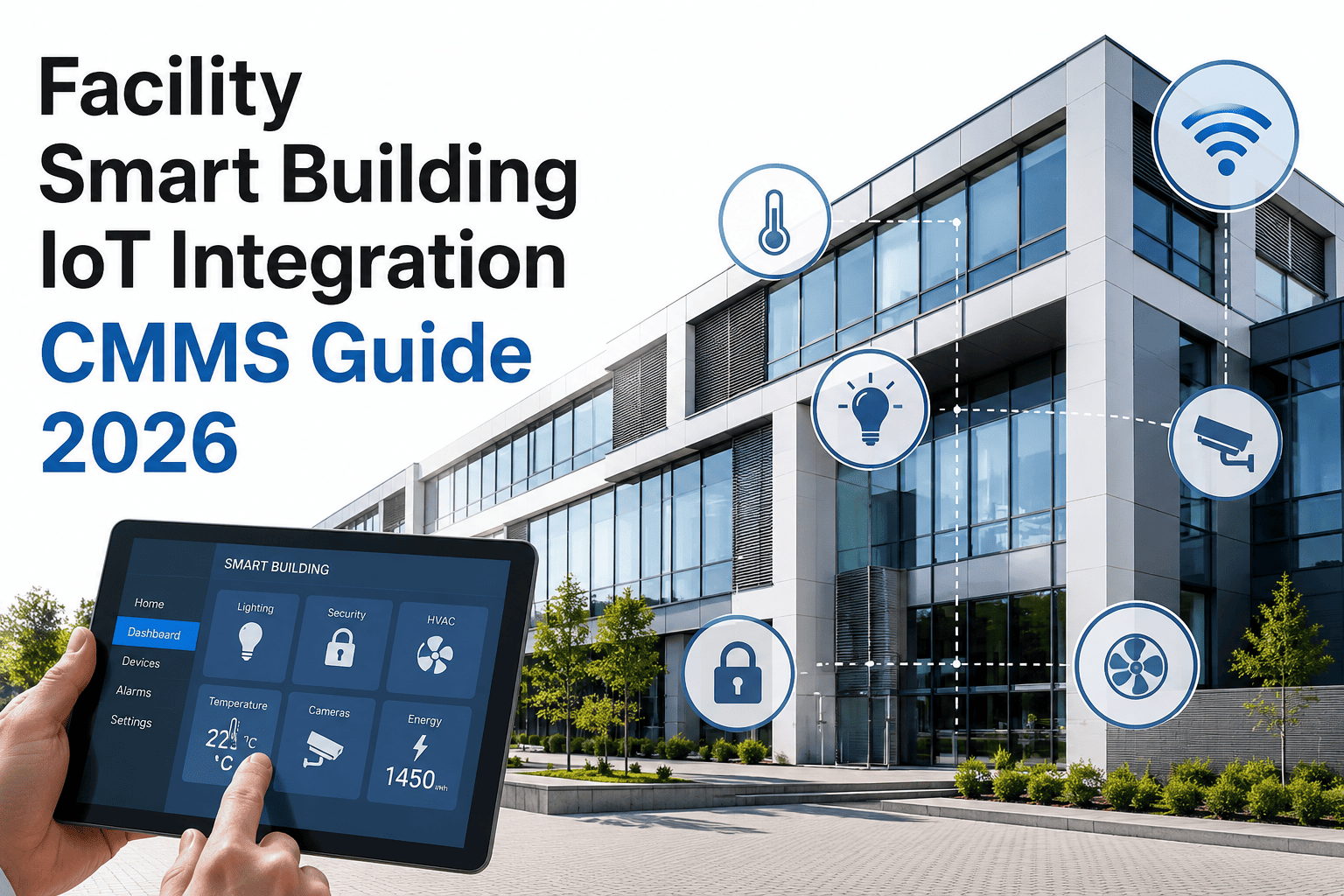
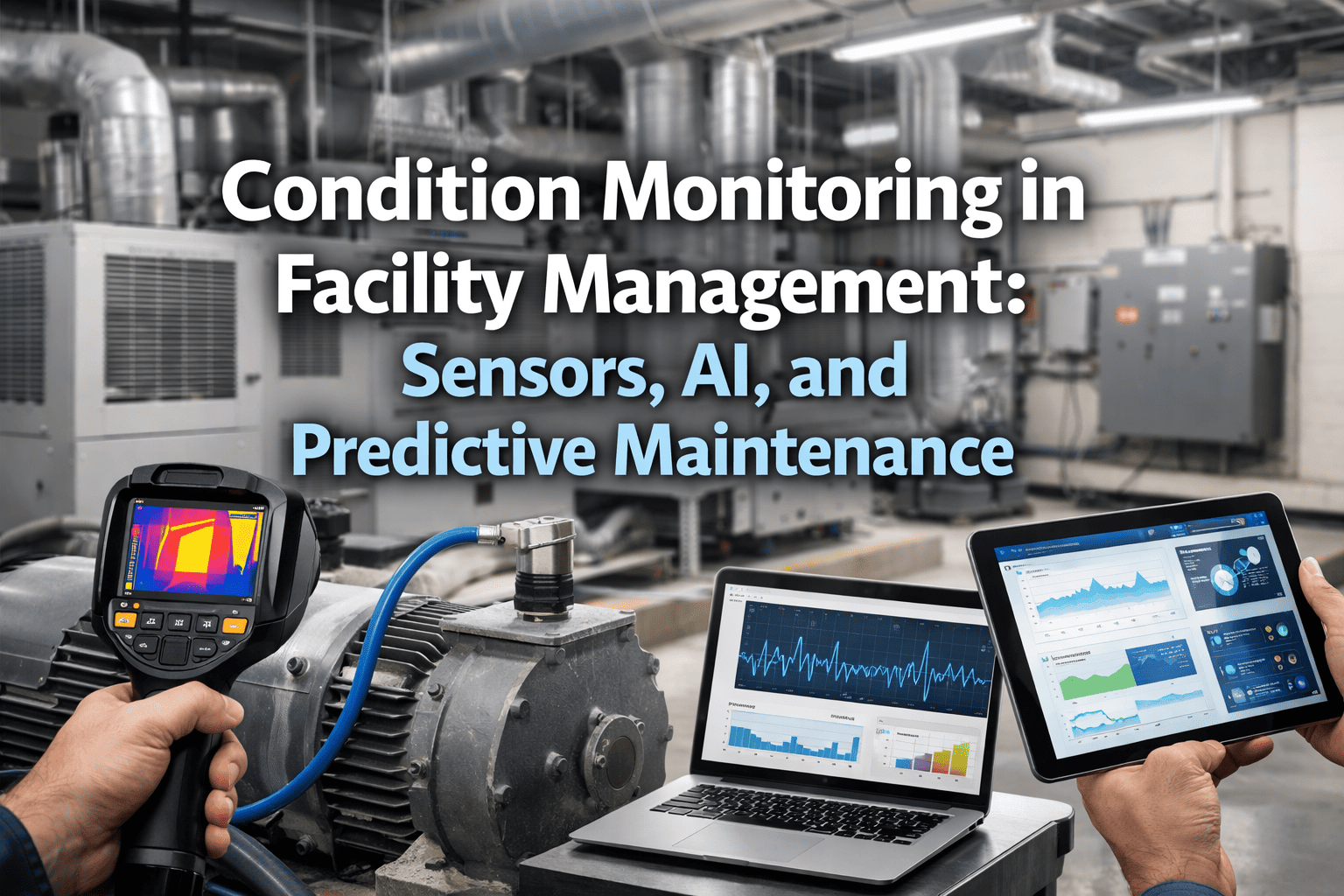
A property manager overseeing a 12-building commercial portfolio gets a call at 7:43 AM on a Tuesday. The chiller serving floors 8 through 14 in the flagship office tower stopped working overnight. The building management system flagged nothing. The last PM was completed on schedule six weeks ago. The technician who arrives finds a bearing that has been developing an outer race defect for at least four weeks. The sensor data was there the whole time. Nobody was reading it. In a smart building running AI and IoT sensor maintenance, that call never happens. The bearing anomaly generates a condition-based work order 3 to 5 weeks before failure. The part is ordered. The repair is planned. The chiller runs through peak summer. Book a demo to see how Oxmaint connects IoT sensor data to AI-driven work orders across your full commercial building portfolio. The global smart building market reached $141.79 billion in 2025 and is projected to reach $554 billion by 2033 at 18.9% CAGR. AI in smart buildings specifically is growing at 24.80% annually, reaching $65 billion in 2026. 91% of organisations surveyed in 2025 had adopted smart building systems. The competitive gap between buildings running AI and IoT maintenance and those still operating on manual inspection cycles is no longer closing. It is widening every quarter.
Your Building Sensors Are Already Generating the Data. Oxmaint AI Turns It Into Prevented Failures.
Oxmaint connects IoT sensors, BMS platforms, and SCADA systems to AI-driven work order automation, real-time equipment health scoring, and predictive maintenance scheduling across every commercial building asset class.
$141B
Global smart building market in 2025, growing at 18.9% CAGR to $554 billion by 2033 driven by IoT and AI adoption
91%
Of organisations adopted smart building systems in 2025, spending over $550,000 per organisation on connected technology
45-65%
Drop in emergency repairs when IoT sensors and AI predictive maintenance replace reactive and calendar-based PM programmes
54%
Growth in IoT usage across energy-efficient smart buildings, making connected sensors the fastest-adopted building technology
WHAT IT ACTUALLY MEANS IN 2026
Smart Building Maintenance with AI and IoT: The 4-Layer Technology Stack
Smart building maintenance is not a single product. It is four technology layers working together. Each layer feeds the next. Remove any one layer and the system delivers fragments rather than intelligence. Understanding the stack is the first step to deploying it correctly.
Layer 01
IoT Sensors and Connected Devices
Vibration, temperature, pressure, current draw, humidity, air quality, occupancy, and runtime sensors attached to building equipment. Wireless deployment onto existing assets without retrofit or rewiring. Sensors feed continuous real-time data streams. 60% of BAS installations now integrate IoT sensors for real-time monitoring alongside traditional BMS sensors.
HVACElectricalElevatorsPlumbing
Layer 02
AI Analytics and Anomaly Detection
Machine learning models trained on equipment failure datasets analyse incoming sensor streams against established baselines. Anomaly signatures that precede specific failure modes are detected 2 to 8 weeks before visible symptoms. AI distinguishes between normal operational variation and genuine degradation patterns requiring intervention.
Failure PredictionCondition Scoring
Layer 03
Automated Work Order Generation
When AI detects an anomaly crossing a configured threshold, Oxmaint auto-generates a structured work order with asset details, failure classification, urgency rating, job plan, parts list, and assigned technician. Zero manual dispatcher intervention on routine condition-based triggers. Work orders generated, assigned, and tracked without human input.
Auto-AssignmentMobile Dispatch
Layer 04
CMMS Integration and Asset Feedback Loop
Every completed repair feeds back into the asset condition score, MTBF model, and CapEx forecast. The AI prediction model improves with every data point. Over time the system learns the specific degradation patterns of each individual asset in each building. Early adopters report 25% reduction in maintenance costs and asset lifespan extensions of 15 to 25%.
Asset HistoryCapEx Forecasting
SENSOR COVERAGE BY SYSTEM
IoT Sensor Applications Across Commercial Building Equipment Classes
Every major building system has specific sensor types, failure modes, and detection windows. The table below maps what IoT sensors measure, what AI detects from that data, and how far in advance Oxmaint generates a condition-based work order before failure occurs.
WHAT MANUAL MAINTENANCE MISSES
Four Gaps Where Traditional Building Maintenance Fails in 2026
Gap 01
Calendar PM Schedules That Miss Real Condition
A chiller serviced every 90 days on a calendar schedule receives identical attention whether it has run 6,000 hours at 60% load or 6,000 hours at 100% load in summer heat. Calendar intervals are averages. Individual assets degrade at individual rates driven by actual operating conditions. IoT sensors replace the calendar with real condition data. 30% of fixed-schedule PM tasks service equipment that does not need attention. An equal proportion misses equipment in accelerated degradation.
Gap 02
After-Hours Failures With No Detection Until Morning
Traditional building maintenance has no visibility between inspection visits. A bearing beginning to fail at 11 PM Friday will run until catastrophic failure or until someone walks past and notices. IoT sensors monitor continuously, 24 hours a day, 7 days a week. AI detects the anomaly within hours of onset. Oxmaint auto-generates an emergency work order with on-call technician notification regardless of time or day. The gap between failure onset and intervention collapses from days to hours.
Gap 03
BMS Data Collected but Never Analysed
Most commercial buildings built in the last 15 years have BMS platforms generating continuous operational data from connected systems. Most facility teams have never had the analytical capability to extract failure prediction signals from that data. 75% of CRE firms still rely on legacy core systems that cannot analyse the IoT data they are already collecting. Sensors without analytics are, as one industry report puts it, expensive thermometers. Oxmaint connects to existing BMS platforms and applies AI analytics without new hardware.
Gap 04
No Feedback Loop From Repairs to Future Scheduling
When a technician completes a repair in a traditional system, that completion is a closed record. In Oxmaint AI, every completed repair updates the asset condition score, recalibrates the MTBF model, and feeds the CapEx forecast. The AI learns the specific degradation pattern of that individual asset in that specific building. After 12 months of data accumulation, Oxmaint predicts failures on the assets it knows with significantly higher accuracy than generic industry failure models.
THE OXMAINT SOLUTION
How Oxmaint Connects IoT Sensors to AI Maintenance Across Commercial Buildings
Oxmaint is the CMMS layer that converts IoT sensor data and BMS outputs into structured maintenance actions. The platform connects to existing building sensors without middleware, applies AI anomaly detection, generates condition-based work orders, and closes the feedback loop by updating asset condition scores from every completed repair.
Plug-In IoT and BMS Integration
Oxmaint connects to IoT sensors and BMS platforms via OPC UA, BACnet, MQTT, and REST API. Data from existing building sensors flows directly into the Oxmaint AI analytics layer from day one without IT infrastructure projects or middleware platforms. Most commercial buildings with existing BMS connectivity are live within 5 to 7 days of deployment start.
Real-Time Asset Health Scoring
Every connected asset receives a real-time health score updated continuously from sensor readings, inspection findings, and work order history. A chiller whose health score drops from 94 to 71 over 18 days is flagged automatically. Portfolio managers see health scores across all buildings in a single dashboard. No spreadsheet. No manual review. No visiting each BMS terminal separately.
Sensor-Triggered Work Order Automation
When a sensor reading crosses a configured AI threshold, Oxmaint auto-creates a structured work order with asset ID, failure classification, urgency, job plan, and parts list attached. High-confidence alerts auto-assign to the qualified available technician with mobile notification. Borderline alerts surface for manager review before dispatch. Zero manual dispatcher involvement on routine condition triggers.
Condition-Based PM Scheduling
PM schedules trigger from actual asset condition and operating data rather than calendar intervals. An AHU running at 95% load through a record summer heat period triggers its inspection at 1,800 runtime hours rather than waiting for the quarterly calendar date. A lightly loaded pump still on schedule triggers at the standard interval. Every asset gets the service it needs, not the service the calendar assumes.
Multi-Building Portfolio Dashboard
Every building's IoT sensor status, asset health scores, open work orders, and overdue PMs consolidated in a single portfolio dashboard. Portfolio managers see which buildings need attention without logging into separate BMS terminals per property. Cross-building benchmarking surfaces underperforming assets for targeted capital attention. Multi-site operators managing 10 to 100 plus buildings operate from a single Oxmaint instance.
Mobile-First for Field Technicians
Field technicians receive sensor-triggered work orders on mobile with full asset history, job plan, parts list, and safety procedures pre-attached. Offline capability for basement plant rooms and areas without mobile coverage. Photo capture, digital signature, and parts consumption recorded at the job site. Completed data updates the asset health model without re-entry at the office. Every repair makes the AI smarter for the next one.
BEFORE VS. AFTER
Traditional Maintenance vs. AI and IoT Smart Building Maintenance: The Operational Gap
Smart Building Maintenance: Oxmaint AI and IoT Platform vs. Manual Process
DOCUMENTED RESULTS
What AI and IoT Smart Building Maintenance Delivers: Real Outcomes
45-65%
Emergency Repair Reduction
Emergency repairs drop 45 to 65% when IoT sensors and AI predictive work orders replace reactive maintenance as the primary failure response model across commercial building portfolios.
15-25%
Asset Life Extension
IoT-monitored, condition-serviced building assets demonstrate 15 to 25% longer operational lifespan compared to assets maintained on calendar-based PM cycles without condition data.
25%
Maintenance Cost Reduction
McKinsey and CRE early adopter data: AI and IoT maintenance programmes reduce total maintenance costs by up to 25% within 18 months through emergency repair elimination and optimised PM scheduling.
24.8%
Market Growth Rate
AI in smart buildings growing at 24.80% CAGR. Commercial buildings and offices hold the largest end-user market share at 44%. The competitive gap between AI-enabled and manual portfolios widens every year.
FREQUENTLY ASKED QUESTIONS
Smart Building Maintenance with AI and IoT: What Facility Teams Ask Most
Do we need to replace our existing BMS to connect Oxmaint IoT and AI maintenance?
No. Oxmaint integrates with existing BMS platforms via OPC UA, BACnet, MQTT, and REST API without replacing or reconfiguring your current building management system. The Oxmaint AI layer sits above your existing BMS, pulling sensor data and operational readings into the predictive analytics engine without any BMS modification required. For buildings without BMS connectivity, wireless IoT sensors deploy directly onto equipment without electrical work or equipment shutdown. Most commercial buildings with existing BMS connectivity go live within 5 to 7 days of deployment start.
Sign up free to begin the assessment, or
book a demo to walk through your specific building control architecture.
How does Oxmaint AI distinguish between a genuine failure signal and normal equipment variation?
Oxmaint AI establishes a unique baseline for each individual asset over the first 2 to 4 weeks of sensor connection by learning normal operational ranges across all monitored parameters for that specific piece of equipment in its specific operating environment. Anomaly detection then identifies deviations from the individual asset baseline rather than applying generic industry thresholds. A compressor running warmer than its own 30-day baseline triggers an alert. The same temperature reading on a different compressor with a higher established baseline does not. This asset-specific approach dramatically reduces false positive alerts and ensures that intervention triggers reflect genuine degradation rather than normal operational variation between different equipment units.
Can Oxmaint manage smart building maintenance across a mixed-age portfolio where some buildings have BMS and others do not?
Yes. Oxmaint handles both simultaneously in a single portfolio instance. Buildings with existing BMS connectivity integrate via API and begin streaming sensor data immediately. Buildings without BMS receive wireless IoT sensors deployed directly onto priority assets. Both data streams feed the same Oxmaint AI analytics engine and appear in the same portfolio dashboard. The portfolio view shows health scores, work orders, and maintenance performance regardless of each building's underlying technology infrastructure. Facilities without any sensor connectivity still benefit from Oxmaint's AI work order automation, condition-based PM scheduling from manual inspection findings, and CapEx forecasting from maintenance cost history.
Book a demo to map your portfolio's specific infrastructure mix, or
start free today.
How quickly does Oxmaint generate value after IoT sensors are connected to building equipment?
Oxmaint begins generating asset health scores and anomaly alerts within the first week of sensor connection as the AI establishes operational baselines per asset. Condition-based work orders from sensor data typically begin generating within 2 to 4 weeks as the first anomalies cross detection thresholds. Most facilities document their first prevented failure event within 30 to 60 days of IoT sensor activation. The AI prediction accuracy improves continuously as the model accumulates more data points on each specific asset. Facilities that deploy Oxmaint IoT and AI maintenance across their full building portfolio typically document measurable emergency repair cost reduction within the first 90 days and full ROI within 12 to 18 months of complete deployment.
CONTINUE READING
AI Maintenance Resources for Commercial Facility Teams
Explore these guides to build a complete picture of AI-driven maintenance management, predictive monitoring, and multi-site planning across your commercial facility portfolio.
Predictive Maintenance Guide
AI Predictive Maintenance for Commercial Buildings 2026
How AI detects HVAC, electrical, and mechanical failures 30 to 90 days before breakdown. Cut unplanned downtime by up to 45% and extend equipment life with condition-based maintenance across your full building portfolio.
Read the Guide
Software Platform Guide
AI Maintenance Management Software for Facility Teams
Compare AI-powered CMMS platforms built for facility management teams. Work order automation, asset condition tracking, PM scheduling, and real-time dashboards evaluated for commercial building operations in 2026.
Read the Guide
Multi-Site Strategy Guide
AI Maintenance Planning for Multi-Site Commercial Facilities
How AI consolidates maintenance planning, asset condition data, and CapEx forecasting across multi-site commercial portfolios. Eliminate siloed records and make capital decisions from a single real-time portfolio view.
Read the Guide
Equipment Monitoring Deep Dive
AI Equipment Health Monitoring for Commercial Buildings
Real-time AI health scoring for HVAC, elevators, electrical systems, and critical building assets. How IoT sensor data and machine learning catch degradation before it becomes downtime, damage, or a capital replacement event.
Read the Guide
91% of Organisations Have Already Adopted Smart Building Systems. Is Your Maintenance Programme Keeping Up?
Oxmaint connects your existing IoT sensors and BMS to AI-driven predictive maintenance, condition-based work order automation, and portfolio-wide asset health dashboards. Deploy in days across any commercial building portfolio. No BMS replacement. No infrastructure project. No implementation consultant required.