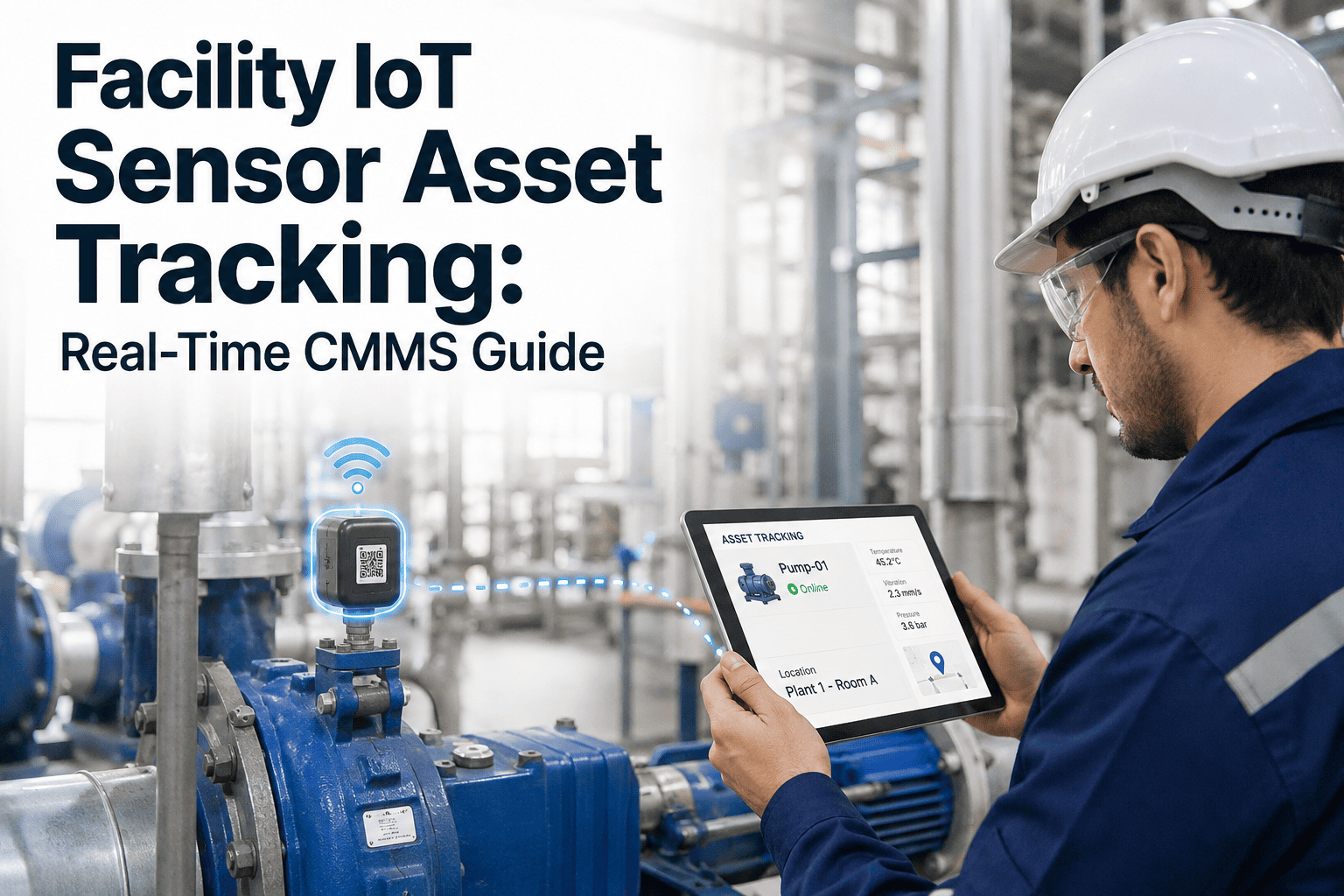
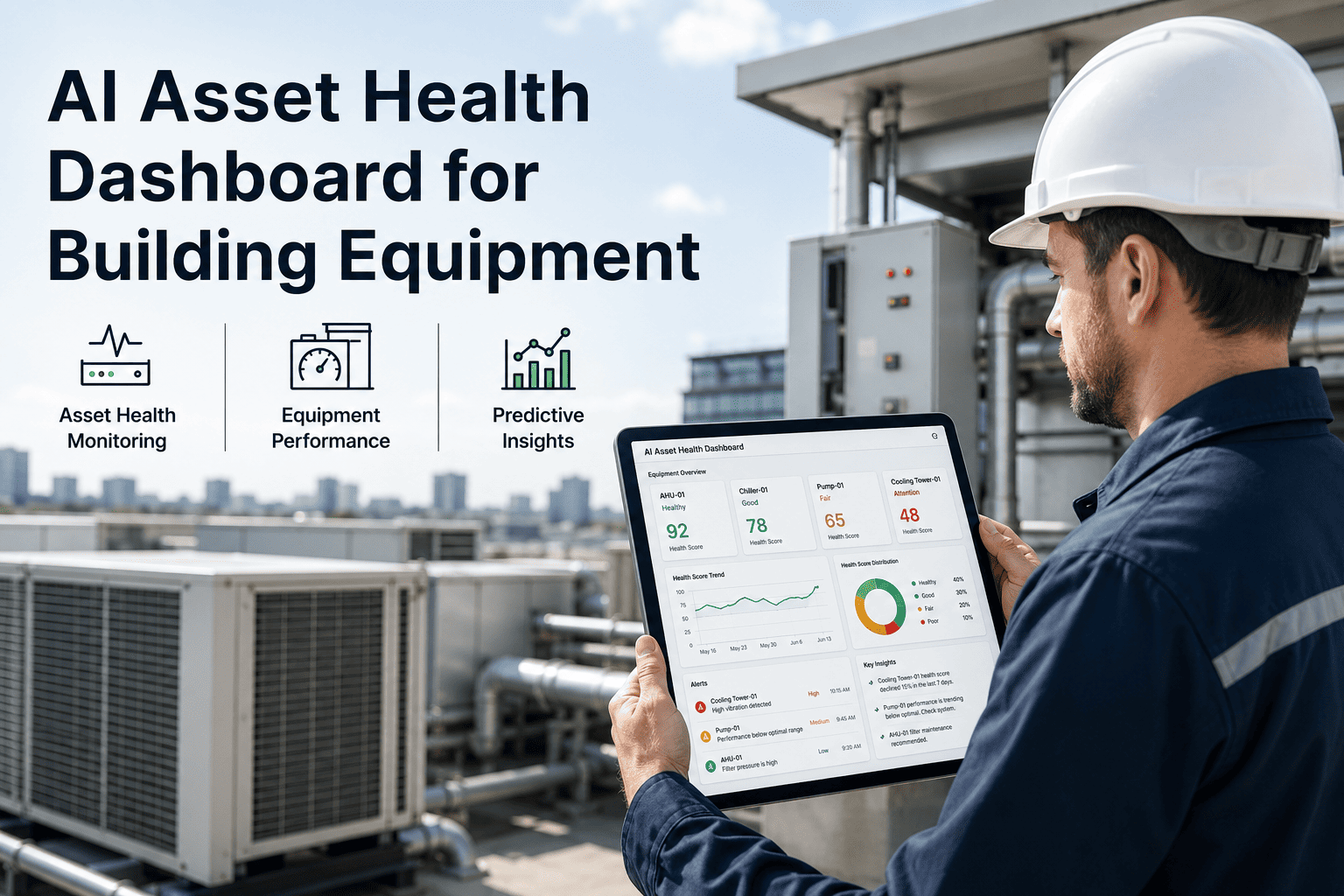
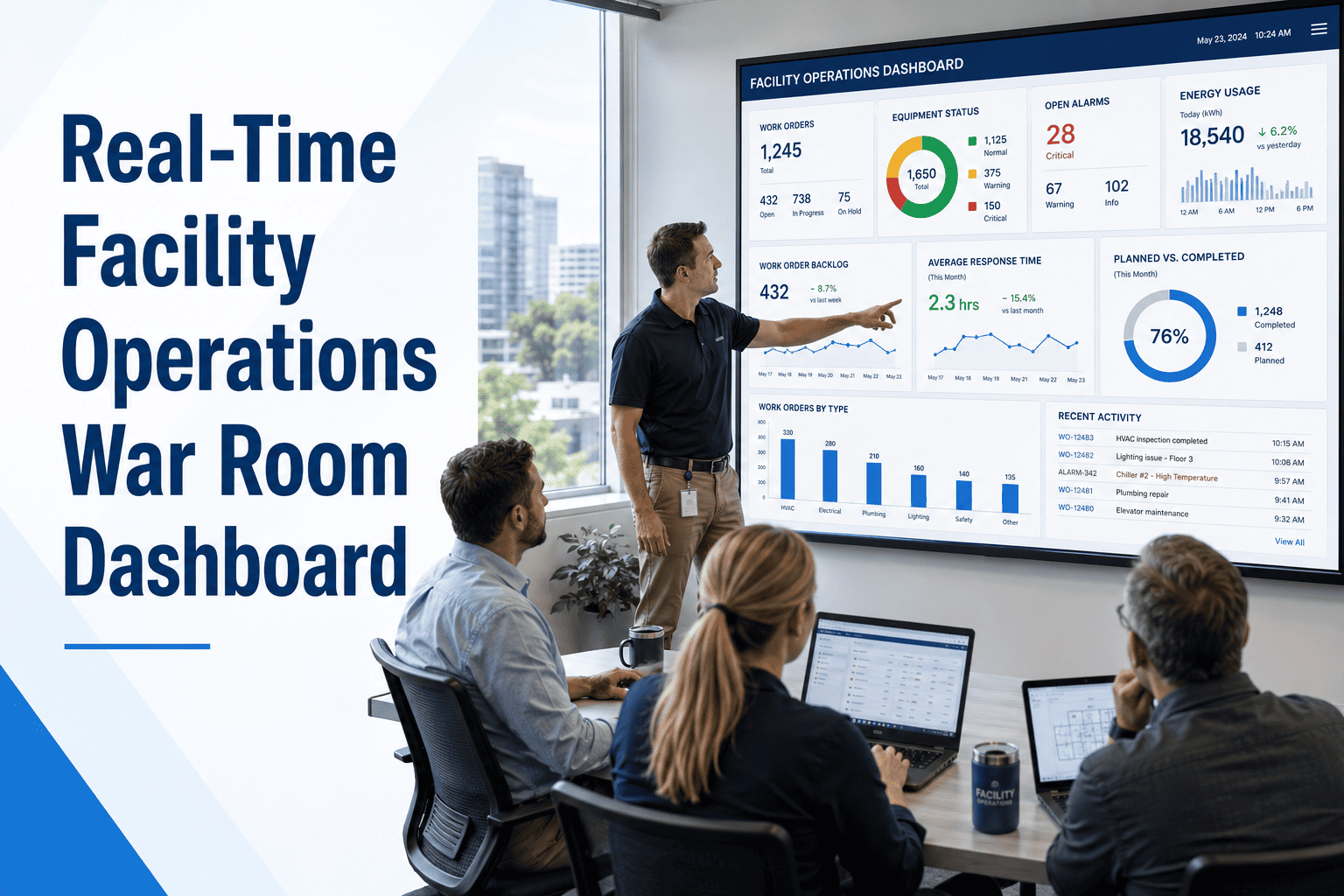
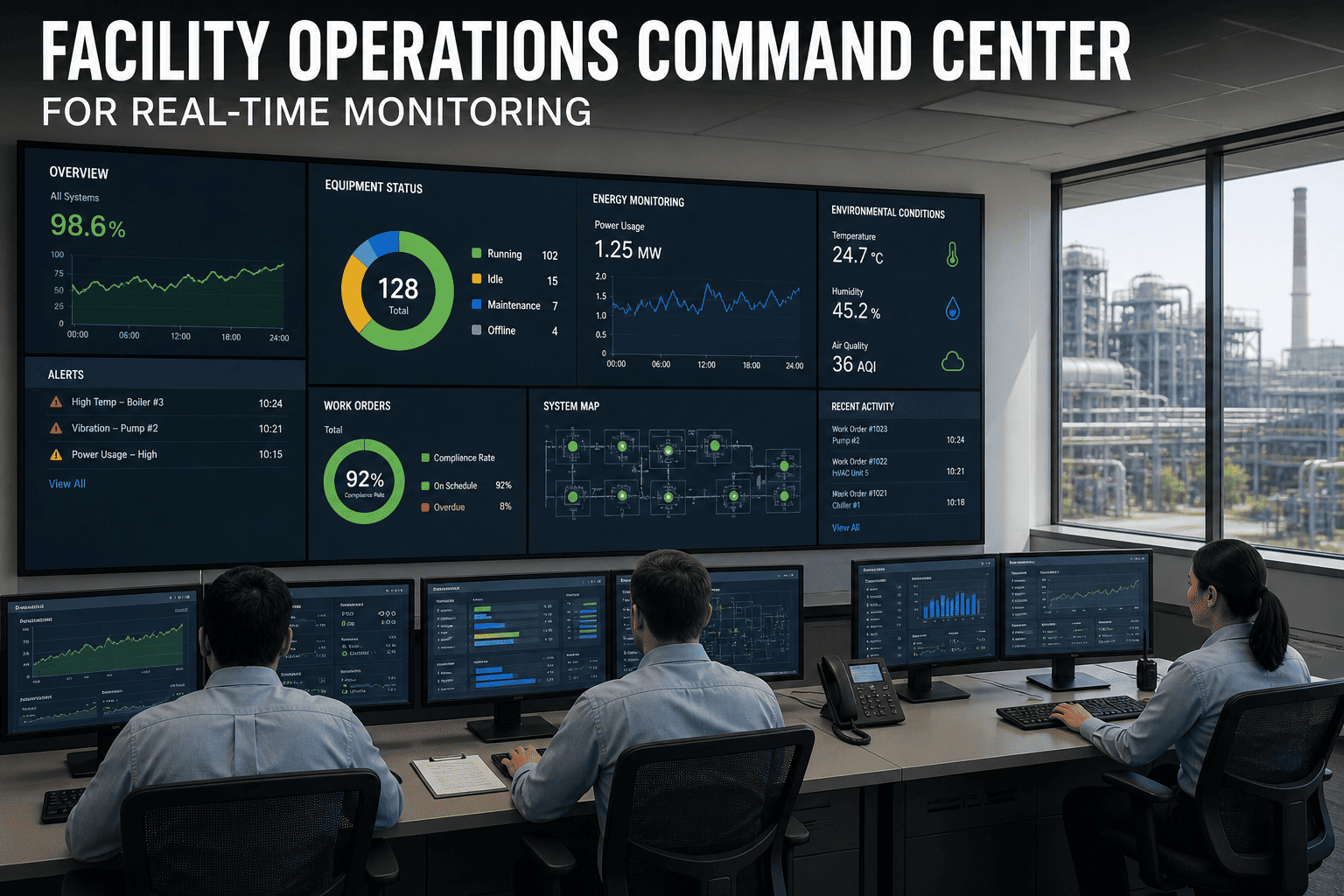
A facility without IoT sensors is a facility operating blind. Equipment degrades, temperatures drift, vibration levels climb, and energy consumption spikes — all invisibly, until the breakdown forces an emergency response that costs 3–5x what a planned repair would have. OxMaint's IoT Sensor Integration connects your facility's physical equipment to a live digital dashboard — turning raw sensor readings into maintenance alerts, work orders, and ESG-ready energy reports without requiring a separate monitoring platform or dedicated IT team. This article explains what sensors to deploy, where, and what decisions each sensor set enables.
IoT Sensors for Facility Equipment Monitoring
Vibration, temperature, humidity, pressure, energy, and occupancy — the complete IoT sensor deployment guide for facility teams moving from reactive to condition-based maintenance.
IoT Sensor Deployment Map by Building System
Each building system has specific sensor requirements tied to its dominant failure modes. This guide maps the right sensor type, measurement parameter, and alert threshold for every major facility asset category.
| Sensor Type | Location | Parameter | Alert Threshold | Failure Mode Detected |
|---|---|---|---|---|
| Tri-axial accelerometer | Compressor body | Vibration (mm/s RMS) | +35% above 30-day baseline | Bearing wear, imbalance |
| RTD temperature sensor | Condenser water in/out | Approach temperature delta | Rise > 2°F from baseline | Tube fouling, scaling |
| Pressure transducers | Refrigerant circuit | Suction / discharge ratio | Suction drop > 8% | Refrigerant leak, valve fault |
| Current transformer | Compressor motor panel | Phase current and kW draw | +10% above load-normalized baseline | Motor degradation, overload |
| Flow meter + RTD | CHW supply and return | LCHWS temp and flow rate | LCHWS < 38°F with low flow | Freeze risk, pump fault |
| Differential pressure sensor | AHU filter banks | Filter pressure drop | Above manufacturer final resistance | Filter clogging, fan overload |
| Sensor Type | Location | Parameter | Alert Threshold | Failure Mode Detected |
|---|---|---|---|---|
| Smart meter / CT clamp | Main distribution board | kWh, kW, power factor | PF < 0.90 or demand spike > 15% | Load imbalance, equipment fault |
| Thermal imaging sensor | Panel bus bars and connections | Surface temperature delta | Hot spot > 10°C above adjacent connection | Loose connection, arcing risk |
| Battery voltage monitor | UPS and DG battery banks | Cell voltage and impedance | Cell voltage variance > 0.05V | Battery degradation, cell failure |
| Fuel level sensor | Generator day tank | Fuel volume percentage | Below 25% capacity | Fuel supply risk for emergency run |
| Vibration sensor | Generator body | Engine vibration at run frequency | +20% above baseline at same load | Mounting looseness, imbalance |
| Sensor Type | Location | Parameter | Alert Threshold | Failure Mode Detected |
|---|---|---|---|---|
| Ultrasonic flow meter | Main domestic water supply | Flow rate m3/hr | Consumption > 15% above occupancy-normalized baseline | Pipe leak, fixture fault |
| Pressure sensor | Booster pump discharge | Static and dynamic pressure | Pressure drop > 10% below design | Pump wear, valve fault, leak |
| Water temperature sensor | Hot water return line | Return temperature | Return temp < 55°C (Legionella risk) | System stratification, heat loss |
| Leak detection cable | Under cooling towers and plant room floor | Resistance / moisture contact | Any contact event | Early leak detection |
| Sensor Type | Location | Parameter | Alert Threshold | Value Generated |
|---|---|---|---|---|
| CO2 and VOC sensor | Occupied zones — ceiling mount | CO2 ppm, TVOC ppb | CO2 > 1,000 ppm, TVOC > 500 ppb | ASHRAE 62.1 compliance, IAQ WO trigger |
| Temperature and humidity sensor | Each HVAC zone | Dry bulb temp and RH% | Temp outside ±1.5°F of setpoint, RH > 65% | HVAC control validation, comfort complaints |
| PIR occupancy sensor | Zones, corridors, meeting rooms | Occupancy state binary | Lights or HVAC active in unoccupied zone > 15 min | Lighting and HVAC demand reduction |
| People counter | Building entrances and floor lobbies | Occupancy count and flow | Occupancy > 90% design capacity | Space utilization, HVAC load optimization |
OxMaint integrates with BACnet, Modbus, MQTT, OPC-UA, and REST API sensor streams — connecting any sensor deployed in this guide to automatic maintenance alerts, work order generation, and ESG-ready energy reporting.
How OxMaint Converts Sensor Data to Maintenance Actions
Raw sensor readings are not maintenance intelligence — they become intelligence only when connected to the right alert logic, work order system, and asset history. Here is the full data-to-action pipeline in OxMaint.
OxMaint receives sensor data via API, MQTT broker, or BAS integration. Each reading is timestamped and stored against the specific asset record — building a continuous time-series dataset per equipment unit.
OxMaint AI compares each reading against a dynamic baseline — calibrated for load, ambient conditions, and operating mode. Deviations exceeding the anomaly threshold are flagged with severity classification: Monitor, Alert, or Action Required.
Action Required anomalies automatically create a prioritized maintenance work order — linked to the triggering sensor reading, the asset's full maintenance history, and the recommended repair procedure. No manual intervention required to move from detection to dispatch.
The assigned technician receives a push notification with the sensor reading, the asset location, and the recommended action. Parts availability is checked automatically against inventory. The full asset history is available on mobile before the technician arrives at the equipment.
After repair, the technician closes the work order with completion notes and photos. OxMaint recalibrates the sensor baseline for that asset and logs the event in the permanent asset history — improving future anomaly detection accuracy.
Expert Review
The IoT sensor market for buildings has matured to the point where the technology is no longer the barrier — the integration architecture is. Facilities that deploy sensors without connecting them to a CMMS workflow get dashboards that nobody acts on. The maintenance team does not check the sensor monitoring platform; they manage work orders. The breakthrough that OxMaint represents is the seamless handoff from sensor anomaly to maintenance work order — closing the gap that causes sensor investments to deliver far less value than their technical capability would suggest. The sensor map in this guide reflects deployment patterns that generate genuine maintenance value rather than monitoring noise. Start with HVAC cooling, electrical panels, and water flow — the ROI on those three sensor categories alone will fund the expansion to the rest of the building systems.
Frequently Asked Questions
Your Equipment Is Sending Signals — OxMaint Listens
Every vibration spike, temperature rise, and pressure deviation your equipment generates is a maintenance signal. Without IoT sensors connected to a CMMS, those signals go unheard until they become breakdowns. OxMaint connects your sensors to automatic alerts, work orders, and ESG reporting — turning raw data into executed maintenance. Book a demo and see live sensor integration for your facility.