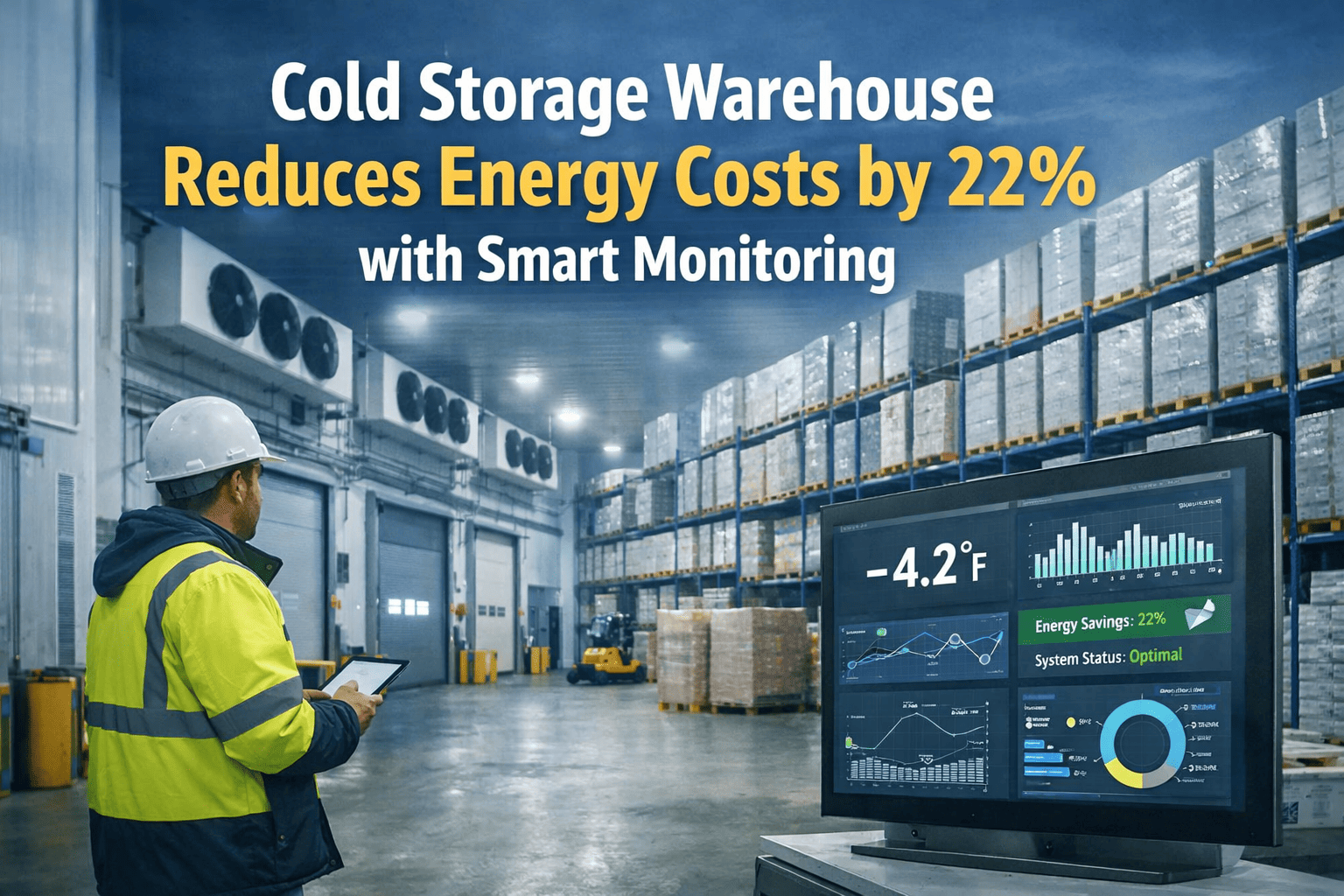
90% of commercial buildings in the United States have no automated energy monitoring system. They manage their largest operating expense with monthly utility bills, manual readings, and time clocks that cannot detect waste until it has already cost them money. The EPA estimates the average commercial building wastes 25% of the energy it consumes, and that waste compounds silently across every shift, every weekend, and every seasonal transition where manual systems cannot respond in real time. IoT-based building energy management closes that gap by placing sensors at every electrical panel, HVAC unit, and utility meter, feeding live consumption data to dashboards that alert your team within minutes when something is running outside its normal operating profile. Research from MDPI confirms IoT technology reduces building energy consumption by up to 30% and operating expenses by 20%. Sign up free to connect Oxmaint to your building systems today, or book a demo to see the live energy dashboard mapped to your facility's WAGES utility profile.
Oxmaint integrates with your building systems via IoT sensors, BMS data feeds, and utility sub-meters to deliver real-time energy dashboards, automated anomaly alerts, and WAGES KPI tracking across your full facility portfolio. Book a demo to see the live energy dashboard configured for your building's utility profile and sustainability targets.
What Is Building Energy Management?
Building energy management is the continuous monitoring, analysis, and control of a facility's energy and utility consumption using IoT sensors, data analytics, and automated response systems. It replaces reactive utility bill analysis with real-time visibility into how every circuit, system, and building zone is consuming energy at every hour of every day.
How most facilities manage energy today
Monthly utility bill arrives 30 to 45 days after the waste occurred. No visibility into which system, shift, or event drove the overage. Manual meter readings once per day at best. HVAC and lighting run on fixed time schedules regardless of occupancy. Equipment degradation inflates energy draw silently for months before anyone notices.
What real-time monitoring delivers
Sensors transmit consumption readings every few minutes to a cloud platform. Anomalies fire alerts within minutes of occurring. HVAC adjusts automatically to occupancy and weather. Equipment efficiency degradation surfaces as rising energy draw weeks before failure. Facility managers see live cost accumulation by zone, system, and shift rather than a monthly surprise.
The WAGES Framework: Five Utility Streams Every FM Team Must Track
WAGES stands for Water, Air, Gas, Electricity, and Steam. These are the five utility streams that together account for the overwhelming majority of a commercial building's operating cost and carbon footprint. Effective building energy management requires live KPI tracking across all five, not just electricity from the monthly bill.
Smart sub-meters detect leaks, irrigation overruns, and cooling tower drift. IoT water monitoring identifies the 15 to 30% of commercial water consumption that is wasted through leaks and inefficient fixtures before it appears on a bill.
Compressed air leaks account for 20 to 55% of compressor output in poorly maintained industrial facilities. IoT pressure sensors pinpoint leak locations and quantify waste in real time against production output benchmarks.
Gas consumption normalized against heating degree-days exposes boiler inefficiency, heating system degradation, and off-hours gas draw that fixed-schedule systems cannot detect. Anomalies surface within the shift, not the month.
Electricity is typically the largest single utility cost in commercial buildings. Circuit-level IoT monitoring identifies ghost loads, HVAC overcycling, lighting waste during unoccupied hours, and peak demand events that trigger demand charges.
Steam trap failures in district heating systems can waste 10 to 25% of total steam output without any visible indication at the boiler. IoT acoustic sensors and temperature monitoring identify failed traps within hours of failure.
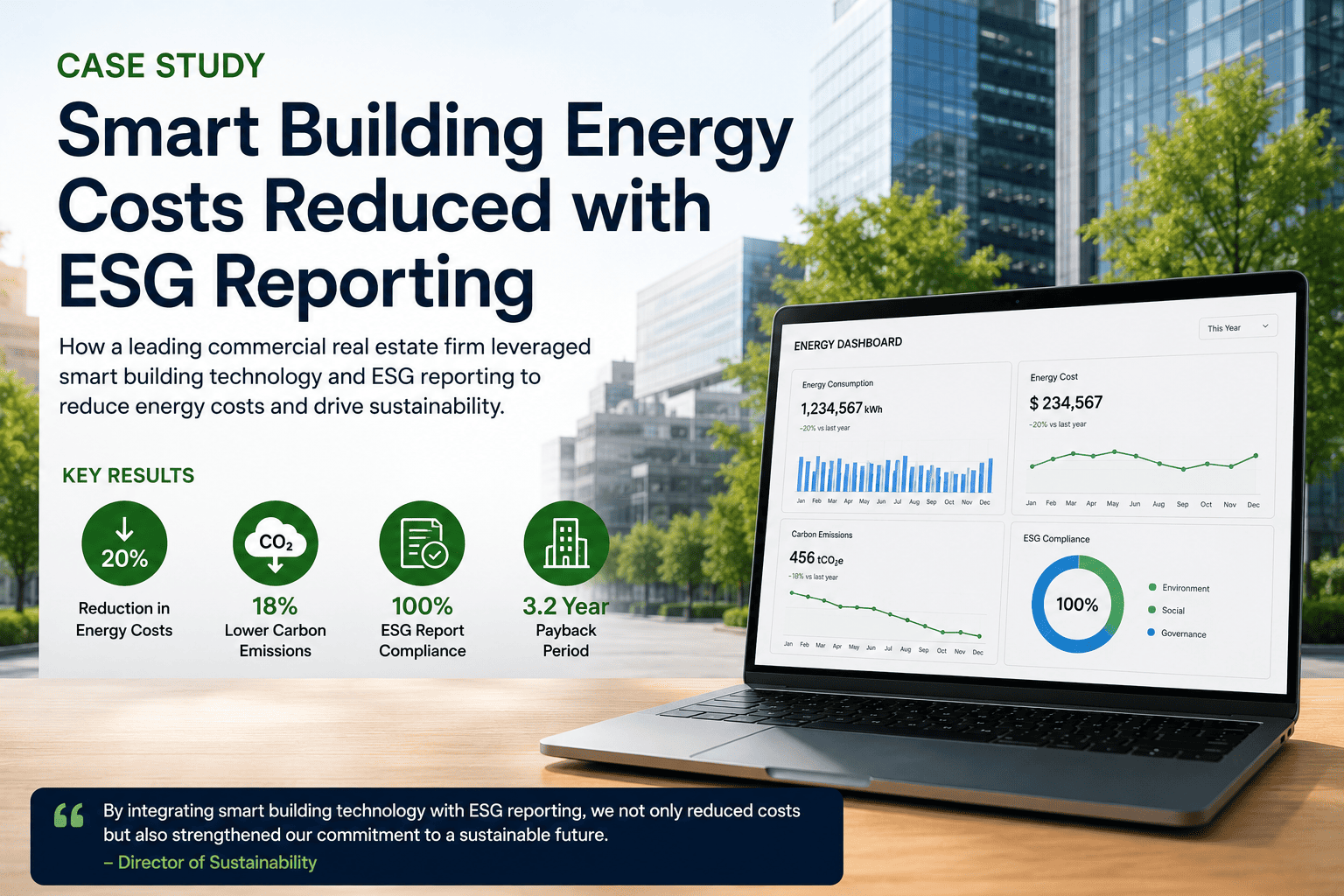
Carbon intensity is increasingly tracked alongside WAGES as ESG reporting obligations expand. Oxmaint calculates Scope 1 and Scope 2 emissions per building and portfolio level from live utility consumption data with no manual calculation required.
Four Energy Management Failures Driving Avoidable Facility Costs
No Visibility Until the Utility Bill Arrives
A building with a failing HVAC economizer running in heating mode during a cold snap may consume 40% more energy than normal for 3 to 6 weeks before anyone notices. Without real-time monitoring, the first signal is the utility bill arriving 30 to 45 days after the waste began. IoT monitoring detects the anomaly within minutes and generates an alert before the next shift ends. Book a demo to see Oxmaint anomaly detection running on live building data.
HVAC Running on Fixed Schedules Regardless of Occupancy
Commercial buildings with fixed HVAC time schedules consume 15 to 25% more energy than occupancy-responsive systems during partial occupancy periods, weekends, and holidays. A 100,000 square foot office building wasting 20% of its HVAC energy on unoccupied conditioning loses $40,000 to $80,000 per year depending on local energy rates. IoT occupancy sensors and automated scheduling eliminate this waste without reducing occupant comfort.
Equipment Degradation Invisible Until Failure
A chiller losing efficiency as refrigerant leaks or heat exchanger fouling builds draws progressively more electricity per ton of cooling. A well-functioning chiller running at 0.5 kW per ton degrading to 0.8 kW per ton adds $30,000 to $60,000 per year in electricity cost before the equipment fails and triggers an emergency call. IoT energy monitoring detects the efficiency decline 6 to 8 weeks before failure through rising kWh per cooling degree-day. Book a demo to see equipment efficiency trending in Oxmaint.
Peak Demand Charges Accumulating Undetected
Demand charges, billed on peak 15-minute interval consumption, can represent 30 to 50% of a commercial electricity bill in many US utility rate structures. A single unmanaged equipment start-up or simultaneous HVAC compressor cycling event can set the demand ratchet for the entire month. Without real-time demand monitoring, facility teams have no way to stagger loads, shed non-critical equipment, or intervene before the peak is set.
How IoT Building Energy Monitoring Works: The Four-Layer Architecture
Modern IoT building energy management operates across four layers from sensor to action. Understanding what happens at each layer clarifies why real-time monitoring delivers results that monthly billing analysis cannot approach.
Clamp-on current transformers, pressure sensors, flow meters, and temperature probes install on existing electrical panels and mechanical systems without power interruption. Wireless transmission means no conduit runs and no construction disruption. A mid-sized commercial building deploys full sensor coverage in 1 to 3 days. Readings transmit every 2 to 5 minutes to the cloud platform.
IoT gateways aggregate sensor data and transmit via encrypted protocols to cloud infrastructure. BMS integration via BACnet or Modbus TCP brings existing building automation data into the same platform. SCADA feeds from industrial facilities integrate via OPC-UA. All data streams merge into a single consumption timeline per building zone and asset.
Cloud algorithms establish consumption baselines by hour, day, occupancy level, and weather condition within the first 7 to 14 days of monitoring. Anomaly detection compares live readings against the dynamic baseline and fires alerts when consumption deviates beyond configurable thresholds. AI models identify equipment degradation patterns that manual analysis cannot see in monthly data.
Anomaly alerts generate structured maintenance work orders in Oxmaint with the asset ID, consumption deviation, and recommended corrective action pre-filled. Automated controls adjust HVAC setpoints and lighting schedules based on occupancy and weather in real time. WAGES KPI dashboards update continuously for FM team and portfolio manager review.
Connect Your Building Systems to Live Energy Intelligence
Oxmaint integrates IoT sensor data, BMS feeds, and utility sub-meter readings into a single real-time energy dashboard with automated anomaly alerts and WAGES KPI tracking across your full portfolio. Book a demo to see live energy dashboards configured for your building type and utility rate structure.
Oxmaint Energy and Sustainability Module: Six Core Capabilities
Oxmaint connects building energy management to the maintenance platform where corrective actions actually happen. When an IoT sensor detects an anomaly, Oxmaint does not just send an email alert. It creates a structured work order with asset history, recommended procedure, and parts list attached before the next shift starts. Book a demo to walk through each capability mapped to your building's asset hierarchy.
Building Energy Management: Without Monitoring vs With Oxmaint IoT
The operational and financial gap between manual utility management and Oxmaint IoT energy monitoring is measurable across every utility stream, every equipment class, and every reporting cycle. Book a demo to see how these differences apply to your building's current energy cost structure.
| Performance Factor | With Oxmaint IoT Monitoring | Without Energy Monitoring |
|---|---|---|
| Anomaly Detection Speed | Consumption anomalies detected within minutes of occurrence. Alerts fire before the shift ends. Corrective work order generated and assigned automatically. Equipment waste stops within hours of the event. | Waste detected when the utility bill arrives 30 to 45 days after the event. No way to identify which system, shift, or event caused the overage. Waste compounds throughout the billing period. |
| HVAC Energy Efficiency | Occupancy-responsive scheduling reduces HVAC energy 15 to 25%. Chiller and AHU efficiency tracked in kWh per cooling degree-day. Degradation trend triggers planned maintenance 6 to 8 weeks before failure and energy waste compound. | HVAC runs fixed schedules regardless of actual occupancy. Equipment degradation invisible until failure or auditor inspection. 20 to 30% energy waste in HVAC systems is typical without continuous monitoring. |
| Demand Charge Management | Real-time peak demand tracking with 15-minute interval visibility. Automated load shedding alerts before demand ratchet is set. Demand charges reduced 10 to 20% in most commercial facilities within the first 3 months of monitoring. | Demand charges visible only on monthly bill after the peak has already set the ratchet for the period. No way to intervene in real time. Demand charges account for 30 to 50% of total electricity cost in many US rate structures. |
| Utility Reporting Speed | Full WAGES utility reports generated from live data in under 2 minutes on demand. ESG and BPS compliance reports exportable in PDF for auditor review. No manual data compilation required at any reporting cycle. | Monthly utility reports require manual collection from multiple utility bills, spreadsheets, and meter readings. Reports take 4 to 8 hours to compile and arrive weeks after the period they cover. |
| Equipment Maintenance Link | Energy anomalies auto-generate structured maintenance work orders with asset history, procedure, and parts list pre-loaded. The energy management and maintenance system are the same platform with zero re-entry between detection and dispatch. | Energy anomalies, if detected, require manual translation into a separate maintenance system. The gap between energy alert and maintenance work order creation averages 4 to 24 hours in facilities running disconnected systems. |
| Carbon and ESG Tracking | Scope 1 and Scope 2 emissions calculated automatically from live utility data. GRESB, SFDR, and Local Law 97 compliance tracking built into the dashboard. Carbon intensity per occupied hour updated in real time as consumption changes. | Carbon calculations performed manually from utility bills once per quarter or annually for ESG reports. Data accuracy depends on completeness of paper records. Compliance gaps invisible until external audit reveals missing documentation. |
Building Energy Management Results: Industry Benchmarks
These performance figures represent documented outcomes from commercial and industrial facilities deploying IoT-based building energy management, drawn from published research, MDPI peer-reviewed studies, and operator-reported case data across multiple facility types.
Regional Energy Compliance and Reporting Requirements
Building energy reporting obligations are tightening across every major region. The days of voluntary disclosure are ending as Local Law 97 in New York, the UK's Streamlined Energy and Carbon Reporting, and Australia's National Greenhouse and Energy Reporting Act impose mandatory benchmarking, penalty structures, and third-party audit requirements on commercial building portfolios.
| Region | Key Energy Frameworks | Oxmaint Coverage |
|---|---|---|
| USA | Local Law 97 (NYC), ENERGY STAR Portfolio Manager, Building Performance Standards across 50 plus cities, ASHRAE 90.1 | EUI benchmarking per ENERGY STAR categories, LL97 emissions tracking, BPS penalty forecasting, automated compliance report generation |
| UK | SECR (Streamlined Energy and Carbon Reporting), ESOS, MEES Minimum Energy Efficiency Standards, EPC requirements | Scope 1 and 2 emissions reporting for SECR, ESOS audit data preparation, EPC improvement tracking, carbon intensity dashboards per building |
| Australia | NGER Act (National Greenhouse and Energy Reporting), NABERS energy ratings, CBD Building Energy Disclosure | NABERS energy data tracking, NGER consumption reporting, NABERS star rating improvement monitoring, portfolio-level disclosure reporting |
| UAE | DEWA Green Permits, Estidama Pearl Rating, Dubai Net Zero 2050, OSHAD-SF energy requirements | Estidama KPI tracking, DEWA consumption benchmark reporting, Vision 2030 smart building energy dashboards, multi-site UAE portfolio energy reporting |
| Germany | GEG (Building Energy Act), EnEV successor requirements, EU Energy Performance of Buildings Directive | GEG compliance energy tracking, EPBD primary energy factor dashboards, carbon emission reporting per DIN EN 15978 methodology |
| Canada | Pan-Canadian Net Zero Buildings Framework, provincial energy benchmarking requirements, NZEBs | Portfolio energy benchmarking, net-zero tracking against provincial targets, automated carbon and utility reporting for ESG disclosure obligations |
Put Every Utility Stream on a Live Dashboard Across Your Building Portfolio
Oxmaint deploys full WAGES energy intelligence from IoT sensor data, automated anomaly alerts, and ESG compliance reporting across your complete asset hierarchy within the first 30 days. No manual calculations, no monthly bill delays, no compliance gaps. Book a demo to see the live energy dashboard running against your building's actual utility profile and sustainability targets.
Frequently Asked Questions: Building Energy Management and IoT Monitoring
QHow quickly does IoT building energy monitoring deploy in an existing commercial facility?
QWhat energy savings should a commercial building realistically expect from IoT monitoring?
QDoes Oxmaint generate the energy documentation required for Local Law 97 and ENERGY STAR compliance?
QHow does Oxmaint connect energy anomaly alerts to maintenance work orders?
Continue Reading: Building Energy Management and Sustainability Resources
Explore these related resources to build a complete energy and sustainability picture, from net-zero roadmaps and ESG compliance frameworks through to building performance standards and LED retrofit ROI guides.
Put Every Utility Stream on a Live Energy Dashboard Across Your Portfolio
Oxmaint deploys WAGES KPI tracking, IoT anomaly detection, automated maintenance work orders, and ESG compliance reporting across your complete building portfolio within 30 days of deployment. No construction. No IT project. No manual reporting. Book a 30-minute demo to see the live energy dashboard configured for your buildings, utility rate structure, and sustainability targets.