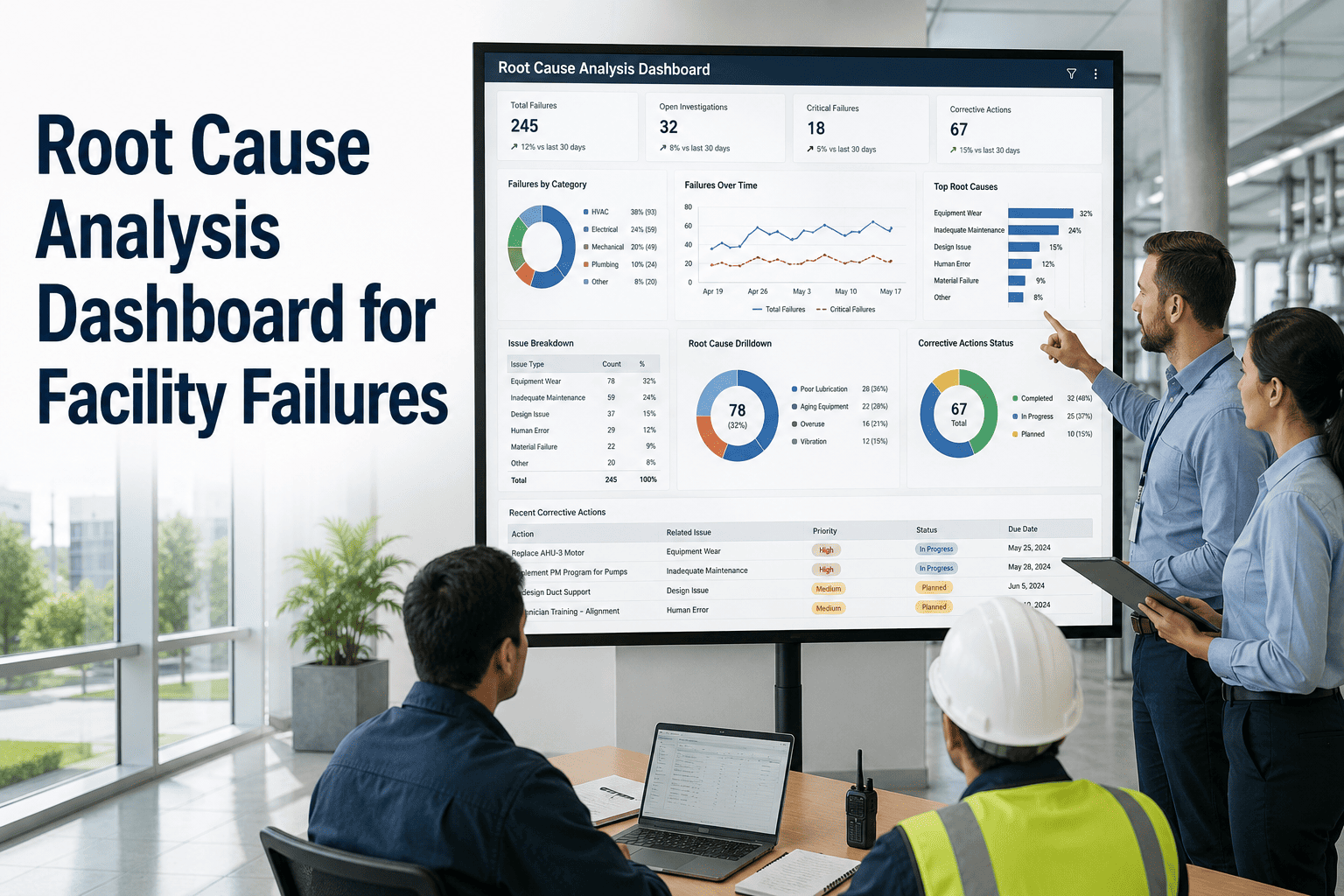
The morning shift report reads like a recurring nightmare—another generator failure during last night's power outage, the third incident this quarter. Each post-incident review identifies a different symptom: corroded terminals, fuel contamination, controller malfunction. But symptoms aren't causes. Without proper root cause analysis (RCA), facilities chase problems instead of solving them, and the same failures resurface under different disguises. Studies show that facilities performing systematic RCA reduce repeat failures by 85% and cut emergency maintenance costs by 60%. This guide provides a structured methodology for identifying and eliminating the true root causes behind diesel generator failures.
Most generator failures trace back to systemic issues—inadequate maintenance programs, improper training, or flawed procedures. Surface-level fixes address symptoms while root causes persist. Start your free OXmaint trial to implement structured RCA workflows and track corrective actions to completion.
Understanding Root Cause vs. Symptom
The Five Whys Applied to Generator Failures
The Five Whys technique systematically drills down from symptoms to root causes. Here's how it applies to common generator failure scenarios:
| Level | Question | Finding |
|---|---|---|
| Why 1 | Why did the generator fail to start? | Battery voltage was insufficient |
| Why 2 | Why was battery voltage insufficient? | Battery charger wasn't functioning |
| Why 3 | Why wasn't the charger functioning? | Charger failure wasn't detected |
| Why 4 | Why wasn't charger failure detected? | No alarm configured for charger status |
| Why 5 | Why was no alarm configured? | Commissioning checklist didn't include alarm verification |
Root Cause: Deficient commissioning procedures → Corrective Action: Update commissioning checklist and audit existing installations
| Level | Question | Finding |
|---|---|---|
| Why 1 | Why did the generator overheat? | Coolant level was critically low |
| Why 2 | Why was coolant level low? | Slow leak at water pump seal |
| Why 3 | Why wasn't the leak detected? | Weekly inspections didn't include coolant check |
| Why 4 | Why doesn't inspection include coolant? | Checklist hasn't been updated in 5 years |
| Why 5 | Why hasn't checklist been updated? | No process for periodic procedure reviews |
Root Cause: No procedure review process → Corrective Action: Implement annual PM procedure audits
Manually tracking Five Whys analyses across multiple incidents leads to lost insights. Schedule a free demo to see how OXmaint structures RCA workflows and automatically surfaces pattern insights.
Fishbone Diagram Categories for Generators
The Ishikawa (fishbone) diagram organizes potential causes into six categories. For diesel generators, these categories reveal the full spectrum of failure contributors:
| Category | Common Causes | Investigation Focus |
|---|---|---|
| Machine | Component wear, design limitations, age | Maintenance history, OEM bulletins, component life |
| Method | Improper procedures, skipped steps | PM procedures, work instructions, operator logs |
| Material | Fuel quality, wrong parts, contamination | Fuel testing, parts specifications, supply chain |
| Manpower | Training gaps, fatigue, communication | Training records, shift schedules, handoffs |
| Measurement | Sensor drift, calibration, wrong specs | Calibration records, sensor history, setpoints |
| Environment | Temperature, humidity, dust, vibration | Room conditions, seasonal patterns, location |
Common Root Cause Patterns by Failure Type
| Symptom | Surface Cause | Root Cause |
|---|---|---|
| Dead battery | Sulfation buildup | PM schedule doesn't include load testing |
| Corroded terminals | Lack of cleaning | Inspection checklist omits terminal condition |
| Charger failure | Component degradation | No redundancy; no monitoring alarm |
| Wrong battery type | Procurement error | Parts spec not linked to work orders |
| Chronic undercharge | Float voltage incorrect | Commissioning procedure incomplete |
| Symptom | Surface Cause | Root Cause |
|---|---|---|
| Microbial contamination | Water in fuel tank | No fuel sampling program |
| Clogged filters | Debris in fuel | Fuel rotation policy not enforced |
| Degraded fuel | Age beyond 12 months | No fuel age tracking system |
| Air in fuel lines | Loose fittings | Torque specs not in PM procedure |
| Injector failure | Contaminated fuel | No fuel polishing for standby units |
| Symptom | Surface Cause | Root Cause |
|---|---|---|
| Overheating | Low coolant | Coolant check not in weekly inspection |
| Thermostat failure | Component age | No time-based replacement schedule |
| Blocked radiator | Debris accumulation | Room cleanliness standard not defined |
| Block heater failure | Element burnout | Heater status not included in alarms |
| Water pump leak | Seal wear | PM interval exceeds seal service life |
The RCA Investigation Process
| Phase | Actions | Documentation Required |
|---|---|---|
| 1. Preserve Evidence | Secure scene, photograph conditions, retain failed parts | Time-stamped photos, witness statements, alarm logs |
| 2. Collect Data | Review maintenance history, interview operators, pull sensor data | Work order history, PM records, trending data |
| 3. Analyze | Apply Five Whys, build fishbone, identify contributing factors | RCA diagrams, timeline reconstruction, cause tree |
| 4. Implement | Define corrective actions, assign owners, set deadlines | Action items, effectiveness verification plan |
Contributing Factor Analysis
Most generator failures involve multiple contributing factors. Effective RCA identifies all contributors, not just the most obvious one:
Corrective Action Hierarchy
Not all corrective actions are equally effective. Use this hierarchy to select actions most likely to prevent recurrence:
RCA Documentation Template
| Section | Content Required | Purpose |
|---|---|---|
| Incident Summary | Date, time, equipment ID, immediate impact | Context and severity classification |
| Timeline | Sequence of events before, during, after | Identify failure progression |
| Evidence Collected | Photos, data logs, parts retained, interviews | Support analysis conclusions |
| Analysis Method | Five Whys, fishbone, fault tree documentation | Show analytical rigor |
| Root Cause Statement | Clear, specific, actionable statement | Define what must change |
| Corrective Actions | Action, owner, deadline, verification method | Enable tracking and accountability |
| Lessons Learned | Broader applicability to other equipment | Prevent similar failures elsewhere |
Pattern Recognition Across Failures
Individual RCAs provide limited value without cross-incident analysis. Look for these patterns across your generator failure history:
Spreadsheets can't surface these patterns. Sign up for free and let OXmaint's analytics automatically identify failure patterns across your facility.