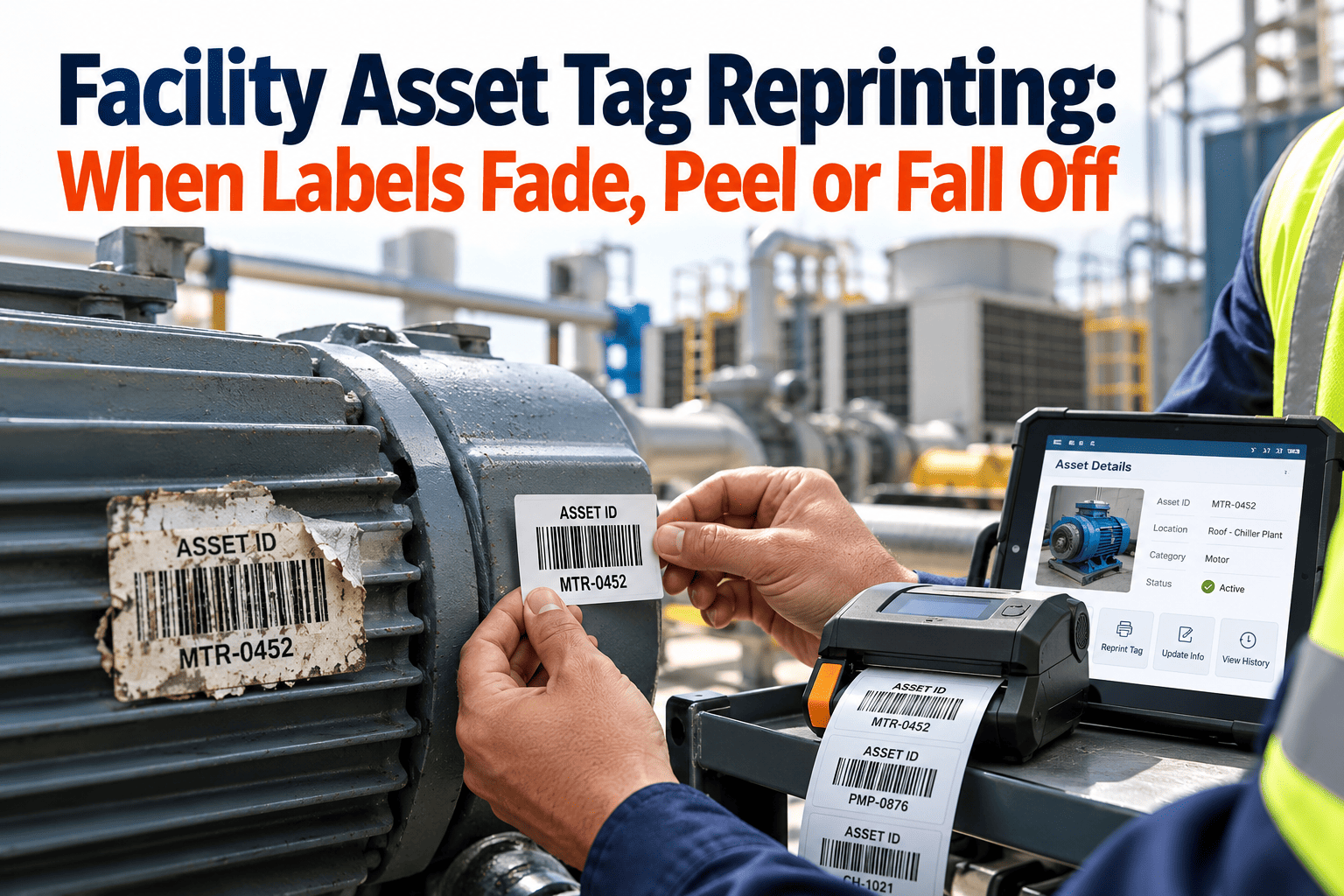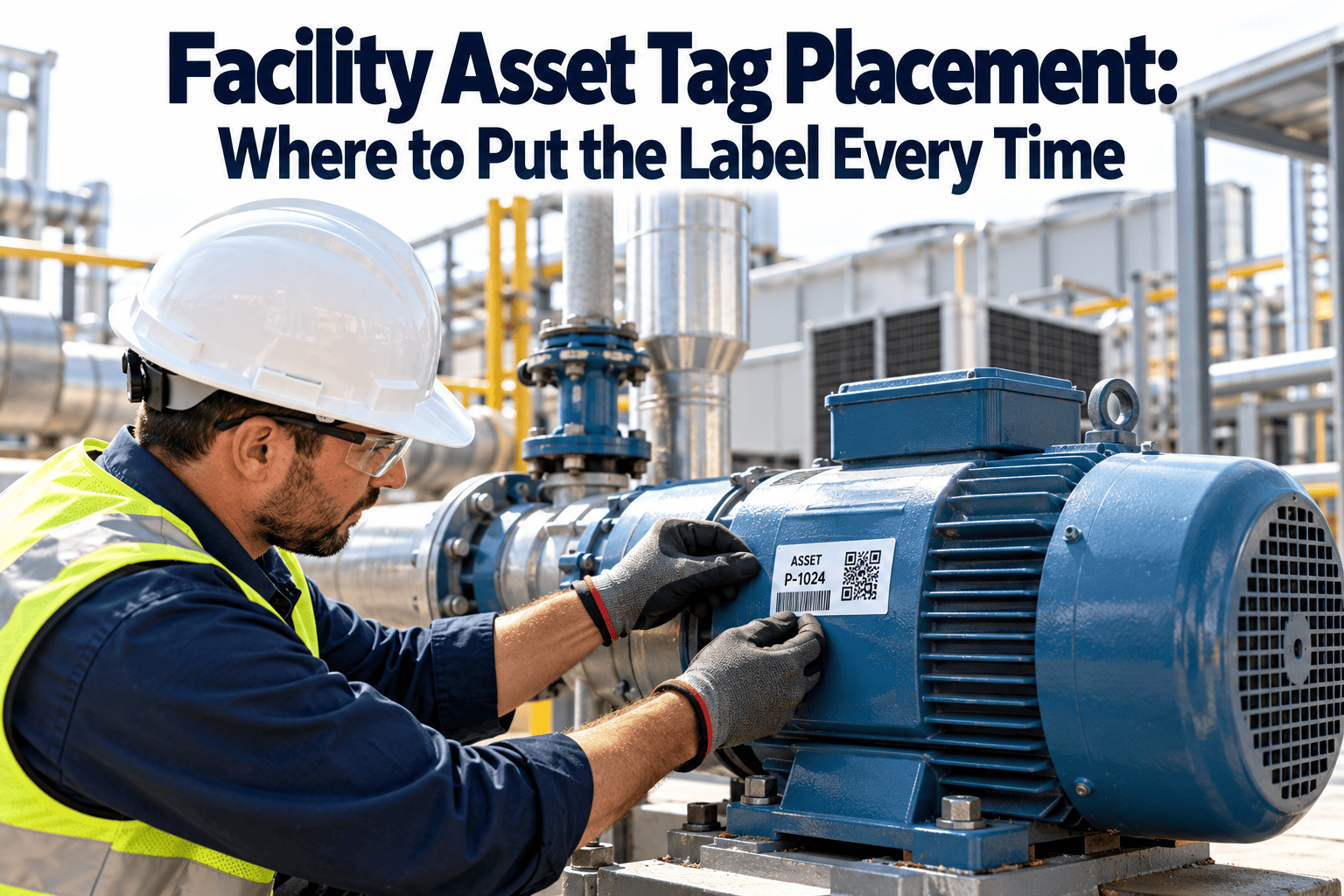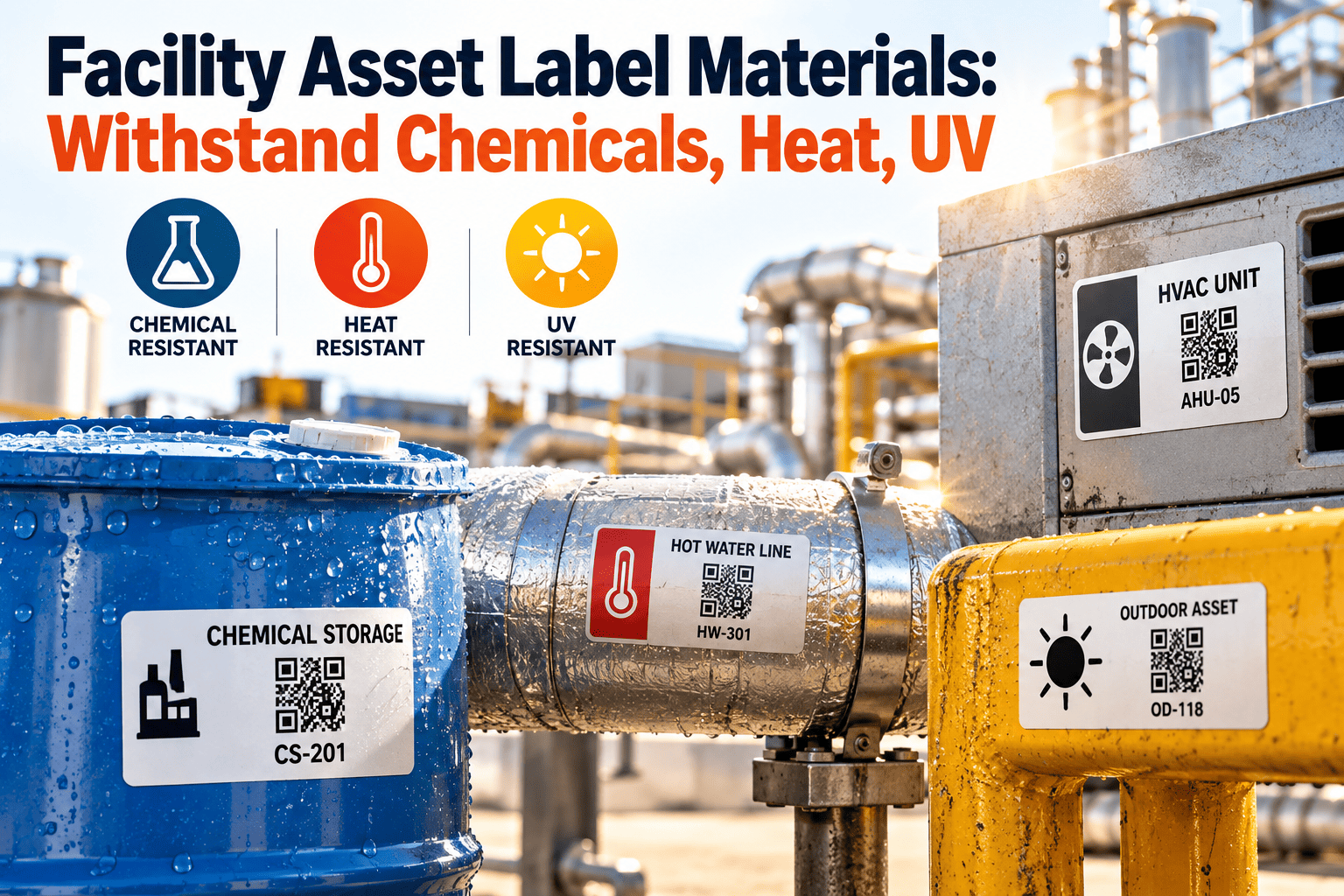
A facility asset tag has one job: stay readable for as long as the asset stays in service. Many do not. Standard paper or basic vinyl labels curl in mechanical rooms, fade on rooftops, and dissolve under cleaning chemicals, often within the first year. When the barcode or QR code stops scanning, work orders get attached to the wrong asset, audits slow down, and technicians go back to guessing. This guide compares polyester, polyimide, anodized aluminum and stainless options, explains how to match each to chemicals, heat and UV, and shows how a maintenance management system turns a durable tag into a reliable asset record.
Facility asset label materials: choose for chemicals, heat and UV, not for price per sheet
The cheapest label is usually the most expensive one once you count re-tagging labor, lost scans and unreadable assets. Start with the exposure, then pick the material that survives it.
How a cheap facility label fails, one stage at a time
Adhesive weakens
Heat, moisture or a dirty surface reduces grip within weeks.Edges lift
Corners curl and collect grease, dust and cleaning residue.Print degrades
UV and solvents fade text and thin out barcode modules.Scan fails
Scanners and phone cameras cannot decode the code.Asset goes untracked
History is lost, and work is logged against the wrong record.- Most failures start at the adhesive, not the facestock, so adhesive choice matters as much as material
- Labels that look fine to the eye can still fail a scan if contrast has dropped
- Replacement tagging is rarely budgeted, so the cost hides inside technician time
Profile the environment before choosing a material
Facility asset label materials side by side
| Material | Chemicals | Heat | UV and outdoor | Abrasion | Best fit |
|---|---|---|---|---|---|
| Paper | Poor | Poor | Poor | Poor | Short-term indoor use only |
| Vinyl | Moderate | Moderate | Moderate to good with laminate | Moderate | Conditioned spaces, general equipment |
| Polyester | Good | Good | Good when UV-rated | Good | Most plant rooms and many outdoor assets |
| Polyimide | Good | Very high | Moderate | Good | Boilers, ovens, hot piping, electronics |
| Anodized aluminum | Very good | Very high | Very good | Very good | Outdoor, harsh and long-life assets |
| Stainless steel | Very good | Very high | Very good | Very good | Fastened tags in extreme or corrosive areas |
Ratings are general guides. Confirm temperature, chemical and outdoor-life limits against the manufacturer datasheet for the exact product and adhesive.
From short-life to lifetime tags
What each durable material does well, and where it falls short
Polyester
- Strong resistance to moisture, many oils and common cleaners
- Prints well with thermal transfer and resin ribbons for sharp, smear-resistant codes
- Choose UV-stabilized grades outdoors, since standard grades can fade over time
Polyimide
- Tolerates much higher temperatures than polyester
- Useful where labels sit near burners, steam lines or heat-treated parts
- Costs more, so reserve it for locations where heat is the real threat
Anodized aluminum with photographic imaging
- The image is formed beneath a sealed anodic layer, so it resists scratching and chemical attack
- Suited to outdoor and long-life assets where re-tagging is difficult or costly
- Best applied with a matched adhesive or mechanical fasteners
Stainless steel and engraved tags
- Exceptional durability in corrosive or high-temperature settings
- Typically fastened with rivets, screws or wire rather than relying on adhesive
- Higher unit cost and slower to produce in volume
Tag every asset once, and keep it scannable
Durable labels only pay off when each code is linked to a complete asset record. Oxmaint connects scanned tags to work orders, inspections and maintenance history, so a good label becomes a good record.
Adhesive mismatch is the quiet cause of most peeling
Mismatched application
- General-purpose adhesive on powder-coated or textured metal
- Label applied to an oily, dusty or damp surface
- Standard adhesive on low-energy plastics such as polyethylene
- Label wrapped around tight curves without conformable stock
- Equipment placed in service before the adhesive finished curing
Matched application
- Adhesive chosen for the surface: smooth, textured, powder-coated or low-energy
- Surface cleaned and dried before application
- Firm pressure applied across the full label, especially at edges
- Application temperature within the adhesive range
- Cure time observed before washdown or heavy exposure
A durable label still needs a readable code
- Print with thermal transfer and a resin or wax-resin ribbon matched to the label material
- Keep quiet zones around barcodes and QR codes clear of text and borders
- Use high contrast, with dark code on a light background
- Size the code for scanning distance, with larger modules for high or hard-to-reach assets
- Include a human-readable asset ID beneath the code for manual entry
- Test-scan every label type with the scanners and phones your team actually uses
A five-step decision path for any asset
Identify the harshest exposure
Choose the dominant threat: chemicals, heat, UV or abrasion.Check the surface
Note the substrate, texture and whether it is painted, oily or curved.Estimate the service life
A five-year pump and a thirty-year air handler justify different materials.Weigh access difficulty
The harder an asset is to reach, the more a lifetime tag saves.Test before volume purchase
Validate on real surfaces and real conditions, then standardize.Run a simple coupon test before tagging the whole site
Measuring the real cost of a label program
Where Oxmaint fits once the label is on the asset
- Asset records hold location, class, documents and history behind each scannable code
- Technicians scan to open the asset, start a work order and complete checklists on mobile
- Inspection workflows can flag damaged or missing labels so replacements are scheduled
- Preventive maintenance schedules attach to the same asset identity across its life
- Reports show which areas generate the most tag-related corrective work
Teams ready to link tags to records can set up their asset register and begin with the most critical equipment.
What chemicals, heat and UV actually do to a label
Chemical exposure
- Solvents and degreasers soften adhesive and can smear weak inks
- Strong cleaners and caustic washdown solutions attack paper and basic vinyl facestock
- Fuel and oil splash is common around generators, pumps and compressors
- Resin-ribbon thermal transfer printing resists smearing far better than direct thermal printing
- Always test against the exact cleaning agents your custodial or sanitation team uses
Heat exposure
- Adhesive often fails before the facestock does, so check the adhesive temperature rating separately
- Surface temperature near burners, flues and steam lines can be far higher than room air
- Repeated heating and cooling cycles cause edge lift and shrinkage in lower-grade films
- Where a label cannot survive, a fastened metal tag on a standoff is safer than forcing adhesive
- Record the hottest nearby surface during commissioning so the right tag is chosen once
UV and weather
- Sunlight breaks down inks and brittle plastics, and dark codes on light stock lose contrast over time
- Rain, freeze-thaw cycles and wind-driven grit abrade unprotected surfaces
- Roof edges, curbs and exposed piping receive more weathering than sheltered equipment
- South-facing and unshaded assets deserve a higher material grade than shaded ones
- Photograph outdoor tags annually to track fade before the code becomes unscannable
Installing labels so the material can do its job
Prepare the surface
Remove dust, oil and moisture. Use a cleaning solvent approved for the label adhesive and let it fully evaporate.Choose a flat, visible location
Avoid seams, welds, vibration hot spots and spots that technicians will cover with insulation or guards.Apply with firm, even pressure
Work from the center outward to avoid trapped air, and press edges down carefully.Allow the adhesive to set
Many pressure-sensitive adhesives continue to build strength for a day or more. Delay washdown until the bond matures.Scan and register immediately
Confirm the code reads and links to the right asset record before leaving the equipment.Label program errors that cost the most
- Buying one material for the whole building and expecting it to suit every room
- Testing labels on a clean bench instead of on real, dirty, curved equipment
- Ignoring the adhesive rating while focusing only on the facestock datasheet
- Printing with direct thermal stock in areas with heat, light or cleaning chemicals
- Placing labels where insulation, guards or paint crews will cover or damage them
- Skipping a periodic label condition check during routine inspections
- Failing to record which label material was installed, which makes later upgrades guesswork
- Relying on a supplier brochure rating without confirming it against your own site conditions and cleaning routine
- Mixing several label sizes and code formats, which confuses scanners and slows technician workflows
Treat asset identification labels separately from safety and regulatory signage, which have their own legibility and durability requirements set by the applicable standards.
Where it is worth paying more for a better label
Spend more when
- The asset stays in service for a decade or longer
- Access needs a lift, scaffold, shutdown or permit
- The location involves heat, chemicals or direct sun
- The asset is critical or covered by compliance records
Spend less when
- The asset is short-lived or easily replaced
- The room is conditioned, clean and dry
- The label is easy to reach and inexpensive to re-apply
- The asset is low-risk and rarely serviced
Build a label specification your whole team can follow
- Define two or three approved label types by environment, such as indoor plant room, outdoor exposed and high heat
- Specify material, adhesive, size, code type and ribbon for each type so purchasing stays consistent across sites
- Assign an owner for label printing, so codes follow one naming convention and never duplicate
- Store the label type on the asset record, which makes future audits and upgrades much faster
- Add label condition to the routine inspection checklist, with a simple pass or replace result
- Review the specification yearly against re-tag data, and move problem areas up a material grade
- Keep a small stock of each approved label type on site, so a damaged tag is replaced during the same visit
- Train technicians on surface preparation, because even the best material fails when applied to a dirty surface
Facility asset label materials: common questions
Which label material is best for outdoor facility assets?
Anodized aluminum or UV-rated polyester suit most outdoor tags. Review the datasheet for expected outdoor life and tracking in your asset system.
What label works near boilers and hot piping?
Polyimide, anodized aluminum or stainless tags handle high heat. Mount them away from direct flame or contact where possible.
Why do polyester labels still peel sometimes?
Usually the adhesive does not match the surface, or the surface was dirty or damp. Clean, dry and press firmly.
Are QR codes or barcodes better on durable labels?
Both work if printed with high contrast and clear quiet zones. QR codes tolerate small damage better in many cases.
How do I plan a label rollout across sites?
Pilot by environment, standardize materials, then book a demo to map tags to records.
Stop re-tagging assets that should have been tagged once
Pair the right label material with a maintenance system that remembers every asset. Build your register in Oxmaint, or see a walkthrough tailored to your environments.