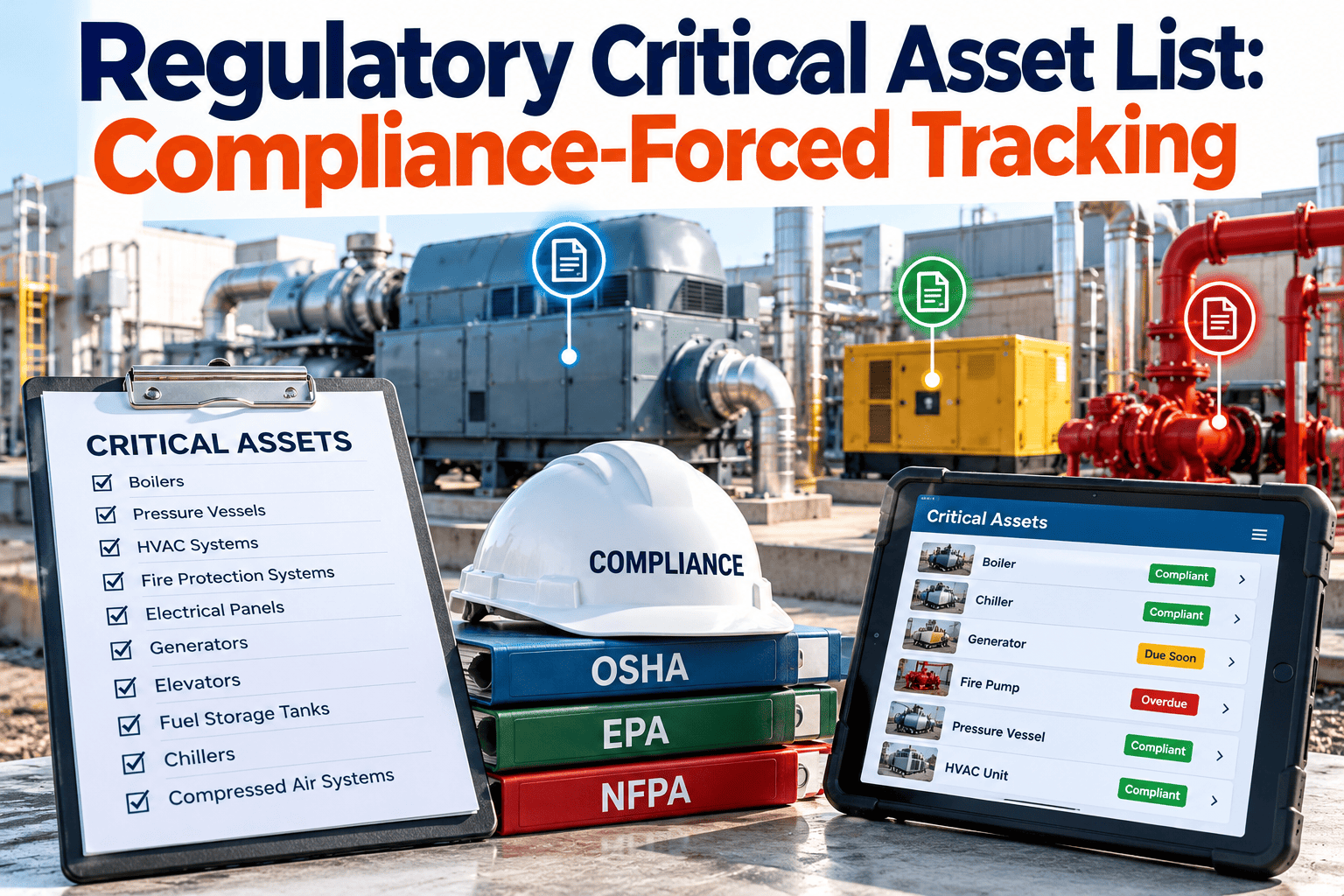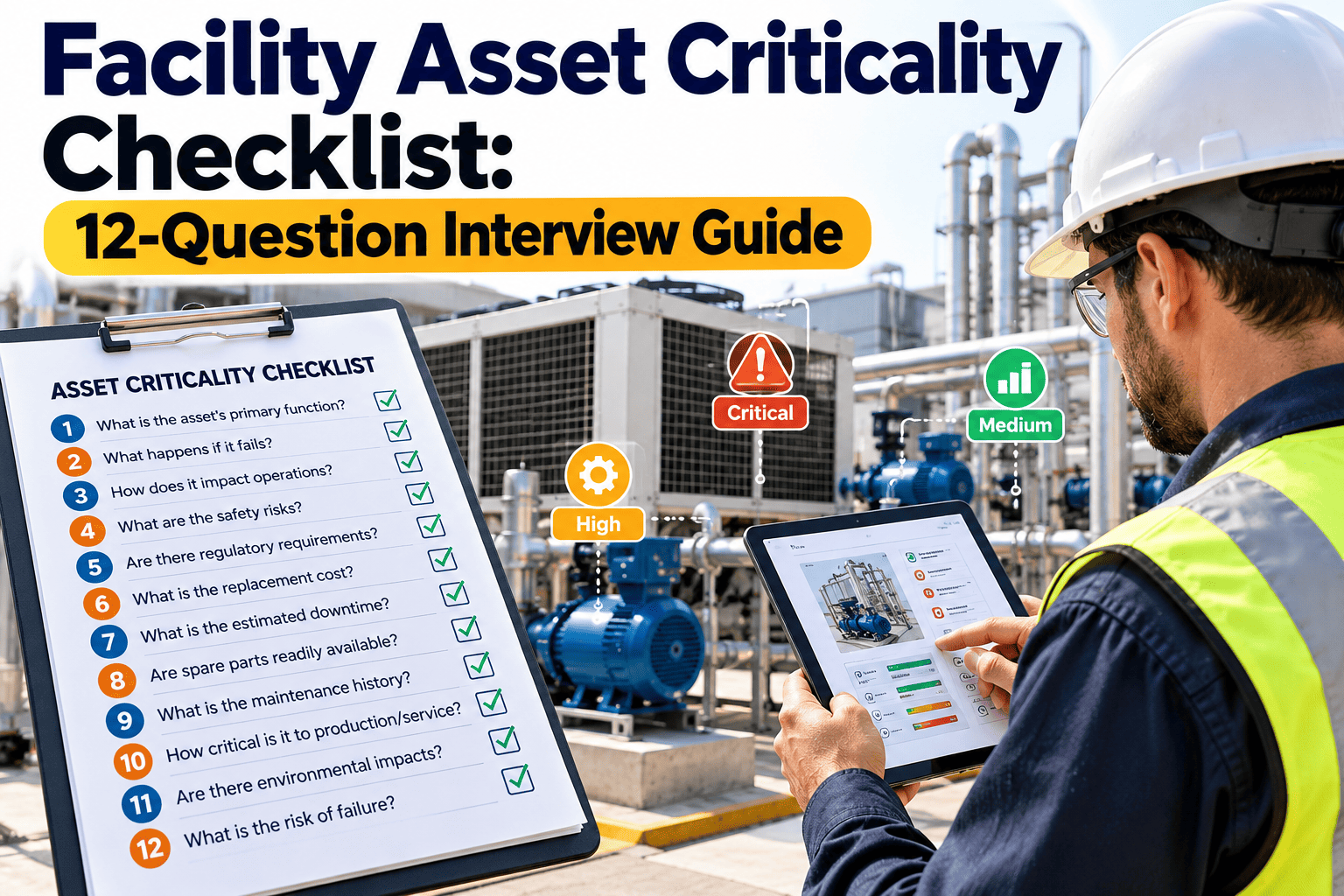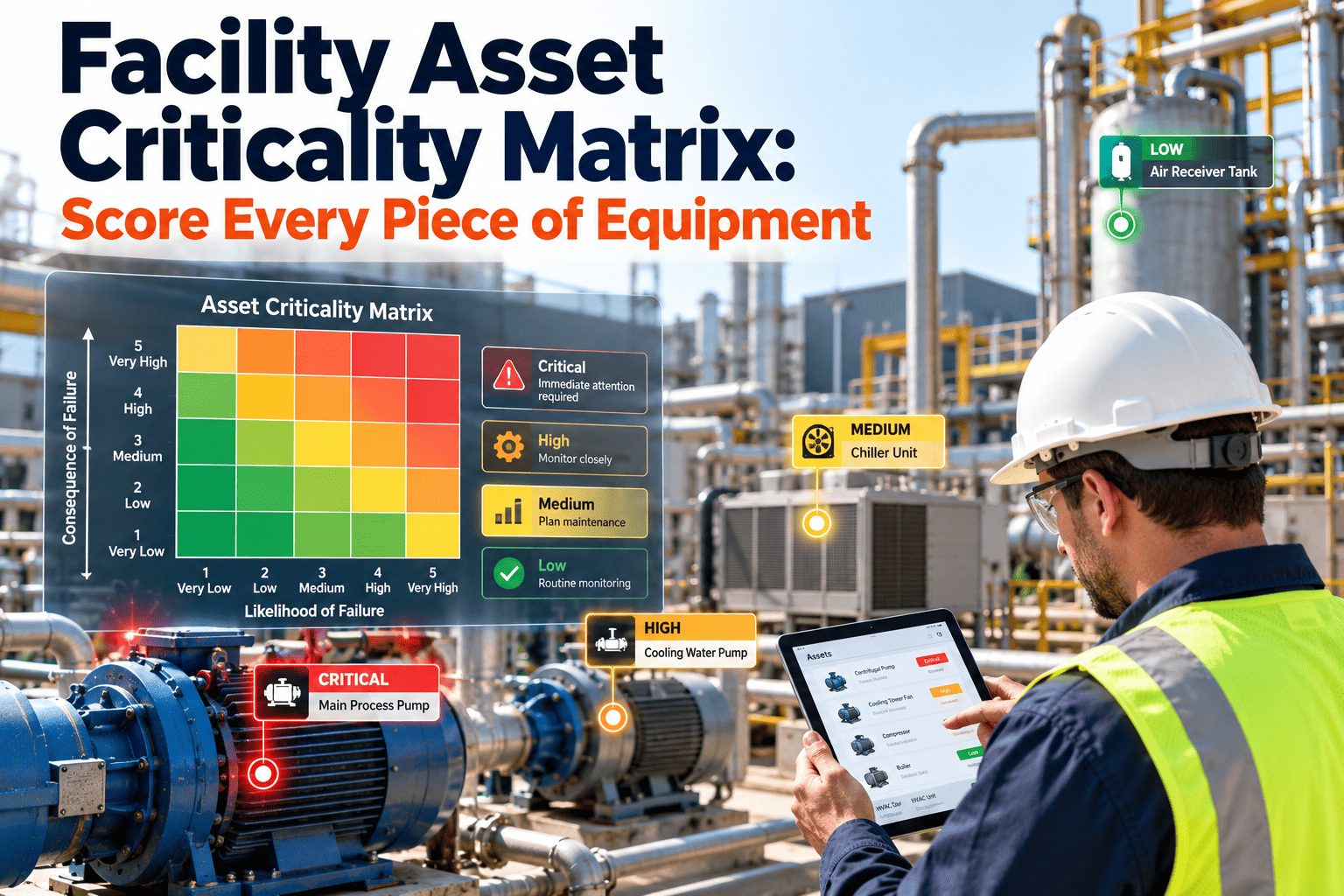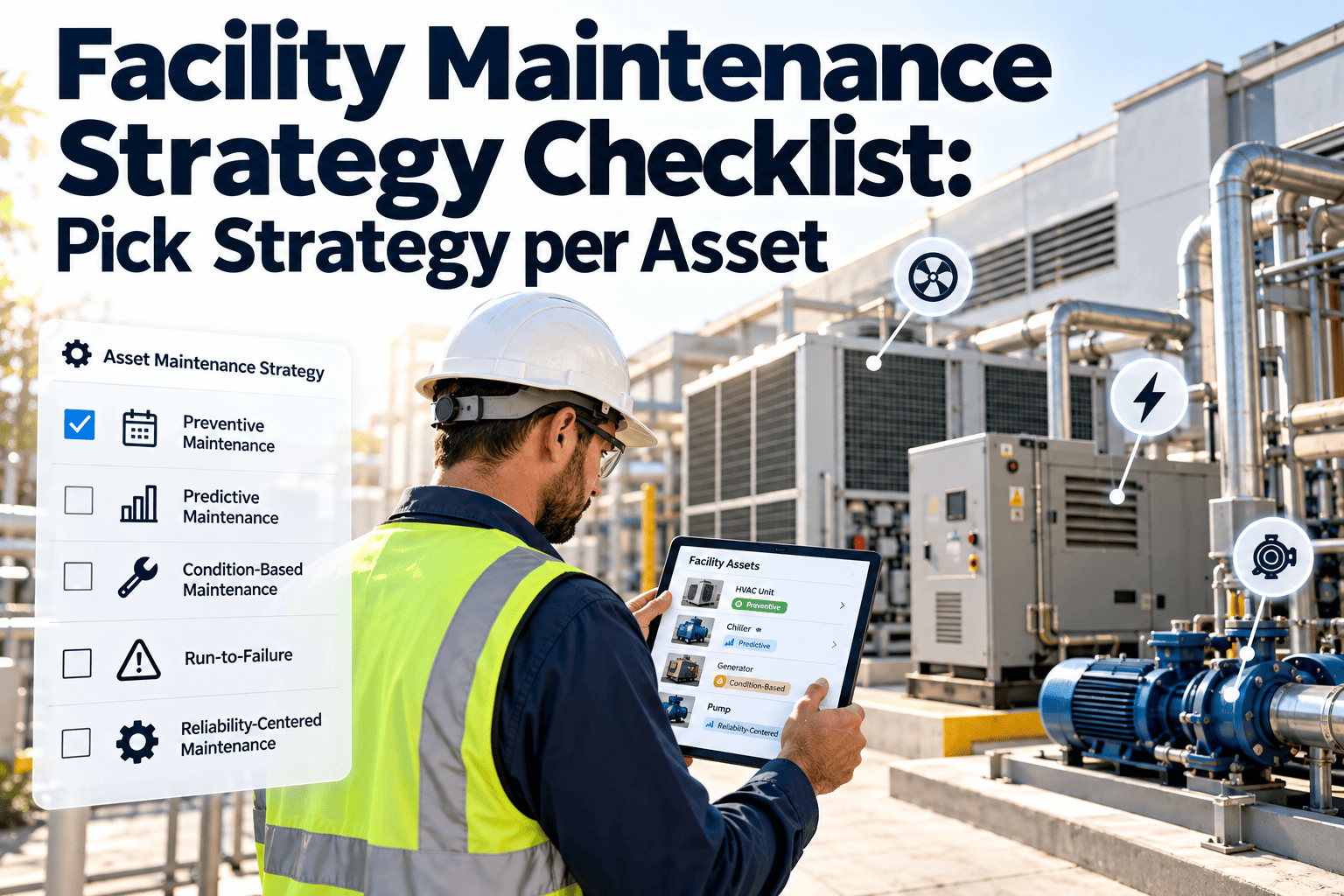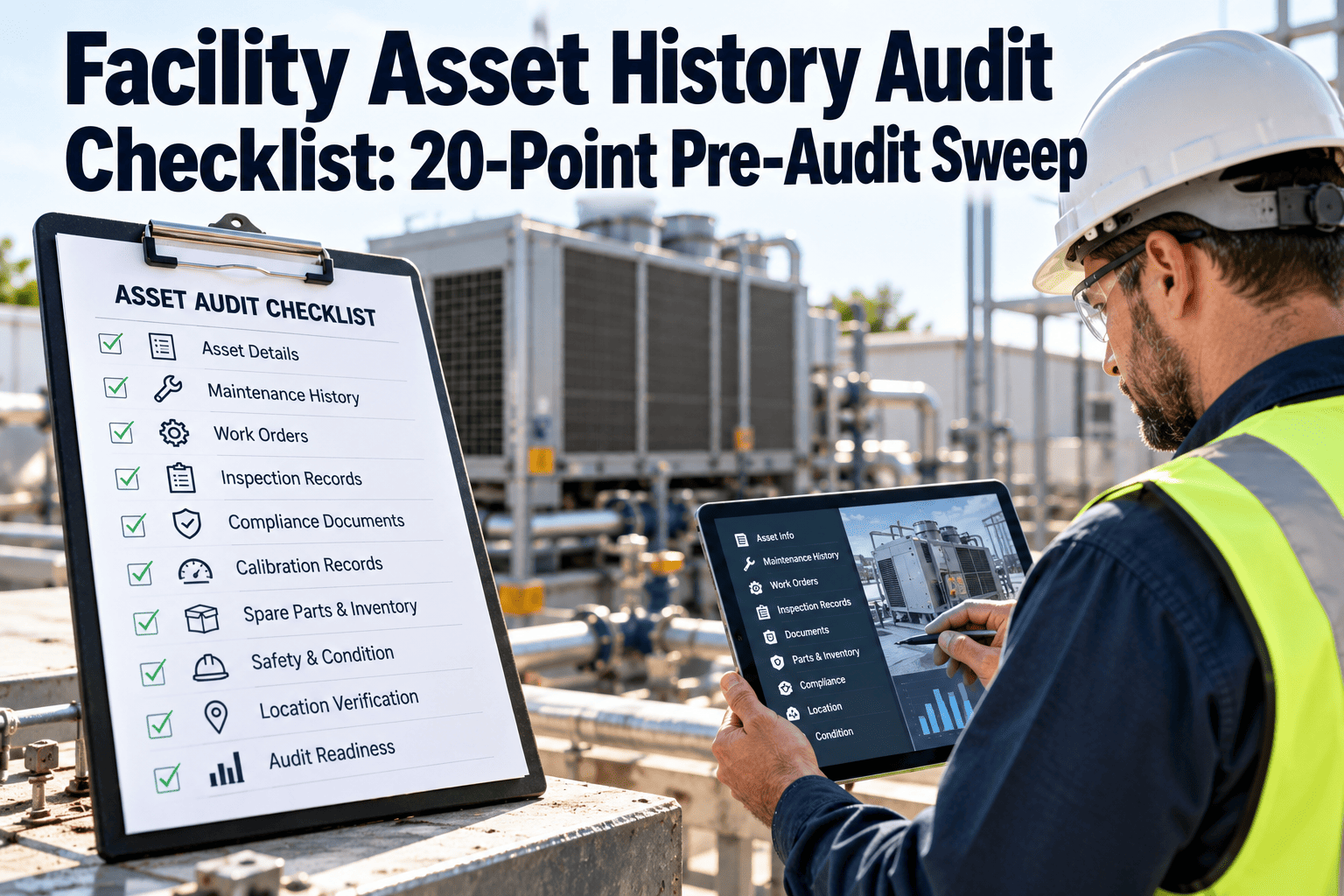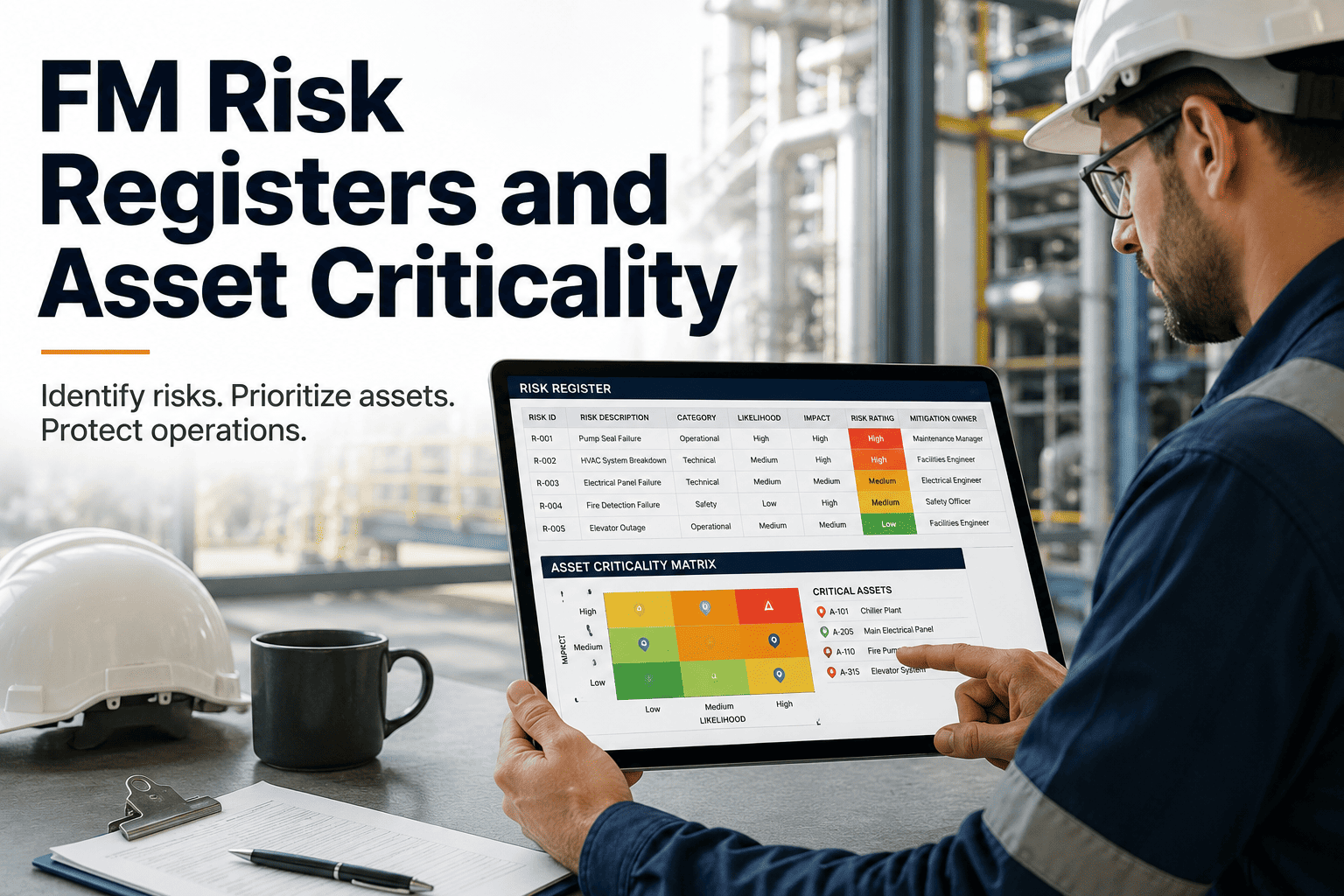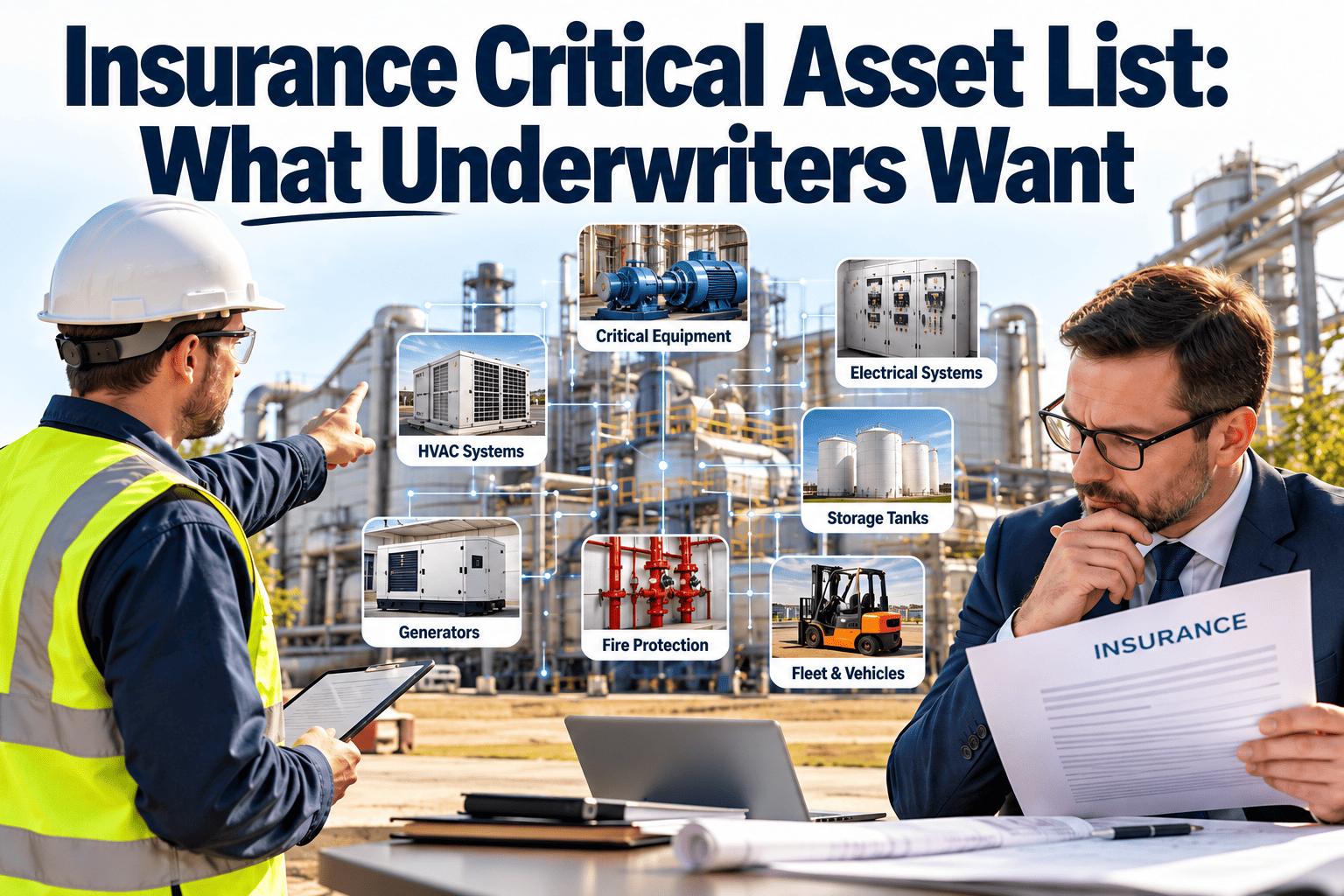
A property underwriter reviewing a commercial building does not care about your full asset register. They care about a short list of systems that determine whether a claim happens at all — sprinklers, backflow preventers, electrical panels, and roof condition near the top of that priority list. Facility teams that can produce inspection records for that specific list, on demand and without a scramble, tend to see fewer surprises at renewal time. A CMMS that already holds those inspection records turns a renewal request from a scramble into an export.
The insurance critical asset list: what underwriters actually want tracked
Commercial property underwriters, guided by frameworks like FM Global's loss prevention data sheets and IRMI risk criteria, focus on a specific, fairly consistent set of building systems. Here is what they look for, why it affects your premium, and how to keep the records ready year-round instead of scrambling the week before renewal.
Underwriting risk is not the same as operational risk
A facility team's critical asset list is usually built around uptime and tenant impact. An underwriter's list is built around loss frequency and severity — the systems most likely to cause a large fire, water, or liability claim — and mixing the two up is a common reason facility teams get caught off guard at renewal time.
Fire protection drives premium more than almost anything else
Sprinkler system impairments, whether from a closed valve or an overdue inspection, are one of the most common findings that trigger a coverage question at renewal.
Water damage is the most frequent commercial claim type
Backflow preventers, roof condition, and plumbing shutoff accessibility get disproportionate underwriter attention because water claims happen far more often than fire.
Undocumented maintenance reads as unmanaged risk
An underwriter cannot distinguish between a well-maintained system with lost paperwork and a poorly maintained one — both look the same on a renewal questionnaire.
Systems that show up on nearly every property risk survey
Not every asset in your CMMS matters to a property underwriter. These are the categories that consistently appear on commercial risk surveys, loosely following the structure FM Global and other insurers use in their own loss prevention data sheets.
| System | What Underwriters Ask For | Typical Record Needed |
|---|---|---|
| Fire sprinkler system | Inspection, testing, and impairment history | NFPA 25 inspection reports, valve tag log |
| Fire pump | Weekly churn test and annual flow test results | Test logs with pressure and flow readings |
| Backflow preventers | Annual certified test results | Certified tester report per device |
| Roof condition | Age, membrane type, and last inspection findings | Roof survey report and repair history |
| Main electrical switchgear | Infrared scan results and last maintenance date | Thermography report, NFPA 70B service record |
| Emergency generator | Load bank test and run-time log | Monthly test log, annual load test report |
| Fire alarm and detection | Annual certification and device testing | NFPA 72 inspection and testing certificate |
| Elevators and escalators | Code inspection certificate status | State or local inspection certificate |
What the loss prevention terminology actually means
A property risk survey report can read like it was written for another engineer, not a facility manager. A few terms show up repeatedly and are worth translating in advance.
Recommendation
A specific corrective action the underwriter wants completed, usually with a priority level and a deadline, distinct from a general observation with no required response.
Impairment
A fire protection system that is temporarily out of service, such as a sprinkler valve closed for repair, which typically requires notifying the insurer under a formal impairment procedure.
Probable maximum loss
An underwriter's estimate of the worst realistic loss a property could sustain from a single event, heavily influenced by fire protection adequacy, building construction, and the presence of firewalls or compartmentation between occupancies.
How a gap in this list actually affects a policy
A missing inspection record rarely voids a policy outright, but it changes the conversation at renewal in ways that cost real money and consume real time from the facilities and risk management teams involved.
Underwriter flags the gap during survey
A risk engineer visiting the property, or reviewing a self-survey questionnaire submitted by the facility team, notes missing or overdue records against the critical asset list.
Recommendation is issued with a deadline
Most carriers issue a formal recommendation with a 30, 60, or 90-day correction window rather than declining coverage outright.
Premium or terms shift if it is not resolved
Unresolved recommendations commonly show up as a premium surcharge, a coverage sublimit, or a non-renewal notice at the next cycle.
A claim after a known gap complicates the payout
If a loss occurs on a system with a documented, unresolved recommendation, the claims process becomes materially harder to navigate, and coverage disputes become more likely even when the policy is technically still in force.
A missed backflow test turns into a renewal condition
Consider a mid-size retail property with an annual backflow test that lapsed by four months because the certified tester's contract expired unnoticed.
Secondary systems that surface on larger or higher-hazard properties
Warehouses, manufacturing sites, and properties with higher-hazard occupancies typically see a longer survey list than a standard office building. A few categories show up often enough to plan for in advance.
Racking and storage arrangement
Aisle width, storage height relative to sprinkler design, and commodity classification affect fire loading calculations that underwriters use to set sprinkler adequacy expectations.
Hot work and flammable storage controls
Permit programs for welding and cutting, along with flammable liquid storage cabinets and quantities, are common line items on industrial property surveys.
Emergency shutoff and utility isolation
Clearly labeled and accessible gas, water, and electrical shutoffs reduce loss severity during an incident and are often checked during a site visit.
Preparing for a risk engineer site visit
Larger properties or higher-value schedules often trigger an in-person risk engineer visit rather than a paper questionnaire. A little preparation changes how that visit goes.
Pull the critical asset list first
Have inspection records for fire protection, backflow, roof, and electrical systems organized and printable before the engineer arrives, not assembled during the walkthrough.
Walk the fire pump and sprinkler riser room
Confirm valve tags are legible, gauges are functioning, and the room is clear of storage — a cluttered sprinkler riser room is a common visual red flag on a survey.
Resolve prior recommendations before the visit
An engineer who sees a prior recommendation already closed out, with a record attached, builds more confidence than one who finds the same open item two years running.
Have a point of contact who knows the building
A facilities lead who can answer specific questions about system age, past incidents, and maintenance history in real time speeds the visit and avoids follow-up requests.
Stop scrambling for records the week before renewal
Keep inspection and test records for every critical-asset category current and exportable, all year, not just at policy renewal.
Assigning responsibility before the gap becomes a surprise
On many properties, insurance compliance records fall into a gap between the facilities team, the property manager, and an outside broker, with each assuming someone else is tracking test dates. Naming a single owner for the critical asset list, even on a small property, closes that gap before it turns into a renewal-week scramble.
Facilities team owns the schedule
Since the facilities team already runs preventive maintenance, folding compliance testing into the same recurring schedule keeps ownership with the people doing the work.
Property manager owns the renewal timeline
Someone needs to track the policy renewal date and trigger the ninety-day self-audit, which is usually the property or asset manager rather than the maintenance lead.
Broker owns the underwriter relationship
The broker translates facility records into the format an underwriter expects and flags which open recommendations carry the most weight going into a renewal conversation.
A short checklist for staying renewal-ready
Most of this is not complicated — it is about making sure the right records exist and are easy to find when someone asks for them on short notice.
Confirm every fire protection, life-safety, and backflow device has a named recurring test schedule, not just a one-time record.
Store certified test reports against the specific asset or device, not in a general shared folder that is hard to search under deadline.
Track roof age, membrane type, and last inspection date as asset attributes, since underwriters ask for this by property, not by work order.
Log generator load tests and fire pump churn tests with actual readings, not just a completion checkbox.
Run a self-audit against the critical asset list ninety days before renewal so gaps get fixed before the underwriter finds them.
Keeping the critical asset list audit-ready by default
The goal is not a separate insurance binder — it is making sure the compliance records underwriters ask for are a natural byproduct of maintenance work that is already happening across the property or portfolio.
Compliance-critical assets flagged in the register
Fire, life-safety, and backflow devices can be tagged as compliance-critical so their inspection status is visible on a dashboard, not buried in a general asset list.
Recurring inspections generate their own record
Each scheduled test or inspection produces a linked record with technician sign-off, readings, and attached certificates tied to the asset.
Overdue items surface before renewal, not during it
A dashboard view of overdue or upcoming compliance inspections lets a facility manager close gaps weeks ahead of a broker's records request, rather than discovering them the same week the renewal package is due.
Exportable history for the renewal questionnaire
Inspection history by asset and property can be pulled directly into the format most brokers and underwriters request at renewal time.
Rolling the critical asset list up across multiple properties
A single building can track its critical asset compliance in a spreadsheet if it has to. A portfolio of a dozen properties on a master insurance policy cannot, because a gap at any one site can affect renewal terms for the whole schedule.
Consistent tagging across sites
The same compliance-critical categories — fire, backflow, roof, electrical — need to be tracked identically at every property, or portfolio-level reporting becomes an exercise in reconciling different spreadsheets.
A single view of overdue items
A regional facilities manager overseeing several buildings needs one dashboard showing every overdue compliance inspection, ranked by property, rather than checking each site's records individually.
Vendor and contractor records in one place
Certified testers for backflow devices and fire systems often serve multiple properties on a portfolio — tracking their certification and report submission centrally reduces the chance a report gets misfiled at the wrong site.
One export for the broker's renewal package
Brokers assembling a renewal submission for a schedule of properties need consistent, exportable data across every site, not a mix of formats collected from different building managers.
Insurance critical asset tracking — answered
Is the underwriter's critical asset list the same at every insurer?
The core categories — fire protection, backflow, roof, electrical, and life safety — are consistent across most commercial carriers, though the specific survey format and thresholds vary by insurer and property type.
Does missing paperwork actually raise premiums, or just create a recommendation?
An unresolved recommendation after the correction deadline commonly leads to a premium surcharge, a coverage sublimit, or non-renewal, depending on the carrier and the severity of the gap. Resolving it promptly with documentation usually avoids all three.
Who typically requests these records — the insurer or the broker?
Usually the broker collects documentation on behalf of the underwriter ahead of renewal, though larger properties or higher-value schedules may receive a direct risk engineer site visit instead of, or in addition to, a paper questionnaire.
How far in advance should records be reviewed before renewal?
Ninety days is a reasonable window to identify and correct gaps, since certified testers and inspection vendors often need lead time to schedule a visit, especially for backflow and fire system testing during busy seasons.
Can this list overlap with our regular preventive maintenance program?
It should. The most efficient approach treats compliance testing as a subset of the existing PM schedule rather than a separate insurance-only process. Get Started to see both tracked in one place.
Walk into your next renewal with the records already pulled
Tag your compliance-critical assets, schedule their recurring inspections, and export the history whenever a broker asks.
Free 14-day trial · No credit card