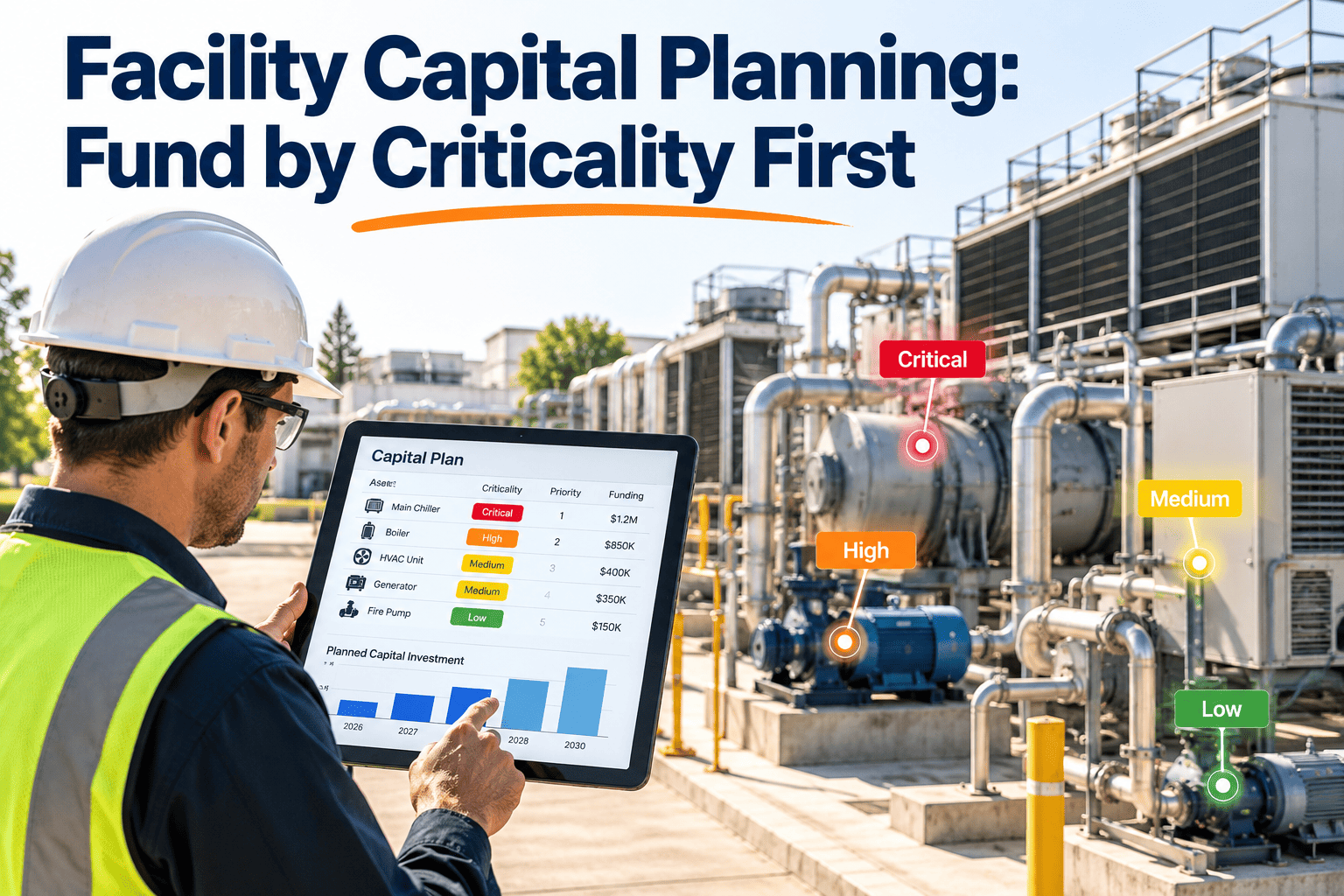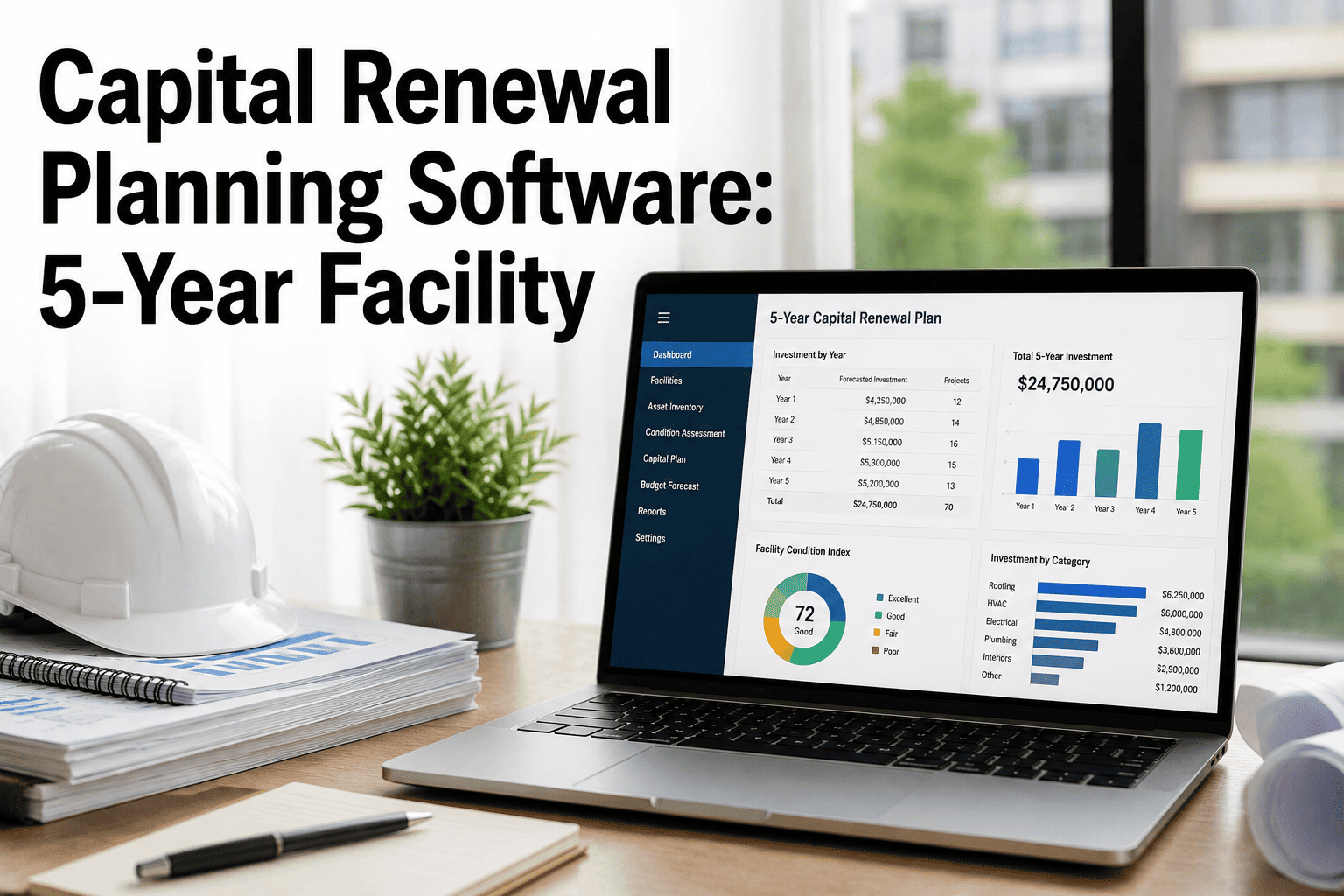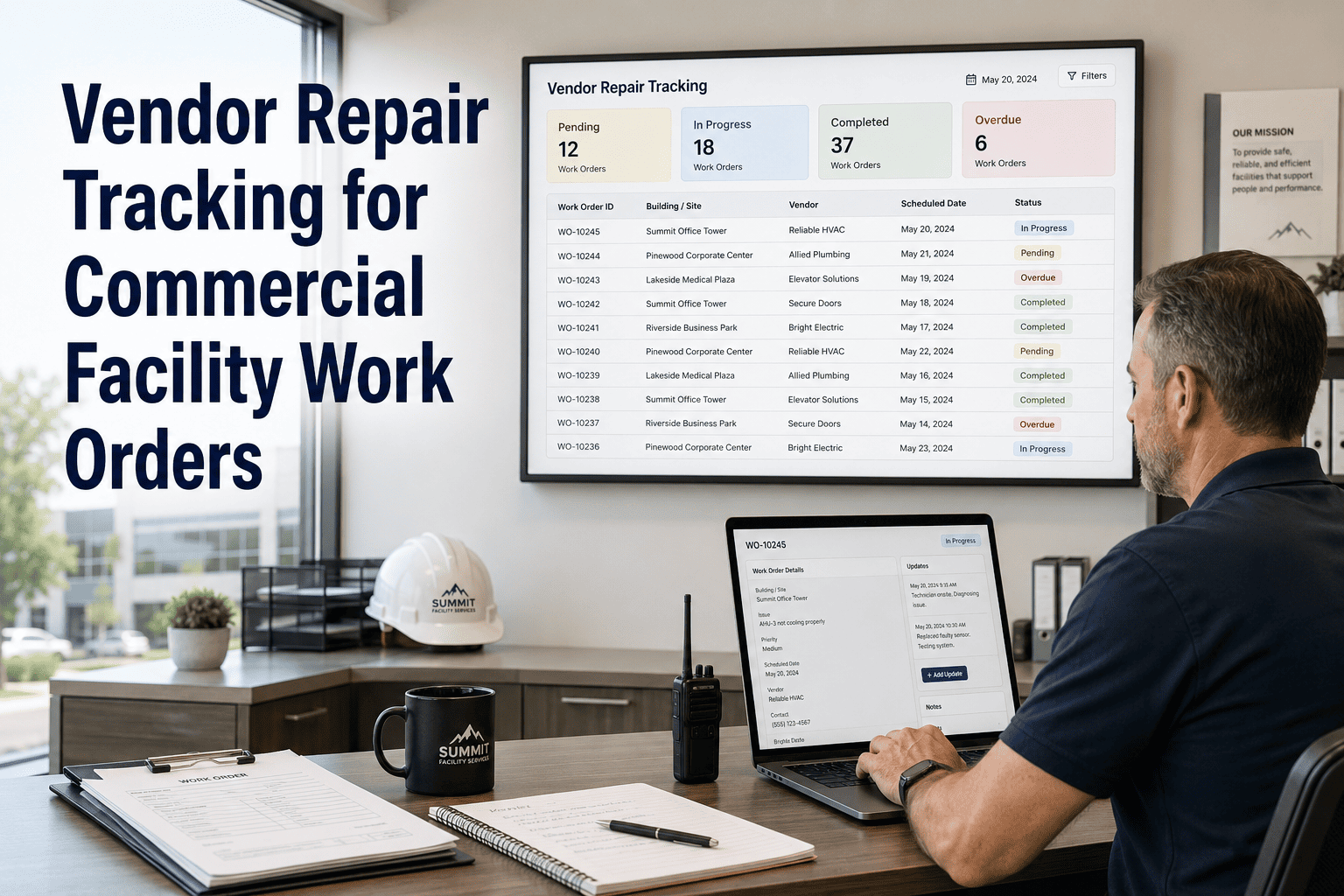
Deferred maintenance rarely fails because nobody knows about it. It grows because annual operating budgets cannot absorb roof replacements, chiller overhauls and electrical upgrades all at once. The Facility Condition Index (FCI) puts a number on that gap, and long-term bond financing is one way owners spread the cost of renewal across the years the assets will serve. This guide explains what bonds can and cannot fund, how the structure works, and what maintenance records lenders expect, with a look at how a CMMS keeps that evidence organized.
FCI Bond Financing: Fund Deferred Maintenance With Long-Term Debt
Turn a rising deferred maintenance balance into a staged capital plan. Tie every financed dollar to an asset, a condition finding and a measurable FCI improvement.
Why the FCI is the starting point for any bond discussion
What the ratio measures
FCI divides the cost of deferred maintenance and needed repairs by the current replacement value of the facility or portfolio. A lower ratio means a healthier asset base. Organizations set their own bands, but a common reading treats single digits as good, the low teens as fair, and anything well above that as a sign of systemic underinvestment.
Why lenders and boards care
A bond request built on a vague statement that "the buildings are old" invites questions. A request built on an itemized backlog, dated condition assessments and a ratio that trends over several years is easier to evaluate and to defend in a public or board setting.
Illustrative calculation
Operating budget versus bond: where each tool fits
| Question | Annual operating budget | Long-term bond financing |
|---|---|---|
| Best suited for | Routine PM, small repairs, consumables, recurring service contracts | Large renewals with long useful lives, such as roofs, central plant, building envelope and major electrical or HVAC replacement |
| Cost timing | Paid in the year the work occurs | Spread over the debt term through scheduled payments |
| Approval path | Normal budget cycle | Board, council or governing body, plus finance and legal review |
| Main risk | Backlog keeps growing because renewals lose to daily needs | Debt service competes with future budgets, and neglected upkeep shortens the life of the financed asset |
| Evidence needed | Work order history and budget justification | Condition assessments, scope, cost estimates, useful life and a maintenance plan for the financed assets |
Bonds fund renewal. They do not replace the preventive maintenance budget that keeps the renewed asset alive.
What typically qualifies and what usually does not
Eligibility depends on the issuer type, the governing documents and the accounting treatment, so confirm every item with finance staff and bond counsel. The split below reflects common practice rather than a rule.
Commonly financed
- Roof system replacement
- Chillers, boilers and air handling replacement
- Electrical switchgear and distribution renewal
- Building envelope and window renewal
- Life-safety and fire protection system upgrades
- Accessibility and code-driven capital work
Commonly kept in operating funds
- Scheduled PM labor and inspections
- Filters, belts, lubricants and consumables
- Minor repairs and call-out response
- Routine cleaning and grounds care
- Short-life items that wear out before the debt is repaid
- Work with no documented condition finding
Match the debt term to the life of what you finance
The core discipline in facility borrowing is simple: the asset should outlive the debt. A bond that runs longer than the useful life of the component means paying for something already worn out. Useful lives vary by product, climate and duty, so use manufacturer data and your own failure history.
Blending projects in one issue
When a single bond covers several asset types, weigh the average useful life of the funded scope against the maturity schedule. Some issuers split the package so shorter-lived components mature sooner.
How the financing structure works
Assess
Complete condition assessments, record deficiencies and calculate FCI by building and system.
Scope and cost
Build project scopes with estimates, contingencies and expected useful life after renewal.
Structure
Work with finance advisors on instrument type, term, repayment source and reserves.
Approve and issue
Obtain governing body approval, then move through legal documents and market sale.
Execute and report
Deliver work against the plan and report spending, schedule and FCI movement.
Instruments you may hear about
General obligation bonds
Backed by the issuer's taxing authority, common for public owners such as school districts and municipalities.
Revenue bonds
Repaid from a defined revenue stream, such as fees from a facility or enterprise.
Lease-based structures
Certificates of participation and similar arrangements tie payments to a lease on the financed property.
Bank loans and private placements
Can suit smaller programs where a full public offering is not practical.
Build the asset evidence your capital request depends on
Oxmaint keeps assets, inspections, work orders and maintenance history in one place so condition findings and spending records are ready when finance asks for them.
Rate mechanics that facility leaders should understand
Credit quality
Stronger credit generally lowers borrowing cost. A credible plan to manage the asset base can support the story, though pricing is set by the market and issuer fundamentals.
Tax status
Tax-exempt borrowing by public entities usually carries lower rates but brings rules on how quickly and for what purposes proceeds are spent. Bond counsel owns this analysis.
Term and structure
Longer maturities lower annual payments but increase total interest. Level and declining payment schedules change the budget profile.
Reserves and covenants
Some deals require reserve funds or coverage tests, which affect how much of the issue reaches actual projects.
A note on specific rates
Rates move daily and differ by issuer, so this guide gives none. Ask your municipal advisor or lender for current indications before any internal business case quotes a number.
Risk view: where bond-funded renewal programs go wrong
| Risk | How it shows up | Control |
|---|---|---|
| Weak condition data | Scope grows after approval and estimates miss | Dated assessments tied to individual assets and locations |
| Maintenance left unfunded | New equipment fails early because PM was skipped | Commit PM budgets for financed assets before issuing debt |
| Term longer than life | Payments continue on components already replaced | Match maturities to useful life by asset class |
| Poor spend tracking | Cannot show where proceeds went | Project coding on work orders and capital records |
| Priority drift | Visible projects displace the highest-risk ones | Documented ranking criteria reviewed by a cross-functional group |
Before and after: the same backlog, two approaches
Without a financing plan
- Repairs compete with daily needs every budget cycle
- Failures set the priority order
- Emergency spend rises as components age
- The board sees a growing number with no path to reduce it
With a staged capital program
- Renewal scope is ranked by risk and condition
- Cost is spread across the life of the assets
- PM protects each completed project
- FCI is re-measured and reported against the plan
The bond-ready project package: a checklist
Asset register
Every financed component identified by building, system and location with install date and condition grade.
Condition evidence
Inspection findings, photos and failure history that justify replacement over repair.
Cost basis
Estimates with contingency and an expected useful life for each renewed system.
Maintenance commitment
The PM plan and annual budget that will protect the new assets.
Reporting plan
Defined metrics: FCI by building, spend against scope, schedule status and work order data.
Where maintenance software supports the process
Before issuance
A CMMS such as Oxmaint holds the asset register, inspection records and corrective work history that support deficiency lists. Inspections capture condition findings as they occur, and work order history shows which assets keep consuming repair spend.
After funding
Preventive maintenance scheduling protects renewed equipment. Work orders can carry project references, inventory tracking supports spare parts, and dashboards report backlog and compliance to the people overseeing the program.
Records lenders and boards ask for
- Asset age and condition by system
- Corrective work history per asset
- PM compliance after renewal
- Spend tied to approved projects
Metrics to track once the money is spent
Sequencing the work: an illustrative three-year program
Spending bond proceeds in a sensible order protects both service and the credit story. The sequence below shows the logic, not a recommendation for any specific portfolio.
Year one: life safety and envelope
Address fire protection, water intrusion and failing roofs first. They cause secondary damage and carry regulatory risk. Package scopes so bids can be compared fairly.
Year two: plant and distribution
Replace chillers, boilers and switchgear that show rising repair cost. Plan shutdowns around tenant or operational needs to avoid emergency windows.
Year three: controls and interiors
Tackle shorter-life items once the backbone is sound, and confirm they fit the maturity schedule before including them in the issue.
Throughout: maintenance handover
Add each completed project to the PM schedule at commissioning, with warranty dates, manuals and baseline readings recorded.
Governance after the bond is issued
Spend tracking by project
Code purchase orders, contractor invoices and internal labor to the approved project, so proceeds can be traced from issuance to the finished asset.
Change control
Set a threshold above which scope changes need approval, and record the reason. Silent substitutions weaken the link between the plan and the debt.
Commissioning and warranty records
Keep start-up reports, warranty terms and serial numbers with the asset so early failures are claimed rather than paid for twice.
Periodic reporting
Report spend against scope, schedule status and FCI movement to the governing body on a fixed cycle, using the same definitions each time.
Keep legal and tax questions with the right people
Rules on how proceeds may be spent, reimbursed or invested differ by issuer and instrument. Facility teams should supply accurate project data and leave the compliance interpretation to bond counsel.
Questions boards and lenders tend to ask
- How was the deferred maintenance figure calculated, and when were the assessments done?
- Which projects address safety or code risk, and which are discretionary?
- What is the expected useful life of each renewed system?
- How will preventive maintenance be funded once the assets are renewed?
- What happens to FCI if the program is only partly funded?
- How will cost overruns and scope changes be controlled?
- What reporting will the governing body receive after issuance?
Why the answers live in maintenance data
Most of these questions are answered by records the maintenance team already creates: asset ages, inspection findings, repair histories and PM compliance. Keeping them current is what turns a financing request into a credible, defensible plan.
Frequently asked questions
Can deferred maintenance be paid for with bonds?
Often the capital renewal portion can, such as roof or plant replacement, while routine upkeep stays in operating funds. Eligibility depends on your issuer type and accounting rules, so confirm with finance and bond counsel.
What FCI level justifies borrowing?
There is no universal trigger. Boards usually look at the trend, the risk of critical systems and the size of the backlog together. A CMMS like Oxmaint helps document these inputs.
How long should the bond term be?
It should not exceed the useful life of the assets financed. Long-life items like roofs and plant suit longer terms, while short-life components fit shorter ones.
Does financing replace preventive maintenance?
No. Renewed assets still need scheduled PM and inspections to reach their full life, and many issuers expect to see that commitment.
How do I report progress after issuance?
Track FCI by building, spend against scope and PM compliance on renewed assets. You can book a demo to see how dashboards present these.
Make your renewal case with records, not estimates
Document condition, rank projects, protect new assets with preventive maintenance and report results. Oxmaint gives facility teams the maintenance data behind a credible capital plan.