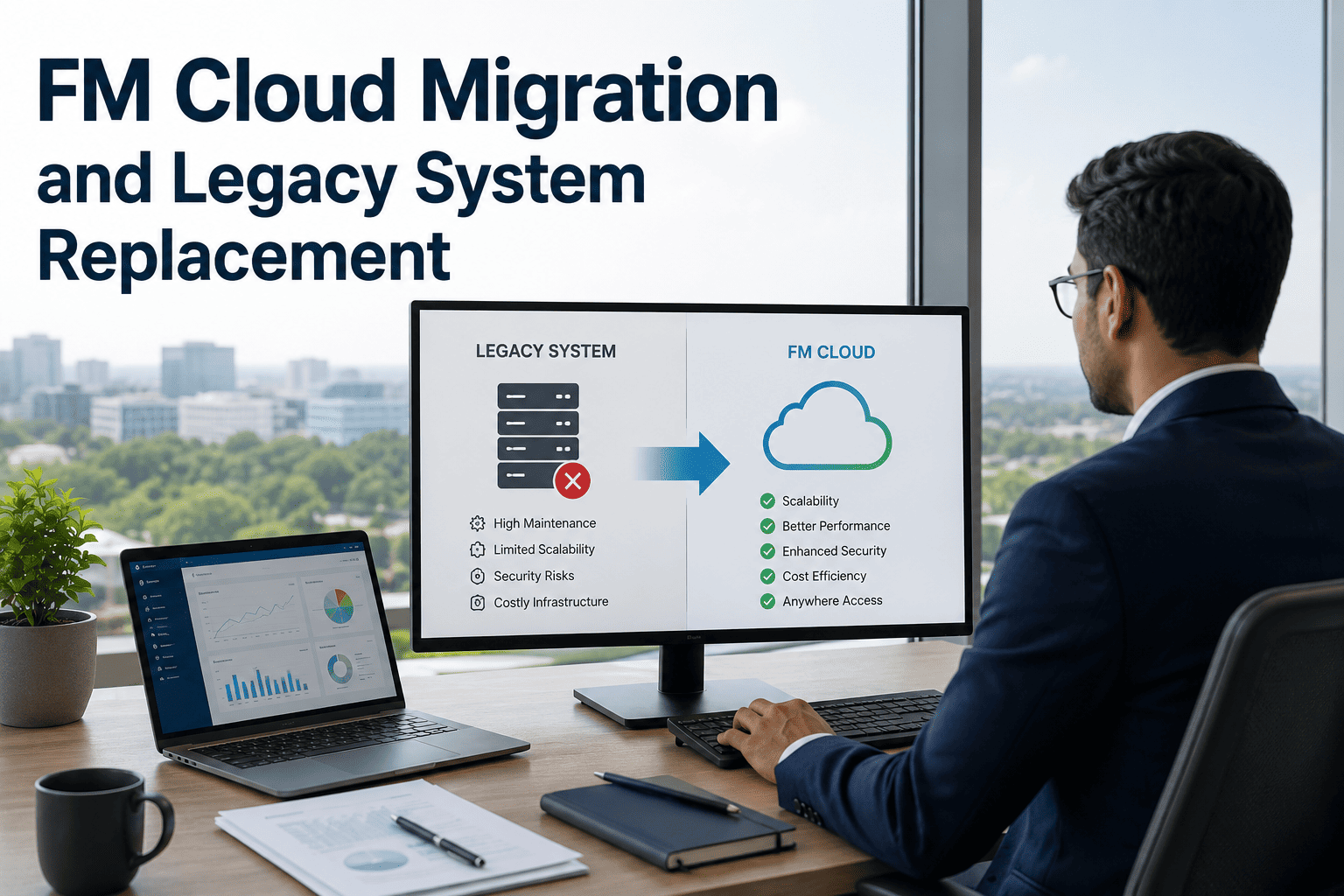
FM cloud migration has become the mainstream technology transition for maintenance and reliability teams moving away from rigid, on-premise legacy systems that trap asset history and block every new capability. Facility legacy system replacement is no longer a question of "if" but "how fast," because aging on-premise platforms throttle mobile work order execution, prevent predictive analytics, and inflate IT support costs by 30–45% compared to modern cloud alternatives. A well-planned facility cloud migration preserves every work-order record, asset hierarchy, and PM schedule while unlocking real-time dashboards, AI-driven failure predictions, and unlimited mobile technicians. The result is a facility legacy modernization effort that pays back in 6–9 months through reduced downtime, eliminated server maintenance, and higher wrench time. Ready to replace your legacy FM platform? You can Start Free Trial of OxMaint today or book a guided demo to see the migration path on your own assets.
Is Your Legacy FM System Quietly Costing You $200K a Year in Downtime?
Most on-premise facility platforms are 8–12 years old, unsupported by vendors, and incapable of mobile work orders or predictive analytics. A planned FM cloud transition eliminates server costs, unlocks AI maintenance, and preserves 100% of your asset history — without disrupting daily operations.
Why Facility Legacy System Replacement Can't Be Postponed
Holding onto a legacy FM platform costs the average mid-sized facility $180K–$250K annually in hidden expenses — from emergency downtime to server patches, manual reporting, and lost maintenance history during staff turnover.
A 180-asset manufacturing plant spending $42K/yr on a legacy on-premise FM platform was losing 12 hours per technician weekly to manual work-order entry and couldn't access asset history from the floor. After completing an FM cloud migration to OxMaint, the team eliminated paper work orders, cut unplanned downtime 34%, and recovered full ROI in 5.8 months — all while preserving 9 years of maintenance history.
How to Plan an FM Cloud Migration Without Losing Data or Momentum
A successful facility cloud migration follows a structured 4-phase timeline. Most mid-market teams complete the full transition in 6–10 weeks with zero operational downtime.
Legacy System Audit & Data Mapping
Inventory every asset record, PM schedule, work-order history, and spare-parts entry in the legacy system. Map fields to the new cloud schema, flag duplicates, and identify data gaps. Export capabilities, API limitations, and custom report dependencies are documented here.
Data Cleansing & Cloud Platform Setup
Cleanse and normalise asset hierarchies, standardise failure codes, and configure the OxMaint cloud environment. Import asset records, PM templates, and spare-parts inventory. Validate that 100% of critical maintenance history transfers intact with full audit trails.
Parallel Run & Team Onboarding
Run the legacy system and OxMaint in parallel for 2–3 weeks. Train technicians on mobile work orders, supervisors on dashboards, and reliability engineers on predictive analytics. Catch reconciliation gaps before the legacy system is decommissioned.
Legacy Cutover & Decommission
Switch all maintenance operations to OxMaint. Archive the legacy database read-only for compliance, retire on-premise servers, and cancel legacy vendor support contracts. Begin measuring KPI improvements — wrench time, PM compliance, MTTR — against the baseline.
On-Premise FM vs. Cloud CMMS: What Actually Changes
Facility legacy modernization isn't just a hosting change — it fundamentally reshapes how maintenance teams execute work, access data, and predict failures. Here's the straight comparison.
| Capability | Legacy On-Premise FM | OxMaint Cloud CMMS |
|---|---|---|
| Deployment time | 3–6 months + IT provisioning | Live in 2–4 weeks, no servers |
| Mobile work orders | None or clunky VPN-required apps | Native iOS/Android, offline-capable |
| Predictive maintenance | Not supported; reactive only | AI failure prediction on IoT sensor data |
| Data history retention | Locked in proprietary databases | Open API, full export, audit-ready |
| Updates & new features | Annual paid upgrades, IT-managed | Continuous, included, zero downtime |
| Total cost over 3 years | $180K–$310K (licenses + servers + IT) | $54K–$96K (subscription only) |
| Scalability | New licenses + hardware per site | Add sites/users instantly, no infra |
What Does FM Cloud Migration Cost — and What's the Payback?
Facility management cloud migration typically delivers full ROI in 5–9 months. The savings come from four compounding sources: eliminated IT infrastructure, reduced downtime, higher wrench time, and avoided emergency repairs.
| Savings Source | Legacy Baseline | Post-Migration | Annual Savings |
|---|---|---|---|
| Unplanned downtime | $96K/yr (8–12 events) | $58K/yr (3–5 events) | $38K |
| Server & IT support | $42K/yr | $0 | $42K |
| Manual reporting labour | $36K/yr (15 hrs/wk) | $8K/yr (2 hrs/wk) | $28K |
| Emergency spare-parts markup | $31K/yr | $14K/yr | $17K |
| Compliance audit prep | $18K/yr | $4K/yr | $14K |
| Total Annual Savings | $139K | ||
How OxMaint Makes FM Legacy Replacement Painless
OxMaint is built specifically for maintenance and reliability teams escaping legacy on-premise systems. Every capability below maps directly to a pain point that legacy FM platforms cannot solve.
Zero-Loss Data Migration Engine
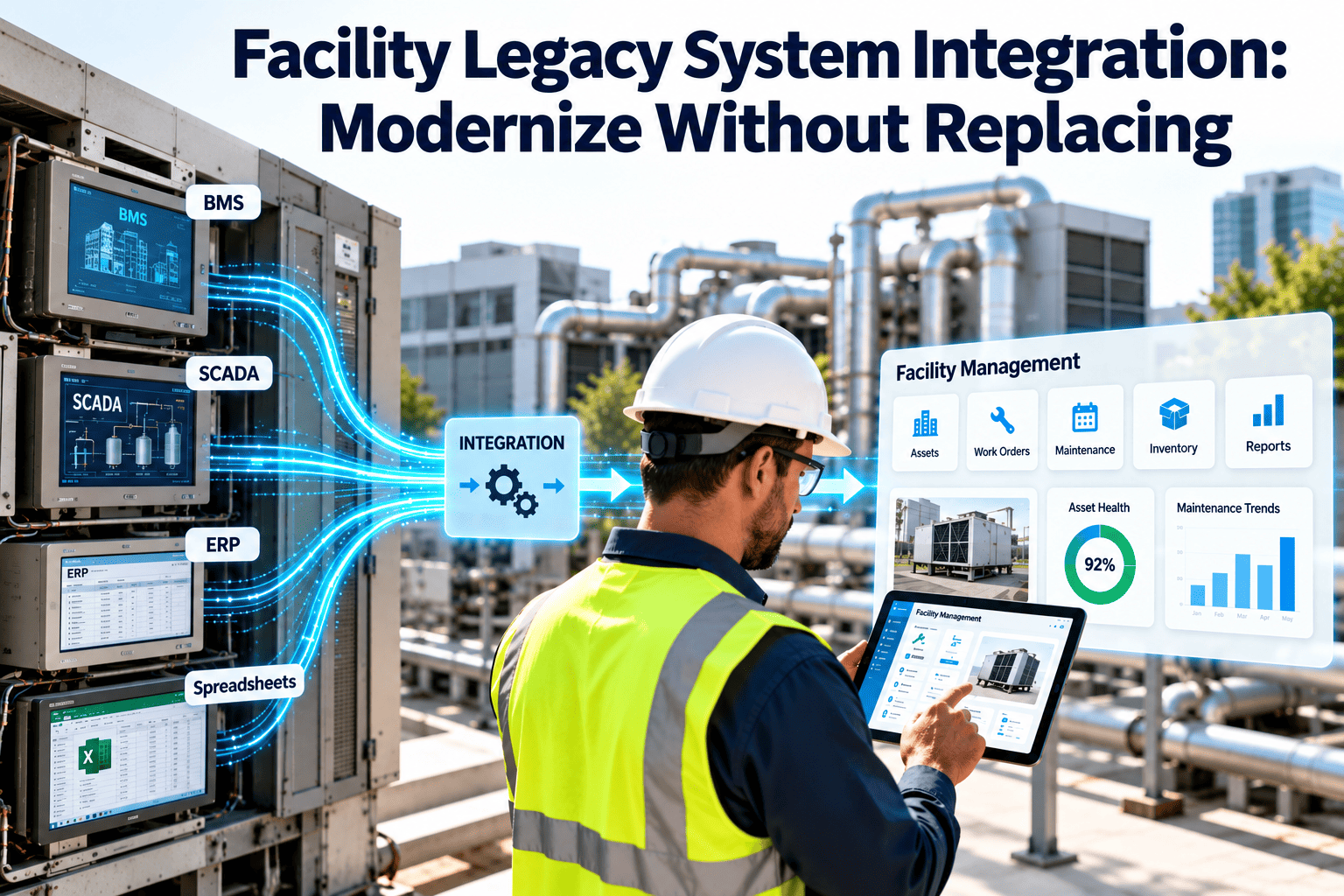
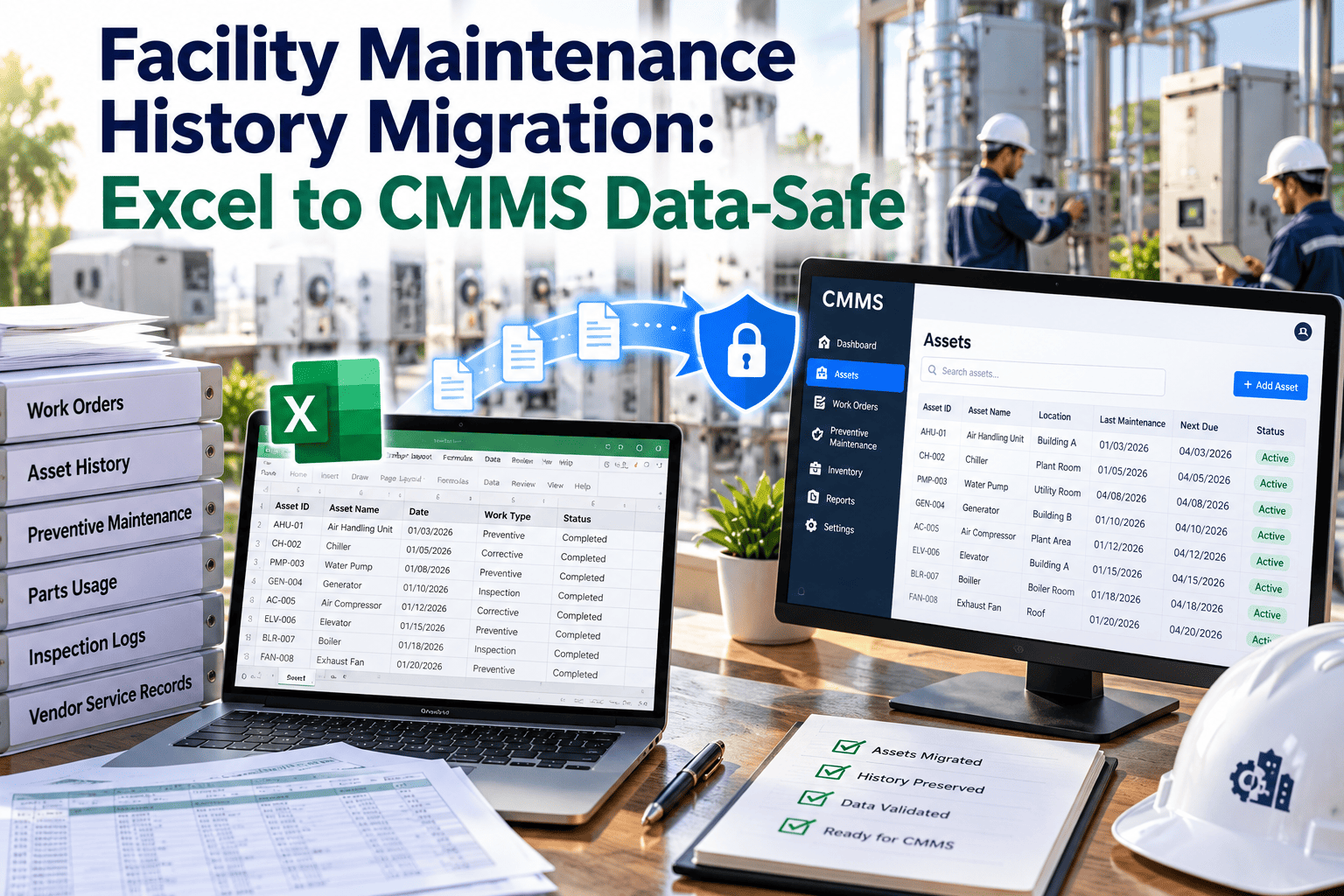
OxMaint's migration toolkit ingests legacy exports (CSV, SQL, API, proprietary backups) and maps every asset, work order, PM schedule, and spare-parts record to the cloud schema — with field-level validation and a reconciliation report. Teams retain 100% of maintenance history and audit trails.
Native Mobile Work Orders
Technicians receive, update, and close work orders on iOS or Android — even offline in basements and remote plant areas. Photos, signatures, parts consumption, and meter readings capture at the asset, eliminating the end-of-shift data-entry backlog that legacy systems create.
AI-Driven Predictive Maintenance
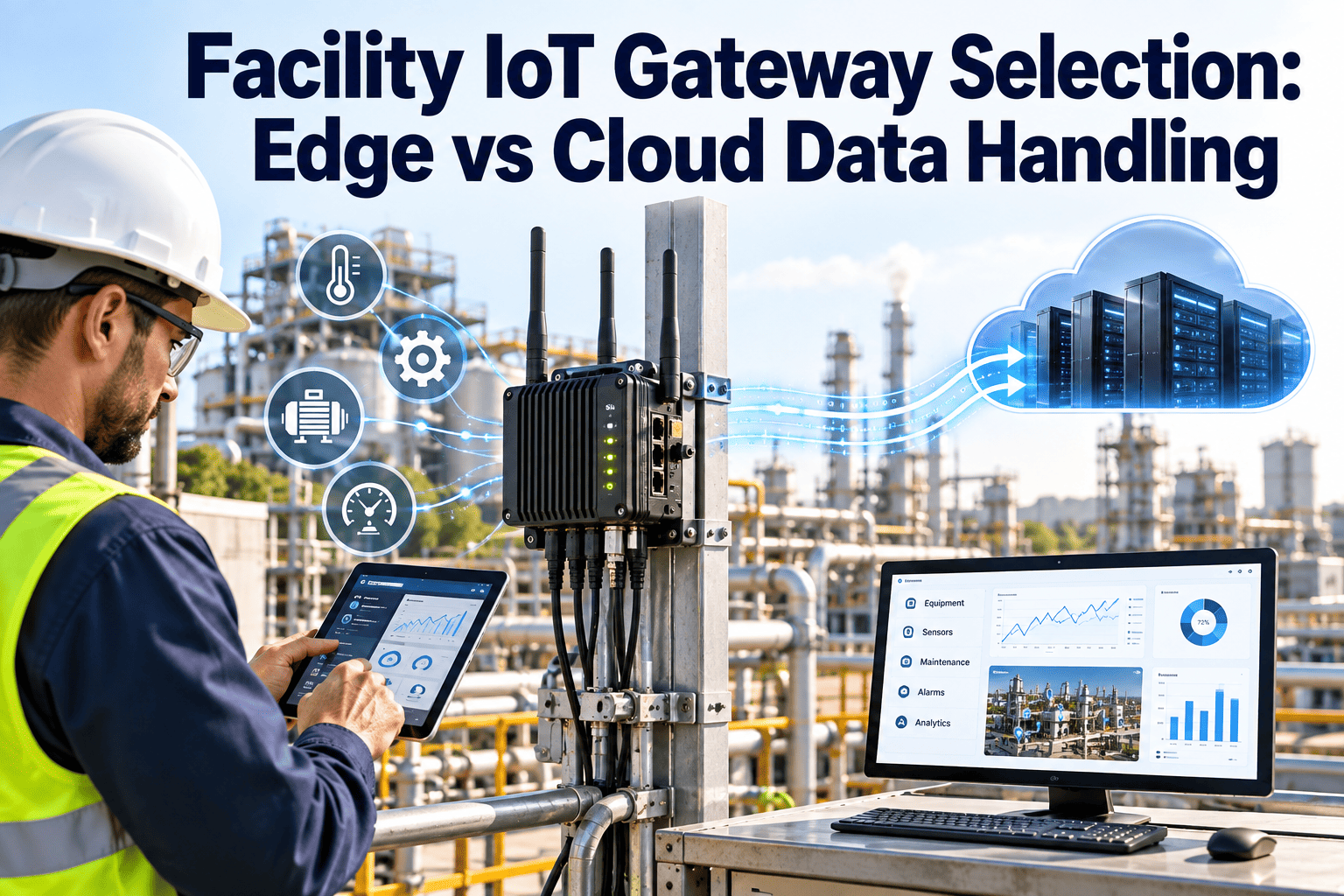
OxMaint analyses vibration, temperature, and runtime data from IoT sensors to predict asset failures 7–21 days before they occur. Legacy systems can't do this. OxMaint auto-generates work orders when risk thresholds are crossed, shifting teams from reactive to predictive.
Real-Time Analytics & Compliance
Dashboards for OEE, MTTR, MTBF, PM compliance, and spare-parts turnover are live on day one — no reports to build, no IT tickets to file. ISO 55000, OSHA, and FMCSA audit logs generate automatically, replacing the 40-hour manual compile cycle legacy systems demand.
See OxMaint on Your Assets — Book a 30-Min Demo
Walk through a live FM cloud migration plan tailored to your facility. We'll map your legacy data structure, show the parallel-run timeline, and project your ROI — all in 30 minutes.
FM Cloud Migration: Your Top Questions Answered
How long does an FM cloud migration take?
Most mid-market facilities complete the full FM cloud transition in 6–10 weeks. Phase 1 (legacy audit and data mapping) takes 1–2 weeks, data cleansing and platform setup another 2 weeks, parallel running 2–3 weeks, and final cutover 1–2 weeks. Larger multi-site operations with 2,000+ assets typically need 12–16 weeks. You can see a tailored timeline by booking a demo with our migration team.
Will I lose my maintenance history during facility legacy modernization?
No. OxMaint's migration engine ingests legacy exports — CSV, SQL dumps, API pulls, even proprietary backup files — and maps every asset record, work order, PM schedule, failure code, and spare-parts transaction to the cloud schema with field-level validation. A reconciliation report confirms 100% data integrity before the legacy system is decommissioned.
Is facility management cloud migration secure for sensitive asset data?
Modern cloud CMMS platforms like OxMaint use AES-256 encryption at rest and in transit, SOC 2 Type II infrastructure, role-based access control, and automated daily backups — typically exceeding the security posture of on-premise legacy systems maintained by a single IT generalist. Cloud deployment also eliminates the risk of unpatched servers and lost local backups.
How much does FM legacy replacement cost versus staying on-premise?
A mid-sized facility spending $42K/yr on legacy servers, licenses, and IT support typically pays $18K–$28K/yr for OxMaint cloud — a 40–55% direct cost reduction before counting downtime or productivity gains. Total 3-year cost of ownership for legacy on-premise FM averages $180K–$310K versus $54K–$96K for cloud. You can explore pricing and Start Free Trial in minutes.
Can I run my legacy FM system and OxMaint in parallel during transition?
Yes, and it's recommended. A 2–3 week parallel run lets technicians learn mobile work orders, supervisors validate dashboards, and reliability engineers test predictive analytics — while the legacy system stays live as a fallback. This eliminates operational risk during cutover and ensures every team member is confident before the legacy platform is retired.
Stop Paying for a Legacy System That Limits Your Team
Join the maintenance teams who've replaced on-premise FM platforms with OxMaint — cutting downtime 30–50%, eliminating paper work orders, and recovering full ROI in under 9 months. Your assets, your history, your schedule — migrated to the cloud without disruption.
Free 14-day trial · No credit card