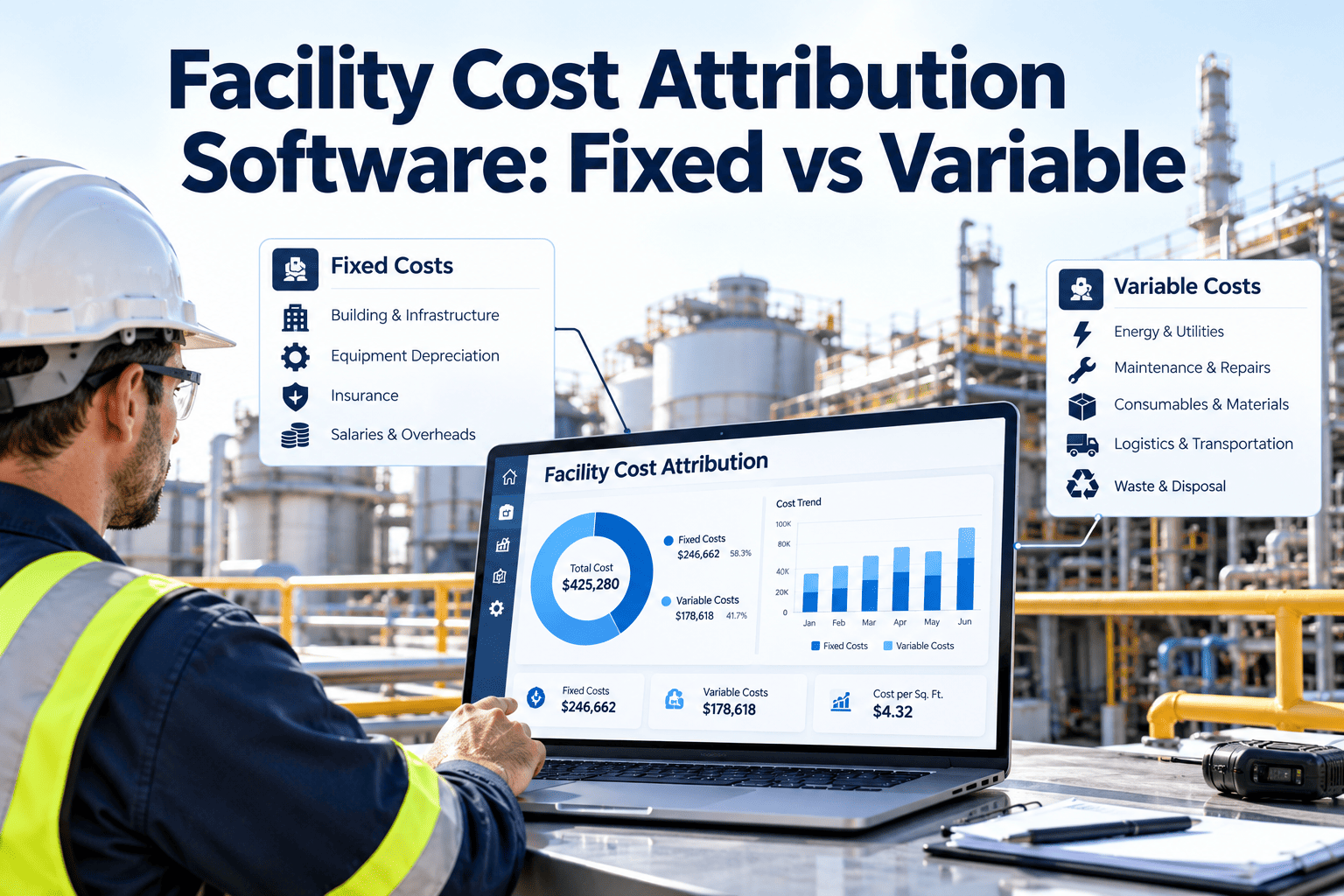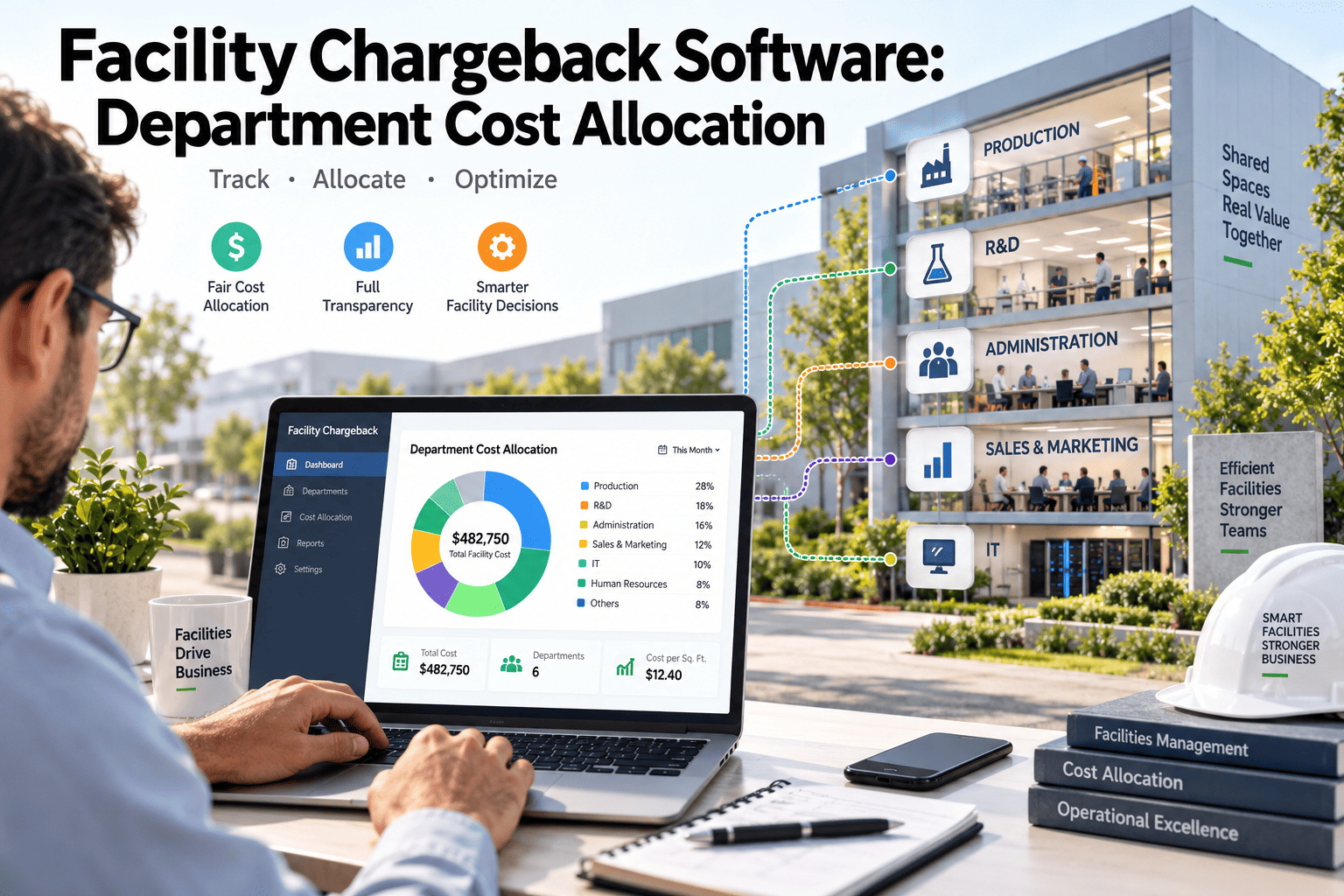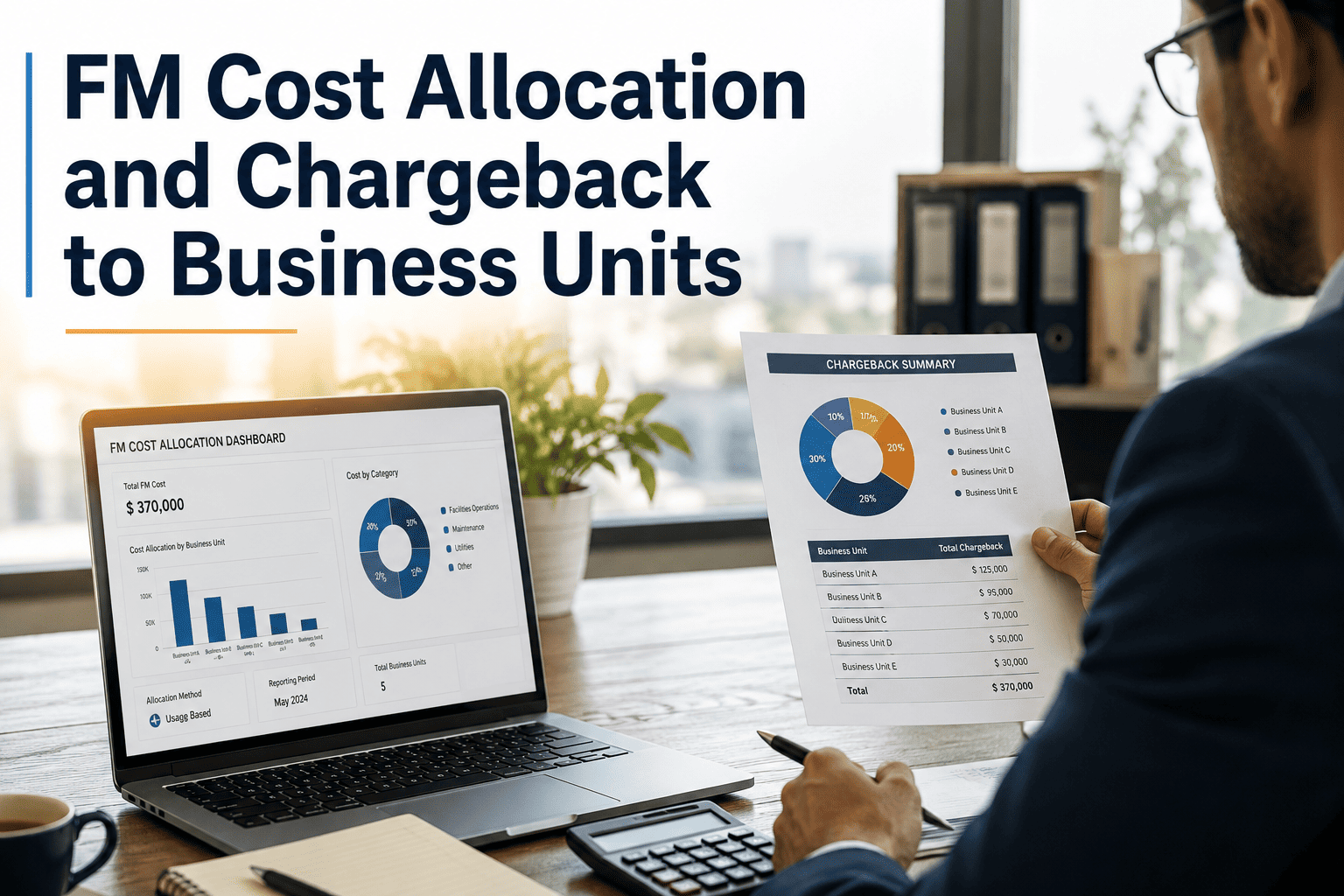
FM cost allocation and chargeback to business units is the discipline that transforms facility spend from an opaque overhead into a transparent, demand-shaping signal. When workspace, utilities, and maintenance are free at the point of consumption, business units have zero incentive to conserve — leading to bloated footprints, after-hours HVAC requests, and unnecessary service tickets. A well-designed facility chargeback model changes that: it assigns real dollar values to the resources each department consumes, driving accountability and typically cutting total facility cost by 10–25% within the first year. OxMaint makes implementation seamless by tracking every work order, asset, and utility allocation against the correct cost center, so you can spin up a defensible FM internal chargeback system in days, not months. Start Free Trial to see how cleanly your data maps to business units.
When facilities are free, nobody controls demand. Make business units accountable.
A robust FM cost allocation framework turns hidden overhead into a transparent invoice. Give departments real-time visibility into the space and services they consume — and watch waste evaporate.
Why a facility chargeback model beats allocating everything to overhead
Roughly 70% of organizations still lump facility costs into a corporate overhead pool, distributing the damage equally by headcount. The result is a classic tragedy of the commons: teams that compressed their footprint and scheduled preventive maintenance receive the same bill as teams running HVAC 24/7 in half-empty spaces. FM cost allocation fixes this by tying consumption directly to cost centers.
Space allocation
The simplest layer: base rent, property taxes, and common area maintenance distributed by usable square footage occupied. Captures the physical footprint each business unit truly controls.
Service consumption
Reactive and preventive maintenance tickets are billed to the requesting cost center. Stops the practice of one department treating facilities as a free concierge service.
Utility metering
Sub-metered or pro-rated energy costs push accountability for after-hours lighting, server rack density, and process equipment down to the actual consumers.
FM cost recovery: the 4-step allocation framework
A defensible FM allocation model requires a structured pipeline. Skip any step and business units will dispute the invoice. Here is the framework used by mature facilities organizations to achieve over 95% cost recovery.
Capture direct costs
Invoices, work order labor, spare parts, and vendor contracts are tagged to a building, floor, or asset — not a generic facilities cost center. This is where spreadsheets fail and a CMMS becomes essential.
Pool indirect costs
Roof replacements, lobby landscaping, and base-building fire-safety inspections are aggregated into a shared pool, then distributed via an equitable allocation key (sq ft, headcount, or conditioned volume).
Map to cost centers
Every employee ID, badge zone, and asset location is linked to a business unit GL code. When a department moves floors, their cost allocation moves automatically — no manual reconciliation.
Generate the chargeback
Monthly internal invoices are generated showing space cost, service cost, and utility cost per unit. Transparency eliminates disputes and creates a behavioral feedback loop that curbs demand.
Facility internal billing: what changes when departments see the bill
Consider a 180,000-sq-ft corporate campus spending $4.2M annually on facilities. Without cost allocation, the engineering team (120 people) and the sales team (40 people) split the bill equally by headcount. Engineering runs lab equipment and 24/7 HVAC; sales occupies quiet desks. The imbalance is hidden. Here is the before-and-after of implementing facility cost chargeback:
| Metric | Before Chargeback | After Chargeback | Impact |
|---|---|---|---|
| Annual facilities spend | $4.2M (uncontrolled) | $3.3M (demand-shaped) | −21% |
| After-hours HVAC tickets | 340 / year (free) | 95 / year (billed) | −72% |
| Unnecessary move requests | 120 / year | 38 / year | −68% |
| Cost dispute resolution time | 3 weeks (manual) | 2 days (auditable) | −90% |
| Footprint utilization | 61% peak | 84% peak | +23 pts |
How OxMaint powers your FM cost distribution
OxMaint replaces the spreadsheets and manual reconciliations that make facility cost recovery a quarterly nightmare. Every work order, asset, and meter reading is captured at the source — with an auditable trail straight to the consuming business unit.
Cost-center-tagged work orders
Every ticket — reactive or preventive — inherits the GL code of the requesting business unit. Labor hours and spare parts roll up automatically into that unit's monthly facility internal billing statement.
Live cost dashboards
Business unit leaders see their real-time facility burn rate — space, services, utilities — without waiting for a month-end export. Transparency drives a 15–25% drop in discretionary service requests.
Automated chargeback reports
Generate defensible monthly invoices with full drill-down from the dollar amount to the originating work order, meter reading, or lease clause. Cuts reconciliation time by 90%.
Asset-level cost attribution
Equipment depreciation, predictive maintenance AI alerts, and failure costs are tied to the business unit that owns the asset. True cost of ownership becomes visible, not buried in overhead.
See exactly how OxMaint maps your facility costs to business units
In a 30-minute demo, we'll load your floor plans, cost centers, and asset list to show a live chargeback report tailored to your organization.
Facility chargeback FAQs
What is FM cost allocation and how does it differ from a chargeback?
FM cost allocation is the methodology for distributing facility expenses (rent, utilities, maintenance) across business units based on usage drivers like square footage or headcount. A chargeback is the financial mechanism that actually invoices those allocated costs to the consuming department's budget. Allocation determines the math; chargeback enforces the payment.
How do you build a defensible FM chargeback model?
Start with direct costs tied to a specific asset or space, then pool indirect costs using a documented allocation key. Every dollar must trace from the original invoice to a work order, meter, or lease clause. Tools like OxMaint automate this trail so business units cannot dispute the numbers — you can Book a Demo to see the audit trail in action.
What allocation keys work best for facility cost recovery?
Square footage is the standard for rent and CAM. Headcount works for shared services like mailrooms. Metered consumption (kWh, Btu, gallons) is ideal for utilities. For maintenance, the requesting business unit's work order volume and labor hours provide the most accurate and behavior-shaping allocation key.
How much can a company save with facility internal billing?
Organizations that implement a transparent chargeback model typically see a 10–25% reduction in total facility spend within 12 months. The savings come from demand destruction: when departments see the cost of after-hours HVAC, unnecessary move requests, and reactive maintenance, they self-regulate and defer only genuine needs.
What software is best for FM cost distribution?
A CMMS or EAM platform with native cost-center tagging — like OxMaint — is the most efficient foundation. It captures labor, parts, and asset costs at the work-order level and rolls them into automated chargeback reports, eliminating the spreadsheet sprawl that makes manual facility cost allocation error-prone and slow.
Stop subsidizing waste. Start charging for reality.
Give every business unit a clear, auditable invoice for the space and services they consume — and give yourself the data to cut facility costs by up to 25%.
Free 14-day trial · No credit card