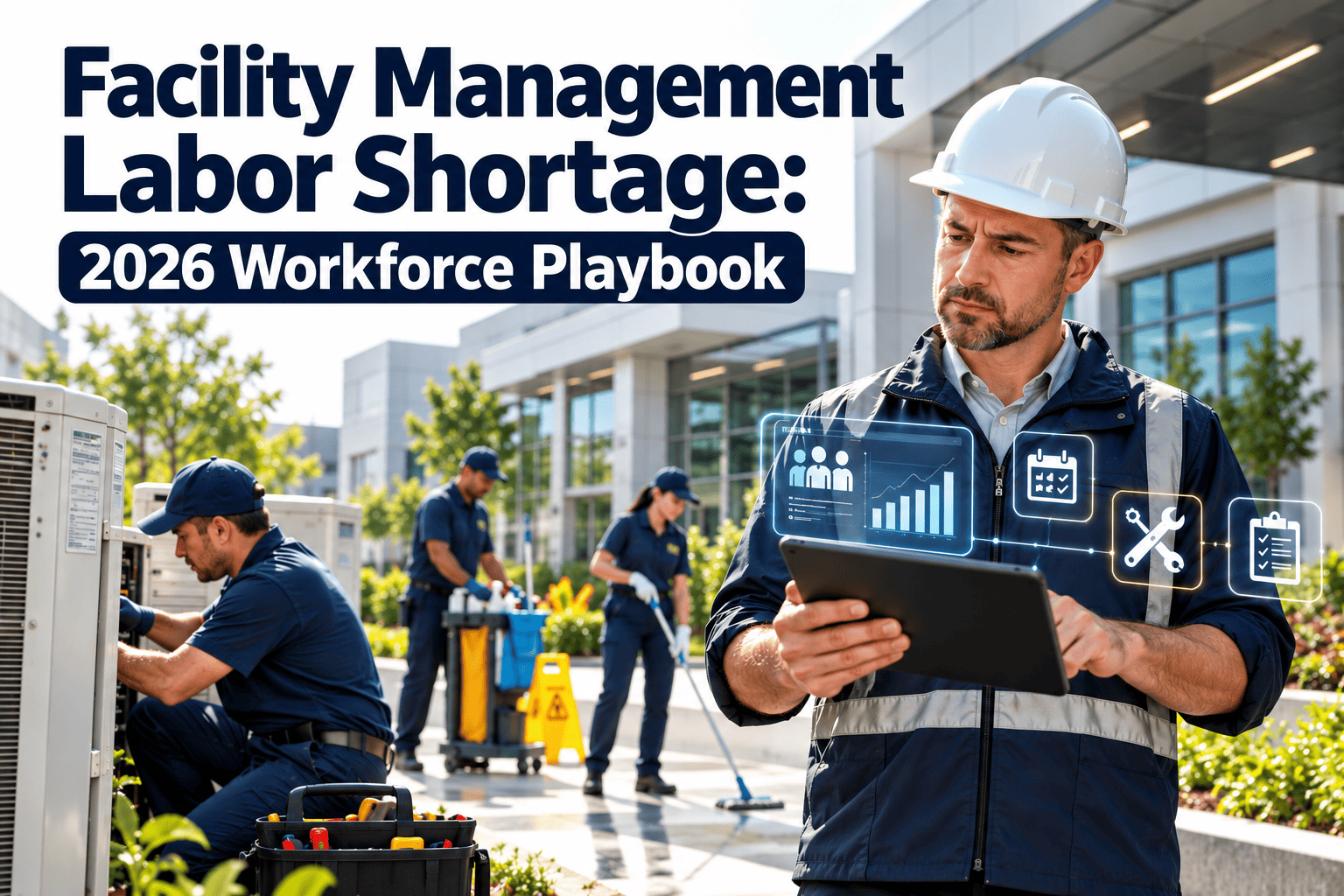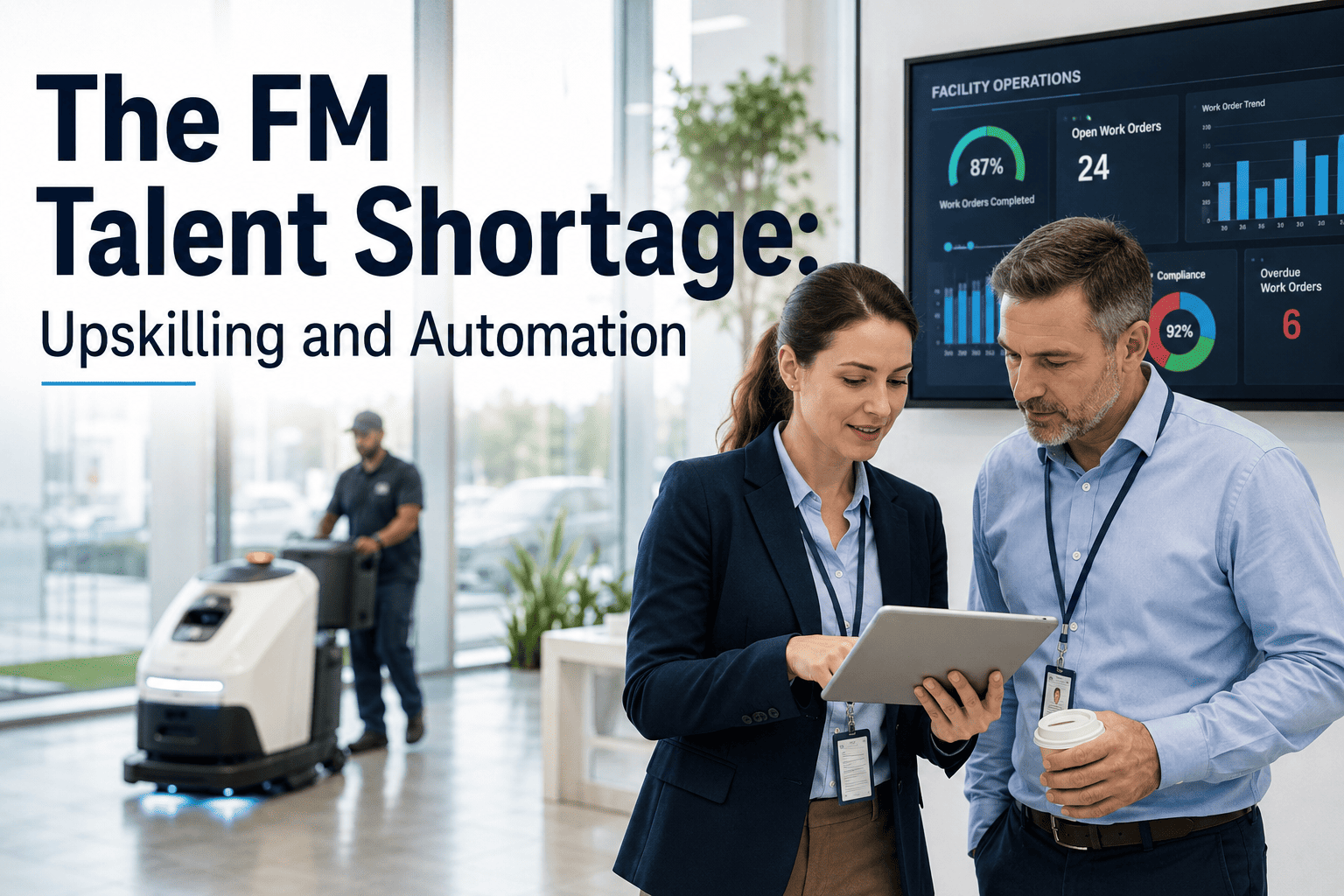
The facility management talent shortage is no longer a cyclical hiring headache — it is a structural deficit driven by retiring veteran technicians, shrinking trade-school pipelines, and rising asset complexity. By 2030, an estimated 40% of the current skilled FM workforce will have retired, leaving operations teams to do more with significantly fewer hands. Facilities can no longer simply hire their way out of this gap; they must multiply the output of the teams they already have through aggressive FM upskilling and intelligent facility talent shortage automation. Start Free Trial to see how OxMaint turns a lean crew into a high-output reliability team.
FM Workforce Strategy
You can't hire your way out of the FM talent shortage.
With 4 in 10 senior technicians retiring by 2030 and trade enrollments flat, the math no longer works. The teams that survive will be the ones that automate administrative friction and upskill junior staff to handle advanced asset reliability faster.
Every unfilled maintenance technician role costs a facility an average of $50,000 per year in accelerated asset decay, outsourced emergency labor, and unplanned downtime.
Automation and targeted upskilling don't just replace headcount — they multiply the impact of the people you already have.
The Root Cause
Why the facility management skills gap is accelerating
The FM workforce shortage is driven by a perfect storm of demographics, educational bottlenecks, and exploding asset complexity.
The silver tsunami is hitting the boiler room
Boomers hold the vast majority of institutional equipment knowledge. When they walk out the door, they take decades of undocumented troubleshooting heuristics with them — leaving junior staff to rely on outdated manuals or guesswork.
Asset complexity is outpacing human training cycles
Modern facilities integrate BMS, IoT telemetry, and automated HVAC controls. A technician hired today must understand both mechanical wrench-turning and digital diagnostic dashboards — a hybrid skill set traditional trade schools rarely teach.
Reactive cultures burn out the talent you keep
Running a lean crew in a reactive maintenance model guarantees 12-hour weekend shifts and high turnover. The FM staffing shortage is self-perpetuating: poor conditions drive resignations, which increase the load on remaining staff.
FM Upskilling
How to close the facility management skills gap through upskilling
Upskilling is the fastest lever for addressing the FM skills shortage, but only if it is structured, measurable, and embedded into daily workflows.
Audit tribal knowledge
Before training begins, extract repair histories, PM checklists, and asset-specific quirks from senior techs. Digitize this into a central knowledge base so experience doesn't retire. Target: Document 80% of critical asset procedures within 30 days.
Implement structured digital checklists
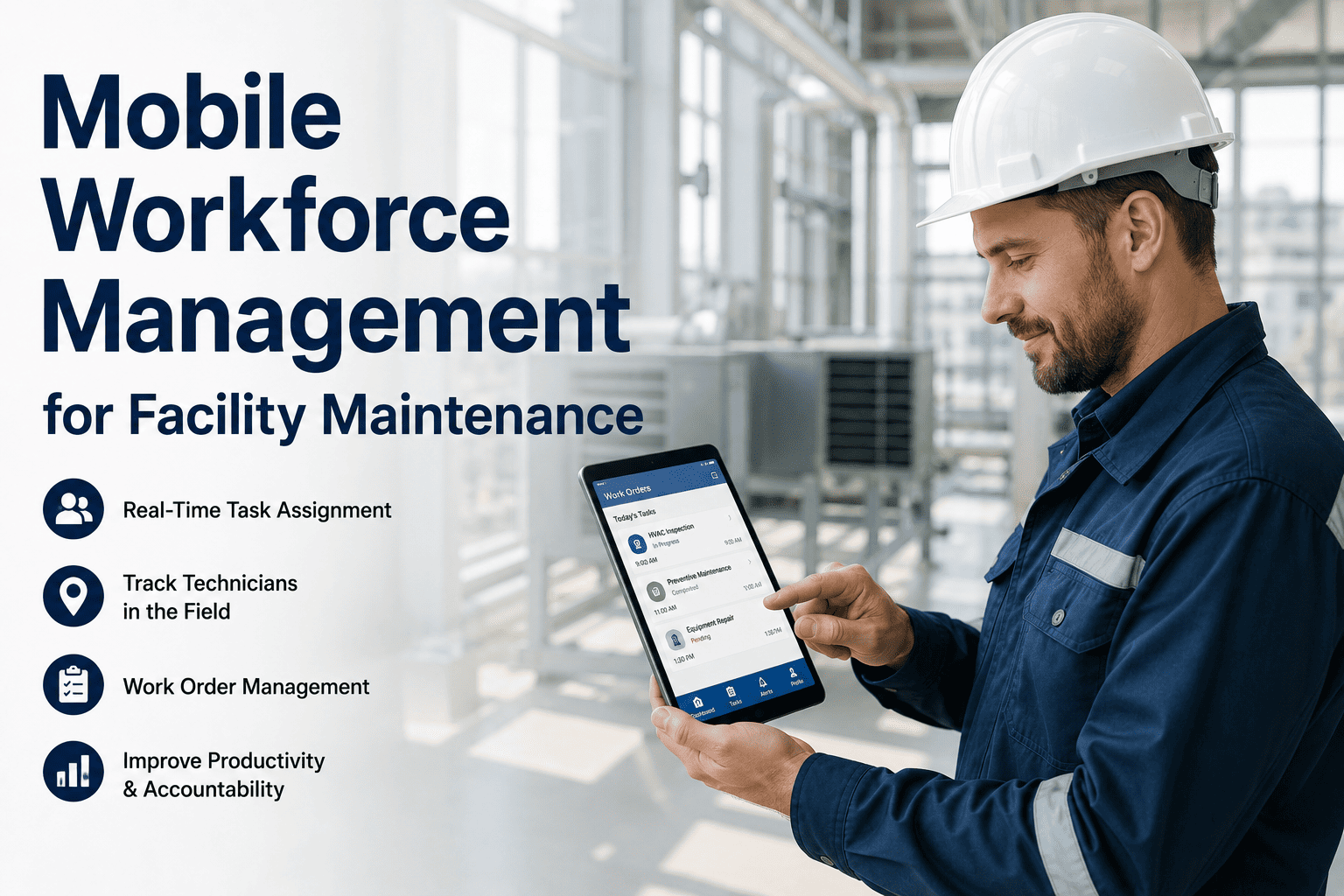
Replace clipboard-based rounds with mobile-guided procedures. Junior staff follow step-by-step digital work orders with safety prompts, mandatory photo capture, and tolerance ranges — turning a 2-year learning curve into a 2-month ramp.
Cross-train on predictive analytics
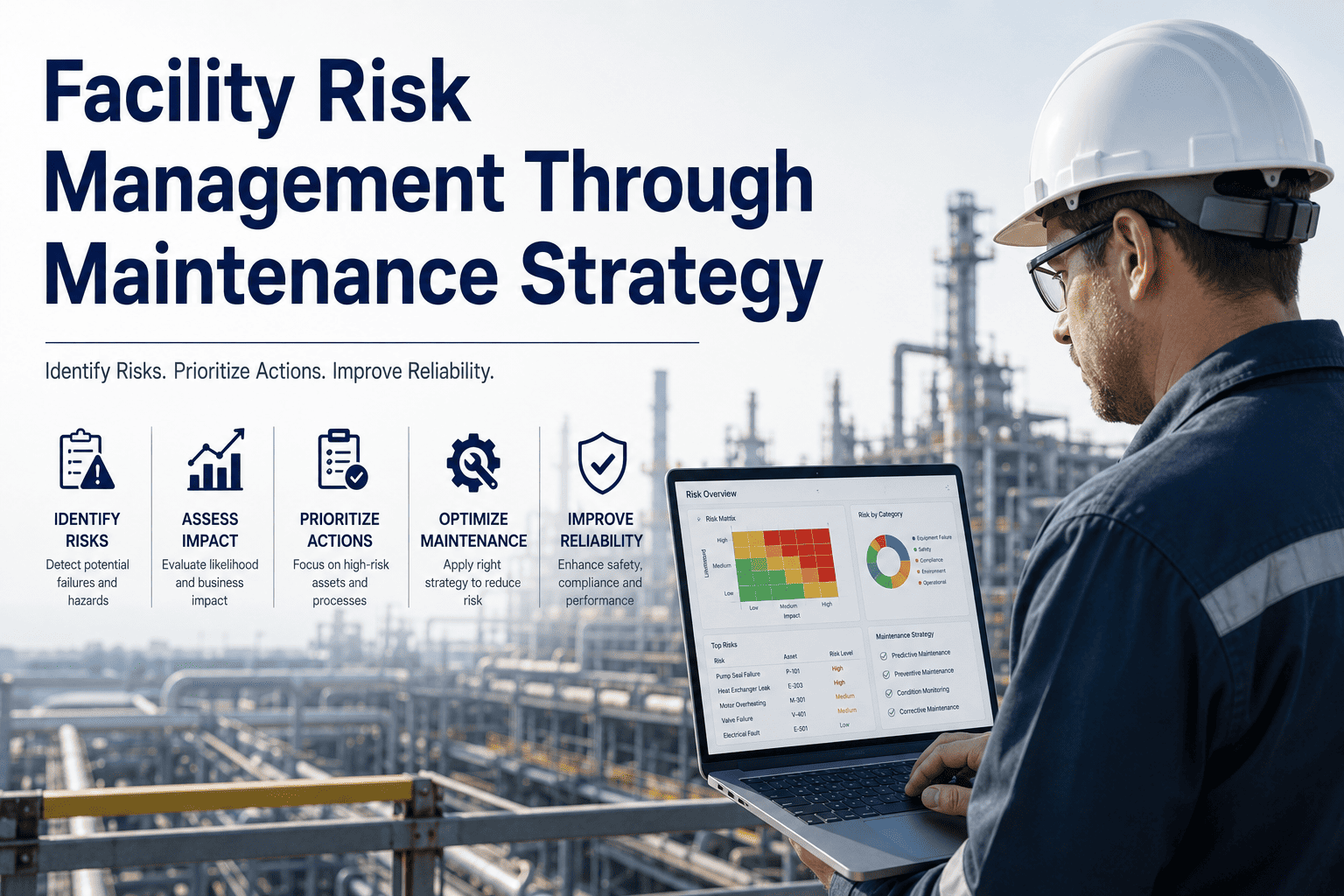
Move beyond preventive maintenance. Teach the team to read vibration, thermal, and oil analysis dashboards. When a junior tech can interpret an anomaly trend and trigger a work order before failure, they are operating at a senior level.
Measure and certify competency
Track completion rates, mean-time-to-repair (MTTR), and first-time-fix rates by technician. Use this data to certify competency on specific asset classes, ensuring your lean team is genuinely qualified, not just trained.
Facility Talent Shortage Automation
Automation: the force multiplier for a lean FM workforce
If upskilling builds capability, automation buys the time to use it. A facility management workforce strategy without automation is just asking people to work harder.
The FM Capacity Formula
Team Capacity = (Headcount × Skill Level) ÷ Administrative Friction
When friction is high, adding skill yields marginal gains. Automation drives friction toward zero, allowing a 6-person team to output the workload of a 10-person team.
| Workload Factor | Manual / Spreadsheet Process | Automated CMMS Process |
|---|---|---|
| Work Order Creation | 15–20 min per order, often delayed by approval bottlenecks | Auto-generated from triggers, meter readings, or sensor thresholds in < 5 seconds |
| PM Scheduling | Manually tracked on whiteboards; 30% of PMs missed monthly | Calendar-driven with automatic part reservations; 98%+ PM compliance |
| Spare Parts Lookup | Walking to stockroom, flipping through binders, 25 min avg | Scanned via mobile, reserved against work order in 30 seconds |
| Compliance Reporting | 2–3 days assembling logs for ISO 55000 / OSHA audits | One-click export of full digital audit trail, instantly ready |
Worked Example
A 180-asset commercial facility running a 4-person maintenance team was spending $42,000 annually on outsourced emergency HVAC labor because internal staff couldn't respond fast enough. By automating work order triage and implementing sensor-based predictive alerts, they reduced unplanned downtime by 35% and eliminated $28,000 in outsourced labor costs within the first year — without adding a single technician.
How OxMaint Helps
How OxMaint equips a smaller team to do more
OxMaint is an AI-powered CMMS and EAM platform built specifically to collapse administrative friction and accelerate the FM upskilling curve.
Guided mobile work orders
Step-by-step digital procedures with mandatory checklists and photo capture turn junior hires into confident, compliant technicians on day one. Eliminates paper work orders and cuts MTTR by up to 30%.
AI-driven predictive maintenance
OxMaint's AI analyzes vibration, thermal, and runtime data to flag failures 7–14 days before they happen. Your lean team plans the fix during normal hours instead of firefighting on overtime.
Smart spare-parts inventory
Automated min/max triggers and work-order-linked reservations mean the right part is always waiting at the right asset. Stops hoarding, stops stockouts, and saves 15–20% on inventory carrying costs.
Instant audit & compliance trails
Every action — who, what, when, and with what part — is logged immutably. Generate ISO 55000, FMCSA, or OSHA-ready reports in seconds, eliminating the days of manual prep that drain your team's capacity.
Stop losing hours to manual admin
Let your lean team do senior-level work.
See how OxMaint automates work order friction, guides upskilling, and predicts failures before they drain your weekend. Book a 30-minute demo on your assets today.
Frequently Asked Questions
FM talent shortage, upskilling, and automation: your questions answered
What is causing the FM talent shortage?
The facility management talent shortage is caused by three converging factors: the retirement of experienced boomer-generation technicians, a 28% decline in technical trade school enrollment, and the rapid increase in digital and IoT asset complexity that outpaces traditional training pipelines. You can explore how automation offsets this deficit when you Start Free Trial with OxMaint.
How does automation help with the facility management skills gap?
Automation bridges the skills gap by capturing tribal knowledge in digital workflows and handling administrative tasks like work order generation, PM scheduling, and parts reservation. This allows less-experienced technicians to perform complex tasks correctly using guided procedures, effectively compressing a multi-year learning curve into a few months.
Can a CMMS really replace the need for more maintenance staff?
A CMMS doesn't replace staff; it multiplies their output. By eliminating 10–15 hours of manual admin work per technician each week and shifting maintenance from reactive to predictive, a lean team of 4 using OxMaint can safely manage the workload that previously required 6 to 7 technicians.
What is the fastest way to upskill a lean facility maintenance team?
The fastest upskilling method is deploying a mobile CMMS with guided, step-by-step work orders and mandatory checklists. By pairing junior technicians with digital procedures built from senior staff's historical repair data, they learn correct methodologies in real-time on the floor. See this in action — Book a Demo with our team.
How long does it take to implement an automated FM workforce strategy?
With OxMaint, core deployment — asset import, PM scheduling, and mobile work order rollout — typically takes 2 to 4 weeks. Teams generally see a 30% reduction in unplanned downtime within the first 90 days as predictive analytics and automated triage take effect, delivering rapid ROI against the cost of the FM labor shortage.
Future-proof your maintenance team
Turn the FM talent shortage into a competitive advantage.
Equip your lean crew with AI-driven work orders, predictive maintenance, and guided upskilling. OxMaint makes a smaller team safer, faster, and more reliable than a bloated reactive one.
Free 14-day trial · No credit card