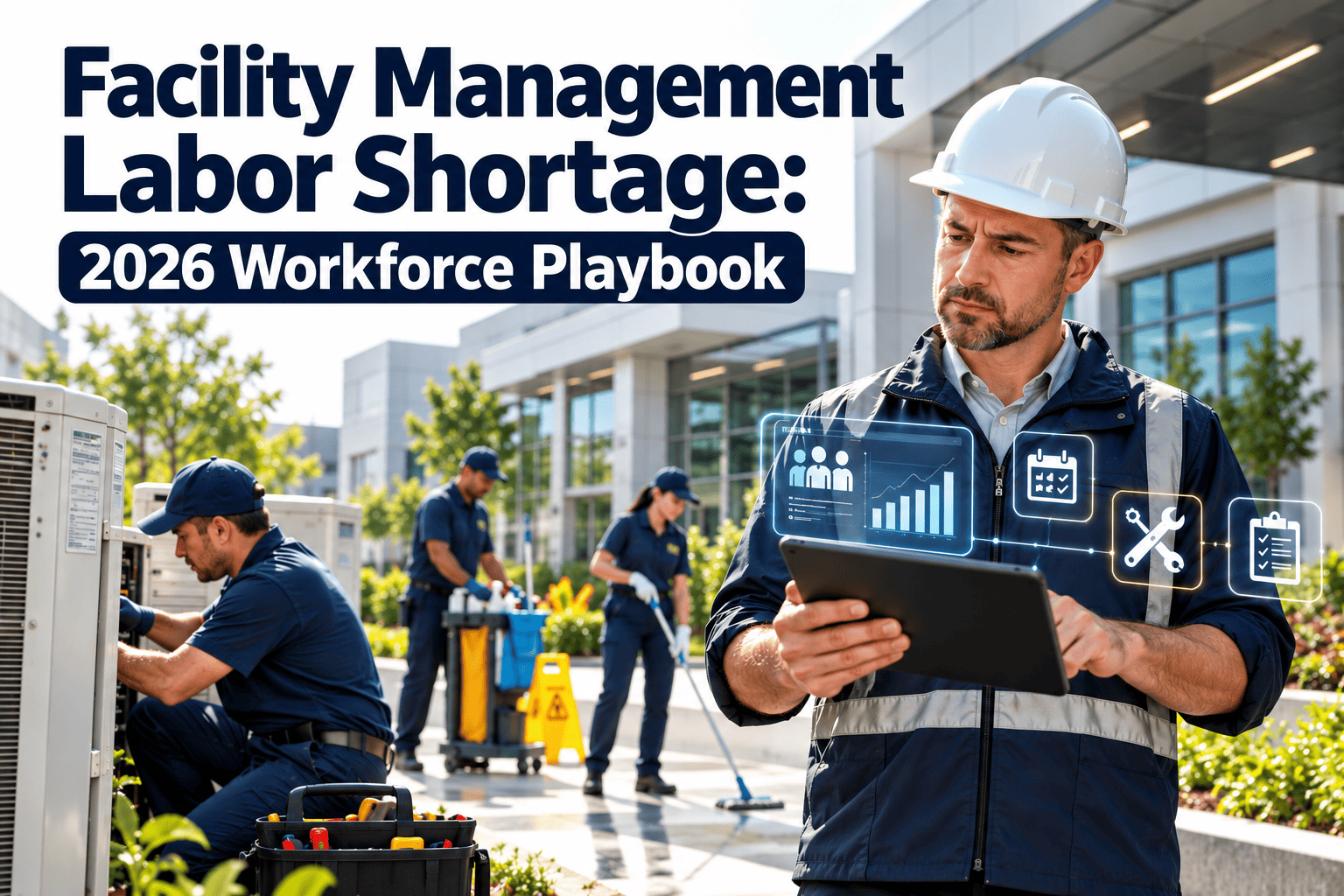
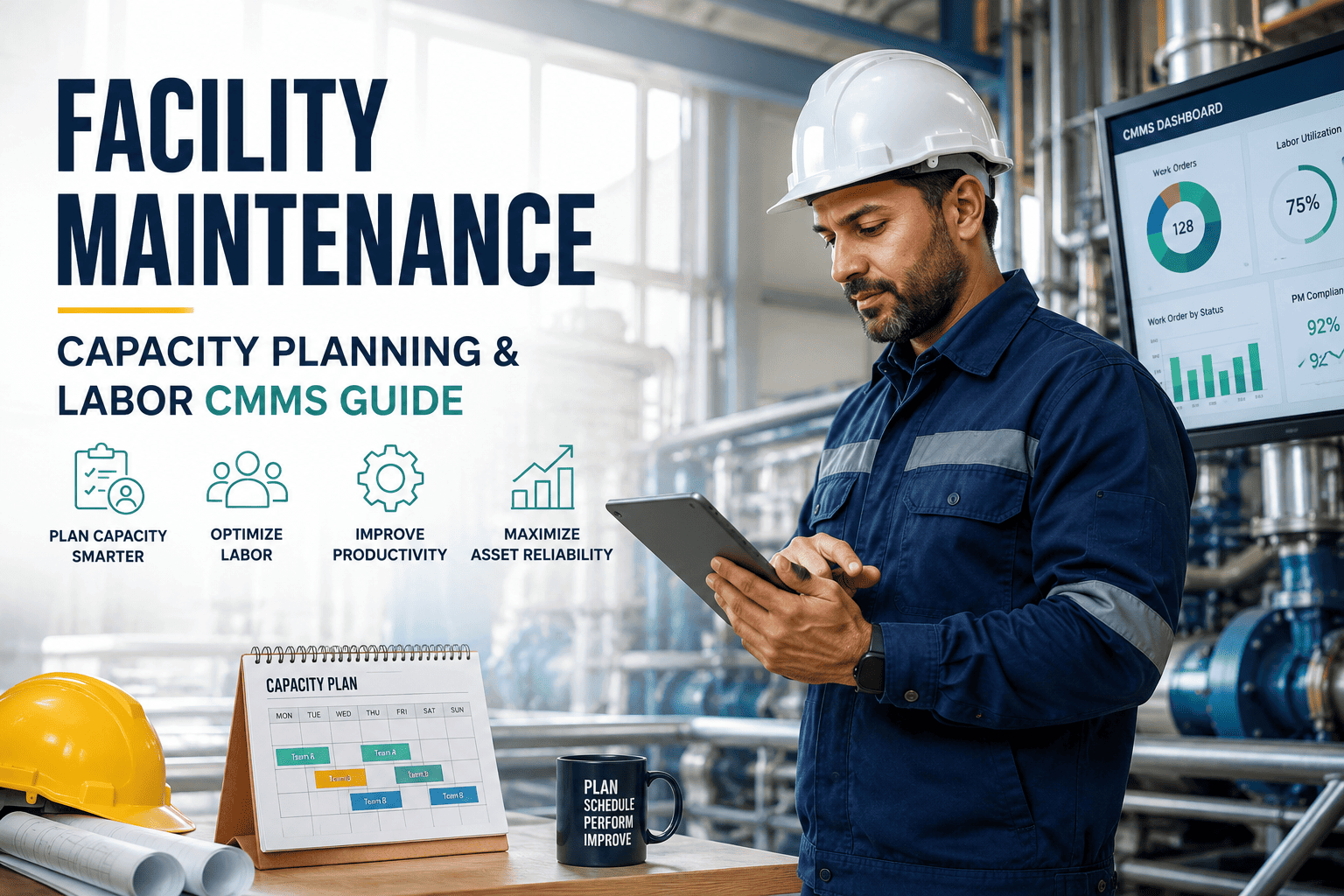
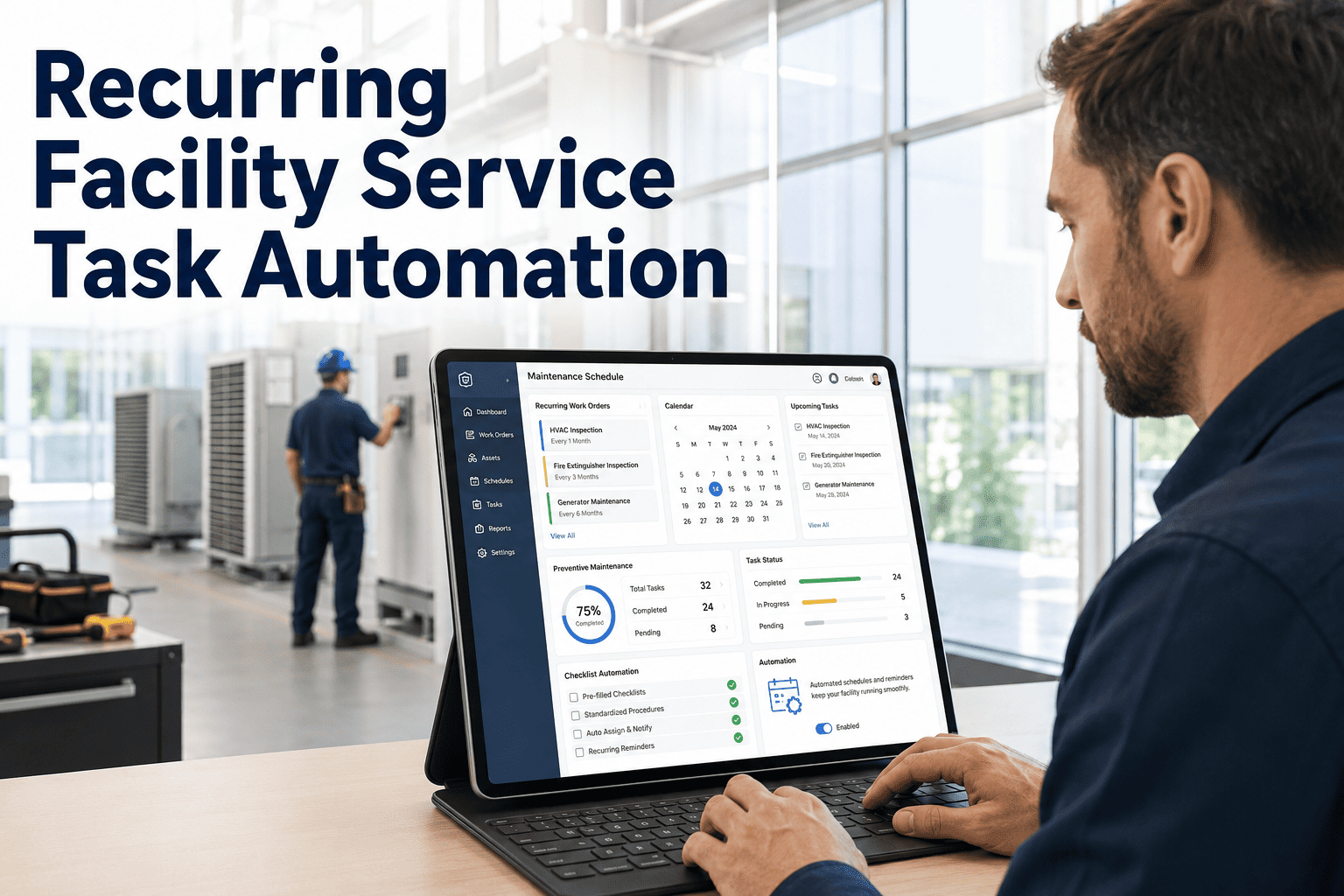
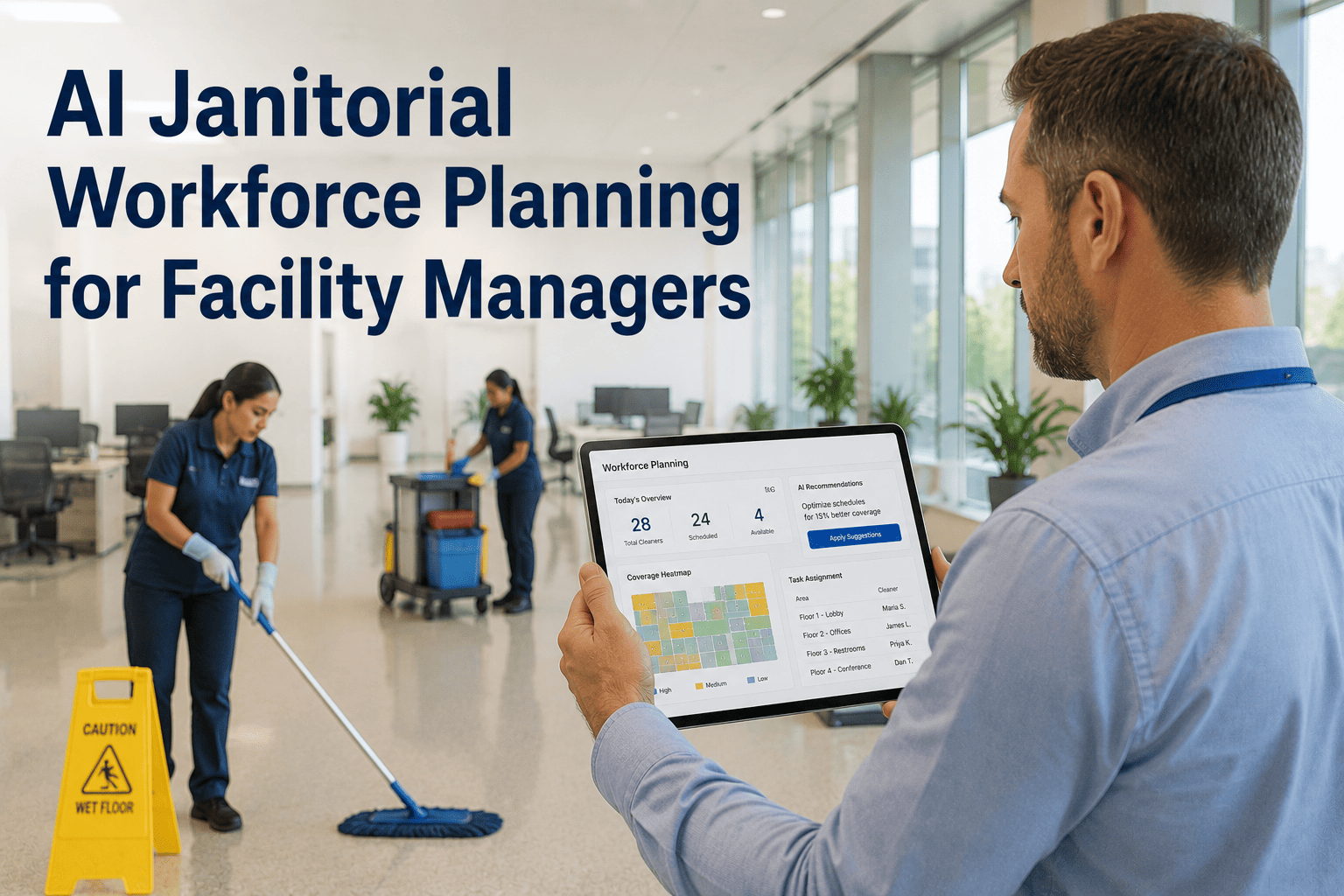
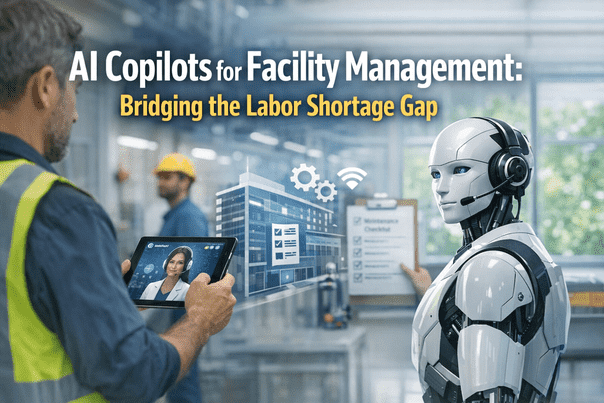
The US faces a 1.7 million annual shortfall in skilled trades workers. 69% of maintenance professionals are aged 50 or older. 40% of the manufacturing workforce is set to retire by 2030. In the UAE, Vision 2030 is accelerating smart building mandates faster than local technical talent pipelines can supply. The maintenance staffing crisis in 2026 is not a future forecast — it is the operational reality facing every Facility Manager, Director of Operations, and VP of Engineering making daily decisions with teams that are 20 to 35% below optimal headcount. The organizations closing this gap are not waiting for the hiring market to recover. They are deploying AI-powered automation, mobile-first workflows, and predictive maintenance systems that let a team of 8 deliver the output of 12 — and they are doing it with Oxmaint. Sign up free on Oxmaint to see how AI-powered facility automation extends your team's capacity from day one, or book a demo to model the workforce gap reduction for your specific site count and team size.
Guide
Solve Maintenance Staffing Shortage with AI: USA and UAE Facility Automation 2026
10 min read
1.7M
Annual skilled trades shortfall in the US alone — the gap is widening, not closing
69%
Of maintenance professionals are aged 50 or older — institutional knowledge loss is accelerating
53%
Predicted facility management staffing shortage rate — creating 1 open position for every 2 filled roles
75%
Reduction in unplanned downtime reported by AI-early-adopter maintenance teams in 2026
Oxmaint AI Facility Automation | US, UAE, UK, Canada, Europe
Your Team Is Running at 65% Capacity. Oxmaint AI Automation Delivers the Other 35% Without a Single New Hire.
35%More output per technician
80%Admin tasks automated
75%Less unplanned downtime
3-5 daysTo deploy and go live
The 2026 Staffing Crisis
Why the Maintenance Staffing Shortage Is Getting Worse Before It Gets Better
Three structural forces are converging simultaneously. No single one can be solved by recruitment alone. The organizations that are winning in 2026 are treating this as a technology problem, not a hiring problem.
01
The Retirement Wave Is Accelerating Knowledge Loss
40% of the manufacturing and facility maintenance workforce retires by 2030. 69% of current maintenance professionals are already 50 or older. When they leave, they take decades of institutional knowledge — equipment quirks, failure patterns, workarounds — that no job posting can replace. The mean time to repair has increased from 49 to 81 minutes average, driven directly by this skills gap. Every retirement without a knowledge capture system is a permanent productivity loss.
MTTR increase: 49 min to 81 min due to skills gap
02
Gen Z Hiring Pipelines Run 3 to 5 Years Behind Demand
The US faces 500,000 unfilled manufacturing and trades positions because modern facilities require digital, robotics, and AI skills that current training systems cannot supply at scale. UAE Vision 2030 smart building mandates are creating demand for IoT-capable FM technicians that regional training programmes are not yet producing. The hiring market will not solve this gap in the timeframe FM operations need. The workforce gap is a decade-long structural problem, not a temporary market cycle.
500,000+ unfilled trades positions in the US in 2026
03
Complexity Is Increasing While Headcount Falls
The average commercial facility asset base is 24 years old — the oldest average age in nearly 70 years — requiring more maintenance attention precisely when technician availability is declining. Compliance obligations under OSHA, Building Safety Act, OSHAD-SF, and ESG disclosure rules are adding documentation workload to teams that have no administrative capacity to absorb it. A team running at 65% headcount cannot maintain a 24-year-old asset portfolio manually without accepting either compliance gaps or equipment failures.
Average facility assets: 24 years old, oldest in 70 years
04
Reactive Maintenance Consumes the Capacity Shortage Has Left
58% of facilities spend less than half their time on scheduled maintenance. The remainder goes to reactive emergency responses that consume 4.8 times the labour and parts cost of the same repair performed as planned maintenance. Short-staffed teams in reactive mode are caught in a compounding trap: not enough people to do planned PM, so more things fail, so even more emergency responses are required, consuming the same limited headcount in an escalating cycle.
58% of teams spend under 50% of time on scheduled maintenance
The Oxmaint Answer
How Oxmaint AI Automation Closes the Workforce Gap Without Closing the Staffing Gap
Oxmaint does not replace your maintenance team. It extends what each person can accomplish by automating the decisions, scheduling, routing, and documentation that currently consumes 40 to 60% of technician time on non-wrench tasks.
Automation 01
AI-Powered Work Order Auto-Generation
Oxmaint's AI automatically generates, prioritises, and assigns work orders based on asset condition data, failure probability scores, and technician availability — without supervisor intervention. When an IoT sensor detects a temperature anomaly on an HVAC unit, Oxmaint creates the work order, assigns it to the nearest qualified technician, attaches the relevant SOP, and routes it to mobile in under 11 minutes. No manual triage. No scheduling meeting. No paperwork.
Alert to work order: under 11 minutes, automated
Automation 02
Predictive Maintenance Replaces Calendar PM
Calendar-based PM schedules send technicians to service equipment that does not need it and miss equipment that does. Oxmaint's AI predictive maintenance console analyses condition monitoring data to identify developing failure patterns 2 to 8 weeks before breakdown — generating only the maintenance events that will prevent actual failures. This shifts the same technician hours from low-value time-based PM to high-value condition-triggered interventions that prevent the reactive emergencies that consume disproportionate team capacity.
Predictive maintenance reduces costs up to 25%, increases uptime 10 to 20%
Automation 03
Mobile-First Technician Workflow With Full Offline Sync
Oxmaint's mobile app eliminates the administrative overhead that consumes technician time between tasks: no desktop return to close work orders, no paper checklists to transcribe, no manual parts requests to submit. QR code asset scanning, photo-documented task completion, digital signature capture, and automated compliance record generation all happen in the field without an active internet connection. Each technician reclaims 90 to 120 minutes per day currently lost to administrative re-work.
90 to 120 minutes per technician per day recovered from admin overhead
Automation 04
AI Knowledge Capture: Institutional Knowledge That Survives Retirement
When experienced technicians complete work orders in Oxmaint, the system captures their procedures, failure diagnoses, and repair sequences against the specific asset record. Oxmaint's AI surfaces this captured knowledge to newer technicians at the point of work — the exact fault signature, the repair sequence, the parts required — reducing first-time-fix failure rates and compressing new technician ramp time from 6 months to 6 weeks. The top AI benefit reported by maintenance teams in 2026 is knowledge capture and sharing, above even failure reduction.
New technician ramp time: from 6 months to 6 weeks with AI knowledge capture
Automation 05
Automated Compliance Documentation From Daily Operations
Every PM task, inspection, and corrective action completed in Oxmaint automatically generates OSHA, Building Safety Act, OSHAD-SF, and GDPR-ready compliance records — without any separate documentation effort from already stretched teams. The same technician activity that produces maintenance work also produces the compliance evidence that manual paper systems require separate administrative staff to compile. Audit-ready export for any regulatory inspection in under 2 hours, with zero additional headcount.
Compliance audit prep: from 65 hours manual to under 2 hours automated
Automation 06
Automated Routing and Technician Workload Optimisation
Oxmaint's AI workload optimiser distributes open work orders across available technicians based on location proximity, skill certification, current workload, and task urgency — without a supervisor manually dispatching each job. For multi-site portfolios, this means the right technician reaches the right asset in the shortest time without a dispatcher coordinating between sites. Travel time between tasks drops by 20 to 30% for multi-site teams using AI-optimised routing versus manual scheduling.
Travel time between tasks: 20 to 30% reduction with AI routing
Every Technician on Oxmaint Is Worth 1.3 Technicians in Output. Deploy in 3 to 5 Days. No Implementation Project. No IT Overhead.
Implementation Roadmap
Oxmaint AI Automation Deployment: From Understaffed to AI-Augmented in 30 Days
A structured deployment approach that addresses the workforce gap immediately rather than waiting for a complete team to be hired. Each phase delivers standalone value while building toward the full AI-augmented operation.
Asset Registry and Work Order System Live
Complete asset hierarchy built in Oxmaint from existing equipment lists or commissioning records. All current work orders migrated or entered digitally. Mobile app activated for all technicians with QR asset tags applied to priority assets. PM schedules configured with appropriate compliance intervals. Day 7 outcome: every work order in the building flows through Oxmaint, not paper or email.
Deliverable: Full digital work order system live for all technicians
AI Scheduling and Automated Dispatch Activated
Oxmaint AI workload optimiser activated to auto-assign and route work orders to technicians. Supervisor manual dispatch replaced by AI-generated daily work queues per technician. Compliance documentation automation configured for all regulated equipment categories. First automated compliance report generated to verify audit readiness. Day 14 outcome: supervisors stop dispatching and start managing exceptions only.
Deliverable: AI dispatch active, supervisor time freed from daily scheduling
Predictive Maintenance and IoT Integration Active
IoT sensors and BMS data feeds connected to Oxmaint via REST API or OPC-UA. Condition monitoring baselines established for all critical assets. AI predictive maintenance thresholds calibrated. First condition-triggered work order generated automatically from sensor deviation. Knowledge base seeded from existing technician work order history to begin AI knowledge capture. Day 21 outcome: the system is preventing failures instead of just managing them.
Pivotal: First predictive work order prevents a reactive failure event
Portfolio Dashboard and CapEx Forecasting Operational
Multi-site portfolio dashboard live showing PM compliance rates, open work orders, technician workload, and asset condition across every managed facility. Rolling 5-year CapEx forecast activated from live asset condition data. Executive and board-level reporting configured. Day 30 outcome: leadership has real-time visibility into the entire maintenance operation with zero additional administrative headcount required to produce it.
Deliverable: Complete AI-augmented operation across all sites with full leadership visibility
Platform Comparison
Oxmaint vs Competing CMMS Platforms: AI Automation and Workforce Augmentation Features 2026
Evaluated on the specific capabilities that directly address the maintenance staffing shortage: AI automation, knowledge capture, mobile field efficiency, and compliance automation for US and UAE facility teams.
Scroll right for full comparison
Oxmaint Is the Only CMMS Built for Teams That Are Already Understaffed. AI That Automates, Predicts, and Documents So Your People Focus on Wrenches, Not Paperwork.
Regional Compliance and Context
How Oxmaint Addresses the Staffing Shortage by Region: US, UAE, UK, Canada, Europe
The staffing shortage manifests differently by region. The compliance obligations differ. The AI automation response is the same. Oxmaint ships with pre-built compliance templates and regional configurations for each primary market.
Scroll right to see full table
Documented Results
What Facility Teams Achieve After Deploying Oxmaint AI Automation
Results from facility teams that deployed Oxmaint to address staffing shortages across commercial, healthcare, and industrial portfolios in the US and UAE.
Output Per Technician
35%
More work orders completed per technician per day after Oxmaint AI routing and mobile workflow activation
Downtime Reduction
75%
Reduction in unplanned downtime reported by AI-early-adopter facility teams — preserving team capacity for planned work
Admin Time Recovered
2 hrs
Per technician per day recovered from paper work orders, manual scheduling, and compliance compilation
PM Compliance Rate
89%
PM compliance rate achieved with AI-scheduled maintenance — versus 51% average for manual scheduling on understaffed teams
287%
ROI in 11 months for a 12-location portfolio that deployed Oxmaint AI automation after managing maintenance with a team 30% below optimal headcount
31%
Operational cost reduction achieved by a multi-site US facility portfolio using Oxmaint — driven primarily by reactive repair premium elimination and PM compliance improvement
6 weeks
New technician ramp time using Oxmaint AI knowledge capture — reduced from 6 months when relying on knowledge transfer from retiring experienced technicians
4.8x
Cost premium of reactive repairs versus planned maintenance — AI prediction eliminates the emergency callouts that consume disproportionate understaffed team capacity
Oxmaint Advantages
Why Understaffed Facility Teams Choose Oxmaint Over General CMMS Platforms
General CMMS platforms manage work orders. Oxmaint was built for operations where headcount cannot keep pace with workload. These are the specific platform characteristics that make the difference for teams managing more with less.
Supervisor-Free Daily Operations
Oxmaint AI generates, assigns, and routes all daily work orders without supervisor intervention. A supervisor managing 15 technicians across 3 buildings previously spent 2 to 3 hours per day on dispatch coordination. Oxmaint handles this automatically, freeing supervisory capacity for exception management, vendor oversight, and compliance review.
Zero Administrative Headcount Required
Every compliance record, work order document, PM checklist, and audit export produced by Oxmaint is a byproduct of technician field activity — not a separate administrative task. Teams running Oxmaint do not need a dedicated maintenance administrator or compliance coordinator. The system generates the documentation that previously required a full-time role to produce manually.
Data Security: SOC 2, ISO 27001, GDPR Ready
Oxmaint's cloud infrastructure is SOC 2 Type II certified and ISO 27001 aligned. All maintenance records, asset data, compliance documentation, and technician work history are encrypted at rest and in transit. Role-based access controls ensure technicians, supervisors, and executives see only the data their role requires. GDPR Article 5-compliant data minimisation and defined retention policies built into the platform.
Scales With Your Team, Not Against It
Adding a new technician to Oxmaint takes 5 minutes. Adding a new building takes hours, not an IT project. The platform scales from a single-site team of 3 to a 200-property portfolio with 500 technicians on the same subscription model — without infrastructure changes, without re-implementation, and without consulting fees at each growth milestone.
Investor and Board-Grade Reporting Without Added Staff
Portfolio-level maintenance KPIs, CapEx forecasts, and compliance status reports generated automatically from live operational data. REIT operators, PE-backed portfolios, and institutional owners receive investor-grade facility performance reporting as a standard output of Oxmaint operations — without a dedicated analyst or management report preparation process consuming team time.
Frequently Asked Questions
Maintenance Staffing Shortage and AI Automation: What FM Leaders Ask First
QHow does Oxmaint AI actually increase output per technician without adding headcount?
Oxmaint eliminates the non-wrench time that currently consumes 40 to 60% of technician capacity: manual work order lookup, paper checklist completion, desktop return to close tasks, and compliance documentation transcription. AI auto-routing delivers the right work order to the right technician on mobile, with SOP attached, parts identified, and compliance record pre-generated. Each technician gains 90 to 120 minutes of field time per day.
Sign up free to measure your current admin overhead, or
book a demo to model the capacity recovery for your team size.
QCan Oxmaint help preserve institutional knowledge when experienced technicians retire?
Yes. Every work order completed in Oxmaint captures the technician's diagnosis, repair procedure, parts used, and failure notes against the specific asset record. Oxmaint's AI surfaces this asset-specific knowledge to newer technicians at the point of work, compressing ramp time from 6 months to approximately 6 weeks. The more work history in Oxmaint, the more precise the AI knowledge delivery.
Book a demo to see knowledge capture configured for your asset types, or
sign up free to start building your asset knowledge base today.
QHow quickly can Oxmaint be deployed for a US or UAE facility team currently running on paper work orders?
Most facilities complete full digital deployment in 3 to 7 days: asset registry built from existing lists, mobile access activated for all technicians, PM schedules configured from OEM and compliance interval requirements. No IT project, no server, no implementation consultant required. UAE operations include Arabic mobile interface and IS2030-compliant record formats from day one.
Sign up free to start your asset import today, or
book a demo to receive a deployment timeline for your facility size.
QWhat is the ROI case for a VP of Operations approving Oxmaint investment when the primary problem is a staffing shortage?
For a 10-person team running at 65% capacity, Oxmaint's 35% per-technician output increase delivers the equivalent of 3.5 additional full-time technicians without hiring. At $65,000 average loaded technician cost, that is $227,500 in annual capacity value from a platform that typically costs $12,000 to $30,000 per year. The ROI case closes before Month 3.
Book a demo to model the workforce gap economics for your team, or
sign up free to begin building your baseline capacity data.
Oxmaint AI Facility Automation | Deploy in 3 to 5 Days | US and UAE Focused
The Maintenance Staffing Shortage Is Not Reversing. The Facility Teams Winning in 2026 Are Not Waiting for It To. They Are Running at Full Output With a Partial Team, Because Oxmaint Provides the Other 35%.
AI Predictive Maintenance
Automated Work Order Dispatch
Knowledge Capture
Mobile Offline Sync
Compliance Automation
Multi-Site Dashboard