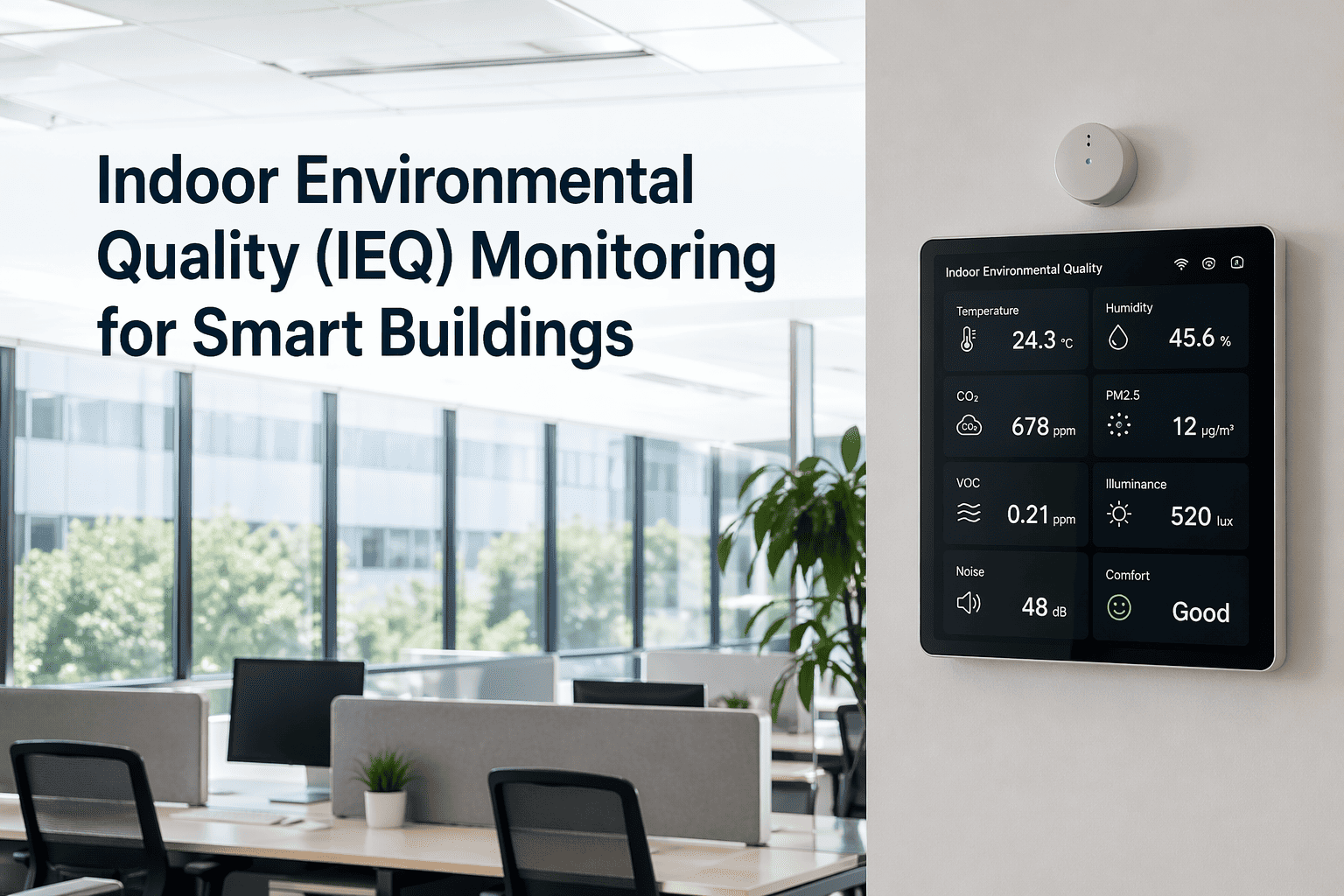
The EPA estimates indoor air is two to five times more polluted than outdoor air, yet most commercial buildings operate with no continuous IAQ monitoring in place. A Harvard T.H. Chan School of Public Health study found that improving indoor air quality in office buildings can enhance cognitive function by 61%. Workers across 6 countries confirmed PM2.5 directly impacts cognition, and CO2 levels routinely exceed 1,000 ppm in conference rooms during extended meetings without FM teams knowing. Poor IAQ is responsible for sick building syndrome, elevated absenteeism, tenant churn, and direct regulatory exposure under ASHRAE 62.1-2025, OSHA, WELL v2, and LEED v4.1 standards. FM teams managing buildings over 25,000 sq ft in New York also face Local Law 97 carbon obligations where ventilation system performance directly affects carbon intensity calculations. The IAQ monitoring market is growing at 6.3% CAGR through 2035, and 67% of commercial buildings are now implementing IAQ solutions in response to occupant health demands. This guide defines the specific pollutants, sensor types, compliance thresholds, and CMMS-tracked PM schedules that turn invisible air quality problems into measurable, managed building performance. Sign up free to connect your building's IAQ sensors to a structured asset and PM register, or book a demo to see how Oxmaint tracks ventilation equipment maintenance, filter schedules, and IAQ compliance documentation in one auditable platform.
Connect IAQ Sensors to Asset Records and CMMS-Tracked Filtration PM Schedules
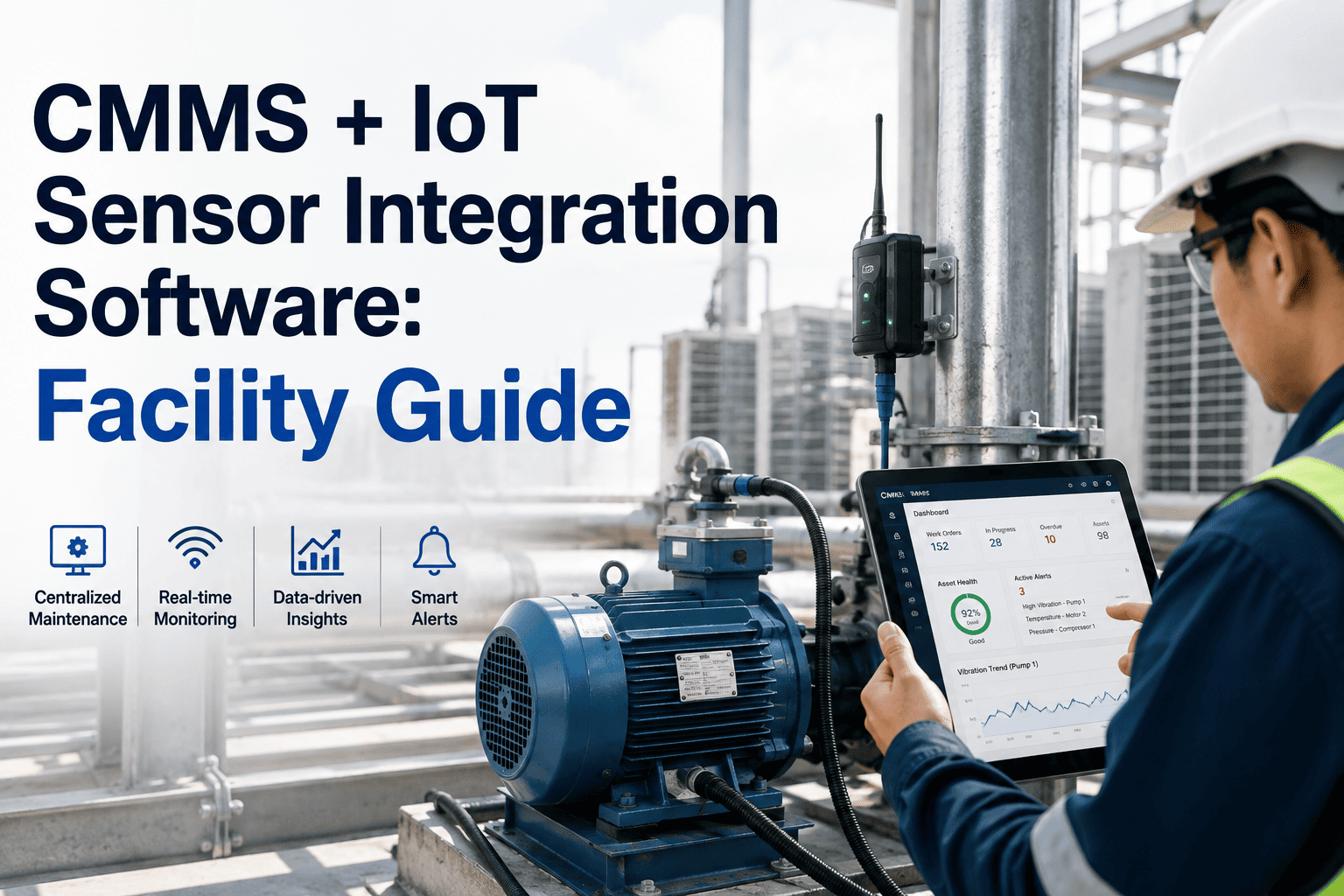
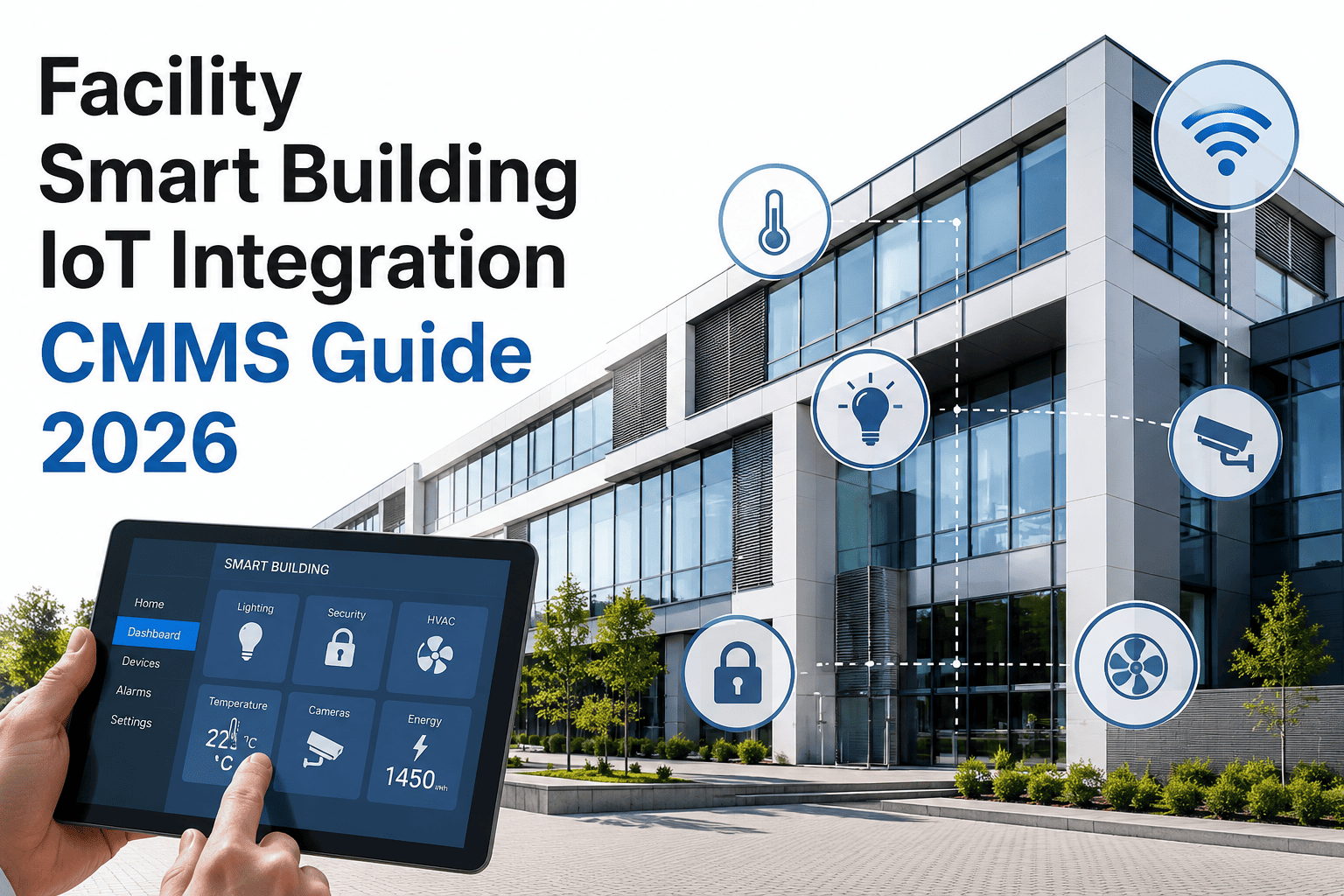
Oxmaint integrates CO2, PM2.5, VOC, and humidity sensor data with your HVAC and AHU asset records, auto-generates filter change and duct cleaning work orders when IAQ thresholds are breached, and produces the ventilation compliance documentation ASHRAE 62.1 audits require.
Six IAQ Pollutants FM Teams Must Monitor in 2026
Each pollutant has a distinct source, a distinct health consequence, and a distinct ASHRAE or EPA threshold. FM teams managing without continuous monitoring discover problems only after occupant complaints, sick leave spikes, or failed WELL certification audits. The six pollutants below account for the majority of commercial building IAQ failures.
Auto-Generate IAQ Maintenance Work Orders When Sensor Thresholds Are Breached
Oxmaint connects CO2, PM2.5, VOC, and humidity sensor feeds to your HVAC asset records. When an IAQ threshold is exceeded, Oxmaint automatically creates a work order linked to the specific AHU, filter, or ventilation zone responsible, with the task, technician assignment, and compliance tag pre-populated. Book a demo to see IAQ-triggered work orders in action.
ASHRAE 62.1, WELL v2, LEED v4.1 and OSHA: IAQ Compliance Requirements for FM Teams
IAQ compliance in 2026 is no longer voluntary for buildings pursuing WELL or LEED certification, operating in Local Law 97 jurisdictions, or housing healthcare and educational occupants. The table below maps each framework to its specific FM documentation and monitoring requirement.
| Framework | Applicability | Key IAQ Requirement | FM Documentation Needed |
|---|---|---|---|
| ASHRAE 62.1-2025 | All new and renovated US commercial buildings. Adopted by most state building codes as minimum ventilation standard. | Minimum outdoor air ventilation rates by space type and occupancy. Humidity control with maximum dew-point requirements in mechanically cooled buildings. Emergency ventilation controls. | Ventilation system commissioning records, outdoor air damper inspection logs, humidity monitoring data, and AHU maintenance completion records by space zone. |
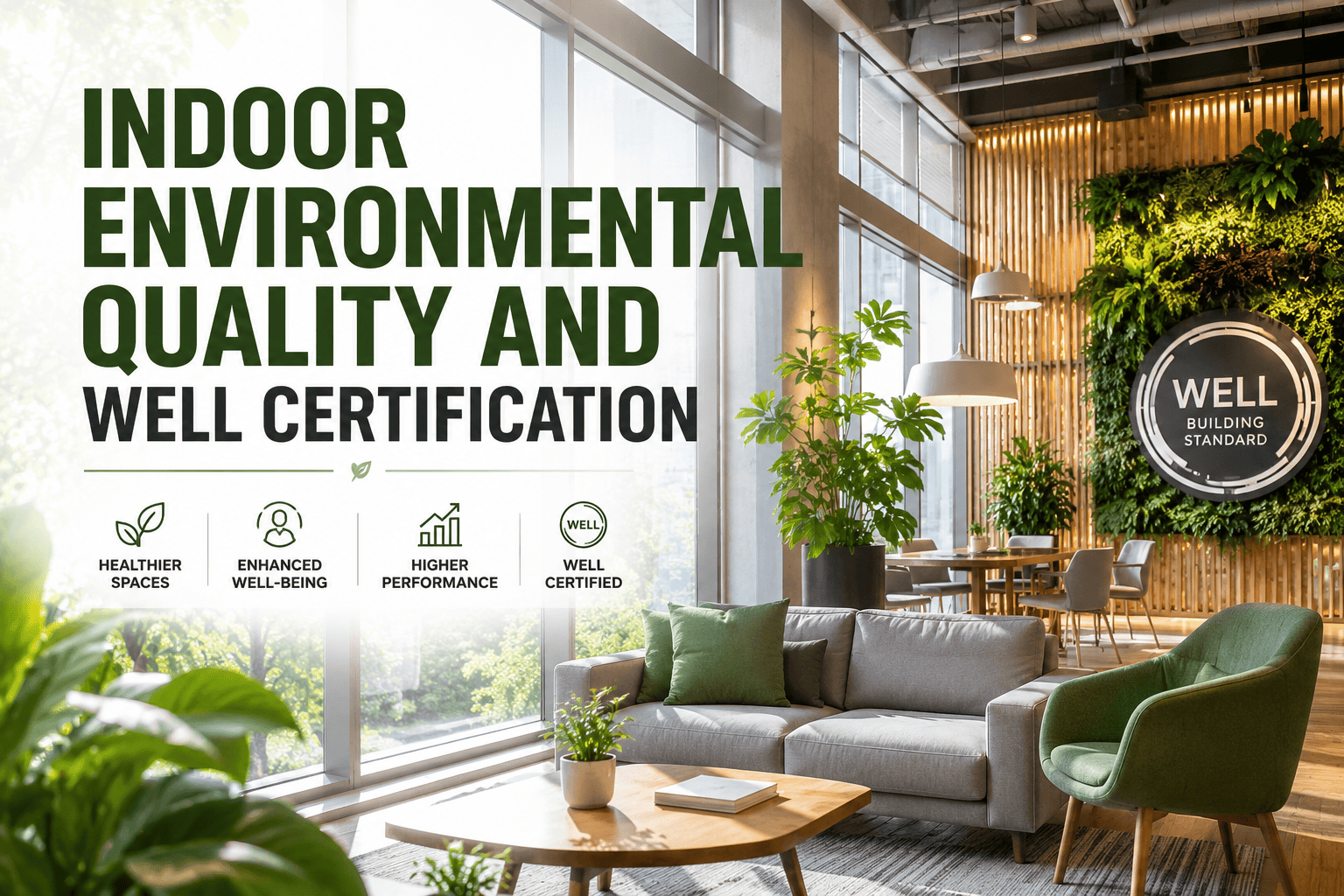
| WELL v2 (IWBI) | Buildings pursuing WELL Gold or Platinum certification. Required for WELL Health-Safety Rating. | TVOC below 500 ug/m3, formaldehyde below 27 ppb, PM2.5 below 12 ug/m3, CO2 below 1,000 ppm. Continuous monitoring with real-time dashboard display required for WELL Platinum. | Continuous IAQ sensor data logs, maintenance records for all filtration and ventilation equipment, air quality test reports, and corrective action work orders when thresholds are exceeded. |
| LEED v4.1 EQ | Buildings pursuing LEED Gold or Platinum certification. IAQ credits required for high-scoring certifications. | EQ Credit: IAQ Assessment requires post-construction flush-out or air testing. EQ Credit: Indoor Air Quality Management during Construction. Ongoing ventilation monitoring for O+M credits. | Post-construction IAQ test reports, ventilation system O+M logs, IAQ monitoring system data, and filter replacement records with MERV rating documentation. |
| OSHA 1910.1000 | US workplaces with employees exposed to specific chemical hazards. Healthcare, laboratories, industrial facilities. | Permissible Exposure Limits (PELs) for 500+ substances. Serious violations up to USD 16,550 per violation in 2025. CO monitoring required where combustion sources present. | Chemical exposure monitoring logs, ventilation system maintenance records demonstrating effectiveness, employee health monitoring data, and corrective action documentation for exceedances. |
| Joint Commission | US hospital and healthcare facility accreditation. Required for Medicare and Medicaid reimbursement. | Comprehensive air quality management plan. Pressure differential monitoring for infection control. HEPA filtration maintenance with documented change intervals. Emergency ventilation testing. | Pressure differential logs, HEPA and MERV filter change records with timestamps, ventilation system PM completion certificates, and air change rate verification documentation. |
| NYC Local Law 97 | NYC buildings over 25,000 sq ft. Carbon intensity limits from 2024 with increasing stringency through 2030. | Carbon intensity limits that are directly affected by HVAC system efficiency and outside air ventilation rates. Poorly maintained ventilation systems increase energy consumption and carbon intensity. | HVAC maintenance records demonstrating equipment efficiency, ventilation system PM logs, energy meter data connected to carbon intensity calculations, and annual compliance reports. |
IAQ Sensor Types and Deployment Strategy for Commercial Buildings
Sensor selection and placement determine whether IAQ monitoring delivers actionable data or expensive noise. Most commercial building IAQ failures are discovered through occupant complaints after weeks or months of subthreshold accumulation. The guide below defines what each sensor type measures, where it must be deployed, and how Oxmaint connects sensor alerts to the specific maintenance actions that resolve the underlying cause.
IAQ Pollutant Thresholds vs Common Building Readings
| Pollutant | Typical Unmanaged Building | ASHRAE / EPA / WELL Threshold | Health Effect Above Threshold | FM Corrective Action |
|---|---|---|---|---|
| CO2 | 800 to 2,500 ppm in meeting rooms, 500 to 700 ppm in open offices | 1,000 ppm ASHRAE 62.1 design target. WELL v2 requires monitoring and ventilation response | Above 1,000 ppm: reduced concentration and decision-making. Above 2,000 ppm: headaches and drowsiness | Increase outside air damper opening. Inspect and clean AHU outside air intakes and actuators |
| PM2.5 | 8 to 35 ug/m3 near roads and urban environments without active filtration management | 12 ug/m3 EPA annual average. 35 ug/m3 EPA 24-hour standard. WELL v2 requires 12 ug/m3 | Cardiovascular inflammation, respiratory disease, direct cognitive performance impairment above 15 ug/m3 | Upgrade MERV filter rating in AHU. Inspect and replace overloaded filters. Seal building envelope gaps |
| TVOC | 200 to 1,500 ug/m3 immediately after renovation or new furniture installation | 500 ug/m3 WELL v2 total VOC limit. Formaldehyde below 27 ppb per WELL Feature X07 | Eye and throat irritation, headaches, and nausea at elevated concentrations. Formaldehyde is a known carcinogen | Increase ventilation rate. Identify and isolate emission source. Schedule material off-gassing flush-out |
| Humidity | 20 to 80% RH seasonal swing without active humidification and dehumidification management | 30 to 60% RH ASHRAE 62.1. ASHRAE 62.1-2025 adds maximum dew-point requirements in cooled spaces | Above 60%: mold growth within 24 to 48 hours on porous surfaces. Below 30%: respiratory irritation | Inspect AHU cooling coil and drain pan. Clean or replace humidifier media. Seal envelope infiltration points |
| CO | 0 to 5 ppm background. Spikes to 50 ppm near loading docks and parking entrances | 9 ppm OSHA 8-hour TWA. 35 ppm OSHA short-term ceiling. ASHRAE Standard 62.1 requires CO control in garages | Above 35 ppm: headaches and dizziness. Above 200 ppm: loss of consciousness. Lethal at higher concentrations | Inspect garage ventilation fan operation. Check gas boiler combustion efficiency. Inspect loading dock air seals |
Five IAQ Failures That Cost FM Teams the Most in 2026
IAQ failures are not isolated incidents. They compound over time, generating occupant health claims, tenant lease breaks, WELL audit failures, and emergency HVAC repairs that cost multiples of the preventive maintenance that would have avoided them. The five failures below account for the majority of commercial building IAQ cost exposure.
IAQ Improvement Performance Benchmarks
Frequently Asked Questions: Indoor Air Quality Management for FM Teams
QWhat is the minimum IAQ monitoring setup for an office building pursuing WELL v2 certification?
QHow does Oxmaint connect IAQ sensor data to maintenance work orders?
QHow often do IAQ sensors need to be calibrated to maintain compliance evidence?
QWhat MERV filter rating does ASHRAE recommend for commercial buildings in 2026?
Monitor Every IAQ Pollutant, Auto-Generate Maintenance Work Orders, and Pass Every WELL Audit
Oxmaint connects your building's CO2, PM2.5, VOC, and humidity sensor feeds to your HVAC asset records and PM schedules. Threshold breaches trigger work orders automatically. Filter change intervals adjust to actual loading. Sensor calibration dates are tracked as scheduled PM tasks. And a single export covers WELL, LEED, ASHRAE 62.1, and tenant IAQ disclosure requirements. Book a 30-minute demo to see IAQ monitoring integration configured for your building portfolio and certification targets.