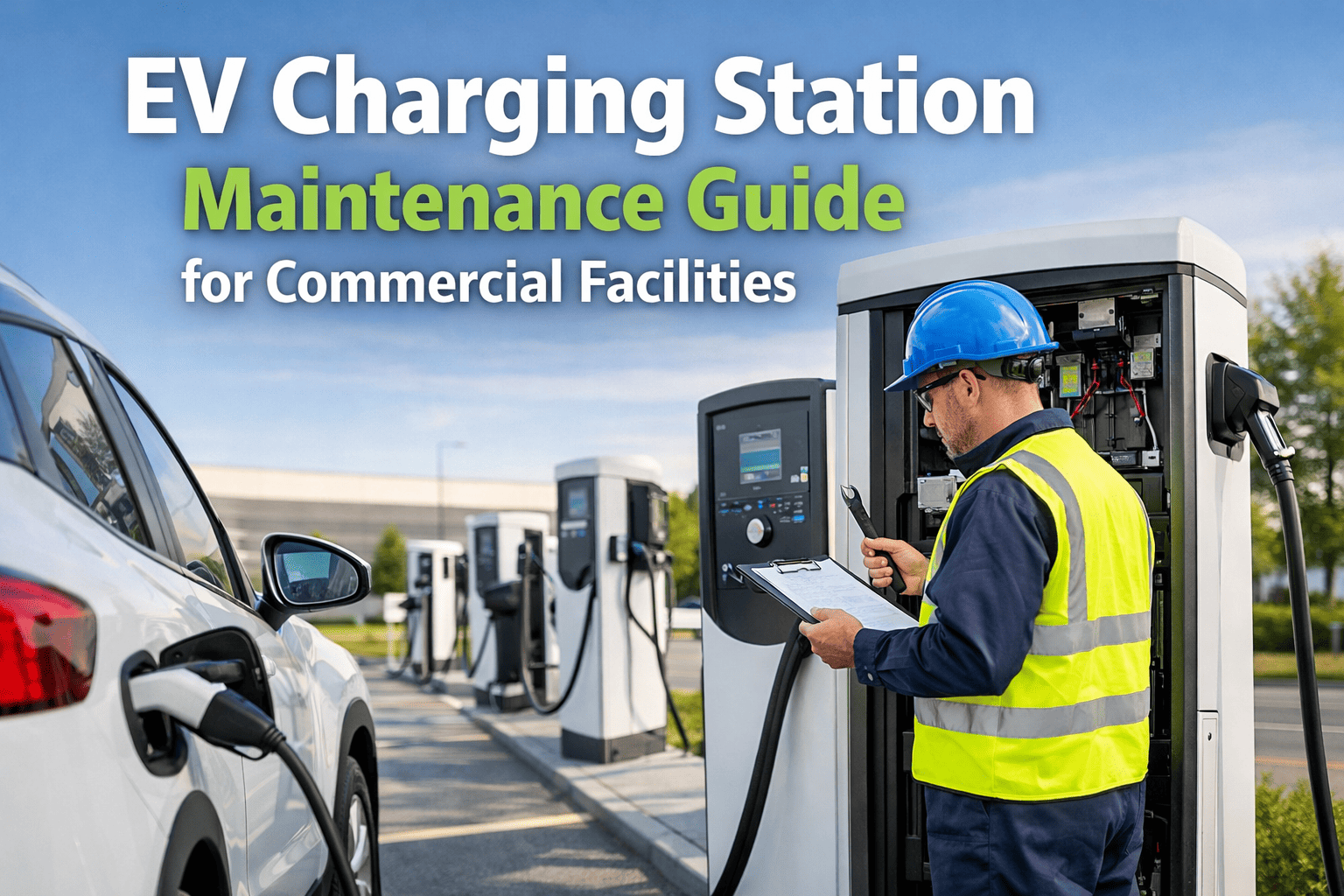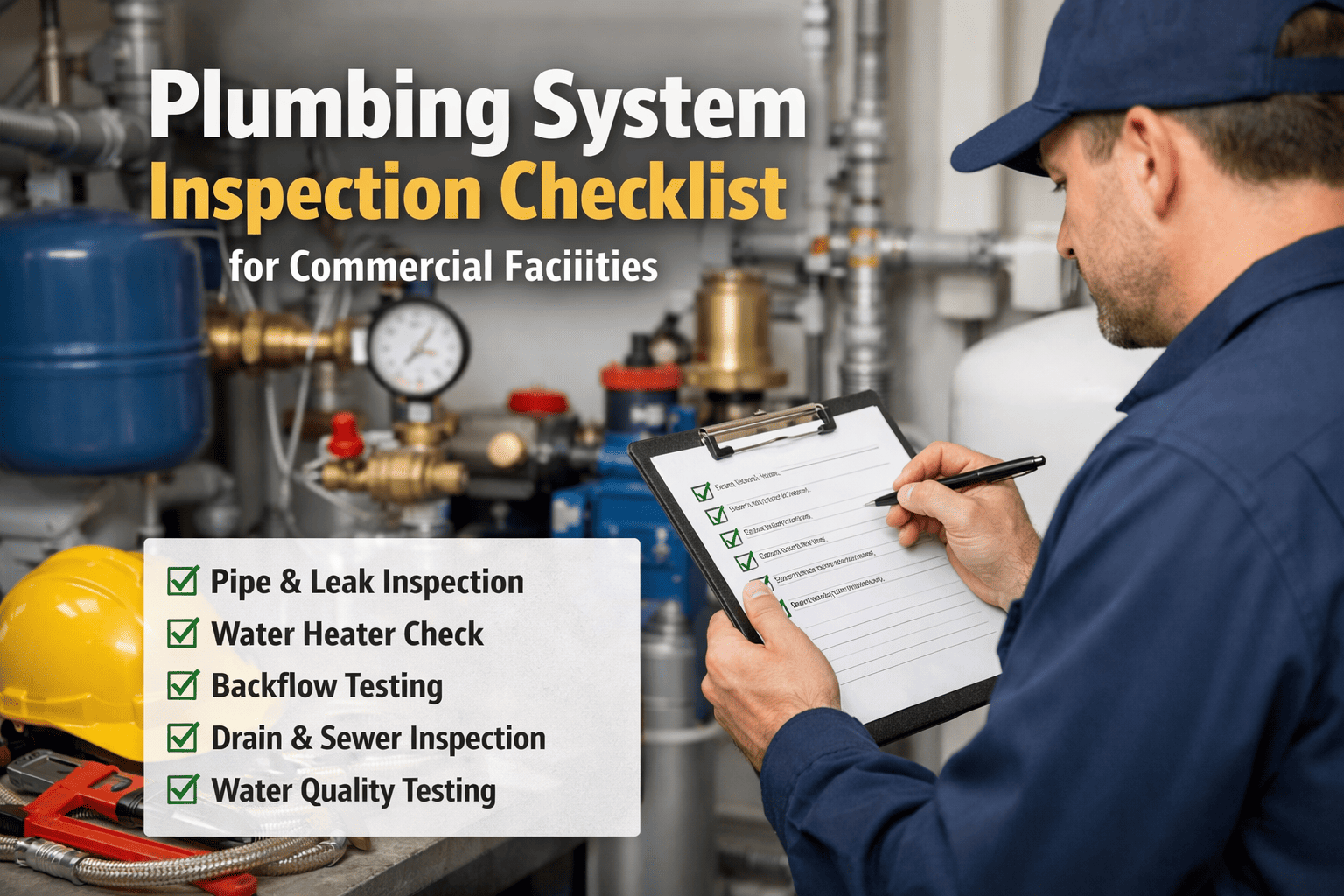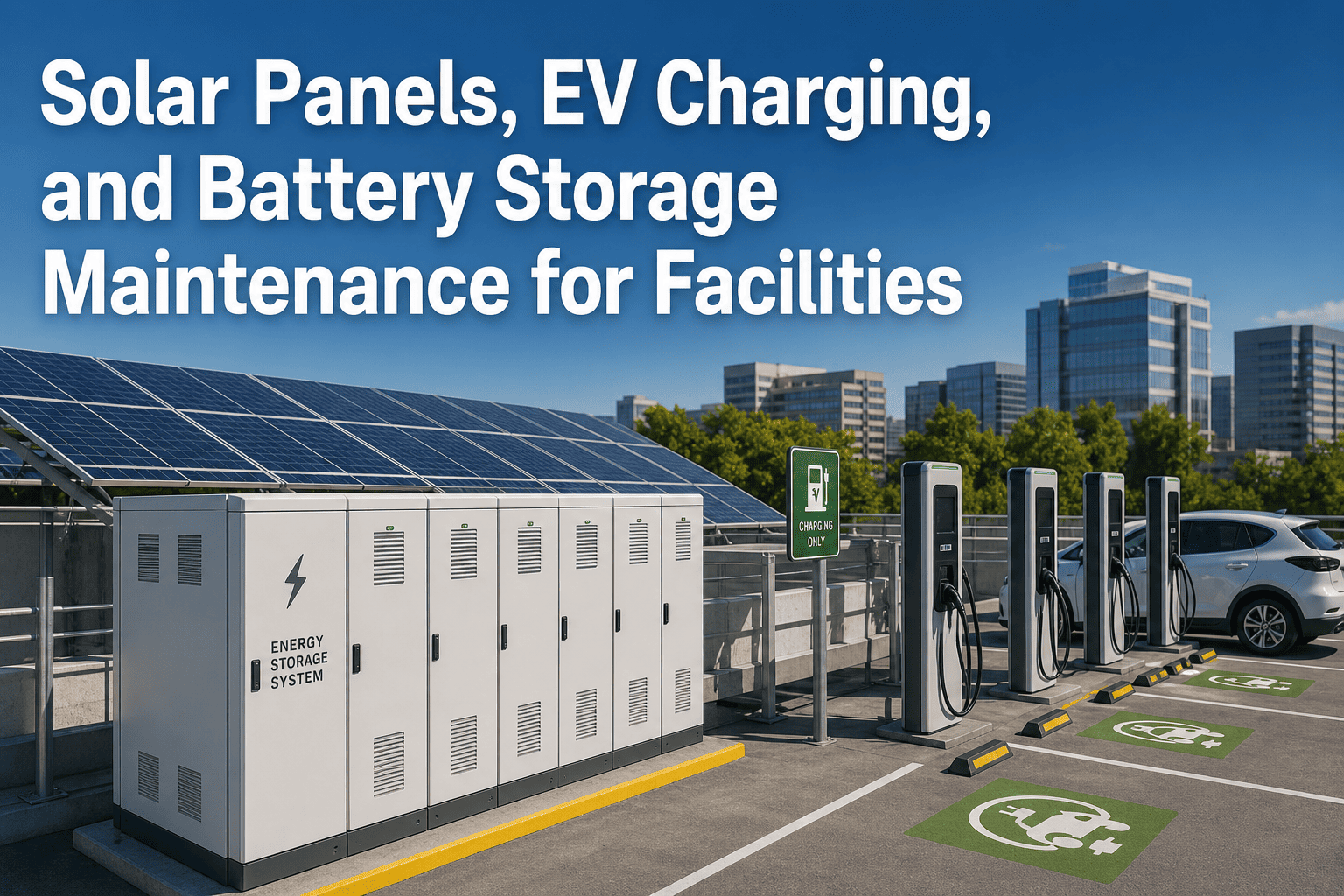
Commercial facilities are no longer just energy consumers — they are energy producers, storage operators, and fleet charging hubs. Solar arrays on the roof, battery storage in the mechanical room, and EV charging stations in the car park represent a new class of critical asset that most facility management programs weren't built to handle. OxMaint's Energy & ESG Reporting module gives facility managers a single maintenance and performance platform for all three green asset types — so your investment in sustainability doesn't quietly degrade from neglected maintenance.
Three Asset Types. One Maintenance Platform.
Solar panels, battery storage systems, and EV chargers each have distinct maintenance requirements, failure modes, and performance KPIs. Managing them across separate spreadsheets or vendor portals means degradation goes undetected until energy bills climb or a charging station goes dark. OxMaint unifies all three into a single preventive maintenance and ESG reporting workflow.
- Quarterly panel cleaning & visual inspection
- Annual IV curve testing per string
- Semi-annual inverter inspection & firmware check
- Thermal imaging for hot spot detection
- DC disconnect and junction box inspection
- Monthly state-of-health (SOH) capacity test
- Quarterly BMS firmware and alarm log review
- Thermal management system inspection (monthly)
- Annual cell voltage balance verification
- Bi-annual safety system and fire suppression check
- Monthly connector and cable visual inspection
- Quarterly firmware update verification
- Semi-annual GFCI and safety interlock test
- Annual load testing at rated capacity
- Seasonal weatherproofing inspection (outdoor units)
Maintenance Impact on Energy ROI: What Gets Lost Without a Program
Every green asset degrades without structured maintenance. The degradation isn't just equipment wear — it's financial performance erosion that compounds year over year. These are the documented costs of deferred maintenance on each asset type.
| Asset | Typical Annual Degradation Without PM | Financial Impact | Maintenance Cost to Prevent |
|---|---|---|---|
| Solar PV (100kW system) | 3–5% output loss from soiling and micro-cracks | $2,400–$4,000/yr in lost energy value | $800–$1,200/yr with quarterly PM |
| BESS (100kWh system) | 5–8% capacity fade, cooling system neglect → thermal risk | $6,000–$15,000 premature replacement cost | $1,500–$2,500/yr with structured PM |
| EV Chargers (10-unit site) | 15–25% charger downtime from unmanaged faults | $8,000–$20,000/yr in lost charging revenue or tenant complaints | $2,000–$4,000/yr with preventive program |
Manage Every Green Asset in One Platform
OxMaint tracks solar panels, BESS systems, and EV chargers alongside your traditional facility assets — with automated PM schedules, performance KPI tracking, and ESG reporting that shows your sustainability investments are maintained and performing.
The Integrated Energy Asset: How Solar, BESS, and EV Charging Work Together
These three asset types are increasingly deployed as a system — and their performance interdependencies mean that a fault in one affects the others. Facilities that manage them together with unified PM scheduling and performance dashboards capture far more value than those managing each asset in isolation.
ESG Reporting: What OxMaint Documents Automatically
Facilities under ESG reporting obligations — public companies, GRESB-rated real estate, and ISO 50001 certified sites — need documented evidence that green assets are maintained and performing. OxMaint's Energy & ESG Reporting module generates this automatically from maintenance and sensor data.
Expert Review
The biggest blind spot I see in commercial facilities is treating solar, battery storage, and EV chargers as fire-and-forget investments. Operators spend months justifying the capital expenditure, then have no structured plan for keeping those assets at peak performance. A solar array losing 4% output annually from unmanaged soiling pays back that whole maintenance budget in the first year of cleaning. When OxMaint links the PM schedule to the energy performance dashboard, facility managers can see the direct line between a missed inspection and a dip in performance ratio — and that visibility changes maintenance behavior permanently.
PM Schedule Benchmark: Green Assets by Frequency
| Task | Asset | Frequency | Consequence if Skipped |
|---|---|---|---|
| Panel cleaning | Solar PV | Quarterly | 3–5% annual yield loss from soiling accumulation |
| Inverter inspection & firmware | Solar PV / BESS | Semi-annual | Silent MPPT faults, string disconnection, fire risk |
| SOH capacity test | BESS | Monthly | Undetected capacity fade, peak-shaving failure, warranty void |
| Thermal management check | BESS | Monthly | Thermal runaway risk — the most severe BESS failure mode |
| Connector & cable inspection | EV Chargers | Monthly | Insulation damage, arc fault risk, charger downtime |
| GFCI & safety interlock test | EV Chargers | Semi-annual | Liability exposure, safety system failure at point of use |
| Thermal imaging (hot spot) | Solar PV | Annual | Undetected micro-cracks, diode failures, fire risk at junction boxes |
Your Green Assets Are Only as Good as Their Maintenance
OxMaint automates PM scheduling, tracks performance KPIs, and generates ESG reports for solar, BESS, and EV charging — so your sustainability investment delivers the returns it was designed for. Book a demo to see the full Energy & ESG module in action.
Frequently Asked Questions
How does a CMMS help manage solar panels differently from a monitoring dashboard?
Solar monitoring dashboards — from inverter manufacturers like SolarEdge or Enphase — show real-time and historical performance data, but they don't manage the maintenance actions that keep performance high. A CMMS like OxMaint uses performance data as a trigger to create maintenance work orders: when specific yield drops below threshold, OxMaint creates a cleaning work order. When an inverter alarm fires, a work order is generated with asset context, technician assignment, and parts list attached. The monitoring dashboard tells you something is wrong; OxMaint tells the right person to fix it, documents the fix, and tracks whether performance recovers — all in a single permanent asset record that feeds ESG reporting automatically.
What are the most critical BESS maintenance tasks for commercial facility operators?
The most critical battery energy storage maintenance task is monthly state-of-health (SOH) capacity testing — because BESS capacity fade is invisible until it becomes a performance failure. A system commissioned at 100kWh quietly delivering only 72kWh due to cell degradation is a peak-shaving failure waiting to happen, and without structured testing, the gap goes undetected for months. The second most critical task is monthly thermal management system inspection — cooling system failures are the primary pathway to thermal runaway, the most severe BESS failure mode. OxMaint automates both tasks as scheduled PM work orders with mobile completion confirmation, photo documentation, and automatic escalation if health metrics fall below defined thresholds. All SOH data feeds directly into OxMaint's ESG reporting module for warranty compliance and capital planning documentation.
How often do commercial EV chargers need maintenance, and what does it cost?
Commercial EV chargers need monthly visual inspection of connectors, cables, and mounting hardware — connector wear is the most common cause of Level 2 and DC fast charger downtime, and catching insulation damage early prevents the arc fault risk and liability exposure of a failed charging session. Quarterly firmware updates prevent the network connectivity failures that create ghost downtime — chargers that appear operational in the fleet management system but fail to initiate sessions. Semi-annual GFCI and safety interlock testing is a code requirement in most jurisdictions. Annual maintenance costs for a 10-station commercial charging site typically run $2,000–$4,000 per year under a structured PM program — versus $8,000–$20,000 per year in unplanned repair costs and tenant complaint management when maintenance is deferred. OxMaint manages the full PM schedule with automatic work order creation, technician mobile completion, and uptime tracking.
Can OxMaint generate the ESG documentation required for GRESB or ISO 50001 reporting?
OxMaint's Energy & ESG Reporting module generates documented records of energy asset performance and maintenance compliance that support GRESB, ISO 50001, GRI Standards, and GHG Protocol reporting requirements. Specifically, OxMaint automatically documents monthly energy generation, storage, and EV delivery data; PM completion rates and inspection history by asset; carbon avoidance calculations using EPA eGRID emission factors; and asset health history for capital planning disclosure. Reports are exportable in structured formats suitable for direct use in GRESB data submissions, ISO 50001 management review documentation, and scope 2 emissions reporting. The maintenance compliance records are particularly valuable for GRESB's Management & Policy scoring, where evidence of active asset stewardship — not just ownership of green assets — determines rating outcomes.