Facility teams that pass every internal review still lose bids to competitors who can show ISO 41001 certification on a tender document. The standard does not ask for cleaner buildings — it asks for a governed management system with a documented policy, competence records, measured outcomes, and management review, the same rigor institutional clients now expect before signing a facility services contract. Certification bodies report that most FM organisations underestimate the documentation burden and treat ISO 41001 as an audit event rather than an operating system change that touches intake, vendor evaluation, and asset records alike. Moving from ad-hoc FM to a certifiable management system typically takes 9 to 14 months of structured build-out across policy, planning, support, operation, and performance evaluation. OxMaint's CMMS platform maps directly onto the ISO 41001 clause structure so every requirement has a system of record behind it.
Governance · Facility Management
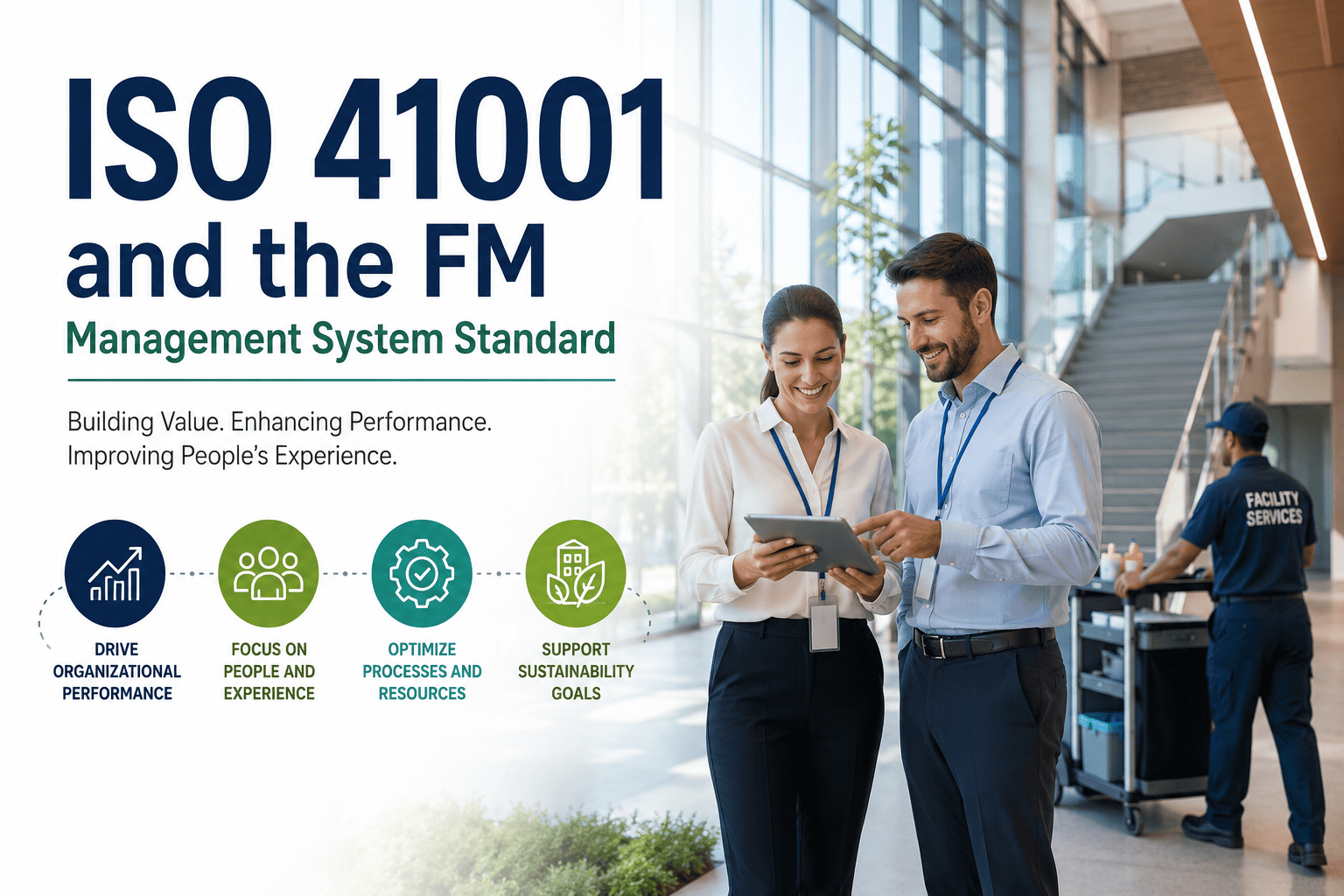
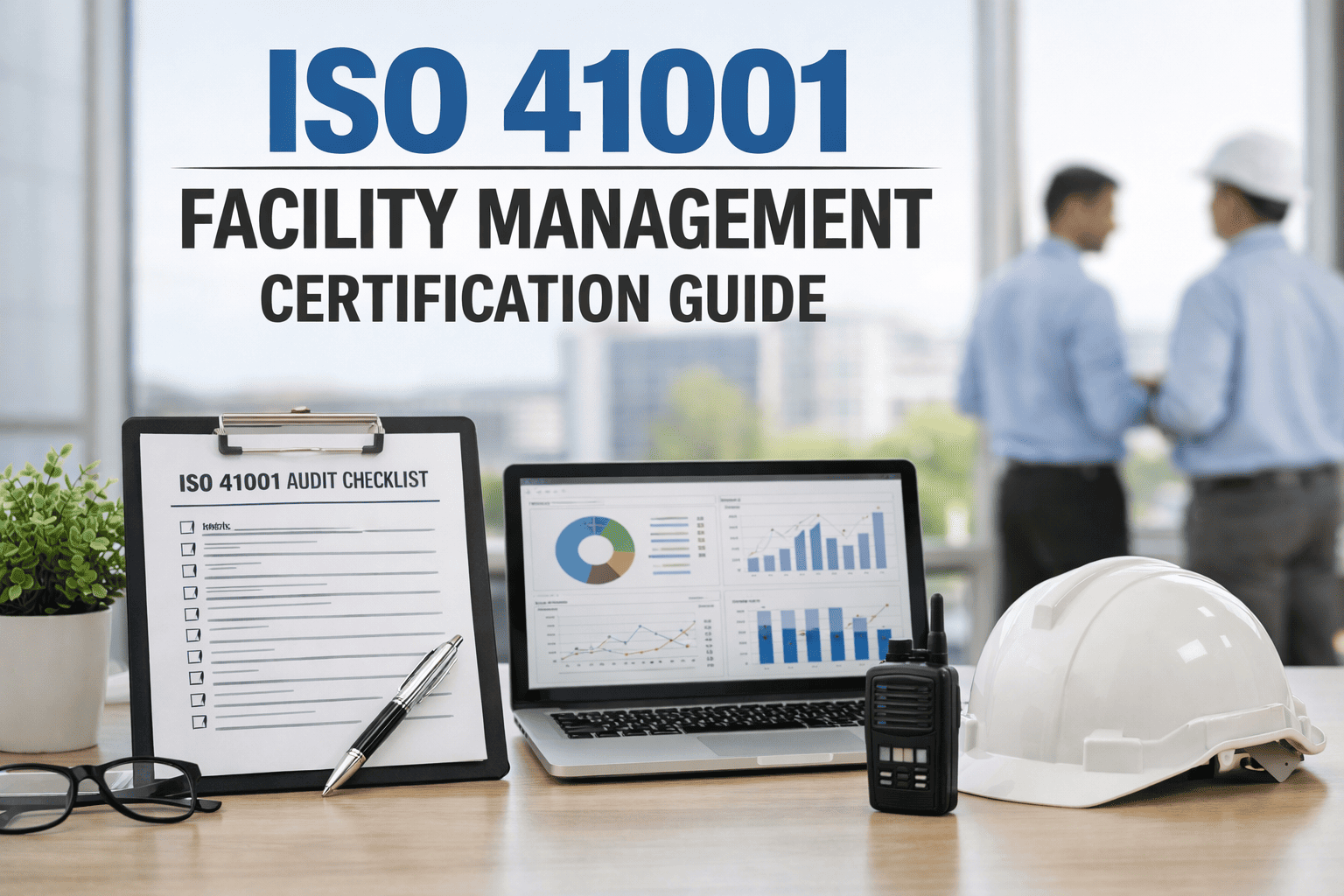
ISO 41001 Facility Management System Standard
The certifiable management system for FM — policy, competence, operational control, and performance review in one auditable structure.
10
Clauses covering context, leadership, planning, support, operation, and review
9–14 mo
Typical build-out time from gap assessment to certification audit
3 yr
Certification cycle with annual surveillance audits
The Clause Structure Behind Certification
ISO 41001 follows the same high-level structure as ISO 9001 and ISO 14001, which is why organisations already certified to those standards move faster. Each clause below needs documented evidence, not just intent.
Cl. 4
Context of the Organisation
Scope of the FM system, interested parties, and internal/external issues that affect service delivery. This is the clause that defines which sites, contracts, and service lines actually fall under the certificate.
Cl. 5
Leadership
Documented FM policy, assigned roles and authorities, and demonstrated top management commitment. Auditors look for evidence leadership actively reviews the system, not just signs off on it once a year.
Cl. 6
Planning
Risk and opportunity register tied to FM objectives, with measurable targets and timelines. Objectives need to be specific enough that progress can be scored at the next management review.
Cl. 7
Support
Competence records, technician training logs, communication protocols, and controlled documentation. This clause is where most Stage 2 findings originate because records fall out of date silently.
Cl. 8
Operation
Operational controls for work orders, vendor management, emergency preparedness, and change control. Covers the day-to-day processes that make up the bulk of what an FM team actually does.
Cl. 9
Performance Evaluation
Monitoring and measurement of FM outcomes, internal audit programme, and formal management review meetings with documented minutes and actions.
Cl. 10
Improvement
Nonconformity handling, root-cause analysis, and corrective action tracking through to verified closure ahead of the next surveillance audit.
Where Certification Attempts Usually Stall
The same handful of gaps show up across most failed Stage 2 audits, and all of them are process problems rather than resourcing problems.
Stale Competence Records
Training logs exist but were never updated after certifications expired or technicians changed roles.
Undocumented Risk Reviews
Risk registers get created once for the audit and are never revisited at the planned review interval.
Inconsistent Scope Across Sites
Procedures applied at headquarters are not actually followed the same way at satellite locations.
Corrective Actions Left Open
Internal audit findings get logged but never tracked through to a verified, evidenced closure.
The Certification Journey
Certification bodies audit evidence, not intentions. A structured path from gap assessment to surveillance keeps the project on schedule and avoids a failed Stage 1 audit.
1
Gap Assessment
Current FM practices measured against all 10 clauses to size the real effort.
2
Documentation Build
Policy, procedures, competence matrix, and risk register drafted and approved.
3
Internal Audit
Full internal audit cycle with corrective actions closed before external review.
4
Certification Audit
Stage 1 documentation review followed by Stage 2 on-site operational audit.
5
Surveillance
Annual surveillance audits maintain certification across the three-year cycle.
6
Recertification
Full reassessment at the end of the three-year cycle, informed by trends from prior surveillance audits.
Certified vs Uncertified FM Operations
The difference shows up long before an auditor arrives — in how quickly the organisation can produce evidence when a client or regulator asks for it.
| Operating Area | Uncertified FM | ISO 41001 Certified |
| Policy & objectives |
Informal, undocumented |
Documented, reviewed annually |
| Technician competence |
Assumed, untracked |
Recorded matrix with renewal dates |
| Risk management |
Reactive, incident-driven |
Registered, scored, reviewed |
| Audit readiness |
Weeks of preparation |
Evidence available on demand |
| Client tender eligibility |
Excluded from certified-only RFPs |
Qualifies for institutional contracts |
| Corrective actions |
Logged informally, rarely closed |
Tracked to verified closure |
| Vendor evaluation |
No formal scoring criteria |
Documented evaluation against set criteria |
| Management review |
Ad hoc leadership check-ins |
Scheduled reviews with recorded minutes |
Expert Review
In two decades of FM consulting, the organisations that fail Stage 2 audits are rarely doing bad work — they simply cannot produce the paper trail an auditor asks for on the spot. A CMMS that already generates competence records, risk logs, and closed corrective actions as a byproduct of daily operations turns certification from a six-month scramble into a formality. That is the real value of building the system before you need the certificate.
Renata Kowalski, IFMA Fellow — FM management systems consultant, 19 years advising ISO 41001 certification programs
Build the evidence trail before the auditor asks for it. OxMaint structures work orders, competence records, and risk logs around the ISO 41001 clause set so certification readiness is a byproduct of daily operations.
Frequently Asked Questions
How long does ISO 41001 certification actually take?
Most organisations complete gap assessment through certification audit in 9 to 14 months. Timeline depends on documentation maturity and how many corrective actions surface during internal audit.
Book a demo to map a realistic timeline for your portfolio.
Can OxMaint generate the evidence auditors ask for?
Yes. Competence records, work order history, risk logs, and corrective action tracking are captured automatically as part of daily operations rather than compiled separately.
Sign up free to see the audit evidence reports.
Do we need ISO 9001 first before pursuing ISO 41001?
No, ISO 41001 stands alone. Organisations already certified to ISO 9001 or ISO 14001 move faster because the clause structure and audit cycle are shared across all management system standards.
What is the most common reason organisations fail Stage 2 audits?
Missing or inconsistent evidence — competence records that were never updated, or risk registers that exist but were never reviewed.
Book a 30-minute session to review your current audit readiness.
Does certification apply per building or across the whole portfolio?
Scope is defined during Clause 4 and can cover a single site or the entire portfolio under one management system, provided processes are applied consistently across all included sites.
Turn Daily Operations Into Certification Evidence
One system that captures competence, risk, and performance data as work happens — so ISO 41001 readiness is never a scramble.