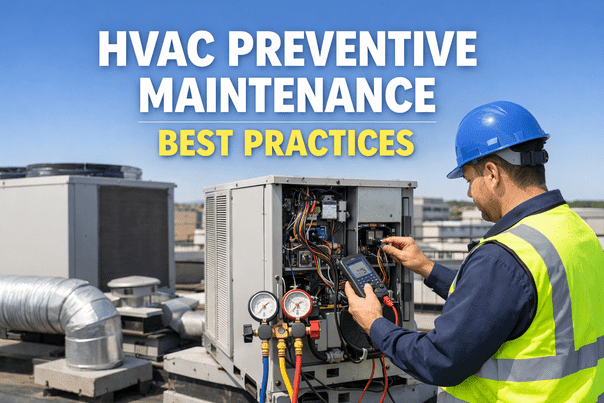
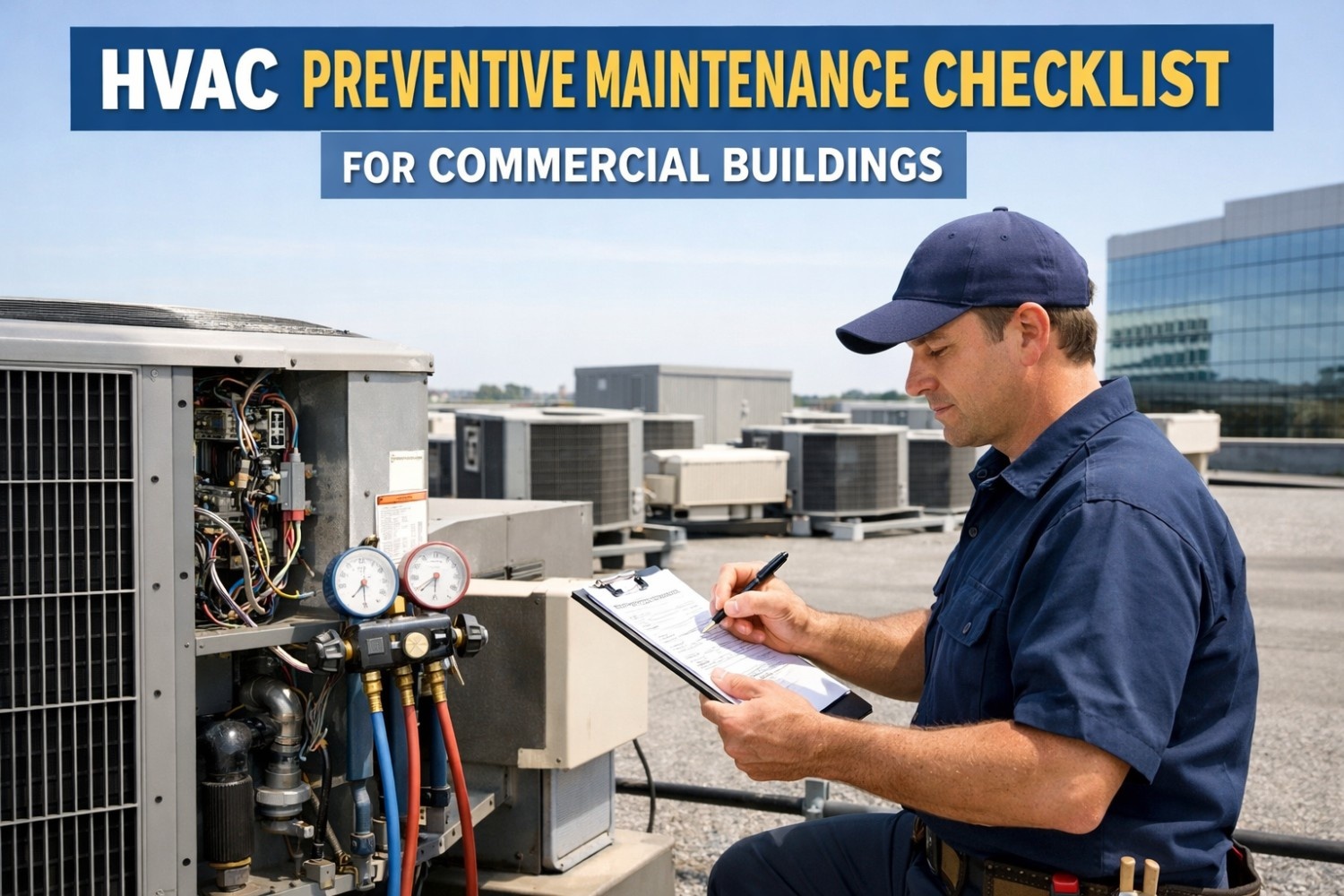
Preventive Maintenance Checklist for Commercial Facilities
By shreen on March 14, 2026
Commercial facilities lose an average of $18,000 per unplanned equipment failure—and most failures trace back to skipped or poorly documented preventive maintenance tasks. When HVAC units break mid-summer, elevators stall during peak hours, or fire suppression systems fail inspections, the root cause is rarely a surprise. It is a missed filter change, an overlooked belt inspection, or a quarterly check that never happened because nobody tracked it. Facilities that replace paper-based PM checklists with a digital CMMS platform like Oxmaint reduce emergency repair calls by 47% and extend average equipment life by 3–5 years. Schedule a free demo to see how automated PM scheduling eliminates missed tasks across every building system.
47%
Reduction in emergency repair calls after implementing structured digital PM checklists
3–5 yrs
Average equipment life extension when preventive maintenance schedules are consistently followed
$18K
Average cost of a single unplanned equipment failure in commercial buildings over 50,000 sq ft
82%
Of facility managers report compliance gaps from manual tracking of preventive maintenance tasks
Why Reactive Maintenance Is Draining Your Facility Budget
Most commercial facilities still operate in reactive mode—fixing equipment after it breaks instead of maintaining it before problems start. This approach costs 3–5x more per repair than planned preventive maintenance, disrupts tenant operations, triggers regulatory penalties, and shortens the lifespan of every major building system. The shift from reactive to preventive maintenance is not optional—it is the single largest operational cost lever facility managers control. Sign up for Oxmaint free to start scheduling and tracking PM tasks across all your building systems today.
Reactive Maintenance
- Equipment runs until failure—repairs cost 3–5x more than planned service
- Tenant complaints spike during unplanned HVAC, elevator, or plumbing outages
- Regulatory inspections fail when maintenance records are incomplete or missing
- Emergency contractor callouts at premium rates eat into operating budgets
- Equipment warranties voided by inability to prove scheduled maintenance was performed
Preventive with Oxmaint
+ Scheduled maintenance prevents 80% of unplanned equipment failures
+ Automated task reminders ensure zero missed inspections across all systems
+ Digital records provide instant audit-ready documentation for every task
+ In-house teams handle 90%+ of work—eliminating emergency contractor premiums
+ Complete maintenance history protects warranties and extends equipment ROI
Key Insight
Preventive Maintenance Saves $4 for Every $1 Spent
The U.S. Department of Energy estimates that a well-executed preventive maintenance program in commercial facilities returns $4 in avoided repair and replacement costs for every $1 invested. For a 200,000 sq ft office complex spending $280,000 annually on maintenance, that translates to over $840,000 in avoided emergency repairs, extended equipment life, and reduced energy waste. Facilities using Oxmaint's PM scheduling achieve full compliance within 60 days of deployment.
Complete Preventive Maintenance Checklist by Building System
Each section below covers a critical building system with specific PM inspection items. Facilities using Oxmaint's digital checklists assign these tasks to technicians with due dates, photo verification requirements, and automatic escalation when deadlines pass.
HVC
HVAC Systems
HVAC Preventive Maintenance
HVAC accounts for 40–60% of commercial building energy costs. Neglected filters, coils, and belts reduce efficiency by 5–15% annually and lead to compressor failures costing $8,000–$25,000 per unit.
Replace or clean air filtersMonthly for standard filters, quarterly for HEPA — record filter type, size, and MERV rating for each unit
Inspect and clean condenser and evaporator coilsQuarterly — dirty coils increase energy consumption by 30% and accelerate compressor wear
Check belt tension and alignment on AHUsMonthly — loose belts reduce airflow by 20% and cause premature motor bearing failure
Test thermostat calibration and control sequencesQuarterly — a 2-degree calibration drift increases annual energy spend by 6–8%
Inspect refrigerant levels and check for leaksSemi-annually — low refrigerant causes compressor overwork and potential regulatory violations
+ Detects coil fouling, belt degradation, and refrigerant leaks before efficiency drops
+ Prevents compressor failures that average $12,000+ in emergency replacement costs
ELC
Electrical Systems
Electrical System Inspections
Electrical failures cause 28% of commercial building fires. Regular inspection of panels, connections, and grounding systems prevents arc flash incidents and reduces insurance premiums by up to 15%.
Thermal scan electrical panels and switchgearQuarterly — infrared imaging detects hot spots from loose connections before they cause arc flash events
Test GFCI outlets and breaker functionMonthly — OSHA and NEC require functional ground fault protection in all wet and commercial areas
Inspect emergency and exit lightingMonthly function test, annual 90-minute battery discharge test per NFPA 101 and local fire codes
Check transformer oil levels and temperatureQuarterly for pad-mount transformers — overheating degrades insulation and causes catastrophic failures
+ Identifies loose connections and overheating components before arc flash incidents
+ Ensures NFPA, NEC, and OSHA electrical compliance documentation is always current
PLB
Plumbing Systems
Plumbing and Water System Maintenance
A single undetected pipe leak wastes 10,000+ gallons of water monthly and creates mold conditions that cost $15,000–$50,000 to remediate. Scheduled plumbing inspections catch problems when they are a $200 repair, not a $20,000 disaster.
Inspect all visible pipes for leaks, corrosion, and condensationMonthly — check mechanical rooms, ceiling spaces, and under-sink areas in restrooms
Test backflow prevention devicesAnnually — required by local codes and essential for potable water safety in commercial buildings
Flush water heaters and check anode rodsSemi-annually — sediment buildup reduces heating efficiency by 25% and accelerates tank corrosion
Clear floor drains and grease trapsMonthly — clogged drains cause flooding, health code violations, and tenant disruption
+ Catches pipe corrosion and slow leaks before they cause water damage and mold
+ Prevents backflow contamination events that trigger health department shutdowns
FLS
Fire & Life Safety
Fire and Life Safety Systems
Fire code violations are the most frequently cited reason for commercial building fines, averaging $2,500–$10,000 per citation. Fire alarm, sprinkler, and extinguisher maintenance is not discretionary—it is legally mandated on strict schedules.
Test fire alarm panel and pull stationsMonthly — NFPA 72 requires documented monthly testing of all initiating devices and notification appliances
Inspect sprinkler heads and control valvesQuarterly visual, annual full inspection per NFPA 25 — check for paint, corrosion, obstructions, and proper clearance
Service fire extinguishersMonthly visual check, annual professional service, 6-year maintenance, and 12-year hydrostatic test per NFPA 10
Test emergency generator under loadMonthly 30-minute load test per NFPA 110 — verify fuel level, battery condition, and transfer switch operation
+ Ensures 100% fire code compliance and avoids $2,500–$10,000 per-citation penalties
+ Validates life safety systems function correctly before an actual emergency occurs
BEV
Building Envelope
Building Envelope and Structural Checks
Roof leaks, failed caulking, and cracked facades account for 35% of commercial property insurance claims. A $500 semi-annual roof inspection prevents the $45,000 average cost of interior water damage from an undetected membrane breach. Sign up for Oxmaint to schedule seasonal envelope inspections with photo documentation requirements.
Inspect roof membrane, flashing, and drainageSemi-annually and after major storms — check for ponding water, membrane splits, and clogged scuppers
Check exterior caulking and weathersealsAnnually — failed sealants around windows and joints allow water intrusion that damages insulation and structure
Inspect parking structure for concrete spalling and rebar exposureAnnually — deicing salt accelerates concrete deterioration in northern climates
Test exterior lighting and signageMonthly — non-functional parking lot and entrance lighting creates liability exposure and tenant safety concerns
+ Catches roof membrane failures and water intrusion before interior damage occurs
+ Prevents structural deterioration that leads to six-figure capital repair projects
Stop tracking preventive maintenance on spreadsheets and whiteboards. Oxmaint automates PM scheduling, sends technician reminders, enforces photo verification, and generates audit-ready compliance reports—across every building system from a single dashboard.
A preventive maintenance checklist is only as effective as the system enforcing it. Oxmaint turns static checklists into automated, trackable, and accountable workflows that ensure every task gets done on schedule with verifiable documentation.
Automated PM Scheduling
Set frequency-based schedules for every building system—monthly filter changes, quarterly electrical scans, annual fire inspections. Oxmaint auto-generates work orders and assigns them to the right technician on the right day.
Auto Work OrdersCalendar Sync
Mobile Checklists with Photo Proof
Technicians complete PM tasks on their phones with step-by-step checklists. Required photo fields ensure visual verification of completed work—no more signing off on tasks that were not actually performed.
Mobile AppPhoto Capture
Compliance Reporting
Generate instant reports showing PM completion rates, overdue tasks, and compliance status by building system. When fire marshals or insurance auditors arrive, pull the documentation in seconds instead of searching filing cabinets.
Audit ReadyOne-Click Reports
Escalation and Accountability
Missed PM tasks automatically escalate to supervisors. Overdue work orders trigger push notifications at 24, 48, and 72-hour thresholds. Every task has a clear owner, a due date, and a completion audit trail. Sign up free to set up escalation rules for your team.
Auto EscalationPush Alerts
Implementation Roadmap: PM Compliance in 60 Days
Transitioning from ad-hoc maintenance to a structured PM program does not require months of planning. Facilities using Oxmaint reach full PM compliance within 60 days by following this proven deployment sequence.
Week 1–2
Asset Inventory and System Mapping
Catalog every maintainable asset across HVAC, electrical, plumbing, fire safety, and building envelope systems. Record model numbers, installation dates, warranty status, and current condition. Load everything into Oxmaint's asset registry.
Week 3–4
PM Schedule Configuration
Define inspection frequencies, checklist items, and photo requirements for each building system using manufacturer recommendations and code requirements. Assign technicians and set escalation rules for overdue tasks.
Week 5–6
Team Training and First PM Cycle
Train maintenance staff on mobile checklists and work order completion. Run the first full PM cycle across all systems. Identify workflow gaps and adjust task assignments based on actual completion times.
Week 7–8
Full Compliance and Optimization
All PM schedules running automatically. Review completion rate dashboards, adjust frequencies based on asset condition data, and generate your first compliance report. Target: 95%+ PM completion rate within 60 days.
We went from 62% PM completion to 97% in under two months after switching to Oxmaint. The automated reminders and photo verification eliminated the "I forgot" and "I checked it" excuses that had been undermining our program for years.
Facilities Director, 350,000 sq ft Mixed-Use Commercial Complex
Your Building Deserves Better Than Reactive Maintenance
Every skipped inspection is a future emergency. Every undocumented task is a compliance risk. Oxmaint gives your maintenance team the digital checklist system, automated scheduling, and audit-ready records to run a preventive maintenance program that actually works. Start protecting your equipment, your budget, and your tenants today.
How often should preventive maintenance be performed in commercial buildings?
Frequency varies by system: HVAC filters monthly, electrical thermography quarterly, fire alarm testing monthly, roof inspections semi-annually, and plumbing backflow tests annually. Sign up for Oxmaint to get pre-built PM schedules based on manufacturer recommendations and local code requirements for every major building system.
What is the biggest risk of skipping preventive maintenance tasks?
The immediate risk is equipment failure at 3–5x the cost of planned repair. The compounding risk is regulatory penalties—fire code violations average $2,500–$10,000 per citation, and failed safety systems create liability exposure that insurance may not cover if documentation shows maintenance was not performed.
Can a CMMS really improve PM compliance rates?
Yes—facilities using digital CMMS platforms like Oxmaint consistently achieve 90–97% PM completion rates versus 55–65% with paper or spreadsheet tracking. Automated work order generation, push notification reminders, escalation rules, and photo verification close the gaps that manual systems cannot.
How long does it take to set up a digital PM program?
Most commercial facilities reach full PM automation within 60 days using Oxmaint. The first two weeks focus on asset inventory, weeks three and four on schedule configuration, and weeks five through eight on team training and the first complete PM cycle. Book a demo to walk through the setup process with our implementation team.
What documentation do fire marshals and insurance auditors expect?
Auditors require dated, signed records of every inspection and service event for fire alarms, sprinklers, extinguishers, emergency generators, and exit lighting. They expect records organized by system and asset with verifiable completion timestamps. Oxmaint generates these reports automatically from completed work orders—start your free account to see compliance reporting in action.