The deferred maintenance backlog is the most expensive number in facility management that most organisations have never formally calculated. US federal facilities carry an estimated $176 billion in deferred maintenance obligations. UK public sector estates report backlogs exceeding £13 billion. In commercial real estate, property condition assessments routinely uncover deferred maintenance equivalent to 8 to 15% of replacement asset value, concentrated in HVAC, roofing, and electrical systems. Every deferred task compounds. A $2,400 bearing replacement deferred six months becomes a $14,000 motor replacement and a $9,000 emergency cooling hire. A $1,800 roof flashing repair deferred two years becomes a $28,000 interior remediation. The backlog does not wait. It accrues at 3 to 5% compound cost annually while the asset continues to deteriorate. The facility manager who inherits a backlog did not create it, but clearing it systematically is the single highest-ROI maintenance investment available. Start a free trial or book a demo to see how Oxmaint's work order management and asset condition tools support structured backlog reduction.
Work Order Management and Asset Condition Tracking Built for Backlog Reduction
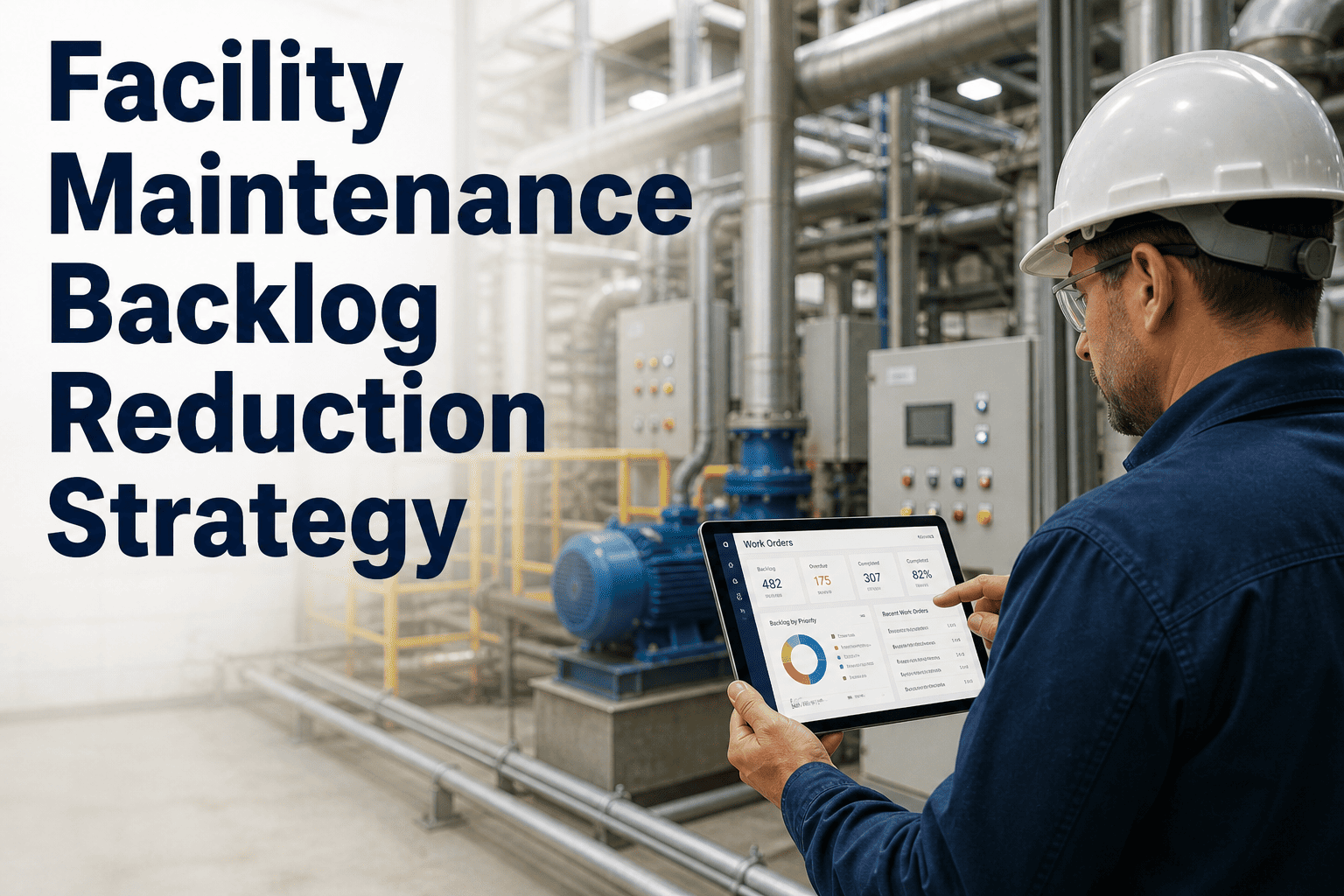
Oxmaint's work order management platform prioritises backlog tasks by asset criticality and condition score, schedules catch-up maintenance within existing PM windows, and tracks backlog burn-down rate on a live dashboard. Book a demo to see backlog management configured for your facility.
Why Deferred Maintenance Backlogs Form and Compound
Understanding the root cause of your specific backlog is the first step. The four structural failure modes below produce different backlog profiles and require different resolution strategies.
The Backlog Prioritisation Framework: Four Tiers, One Decision Rule
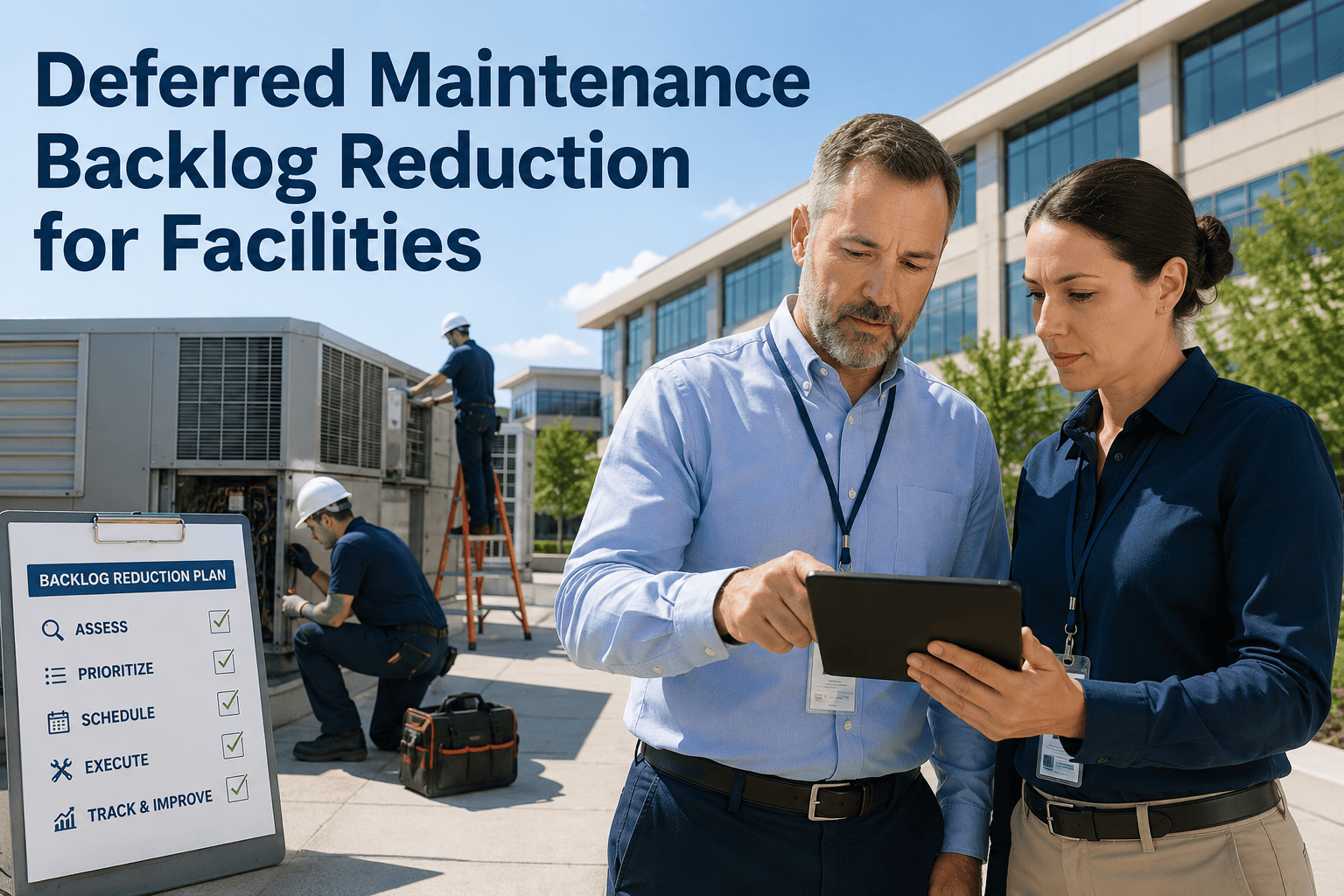
Not all deferred tasks are equal. The most common prioritisation failure is treating every backlog item as equally urgent, which produces a paralysed backlog review rather than a clearing plan. The four-tier framework below is the operational standard for facilities managing backlogs of 50 or more deferred work orders.
| Tier | Definition and Criteria | Action Required | Target Clearance |
|---|---|---|---|
| Tier 1: Safety and Compliance Critical | Any deferred task that creates a life safety, structural, or regulatory compliance risk. Fire suppression, emergency lighting, electrical safety, structural integrity, gas safety. | Immediate scheduling regardless of budget status. If funding unavailable, escalate to senior management with documented risk. Do not defer further. | Within 30 days or as regulatory schedule requires |
| Tier 2: Asset Criticality and Failure Risk | Deferred tasks on Tier 1 critical assets whose failure would cause significant operational disruption, production loss, or cascading equipment damage. HVAC primary plant, boilers, critical electrical switchgear. | Schedule within the next planned maintenance window. Do not await the next annual shutdown. Assign dedicated resource or contractor if in-house capacity is constrained. | Within 60 to 90 days |
| Tier 3: Condition Deterioration Risk | Deferred tasks where delay increases the scope and cost of eventual repair. Roof maintenance, water ingress control, facade repairs, early-stage mechanical wear on non-critical assets. | Schedule within 6 months. Each month of additional deferral increases eventual repair cost by an estimated 15 to 25%. Prioritise tasks where cost of delay exceeds cost of resource mobilisation. | Within 6 months |
| Tier 4: Planned Improvement Deferred | Deferred tasks that improve performance, efficiency, or occupant experience but whose delay does not significantly increase risk or cost. Aesthetic repairs, energy efficiency upgrades, non-critical system enhancements. | Plan within 12 months. Include in annual capital budget submission. Batch with adjacent Tier 2 and 3 work when contractors are already mobilised to reduce cost. | Within 12 months |
How Oxmaint Drives Structured Backlog Reduction
From Reactive to Planned: Oxmaint Breaks the Backlog Cycle Permanently
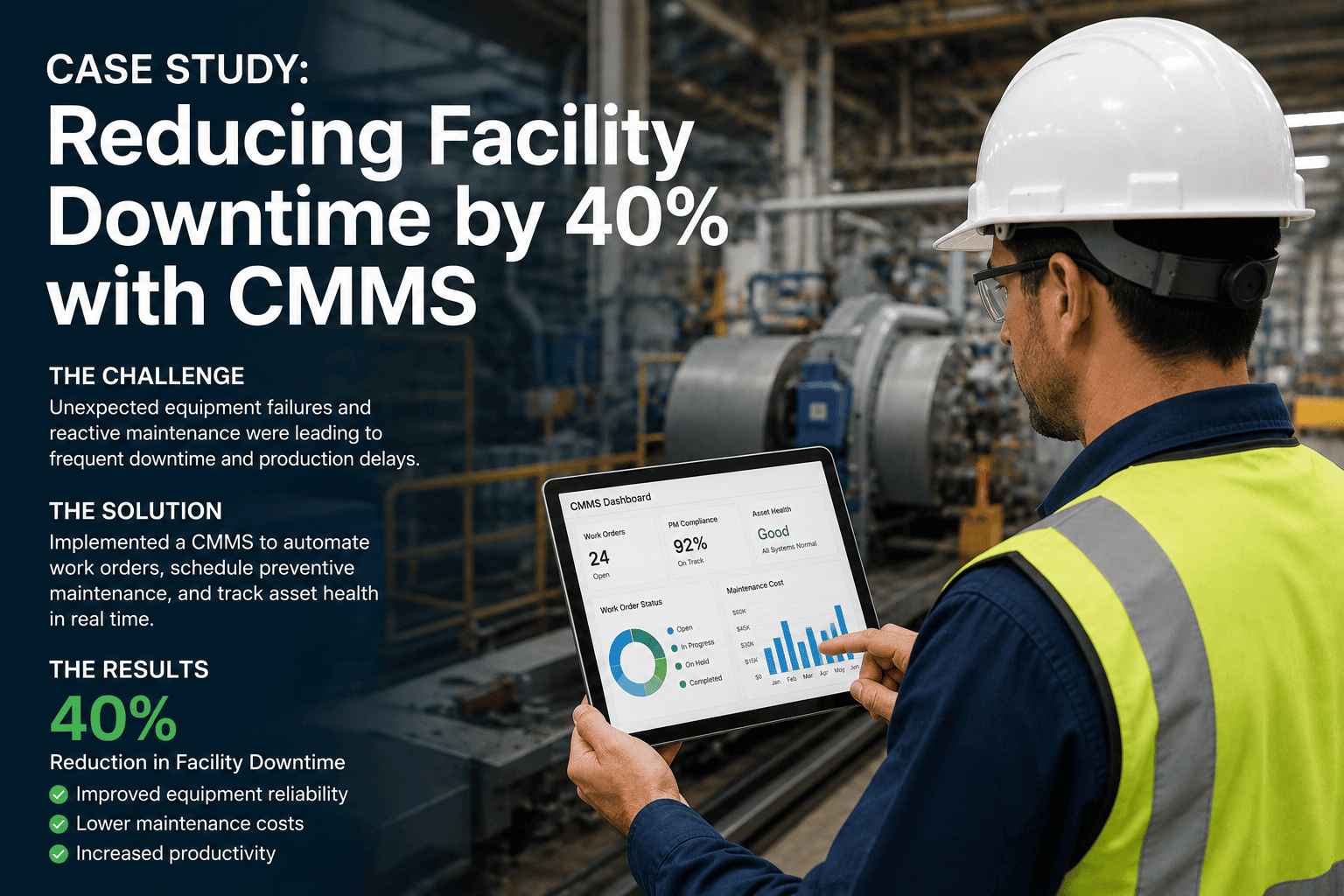
Every reactive emergency callout that Oxmaint's PM programme prevents is one fewer event that displaces a planned backlog clearance task. Breaking the reactive cycle is the prerequisite for sustained backlog reduction. Facilities that achieve 80% or above PM compliance see 47% fewer emergency callouts, restoring team capacity for planned backlog work.
Backlog Reduction: Without CMMS vs With Oxmaint
| Function | Without Structured CMMS Management | With Oxmaint Backlog Management |
|---|---|---|
| Backlog quantification | Unknown or estimated from spreadsheets. No agreed definition of what constitutes a backlog item. FM directors report different numbers depending on which spreadsheet is current. | All deferred work orders tagged and counted in real time. Backlog value, tier distribution, and age visible on dashboard. No manual compilation required. |
| Prioritisation | Priority assigned subjectively by the maintenance manager based on experience and operational pressure. High-visibility items prioritised over high-risk items. Tier 3 cost-escalation risk not visible. | Automatic priority scoring by asset criticality, condition rating, and cost-of-delay model. Ranked clearance plan generated without manual analysis. |
| Catch-up scheduling | Backlog tasks scheduled separately from PM calendar, creating additional site access events and contractor mobilisation costs. No batching optimisation across adjacent assets. | Oxmaint identifies batching opportunities across the PM calendar. Backlog tasks appended to existing contractor mobilisations. 20 to 35% reduction in clearance cost vs uncoordinated scheduling. |
| Progress reporting | Monthly manual report compiled from work order completion records. Backlog volume at end of month is an estimate. Board presentation requires 6 to 10 hours of preparation per reporting cycle. | Live burn-down dashboard shows backlog volume, tier movement, and monthly clearance rate. Board report exported in one click from the compliance dashboard. |
| Capital justification | CapEx request for backlog clearance submitted without condition data, cost-of-delay quantification, or risk-adjusted priority evidence. Approval delayed or reduced without supporting data. | Oxmaint CapEx forecasting module generates risk-adjusted backlog clearance cost model with condition scores and delay-cost escalation. Approval rates increase with data-backed submissions. |
Backlog Reduction Performance Benchmarks
Continue Reading: FM Workforce and Vendor Management
Frequently Asked Questions
QWhat is a Facility Condition Index and how does it relate to the deferred maintenance backlog?
QHow much does deferred maintenance cost compound annually if left unaddressed?
QCan Oxmaint generate a board-ready deferred maintenance backlog report for capital approval?
QHow long does it typically take to clear a significant FM maintenance backlog?
$176B in US Deferred Maintenance. Yours Does Not Have to Compound Further. Start Clearing It This Quarter.
Oxmaint quantifies your backlog by asset criticality, prioritises clearance by risk and cost-of-delay, batches tasks within existing PM windows, and tracks burn-down on a live dashboard. Go live in 14 days. No implementation fees.