A mid-sized oil and gas logistics company operating 127 vehicles across remote well sites in the Permian Basin faced escalating costs from unplanned breakdowns—averaging $47,000 per incident when factoring in tow costs, emergency repairs, production delays, and contract penalties. After implementing AI-powered predictive maintenance with IoT sensors, the company reduced critical vehicle failures by 73% within 18 months, saving an estimated $2.1 million annually while achieving 99.2% fleet availability.
See how AI-powered alerts can transform your fleet operations from reactive to predictive.
Company Background
The company provides critical logistics services to oil and gas producers across West Texas and southeastern New Mexico. Their fleet operates 24/7 supporting drilling operations, production facilities, and pipeline terminals—environments where vehicle breakdowns don't just cost money, they can halt million-dollar operations and trigger contractual penalties.
Remote well sites present unique challenges: the nearest repair facility may be 90+ miles away, cellular coverage is often spotty, and extreme temperatures stress vehicle systems year-round. A breakdown at a remote location can leave a driver stranded for hours while dispatch coordinates emergency service from distant providers.
The Challenge
Before implementing AI-powered monitoring, the company relied on scheduled preventive maintenance, and driver-reported issues to manage fleet health. This approach had worked adequately for years—until rapid expansion stretched maintenance resources thin and aging vehicles began failing at accelerating rates.
"We were playing whack-a-mole with breakdowns. Every morning started with calls from drivers stranded at well sites. Our mechanics spent more time on emergency road calls than scheduled maintenance. Something had to change."
Critical Pain Points
Average breakdown cost reached $47,000 when including tow fees ($2,500+ from remote sites), emergency repairs (premium labor rates), production delays (customer penalties), and replacement vehicle logistics.
Drivers stranded on isolated roads faced heat exposure risks in summer (110°F+), limited communication options, and delays waiting for assistance—creating serious safety liability.
Major customers imposed penalties for missed service windows. Three consecutive missed pickups triggered contract review clauses that threatened $4.2 million in annual revenue.
Paper-based maintenance records created audit trail problems. DOT inspections revealed documentation gaps that resulted in $23,000 in fines over 18 months.
Breakdown Analysis: Root Causes
Before implementing changes, the company analyzed 14 months of breakdown data to understand failure patterns. The findings revealed that most breakdowns were predictable—the warning signs existed, but no system captured them.
Overheating failures, typically preceded by 2-4 weeks of gradually increasing coolant temperatures
Air system failures and brake wear issues, often showing symptoms in air pressure build-up times
Blowouts from underinflation or damage, preventable with real-time pressure monitoring
Battery and alternator failures showing voltage degradation patterns days before failure
Transmission, drivetrain, and miscellaneous failures with varied predictability
The Solution: AI-Powered Predictive Maintenance
The company partnered with Oxmaint to implement a comprehensive predictive maintenance fleet management system combining IoT sensors, AI analytics, and mobile-enabled work order automation. The solution was designed to detect failure precursors and generate actionable alerts before breakdowns occurred.
IoT Sensor Deployment
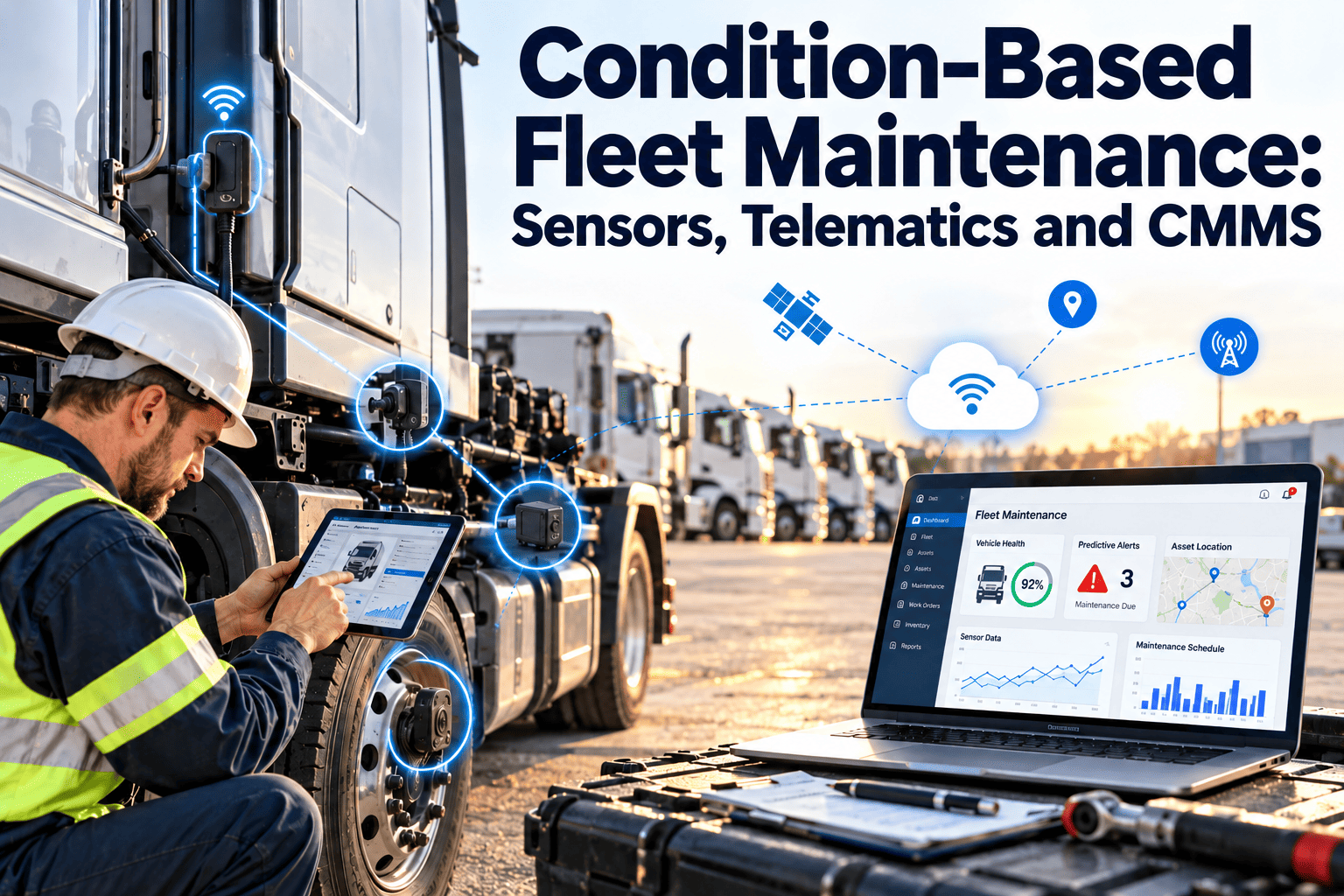
Each vehicle was equipped with connected sensors monitoring critical systems. Sensor selection prioritized the failure modes identified in the breakdown analysis—focusing investment where data would have the greatest impact.
AI Analytics and Risk Scoring
Raw sensor data feeds into Oxmaint's AI analytics engine, which learns normal operating patterns for each vehicle and identifies deviations that indicate developing problems. The system assigns risk scores to prioritize maintenance attention.
Response: Immediate alert to driver and dispatch. Vehicle should be taken out of service for inspection within 4 hours. Example: Brake air pressure dropping below safe threshold.
Response: Work order generated for service within 48 hours. Driver notified to monitor for symptoms. Example: Coolant temperature trending 15°F above baseline over 3 days.
Response: Scheduled for next preventive maintenance visit. Added to technician inspection checklist. Example: Tire pressure consistently 5-8% below optimal.
Response: Continue monitoring. No immediate action required. Standard PM schedule maintained. Example: All parameters within normal operating ranges.
Cutting Downtime with Foresight — A Fleet Management Lifecycle with Mobile Apps
The system connects AI-generated alerts directly to mobile-enabled workflows, ensuring that insights translate into action without communication delays or lost paperwork.
IoT sensors detect anomaly — coolant temperature rising 2°F per day above learned baseline
AI correlates data with failure patterns — 87% probability of cooling system failure within 2 weeks
Risk score triggers High alert — automatic work order created with diagnostic context
Work order routed to available technician — spare parts planning confirms components in stock
Technician completes repair during scheduled downtime — mobile app captures labor, parts, and photos
Audit trail automatically updated — compliance logs maintained, work order closed
Implementation Timeline
The company implemented the solution in phases over 16 weeks, prioritizing high-value vehicles and critical failure modes first. This phased approach allowed the team to learn and refine processes before full fleet deployment.
Scope: 20 highest-utilization vehicles
Focus: Engine and tire monitoring sensors
Goals: Validate sensor reliability, train maintenance team, establish baseline data
Outcome: 3 potential failures detected and prevented during pilot
Scope: Full fleet sensor deployment (remaining 107 vehicles)
Focus: All critical systems — engine, tires, brakes, electrical
Goals: Complete hardware installation, integrate with dispatch systems
Outcome: 100% fleet coverage achieved, AI models training on fleet-specific data
Scope: Full system integration and workflow automation
Focus: Work order automation, mobile app deployment, reporting dashboards
Goals: Eliminate manual processes, establish KPI tracking, refine alert thresholds
Outcome: System fully operational, continuous improvement cycle established
Results
Eighteen months after full implementation, the company documented significant improvements across all key metrics. The AI-powered system had fundamentally transformed their approach to fleet maintenance—from reactive firefighting to proactive prevention.
Before and After Comparison
- 4.2 critical breakdowns per month
- 91.4% fleet availability
- $47,000 average breakdown cost
- 18 emergency road calls per month
- Paper-based maintenance records
- Reactive maintenance approach
- 3 DOT violations in 18 months
- 1.1 critical breakdowns per month
- 99.2% fleet availability
- $8,200 average incident cost
- 3 emergency road calls per month
- Digital audit trail with compliance logs
- Predictive maintenance approach
- Zero DOT violations in 18 months
ROI Analysis
Investment
Annual Savings
Key Learnings
The implementation revealed several insights that informed ongoing optimization and would benefit other oil and gas logistics operations considering similar solutions.
Analyzing historical breakdown data before sensor selection ensured investment targeted the failures causing the most damage. Engine cooling and tire monitoring delivered immediate value, building organizational confidence in the system.
Initial driver skepticism ("Big Brother monitoring") transformed into enthusiasm when drivers experienced fewer roadside strandings. Communicating that the system protected driver safety—not just company assets—accelerated adoption.
Initial alert thresholds generated too many false positives, creating alert fatigue. Three months of threshold refinement based on actual outcomes reduced noise while maintaining detection accuracy.
Predictive alerts only help if parts are available for repairs. Connecting AI predictions to inventory management ensured components were in stock when work orders were generated—eliminating parts-related delays.
The automatic audit trail proved valuable beyond maintenance optimization. DOT auditors praised the documentation quality, and insurance carriers offered premium reductions based on demonstrated maintenance rigor.
Fleet Management Compliance Requirements
Oil and gas logistics operations face stringent compliance requirements from DOT, state agencies, and customer contracts. The Oxmaint implementation addressed compliance as a core requirement rather than an afterthought.
DOT Inspection Readiness
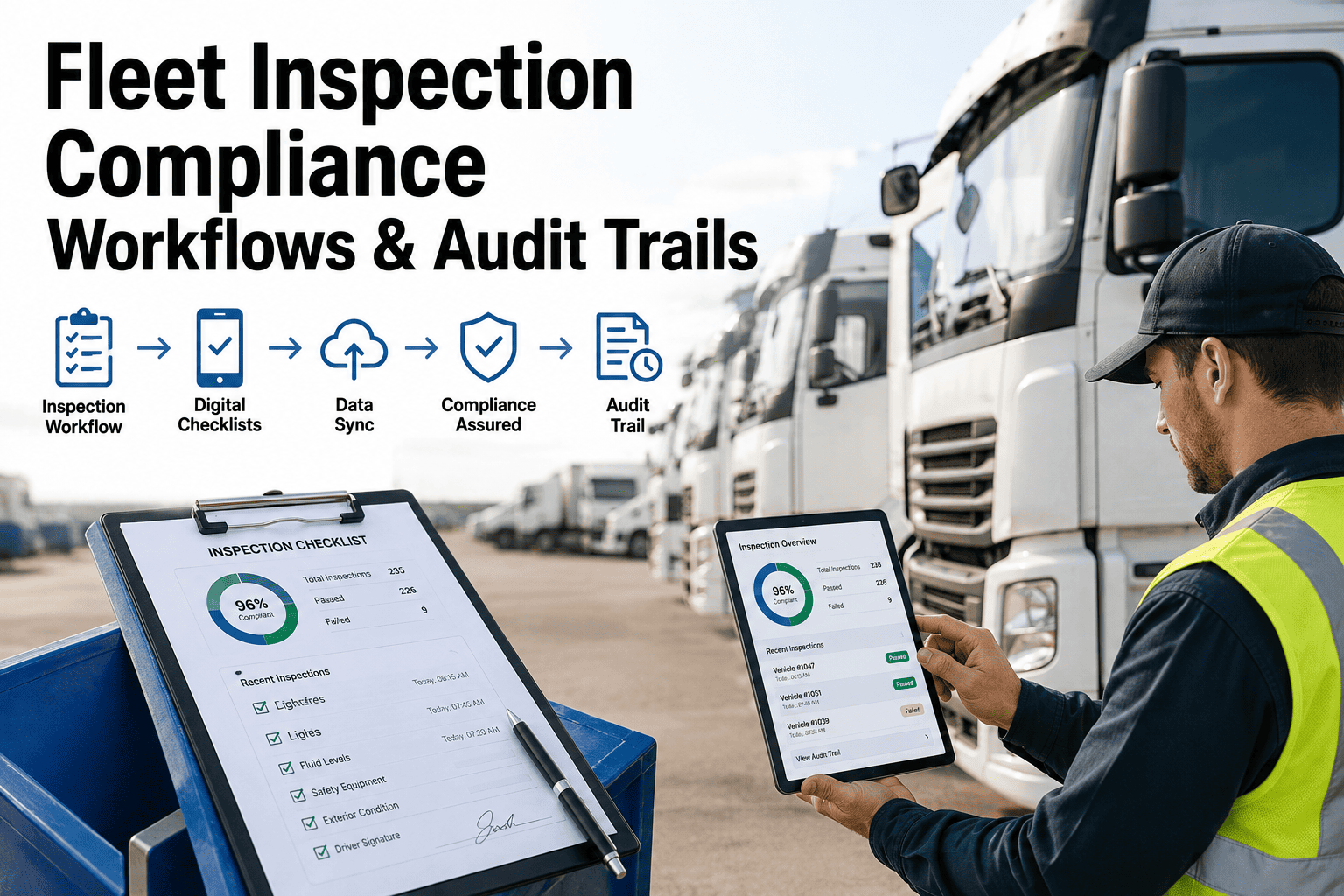
Digital maintenance records available instantly during roadside inspections. Complete service history accessible via mobile device, eliminating "records not available" violations.
HazMat Documentation
Tanker truck inspections documented with timestamps, photos, and technician certifications. Audit trail meets DOT 49 CFR requirements for hazardous materials carriers.
Customer Audit Requirements
Major oil company customers require maintenance documentation for contractor qualification. Automated reporting satisfies ISNetworld and Avetta compliance verification.
Insurance Documentation
Comprehensive maintenance records support insurance claims and demonstrate proactive risk management. Carrier recognized documentation quality with 12% premium reduction.
"The compliance documentation alone justified the investment. We went from scrambling before every audit to having everything available at the click of a button. Our DOT audit last quarter took 45 minutes instead of two days."
Ready to achieve similar results for your oil and gas fleet? See how Oxmaint CMMS can transform your maintenance operations.