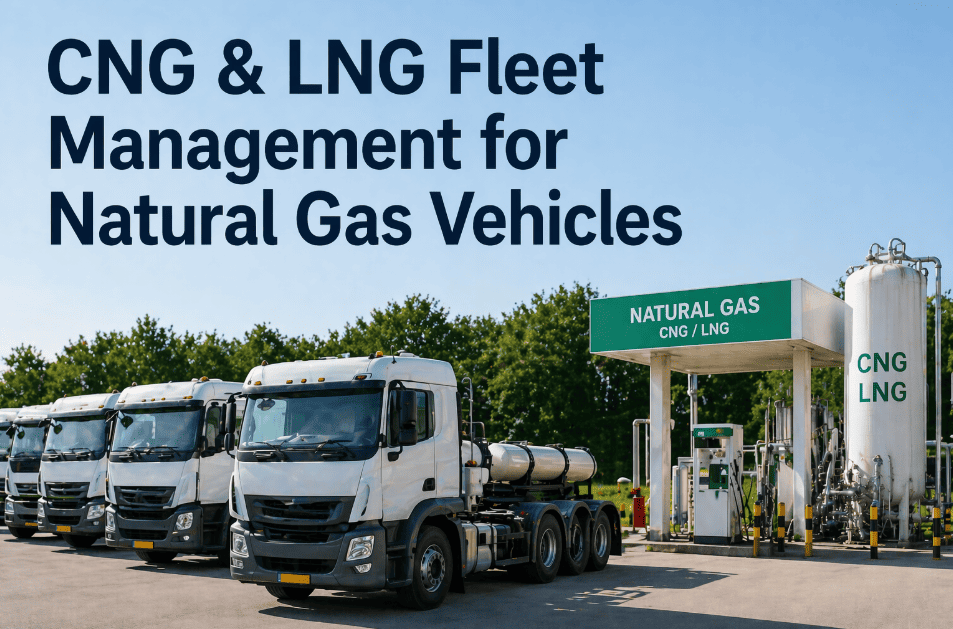
Natural gas fleet vehicles — CNG for urban and regional operations, LNG for long-haul — represent the most proven, commercially mature alternative fuel option available to fleet managers today. Over 175,000 natural gas trucks are operating in the United States, supported by 1,000+ public fueling stations and decades of real-world maintenance data. For fleets that can't yet electrify due to range requirements, charging infrastructure gaps, or capital constraints, CNG and LNG deliver 20–30% lower carbon emissions than diesel, 30–40% lower fuel costs in many markets, and operating costs that are well-understood and predictable. But natural gas vehicles are not plug-and-play diesel replacements. The fueling systems, maintenance protocols, safety requirements, and compliance obligations are fundamentally different — and fleets that treat them like diesel trucks face expensive surprises. This guide covers everything fleet maintenance managers need to know about CNG and LNG operations in 2026, from fuel station planning and high-pressure cylinder inspections to emissions tracking and regulatory compliance. Oxmaint helps CNG and LNG fleet operators manage the specialized maintenance schedules, safety inspections, and compliance documentation that natural gas operations demand.
CNG & LNG Fleet Management for Natural Gas Vehicles
Manage compressed and liquefied natural gas fleets with confidence — fueling infrastructure, specialized maintenance, emissions compliance, and safety protocols for CNG and LNG operations.
CNG or LNG — Choosing the Right Natural Gas Format for Your Fleet
CNG and LNG use the same fuel source but in different physical states — CNG is compressed gas at 3,600 PSI, LNG is cryogenically liquefied at -260°F. The choice between them depends entirely on your route profile, range requirements, and fueling infrastructure strategy. Neither is universally better — the wrong choice costs you operationally.
Compressed Natural Gas
Liquefied Natural Gas
Planning Your CNG/LNG Fueling Strategy
Your fueling infrastructure strategy determines your operational flexibility, capital investment, and fuel cost. Fleets with 10+ natural gas vehicles almost always benefit from on-site or on-route fueling rather than relying exclusively on public networks. Here's the real-world planning framework.
On-Site CNG Station
Best for fleets with 15+ CNG vehicles returning to the same depot. Lowest per-GGE cost after payback.
Time-Fill Station
Vehicles connect overnight and fill slowly. Lower cost, lower pressure requirements. Perfect for refuse, transit, school bus.
Public Network Access
Works for fleets with fewer than 10 vehicles or where routes pass existing stations. Less price control.
LNG Depot Station
Required for depot-based LNG operations. LNG delivered by cryogenic tanker. Requires cryogenic safety protocols.
Track Natural Gas Fleet PMs, Safety Checks & Compliance
Oxmaint manages CNG cylinder inspections, LNG cryogenic system maintenance, emissions records, and DOT compliance — all in one connected platform.
CNG & LNG Vehicle Maintenance Intervals — The Complete Reference
Natural gas vehicles share most routine maintenance with diesel equivalents — oil changes, brakes, tires, and chassis service intervals are similar. The critical differences are the compressed gas fuel system components: high-pressure cylinders, regulators, fuel lines, and safety relief devices. These require specialized inspection protocols that diesel technicians are not trained for.
Regulatory Compliance for CNG & LNG Fleets
Natural gas vehicle compliance involves federal, state, and local requirements spanning DOT regulations for high-pressure cylinders, EPA and CARB emissions standards, NFPA 52 fueling station requirements, and OSHA compressed gas safety rules. Missing any one of these creates liability exposure and potential fleet-wide shutdown orders.
DOT / FMCSA
CNG cylinders must be requalified every 3 years and retired after 15–20 years. Documentation of inspection dates, cylinder serial numbers, and requalification records required for annual DOT inspection.
EPA / CARB Emissions
Natural gas vehicles must maintain OBD-II system integrity. EPA requires annual emissions testing in covered areas. CARB's Truck and Bus rule applies to CNG fleets operating in California.
NFPA 52 Station Compliance
On-site fueling stations require NFPA 52 compliant installation, annual inspection by certified inspector, ventilation systems, gas detection, and emergency shutoff documentation.
OSHA Compressed Gas
Technicians working on CNG systems require compressed gas safety training. Shops must have gas detection equipment, proper ventilation in maintenance bays, and emergency response procedures posted.
CNG vs. Diesel — The Real Cost Comparison
Natural gas economics vary significantly by region — markets with access to compressed natural gas from utility pipelines see dramatically different economics than markets relying on delivered LNG. Here's a realistic cost model for a 50-vehicle regional fleet in a favorable CNG market.
Diesel Fleet (50 trucks)
CNG Fleet (50 trucks)
"We converted 35 of our refuse trucks to CNG four years ago. The fuel savings alone are $620K annually. Maintenance cost is slightly higher due to the cylinder inspections, but Oxmaint keeps us on schedule and gives us the compliance documentation we need for our city contract renewals."
— Fleet Director, 180-vehicle municipal fleet, Midwest
How Oxmaint Manages Natural Gas Fleet Operations
CNG and LNG fleets need a CMMS that understands compressed gas inspection requirements, cylinder lifecycle management, and alternative fuel compliance — not just oil changes and tire rotations. Book a demo to see Oxmaint configured for natural gas fleet operations.
Cylinder Lifecycle Tracking
Track serial numbers, manufacture dates, inspection history, and retirement dates for every CNG cylinder in your fleet. Auto-alert before requalification deadlines.
DOT Inspection Records
Maintain complete DOT inspection documentation for annual compliance reviews. Generate compliance reports in one click for audits and contract renewals.
Fuel Consumption Tracking
Track GGE consumed per vehicle, cost per mile, and fuel efficiency trends. Compare CNG economics against diesel on the same routes.
CNG-Specific PM Templates
Separate maintenance schedules for natural gas systems — pressure relief devices, regulators, fuel lines, and spark plugs — alongside standard vehicle PMs.
Emissions Reporting
Generate EPA and CARB-aligned emissions reports showing CO₂, methane, and NOx data for compliance filings and customer sustainability documentation.
Technician Certification Tracking
Track compressed gas safety certifications for every technician. Enforce assignment rules — only certified techs receive CNG fuel system work orders.
Frequently Asked Questions
What's the difference between CNG and LNG for fleet operations?
How often do CNG cylinders need to be inspected?
Can diesel technicians service CNG vehicles?
What's the real-world fuel cost advantage of CNG over diesel?
How does Oxmaint handle CNG cylinder expiration tracking?
Run Your Natural Gas Fleet on Data, Not Guesswork
Cylinder tracking, CNG-specific PMs, compliance records — all in one platform.