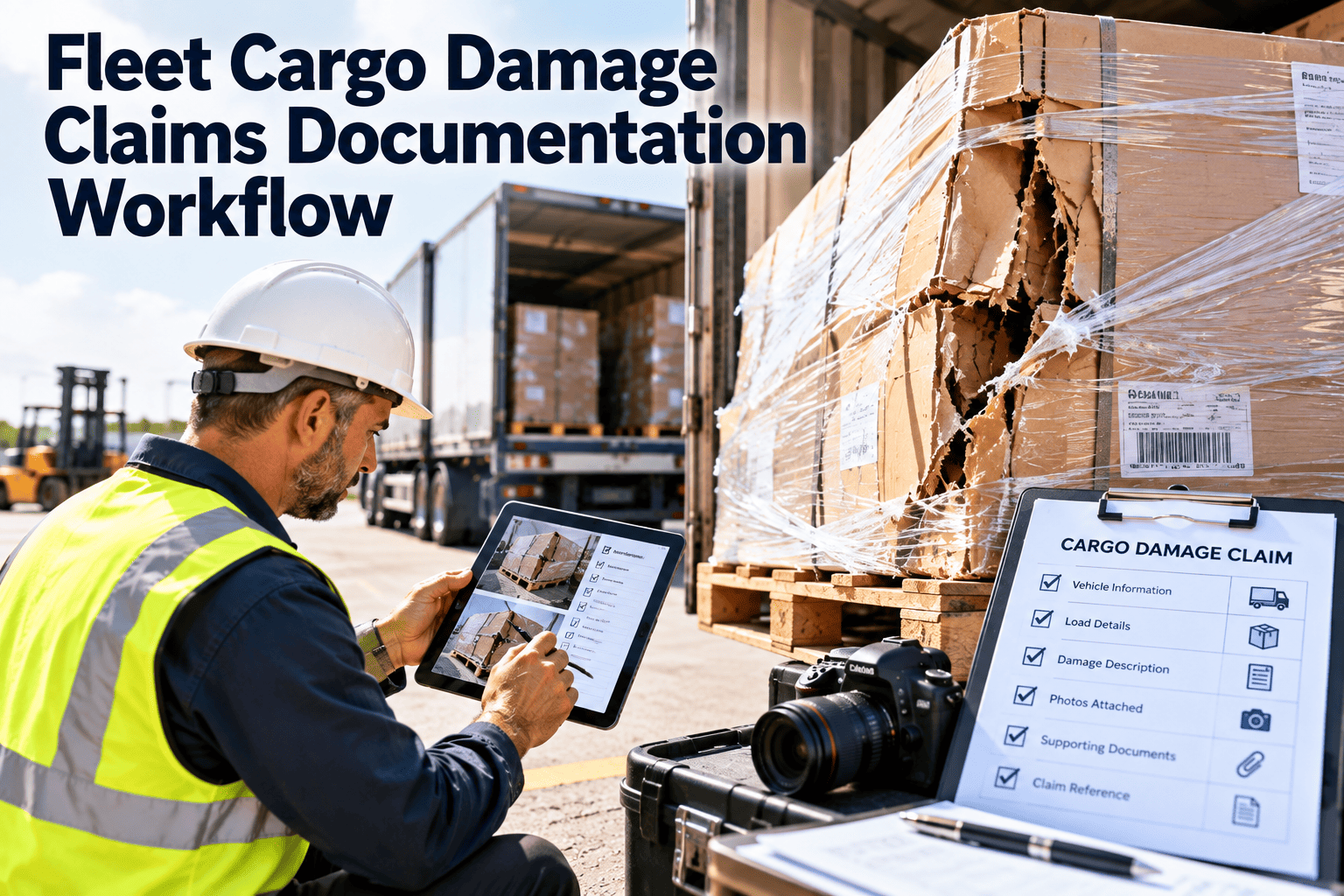
Most cargo damage claims are not caused by a collision or a dropped pallet — they come from damage that was already present when a load changed hands, with nobody able to prove when or where it happened. A driver signs a bill of lading without inspecting every pallet, a dock worker glances at a shrink-wrapped load, and three touchpoints later a claim arrives for damage nobody documented. AI cargo inspection closes that gap by scanning freight condition at every handoff — load, transit checkpoint, and delivery — and attaching a timestamped photo record to the shipment itself. For freight and logistics operations already running a maintenance and operations platform, tying cargo condition data to the same system that tracks trailers and equipment turns a scattered claims process into a single auditable record.
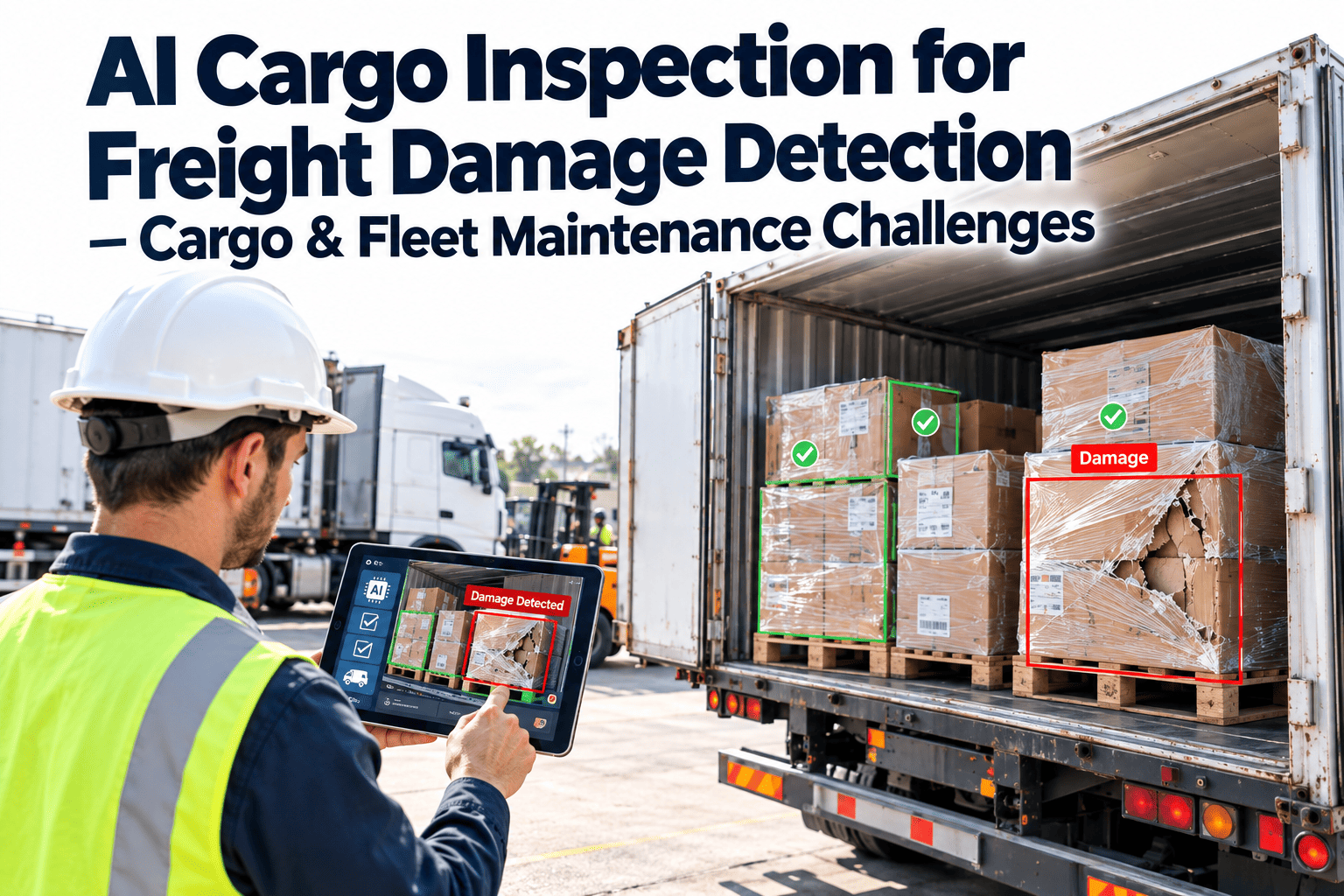
AI Cargo Inspection for Freight Damage Detection: Cargo & Fleet Maintenance Challenges
Undocumented cargo damage costs freight operations billions each year, most of it from handoffs nobody photographed. AI-powered cargo inspection scans packaging, load stability, and container condition at each checkpoint — creating evidence trails that protect claims liability and feed straight into maintenance and compliance records.
The Scale of Undocumented Cargo Damage
Cargo damage and loss cost the US freight industry tens of billions of dollars annually, and a large share of that figure traces back not to accidents in transit but to damage that existed before a load was ever accepted at a dock. When there is no consistent way to record condition at intake, accountability collapses the moment a claim surfaces weeks later, and insurers, shippers, and carriers spend more time arguing over who is responsible than anyone spends actually preventing the next incident.
The pattern repeats across nearly every mode of freight movement: less-than-truckload consolidation, parcel cross-docking, container drayage, and even intermodal rail transfers all share the same structural weakness — a handoff point where nobody has a reliable, objective record of condition on both sides of the exchange.
Where Freight Damage Actually Happens
Cargo does not sit still, and neither does the risk to it. Each stage of a shipment's journey introduces a different kind of damage risk, which is why a single inspection at origin is not enough to protect a fleet or a shipper from disputed claims. Mapping out exactly where damage tends to originate is the first step toward deciding where inspection cameras actually belong, and it usually surprises operations teams how much damage traces back to the first loading stage rather than the road miles that follow.
What AI Cargo Inspection Cameras Actually Check
Cargo inspection cameras are trained on different visual patterns than vehicle damage models, because the object being inspected is not a fixed structure like a chassis but a variable load of packaging, pallets, and containers. That variability is precisely why manual spot checks struggle to keep up — a dock worker cannot realistically eyeball every pallet in a full trailer during a normal loading window, but a fixed or handheld camera scanning at dock speed can.
| Inspection Point | What the Camera Checks | Typical Trigger |
|---|---|---|
| Packaging integrity | Punctures, crushing, water stains, torn shrink wrap | Logged with photo, claim flag |
| Load stability | Leaning pallets, shifted stacks, unsecured cargo | Alert before departure |
| Stacking compliance | Overloaded lower pallets, incorrect stack height | Rework request at dock |
| Container and trailer condition | Seal integrity, door damage, floor condition | Maintenance work order |
| Moisture exposure | Visible water damage, condensation staining | Immediate hold for inspection |
| Label and manifest match | Barcode and label legibility against shipment record | Data exception flag |
Paper Bill of Lading vs AI-Verified Condition Record
A signed bill of lading has always been the industry's default proof of condition at handoff. In practice, it rarely holds up as real evidence, because a signature confirms a document was signed, not that anyone actually inspected the freight it describes. Courts and insurers increasingly treat a bare signature as weak evidence on its own, which is pushing shippers and carriers toward systems that capture something more concrete.
Stop Paying Claims for Damage You Can't Prove Happened Elsewhere
Oxmaint links AI cargo inspection findings to trailer and equipment maintenance records, work orders, and compliance documentation — one platform instead of a claims folder, a maintenance system, and a spreadsheet.
Cargo Damage Risk by Likelihood and Impact
Not every damage type deserves the same operational response. Ranking risks by how often they occur and how expensive they are when they do helps a maintenance and operations team decide where to point inspection resources first, rather than treating every flagged image with the same urgency regardless of what it actually costs the business.
Temperature-Sensitive and High-Value Freight
Reefer loads, pharmaceuticals, and high-value electronics carry a different risk profile than general freight, because a single undetected failure can destroy an entire shipment rather than just one pallet. A trailer door that does not seal properly, a reefer unit running a few degrees outside its set point, or condensation building inside a container are all conditions a camera can flag that a visual glance at a closed trailer door cannot.
For food and pharmaceutical freight specifically, documentation requirements already exist under cold chain and traceability rules, and a photo-verified inspection at load and unload strengthens that paper trail rather than replacing it. Insurers covering high-value freight increasingly ask for exactly this kind of evidence when evaluating a claim, which means the inspection record itself becomes a factor in what a policy actually costs. Some carriers now offer premium adjustments to shippers who can demonstrate a consistent, camera-verified inspection program rather than relying on driver observation alone.
Connecting Cargo Inspection to Fleet Maintenance and Compliance
Cargo condition and equipment condition are not separate problems. A trailer with a failing door seal is both a maintenance issue and a cargo damage risk, which is why the two data streams belong in one system rather than two. Splitting cargo inspection into a standalone app disconnected from the maintenance platform recreates the same accountability gap the cameras were meant to close, since nobody ends up owning the full picture of why one specific trailer keeps generating damage claims.
Building a Cargo Inspection Program That Actually Sticks
Deploying cameras is the easy part. The programs that actually reduce claims are the ones that treat AI cargo inspection as a workflow change across dock, dispatch, and maintenance — not a piece of hardware bolted onto an existing process. That means someone owns the flagged findings, someone reviews recurring patterns, and the output actually changes what happens at the dock the next time a similar load comes through.
It also means setting realistic expectations with dock crews from day one. A camera that flags every minor cosmetic scuff as a claim-worthy defect will get ignored within a week, the same way an over-sensitive smoke alarm gets disabled rather than fixed. Calibrating severity thresholds against what actually drives claims — not every visual imperfection — is what keeps the system trusted and used.
Frequently Asked Questions
How is AI cargo inspection different from a driver checking a bill of lading?+
Where should a fleet start when adding cargo inspection cameras?+
Can cargo inspection data connect to trailer maintenance records?+
Does AI cargo inspection slow down loading operations?+
How does this help with reducing disputed damage claims?+
Every Pallet. Every Handoff. One Verified Record.
AI cargo inspection only pays off when the evidence it captures connects to real operations — maintenance, compliance, and claims. Oxmaint ties cargo condition scans to trailer work orders, asset history, and audit-ready documentation in one platform.