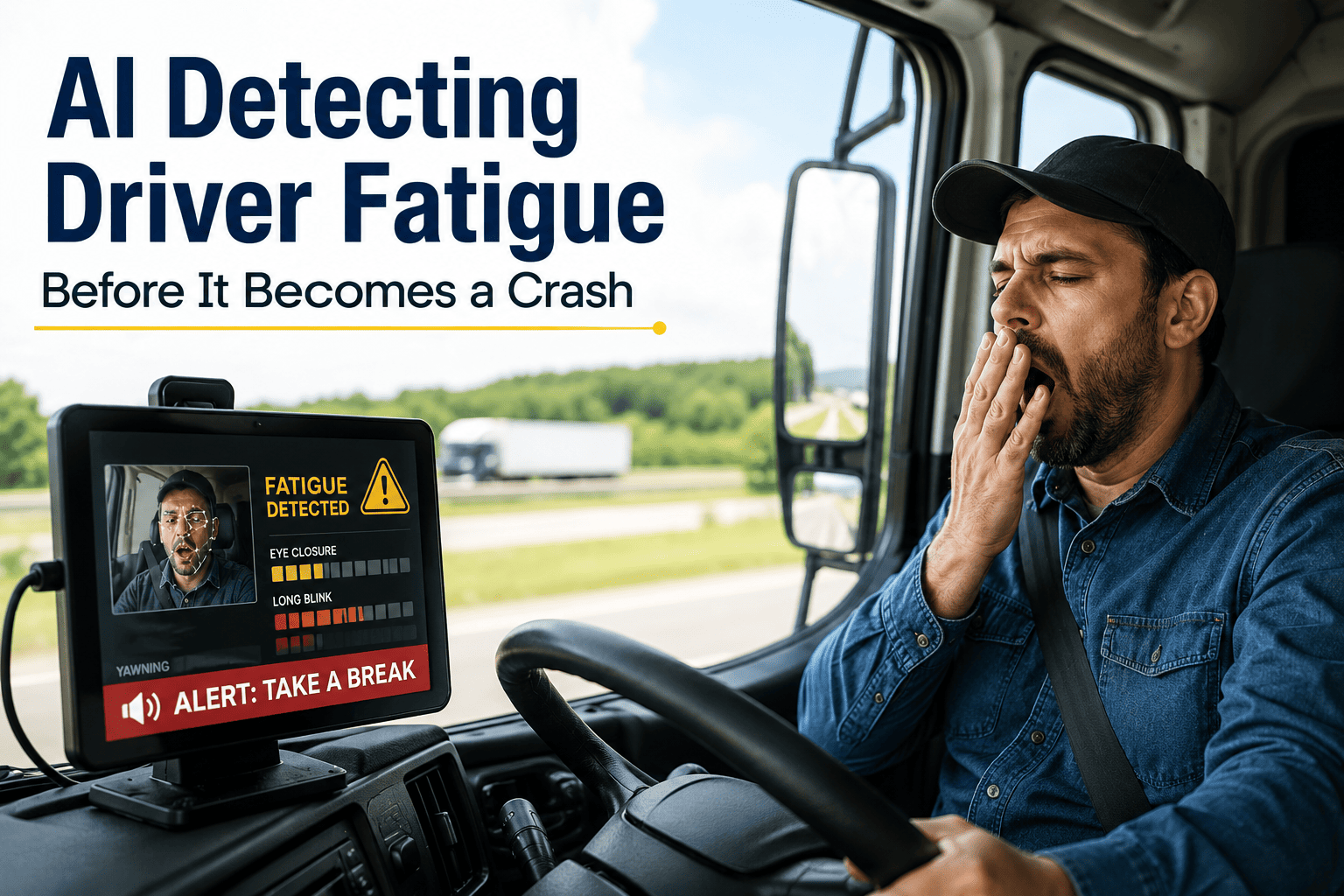
Driver fatigue is no longer a guesswork problem solved by paper logs and hour-of-service rules alone. Modern in-cab AI now reads the small, involuntary signals — eyelid closure, head nod, gaze drift, yawning cadence — and turns them into a real-time risk score that dispatch and safety teams can act on before a wheel ever crosses a center line. The operational payoff is concrete: fleets running structured AI driver monitoring report 40–60% fewer preventable at-fault crashes inside twelve months, against an industry where fatigue-related incidents alone drain an estimated $12 billion in annual claims. The technology has moved well past hard-braking pattern matching into behavioral risk scoring, in-cab intervention, and supervisor coaching queues. See it for yourself — Start Free Trial — or read on for the full architecture, signals, and rollout framework.
What if you could see fatigue forming 90 minutes before the crash?
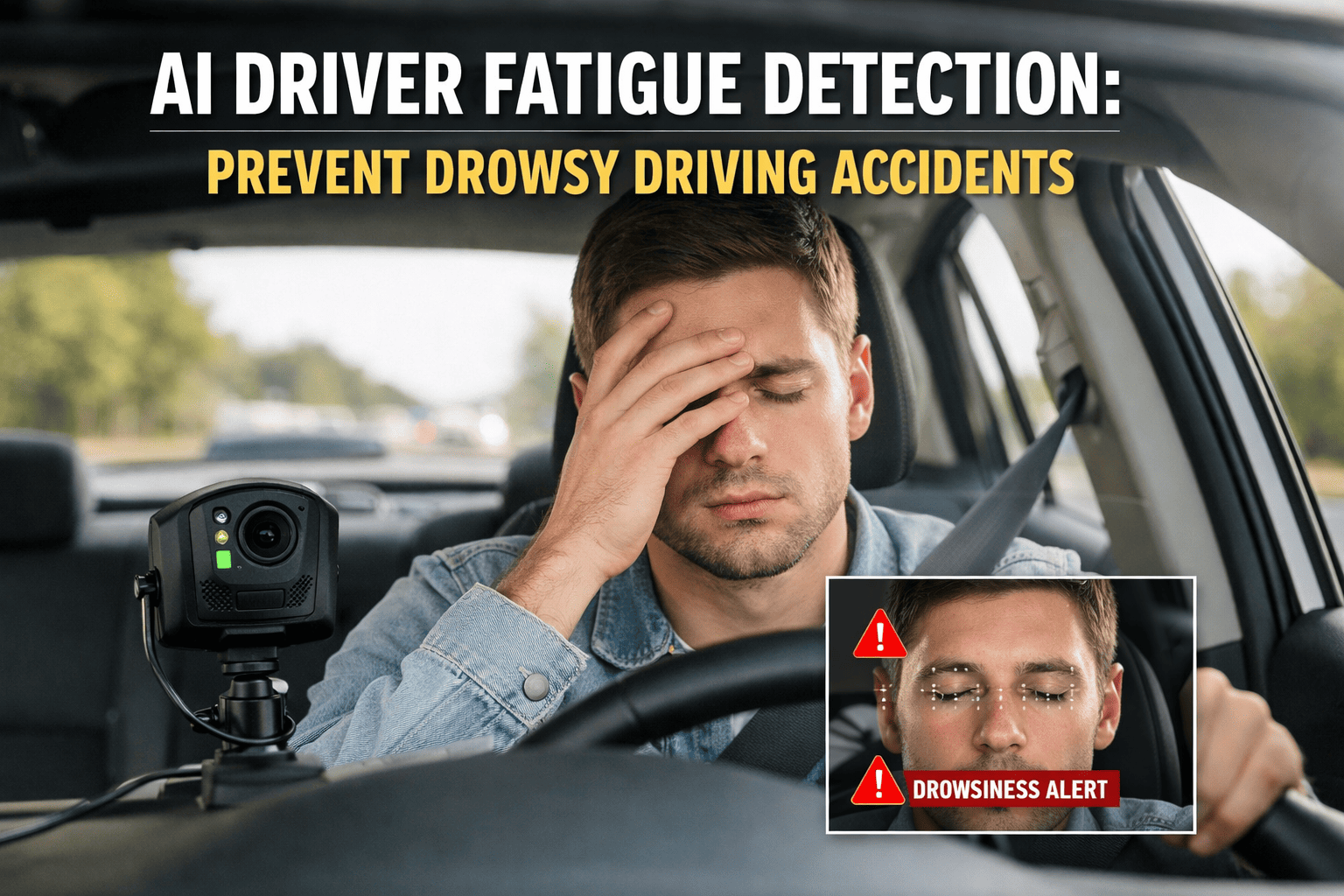
Today's in-cab computer vision reads microsleeps, head drift, and gaze patterns in real time — surfacing a fatigue signal that typically appears 20 to 90 minutes before the event that would have caused the collision. That window is where preventable crashes are eliminated.
Fatigue doesn't arrive suddenly — it broadcasts for up to 90 minutes
The single most important operational insight from modern driver monitoring is that fatigue is a slow-building, observable signal — not a switch that flips at the moment of impact.
Yawning frequency rises above baseline. Sustained blink duration crosses 0.5 seconds. Gaze begins drifting off-road in periodic sweeps. The driver is still functional, but the trend line is bending.
Head nod events appear — brief forward drops corrected by the driver. Following distance variance increases. Lane keeping becomes corrective rather than smooth. Safety score drops into the yellow band.
Eye closure events exceed 3 seconds. This is the hard microsleep signal — the point where most systems trigger an in-cab audio and haptic alert and notify dispatch for active intervention.
Without intervention: lane departure, rear-end collision, or road departure. With intervention at T−45 to T−20: the driver is parked, rested, or rerouted — and the event never occurs.
"Fatigue-related crashes cost the trucking industry an estimated $12 billion annually in claims. The fatigue signal typically appears 20–90 minutes before the event that would have caused the crash."
Eight signals fused into one real-time safety score
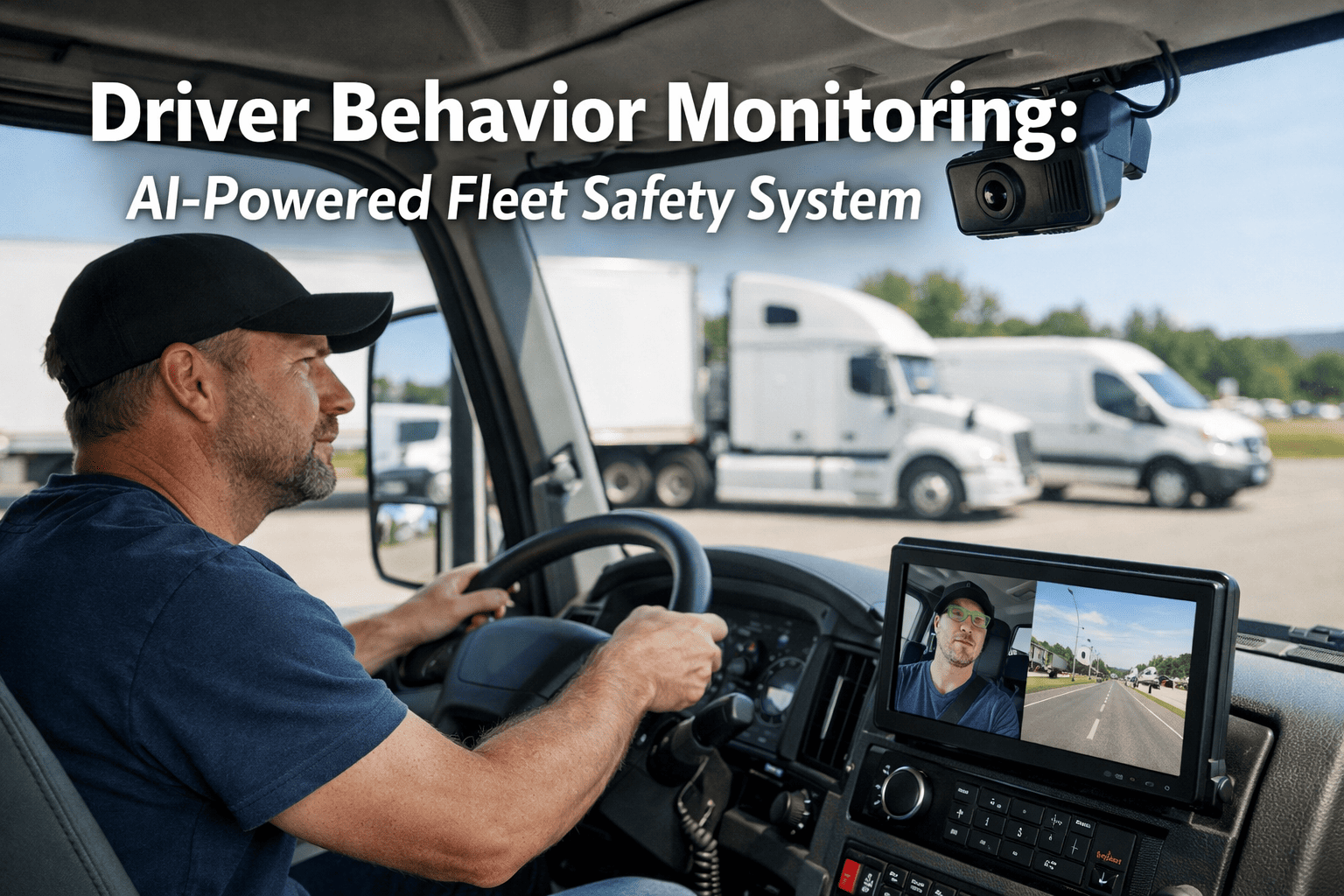
Modern in-cab systems from Samsara, Motive, Lytx, Nauto, and comparable providers fuse driver-facing vision, road-facing vision, and telematics into a single behavioral risk score — not isolated event flags.
Closure events beyond 3 seconds are the canonical microsleep marker — the strongest single predictor of imminent fatigue-related loss of control.
Forward head nod and lateral droop tracked frame-by-frame. Sustained drift patterns correlate strongly with declining alertness 30–60 minutes before critical events.
Yawn count per minute tracked against the driver's personal baseline. Three or more yawns in five minutes is an early-warning trigger in most production models.
Where the eyes point matters. Sustained gaze away from the road center — at a phone, at a passenger, at the floor — is flagged independently of phone detection.
Handheld device detection — phone to ear, texting posture, or scrolling grip — triggers immediate in-cab alert and logs a high-severity coaching event.
Continuous visual confirmation of belt use. Unbuckled-while-in-gear events surface in the daily safety report and the supervisor coaching queue.
Hands-off-wheel duration beyond a configurable threshold — typically 8–15 seconds depending on speed — flags potential automation over-trust or distraction.
Lane departure frequency, following distance variance, and forward collision warnings from the road camera fuse into the same score — behavior meets context.
A 180-truck fleet loses roughly $1.2M per year to preventable fatigue crashes
The math is uncomfortable but clarifying. Below is the per-fleet cost model that drives most monitoring deployments — conservative figures based on industry averages.
| Cost bucket | Without AI monitoring | With AI monitoring (12 mo) | Avoided cost |
|---|---|---|---|
| Preventable at-fault crash claims | $1,224,000 | $489,600 | $734,400 |
| Loss-of-use & rental downtime | $96,000 | $38,400 | $57,600 |
| Insurance premium surcharge | $145,000 | $87,000 | $58,000 |
| CSA score & DOT intervention admin | $54,000 | $21,000 | $33,000 |
| Driver turnover from incident stress | $78,000 | $39,000 | $39,000 |
| Totals | $1,597,000 | $674,600 | $922,400 |
What 40–60% fewer preventable crashes looks like in practice
Fleets running structured AI driver monitoring report a 40–60% reduction in preventable at-fault crashes within twelve months. Here is what that looks like on the ground.
Stop documenting crashes after the fact. Start preventing them 90 minutes before.
Deploy AI driver monitoring with Oxmaint and turn fatigue signals into in-cab alerts, coaching queues, and measurable crash reduction inside one quarter.
A monitoring program drivers actually trust
The technology is the easy part. The harder work is building a privacy and acceptance framework that defines who sees what footage, when it is reviewed, and what triggers coaching versus discipline.
Define exactly who can review footage — safety supervisors only, not operations or sales. Time-box access to the event window plus 60 seconds on either side, not full-shift streams.
Footage is surfaced only when a defined event triggers — microsleep, phone use, hard brake over threshold. No always-on monitoring of drivers, no fishing expeditions through historical video.
First-event coaching. Second-event documented coaching. Third-event escalation. Drivers need to see the system as a safety net, not a surveillance weapon aimed at their paycheck.
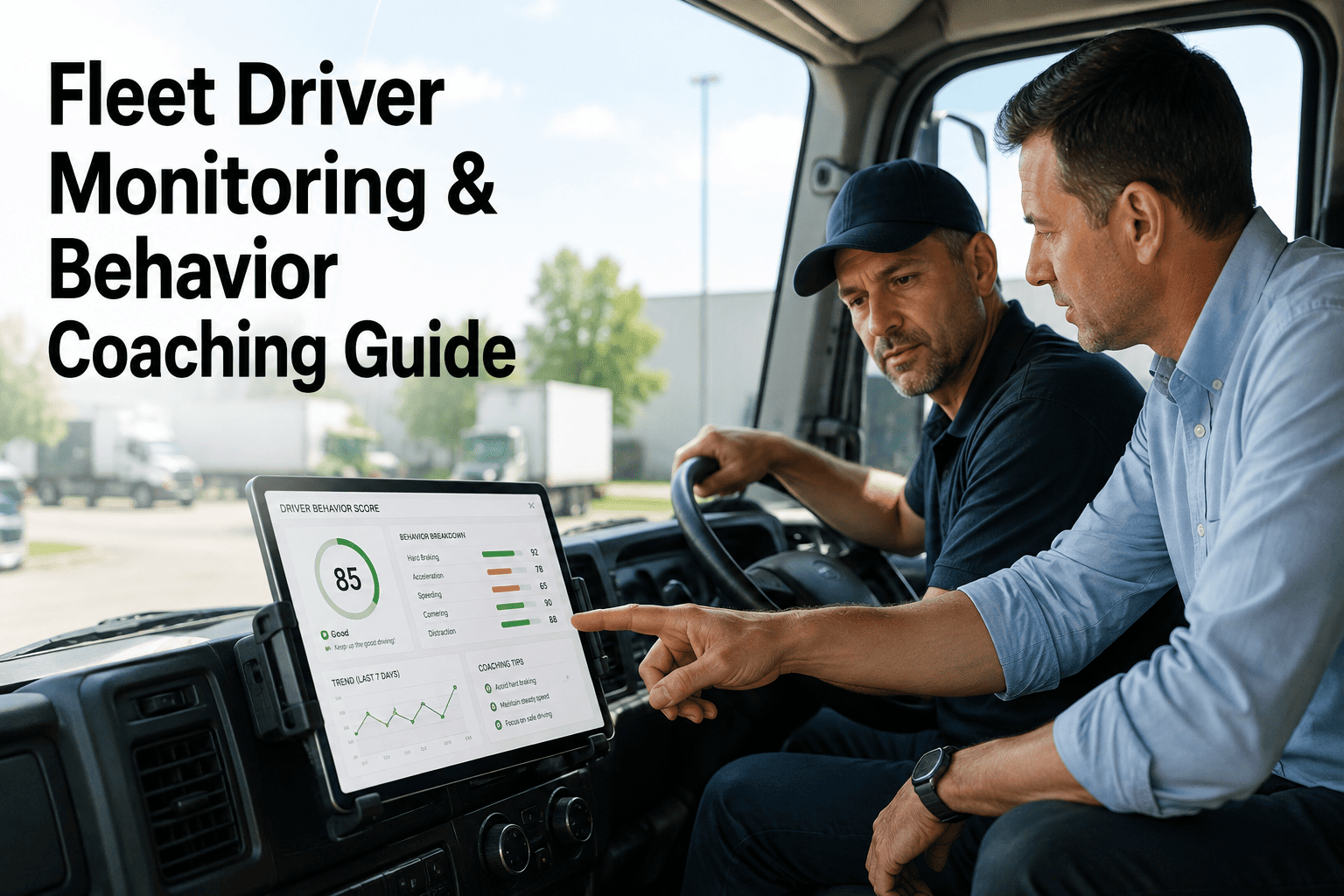
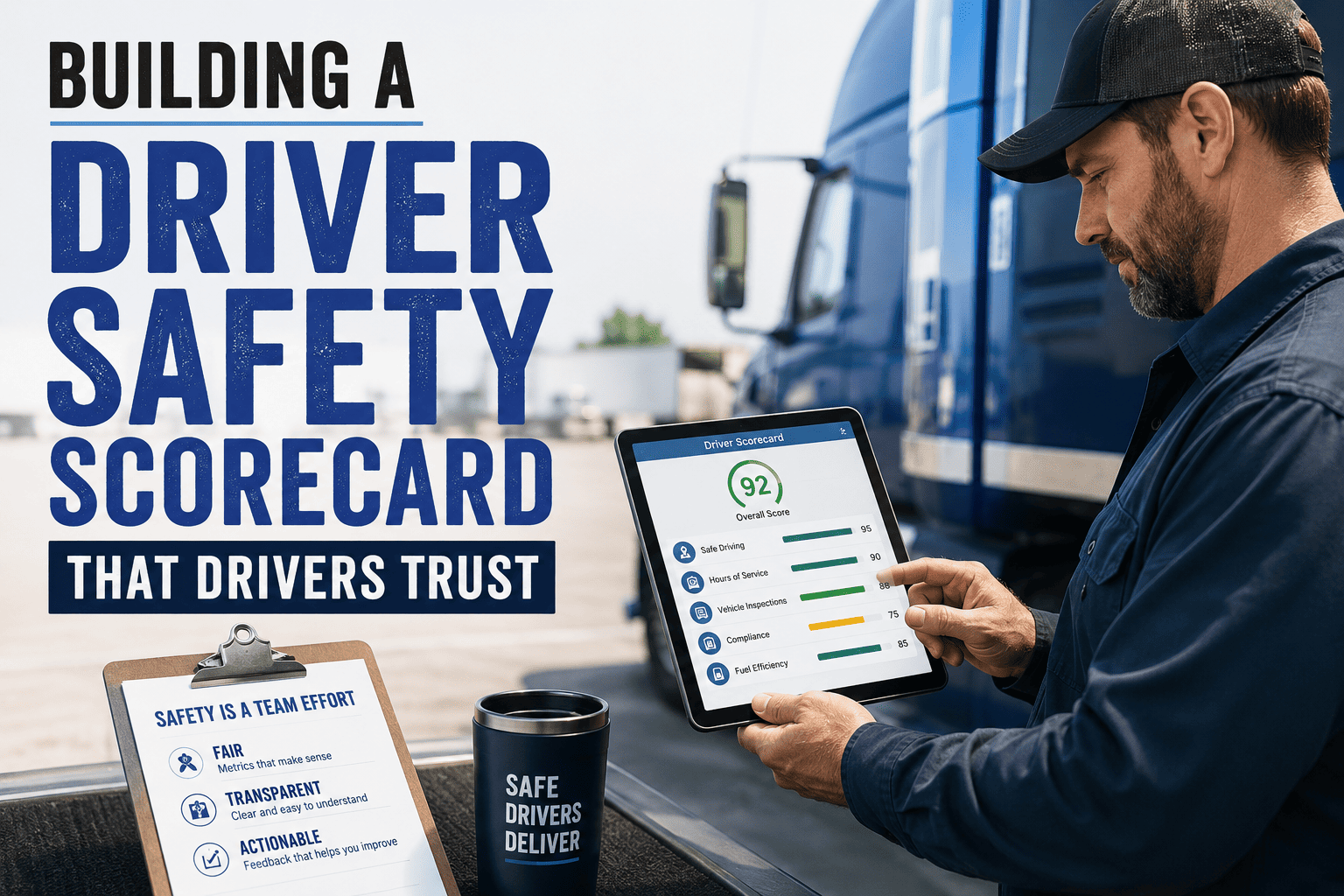
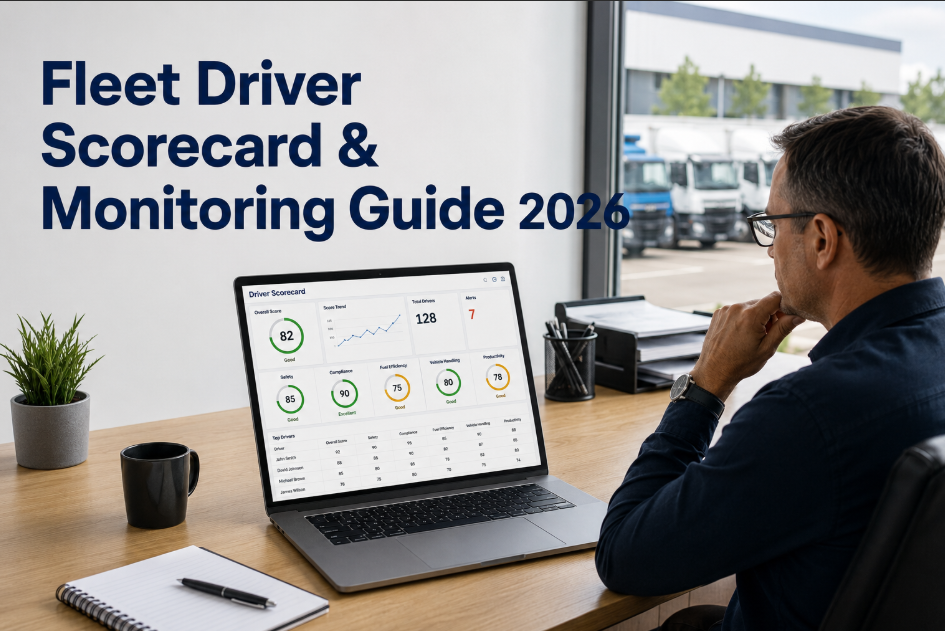
In Oxmaint, driver scorecards incorporate AI events alongside telematics data. Drivers see their own score, their trend, and exactly which events contributed — no black-box scoring.
What fleets ask before deploying AI driver monitoring
Production systems from leading providers achieve over 90% precision on microsleep events (eye closure beyond 3 seconds) in daylight and well-lit cab conditions. Accuracy drops in extreme low light, with sunglasses, or when a driver's face is partially occluded — which is why the best systems fuse multiple signals (head drift, yawning, gaze) rather than relying on eyelid tracking alone. False-positive rates for in-cab alerts are typically tuned low to preserve driver trust.
A 150-truck fleet can fully deploy in 4–6 weeks: week one for hardware installation across the fleet, weeks two through three for baseline calibration and AI model tuning against your specific routes and cab configurations, and weeks four through six for supervisor training on the coaching queue and driver scorecard workflows inside Oxmaint. Most fleets see measurable crash-reduction trends within the first quarter. Book a Demo to map your timeline.
Acceptance hinges on policy clarity. Fleets that publish a transparent access policy (who sees what, when, and why), lead with coaching rather than discipline, and show drivers their own scorecards report adoption rates above 85% within 90 days. The key is framing: the system protects the driver from the fatigue crash, it does not surveil them for performance critique.
For a mid-size fleet averaging one preventable fatigue crash per month with an $85,000 average claim cost, the hardware and software subscription is typically recovered within 4–7 months. Larger fleets with higher exposure and existing telematics infrastructure in place see faster payback because the incremental install is lighter. The 40–60% crash reduction figure is the primary driver of ROI.
Yes. Oxmaint ingests AI events and telematics behavior data from major providers and consolidates them into unified driver scorecards. Repeat events surface automatically in a supervisor coaching queue, and the scorecard feeds directly into your asset and maintenance workflows — so a fatigue-flagged driver, their assigned vehicle, and any related inspection history live in one record. Start Free Trial to connect your stack.
Deploy fatigue detection that acts 90 minutes before the crash
Join the fleets cutting preventable at-fault crashes by 40–60% inside twelve months with AI driver monitoring, coaching queues, and real-time in-cab intervention.
Free 14-day trial · No credit card


.png)