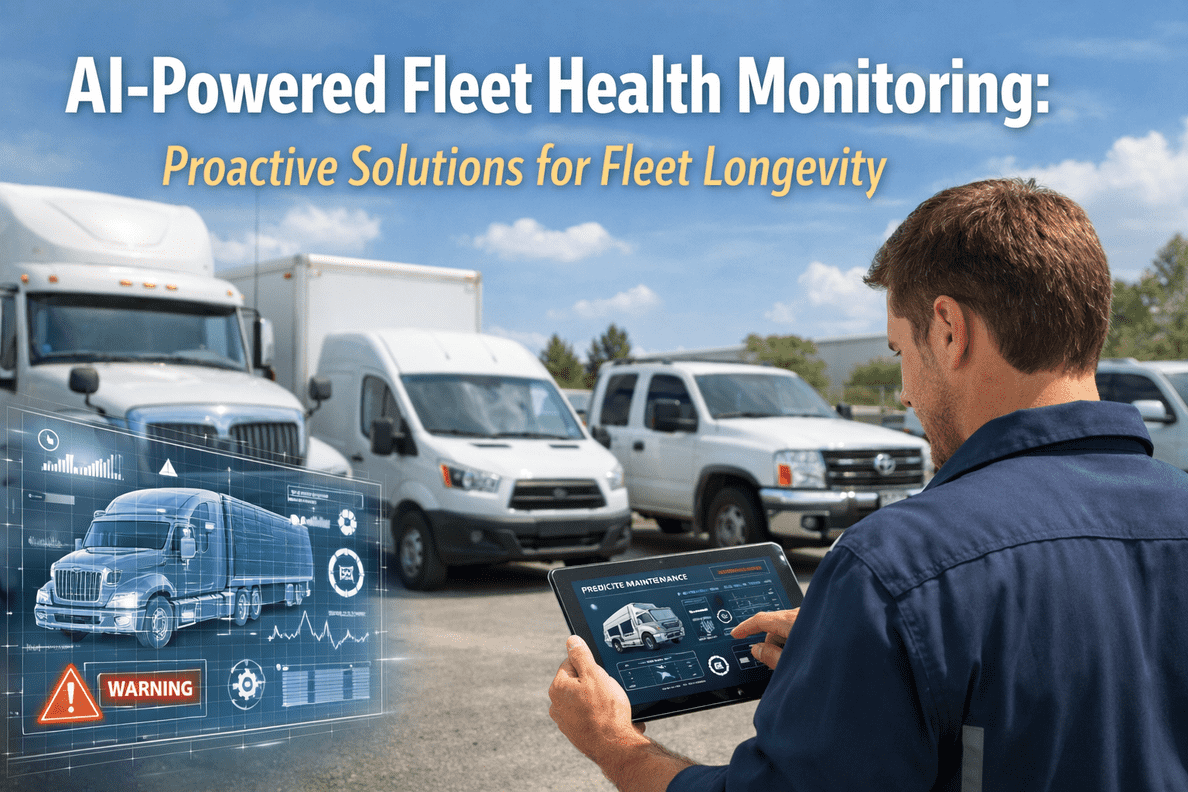
Fleet maintenance has entered a new era. Instead of waiting for vehicles to break down or relying on rigid calendar-based service schedules, modern fleet operators are turning to artificial intelligence to predict exactly when and where failures will occur. AI-powered fleet maintenance combines machine learning algorithms, real-time sensor data, and historical repair patterns to deliver actionable insights that keep your vehicles on the road and your costs under control. The shift from reactive to predictive is not just a technological upgrade — it is a fundamental change in how fleets operate, compete, and grow. Industry data shows that AI-driven predictive maintenance can reduce maintenance costs by 25–40% and cut unplanned downtime by up to 50%. If your fleet still runs on spreadsheets and guesswork, now is the time to sign up for OxMaint and experience the difference intelligent maintenance makes.
How AI Transforms Fleet Maintenance
Traditional fleet maintenance follows one of two models: reactive (fix it after it breaks) or preventive (service it on a fixed schedule regardless of actual condition). Both approaches carry significant waste. Reactive maintenance leads to costly emergency repairs that can be four times more expensive than scheduled service. Preventive maintenance often replaces perfectly functional parts simply because a calendar says so. AI-powered maintenance changes this paradigm entirely by listening to each vehicle individually and predicting exactly when components need attention.
The Evolution of Fleet Maintenance
Machine learning models analyze thousands of data points from engine diagnostics, tire pressure, fluid levels, temperature readings, and vibration sensors. These algorithms detect subtle anomalies that human eyes would miss — a slight change in engine vibration frequency, a gradual increase in brake response time, or an unusual oil temperature pattern. When the system identifies a developing issue, it automatically generates a work order, checks parts inventory, and schedules the repair during planned downtime windows. To see how this works in practice, book a demo with OxMaint and walk through a live predictive maintenance workflow.
The Business Impact: AI Maintenance by the Numbers
The financial case for AI-powered fleet maintenance is compelling and well-documented across multiple industry studies. Fleets that have adopted predictive maintenance technology are reporting dramatic improvements across every key performance metric.
These numbers translate directly to the bottom line. A single prevented roadside breakdown can save thousands of dollars in towing, emergency labor, and lost revenue. Multiply that across an entire fleet over a year, and the ROI becomes undeniable. Early adopters are reporting that their AI maintenance systems pay for themselves within the first 3–12 months, often with the very first prevented failure covering the entire investment. If you are ready to start seeing these results, sign up for OxMaint and put AI to work for your fleet today.
Key AI Technologies Driving Smart Fleet Maintenance
Several core technologies work together to make AI fleet maintenance possible. Understanding these components helps fleet managers evaluate solutions and make informed decisions about their maintenance technology stack.
Machine Learning Models
Algorithms trained on millions of data points learn what normal engine behavior looks like and flag deviations that signal developing failures — often weeks before any visible symptoms appear.
IoT Sensor Networks
Connected sensors installed across your fleet transmit real-time data on engine temperature, vibration, fluid levels, tire pressure, and brake performance directly to your CMMS platform.
Digital Twin Technology
Virtual replicas of your vehicles mirror real-world conditions in real time. Run simulations to test maintenance scenarios and optimize service timing without taking a single vehicle offline.
CMMS Integration
AI insights feed directly into your computerized maintenance management system, automatically creating work orders, scheduling technicians, and tracking parts inventory without manual intervention.
How OxMaint Puts AI to Work for Your Fleet
OxMaint integrates AI-driven analytics directly into its CMMS platform, giving fleet managers a single dashboard to monitor vehicle health, receive predictive alerts, and manage maintenance workflows. Rather than juggling multiple disconnected tools, everything flows through one intelligent system. When sensors detect an anomaly — say, a gradual increase in transmission temperature on one of your trucks — OxMaint's AI engine analyzes the pattern against historical failure data, assesses the severity, and automatically generates a prioritized work order. The maintenance team receives a notification with the diagnosis, recommended parts, and an optimal service window that minimizes operational disruption. This is the difference between managing maintenance and letting maintenance manage you. Ready to take control? Book a demo and see how OxMaint's AI features work with your specific fleet setup.
AI-Powered Maintenance Workflow
Industries Benefiting from AI Fleet Maintenance
AI-powered fleet maintenance is not limited to long-haul trucking. Any operation that depends on vehicles or heavy equipment stands to gain from predictive intelligence. Transportation and logistics companies use AI to keep delivery fleets running on schedule, reducing missed shipments and customer complaints. Construction firms apply predictive analytics to excavators, loaders, and cranes where a single day of unplanned downtime can cost thousands of dollars. Public transit agencies leverage AI to maintain bus and rail fleets, ensuring passenger safety and service reliability. Mining operations, utility companies, and municipal fleets all benefit from the same core technology — smart sensors feeding data into intelligent algorithms that turn raw numbers into maintenance actions. No matter your industry, sign up for OxMaint to start building a smarter, more resilient maintenance operation.
Getting Started: Your AI Maintenance Roadmap
Transitioning to AI-powered maintenance does not require replacing your entire fleet or overhauling every process overnight. The most successful implementations follow a phased approach that builds momentum and demonstrates ROI quickly. Start by digitizing your existing maintenance records and inspection workflows. Clean, structured data is the foundation that AI models need to deliver accurate predictions. Next, deploy IoT sensors on your highest-value or highest-failure assets — these will generate the quickest returns and validate the approach for your team. Integrate your sensor data with a CMMS platform like OxMaint that has built-in AI analytics, so predictions automatically become work orders. Finally, expand the system across your full fleet as your team builds confidence and the algorithms become more accurate with each data point. Most fleet managers who follow this roadmap see their first prevented failure within 45 days, and full ROI within 3–12 months. Want a personalized implementation plan? Book a demo and our team will walk you through the process step by step.
Frequently Asked Questions
What is AI-powered fleet maintenance
AI-powered fleet maintenance uses machine learning algorithms and IoT sensor data to monitor vehicle health in real time and predict component failures before they occur. Instead of following fixed service schedules or waiting for breakdowns, the system analyzes engine diagnostics, vibration patterns, fluid levels, and historical repair data to recommend maintenance actions at the optimal time — reducing costs, preventing downtime, and extending asset life.
How does predictive maintenance differ from preventive maintenance
Preventive maintenance follows a fixed schedule (e.g., oil change every 10,000 miles) regardless of actual vehicle condition. Predictive maintenance uses real-time data and AI analysis to determine when service is actually needed based on the specific condition of each vehicle. This means you service vehicles only when necessary, avoiding both premature part replacements and unexpected failures.
How quickly can I see ROI from AI fleet maintenance
Most fleets see measurable ROI within 3 to 12 months of implementation. Many operations report that the first prevented breakdown alone covers the cost of the entire system. Fleets with high-value assets or frequent failure rates typically see the fastest returns, often within the first 45 days of deployment.
Do I need to install new sensors on all my vehicles
Not necessarily. Most modern vehicles and heavy equipment manufactured in recent years come equipped with onboard telematics hardware that already broadcasts diagnostic data. OxMaint can ingest data from existing telematics systems, OBD-II ports, and OEM cloud APIs. For older vehicles, affordable aftermarket IoT sensors can be added to capture the data needed for predictive analytics.
Can OxMaint integrate with my existing fleet management tools
Yes. OxMaint is built with an API-first architecture and integrates with popular telematics providers, ERP systems, parts inventory platforms, and accounting software. When AI generates a maintenance alert, the system can automatically check parts availability, create purchase orders, and update cost tracking across your existing technology stack.
Is AI maintenance suitable for small fleets
Absolutely. In fact, smaller fleets often see a higher percentage ROI because preventing even one breakdown or optimizing fuel efficiency by 10% has an immediate and noticeable impact on tight margins. OxMaint offers scalable plans designed for fleets of all sizes, from 10 vehicles to 10,000 and beyond.