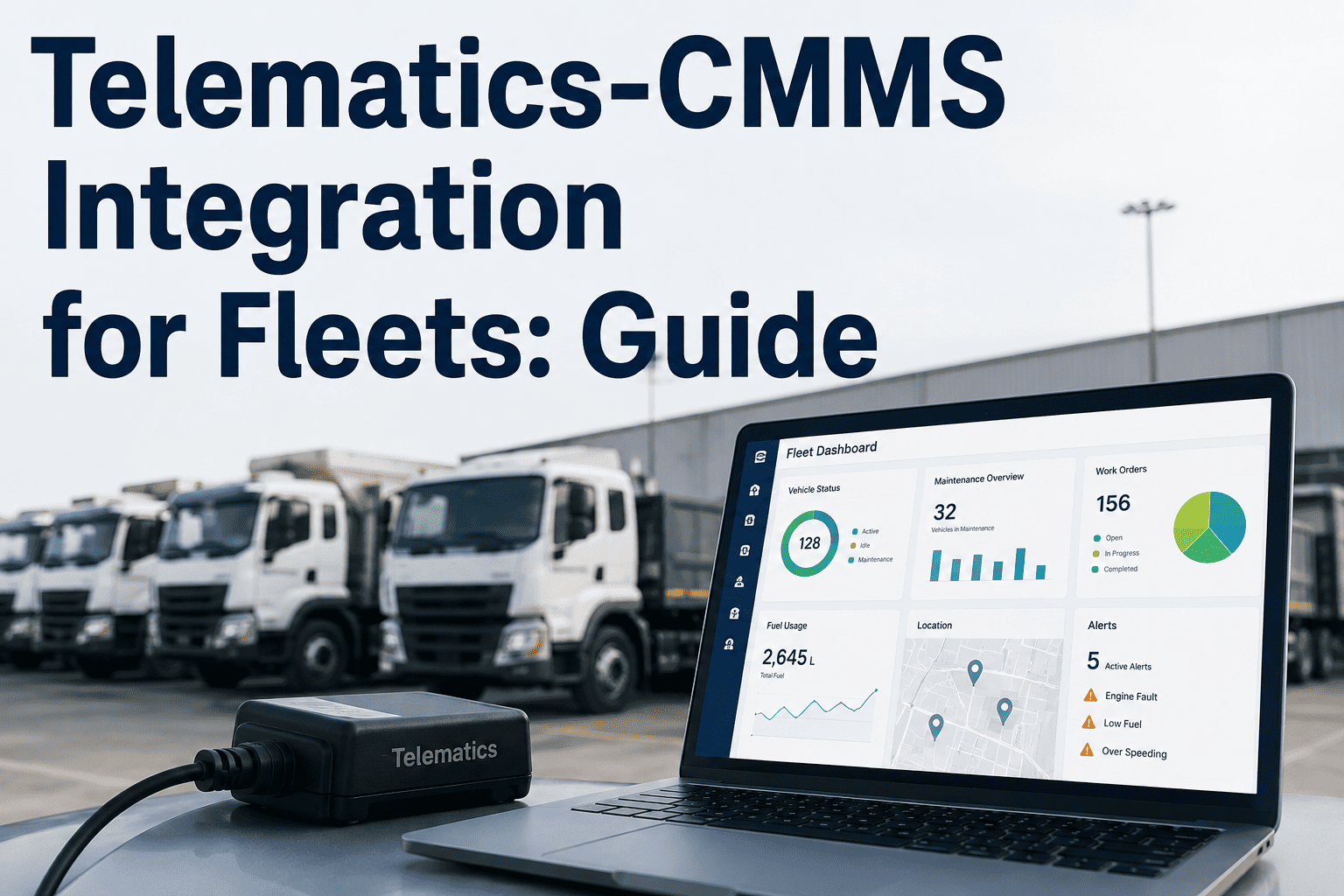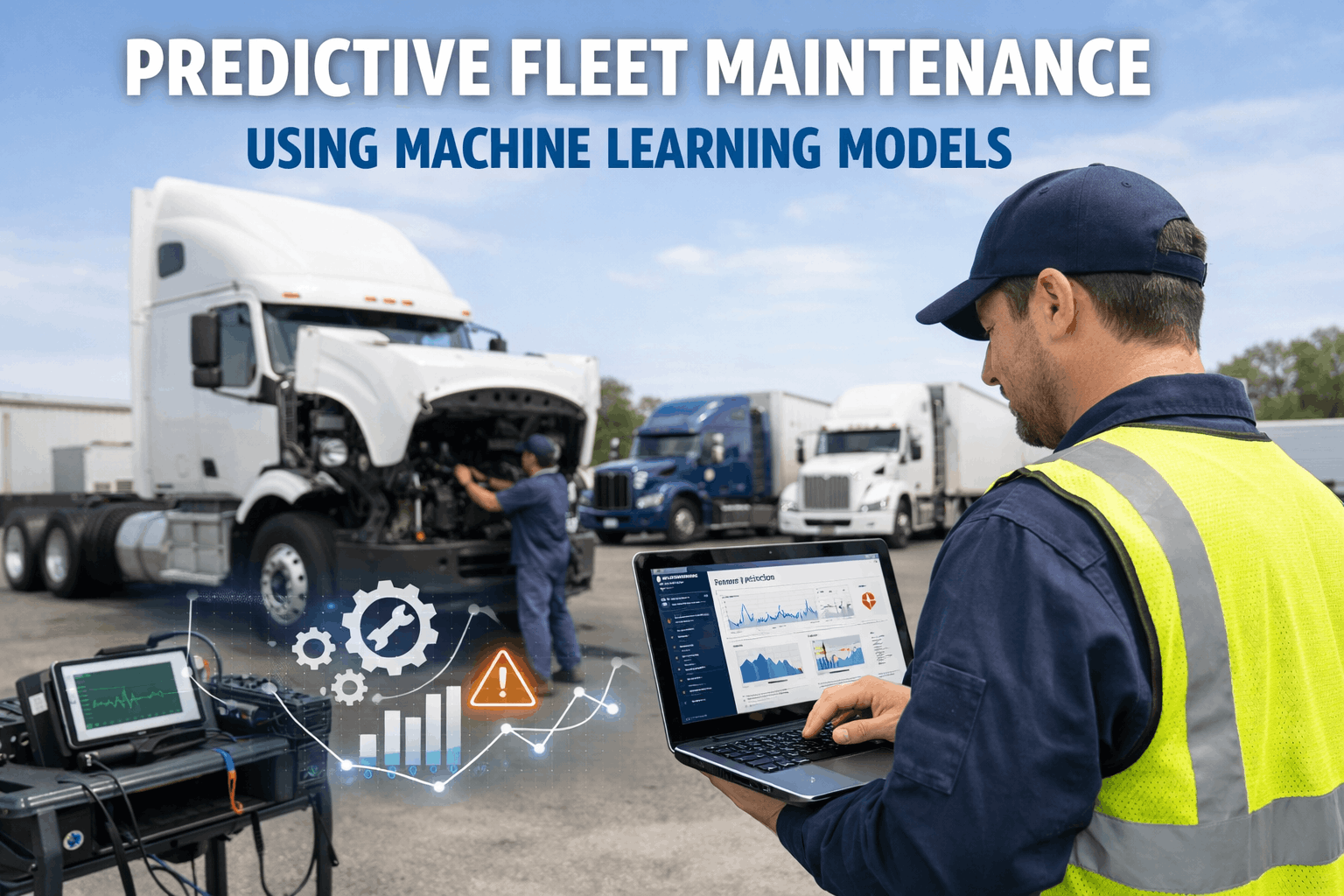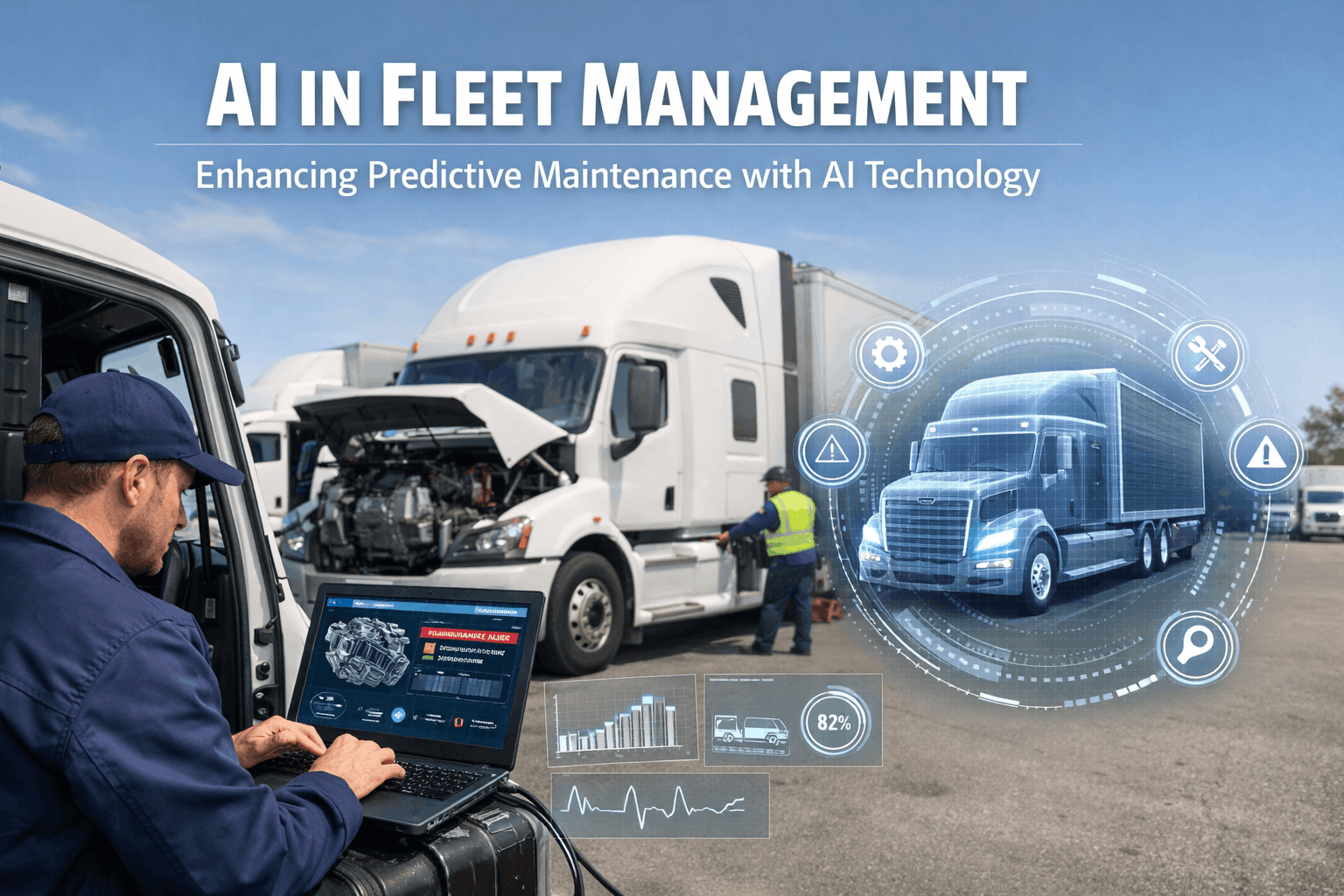
The fleet maintenance landscape is experiencing a paradigm shift powered by artificial intelligence. With the AI-Driven Fleet Maintenance market valued at $4.2 billion in 2024 and projected to reach $11.7 billion by 2033 at a robust 19.3% CAGR [^24^], organizations are rapidly abandoning reactive repair models for AI-powered predictive systems. Traditional maintenance approaches—whether reactive breakdown fixes or rigid time-based schedules—result in unnecessary downtime, inflated costs, and compromised safety. AI predictive maintenance transforms this paradigm by analyzing real-time sensor data, historical performance patterns, and environmental factors to forecast failures weeks before they occur. For fleet managers, this means transitioning from costly emergency repairs to strategic, scheduled maintenance that maximizes vehicle uptime and extends asset lifecycles. In fact, fleets implementing AI predictive maintenance report 45% reduction in downtime, 30% lower maintenance costs, and 60% fewer emergency repairs [^27^], delivering ROI within 6-12 months of implementation.
Transform Fleet Maintenance with AI
Join leading fleet operators reducing maintenance costs by 30% and eliminating unexpected breakdowns with Oxmaint's predictive AI platform.
How AI Predictive Maintenance Works
AI predictive maintenance represents a sophisticated convergence of machine learning algorithms, IoT sensor networks, and advanced data analytics. Unlike traditional maintenance that relies on fixed schedules or reactive repairs, AI systems continuously learn from vast datasets to identify subtle patterns indicating impending failures. Sign up today to experience how AI transforms your maintenance operations.
Data Collection
IoT sensors continuously monitor engine diagnostics, vibration patterns, fluid levels, temperature fluctuations, and tire pressure across your entire fleet. This real-time data streams to centralized cloud platforms for analysis.
Pattern Recognition
Machine learning algorithms analyze historical maintenance records, failure patterns, and real-time sensor data to establish baseline performance metrics and identify anomalies that precede component failures.
Failure Prediction
AI models forecast potential failures 3-8 weeks in advance with over 90% accuracy, allowing maintenance teams to schedule repairs during planned downtime rather than responding to roadside emergencies [^27^].
Automated Action
Systems automatically generate work orders, pre-order necessary parts, and schedule maintenance appointments based on predicted failure timelines and resource availability.
Key Benefits of AI-Driven Predictive Maintenance
Real-World Impact: Case Study Insights
The tangible benefits of AI predictive maintenance are best illustrated through documented fleet transformations. Book a demo to see how these results apply to your specific fleet configuration.
250-Vehicle Transportation Fleet Transformation
Before AI implementation, this fleet experienced 80 downtime incidents annually with $3M in maintenance costs. After deploying predictive maintenance analytics, downtime incidents dropped to 44 per year, emergency repairs decreased from 30 to 12 monthly, and fleet uptime improved from 92% to 97% [^27^].
Food & Beverage Fleet
A 50,000-vehicle fleet used AI to receive advanced warnings of cylinder head failures, transforming $50,000 engine replacements into manageable $3,000 repairs. Over four months, this prevented $1 million in catastrophic repair costs across 80 vehicles [^29^].
Brake System Optimization
FleetDynamics Corporation implemented AI-powered predictive analytics for brake maintenance across 1,500 commercial vehicles, reducing annual brake maintenance costs from $4.2 million while improving safety and eliminating unexpected failures [^32^].
Core Technologies Powering Predictive Maintenance
Random Forest: Excels at learning part-specific decay trends and vehicle attrition patterns with minimal overfitting [^33^]
Neural Networks: Detect complex non-linear relationships in sensor data indicating impending failures
Time Series Analysis: Uses LSTM and ARIMA models to predict component lifespan based on usage patterns
Engine Diagnostics: OBD-II data revealing performance degradation and fault codes
Vibration Analysis: Detects bearing wear, alignment issues, and component fatigue
Thermal Monitoring: Identifies overheating patterns in brakes, engines, and transmissions
Creates virtual replicas of physical assets to simulate performance under various conditions
Enables scenario modeling for maintenance optimization without disrupting operations
Provides real-time comparison between expected and actual vehicle performance
AI systems achieve over 90% accuracy in predicting failures by continuously refining models based on historical data and real-time diagnostics [^27^]. This precision enables maintenance teams to transition from calendar-based schedules to condition-based interventions.
Experience 90%+ Prediction Accuracy
See how Oxmaint's machine learning algorithms analyze your fleet data to predict failures weeks in advance with industry-leading precision.
Implementation Roadmap: From Reactive to Predictive
Successful AI predictive maintenance implementation requires strategic phased deployment. Get started with Oxmaint to begin your transformation journey.
Phase 1: Data Infrastructure (Weeks 1-4)
Install IoT sensors across fleet vehicles, integrate telematics systems with maintenance management software, and establish data pipelines to cloud analytics platforms. Define baseline KPIs for downtime, maintenance costs, and vehicle availability.
Phase 2: Model Training (Months 2-3)
Feed historical maintenance records, failure data, and sensor readings into machine learning algorithms. Train models to recognize failure patterns specific to your vehicle types, operating conditions, and usage patterns.
Phase 3: Pilot Deployment (Months 4-6)
Test predictive models on a subset of vehicles to validate accuracy and refine alert thresholds. Compare predicted failures against actual outcomes to achieve 90%+ prediction reliability before fleet-wide rollout.
Phase 4: Full Integration (Months 7-12)
Deploy across entire fleet with automated work order generation, parts inventory optimization, and maintenance scheduling. Establish continuous learning protocols where AI models improve accuracy based on new data.
Frequently Asked Questions
How accurate is AI at predicting vehicle failures?
Modern AI predictive maintenance systems achieve over 90% accuracy in forecasting component failures when properly trained on historical data and real-time diagnostics. Machine learning models continuously improve prediction precision by learning from each maintenance event and outcome. Random Forest algorithms have demonstrated particular effectiveness in fleet applications, showing minimal overfitting and reliable generalization across diverse vehicle types [^27^] [^33^].
What types of failures can AI predict?
AI systems can predict a comprehensive range of component failures including engine cylinder head issues, brake system degradation, transmission problems, tire wear patterns, battery failures, and HVAC system malfunctions. The technology excels at identifying gradual wear patterns in high-value components like engines and transmissions, enabling intervention before catastrophic failure. AI analyzes vibration patterns, temperature fluctuations, fluid quality, and performance metrics to detect anomalies across all critical vehicle systems [^26^] [^29^].
How far in advance can AI predict maintenance needs?
AI predictive maintenance systems typically forecast failures 3-8 weeks in advance, providing sufficient time to schedule repairs during planned downtime rather than responding to emergency breakdowns. This advance notice allows maintenance teams to pre-order parts, allocate technician resources, and minimize operational disruption. The prediction window varies by component type and failure mode, with gradual wear issues offering longer forecast periods than sudden mechanical failures [^27^].
What ROI can we expect from AI predictive maintenance?
Fleets implementing AI predictive maintenance typically achieve 220-650% ROI within the first year through multiple cost reduction channels. A 250-vehicle fleet documented $1.8 million in annual savings through 30% maintenance cost reduction and 45% downtime decrease. Specific savings include 20-30% reduction in overall maintenance expenses, elimination of costly roadside repairs (which cost 4x more than shop maintenance), 25% increase in productivity, and 70% reduction in breakdowns [^21^] [^27^] [^29^]. Book a demo to calculate your specific ROI potential.
Is AI predictive maintenance suitable for small fleets?
Yes, AI predictive maintenance scales effectively for fleets of all sizes. While large fleets generate more data for model training, small and medium fleets often achieve faster ROI because they can implement changes more quickly and have less complex organizational dynamics. Cloud-based AI solutions eliminate the need for expensive infrastructure investments, making predictive maintenance accessible to fleets with as few as 10-20 vehicles. The key success factor is data quality rather than fleet size [^24^] [^30^].
How does AI predictive maintenance integrate with existing fleet management systems?
Modern AI predictive maintenance platforms offer API integrations with major ERP, telematics, and maintenance management systems. Cloud-based solutions provide seamless data synchronization between vehicle sensors, maintenance scheduling software, and inventory management systems. This integration enables automated work order generation, parts procurement, and resource allocation based on AI predictions. The technology complements existing telematics investments by adding intelligence layer that transforms raw data into actionable maintenance insights [^25^] [^31^].
Ready to Eliminate Unexpected Breakdowns?
Join forward-thinking fleet operators using Oxmaint's AI predictive maintenance to achieve 90%+ prediction accuracy, reduce costs by 30%, and maximize vehicle uptime.