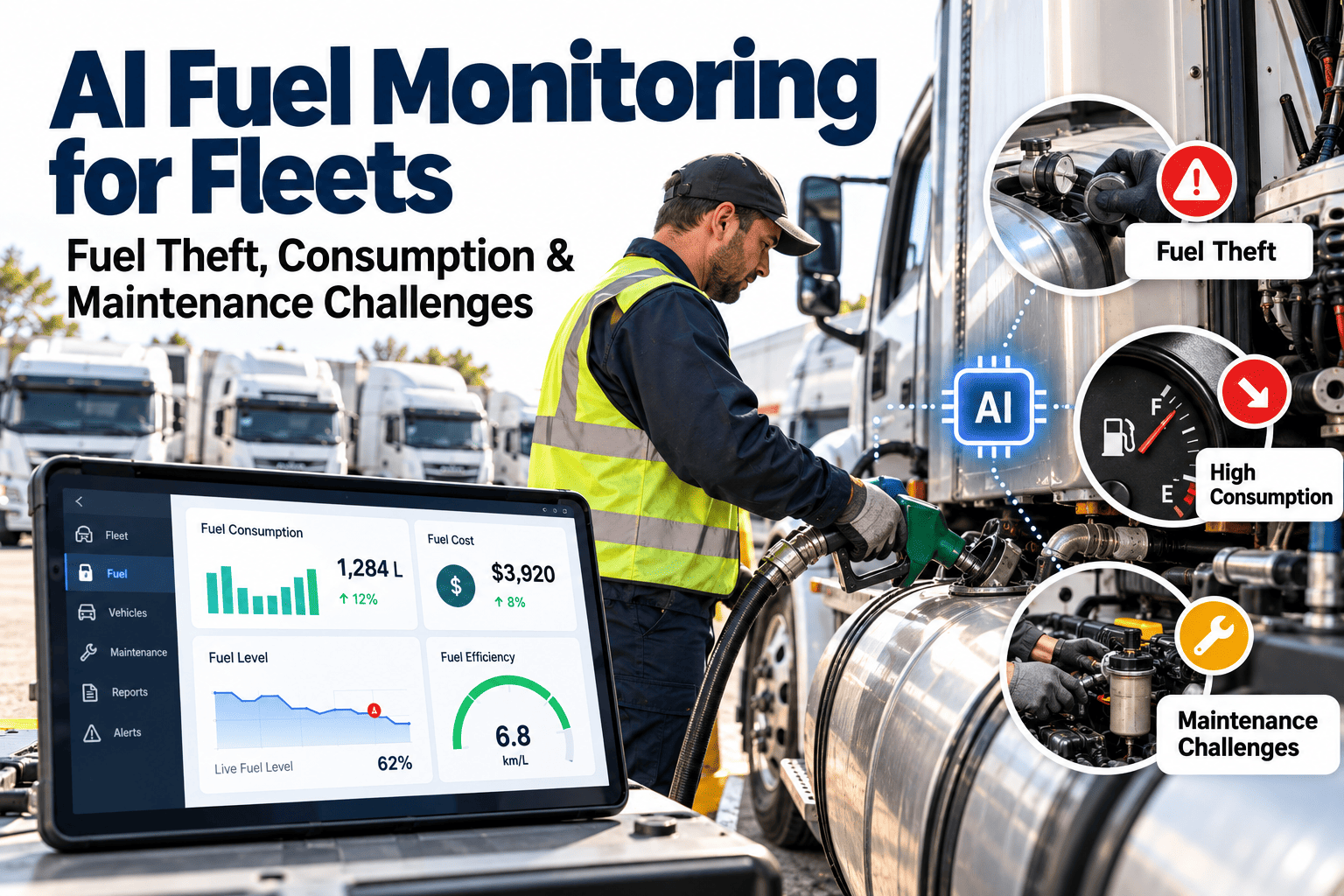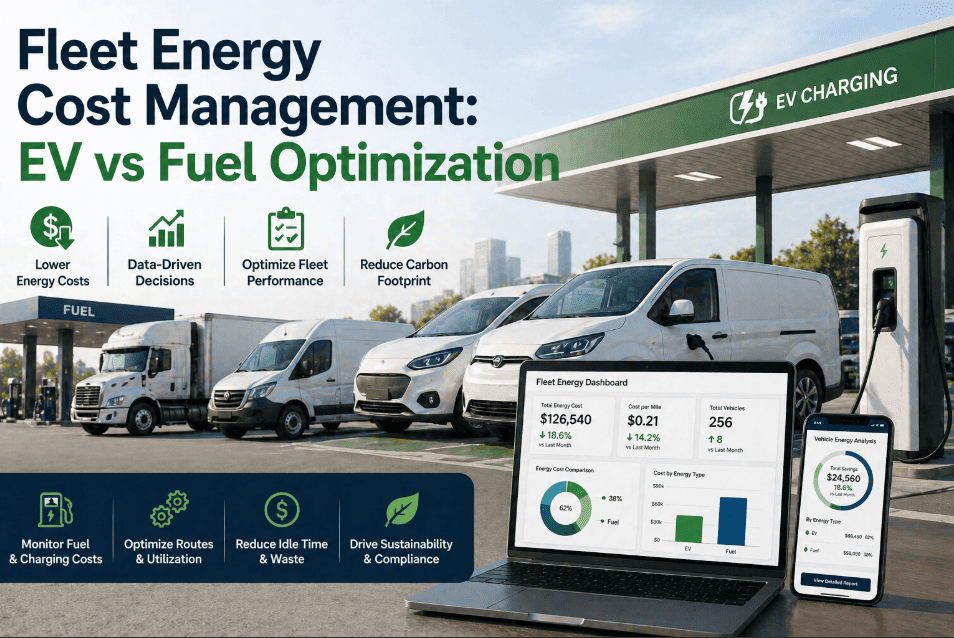
Fuelis the silent budget killer in fleet operations. Accounting for 20% to 40% of total operating costs, it is the single largest controllable expense most fleet managers face — and yet, a staggering 25% to 40% of fuel spend is wasted on inefficient routing, excessive idling, and poor driving habits. In 2026, with diesel projected to average $3.50 per gallon and global fuel price volatility showing no signs of slowing, the fleets that survive — and thrive — will be those that treat fuel management not as an afterthought, but as a core operational strategy. This guide breaks down exactly how modern fuel management solutions work, why they matter more now than ever, and how your fleet can start saving thousands (or even hundreds of thousands) of dollars annually. If you're ready to take control of your fuel costs today, sign up for OxMaint free and see the difference data-driven fuel management can make.
The Real Cost of Ignoring Fuel Management
These numbers paint a clear picture: fuel is not just an expense — it is a strategic lever. Every dollar wasted on unnecessary idling, unoptimized routes, or unchecked driver behavior is a dollar directly subtracted from your bottom line. The U.S. Department of Energy reports that a single idling truck burns approximately 0.8 gallons per hour, which across a fleet of even 20 vehicles, adds up to thousands of wasted gallons per month. The fleet management market itself is growing at over 17% CAGR, with software-centric solutions leading the charge — a clear signal that the industry is rapidly shifting from guesswork to data-driven fuel optimization. The question is: will your fleet be ahead of the curve or scrambling to catch up?
What Is Fleet Fuel Management?
Fleet fuel management is a comprehensive approach to monitoring, analyzing, and optimizing every aspect of fuel consumption across your vehicle fleet. It goes far beyond simply tracking how many gallons you purchase. A modern fuel management system integrates data from GPS trackers, telematics sensors, fuel cards, and maintenance records to give you a complete picture of where your fuel dollars go — and more importantly, where they are being wasted. Think of it as the difference between checking your bank balance once a month versus having a real-time dashboard that flags every unnecessary expense the moment it happens.
Real-Time Tracking
Monitor fuel consumption per vehicle, per trip, and per driver in real time. Spot anomalies the moment they occur.
Idle Time Reduction
Automatically detect and alert on excessive idling — one of the biggest fuel wasters, burning up to 40% of your budget.
Driver Behavior Analytics
Score drivers on fuel efficiency. The top 10% of drivers use 25% less fuel than the bottom 10% in identical vehicles.
Route Optimization
Cut 10-15% of fuel consumption by eliminating deadhead miles and avoiding congestion with dynamic routing.
Why 2026 Is the Year to Act
Fuel Price Volatility
Diesel prices fluctuated by over 20% within months in recent years. Even with 2026 forecasts projecting some stabilization, a $0.10 per gallon swing on a 50-truck fleet changes annual spend by over $100,000. Reactive budgeting no longer works.
Tightening Emissions Regulations
Governments worldwide are enforcing stricter carbon reporting and emissions standards. Fleets that optimize fuel efficiency reduce greenhouse gas output, meet compliance targets, and appeal to ESG-conscious customers and shippers.
AI-Driven Fleet Intelligence
AI-powered fuel management now delivers predictive insights — forecasting maintenance needs, optimizing refueling schedules, and coaching drivers in real time. Early adopters report 10-15% fuel cost reductions within the first year.
Competitive Pressure
The fleet management software market is valued in the billions and growing at over 17% annually. Competitors who adopt smart fuel management gain operational advantages your fleet cannot afford to ignore.
The convergence of volatile prices, regulatory pressure, and available technology makes 2026 the inflection point. Fleets that continue relying on spreadsheets and manual tracking will fall behind those that leverage integrated, AI-driven fuel management platforms. Ready to see how OxMaint can transform your fuel strategy? Book a free demo and get a personalized walkthrough.
Stop Burning Money on Fuel Waste
Join 1,000+ organizations worldwide using OxMaint to cut fuel costs, eliminate waste, and drive smarter fleet operations.
6 Proven Strategies to Slash Fleet Fuel Costs
Fuel savings do not come from a single silver bullet. The most successful fleets stack multiple strategies that compound together. Here are the six approaches that consistently deliver the biggest impact, along with the data behind each one.
Eliminate Excessive Idling
Idling is the single most wasteful fuel behavior, and it is entirely preventable. A heavy-duty truck idling for just one hour burns roughly 0.8 gallons of diesel — and across a fleet, this adds up to potentially 40% of total fuel costs. Modern telematics systems can detect idling events in real time and send alerts to both drivers and managers. Setting clear anti-idling policies and using automated engine shutdown technology can recover thousands of gallons annually. Some states impose idling regulations with fines for violations as short as one minute, adding a compliance incentive on top of cost savings.
Invest in Driver Training and Coaching
Driver behavior is the single most important controllable factor in fuel efficiency. Aggressive acceleration, hard braking, excessive speed, and frequent lane changes all dramatically increase fuel consumption. Research consistently shows that the top-performing drivers consume up to 25% less fuel than the worst performers, even when driving the same vehicles on the same routes. Implementing structured driver coaching programs — supported by telematics data that shows each driver exactly where they can improve — creates measurable, lasting fuel savings. Gamification and incentive programs that reward fuel-efficient driving amplify these results by making fuel savings a team effort. Sign up for OxMaint to start tracking driver performance and fuel efficiency today.
Optimize Routes Dynamically
Every unnecessary mile driven is fuel burned for zero return. Dynamic route optimization uses real-time traffic data, historical patterns, delivery windows, and vehicle load capacity to calculate the most fuel-efficient path for every trip. Fleets using advanced route optimization typically see fuel consumption drop by 10% to 15% by eliminating deadhead miles, avoiding congestion, and reducing stop-and-go driving. When combined with geofencing and dispatch automation, route optimization also reduces total drive time, improving both fuel efficiency and customer delivery performance simultaneously.
Prioritize Preventive Maintenance
A poorly maintained vehicle is a fuel-guzzling vehicle. Clogged air filters, misaligned wheels, worn spark plugs, and low tire pressure all degrade fuel efficiency significantly. Under-inflated tires alone can reduce fuel economy by 3%. Preventive maintenance schedules ensure that every vehicle in your fleet operates at peak efficiency. AI-powered predictive maintenance goes even further, analyzing real-time sensor data to identify potential issues before they cause breakdowns or fuel waste. The ROI on preventive maintenance is immediate and compounding: fewer breakdowns, less downtime, lower repair costs, and better fuel economy across the board. Book a demo to see how OxMaint automates preventive maintenance scheduling.
Leverage Fuel Cards and Strategic Purchasing
Where and how you buy fuel matters more than most fleet managers realize. Fuel card programs offer per-gallon discounts at participating stations, real-time transaction monitoring, spending controls, and fraud protection. Leading fuel card programs can save between $0.15 and $0.48 per gallon off retail prices. For a fleet burning hundreds of thousands of gallons annually, this translates to six-figure savings. Directing drivers to lower-cost stations using fuel price optimization tools — and taking advantage of bulk purchasing agreements where possible — further compounds savings. Regional fuel price variations can exceed $1.00 per gallon, so strategic fueling geography alone can significantly impact your bottom line.
Implement Centralized Fuel Data Analytics
You cannot manage what you cannot measure. Centralized fuel analytics platforms integrate data from telematics, fuel cards, maintenance records, and GPS tracking into a single dashboard. This unified view reveals patterns invisible in siloed data: which vehicles consistently underperform, which routes burn disproportionate fuel, which drivers need coaching, and where fraud or theft may be occurring. The most effective fuel management systems generate automated alerts and reports, enabling fleet managers to make proactive decisions instead of reacting to monthly fuel bills. Modern platforms also benchmark your fleet performance against industry standards, giving you a clear picture of where you stand and where the biggest improvement opportunities lie. Sign up today and unlock the power of centralized fleet fuel intelligence.
The Fuel Savings Breakdown: What a 50-Truck Fleet Can Expect
| Strategy | Annual Fuel Savings (Est.) | Implementation Difficulty |
|---|---|---|
| Anti-Idling Enforcement | $60,000 - $120,000 | Easy |
| Driver Coaching Programs | $80,000 - $150,000 | Medium |
| Dynamic Route Optimization | $50,000 - $100,000 | Medium |
| Preventive Maintenance | $30,000 - $60,000 | Easy |
| Fuel Card Optimization | $70,000 - $115,000 | Easy |
| Centralized Analytics Platform | $40,000 - $80,000 | Medium |
| Combined Total Potential | $330,000 - $625,000+ |
Estimates based on a 50-truck Class 8 fleet averaging 100,000 miles/truck/year at 6.5 MPG. Actual results vary by fleet composition, geography, and current optimization level.
How OxMaint Powers Smarter Fuel Management
OxMaint is an AI-powered CMMS (Computerized Maintenance Management System) built specifically to help fleet operators take control of their maintenance, reduce downtime, and directly improve fuel efficiency. While many solutions focus only on tracking fuel purchases, OxMaint attacks the root causes of fuel waste — poorly maintained vehicles, reactive repair cycles, and missed optimization opportunities.
Never miss a service interval. OxMaint automates preventive maintenance based on mileage, engine hours, or calendar triggers — keeping every vehicle at peak fuel efficiency.
Create, assign, and track maintenance work orders from anywhere. Faster turnaround on repairs means less downtime and fewer vehicles running in degraded, fuel-wasting condition.
OxMaint's AI engine analyzes patterns across your fleet to predict failures before they happen — preventing the kind of deferred maintenance that silently destroys fuel economy.
Consolidated reporting across all vehicles and locations gives you the visibility to spot fuel efficiency trends, identify underperforming assets, and make data-driven decisions.
With 1M+ app downloads, OxMaint puts fleet management in the hands of every technician and driver — enabling real-time inspections, condition reporting, and issue escalation from the field.
Your Fleet Deserves Better Fuel Economics
Whether you manage 10 vehicles or 1,000, OxMaint gives you the tools to eliminate fuel waste, automate maintenance, and make every gallon count.
Frequently Asked Questions
What is fleet fuel management and why does it matter?
Fleet fuel management is the process of monitoring, analyzing, and optimizing fuel consumption across all vehicles in a fleet. It matters because fuel typically accounts for 20% to 40% of total fleet operating costs, making it the largest controllable expense. Without active management, fleets can waste 25% to 40% of their fuel budget through inefficient routing, excessive idling, and poor driver habits. Effective fuel management turns this waste into measurable savings.
How much can a fleet realistically save with fuel management software?
Savings vary based on fleet size, current efficiency levels, and implementation depth. However, industry data consistently shows that AI-driven fuel management programs reduce fuel costs by 10% to 15% in the first year. For a 50-truck fleet, combined optimization strategies — including anti-idling enforcement, route optimization, driver coaching, and preventive maintenance — can deliver $330,000 to $625,000+ in annual savings.
How does preventive maintenance impact fuel efficiency?
Preventive maintenance directly impacts fuel efficiency by keeping vehicles operating at their mechanical best. Under-inflated tires alone can reduce fuel economy by 3%. Clogged air filters, misaligned wheels, and worn engine components all force engines to work harder and consume more fuel. A well-maintained fleet consistently achieves better MPG ratings, lower emissions, and fewer costly breakdowns that disrupt operations.
What role does driver behavior play in fuel consumption?
Driver behavior is arguably the most significant controllable factor in fuel efficiency. Research shows that up to 30% of a vehicle's fuel efficiency is determined by how it is driven. Aggressive acceleration, excessive speeding, hard braking, and unnecessary idling all dramatically increase fuel burn. The best-performing drivers in a fleet can use up to 25% less fuel than the worst performers driving the same vehicle on the same route — making driver coaching one of the highest-ROI fuel management strategies available.
Can OxMaint integrate with my existing fleet management tools?
Yes. OxMaint is designed to work alongside your existing fleet management ecosystem. It integrates with telematics systems, GPS tracking platforms, and other operational tools to create a unified maintenance and performance management layer. This integration ensures that maintenance data informs fuel optimization decisions and vice versa, delivering a comprehensive approach to fleet efficiency.
How quickly can I see results after implementing fuel management solutions?
Most fleets see measurable results within the first 30 to 90 days of implementation. Quick wins like anti-idling enforcement and fuel card optimization deliver immediate savings. Strategies like driver coaching and route optimization typically show compounding results over three to six months. Predictive maintenance benefits accumulate over time as the system learns your fleet's patterns and prevents increasingly costly issues before they arise.
Is OxMaint suitable for small fleets or only large operations?
OxMaint serves fleets of all sizes, from small operations with 10 vehicles to enterprise fleets with over 1,000. The platform scales with your needs, and its mobile-first design means you do not need dedicated IT infrastructure to get started. Many small and mid-sized fleets find that OxMaint pays for itself within the first quarter through maintenance cost savings and improved fuel efficiency alone.