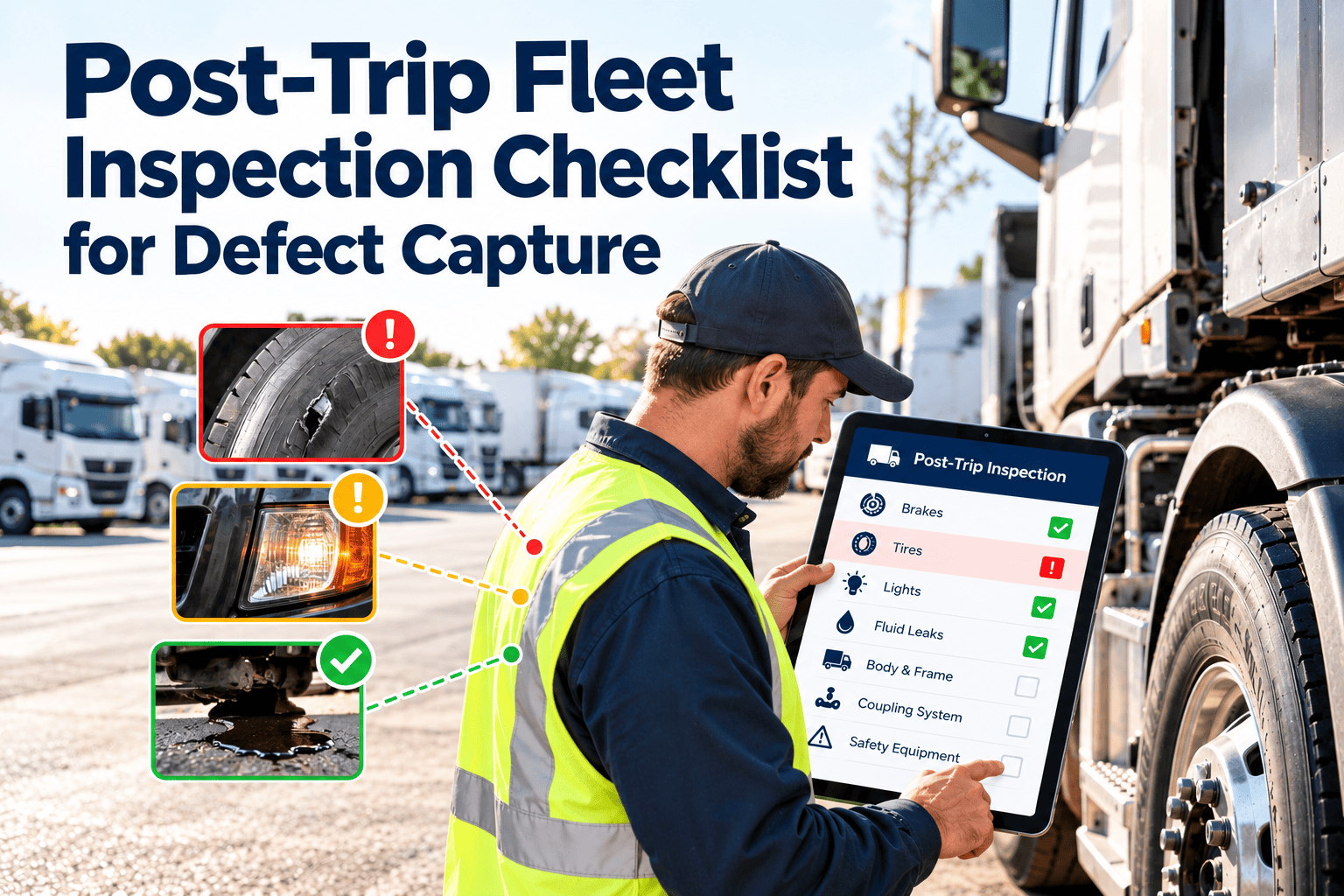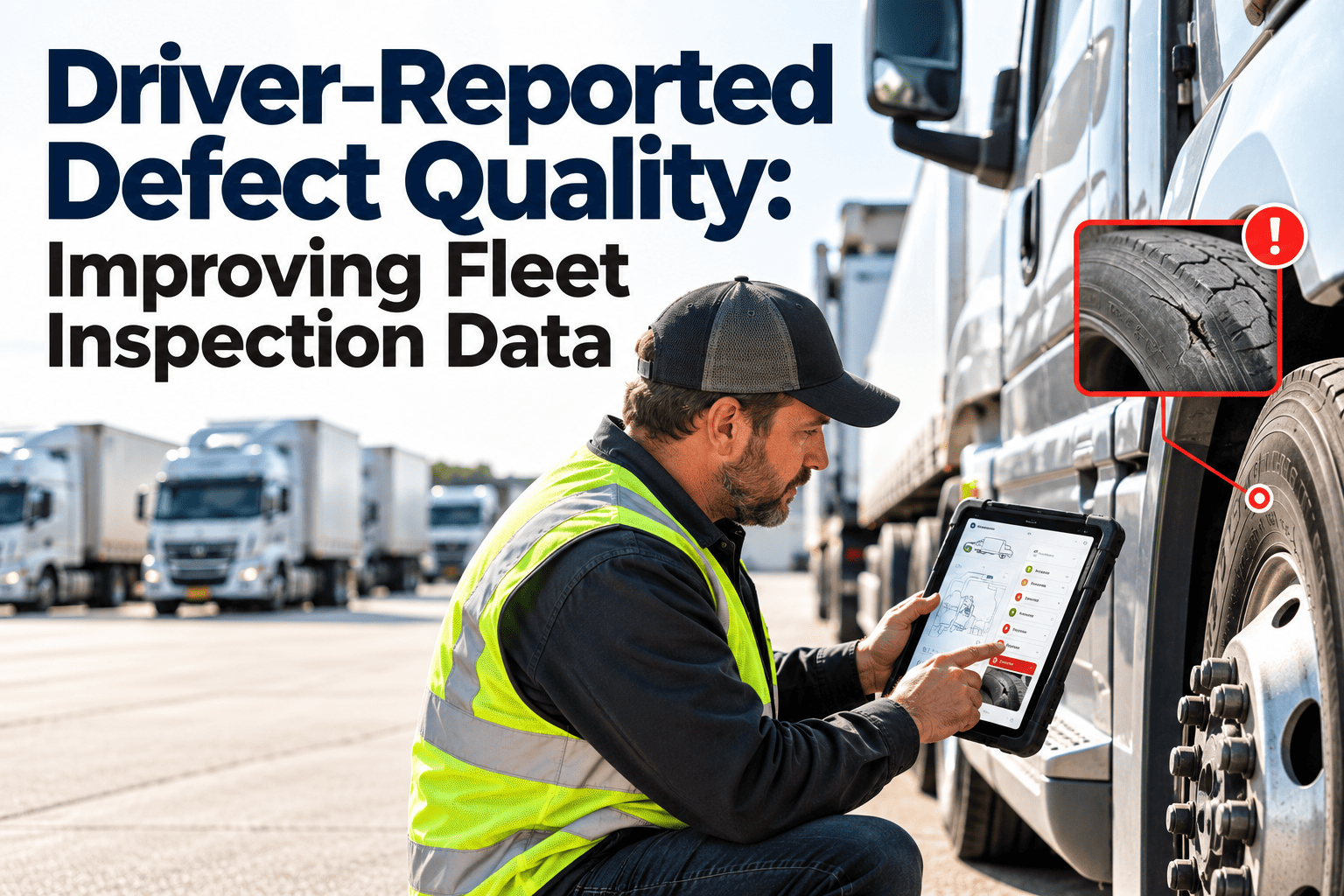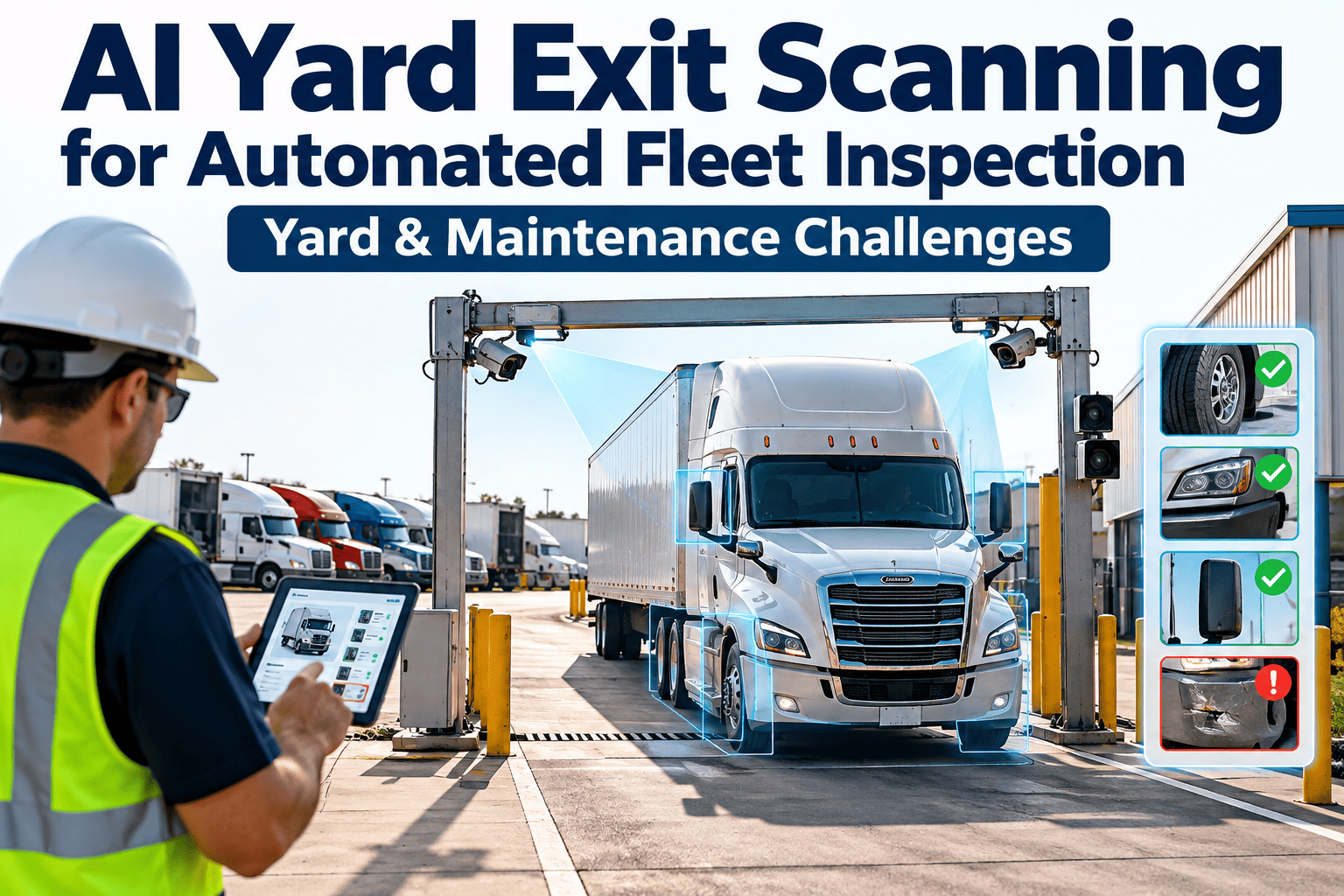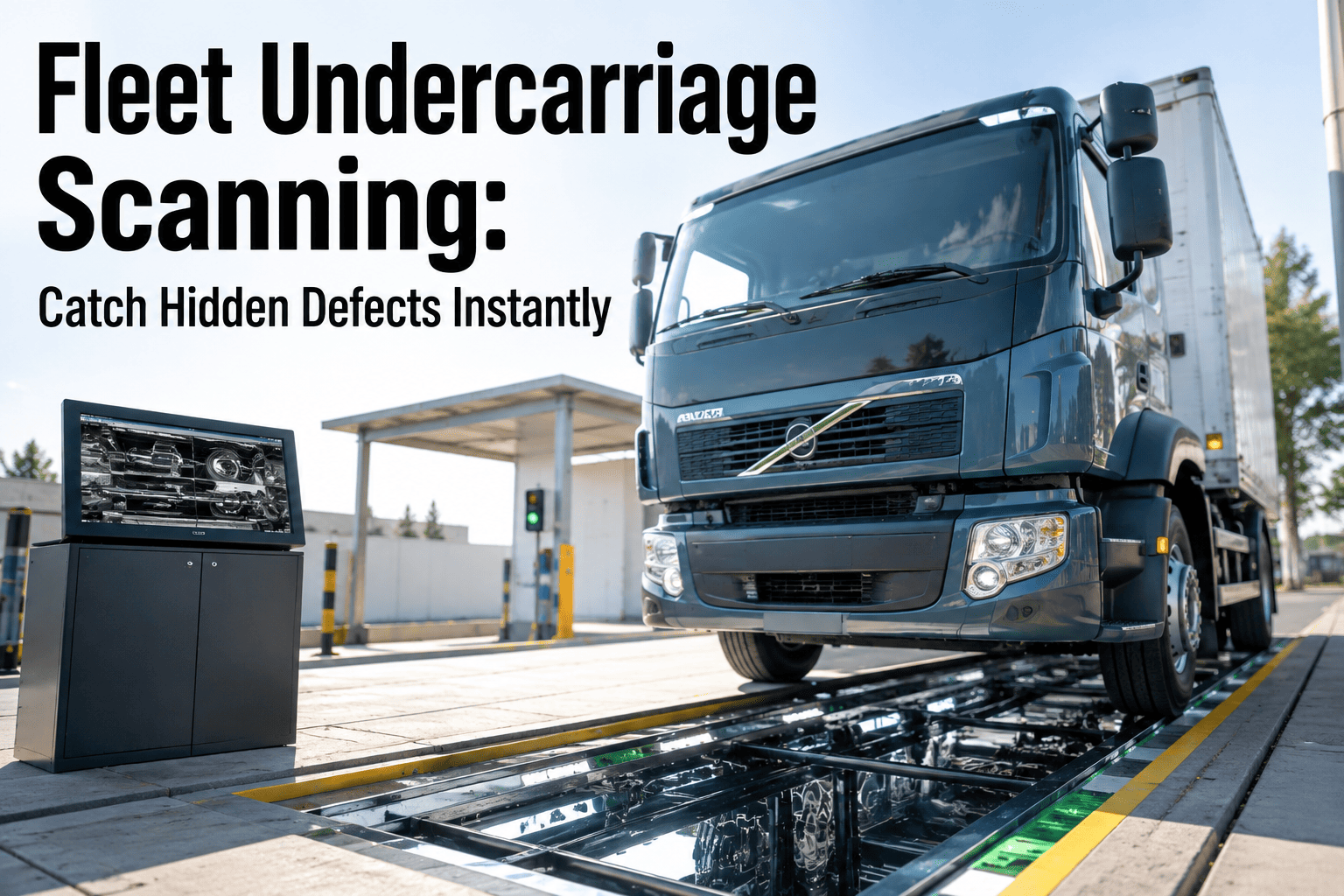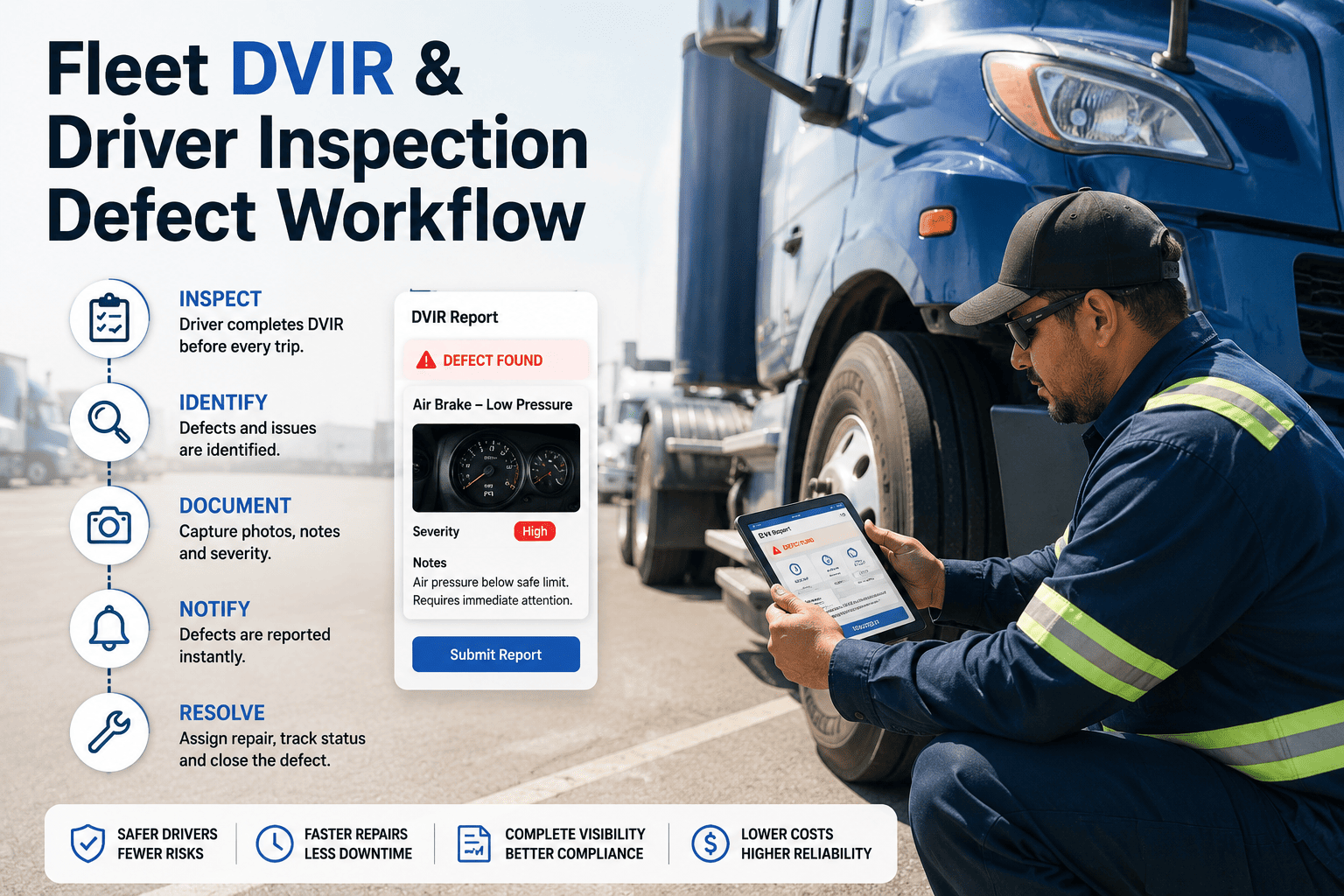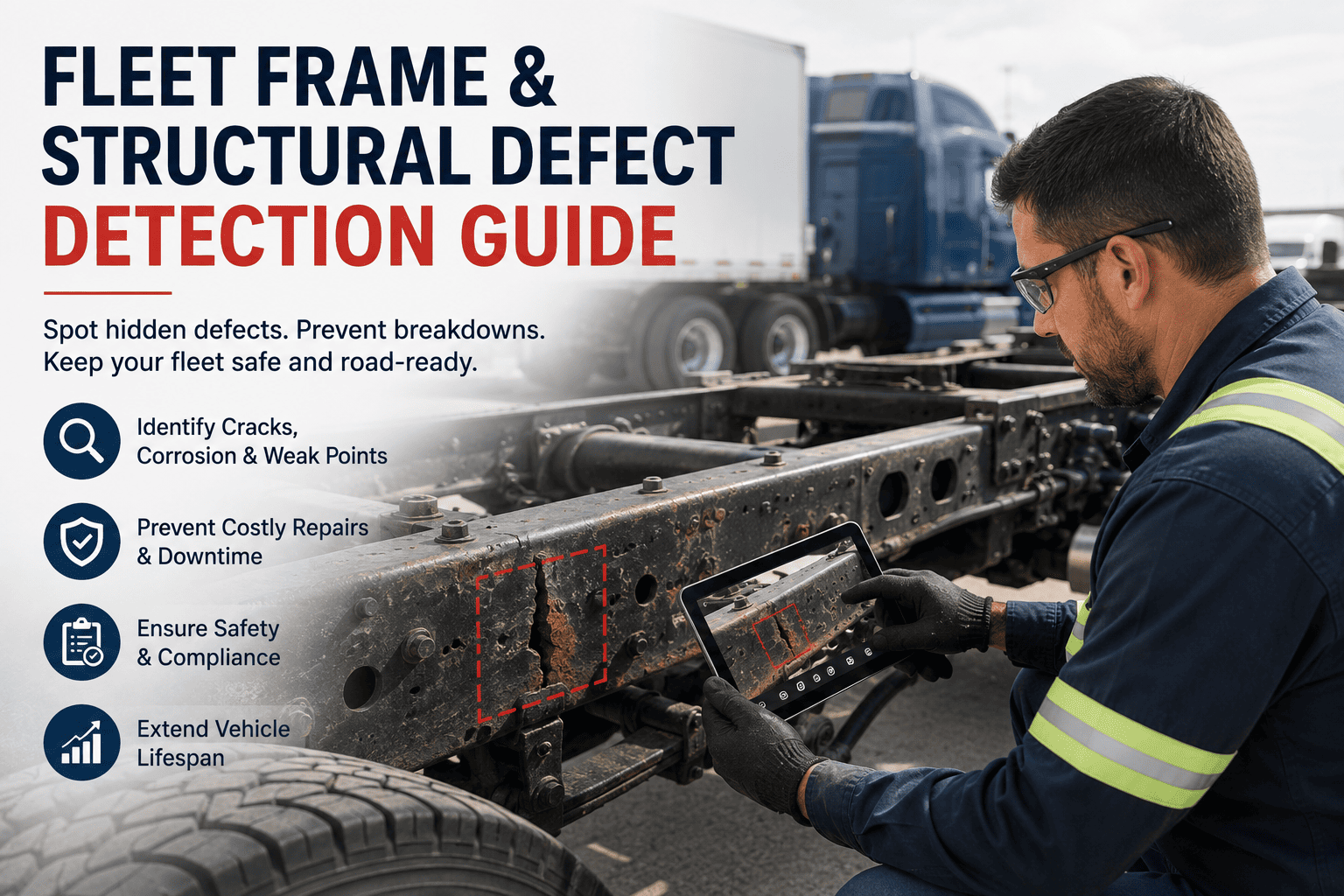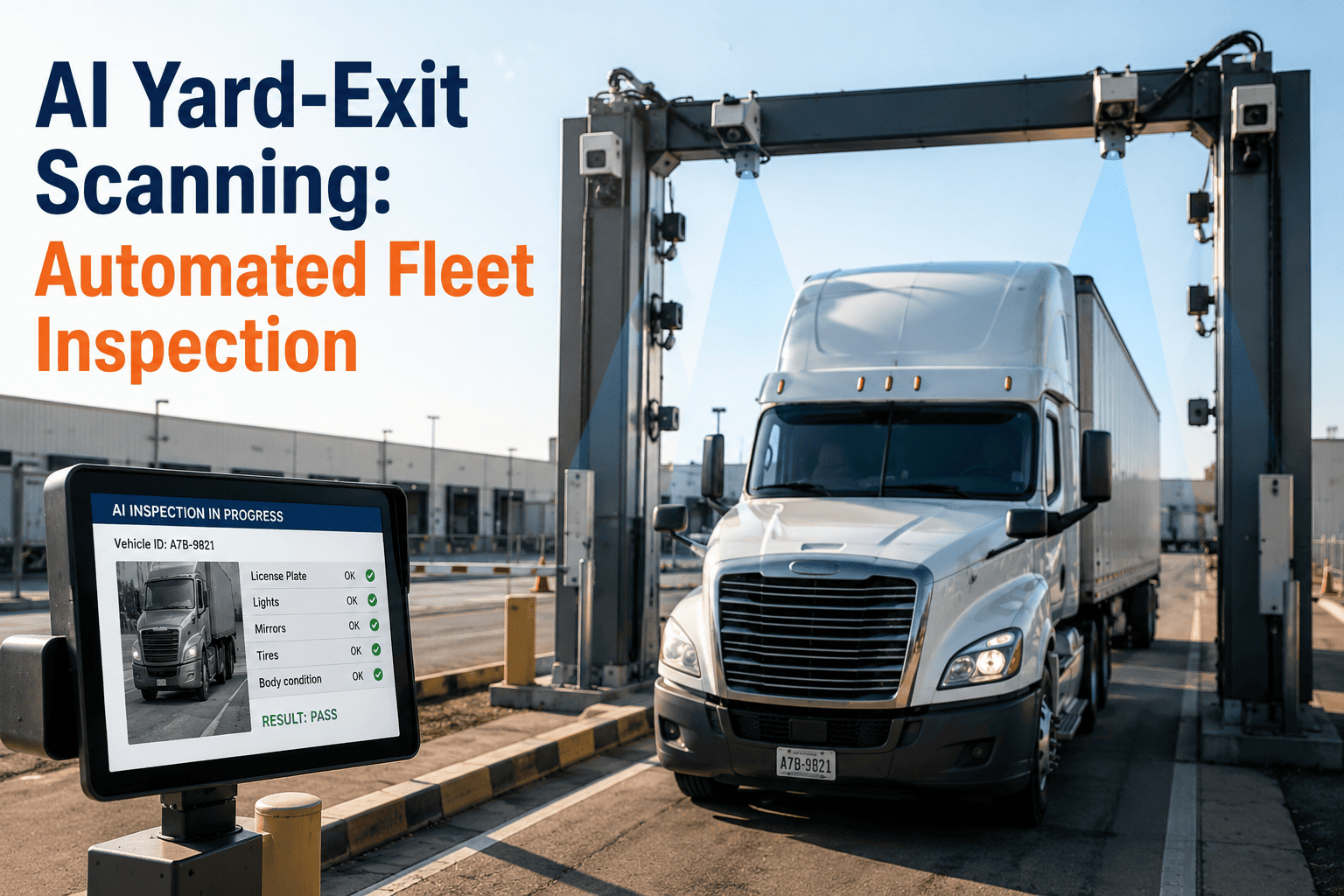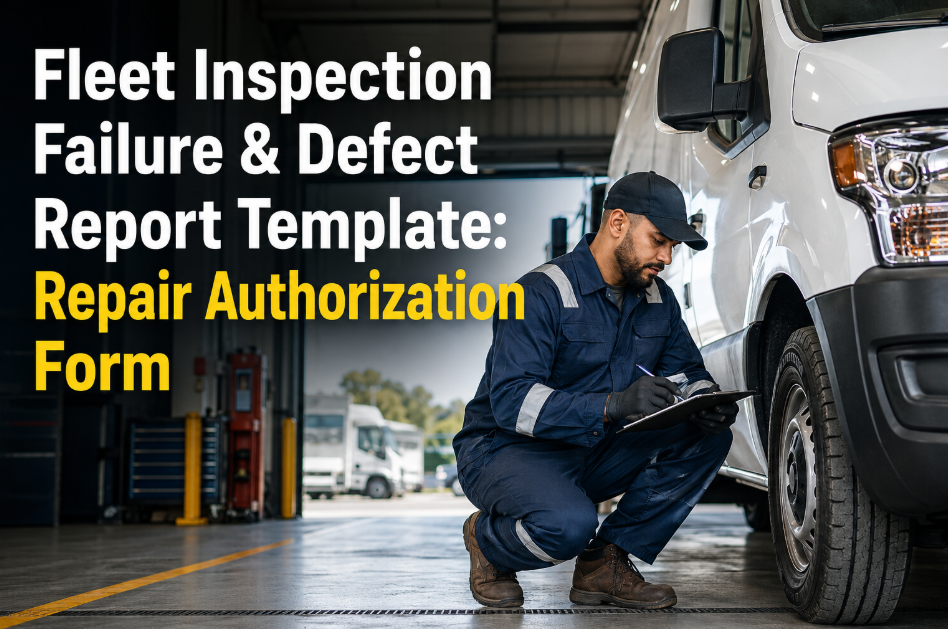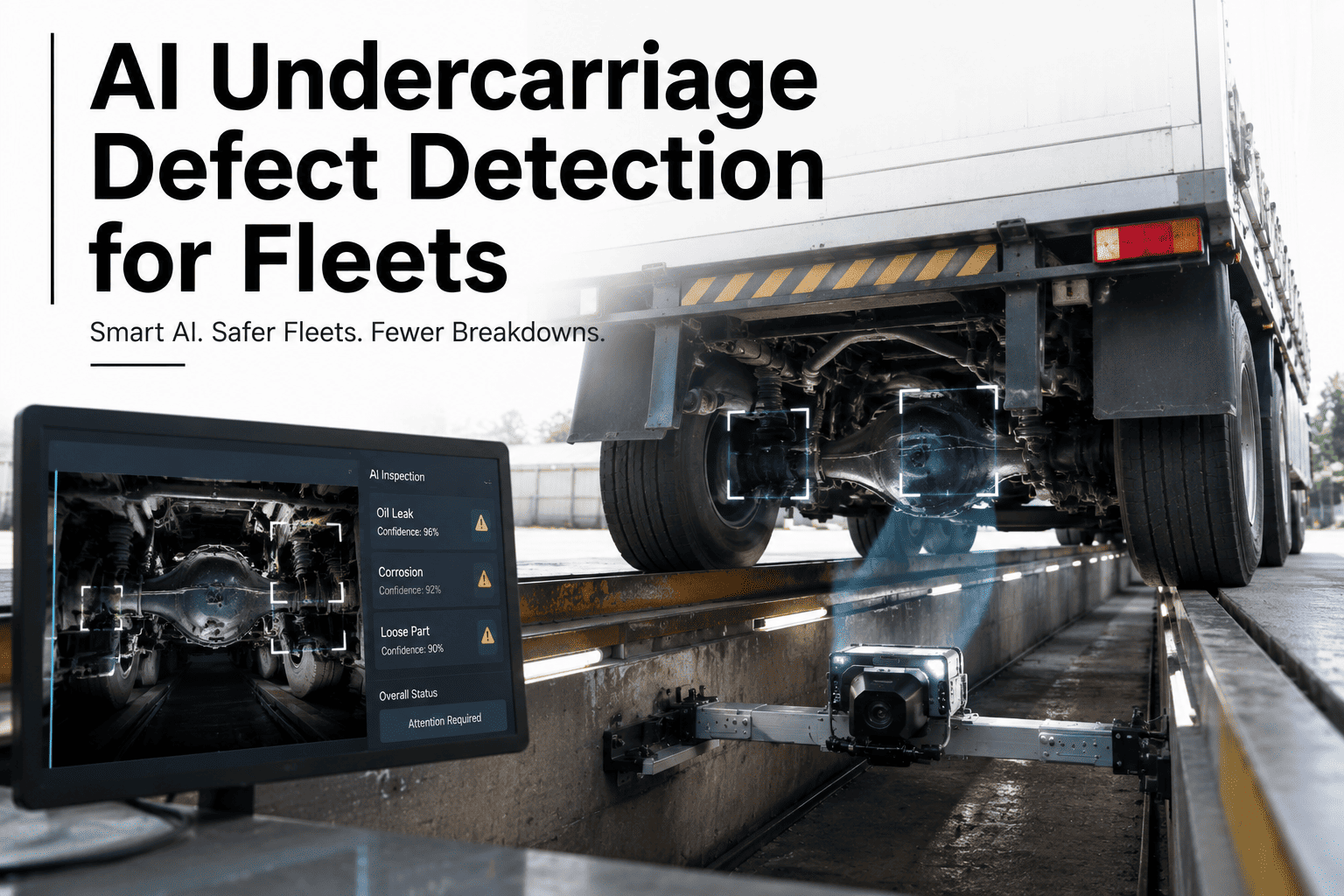
AI undercarriage defect detection uses machine-vision cameras and deep-learning models to automatically inspect the hidden underside of fleet vehicles — catching corrosion, air leaks, suspension wear and structural damage that a manual walkaround simply cannot see. For maintenance and reliability teams managing trucks, heavy equipment or transit fleets, automated undercarriage inspection turns a slow, inconsistent, lift-bay bottleneck into a drive-through scan that flags defects in seconds. The real value emerges when those AI findings flow directly into a CMMS: OxMaint captures every undercarriage AI scan, auto-generates work orders, and schedules corrective action before a minor leak becomes a roadside failure. Ready to see it on your fleet? Start Free Trial or read on for the full breakdown.
AI Undercarriage Inspection
The defects hiding under your fleet cost 3× more when they fail on the road.
A single AI undercarriage scan sees what a 15-minute walkaround misses — hairline cracks, weeping seals, rusted cross-members, leaking air lines. OxMaint turns each scan into a tracked, prioritized work order before the vehicle leaves the yard.
What an AI undercarriage scan detects in one pass
- Corrosion & rust on frame rails, cross-members and skid plates
- Fluid & air leaks — oil, coolant, brake fluid, compressed air
- Suspension wear — bushings, U-bolts, springs, shock mounts
- Structural damage — cracks, bends, loose or missing fasteners
The Hidden Cost Gap
Why manual undercarriage inspections miss 60 % of early-stage defects
A technician with a flashlight and creeper can inspect roughly one vehicle every 20 minutes — and fatigue, poor lighting and tight clearances mean even experienced mechanics miss early corrosion pitting, hairline stress cracks and slow fluid weeps. By the time these issues are visible to the naked eye, the repair cost has already tripled.
60%
of early undercarriage defects missed by manual walkaround checks
$4.2K
average roadside repair cost per undetected undercarriage failure
14hrs
average downtime per vehicle when a hidden defect becomes a breakdown
3×
repair cost multiplier when proactive fix becomes emergency roadside work
How It Works
From drive-through scan to scheduled work order in 4 steps
AI undercarriage inspection replaces the lift-bay bottleneck with a drive-over camera array. Here is the end-to-end flow — and where OxMaint closes the loop between detection and action.
Vehicle drives over the scanner array
High-resolution cameras and structured-light sensors mounted in a pit or low-profile ramp capture the full undercarriage in 8–12 seconds as the vehicle rolls through at 3–5 mph. No lift, no technician crawling underneath.
Deep-learning models classify each defect
Convolutional neural networks trained on millions of undercarriage images identify corrosion severity, fluid leaks, cracked welds, missing fasteners and worn bushings — assigning each finding a confidence score and severity level (info / monitor / repair-now).
OxMaint auto-generates a prioritized work order
Each flagged defect flows into OxMaint as a structured work order — tagged to the asset, annotated with the scan image, severity-ranked and routed to the right technician. No manual data entry, no clipboard, no delayed handoff.
Condition history drives predictive PM scheduling
OxMaint tracks defect progression across repeated scans for the same asset — so a slowly growing rust patch or weeping seal triggers a preventive maintenance task before it becomes a critical failure. The AI scan data feeds directly into the PM schedule.
Manual vs AI Inspection
What changes when you replace the creeper with computer vision
The gap between manual and AI undercarriage inspection is not incremental — it is structural. One is subjective, slow and incomplete; the other is consistent, fast and exhaustive.
| Inspection dimension | Manual walkaround | AI undercarriage scan + OxMaint |
|---|---|---|
| Time per vehicle | 15–25 minutes on a lift | 8–12 seconds drive-through |
| Defect detection rate | ~40 % of early-stage issues caught | 92–96 % detection accuracy |
| Consistency across technicians | Highly variable — skill & fatigue dependent | Identical on every scan, every shift |
| Defect documentation | Handwritten notes, photos on a phone | Auto-tagged image, severity score, asset history |
| Time from defect to work order | Hours to days — manual entry & routing | Under 60 seconds — fully automated |
| Condition trend tracking | Practically impossible across paper records | Every scan stored, compared & trended per asset |
| Audit & FMCSA compliance evidence | Incomplete, hard to retrieve | Full digital trail — image, time, action, sign-off |
Worked Example
A 220-truck regional fleet spending $186K a year on undercarriage failures
Manual walkaround inspections only
- 220 trucks inspected manually every 30 days
- 47 roadside failures per year traced to undercarriage causes
- $4.2K average cost per roadside repair (towing + labour + parts)
- $197K annual undercarriage-related repair spend
- 14 hrs average downtime per failure event
- 1,240 hrs total annual technician time on undercarriage inspections
AI undercarriage detection + automated CMMS
- 220 trucks scanned on every yard entry — zero technician time
- 9 roadside failures per year (81 % reduction)
- $1.6K average cost — proactive repair, no towing
- $42K annual undercarriage repair spend
- 4 hrs average downtime per scheduled fix
- 180 hrs technician time redirected to higher-value work
How OxMaint Helps
Turn every undercarriage AI scan into tracked, scheduled, verified action
Detection without action is just data. OxMaint is the CMMS layer that converts AI undercarriage inspection output into measurable maintenance outcomes — fewer breakdowns, tighter compliance, lower repair spend.
Defect-to-work-order automation
Every flagged defect auto-generates a work order tagged to the asset, complete with scan image, severity score and recommended action — no manual entry, no clipboard handoff. Cuts administrative overhead by up to 70 %.
Condition history & predictive PM
OxMaint stores every scan against the asset record and trends defect progression over time — so a slowly worsening corrosion patch auto-triggers a preventive task before failure. Reduces unplanned downtime 30–50 %.
FMCSA-ready compliance trail
Each inspection, defect, work order and sign-off is time-stamped and digitally linked — producing an audit-ready evidence chain for FMCSA, DOT and internal reliability reviews. Eliminates paper inspection forms entirely.
Maintenance analytics & cost tracking
Real-time dashboards show defect rate by vehicle, failure mode trends, MTBF, repair cost per asset and PM compliance — so reliability leaders can prove ROI and target the worst offenders. Typically cuts repair spend 20–35 %.
Implementation Timeline
How long does it take to deploy AI undercarriage detection on a fleet?
Most fleets of 50–500 vehicles go from signed order to first live scan in 4–6 weeks. The OxMaint CMMS integration — the part that turns scans into work orders — can be configured in days, not months.
Site assessment & scanner spec
OxMaint and the vision partner assess yard layout, traffic flow and vehicle mix. Camera array, pit or ramp configuration is finalized. Integration requirements for existing telematics or fleet systems are scoped.
Hardware install & calibration
Scanner array is installed in the yard entry lane. Cameras are calibrated to the fleet's typical vehicle heights and wheelbases. Baseline scans are captured for the first 20–30 vehicles to tune detection thresholds.
OxMaint CMMS integration
Defect-to-work-order rules are configured. Asset records, PM schedules and technician routing are set up in OxMaint. The first live AI scans begin auto-generating work orders. Training is delivered to maintenance staff.
Full fleet rollout & tuning
All vehicles are enrolled in the scan schedule. Detection models are fine-tuned on fleet-specific defect patterns. Dashboards go live for reliability leaders. First KPI review — defect catch rate, false-positive rate, work-order cycle time.
See OxMaint turn undercarriage scans into action — book a 30-minute demo
We will show you exactly how AI undercarriage detection feeds into automated work orders, predictive PM and full FMCSA compliance — on a fleet configured to match yours.
FAQ
AI undercarriage defect detection — what fleet managers ask
How accurate is AI undercarriage defect detection compared to manual inspection?
Trained AI vision models achieve 92–96 % detection accuracy for common undercarriage defects — corrosion, leaks, cracks and missing fasteners — versus roughly 40 % for a manual walkaround. Accuracy depends on image quality, lighting and model training data, but the AI is consistent on every scan while human inspectors vary by skill, fatigue and visibility conditions. You can evaluate the detection rate on your own fleet with a Start Free Trial of OxMaint.
What types of undercarriage defects can AI scanning detect?
Modern AI undercarriage inspection systems detect surface and structural corrosion on frame rails and cross-members, fluid leaks (oil, coolant, brake fluid, fuel), compressed-air leaks, cracked or bent structural members, worn or broken suspension components (bushings, U-bolts, shock mounts, springs), loose or missing fasteners, and abnormal component wear. Deep-learning models classify each finding by type, severity and recommended action.
How does OxMaint connect AI undercarriage scans to work orders?
When the vision system flags a defect, OxMaint automatically creates a work order tagged to the specific asset — complete with the scan image, defect type, severity score and recommended repair action. The work order is then routed to the appropriate technician based on priority, skill set and availability. No manual data entry is required, and every action is time-stamped for a full audit trail.
How much does automated undercarriage inspection cost for a fleet?
Hardware (camera array, sensors, installation) typically runs $35K–$80K depending on lane configuration and vehicle volume. The OxMaint CMMS software subscription — which includes defect-to-work-order automation, condition tracking and analytics — scales per asset and most fleets of 100+ vehicles see full payback in 3–6 months through reduced roadside failures and repair spend. Book a demo for a tailored ROI calculation.
Can AI undercarriage monitoring integrate with our existing fleet management system?
Yes. OxMaint integrates with most telematics platforms, fleet management systems and existing CMMS/EAM tools via API. The AI vision system feeds scan results into OxMaint, which then syncs work orders, asset records and PM schedules with your broader tech stack. If you are currently on spreadsheets or a legacy CMMS, OxMaint can replace it directly — most teams are fully migrated within 2–4 weeks.
Stop relying on flashlights and creepers to find the defects that cost you the most.
Deploy AI undercarriage defect detection with OxMaint and turn every scan into a tracked, prioritized, scheduled work order — before a $200 seal leak becomes a $4,200 roadside failure.
Free 14-day trial · No credit card