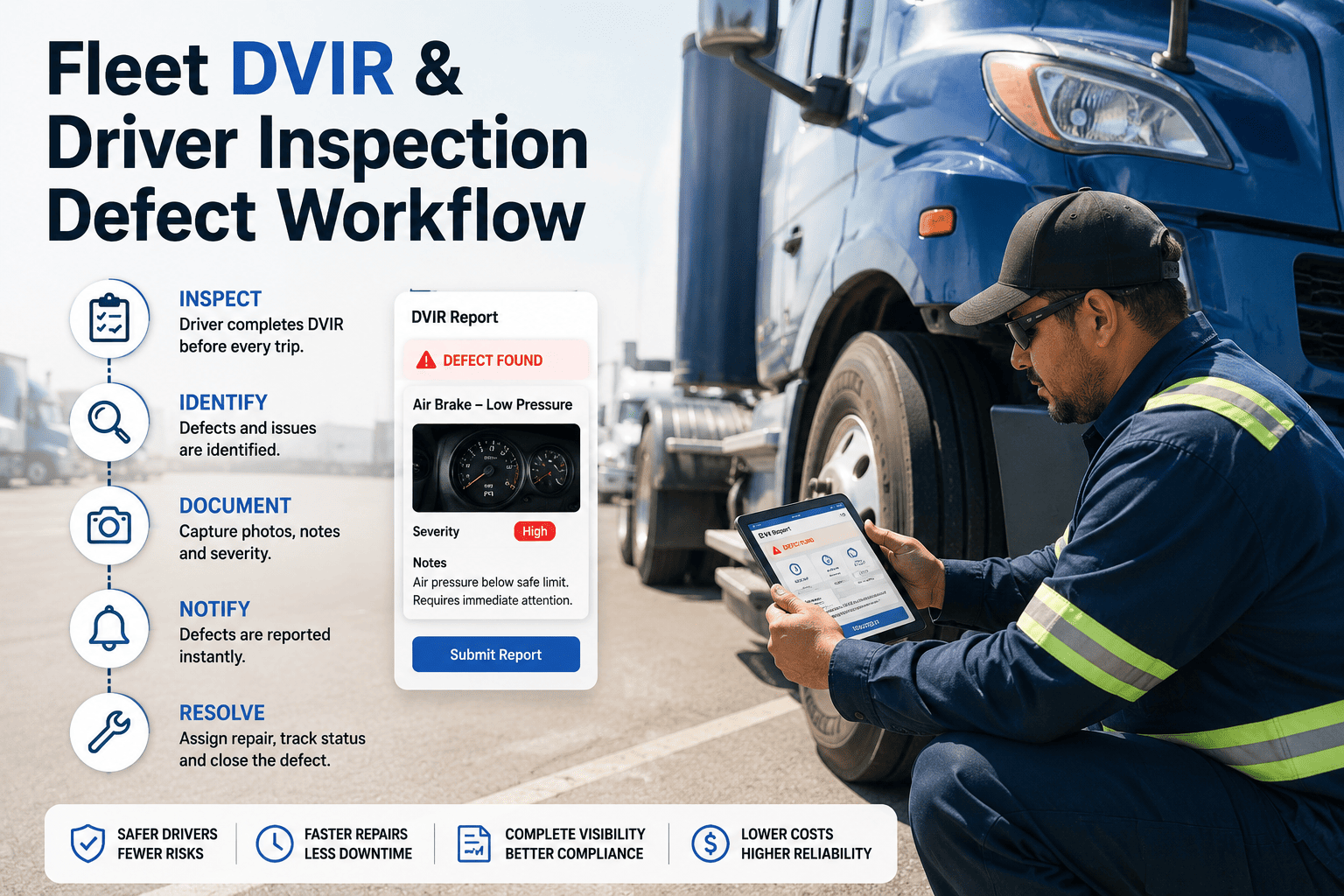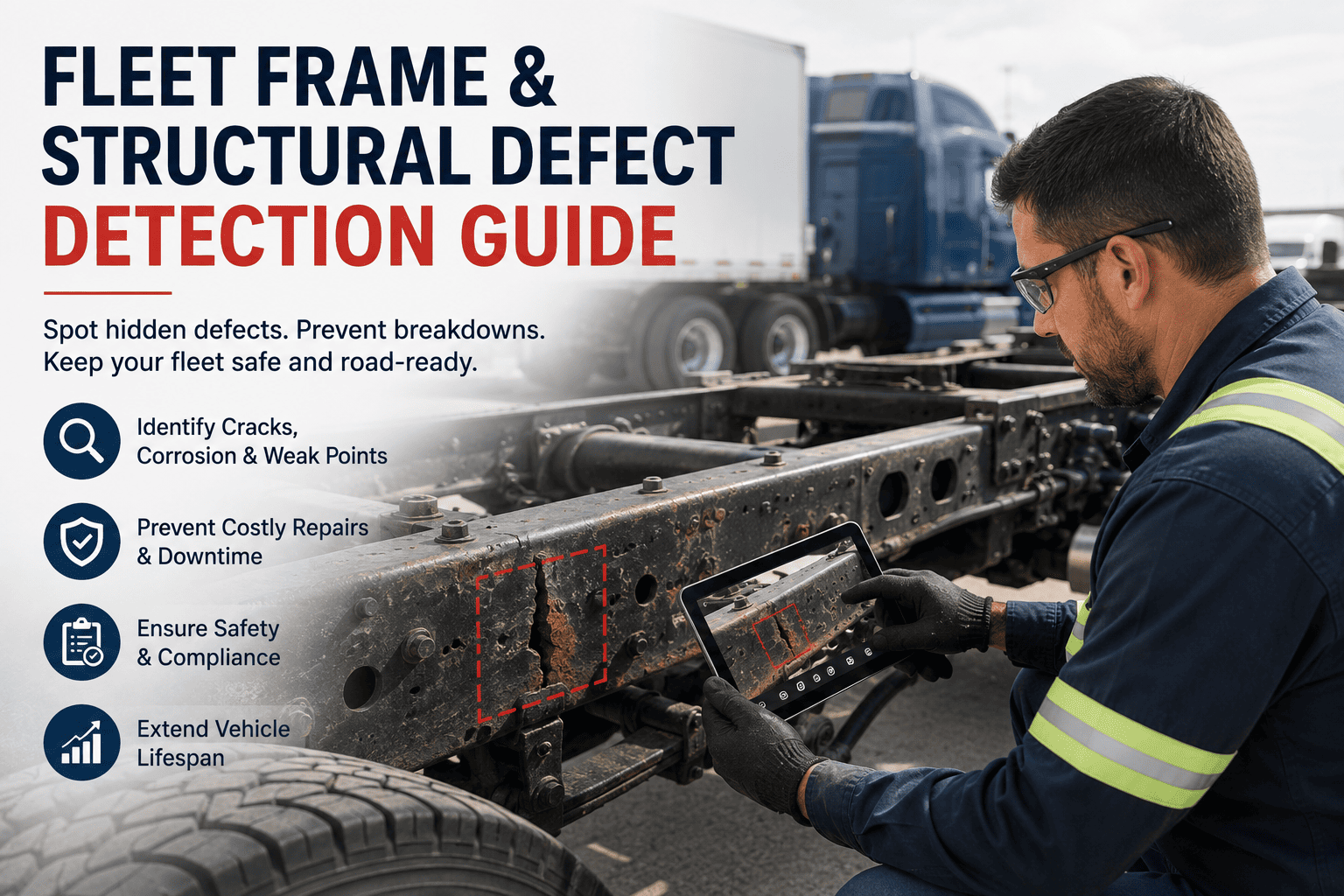
Fleet frame defect detection is the safety-critical process of identifying structural fatigue, corrosion, cracking, and distortion in vehicle chassis before they cause catastrophic failure on the road. Traditional walkaround inspections routinely miss early-stage fleet structural defects, condemning vehicles to costly emergency repairs or outright retirement if left unchecked. By implementing a rigorous frame structural inspection protocol supported by modern CMMS technology, maintenance teams can catch frame corrosion and metal fatigue weeks or months before they become compliance violations or safety incidents. This guide breaks down how to modernize your fleet frame inspection process, and you can Start Free Trial to immediately digitize your structural defect tracking.
Fleet Frame & Structural Defect Detection Guide
Are Hidden Frame Defects Silently Condemning Your Fleet?
Over 60% of catastrophic structural failures stem from micro-cracks and corrosion that standard visual walkarounds miss entirely. Without a defensible, digitized fleet frame inspection workflow, you are risking roadside failures, DOT violations, and compromised driver safety.
The High Cost of Missed Defects
Why Traditional Fleet Frame Corrosion Detection Fails
Relying on a flashlight and a mirror is no longer a defensible standard for fleet structural inspection. A single overlooked fatigue crack can lead to a catastrophic separation event, costing millions in liability and grounding an entire asset class.
A 180-vehicle regional haul fleet discovered 12 frames with severe fatigue cracking only after a trailer lost a tandem axle. Had they used predictive condition tracking, the proactive repair cost would have been $14,000 instead of a $220,000 liability settlement and a 3-week DOT audit.
Core Inspection Framework
Fleet Frame & Structural Inspection Checklist
A defensible fleet frame inspection must follow a tiered protocol. Move beyond surface-level checks to ensure structural defect detection covers high-stress zones where fatigue propagates fastest.
Surface & Corrosion Evaluation
- Inspect frame rails for section loss, pitting, and scale
- Check cross-member attachment points for rust jacking
- Verify undercoating integrity and identify trapped moisture
- Assess suspension hanger brackets for structural integrity
Fatigue & Crack Detection
- Examine fish-mouth cracks at rivet holes and welds
- Apply dye-penetrant testing on high-stress web areas
- Inspect fifth wheel mounting plates for elongation
- Measure frame twist and diagonal alignment tolerances
Deflection & Distortion Checks
- Verify straightness of frame rails using laser alignment
- Check for buckling or bending around engine mounts
- Measure suspension boss alignment and axle centers
- Document permanent deflection beyond OEM specs
Inspection Frequencies
Structural Fleet Defect Detection Schedule
Establishing a time-based and condition-based cadence is critical for FMCSA compliance and ISO 55000 alignment. Use this timeline to structure your fleet frame damage detection intervals.
Driver Visual Defect Check
Drivers perform a high-level walkaround noting visible frame sag, hanging cross-members, or severe rust dripping from mounts. Captured via mobile app for immediate CMMS triage.
Bay Inspection & Corrosion Grading
Technicians grade frame corrosion (Scale 1-4) using standardized criteria. Focus on suspension mounting points and brake chamber brackets where stress concentrates.
Detailed NDT & Fatigue Mapping
Non-destructive testing (dye-penetrant, ultrasonic) applied to high-mileage assets. Structural defect detection data is mapped to asset history within the CMMS for predictive analysis.
Comprehensive Frame Audit
Full laser alignment, structural teardown inspection, and OEM specification verification. Digital compliance records are locked for DOT audit readiness.
Reactive vs. Defensible
The Cost Gap: Paper Inspection vs. CMMS Tracking
When a structural failure leads to an incident, paper checklists do not hold up in court. A digitized, condition-based tracking system proves you actively mitigated risk and scheduled appropriate interventions.
| Capability | Spreadsheets & Paper | OxMaint CMMS |
|---|---|---|
| Frame Corrosion History | Lost in file cabinets or unsearchable PDFs | Full digital asset card with condition photos & NDT results |
| Crack Propagation Tracking | Impossible to trend over time accurately | Predictive analytics flag acceleration in crack growth |
| Repair Verification | Paper work orders easily lost or altered | Digital sign-off with technician credentials and timestamps |
| Audit Readiness | Weeks of manual compilation, prone to gaps | Instant compliance reports generated on demand |
Stop Guessing. Start Tracking Structural Health.
See how OxMaint transforms your fleet frame inspection from a paper checklist into a defensible, predictive safety shield. Book a 30-minute demo to see it on your assets.
OxMaint CMMS Capabilities
How OxMaint Powers Fleet Frame Damage Detection
OxMaint integrates AI-powered structural inspection workflows, condition tracking, and maintenance analytics into a single platform. Transitioning from reactive fixes to predictive asset management cuts unplanned downtime by up to 40%.
Digital Asset Condition Tracking
Eliminate paper work orders. Every frame corrosion grade, crack measurement, and photo is tied to the specific asset's digital twin, creating an unbroken history of structural integrity.
AI-Powered Defect Analysis
Upload inspection photos and let OxMaint's AI structural inspection integration flag potential anomalies and accelerated corrosion patterns before the human eye catches them.
Automated Repair Verification
When a structural weld or frame reinforcement is completed, the work order requires digital sign-off and photo proof, closing the loop and ensuring no defective asset returns to service unverified.
Predictive Maintenance Analytics
By analyzing frame fatigue detection fleet data over time, OxMaint predicts which assets are approaching critical failure, allowing you to schedule downtime proactively rather than reacting to roadside breakdowns.
Real-World Impact
Measurable ROI on Structural Fleet Defect Detection
Moving from a reactive maintenance culture to a predictive, CMMS-driven fleet structural inspection program delivers hard, quantifiable savings within the first quarter of implementation.
Annual Risk Mitigation Formula
(Prevented Catastrophic Failures) × (Avg. Liability & Tow Cost) + (Recovered Asset Lifespan Value) = Total Program ROI
Within 60 days of deploying OxMaint, our technicians flagged hairline cracks on three trailers we would have sent straight back onto the highway. The AI photo analysis and condition tracking paid for the entire software subscription in a single prevented failure.
Frequently Asked Questions
Fleet Frame Inspection & Defect Detection FAQs
How often should fleet frame corrosion inspection be performed?
A comprehensive fleet frame corrosion inspection should be performed quarterly, with visual pre-trip checks daily. High-mileage vehicles operating in salt-heavy environments require monthly undercarriage assessments. OxMaint allows you to automate these inspection triggers based on mileage, engine hours, or calendar days, ensuring no asset slips through the cracks. You can Book a Demo to see how to automate these schedules.
What are the most common signs of a fleet structural defect?
The most common signs include rust scaling at cross-member joints, hairline cracks around rivet holes and fifth-wheel mounts, visible frame sag, and bent or elongated suspension mounting holes. These indicators often start as microscopic fatigue that requires non-destructive testing to catch before they propagate into visible structural failure.
Can a CMMS actually improve frame structural inspection fleet compliance?
Yes. A CMMS like OxMaint replaces paper checklists with immutable digital records, timestamped photos, and standardized defect grading. This creates a defensible audit trail proving that inspections were performed correctly and repairs were verified, drastically reducing liability during DOT Level I inspections.
What is the difference between frame fatigue detection and frame corrosion detection?
Frame fatigue detection looks for microscopic cracks and metal distortion caused by cyclic stress and heavy loads, often requiring dye-penetrant or ultrasonic testing. Frame corrosion detection focuses on material loss and structural degradation caused by rust and environmental exposure, usually identified through visual grading and thickness measurements.
How does AI structural inspection integration work in OxMaint?
Technicians upload photos of frame rails and cross-members via the OxMaint mobile app during routine inspections. The AI analyzes the images for patterns consistent with surface cracking, advanced corrosion, and joint separation, flagging potential anomalies for immediate technician review and triggering a priority work order if a defect is suspected.
Ready to Eliminate Structural Failures?
Join the maintenance teams using OxMaint to predict failures, digitize compliance, and keep their fleets safely on the road. See it in action today.
Free 14-day trial · No credit card