A delivery van doing 80 stops a day in dense city traffic and an identical van doing three long motorway runs wear out at completely different rates — yet most fleets service both on the same calendar interval, systematically under-maintaining the one that's actually working hardest. That mismatch is why a van fails mid-route, costing $800–$2,500 per breakdown in towing, missed deliveries, idle crews, and broken customer promises. The fix is not more maintenance; it's the right maintenance, triggered by how each van is actually used. Oxmaint builds a usage-based plan that services each van when it needs it, not when the calendar says so.
Build a Delivery Van Plan That Matches Real Usage
Oxmaint triggers PM by miles, stop-count, brake events, and engine hours — not just the calendar — so every van is serviced to its real workload, with driver inspections that auto-generate work orders before dispatch.
Why Calendar-Only PM Fails Delivery Fleets
The flaw is simple: utilisation varies enormously by route. Two vans on the same monthly interval can have completely different wear profiles. Stop-and-go city work, heavy idling, and curb-climbing accelerate brake, starter, and suspension wear in ways highway miles never show. Look at what the same calendar interval hides.
The downtown van logs a quarter of the miles but four times the brake events. On mileage alone, it looks like the lighter-duty vehicle — which is exactly how its brakes end up failing during a delivery window. Stop-count is the trigger that catches it.
The Delivery Van PM Schedule
An effective plan runs on two triggers — usage intervals and calendar intervals — with whichever arrives first driving the service. Organise tasks by what's being protected, not by an arbitrary date. The schedule below is a starting framework; adjust intervals to each van's duty cycle.
| Interval | Core Tasks | Why It Matters |
|---|---|---|
| Daily / Pre-trip | Driver walk-around, fluid leak check, tires, lights, brakes, mirrors | Drivers spot odd noises and soft brakes first — a thorough pre-trip catches most issues that would fail a roadside check |
| 3,000–5,000 mi | Oil and filter, tire rotation, brake inspection, belt and hose check | The highest-frequency wear items on a stop-and-go van — shorten for high-stop routes |
| 10,000 mi | Full brake service, suspension and steering check, battery test, alignment | City curb-climbing and constant braking fatigue these components fastest |
| 30,000 mi | Transmission fluid, major fluid flush, deep diagnostic scan | High idle time and rough shifts are early transmission-wear signals worth catching here |
| Annual / 12 mo | FMCSA periodic inspection, full documentation review, AC and heating | Required under federal rules — a missed annual is one of the most common violations |
Pre-Trip Inspection Checklist
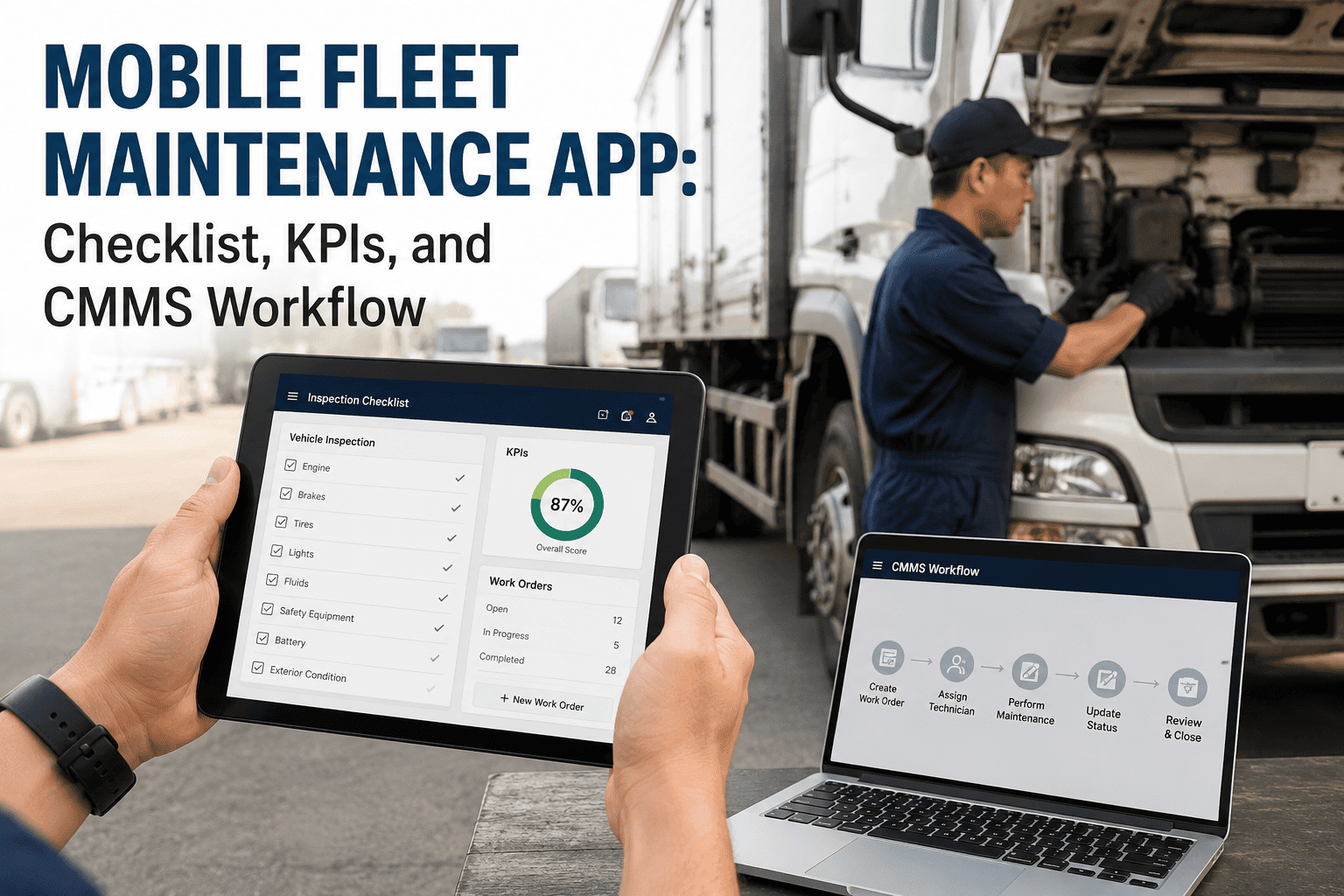
The pre-trip is your cheapest early-warning system — drivers are with the van more than anyone and notice problems first. The trick is making reporting easy enough that issues actually get logged. In Oxmaint, a flagged defect auto-generates a work order routed to the shop instantly.
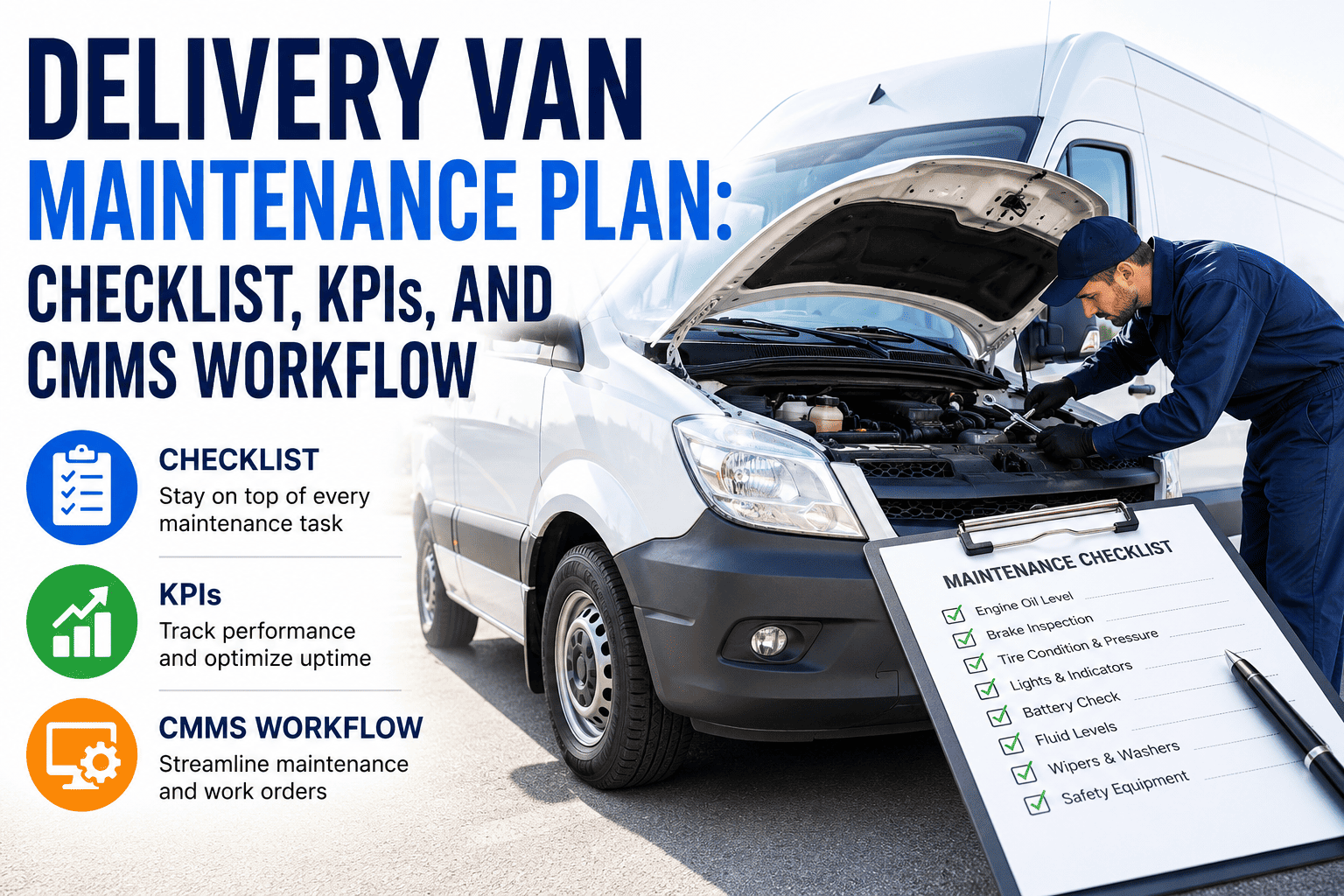
Walk the van and check under it for fresh fluid leaks
A puddle or drip is the earliest sign of a developing fault — log location and a photo, not just a checkmark. Safety-critical
Test brake feel and listen for noise before loading out
Stop-and-go routes punish brakes hardest — soft pedal or grinding is a same-day defect, not a "next service" note. Safety-critical
Check tire pressure and tread, including the inner duals
Urban curb contact and heavy loads wear tires unevenly — verify pressure and look for the wear patterns that signal alignment issues. Routine
Confirm all lights and signals operate
Constant door-open, engine-off cycling strains the electrical system — a no-start or dead signal mid-route is a missed delivery window. Routine
Note any warning lamp and check battery terminals
Corroded terminals and a failing alternator strand vehicles without warning — catch the no-start condition before the route, not on it. Routine
Report any odd noise, vibration, or rough shift
High idle time plus rough shifting points to transmission wear weeks ahead — driver feedback is the cheapest predictive signal you have. Routine
Turn Pre-Trip Checks Into Prevented Breakdowns
Oxmaint turns driver-reported defects into instant work orders and uses fault-code and wear-pattern data to flag at-risk vans during scheduled downtime — so every van dispatched completes its route.
What Stop-and-Go Work Does to Each System
The pre-trip checklist focuses on brakes, tires, electrical, and drivetrain for a reason — those are exactly the systems urban delivery work punishes hardest. Understanding why turns a checkbox into a targeted inspection. Oxmaint shortens the PM interval on each of these by real usage data.
Turn Driver Reports Into Early Warnings
Drivers spend more time with the van than anyone, so their input is the cheapest predictive signal you have — but only if reporting is frictionless and they see issues get fixed. Coach the team to flag these specific signs, each tied straight to a checklist item.
The KPIs That Run a Delivery Plan
For a delivery fleet, uptime is revenue. Every 1% of uptime can be worth hundreds of thousands annually. These are the metrics that tell you whether your plan is working — and where it's leaking money.
The CMMS Workflow That Prevents Mid-Route Failures
Predictive beats reactive because of where the downtime lands. A van breaking down mid-route is 2–5 days lost; the same fault caught early is two hours in a bay overnight. Here's how the workflow shifts you from one to the other.
We were on a flat 10,000-km interval for the whole fleet and kept losing downtown vans to brakes mid-route. Switching to stop-count triggers in Oxmaint changed everything — the high-stop vans now get serviced on their real wear, and a held van with an $820 fault was repaired overnight instead of stranding a route. Our first AI-prevented breakdown showed up inside 45 days.
Frequently Asked Questions
Common questions from fleet managers building a delivery van maintenance plan around real-world usage.
High-frequency stopping, heavy idling, and curb-climbing accelerate brake, starter, and suspension wear far faster than mileage suggests. Shortening PM intervals by stop-count catches that wear before a roadside failure.
Use both, with "whichever comes first" logic, and add usage signals like stop-count for delivery work. High-mileage highway vans lean mileage-based; low-mileage urban vans need time and stop-count triggers too.
Each event runs $800–$2,500 in direct and indirect losses — towing, emergency parts, idle crews, and cascading SLA breaches. The same fault caught in a planned bay visit costs a fraction of that.
A structured program cuts unplanned downtime 40–60% and total maintenance cost 25–35%. Oxmaint users often see their first prevented breakdown within the first month.
Make it a mobile, one-tap process. When reporting is easy and drivers see issues get fixed, defects get logged early — turning the pre-trip into a real early-warning system instead of a checkbox.
Every Van Dispatched Should Finish Its Route
Oxmaint matches each van's maintenance to its real usage, turns driver checks into instant work orders, and predicts failures weeks ahead — protecting uptime, SLAs, and customer promises. See it on your fleet within the first month.