DOT repair documentation is one of the most consequential compliance obligations fleet managers carry — and one of the most frequently mishandled. A single missing record during a roadside inspection or audit can result in out-of-service orders, fines exceeding $16,000 per violation, and CSA score damage that follows your operation for 24 months. The challenge is not that fleet teams do not care about documentation — it is that paper-based and fragmented CMMS systems make complete, audit-ready records structurally difficult to maintain. This guide covers the exact checklist, KPIs, and CMMS workflow that transforms DOT documentation from a recurring liability into a compliance strength. Start a free trial with Oxmaint or book a 30-minute demo to see how leading fleets handle this automatically.
DOT Repair Documentation: Checklist, KPIs, and CMMS Workflow
The complete framework for audit-ready repair records — built for fleet maintenance managers who cannot afford compliance gaps.
What Is at Stake with DOT Documentation Gaps
The DOT Repair Documentation Checklist
Every repair record must contain all of the following to be considered audit-ready under FMCSA Part 396 requirements.
The 7 KPIs That Predict Documentation Compliance
Track these metrics in your CMMS to catch compliance drift before it becomes an audit finding.
Percentage of driver defect reports that have a corresponding closed work order within 24 hours. Target: 100%. Below 90% indicates documentation gaps.
Percentage of closed work orders with all 7 required fields populated. Incomplete records are invalid under FMCSA regardless of the repair quality.
Time between repair completion and record finalization. Repairs documented more than 48 hours after completion create audit exposure. Target under 4 hours.
Percentage of inspection-flagged defects closed and documented within required timeframes. Open defects on inspected vehicles are the most common CSA violation trigger.
How long it takes to pull any vehicle's complete repair history on demand. During a roadside inspection, you have minutes. Paper-based systems average 23 minutes; CMMS averages under 90 seconds.
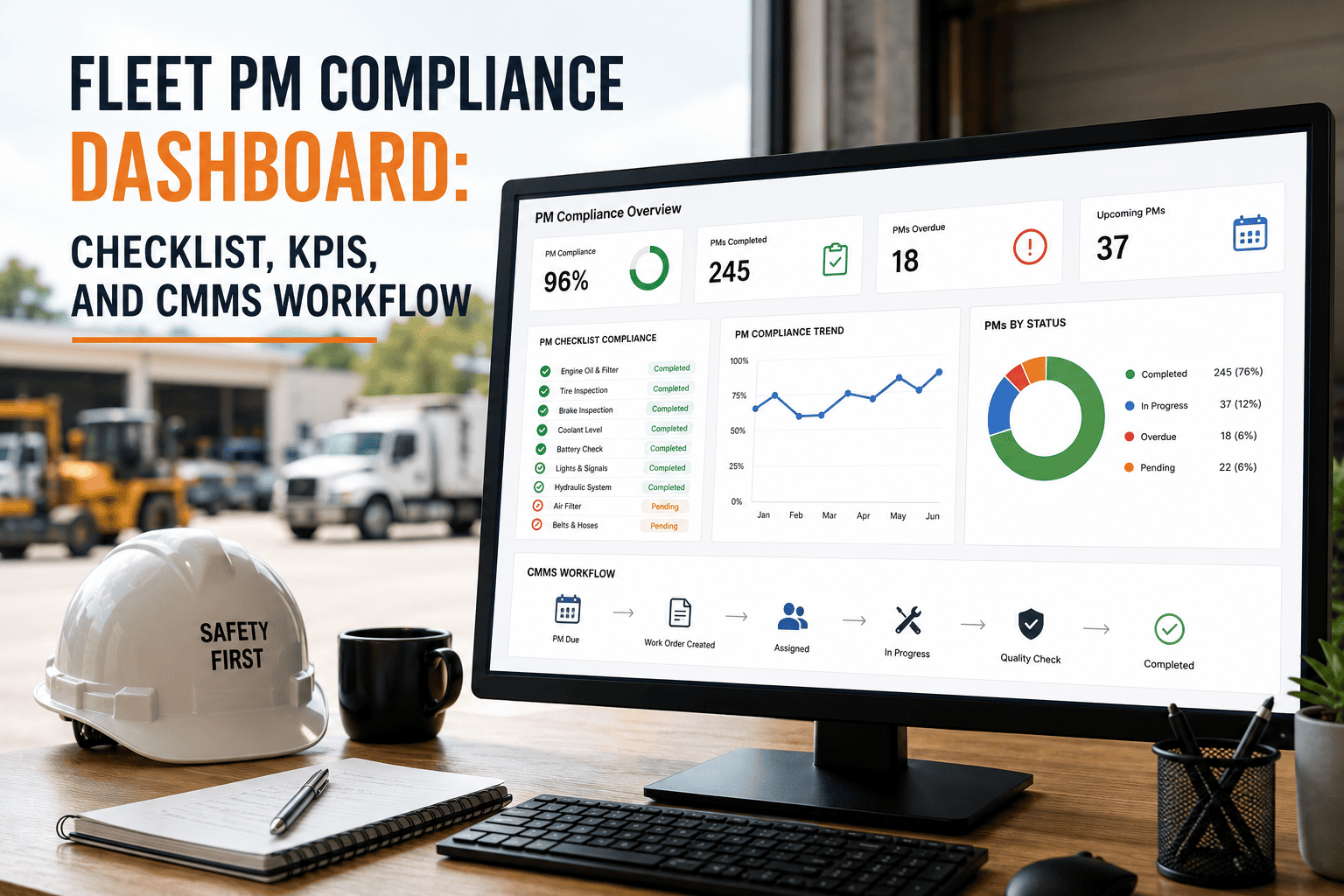
Percentage of scheduled preventive maintenance completed on time with documentation. Fleets with PM compliance above 94% have 52% fewer DOT violations across all categories.
Percentage of repair records with valid technician and supervisor signatures captured digitally at time of completion. Missing signatures invalidate records under Part 396.
Oxmaint Makes Every Record Audit-Ready Automatically
Oxmaint's AI Predictive Maintenance and digital inspection workflow captures every required field at the point of work — no manual documentation, no compliance gaps, no audit surprises.
The Oxmaint DOT Documentation Workflow
From defect detection to audit-ready record in a single connected workflow — no paper, no manual data entry, no gaps.
Driver completes pre or post-trip inspection on the Oxmaint mobile app. Defects are flagged with photos and GPS timestamp. Record is immediately visible to dispatch and maintenance.
Every flagged defect automatically creates a linked work order with the vehicle ID, defect description, and regulatory category pre-populated. No manual data transfer required.
Technician documents corrective action, parts used, labor time, and signs off digitally from mobile. Record is timestamped and linked to the technician's profile automatically.
Supervisor receives mobile notification, reviews the completed work, and adds approval signature. Vehicle is cleared for return to service with a timestamped compliance record.
Complete record with DVIR, work order, parts, labor, photos, and dual signatures is stored in the vehicle's permanent history. Retrievable in under 90 seconds during any inspection.
Paper vs Digital Documentation: Compliance Comparison
| Documentation Area | Paper-Based System | Oxmaint Digital Workflow | Compliance Impact |
|---|---|---|---|
| Record Retrieval Speed | 23 minutes average | Under 90 seconds | Critical during roadside inspections |
| Required Field Completion | 71% average completion rate | 99.8% with mandatory fields | Incomplete records are invalid under Part 396 |
| DVIR-to-Work-Order Link | Manual, often missed | Automatic, 100% linked | Unlinked defects are a CSA violation trigger |
| Signature Capture | Physical only, easily lost | Digital, timestamped, tied to profile | Missing signatures void the repair record |
| Record Retention Control | Manual filing, no automated expiry alerts | Automated 12-month active retention | Retention failures result in audit findings |
| Audit Preparation Time | 8–16 hours per audit | Under 30 minutes with report export | Reduces compliance team burden significantly |
Frequently Asked Questions
How long must fleet repair records be retained under DOT regulations?
What is the difference between a DVIR defect and a DOT repair record?
Can digital signatures replace physical signatures on repair records?
What triggers an FMCSA compliance review related to maintenance records?
Turn Your Biggest Compliance Liability into Your Strongest Audit Asset
Oxmaint digitizes the entire DOT repair documentation lifecycle — from DVIR defect to audit-ready record — with zero manual data entry. Fleets on Oxmaint see 52% fewer violations within 90 days of going live.