Engine Inspection Checklist for Commercial Fleet Vehicles
By Oxmaint on January 2, 2026
That check engine light has been on for eleven days. Your driver mentioned a slight hesitation during acceleration last Tuesday—but the truck keeps running, so it keeps driving. Meanwhile, the engine oil is slowly degrading, a coolant leak is worsening, and what would have been a $400 repair is compounding into a $6,000 problem. Engine failures don't announce themselves with sirens. They whisper through subtle changes that only systematic inspection catches. An engine inspection checklist isn't paperwork—it is your fleet's first line of defense against catastrophic breakdowns, and the cascading costs that follow.
The Engine Inspection Reality Check
What the data reveals about fleet engine maintenance
90%
Engine Failures Are Preventable
With proper inspection protocols
60%
Fewer Preventable Breakdowns
Fleets using predictive maintenance
11.3%
Maintenance Cost Increase
Year-over-year 2024 vs 2023
Your Complete Engine Inspection Checklist
Every commercial motor vehicle crossing state lines must meet FMCSA standards under 49 CFR 396. But compliance is the floor, not the ceiling. The most reliable fleets go beyond regulatory minimums to catch engine issues before they become roadside emergencies. This checklist covers the critical engine components that demand regular attention—organized by inspection frequency and system.
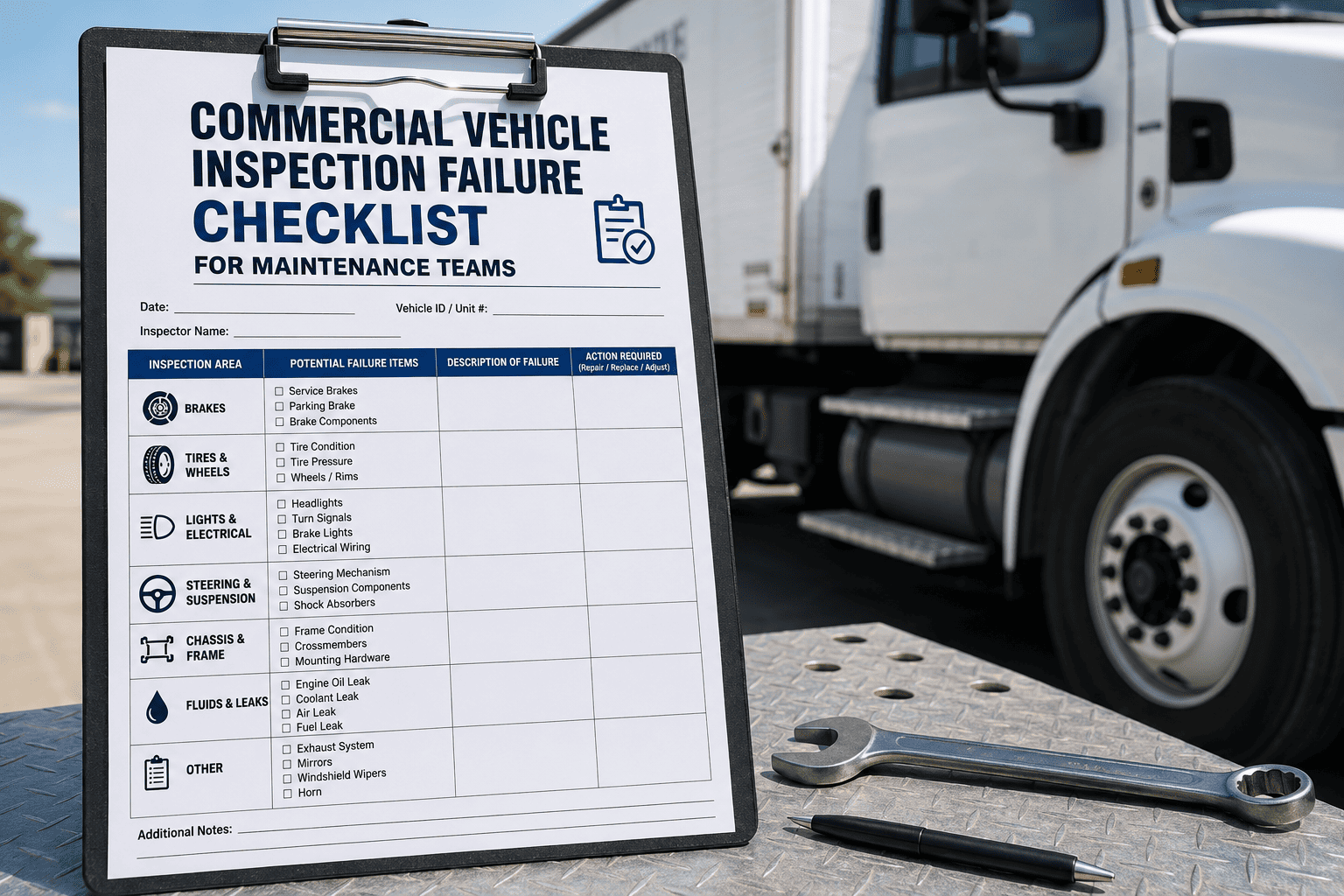
Commercial Fleet Engine Inspection Checklist
41 Critical Inspection Points for Fleet Reliability
Daily (15 items)
Weekly (12 items)
Monthly (8 items)
Annual DOT (6 items)
Lubrication System
5 Items
Engine oil level (dipstick)
Daily
Oil color and consistency
Daily
Oil leaks under engine
Daily
Oil pressure gauge reading
Daily
Oil filter condition
Monthly
Cooling System
7 Items
Coolant level (reservoir)
Daily
Coolant leaks/puddles
Daily
Radiator hoses (cracks/bulges)
Weekly
Radiator cap seal
Weekly
Fan belt tension/wear
Weekly
Thermostat operation
Monthly
Antifreeze concentration
Monthly
Fuel System
5 Items
Fuel tank cap seal
Daily
Fuel line leaks
Daily
Water separator drain
Weekly
Fuel filter condition
Monthly
Injector performance
Monthly
Air Intake & Turbo
6 Items
Air filter restriction indicator
Daily
Turbo boost gauge
Daily
Intake hose connections
Weekly
Turbo sounds (whine/whistle)
Weekly
Air filter element
Monthly
Intercooler for leaks
Monthly
Exhaust & Emissions
7 Items
DEF fluid level
Daily
Check engine/emissions lights
Daily
Exhaust smoke color
Daily
DPF regen status/frequency
Weekly
Exhaust leaks/mounting
Weekly
EGR valve operation
Monthly
SCR system check
Weekly
Electrical & Sensors
5 Items
Warning lights/gauges
Daily
Battery terminals
Weekly
Starter motor engagement
Weekly
Alternator output
Monthly
Wiring harness condition
Weekly
Annual DOT Inspection Requirements (49 CFR 396)
6 Required Items
Engine compartment comprehensive inspection
All fluid systems leak test
Exhaust system integrity
Fuel system safety inspection
Engine mounts and transmission mounts
Complete diagnostic code scan
Want this checklist as an automated digital workflow?
Missing these inspection points doesn't just risk breakdowns—it risks your operating authority. FMCSA violations for recordkeeping failures now carry penalties up to $1,544 per day, with cumulative maximums reaching $15,445. More critically, fleets using automated inspection management report 62% less unplanned downtime than those relying on paper-based systems.
The True Cost of Skipped Engine Inspections
When maintenance gets deferred, costs don't disappear—they compound. That $400 oil change becomes a $6,000 engine overhaul. That ignored coolant leak becomes a seized engine on I-95. Understanding this cost escalation helps fleet managers prioritize inspection compliance as a financial strategy, not just a regulatory checkbox.
Cost Escalation: From Inspection to Emergency
Stage 1
Routine Inspection
$50 - $150
Catches issues early, documents condition
Stage 2
Minor Repair
$200 - $800
Belt replacement, hose repair, fluid flush
Stage 3
Component Failure
$1,500 - $4,000
Turbo replacement, injector rebuild, cooling system overhaul
Stage 4
Catastrophic Failure
$8,000 - $25,000+
Engine replacement, towing, lost revenue, emergency labor
Every dollar spent on inspection saves $4-8 in avoided emergency repairs
Digital vs. Paper: Inspection Methods Compared
The technician shortage isn't improving—and the vehicles are getting more complex. Fleets that cling to clipboard-based inspections face increasing gaps between what should be checked and what actually gets checked. Modern fleet management systems don't just digitize the checklist; they enforce it, timestamp it, and flag when something's missed.
Inspection Management Approaches
Swipe to compare methods
Capability
Paper Checklists
CMMS Digital
Automated Reminders
None
Time, mileage, engine hours
Photo Documentation
Manual attachment
In-app capture with GPS
Compliance Tracking
Manual filing
Real-time dashboard
Issue Escalation
Verbal/email
Instant work order creation
Audit Readiness
Hours of prep
Export in seconds
Trend Analysis
Not feasible
Automatic pattern detection
The transition from paper to digital inspection management delivers measurable results. Fleets implementing CMMS platforms report not just compliance improvements but operational gains—reduced inspection time, faster issue resolution, and data that actually informs maintenance decisions. For fleet managers ready to see what modern inspection workflows look like, scheduling a platform walkthrough reveals capabilities that paper simply can't match.
Digitize Your Engine Inspections Today
Stop losing inspection records and start building maintenance intelligence. See how automated checklists, instant work orders, and compliance dashboards transform fleet reliability.
Expert Perspective: Building an Inspection Culture
Placing a high priority on timely preventive maintenance intervals is highly beneficial. Many fleets are blindsided with engine replacement costs due to a lack of maintenance. Diesel exhaust and fuel systems in work trucks are highly susceptible to high repair costs when not maintained properly. Remember that engine hours should be monitored along with mileage for trucks that accrue high idle time or use power take-off units.
Track Engine Hours, Not Just Miles
Vehicles with high idle time or PTO use accumulate engine wear faster than odometer readings suggest. Schedule maintenance by engine hours for accurate intervals.
Train Drivers as First Responders
Vehicle operators are the first line of defense. Training them to recognize and immediately report issues like warning lights, unusual sounds, or fluid leaks prevents small problems from escalating.
Monitor Recalls Proactively
Open recalls left unaddressed become expensive surprises. Track recall status for every vehicle and complete them promptly to avoid preventable repair costs.
Building inspection discipline requires more than checklists—it requires systems that make compliance the path of least resistance. When drivers can complete inspections on a mobile app in three minutes, compliance rates climb. When flagged issues automatically generate work orders, nothing falls through the cracks. Fleet managers exploring inspection automation platforms discover that the technology investment pays for itself in avoided breakdowns and reduced administrative burden.
Implementing Your Engine Inspection Program
The gap between knowing what to inspect and consistently inspecting it is where most fleets struggle. Implementation requires clear protocols, assigned accountability, and systems that track completion. Here's the workflow that high-performing fleets follow to maintain engine inspection consistency across their operations.
Engine Inspection Workflow
From scheduled check to documented completion
Schedule Triggers
Time/mileage alert
Driver Assigned
Push notification
Mobile Checklist
Step-by-step items
Photo Capture
Visual documentation
Issue Flagged
Auto work order
Record Complete
Audit-ready file
The difference between compliant fleets and struggling ones isn't knowledge—it's execution. Systems that automate scheduling, simplify completion, and enforce documentation transform inspection from a burden into a habit. For operations ready to close the gap between intention and action, exploring fleet inspection solutions reveals how technology removes the friction that causes inspections to slip.
Ready to Eliminate Engine Surprises?
Join fleet managers using OXmaint to turn engine inspections into actionable maintenance intelligence. Automated schedules, mobile checklists, and instant work orders keep your engines running.
How often should commercial fleet engines be inspected?
FMCSA requires annual inspections for all commercial motor vehicles, but effective fleet management demands more frequent checks. Daily pre-trip inspections should cover fluid levels and visible leaks. Weekly inspections should examine belts, hoses, and filter conditions. Monthly comprehensive checks should assess emissions systems, turbocharger performance, and cooling system integrity. High-utilization vehicles or those operating in severe conditions may require more frequent inspection intervals based on engine hours rather than calendar time.
What are the most commonly missed engine inspection items?
The most frequently overlooked items include DEF (Diesel Exhaust Fluid) levels and quality, DPF regeneration status, coolant concentration testing, air filter seal integrity, and turbocharger connection checks. These items are easily missed because they don't always present obvious symptoms until significant damage has occurred. Digital checklists with mandatory completion fields help ensure these critical items receive attention during every inspection cycle.
What documentation is required for DOT engine inspection compliance?
FMCSA regulations under 49 CFR 396 require motor carriers to maintain the original driver vehicle inspection report (DVIR), certification of repairs, and driver review certification for at least three months. Annual inspection reports must be retained for 14 months. Documentation must include the date, vehicle identification, inspector credentials, components inspected, defects found, and repair certifications. Digital CMMS platforms automatically generate and store compliant documentation, eliminating the administrative burden of paper-based systems.
How can CMMS software improve engine inspection compliance?
CMMS platforms automate inspection scheduling based on time, mileage, or engine hours—eliminating missed intervals. Mobile apps enable drivers to complete standardized checklists with photo documentation and GPS timestamps, creating defensible compliance records. When issues are flagged, the system automatically generates work orders and assigns them to qualified technicians. Dashboard reporting provides real-time visibility into fleet-wide compliance status, enabling managers to address gaps before they become violations.
What are the penalties for failing to maintain engine inspection records?
FMCSA penalties for recordkeeping violations reach $1,544 per day per violation, with cumulative maximums of $15,445. Creating false inspection records carries penalties up to $10,000 per violation. Beyond fines, inadequate inspection documentation can result in vehicles being placed out of service during roadside inspections, directly impacting delivery schedules and customer commitments. Repeat violations can affect Safety Measurement System (SMS) scores, potentially threatening operating authority.