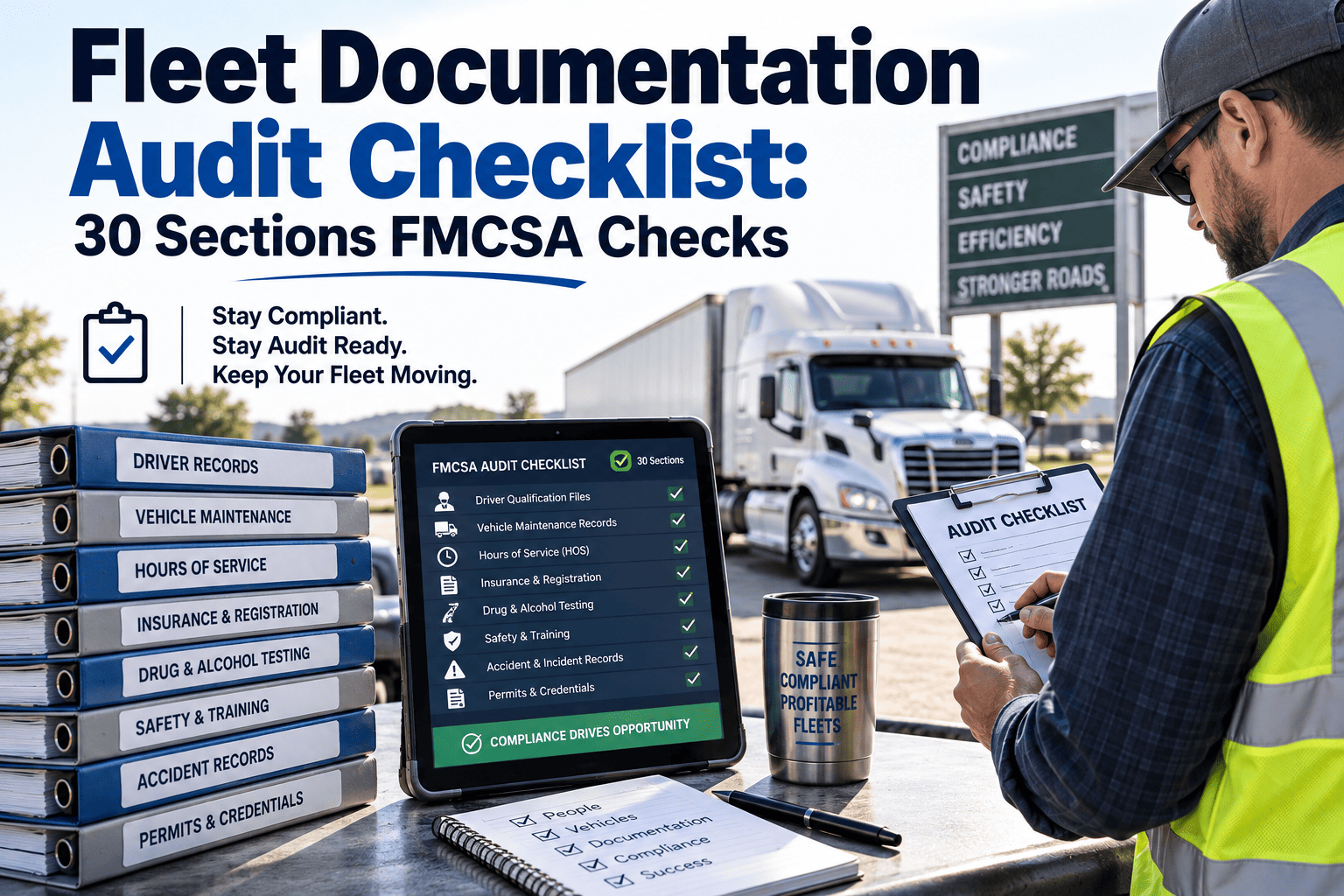
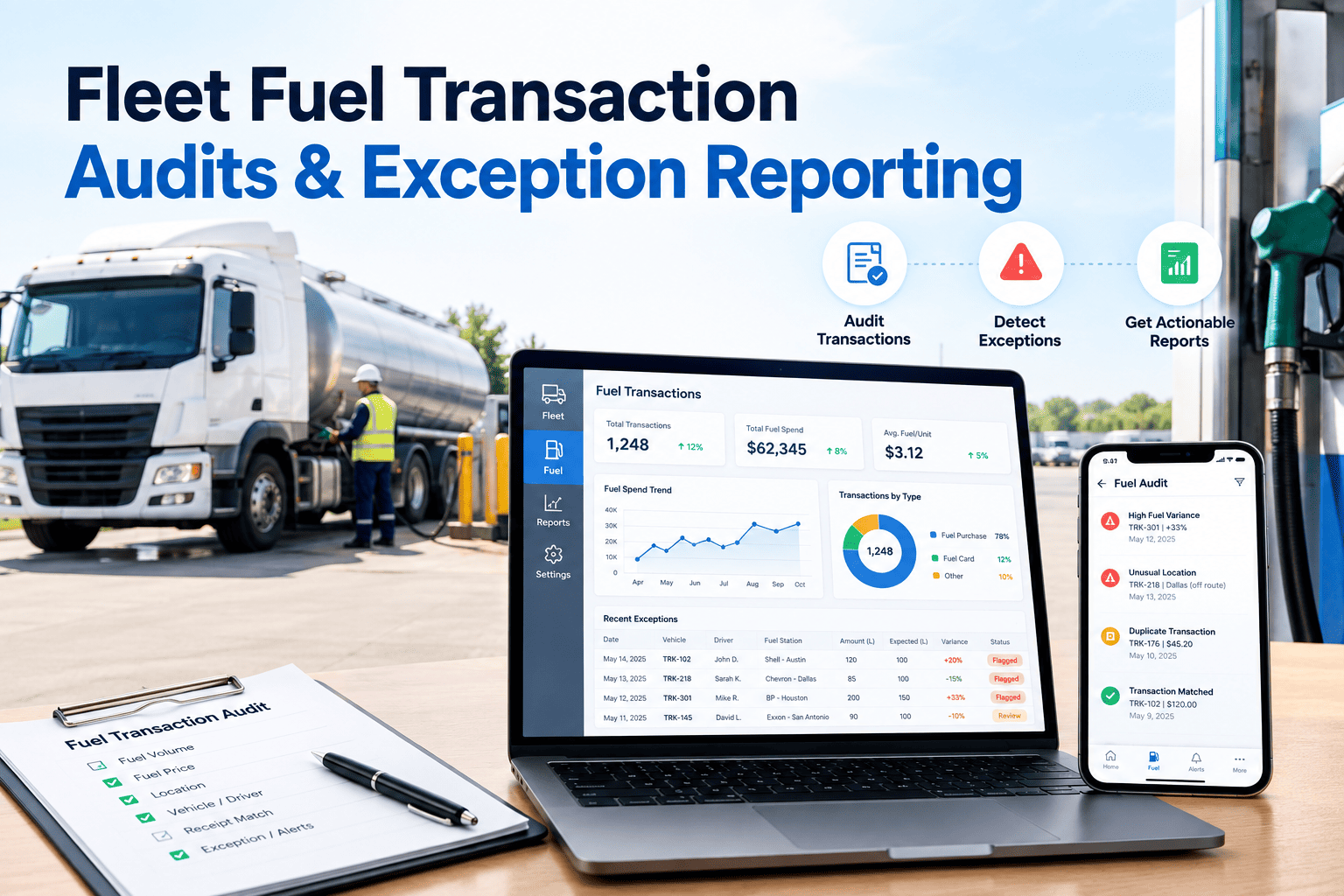
The auditor asks for your engine inspection records from March. You pull up the folder—some paper forms, a few phone photos, and notes scattered across three different systems. Forty minutes later, you're still searching while the auditor waits. Sound familiar? According to Fleetworthy's 2025 Trucking Insights Report, 87% of fleet leaders cite documentation issues as their biggest barrier to passing DOT audits—even when their actual maintenance practices are solid. The problem isn't what you're doing; it's how you're recording it. A structured engine inspection report template transforms scattered observations into audit-ready documentation that proves compliance the moment someone asks.
87%
of fleet leaders cite documentation as their #1 audit barrier
Fleetworthy 2025 Report
65%
worry their fleet would fail a DOT audit today
Fleetworthy 2025 Report
93%
believe they have strong safety practices
Yet still fear failing audits
The disconnect is clear: fleets are doing the work but not documenting it in ways auditors can verify.
What an Effective Engine Inspection Report Actually Captures
FMCSA regulations under 49 CFR 396.3 require specific documentation elements that many fleets overlook. An effective engine inspection report isn't just a checklist—it's a structured record that connects observations to actions, timestamps every entry, and creates an unbroken chain of accountability. Fleets that start with free digital inspection templates find that standardization eliminates the gaps auditors typically flag.
1
Vehicle Identification
Unit #, VIN, Make/Model, Odometer, Engine Hours
2
Inspector Credentials
Name, Certification #, Qualification Date, Signature
3
Condition Findings
Pass/Fail per component, Measurements, Photo Evidence
4
Defects Identified
Description, Severity Rating, OOS Determination
5
Corrective Actions
Repair Description, Parts Used, Technician, Completion Date
6
Verification & Sign-off
Repair Verified By, Return-to-Service Date, Manager Approval
Missing any of these elements can result in audit findings, even if the actual inspection was thorough.
The Retention Timeline You Can't Ignore
Federal regulations specify exactly how long you must keep different types of inspection documentation. Getting this wrong is one of the most common audit failures—records that were complete when created but aren't available when requested. Understanding these requirements helps you build a documentation system that stays compliant, and scheduling a quick demo shows exactly how automated retention works.
3 Months
Driver Vehicle Inspection Reports (DVIR)
§396.11
1 Year
Inspection, Repair & Maintenance Records
§396.3
1 Year
Roadside Inspection Reports
§396.9
14 Months
Annual DOT Inspection Reports
§396.21
Vehicle Life + 6 Mo
Vehicle Identification Records
§396.3
Records must be available at principal place of business within 48 hours of audit request
Ready to Build Audit-Proof Documentation?
See how digital inspection templates automatically organize, timestamp, and retain your engine reports according to FMCSA requirements.
Paper vs. Digital: The Compliance Reality
The shift to digital documentation isn't just about convenience—it directly impacts audit outcomes and operational costs. Research shows that fleets using digital systems reduce record-keeping costs by 70% while improving audit readiness by 85%. When every inspection automatically captures timestamps, GPS location, and photo evidence, the documentation speaks for itself. Fleet managers ready to sign up for digital inspection reporting consistently find that the technology pays for itself through reduced audit risk alone.
✗
Illegible handwriting causes interpretation disputes
✗
No automatic timestamps—dates can be questioned
✗
Photos stored separately, often disconnected
✗
40+ minutes average retrieval during audits
✗
Physical damage, loss, or misfiling risk
✗
No defect-to-repair chain verification
✓
Standardized fields eliminate interpretation issues
✓
Automatic timestamps with GPS verification
✓
Photos embedded directly in inspection records
✓
90-second retrieval with search filters
✓
Cloud backup with automatic retention management
✓
Automatic linking: defect → work order → completion
70%
Reduction in record-keeping costs with digital systems
85%
Improvement in audit readiness scores
Expert Perspective: Documentation That Survives Scrutiny
The fleets that pass audits consistently aren't necessarily doing more maintenance—they're documenting it in ways that create an undeniable paper trail. Every inspection needs three things: a qualified inspector's credentials, timestamped observations with photo evidence, and a closed-loop showing how every defect was resolved. Digital systems make this automatic; paper systems make it optional.
Close the Loop on Every Defect
Auditors look for the connection between identified issues and documented repairs. An open defect with no corresponding work order is a red flag.
Photos Are Worth $10,000
Visual evidence of component condition eliminates disputes about whether inspections were thorough. Embed them directly in your reports.
Inspector Qualifications Matter
Under 49 CFR 396.19, inspectors must have documented qualifications. Keep credentials linked to every inspection they perform.
Template Implementation: Your 4-Step Process
Transitioning to structured inspection reporting doesn't require overhauling your entire operation. The most successful implementations start with critical equipment and expand as teams build familiarity. For fleets ready to modernize their documentation, booking a personalized implementation demo can accelerate the transition significantly.
01
Standardize Your Template
Create inspection forms that capture all 6 required documentation elements with consistent fields across your fleet.
Week 1
02
Train Your Inspectors
Ensure everyone understands what thorough documentation looks like and why each field matters for compliance.
Week 2
03
Connect to Work Orders
Link inspection findings directly to repair workflows so every defect has a documented resolution path.
Week 3
04
Automate Retention
Set up automatic archiving that meets FMCSA retention timelines without manual tracking or purging.
Week 4
The fleets that approach documentation as a system—rather than a task—consistently outperform during audits. When your inspection report template feeds directly into your CMMS, work orders generate automatically, and retention happens without manual intervention. This isn't about adding administrative burden; it's about building infrastructure that protects your operation. Ready to see what structured engine inspection reporting looks like in practice? Create your free account today and explore template options designed specifically for fleet operations.
Transform Your Inspection Documentation Today
Join fleet operations using OXmaint to create audit-ready engine inspection reports with automatic timestamps, photo capture, and compliance retention.
Frequently Asked Questions
What elements must an engine inspection report include to be DOT compliant?
A compliant engine inspection report must include vehicle identification (unit number, VIN, odometer, engine hours), inspector credentials and signature, date and location of inspection, condition findings for each component checked, any defects identified with severity ratings, corrective actions taken with parts used and technician information, and verification that repairs were completed before return to service. Missing any of these elements can result in audit findings under 49 CFR 396.3.
How long must fleet operators retain engine inspection records?
Under FMCSA regulations, inspection, repair, and maintenance records must be retained for one year while the vehicle is in service, plus six months after the vehicle leaves service. Annual DOT inspection reports must be kept for 14 months. Driver Vehicle Inspection Reports (DVIRs) require 3-month retention. Vehicle identification records must be kept for the entire time the vehicle is in service plus six months. Records must be available at your principal place of business within 48 hours of an audit request.
What's the difference between an inspection checklist and an inspection report?
An inspection checklist guides what to examine during an inspection—it's a tool for the inspector. An inspection report documents what was found, including condition assessments, defects identified, and corrective actions taken—it's the official record. Effective fleet documentation requires both: checklists ensure consistency during inspections, while reports create the audit trail that proves compliance. The report captures the inspector's observations, timestamps, photos, and the resolution of any issues found.
How do digital inspection reports improve audit outcomes?
Digital inspection reports improve audit outcomes by eliminating common paper-based failures: illegible handwriting, missing timestamps, disconnected photos, and lost documents. Digital systems automatically capture date/time stamps and GPS location, embed photos directly in reports, link defects to work orders showing resolution, and maintain proper retention timelines. Research indicates digital documentation reduces record-keeping costs by 70% while improving audit readiness by 85%. Retrieval time drops from 40+ minutes to under 90 seconds.
What qualifications must engine inspectors have for valid reports?
Under 49 CFR 396.19, inspectors must meet specific qualification requirements: completion of a state or federal training program on commercial vehicle safety inspections, a state or Canadian province qualifying certificate, or a combination of training and practical experience totaling at least one year. Inspectors must be familiar with Parts 393, 396, and Appendix G of Federal Regulations. Every inspection report should include the inspector's credentials, and fleets should maintain documentation proving each inspector's qualifications.