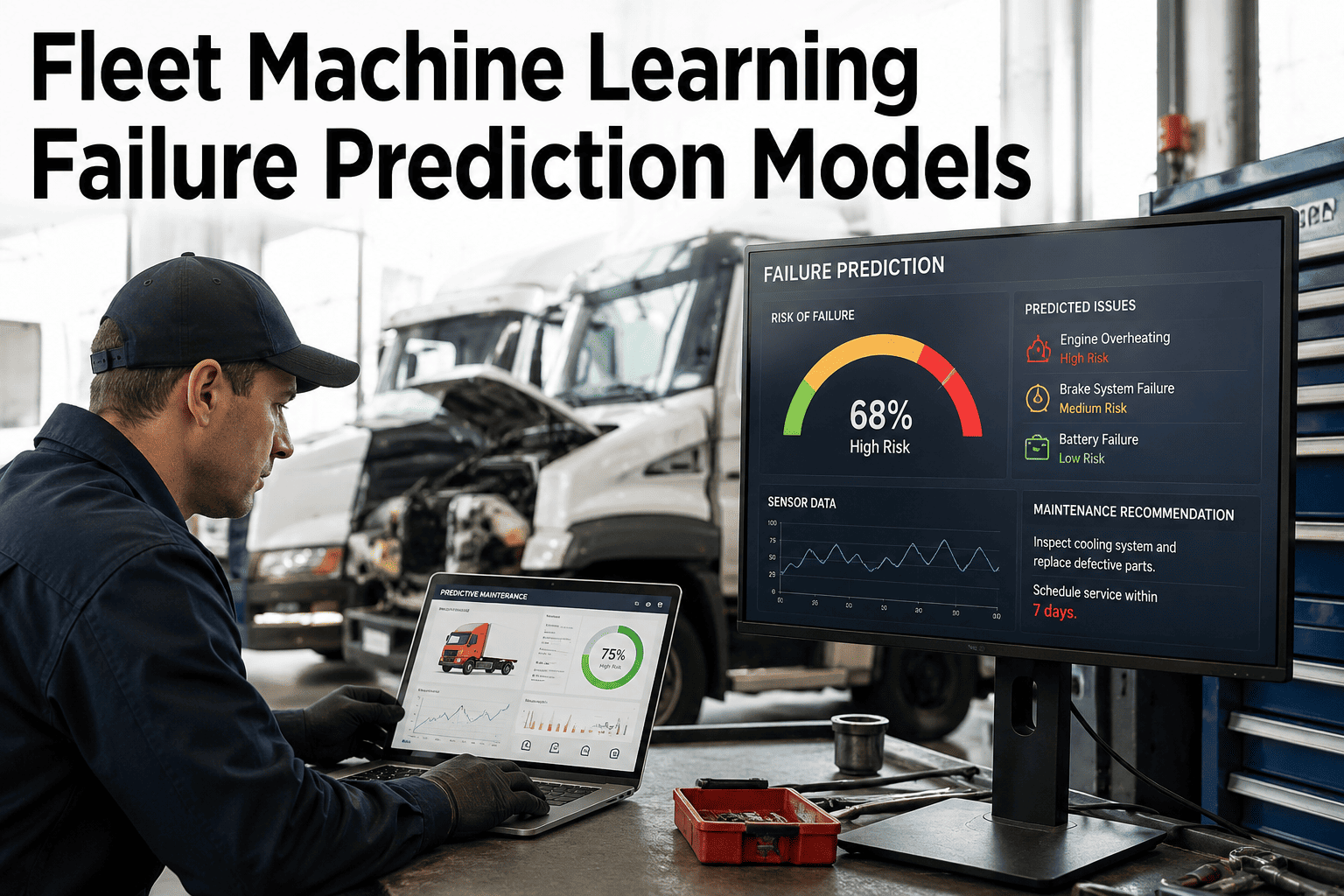
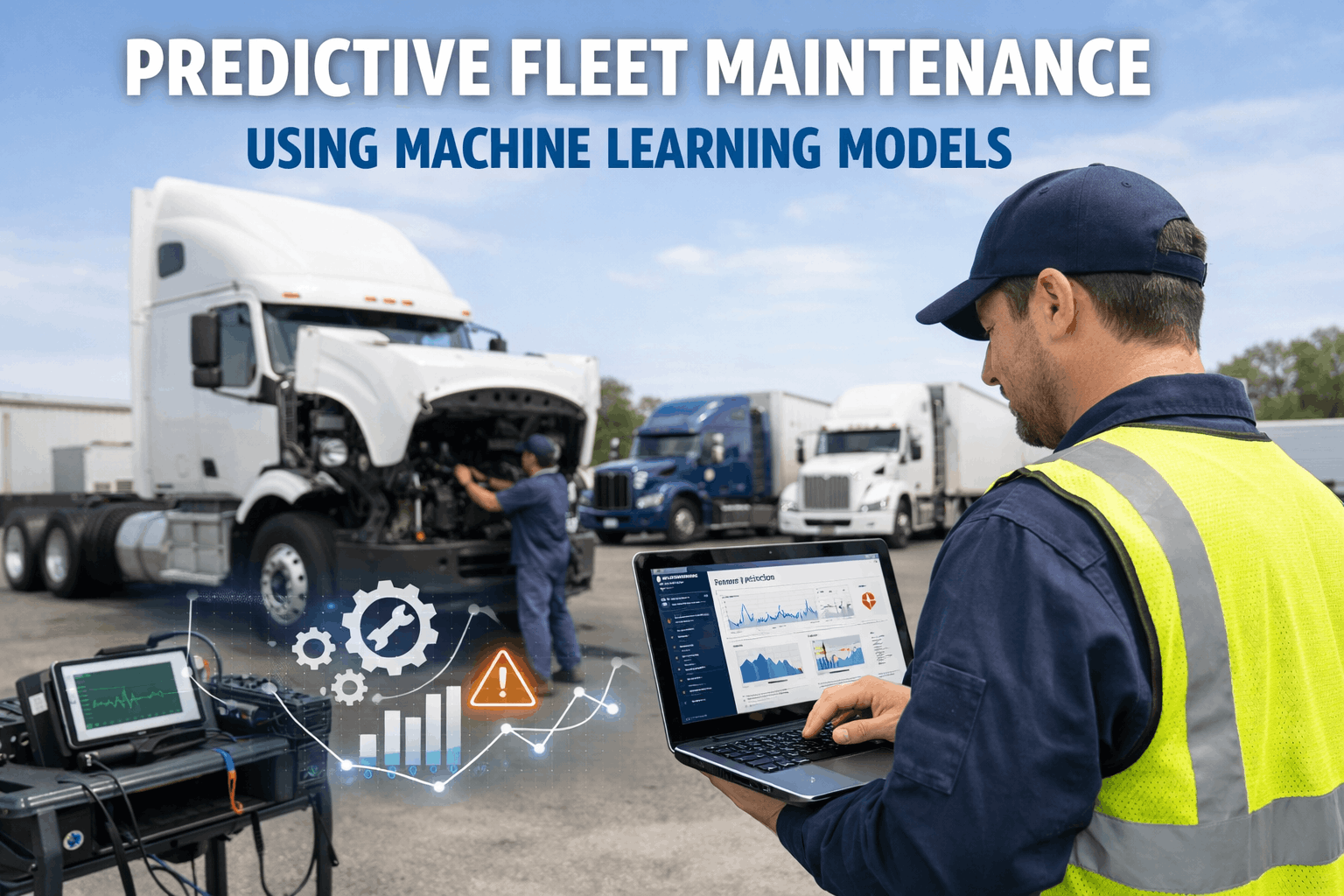
Every fleet manager dreads that moment—a driver calls in with steam billowing from under the hood, stranded miles from the nearest service station. Engine overheating isn't just an inconvenience; it's a $760-per-hour emergency that can escalate into a $50,000 engine replacement if left unchecked. The cruel irony? 78% of these breakdowns are entirely preventable. Modern AI-powered monitoring systems can detect the subtle temperature anomalies, coolant degradation, and cooling system failures that precede catastrophic overheating—often 30 to 60 days before you'd ever see a warning light. This is where predictive maintenance transforms from buzzword to bottom-line impact, turning potential disasters into scheduled $3,000 repairs done on your terms, not the roadside's.
Predictive Maintenance for Engine: AI Detection of Overheating
Detect engine overheating 30–60 days in advance. Reduce breakdowns by 70%, cut maintenance costs by 25%, and eliminate surprise roadside emergencies with AI-powered thermal monitoring.
Why Heavy-Duty Engines Overheat: Root Causes Every Fleet Manager Must Know
Heavy-duty diesel engines in commercial trucks operate within a narrow thermal window of 195–220°F under normal conditions. When coolant temperatures exceed this range, a cascade of damage begins: metal components expand beyond design tolerances causing warping, engine oil rapidly loses its viscosity and lubricating properties, cylinder head gaskets begin to fail under thermal stress, and turbocharger bearings can seize from oil breakdown. Understanding these root causes is critical because each one produces distinct data signatures that AI monitoring systems can detect weeks before visible symptoms appear.
The cooling system in a Class 8 truck must dissipate approximately 2,000–3,000 BTUs of heat per minute during highway operation. Any reduction in this heat dissipation capacity—whether from coolant loss, restricted airflow, or component degradation—creates a thermal deficit that compounds over time. What starts as a 3–5°F elevation in average operating temperature can progress to a catastrophic overheat event within 2–6 weeks if not addressed. This progressive nature is precisely what makes engine overheating ideal for AI-based predictive detection.
Low Coolant Levels
Leaks from hoses, gaskets, water pump seals, or radiator cores reduce heat dissipation capacity. Even a 10% coolant loss can raise operating temperatures by 15–25°F under load. AI detects gradual coolant level decline patterns and correlates them with temperature trends to predict when levels will reach critical thresholds.
Water Pump Failure
Worn impellers, bearing degradation, or seal leaks reduce or halt coolant circulation entirely. Water pumps in heavy-duty applications typically last 300,000–500,000 miles but can fail prematurely under harsh conditions. AI monitors coolant flow rate variations and pressure differentials across the system to identify declining pump efficiency before complete failure.
Thermostat Malfunction
A thermostat stuck in the closed position blocks coolant flow to the radiator, causing rapid temperature escalation. Conversely, a thermostat stuck open prevents the engine from reaching optimal operating temperature, reducing fuel efficiency by 5–10%. AI tracks thermostat response time and correlates ambient temperature changes with coolant flow patterns to detect degradation.
Clogged or Damaged Radiator
External debris (bugs, dirt, road grime) blocks airflow across radiator fins, while internal scale buildup and corrosion from degraded coolant reduce heat transfer efficiency. A 20% reduction in radiator efficiency can raise steady-state temperatures by 30°F or more during summer highway operation. AI identifies progressive temperature creep patterns that indicate declining radiator performance.
Fan Clutch Failure
The fan clutch engages the engine cooling fan when coolant temperatures rise above a set threshold. Failed clutches—whether thermal, electronic, or viscous types—prevent adequate airflow at idle and low-speed operation where ram air is insufficient. AI correlates fan engagement patterns with temperature responses to detect clutch slippage or delayed engagement before total failure.
Blown Head Gasket
Head gasket failure allows coolant to leak into the combustion chamber, oil passages, or externally. This causes coolant loss, oil contamination, and compression loss simultaneously. AI detects the early signatures: unexplained coolant consumption without visible leaks, oil viscosity changes detected through pressure variations, and subtle temperature spikes during specific cylinder firing sequences.
Ready to Prevent Engine Failures Before They Happen?
Get started with AI-powered predictive maintenance and stop overheating before it stops your fleet. OxMaint monitors every engine in your fleet 24/7, alerting you weeks before problems become breakdowns.
How AI Catches Engine Overheating Problems Before You Do
Traditional engine monitoring relies on threshold-based alerts—when coolant temperature hits a predetermined limit (typically 230–240°F), a warning light activates. By this point, damage may already be occurring. AI-powered predictive maintenance takes a fundamentally different approach: it continuously analyzes patterns across multiple data streams simultaneously, identifying subtle anomalies that indicate developing failures often 30–60 days before any visible symptoms or warning lights appear.
Multi-Parameter Correlation Analysis
AI doesn't just watch coolant temperature—it simultaneously monitors 15–25 engine parameters including coolant temperature and pressure, oil temperature and pressure, intake manifold temperature, exhaust gas temperature (EGT), turbo boost pressure, ambient temperature, engine load percentage, RPM patterns, and coolant flow rate. By analyzing how these parameters interact and change relative to each other over time, AI builds a thermal "fingerprint" unique to each engine and identifies deviations that indicate developing problems.
Real-World Detection Example
Consider this scenario: when coolant temperature variance increases by just 12% while operating above 85°F ambient—combined with a 3% decrease in coolant pressure response time and a 0.5 PSI drop in stabilized oil pressure—AI can predict water pump failure with 94% accuracy up to 21 days in advance. A human monitoring these parameters individually would never catch these micro-changes until the pump fails catastrophically, potentially causing an overheat event that warps the cylinder head and requires a $15,000–$50,000 repair.
Machine Learning and Fleet-Wide Intelligence
The AI system becomes more accurate over time through machine learning. As it processes data from thousands of engines across your fleet (and across the broader OxMaint network), it builds increasingly sophisticated failure prediction models. If a specific engine model develops a pattern of water pump failures at 380,000 miles in vocational applications, the system learns this pattern and begins flagging similar engines for proactive inspection at 350,000 miles—even before any individual sensor shows degradation.
The Real Cost of Waiting vs. Acting Early: Financial Impact Analysis
The financial case for AI-powered predictive maintenance is overwhelming. A real fleet operating 50,000 vehicles turned potential $50,000 engine catastrophes into manageable $3,000 scheduled repairs by receiving advanced warnings of cylinder head failures. In just four months, they documented $1 million in savings across 80 trucks—a return on investment that paid for the entire monitoring system multiple times over. Here's how the costs break down:
Without AI Monitoring
With OxMaint AI
Hidden Costs of Reactive Maintenance
The direct repair cost is only part of the equation. When an engine overheats on the road, carriers face compounding costs that are often 3–5× the repair itself: emergency towing fees ($500–$2,000 depending on location), driver detention and rerouting expenses, missed delivery penalties and customer contract violations, potential cargo spoilage for temperature-sensitive loads, increased insurance premiums from poor loss ratios, negative CSA scores from roadside breakdowns, and the operational disruption of reassigning loads across the remaining fleet. AI predictive maintenance eliminates virtually all of these secondary costs by ensuring repairs happen at your shop, on your schedule.
ROI Calculation for a Typical Fleet
For a fleet of 100 trucks experiencing an average of 8 overheating-related breakdowns per year (industry average for fleets without predictive maintenance), the annual cost of reactive engine thermal management is approximately $400,000–$600,000. Implementing AI-powered predictive monitoring typically reduces these events by 70%, saving $280,000–$420,000 annually. With monitoring system costs of $30,000–$60,000 per year for a 100-truck fleet, the ROI ranges from 5:1 to 14:1 in the first year alone, improving as the system learns and optimizes.
What Fleet Managers Gain with AI Engine Monitoring
Implementing AI-powered predictive maintenance for engine overheating protection delivers measurable improvements across every aspect of fleet operations. These aren't theoretical benefits—they're documented outcomes from fleets that have deployed AI thermal monitoring systems:
Reduce Unplanned Downtime by 40–70%
AI identifies developing cooling system issues 30–60 days before they cause roadside failures. This advance warning converts emergency breakdowns into planned maintenance events, keeping trucks on the road and revenue flowing. Fleets report 40% reduction in the first 90 days, improving to 70% as the system learns fleet-specific patterns.
Cut Total Maintenance Costs by 25–35%
Emergency repairs cost 3–9× more than the same repair performed proactively. A water pump replacement during a scheduled PM visit costs $800–$1,200. The same repair after a roadside failure—including towing, expedited parts, overtime labor, and downtime—costs $4,000–$8,000. AI ensures you almost always pay the lower number.
Extend Engine Lifespan by 20–30%
Repeated thermal cycling and overheating events cause cumulative metallurgical damage to cylinder heads, block decks, and bearing surfaces. Each overheating event reduces remaining engine life by an estimated 5–15%. By preventing these events entirely, AI monitoring helps engines consistently reach or exceed their designed overhaul intervals of 750,000–1,000,000 miles.
Automated Work Orders and Parts Procurement
When AI detects a developing issue, it doesn't just send an alert—it automatically generates a work order in your CMMS with the specific component identified (e.g., "Water pump efficiency decreased 15% — recommend inspection within 14 days"), suggested repair procedures, required parts, and estimated labor time. Integration with parts suppliers can even trigger automatic ordering for critical components.
Improved Driver Safety and Retention
Engine overheating on the highway creates dangerous situations—loss of power steering, potential engine fires, and stranding drivers in hazardous locations. Eliminating these events improves driver safety and satisfaction. Fleets with predictive maintenance programs report 15–20% improvement in driver retention, as drivers prefer working for carriers that maintain their equipment proactively.
Key Engine Parameters AI Monitors for Overheating Prevention
Understanding which parameters the AI system monitors helps fleet managers appreciate the depth of protection and communicate the system's capabilities to drivers, technicians, and stakeholders. OxMaint's AI engine thermal monitoring tracks the following critical data points in real-time:
Coolant Temperature & Delta
Absolute temperature plus the rate of change over time. A gradual 2°F/week increase in baseline operating temperature—invisible to standard gauges—can indicate a developing restriction in coolant flow or declining radiator efficiency that will reach critical levels within 3–6 weeks.
Oil Temperature & Pressure Correlation
Engine oil serves as a secondary cooling medium, absorbing 20–30% of engine heat. AI monitors the relationship between oil temperature and pressure—when oil thins from overheating, pressure drops. A consistent 1–2 PSI pressure decline at operating temperature can indicate thermal stress that precedes major failure.
Exhaust Gas Temperature (EGT)
EGT readings from individual cylinder banks reveal uneven combustion that can indicate head gasket leaks, injector problems, or localized cooling deficiencies. AI compares EGT patterns across cylinders and against historical baselines to identify anomalies that precede thermal events.
Coolant Pressure & Flow Rate
System pressure changes indicate leaks (gradual loss), water pump degradation (reduced flow), or thermostat issues (abnormal pressure cycling). AI correlates these readings with RPM and load to distinguish normal operational variation from developing failures.
Ambient vs. Operating Temperature Ratio
The relationship between outside air temperature and engine operating temperature should follow predictable patterns. AI builds thermal models for each engine and flags when the ambient-to-operating ratio deviates, indicating reduced cooling system capacity regardless of absolute temperature readings.
Engine Load & Thermal Recovery Time
How quickly an engine returns to baseline temperature after high-load operation (climbing grades, heavy acceleration) reveals cooling system health. Progressively longer recovery times indicate declining system capacity that will eventually result in sustained overheating under load.
Implementation: Getting Started with AI Engine Monitoring
Deploying AI-powered predictive maintenance for engine overheating doesn't require ripping out existing systems or installing expensive new hardware. OxMaint integrates with your fleet's existing telematics infrastructure and Engine Control Unit (ECU) data streams to begin monitoring immediately. Here's the typical implementation process:
Step 1: Connect Your Data Sources
OxMaint connects to your existing telematics provider's API or directly to the vehicle's CAN bus (Controller Area Network) through standard J1939/J1708 data connectors. This means the system utilizes the parameters already being tracked by your ECU—coolant temperature, oil pressure, intake air temperature, engine load, RPM, and dozens of other data points—without requiring additional sensor installation on most modern trucks (2010+).
Step 2: Baseline Learning Period
During the first 2–4 weeks, the AI system establishes baseline thermal profiles for each engine in your fleet. It learns the normal operating patterns—how each engine responds to different loads, ambient temperatures, terrain, and driving styles. This individual baseline approach is critical because a 205°F reading might be perfectly normal for one engine but indicate a developing problem in another with a historical baseline of 195°F.
Step 3: Active Monitoring and Alerting
Once baselines are established, the system begins active monitoring with tiered alerts: informational notices for minor deviations that should be checked at the next scheduled service, priority alerts for developing issues requiring attention within 7–14 days, and urgent alerts for conditions requiring immediate action. Each alert includes the specific anomaly detected, the affected component, recommended action, and confidence level.
Step 4: Continuous Learning and Optimization
The system continuously refines its models based on maintenance outcomes. When a flagged water pump is replaced and the technician confirms degradation, the AI strengthens that detection pattern. When an alert turns out to be a false positive (e.g., caused by unusual operating conditions rather than a fault), the system adjusts to reduce future false alerts. Most fleets see false positive rates drop below 5% within the first 6 months of operation.
Frequently Asked Questions
Protect Your Engines Before They Overheat
Join the fleets that have eliminated surprise breakdowns and turned engine maintenance from reactive firefighting into proactive optimization. Start monitoring your fleet's engine health today.