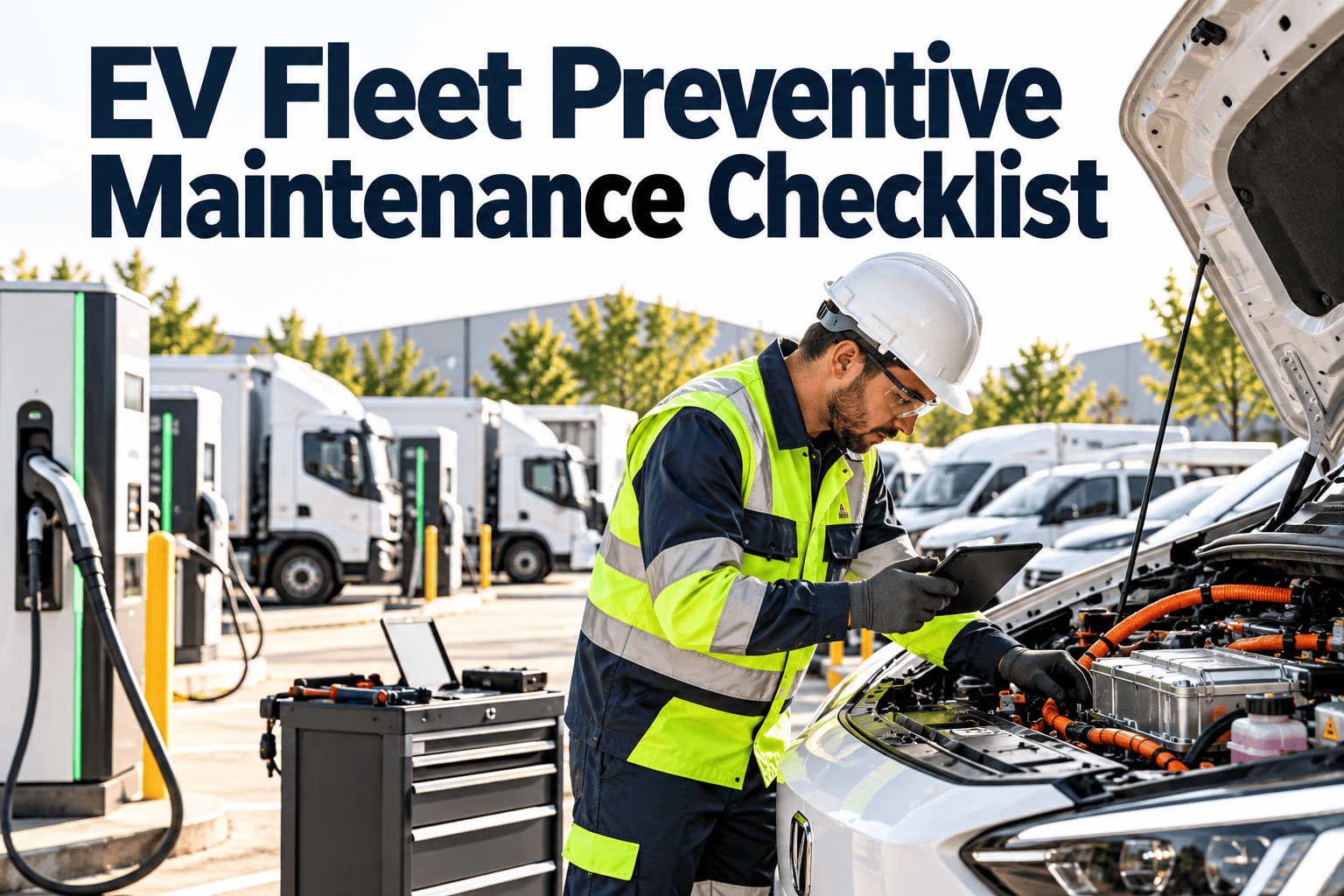
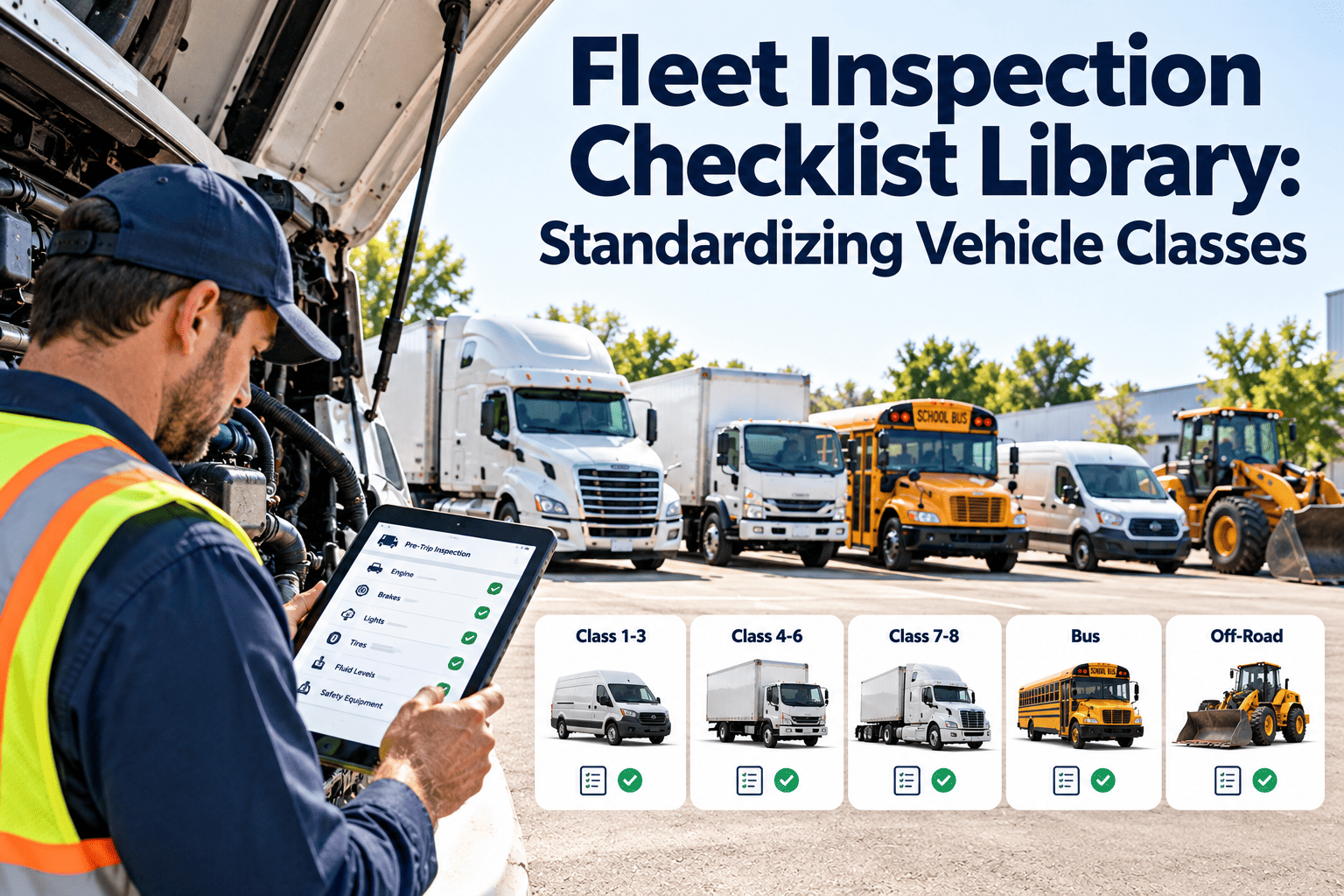
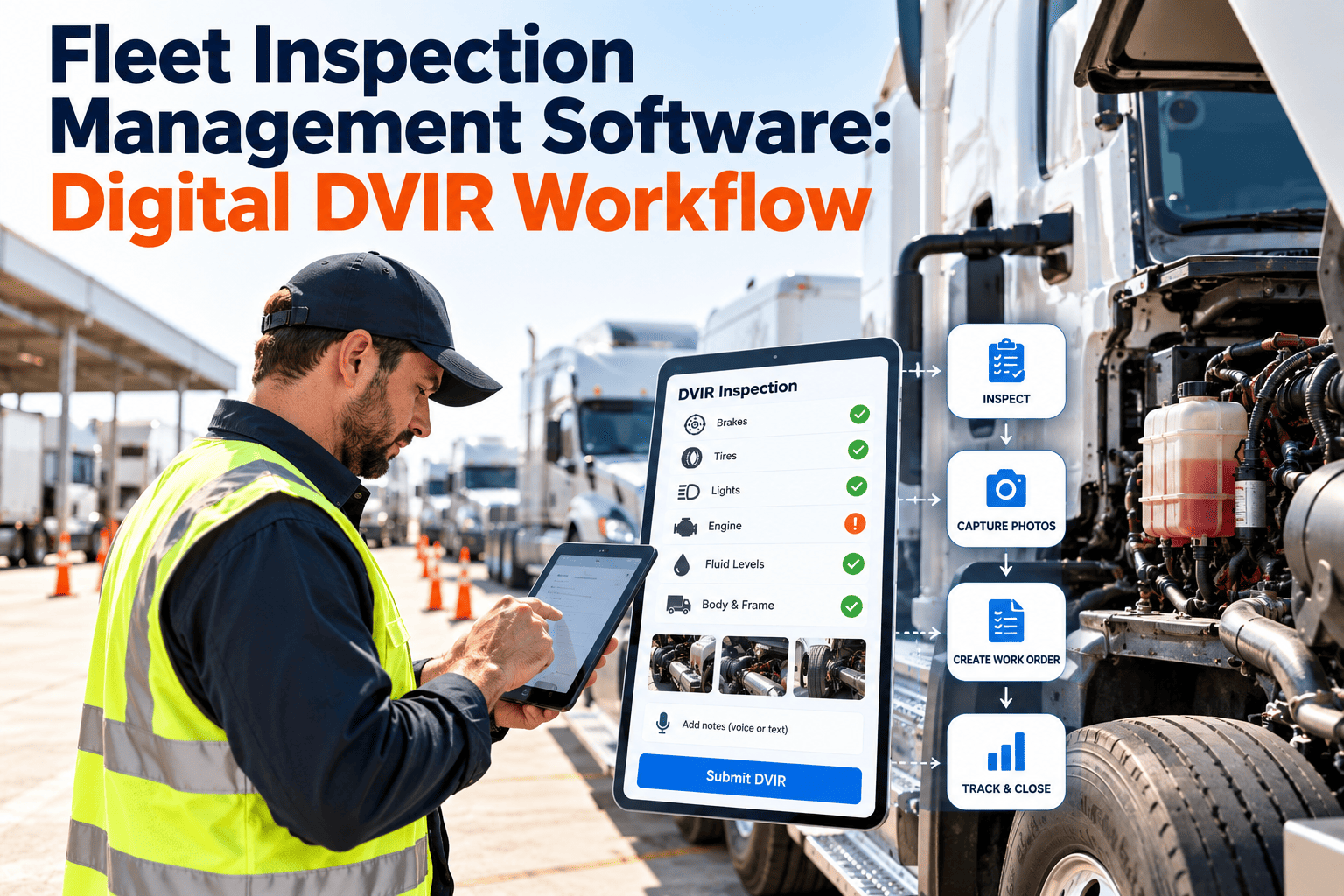
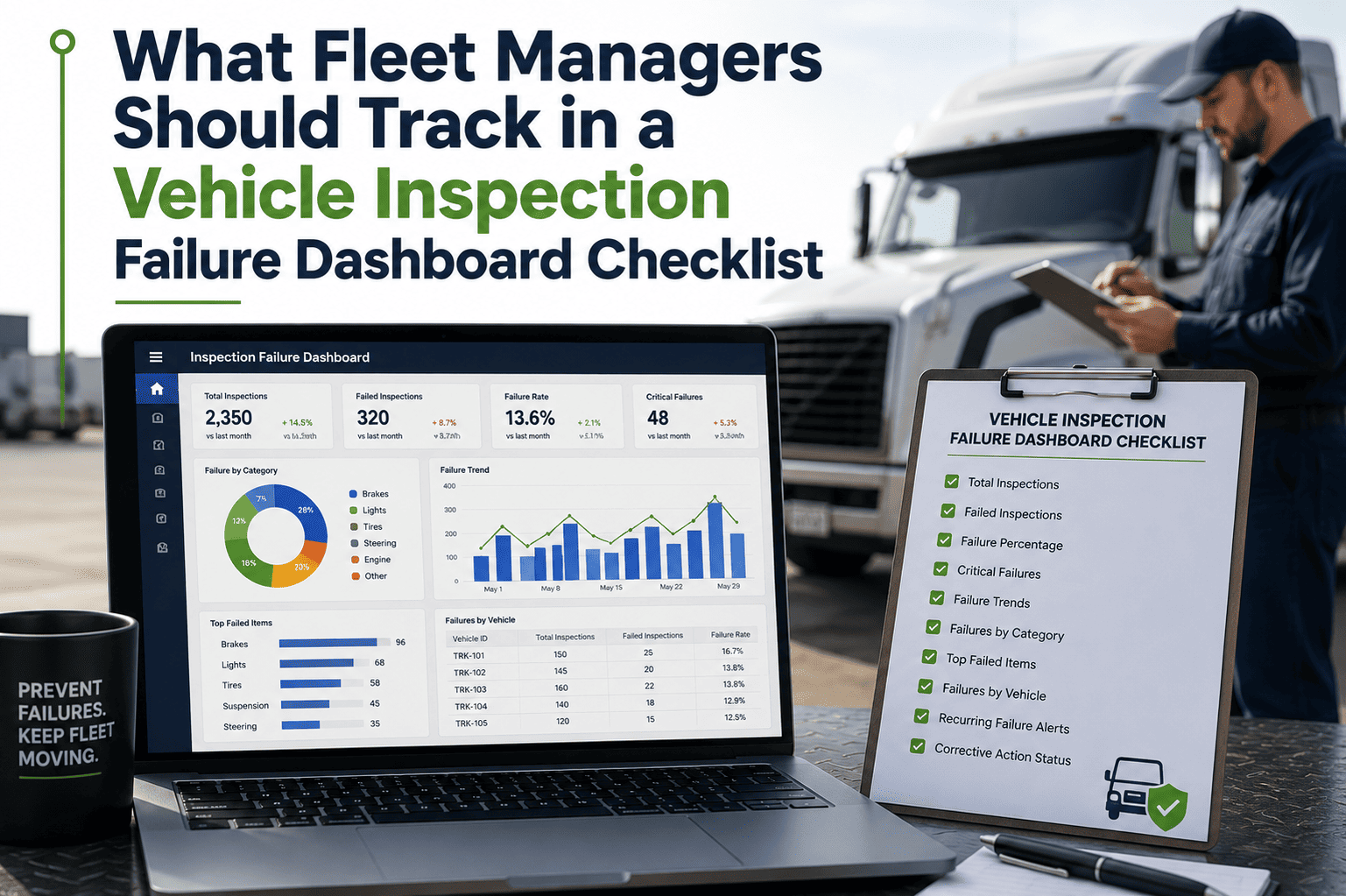
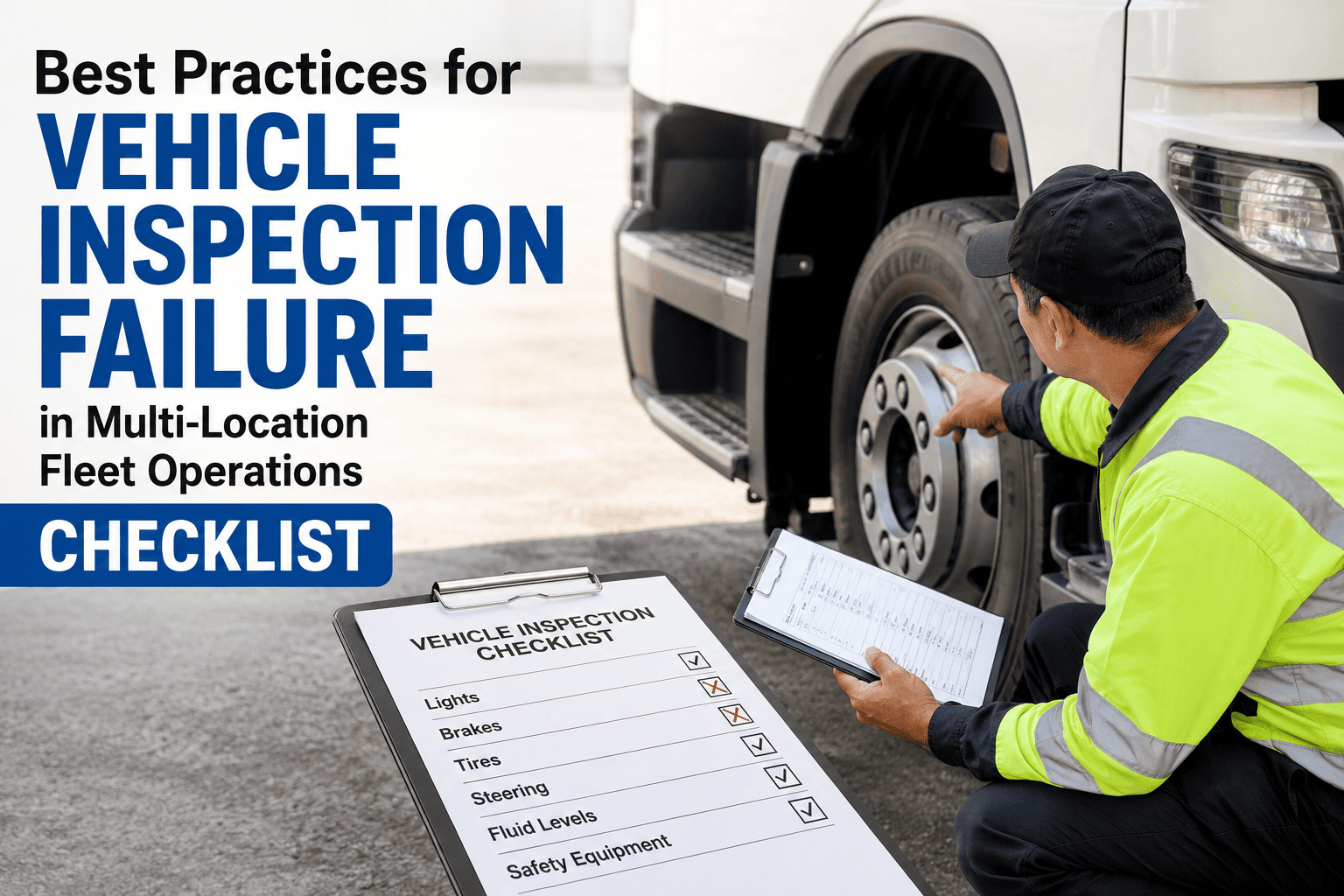
Electric vehicles remove oil changes, belts, and exhaust work, but they do not remove the need for structured inspections. Battery health, coolant condition, charge port wear, brake corrosion, and tyre wear all drift quietly until a vehicle fails to dispatch. This working checklist gives drivers, technicians, and supervisors exact items to tick at every interval, with an owner and a record for each one. It also shows how a fleet maintenance software workflow turns every failed item into a tracked work order.
Fleet Inspections & Compliance
EV Fleet Preventive Maintenance Checklist
A tickable, interval-based inspection checklist for battery electric vans, trucks, and buses, covering batteries, charging, thermal systems, brakes, tyres, chargers, and records.
7Checklist sections
35Inspection items
5Service intervals
3Defect tiers
How to Use This Checklist
Each item carries an interval tag and a suggested owner. Treat the intervals as a fleet-level starting point, then align them with the OEM service schedule for every model and adjust for duty cycle, climate, and charging pattern.
DEvery dispatch
WWeekly
MMonthly
QQuarterly
AAnnual or per OEM
Why EV Checklists Differ From Diesel and Petrol Checklists
Removed or reduced
- Engine oil, filters, and spark plugs
- Exhaust and emissions components
- Drive belts and most engine hoses
- Friction brake pad wear
Added or more important
- Battery health trend and cell balance
- Coolant and thermal loop condition
- Charge inlet, cable, and depot charger wear
- Brake corrosion, tyre wear, and 12V health
- Software versions, recalls, and HV technician records
Section 01
Pre-Trip Walkaround and Dashboard Review
The driver is the first sensor in the system. A short, consistent walkaround catches warnings and physical damage before the vehicle leaves the depot.
Dashboard warning lights reviewed at start-up, covering battery, charging, thermal, brake, and stability faults, with any active warning reported before the vehicle moves.DDriver · Dashboard fault log
State of charge and estimated range recorded and compared with the planned route, including a reserve margin for weather, load, and detours.DDriver · Range and charge record
Underbody and wheel arches checked for kerb strikes, road debris contact, hanging shields, and fresh fluid marks on the ground beneath the vehicle.DDriver · Walkaround log
Lights, indicators, wipers, horn, mirrors, and cameras confirmed working, since many EVs rely on cameras and sensors for driver assistance functions.DDriver · Safety equipment log
Open driver-reported defects reviewed so every reported item has a work order, an owner, and a status before the vehicle is released again.WSupervisor · Defect backlog review
Section 02
High-Voltage Battery and Charge Port
Battery packs age with heat, fast charging, deep cycles, and physical impact. Trend data matters more than any single reading.
Charge port door, seal, and pins inspected for debris, moisture, bent pins, and heat discolouration. Burn marks on inlet pins mean the vehicle stays out of service until a qualified technician clears it.DDriver · Charge port inspection
Battery state of health reading recorded and compared against the previous reading and against similar vehicles in the fleet, flagging units that degrade faster than their peers.MTechnician · Battery health record
Cell voltage imbalance, repeated power derating events, and thermal alerts reviewed from diagnostic or telematics data and raised as a work order when a pattern appears.MTechnician · Diagnostic review log
Battery underbody shield, casing, and mounting points inspected for cracks, dents, leaks, corrosion, and loose fasteners, with extra scrutiny after any reported impact.QTechnician · Underbody inspection
Fast charging frequency and full charge habits reviewed per vehicle against OEM advice, so scheduling can reduce unnecessary stress on high-use assets.MFleet Manager · Charging pattern review
Stop Managing This Checklist on Paper
Load these items into digital inspection templates, attach photos, and let failed items open work orders on their own.
Section 03
Thermal Management and Coolant
Thermal loops keep the battery, inverter, and charger inside a safe temperature window. A small leak or a blocked radiator can trigger power limits in hot weather or during fast charging.
Coolant reservoir level checked with the vehicle cool and on level ground, using only the coolant type specified by the OEM. Different coolant types must never be mixed.WTechnician · Coolant level log
Hoses, clamps, pumps, and radiator inspected for weeping, swelling, and blockage from road debris, leaves, or insects that restrict airflow.MTechnician · Thermal system inspection
Cabin heater, heat pump, and cooling compressor operation confirmed, because cabin systems draw from the same energy and thermal budget as the battery.QTechnician · Climate system test
Coolant condition and replacement due date verified against the OEM interval, with the service recorded on the asset so the next due date is calculated automatically.ATechnician · Coolant service record
Battery temperature alerts from hot or cold routes reviewed, so vehicles that repeatedly hit limits are moved to less demanding duties or flagged for inspection.MFleet Manager · Thermal alert review
Section 04
Brakes, Tyres, and Suspension
Regenerative braking saves pads but leaves rotors and slide pins exposed to corrosion. Heavier vehicles with instant torque also consume tyres and suspension components faster.
Tyre pressure checked with a calibrated gauge and tyres inspected for cuts, bulges, and uneven wear. Correct pressure protects both range and tyre life on heavy EVs.DDriver · Tyre pressure log
Tread depth measured and compared across axles and sides. Uneven wear triggers a rotation or alignment work order, and tyres must match the load rating for the vehicle.MTechnician · Tread depth record
Pad thickness, rotor surface, and caliper slide movement inspected, with rust build-up, glazing, or sticking slides recorded even when pads still look thick.MTechnician · Brake inspection log
Brake hardware cleaned and lubricated on vehicles with heavy regenerative braking use, and parking brake and brake warning functions tested for correct operation.QTechnician · Brake hardware service
Brake fluid condition tested and replaced on the OEM or time-based schedule, since fluid absorbs moisture whether or not the pads are worn.ATechnician · Brake fluid record
Bushings, ball joints, and dampers inspected for play, leaks, and early wear, because higher vehicle mass loads suspension parts more than comparable ICE models.QTechnician · Suspension inspection
Section 05
12V System, HV Cabling, Drive Unit, and Software
A healthy traction battery cannot start a vehicle with a weak 12V battery. Software and recalls also belong on the checklist, not in a separate process.
12V auxiliary battery load-tested and terminals checked for corrosion, with replacement decided by test result and not by age alone.MTechnician · 12V battery test
Visible orange high-voltage cabling, brackets, and grommets checked for chafing, cracked insulation, and loose routing. This is a visual check only, with no disconnection.MTechnician · HV cable visual check
Drive unit and reduction gear inspected for leaks, unusual noise, and vibration, with fluid service completed where the manufacturer specifies a change interval.ATechnician · Drive unit service
Diagnostic trouble codes read and stored, and repeat faults escalated for root cause analysis instead of being cleared and forgotten.MTechnician · DTC history
Software version, pending updates, open recalls, and service campaigns checked and logged per vehicle so campaign completion can be proven.QFleet Admin · Recall and software log
Section 06
Depot Chargers and Charging Infrastructure
Chargers are maintenance assets too. When they fail, the vehicle looks unreliable even though the fault sits in the equipment.
Charging cables and connectors inspected for damaged jackets, cracked housings, worn latches, bent pins, and crushed or twisted sections. Damaged cables are tagged out of use.WTechnician · Cable inspection log
Holsters, cable management, bollards, and enclosures checked for impact damage, water ingress, and missing covers that expose equipment to weather.WTechnician · Charger housing check
Failed and interrupted charging sessions reviewed by charger and by vehicle, which separates a failing charger from a failing vehicle inlet.WFleet Manager · Session fault review
Charger firmware, error history, and filters or cooling airflow checked against the manufacturer's maintenance guidance.QTechnician · Charger service record
Electrical safety testing performed by a qualified electrician to the manufacturer and local electrical code requirements, with certificates attached to the charger asset.AElectrician · Electrical test record
Section 07
Documentation and Compliance Records
A checklist only protects the fleet if the evidence is stored and searchable. These items keep audits and warranty conversations simple.
Completed inspection signed by the driver or technician and stored against the vehicle ID with date, time, and any attached photos.DDriver · Signed inspection record
Regulatory and safety inspections applicable to the vehicle class and region completed, with certificates and expiry dates recorded on the asset.AFleet Admin · Statutory inspection record
High-voltage tasks confirmed as assigned to authorised technicians, with training, PPE inspection, and de-energisation steps recorded on the work order.MWorkshop Lead · HV authorisation record
Closed defects verified, with parts used, labour hours, and technician sign-off attached so repeat failures can be traced to a cause.WSupervisor · Work order close-out
Warranty-relevant service events, including battery, coolant, and software actions, kept in one asset history in case of a claim.QFleet Admin · Warranty file
High-Voltage Safety Boundary
Visual checks, fluid checks, and reading data are different from high-voltage work. Keep the boundary explicit in every procedure.
01Only trained and authorised technicians open, disconnect, or test HV components.
02Follow the OEM procedure to de-energise and verify before any HV work.
03Use insulated tools and inspected, correctly rated insulating gloves, and log PPE checks.
04Quarantine any vehicle with a damaged pack, swelling, odour, or thermal warning, and follow OEM and fire safety guidance.
What To Do When an Item Fails
Tier every failed item at inspection time so urgent vehicles come off the road and minor items join the planned schedule.
Tier 1: Remove from service
- Battery casing damage, swelling, leak, or thermal alert
- Exposed or damaged HV cable
- Burnt charge inlet pins
- Brake failure warning or seized brake
Tier 2: Repair before dispatch
- Damaged charging cable or connector
- Weak 12V battery
- Low or uneven tyre tread
- Sticking caliper slide pins
Tier 3: Schedule at next PM
- Cabin filter or wiper replacement
- Cosmetic or trim damage
- Non-critical software update
- Early surface corrosion on hardware
1Item fails on the mobile checklist
2Photo, tier, and asset ID captured
3Work order assigned to a qualified technician
4Parts and labour logged
5Repair verified and vehicle released
KPIs That Show Whether the Checklist Is Working
| KPI | What it shows | How to calculate | Review |
|---|
| Checklist completion rate | Whether inspections are actually done | Inspections completed / inspections due | Daily |
| PM compliance rate | On-time scheduled service | PMs completed on time / PMs due | Weekly |
| Unplanned downtime | Availability impact of failures | Hours out of service from unscheduled repairs | Weekly |
| Repeat defect rate | Quality of repair and root cause work | Same defect recurring within a set period | Monthly |
| Failed charge session rate | Charger and inlet reliability | Failed sessions / total sessions | Weekly |
| Open defect age | Backlog discipline | Days from report to close-out | Daily |
How Oxmaint Supports This Checklist
Mobile inspectionsDigital checklists with required fields, photo capture, and timestamped sign-off.
Preventive maintenanceRecurring schedules by time or usage, with separate templates for each EV model.
Work ordersFailed items become prioritised, assigned corrective work with full history.
Asset managementVehicles, chargers, and components tracked in one record.
InventoryTyres, filters, 12V batteries, brake parts, and coolant linked to jobs.
ReportingDashboards for PM compliance, downtime, defect age, and cost trends.
Frequently Asked Questions
How often should an EV fleet run this checklist?
Use the interval tags: pre-trip items each dispatch, others weekly to annually. Always confirm against the OEM schedule for each model.
Can drivers complete the high-voltage items?
Drivers handle visual and dashboard checks only. Opening or testing HV components is reserved for authorised technicians.
Why check brakes if regenerative braking reduces wear?
Low friction use lets rotors and slide pins corrode or seize. Inspect hardware on schedule, even when pads look thick.
Should chargers be on the same checklist program?
Yes. Track chargers as assets with their own inspections. You can book a demo to see vehicle and charger records together.
Can this checklist be digitised?
Yes. Build the items as a mobile inspection template with photo capture and automatic work orders.
Put Every EV Inspection and Service in One Trackable System
Bring checklists, PM schedules, work orders, parts, and compliance records together so every vehicle is inspected, serviced, and ready to dispatch.