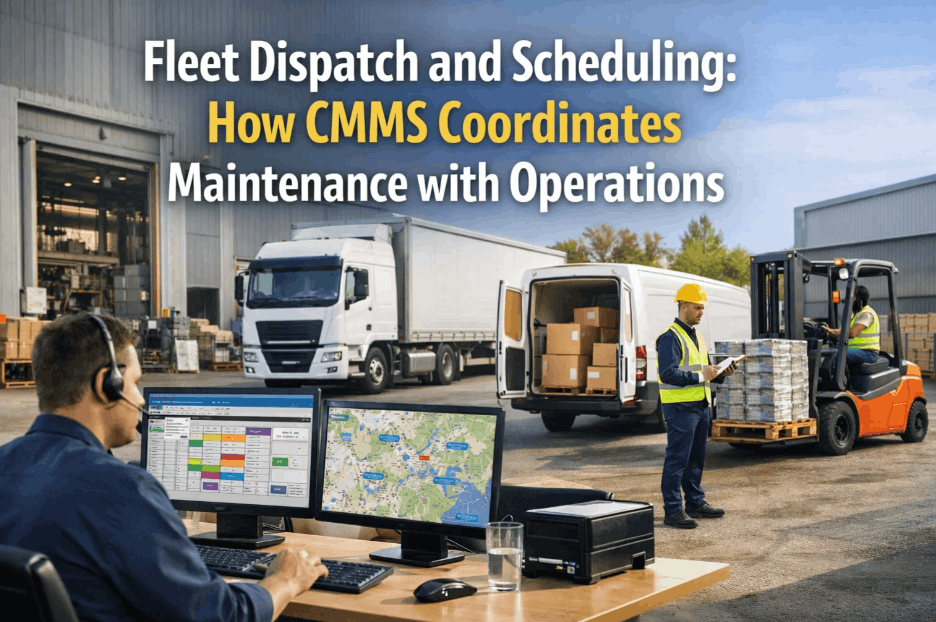
Every fleet runs on two schedules that rarely talk to each other — the dispatch board that decides which vehicle goes out today, and the maintenance calendar that decides which vehicle needs to come in. When those two schedules collide, a truck gets pulled for a service interval the same morning it was booked for a delivery, or a vehicle skips its inspection because dispatch needed it on the road. The result is not a maintenance problem or a dispatch problem — it is a coordination gap, and it is the single most common reason fleets lose both uptime and compliance in the same week. Closing that gap does not require slowing dispatch down or delaying maintenance; it requires both teams working from the same live data. See how OxMaint keeps dispatch and maintenance synced before your next scheduling conflict.
Fleet Operations · Dispatch & Maintenance · Coordination Guide
Fleet Dispatch and Maintenance Coordination — How to Stop Two Teams From Fighting Over the Same Vehicle
Why dispatch and maintenance schedules collide, the coordination framework that keeps both teams working from one vehicle status, and how OxMaint syncs PM scheduling with daily dispatch so neither team blocks the other.
34%
Of unplanned fleet downtime traced back to a dispatch and maintenance scheduling conflict
2.6 hrs
Average dispatcher time lost per week manually checking vehicle service status
41%
Of overdue PM services caused by a vehicle being dispatched instead of pulled for service
19%
Fleet uptime improvement reported after connecting dispatch boards to live maintenance status
The Root Problem
Why Dispatch and Maintenance End Up Competing for the Same Vehicles
Dispatch and maintenance are not adversaries by design — they become adversaries by default, because most fleets run them on separate systems with no shared view of vehicle availability. Dispatch sees a truck sitting idle and assigns it a route. Maintenance sees the same truck due for a 5,000-mile service and schedules it for the shop. Neither team is wrong. Neither team can see what the other is planning. The vehicle becomes the battleground, and the fleet absorbs the cost either way — as downtime, as a missed delivery, or as a skipped service interval that turns into a breakdown three weeks later.
Visibility Gap
Dispatch Can't See Maintenance Status
Most dispatch boards show vehicle location and driver assignment, not service due dates or open work orders. A dispatcher assigns the closest available vehicle without knowing it is three days overdue for inspection.
Timing Gap
Maintenance Schedules Without Dispatch Input
PM intervals are typically set by mileage or calendar date alone, with no reference to committed routes or delivery windows. A vehicle gets flagged for service the same day it is booked for a high-priority run.
Communication Gap
Status Updates Travel Through People, Not Systems
A technician tells a supervisor a vehicle is ready; the supervisor forgets to tell dispatch; dispatch assumes it is still in the shop. Every handoff through a phone call or a hallway conversation is a place the coordination breaks down.
Priority Gap
No Shared Rule for Who Wins the Conflict
Without an agreed escalation rule, every conflict gets resolved case by case, usually in favor of whoever asks loudest — which tends to be dispatch, which is why deferred maintenance accumulates fastest in fleets without a coordination process.
The Coordination Framework
The Four-Point Framework That Keeps Dispatch and Maintenance Working From the Same Vehicle Status
Fleets that stop the tug-of-war between dispatch and maintenance are not the ones with more staff or stricter rules — they are the ones running both functions off a single, live source of vehicle truth. The framework below is what that coordination actually looks like in daily operations.
01
One Shared Vehicle Status, Not Two Separate Calendars
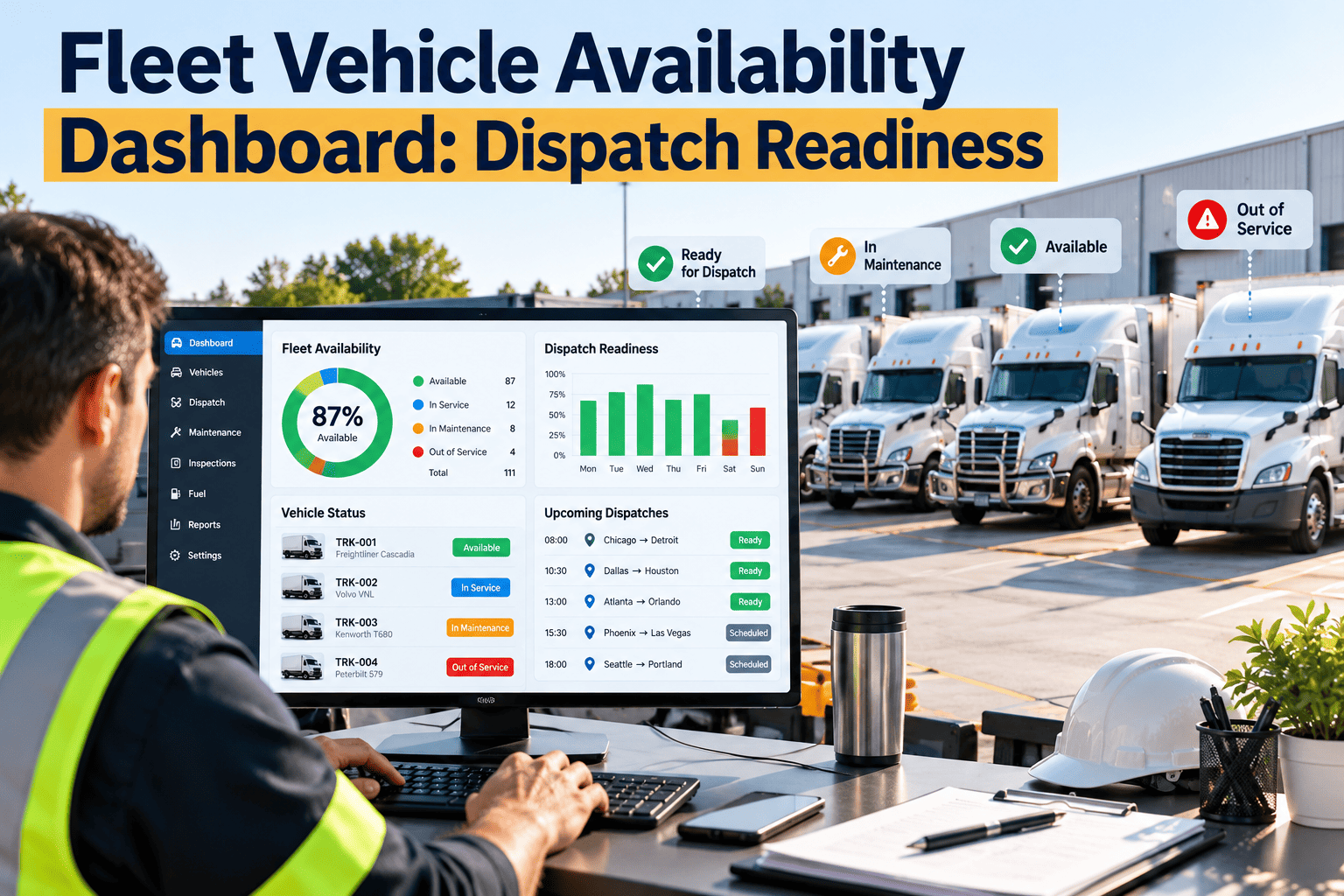
Every vehicle carries a single live status — available, assigned, due for service, or in the shop — visible to both dispatch and maintenance at the same time. Neither team has to call the other to find out what the vehicle is doing right now.
02
PM Windows Planned Around Dispatch Commitments
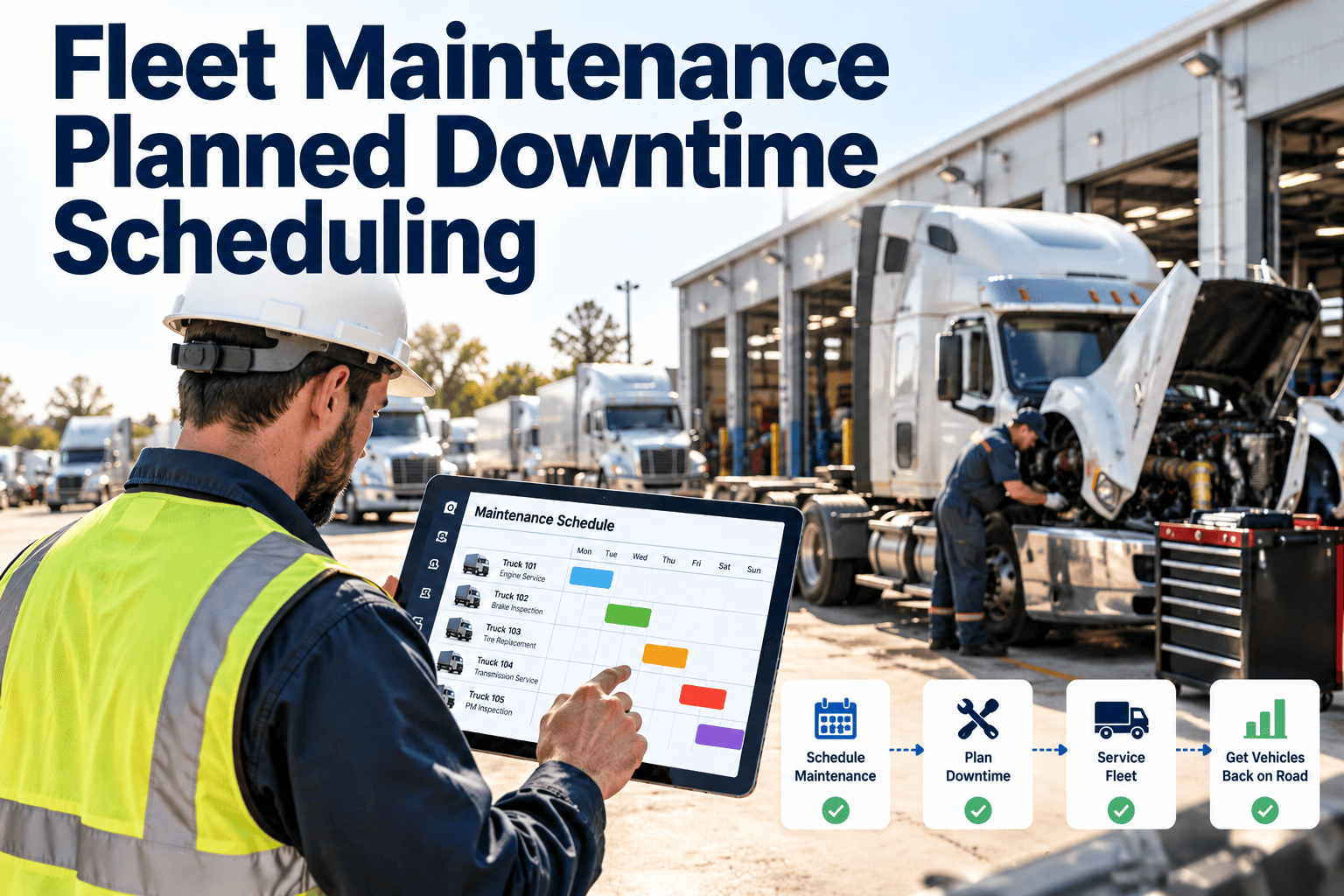
Service intervals are scheduled with visibility into upcoming routes, so a vehicle due for maintenance in the next five days is flagged before dispatch commits it to a six-day route, instead of after.
03
Automatic Holds Instead of Manual Warnings
A vehicle flagged for an open work order or overdue inspection is automatically held from dispatch assignment rather than relying on a dispatcher to remember to check. The system enforces the rule so people do not have to.
04
A Clear Escalation Path When Conflicts Still Happen
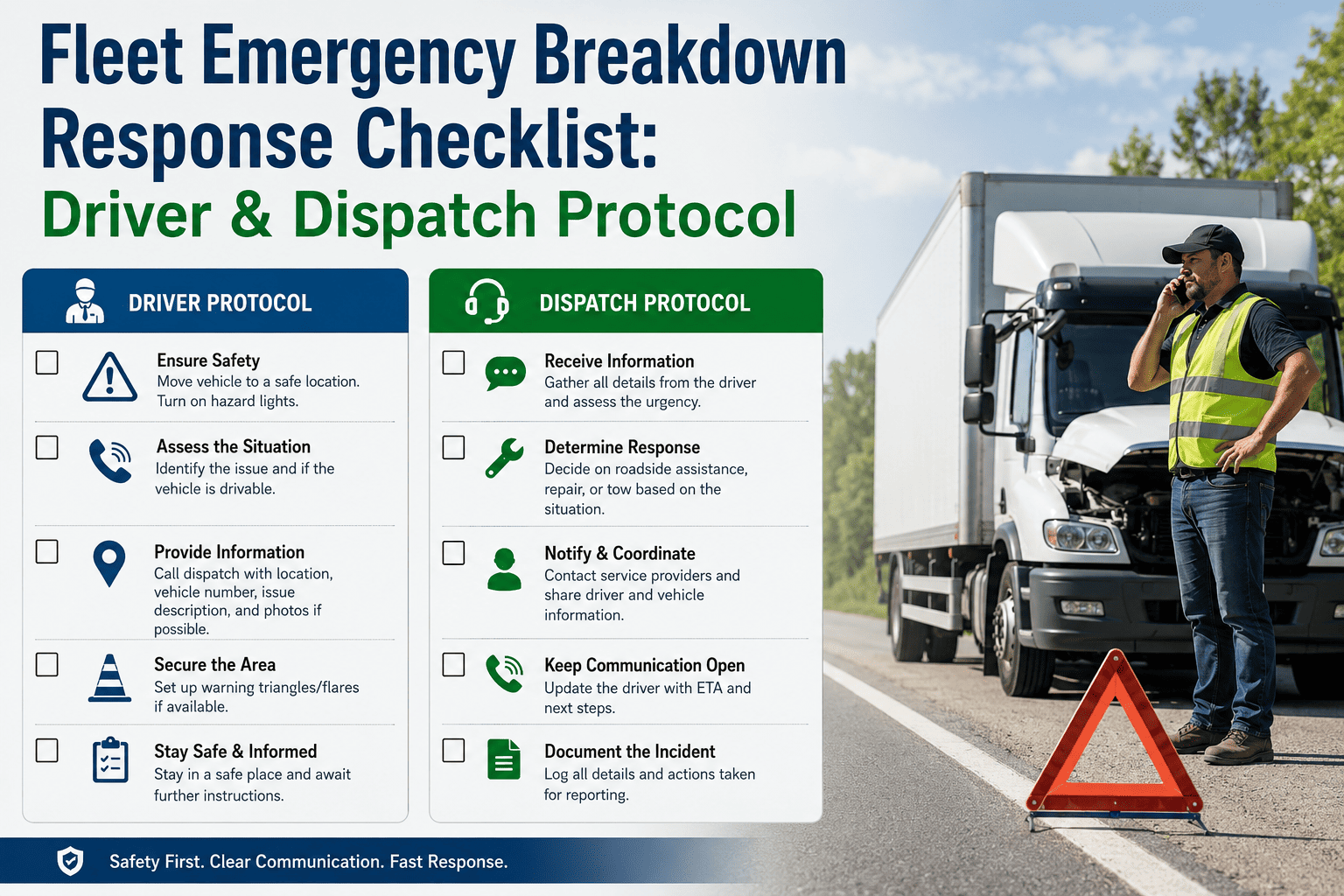
Even with good coordination, urgent routes and urgent repairs will sometimes land on the same day. A documented escalation rule — who decides, based on what criteria — replaces the ad-hoc negotiation that usually favors whichever team is more persistent.
Fleet Coordination · Dispatch & Maintenance · OxMaint
Give Dispatch and Maintenance the Same View of Every Vehicle
OxMaint connects live maintenance status to your dispatch workflow, so vehicles due for service are visible before they are assigned — not discovered after. See what a coordinated fleet operation looks like in a working system, not a spreadsheet.
Before and After
Coordinated vs Uncoordinated Fleet Operations — What Actually Changes
The difference between a fleet running coordinated dispatch and maintenance scheduling and one that isn't shows up in daily friction, not just in year-end reports. Here is what changes across the operations that matter most.
The OxMaint Approach
How OxMaint Synchronizes Dispatch and Maintenance Scheduling in One System
OxMaint is built as a CMMS that fleet operations teams actually use alongside dispatch, not a maintenance-only tool that dispatch has to work around. Here is what that coordination looks like inside the platform.
Live Status
Real-Time Vehicle Availability
Every vehicle's status — available, assigned, in service, or flagged — updates automatically as work orders open and close, giving dispatch a live picture instead of a stale spreadsheet.
PM Sync
Service Intervals Mapped to Route Load
Preventive maintenance windows are generated with visibility into upcoming dispatch commitments, so service gets scheduled into gaps in the route calendar rather than colliding with it.
Automated Holds
Assignment Blocks on Flagged Vehicles
A vehicle with an open work order or an overdue inspection is automatically excluded from the available pool, removing the need for a dispatcher to manually cross-check every assignment.
Work Order Flow
One Ticket From Fault to Resolution
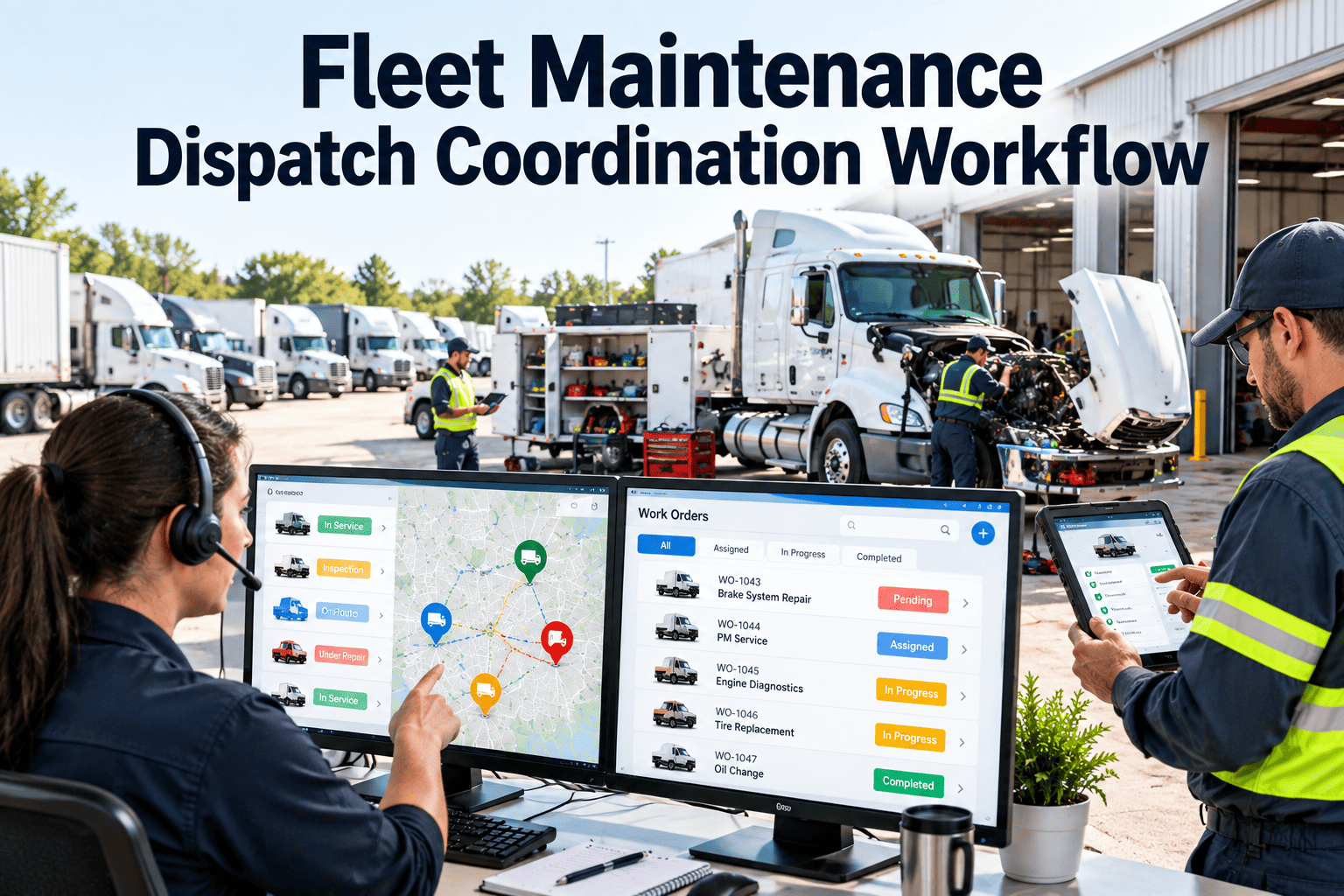
Fault codes, driver-reported issues, and scheduled services all generate the same type of trackable work order, so maintenance and dispatch are reading the same record instead of separate notes.
Mobile Access
Field Updates Reach Dispatch Instantly
Technicians close out work orders from the mobile app, and the vehicle status updates for dispatch immediately — no waiting for a phone call or an end-of-shift report.
Escalation Rules
Configurable Priority Logic
When a route and a repair genuinely compete for the same vehicle, configurable rules decide the outcome consistently, based on criteria your operation sets — not on who called first.
Coordination Impact
What Fleets Recover When Dispatch and Maintenance Stop Competing
Reduction in overdue PM services
Up to 41% fewer
Dispatcher hours saved on manual status checks
2.6 hrs / week
Unplanned downtime from scheduling conflicts
Up to 34% lower
Fleet-wide uptime improvement
Up to 19% gain
What This Adds Up To
Fewer breakdowns, fewer missed routes, one shared schedule
Fleets that connect dispatch and maintenance data report both higher on-time delivery rates and lower deferred-maintenance backlogs — because neither team is guessing what the other is planning.
Fleet Manager Questions
Dispatch and Maintenance Coordination — Common Questions From Fleet Operations Teams
How do we stop dispatch from assigning a vehicle that's due for maintenance?
+
The reliable fix is an automatic hold, not a manual reminder — a vehicle with an open work order or overdue PM should be removed from the available pool before a dispatcher can select it.
See how OxMaint enforces this automatically.
Should maintenance or dispatch have final say when a conflict happens?
+
Neither, by default — the fleets that avoid friction set a documented escalation rule in advance based on criteria like safety risk and delivery priority, so the decision is consistent rather than negotiated fresh every time.
How far in advance should PM be scheduled around dispatch routes?
+
Most coordinated fleets flag upcoming service needs five to seven days ahead, giving dispatch enough runway to route around the service window instead of discovering the conflict the morning a vehicle is due out.
What is the fastest way to get dispatch and maintenance onto one shared view?
+
Replacing separate spreadsheets and whiteboards with a single system that both teams log into is the fastest path — status changes made by one team become instantly visible to the other.
Book a demo to see this in a live fleet setup.
Does better coordination actually reduce deferred maintenance?
+
Yes — deferred maintenance mostly accumulates because dispatch repeatedly wins the daily conflict over vehicle access. Once service windows are protected automatically, fleets typically see overdue PM counts drop sharply within the first quarter.
OxMaint · Dispatch & Maintenance · Coordination Platform
Stop Choosing Between the Route and the Repair
OxMaint gives dispatch and maintenance one live view of every vehicle, so service windows are protected before they are overridden and routes are planned around real availability, not guesswork. Bring both teams onto one system and let the coordination happen automatically.