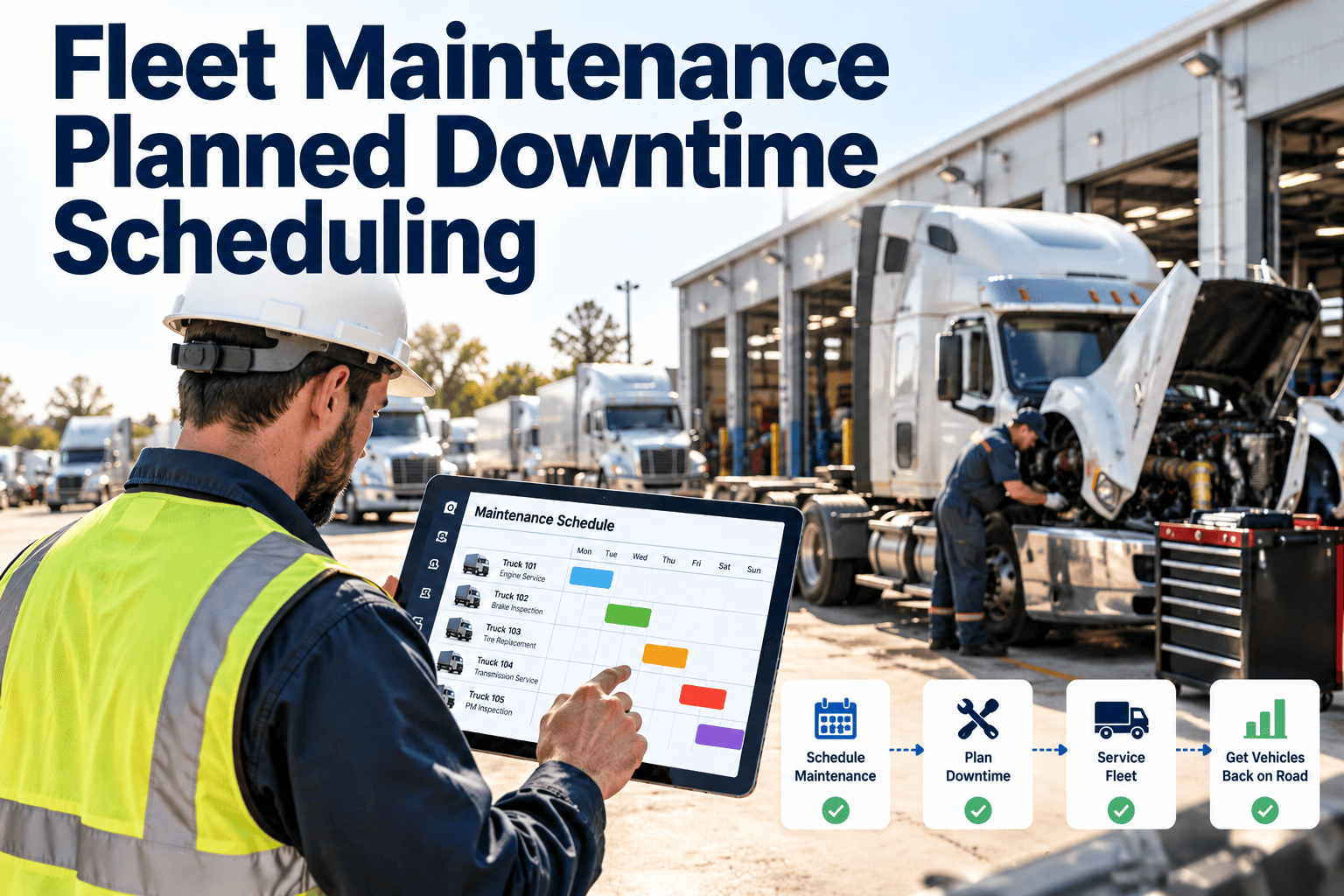
Planned downtime is the cheapest downtime a fleet will ever have, but only when it lands at the right time. Pull a truck in during a peak delivery week and the shop saves a repair while dispatch loses a route. Schedule it around the work, the bays, the technicians and the parts, and the same hours cost far less. This guide explains how fleet teams plan maintenance windows, balance shop capacity, and avoid last-minute conflicts, with practical support from Oxmaint for PM, work orders and scheduling.
Fleet Maintenance Planned Downtime Scheduling
Why planned downtime still goes wrong
Dispatch learns late
Everything is due at once
Parts arrive after the vehicle
Emergency repairs take the bay
Build the schedule from four capacity layers
A realistic plan checks each layer before a vehicle is booked, not after.
Vehicle availability
When the unit can come off the route, based on dispatch demand and seasonal peaks.Bay and equipment capacity
Lift space, specialty tools and bay type, since a refrigerated unit and a van need different setups.Technician skills and hours
Certified techs for brakes, electrical, emissions or HVAC, plus shift coverage.Parts and kit readiness
Service kits reserved against the work order before the booking is confirmed.Choosing the right downtime window
| Window | Best for | Watch out for |
|---|---|---|
| Overnight or weekend | Routine PM, inspections, tire work on day-shift vehicles | Technician availability and overtime planning |
| Midday low-demand gap | Short services between route waves | Tight turnaround if a job runs long |
| Seasonal slow period | Larger overhauls, refurbishment, body work | Parts lead times and workload bunching |
| Return-to-depot service | Planned stops when a route naturally ends | Drivers and dispatch need advance notice |
| Mobile or on-site service | Light PM where the vehicle cannot leave | Tool and parts limits in the field |
Plan downtime before it plans you
Techniques that smooth the workload
Stagger intervals
Batch compatible work
Keep a buffer bay
Use lead-time alerts
From PM trigger to vehicle back in service
Due point approaches
Window proposed
Resources confirmed
Service performed
Release and record
Unplanned scheduling versus planned scheduling
Ad hoc scheduling
- Shop learns of due PM from the driver or a spreadsheet
- Vehicles wait in the yard for open bays
- Parts ordered after diagnosis
- Emergency repairs bump service work
Planned scheduling
- Due dates visible weeks ahead
- Bays and technicians booked in advance
- Kits reserved against the work order
- Buffer capacity protects urgent jobs
Compliance deadlines belong on the same calendar
Inspection and registration dates should compete for bay time visibly, not surprise the shop at the last moment.
- Annual vehicle inspections, which US motor carriers must document under 49 CFR 396.17.
- Periodic brake, lift gate and PTO inspections required by your operation.
- Emissions or state inspection dates where they apply.
- Recall and warranty campaign work with vendor deadlines.
Measures that show scheduling is improving
Scheduled-to-actual match
Bay utilization
Wait time for parts
Planned work share
Estimate downtime from your own history
Generic time guides rarely match a real shop. The most reliable estimates come from completed work orders for the same task on the same vehicle class.
| Job type | What drives duration | What to record on the work order |
|---|---|---|
| Routine PM service | Service level, vehicle class, bay setup | Start and finish time, parts used, extra findings |
| Brake and tire work | Axle count, wear condition, parts availability | Components replaced, wait time for parts |
| Annual inspection | Inspector availability, repairs found | Inspection result, defects, repair follow-up |
| Refrigeration or lift gate service | Technician skill, specialist tools | Unit hours, tests performed, parts used |
| Body or major overhaul | Scope, outside vendor lead time | Estimate versus actual, vendor dates |
Seasonal and peak calendars
Demand is not flat. The best downtime plans start with the operational calendar, then place maintenance around it.
Pre-peak readiness
Peak blackout
Post-peak recovery
Weather windows
Coordinating with dispatch and operations
Downtime plans fail when maintenance and operations plan separately. A shared view of due work and route demand removes most conflicts.
What maintenance should share
- List of units due within the next planning period
- Estimated time out of service for each job
- Open defects that may force an unplanned stop
- Parts status and expected completion date
What operations should share
- Route demand and expected busy days
- Spare vehicle availability for cover
- Units that must stay available for key customers
- Changes in assignment that alter usage
Parts lead times decide the real downtime
Labor hours are often the smaller part of a repair stop. Waiting for a component can double the time a vehicle is off the road.
Identify early
Check stock
Order ahead
Stage the kit
Confirm slot
When emergencies displace planned work
Emergencies will happen. The question is whether the schedule bends gracefully or collapses.
Set priority rules
Reschedule, do not cancel
Use the buffer first
Review the cause
Spare vehicles and swap strategy
Planned downtime is easier when a replacement unit can cover the route. Without spares, every service competes with delivery commitments.
- Keep a small, deliberate pool of spare units and rotate them through PM first.
- Record swaps so usage and cost follow the vehicle that actually did the work.
- Schedule the spare's own PM during low-demand periods, so the spare is ready when needed.
- Consider short-term rental only for planned, longer jobs where a spare is unavailable.
Mobile and on-site service options
Not every service requires a trip to the shop. Some tasks can be done where the vehicle already is, which shortens downtime.
Depot overnight work
Mobile technicians
Vendor visits
Roadside planning
How Oxmaint supports downtime planning
Oxmaint brings the inputs of a downtime plan into one maintenance record.
PM and inspection schedules
Work order management
Inventory control
Reporting
Checklist before you lock the schedule
- The vehicle is confirmed available by dispatch for the full window.
- A bay with the right equipment is booked for the whole job.
- A technician with the required skill is assigned, with backup named.
- Parts and kits are on hand or confirmed with a delivery date.
- Related defects and recall items are added to the same visit.
- A spare vehicle or alternative route cover is arranged where needed.
- The driver knows when and where to drop the vehicle off.
Different fleets, different downtime patterns
The same scheduling logic applies across fleet types, but the constraints change. Knowing yours helps you choose the right window and the right level of buffer.
| Fleet type | Main scheduling constraint | Practical approach |
|---|---|---|
| Last-mile delivery vans | Vehicles are needed every morning on tight routes | Service overnight or between route waves, rotate spares through PM first |
| Long-haul tractors and trailers | Units are away from base for long periods | Plan PM around home-time and use approved shops along the lane |
| Refrigerated fleets | Reefer units need separate specialist service | Book refrigeration work with vehicle PM to avoid two separate stops |
| Service and utility vehicles | Technicians depend on the vehicle and its equipment | Schedule around job calendars and service the vehicle and tools together |
| Municipal and vocational fleets | Seasonal demand such as snow or waste collection peaks | Complete heavy overhauls in the off-season and protect peak months |
Avoid these planned downtime mistakes
Booking by date only
No buffer capacity
One long job per visit
Silent reschedules
A simple weekly planning routine
A short, regular meeting does more than a perfect plan that is never reviewed. Keep it brief and focused on the next two weeks.
Review due work
Check demand
Match capacity
Publish the plan
Review misses
Measure planned downtime the same way every time
If every team counts downtime differently, comparisons mean nothing. Agree on definitions and record the timestamps on the work order.
Time to capture
- When the vehicle left service or the route
- When work actually started in the bay
- Time spent waiting for parts or approval
- When the repair was certified and the unit released
- When dispatch put the vehicle back on a route
What the gaps reveal
- Long gap before work starts points to bay or technician shortage
- Long wait for parts points to stocking or ordering problems
- Long gap after repair points to release or paperwork delays
- Long total time on small jobs points to poor job planning
- Variation between technicians points to training or tooling needs
Keep drivers informed and involved
Drivers know their vehicles better than anyone. Clear communication reduces missed drop-offs and surfaces problems earlier.
- Send a short notice with the date, time, place and expected duration of each service.
- Ask drivers to report new defects before drop-off so they can be added to the same visit.
- Confirm who collects the vehicle and how the driver gets back to the route or depot.
- Tell drivers when a slot has moved and why, so they trust the plan.
- Close the loop by confirming the vehicle is released and ready for the next shift.
Questions to settle before the first plan
A short alignment meeting between maintenance, dispatch and finance prevents most early scheduling disputes.
- Who has final say when a PM and a customer commitment collide?
- How many units may be out of service on the same day?
- Which compliance dates can never be moved, and who tracks them?
- What notice does dispatch need before a unit is pulled from a route?
- How will actual downtime be measured, and who reviews the gap against plan?