Dispatch and maintenance run on two different clocks inside the same fleet. Dispatch measures success by which vehicles are on the road right now; maintenance measures success by which vehicles get pulled offline before something fails. When those two clocks aren't synced to the same data, a truck gets committed to a route the same morning it's due for a brake inspection, and Book a demo shows how one shared vehicle status stops that collision before it happens.
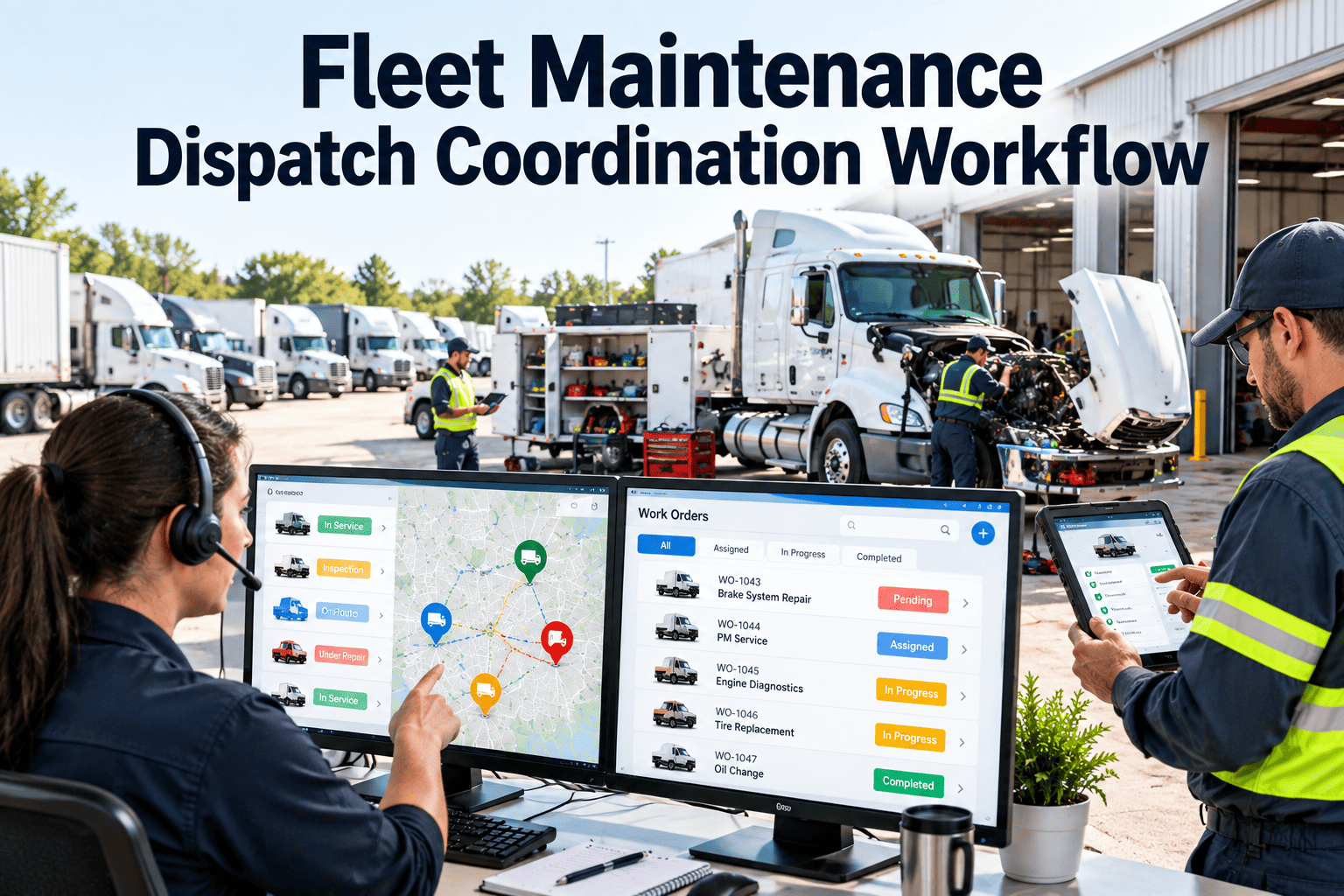
Fleet Maintenance Dispatch Coordination Workflow
See how connecting the dispatch board to live maintenance status stops vehicles from being double-booked between a route and a repair.
Why Dispatch and Maintenance End Up Fighting Over the Same Vehicle
Neither team is doing anything wrong in isolation. Dispatch is optimizing for coverage and on-time delivery. Maintenance is optimizing for uptime and compliance. The conflict shows up only when both teams are working from separate, disconnected views of the same fleet.
What a Shared Dispatch Board Should Actually Show
The fix isn't slowing dispatch down or delaying maintenance. It's giving both teams a live status per vehicle, color-coded, that reflects both its route commitments and its service condition at the same time.
Give Dispatch and Maintenance the Same Live Vehicle Status.
Oxmaint shows every vehicle's PM window, open work orders, and route commitments in one place, so dispatch never assigns a vehicle maintenance is about to pull.
How a Coordinated Dispatch and Maintenance Cycle Runs
What Changes Once Both Teams Share One System
What a Coordinated Fleet Operation Needs in Place
Connect the Dispatch Board to Live Maintenance Status.
Oxmaint keeps dispatch and maintenance working from the same vehicle record, so uptime and compliance stop competing with each other.
What Actually Connects the Dispatch Board to Maintenance
Coordination between dispatch and maintenance isn't solved by a meeting or a shared spreadsheet, both of which go stale the moment a vehicle's condition changes. It's solved by having both functions read from, and write to, the same underlying asset record.
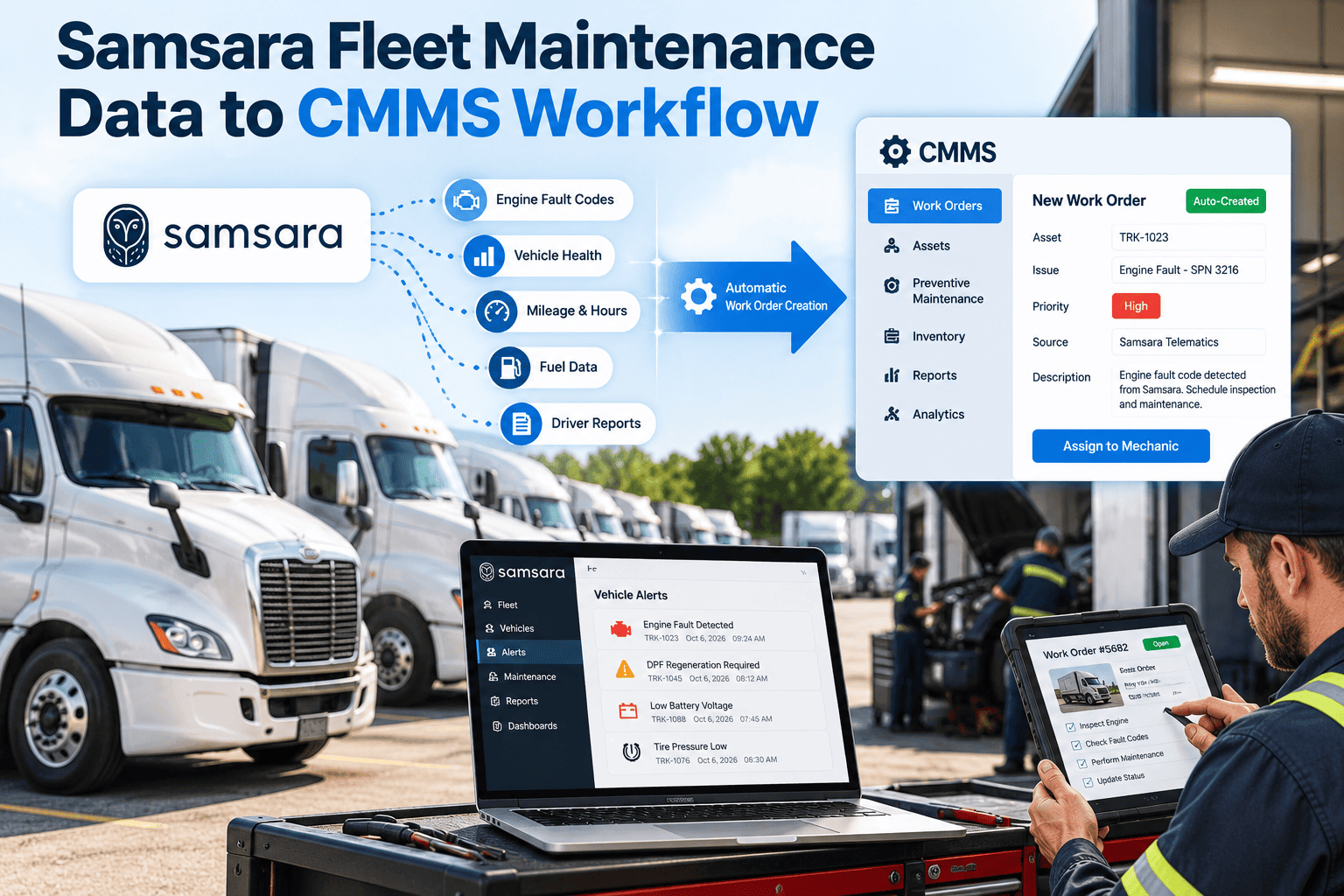
Telematics plays an increasingly central role here. A vehicle's mileage, engine diagnostic codes, and fault alerts can feed directly into the same system that tracks its PM schedule, so a due-for-service flag appears on the dispatch board without anyone manually updating a calendar. Combined with mobile defect reporting from drivers, the vehicle's status becomes a live signal rather than a snapshot from whenever someone last checked.
The same connection works in reverse for maintenance planning. When dispatch commits a vehicle to a known multi-day route, that commitment should be visible to the maintenance team scheduling PM windows, so a service appointment isn't booked for a truck that's three states away. This two-way visibility is what actually prevents the scheduling collisions that cost fleets the most unplanned downtime.
The Measurable Difference Coordinated Scheduling Makes
Fleets that connect dispatch and maintenance data report fewer last-minute route reassignments and a more predictable maintenance bay schedule, since technicians aren't waiting on a vehicle that dispatch already sent out. The effect compounds over time: fewer emergency repairs mean fewer disrupted routes, and fewer disrupted routes mean maintenance can plan further ahead with more confidence in the schedule holding.
How Spare Vehicle Planning Fits Into Coordination
Even the best-coordinated dispatch and maintenance schedule can't eliminate downtime entirely. Vehicles still fail unexpectedly, and PM still takes equipment offline. What coordination changes is how predictable that downtime becomes, which directly affects how many spare vehicles a fleet actually needs to carry.
A fleet with fragmented dispatch and maintenance data tends to overcompensate by keeping more spares than necessary, since nobody has reliable visibility into how much capacity is really offline at any given time. A fleet with synchronized status data can calculate backup capacity more precisely, based on real historical downtime rates rather than a defensive guess, freeing up capital that would otherwise sit idle in extra vehicles.
Measuring Whether Coordination Is Actually Working
Coordination between dispatch and maintenance is easy to claim and hard to prove without specific metrics attached to it. A handful of numbers, tracked consistently, show whether the two teams are genuinely working from the same data or still relying on side conversations to catch conflicts.
On-time PM completion rate is the most direct signal, since a fleet that regularly defers scheduled service because a vehicle was out on a route has a coordination gap, not just a scheduling inconvenience. Unplanned downtime traced back to a missed or deferred PM is the second number worth tracking closely, because it connects the coordination problem directly to its operational cost.
Dispatch and Maintenance Coordination — Common Questions
A common practice is surfacing an upcoming service window at least 48 hours ahead, giving dispatch enough lead time to plan a shorter route or schedule the service window before a longer commitment.
A documented priority rule, based on criteria like defect severity or how critical the route is, should decide the outcome consistently, rather than leaving it to whichever team raises the issue first. Book a demo to see how priority rules are configured.
Yes, when the system is connected. A defect that opens a work order can automatically change the vehicle's dispatch status to held, preventing it from being assigned until maintenance clears it.
It shouldn't. The goal is giving both teams the same data faster, not adding an approval step. Status updates happen automatically as inspections, work orders, and repairs are logged. Sign up to see live status updates in your own fleet.
Most unplanned downtime traces back to a vehicle being dispatched despite a known, pending issue. Surfacing that issue on the dispatch board before assignment prevents the breakdown rather than reacting to it after the fact.
Let Dispatch and Maintenance Finally Work From the Same Fleet Data.
Oxmaint syncs PM scheduling, defect reports, and dispatch status in real time, so neither team is guessing about what the other already knows.