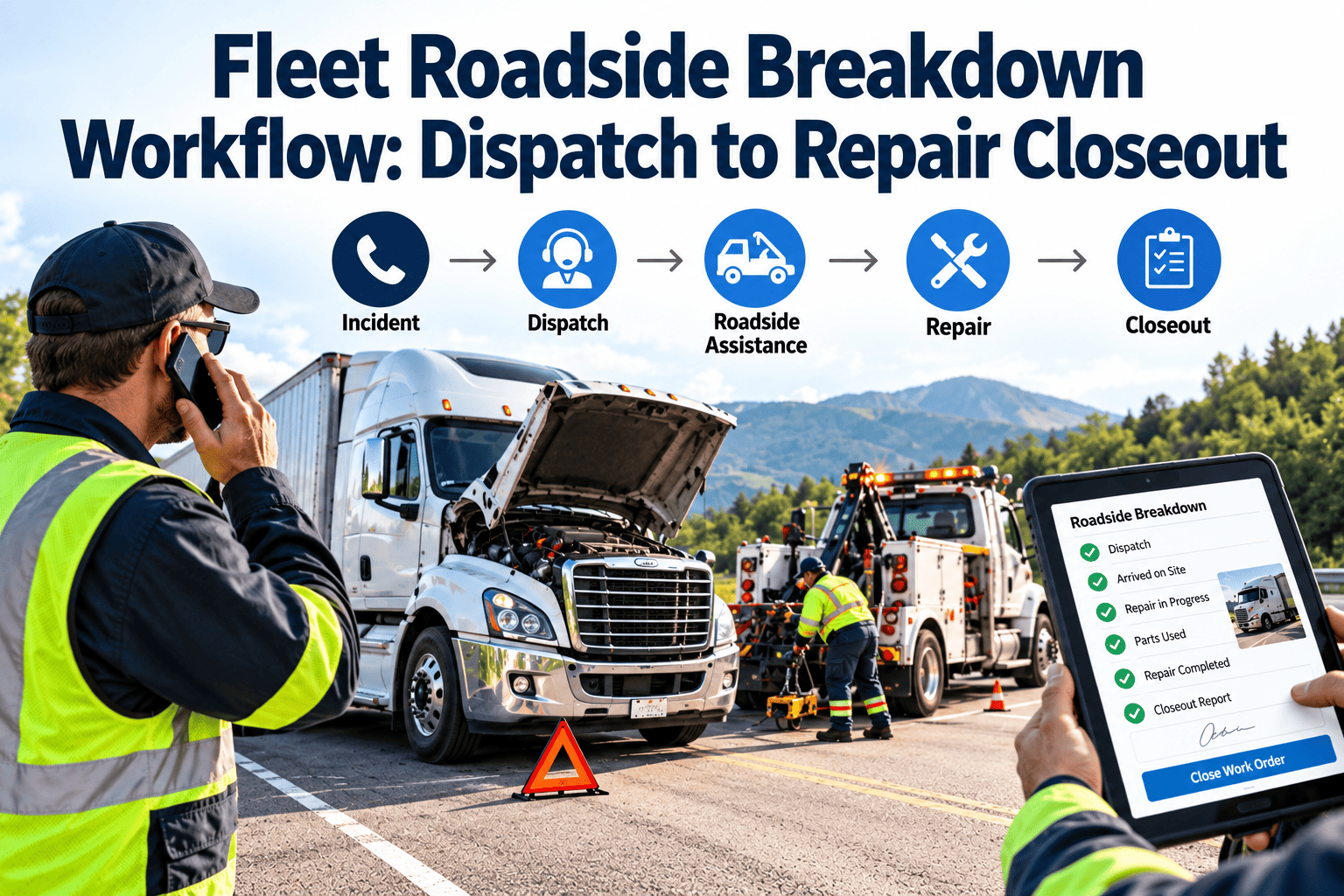
A roadside breakdown is not just a mechanical failure; it is a chain of phone calls, decisions and handoffs under time pressure. The driver reports a problem, dispatch reroutes work, someone chooses between mobile repair and a tow, and the shop learns about the invoice days later. When that chain lives in texts and phone notes, repair cost, downtime and root cause are lost. A defined workflow captures every step from first call to closeout, and a fleet maintenance CMMS turns each breakdown into a complete record that feeds future prevention.
Fleet Roadside Breakdown Workflow: Dispatch to Repair Closeout
A step-by-step process for handling breakdowns quickly and safely, protecting drivers and cargo, controlling repair cost and capturing the data needed to stop the same failure from happening again.
What Goes Wrong in an Unstructured Breakdown
The Workflow, Stage by Stage
- Stage 1
Driver report and safety
The driver moves to a safe location, reports location and symptoms, and notes whether the vehicle is drivable. Structured prompts replace open-ended calls: warning lights, noises, leaks, loss of power, tire or brake condition. Safety instructions come before any repair discussion.
- Stage 2
Triage and work order creation
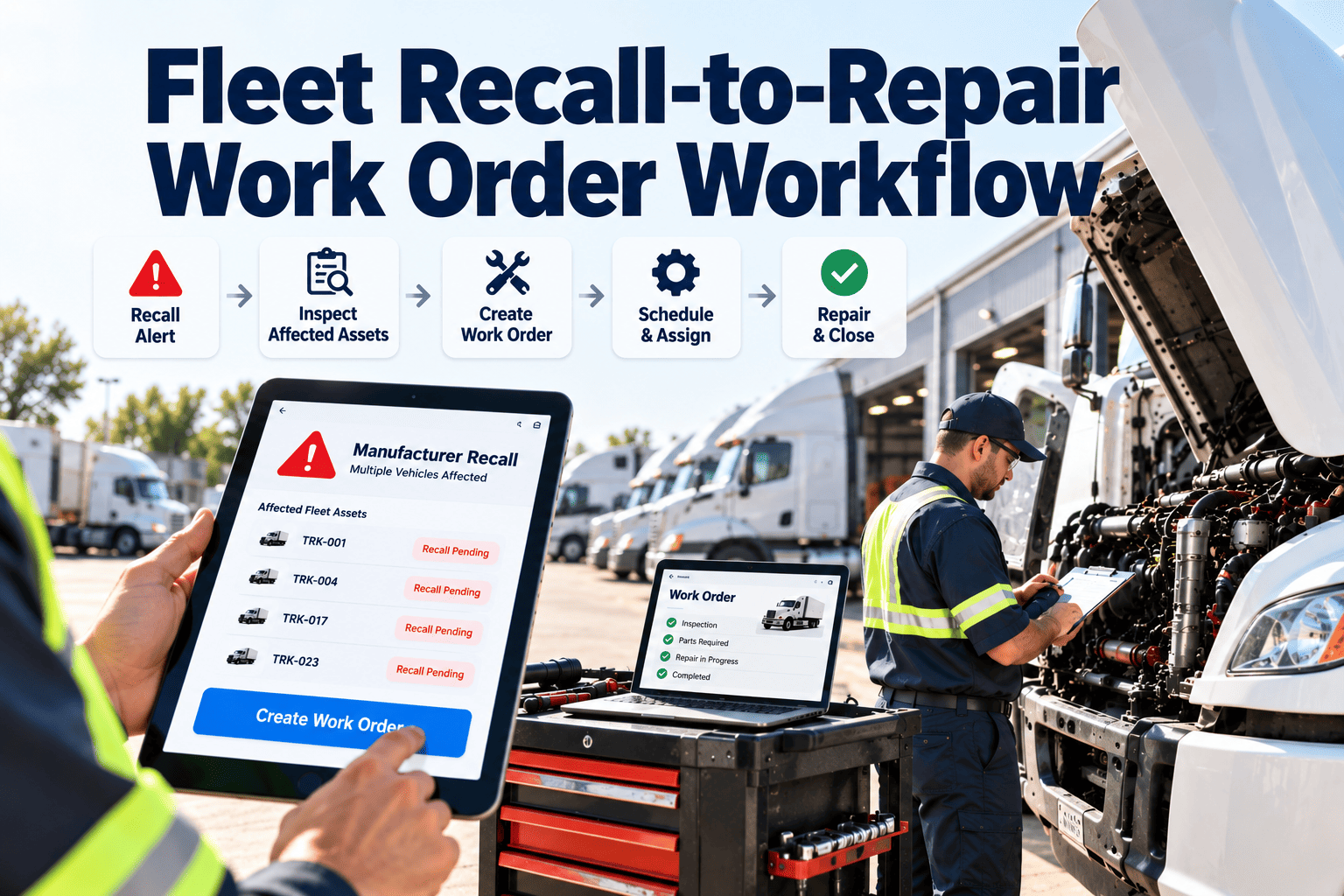
Dispatch or the maintenance desk opens a breakdown work order linked to the VIN or unit number. Fault codes, recent inspection defects and open work orders are reviewed so the team knows whether the problem is known.
- Stage 3
Decision: roadside repair, tow or swap
Choose based on severity, location, cargo and time. Minor tire or electrical issues may be fixed on site, while brake, steering or major powertrain failures usually require a tow. Document the choice and reason.
- Stage 4
Dispatch and vendor management
Send the approved vendor with the work order number, unit details and spending limit. Record the arrival estimate and track it. Arrange cargo transfer or a replacement unit when service levels demand it.
- Stage 5
Repair, parts and approvals
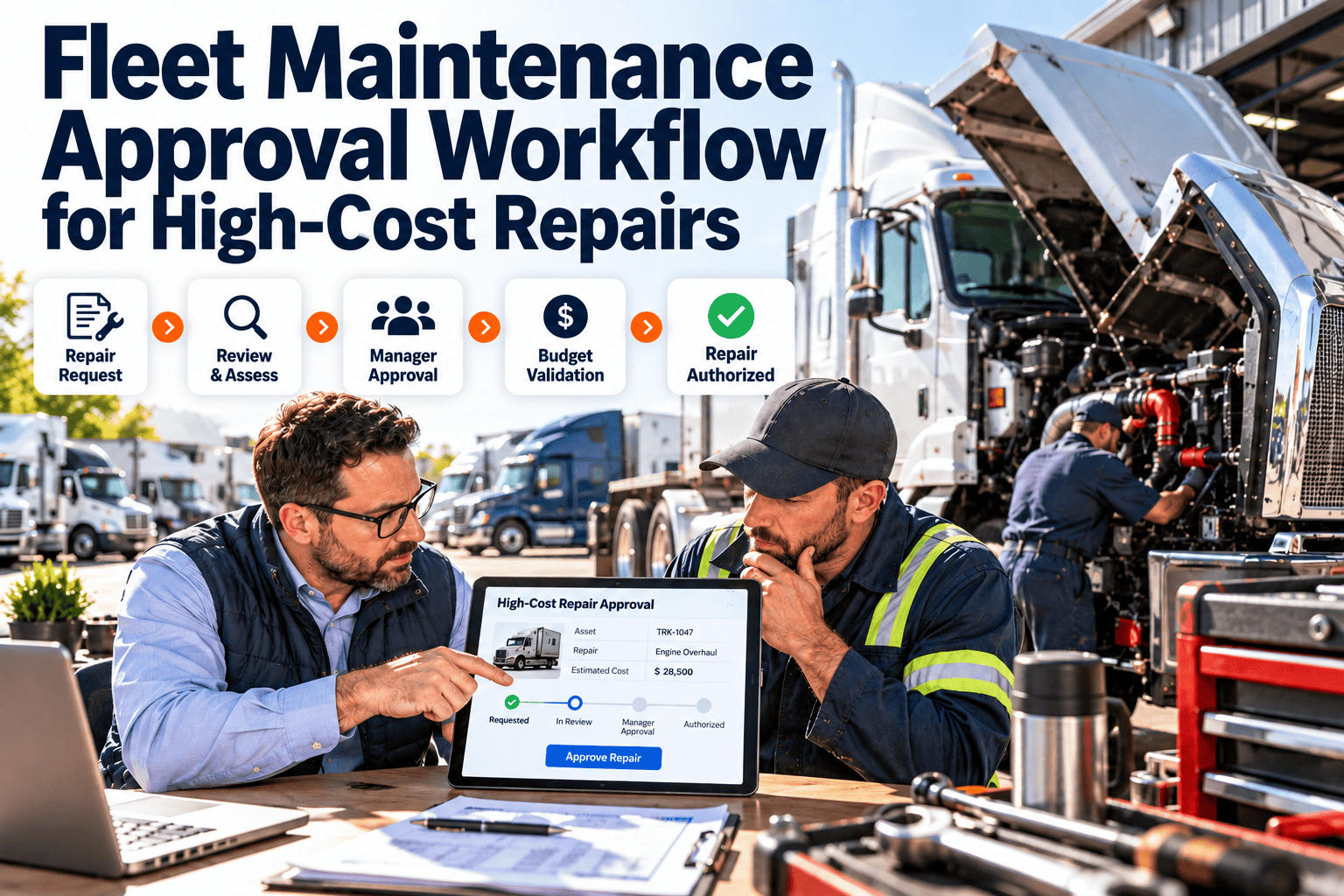
Whether in your shop or an outside facility, capture diagnosis, parts used, labor and warranty eligibility on the work order. Require approval for repairs above the agreed limit.
- Stage 6
Return-to-service verification
A qualified person confirms the repair, checks related systems and clears the unit. Safety-related repairs should be verified before the vehicle is dispatched again.
- Stage 7
Closeout and review
Record cause, correction, total cost and downtime. Match vendor invoices, update asset history and flag repeat failures for corrective action.
Who Does What: Responsibility Lanes
| Stage | Driver | Dispatch | Maintenance | Management |
|---|---|---|---|---|
| Report | Secures vehicle, reports symptoms | Logs call, checks route impact | Reviews unit history | Informed if major |
| Decision | Provides condition details | Coordinates load plan | Recommends repair or tow | Approves high cost |
| Service | Stays safe, assists if trained | Tracks vendor arrival | Authorizes work, tracks parts | Monitors escalations |
| Closeout | Confirms operation after repair | Releases unit to schedule | Verifies, records cause | Reviews trends |
Repair at the Roadside or Tow? A Quick Matrix
Give Every Breakdown a Complete Record
Create work orders from the first call, track vendors and costs, and close each event with cause and downtime data.
Compliance and Documentation Considerations
Records worth keeping
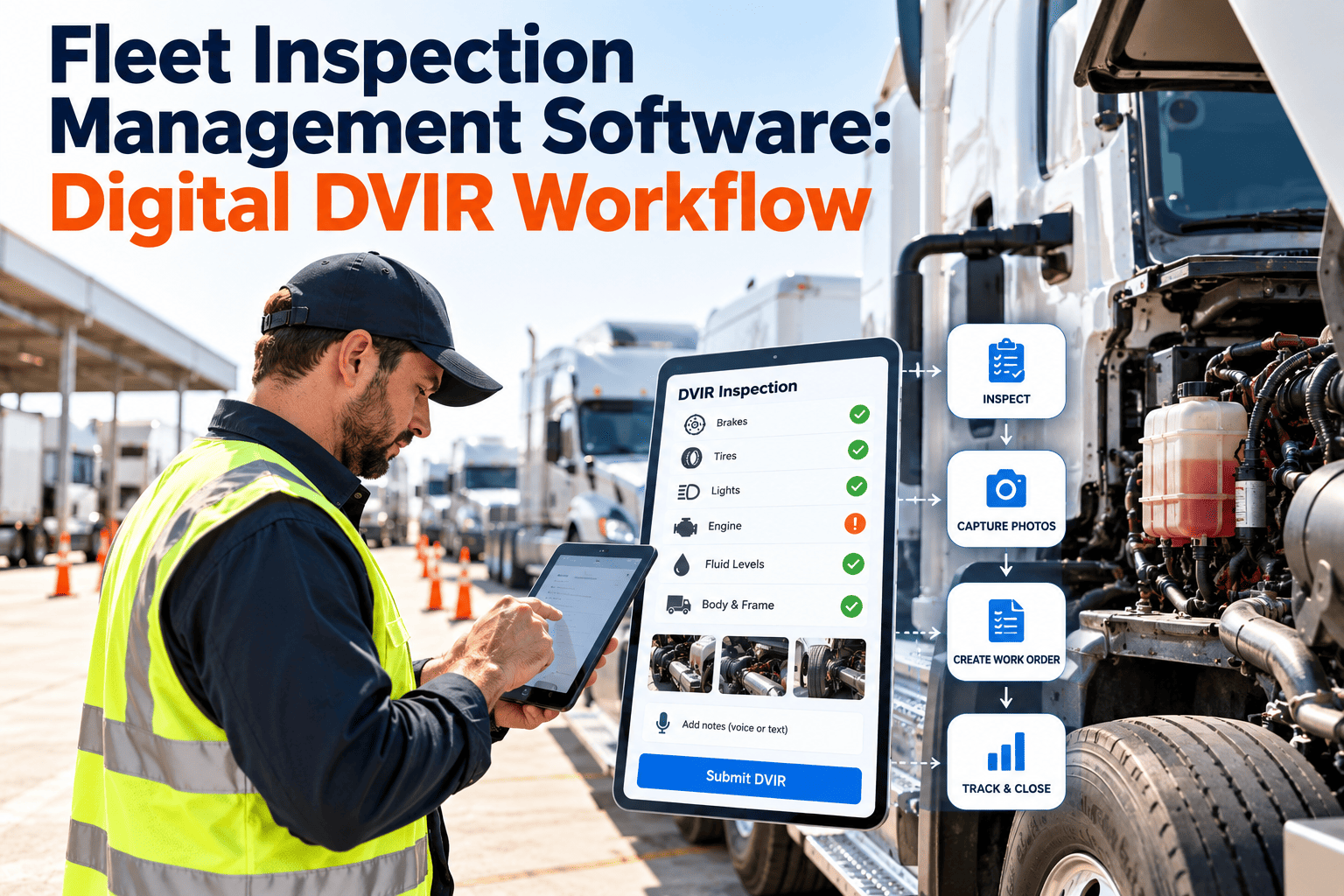
- Driver-reported defects and the vehicle inspection report that preceded the failure
- Repair and maintenance entries linked to the unit
- Evidence that defects affecting safe operation were corrected
- Outside vendor invoices matched to the work order
Why it matters
- US motor carriers are expected to maintain inspection, repair and maintenance records for their vehicles under FMCSA rules, so confirm your retention requirements
- Roadside inspection outcomes can reflect on a carrier's safety performance
- Complete records support warranty claims and insurance discussions
Metrics to Track for Breakdown Performance
Closing the Loop: From Breakdown to Prevention
- Review breakdowns by system and unit class every month to find clusters.
- Check whether a related defect appeared on a recent inspection and was not acted on.
- Adjust PM tasks or intervals where a component repeatedly fails between services.
- Update inspection checklists to include items that preceded the failure.
- Challenge vendors and parts suppliers when the same item fails early.
What to Capture on the First Call
Escalation Triggers and Notifications
Escalate immediately when
- There is a safety hazard, injury or fire risk
- Cargo is temperature-sensitive or high value
- A repair estimate exceeds the approval limit
- The vendor has not arrived within the agreed time
- The same unit has broken down recently
Notify these parties
- Dispatch, for load planning and customer updates
- The shop, for parts and bay planning
- The fleet manager, for major events
- Safety or compliance staff, for incidents
- Customer service, when delivery commitments change
Managing Roadside and Outside Repair Vendors
Maintain a vetted vendor list
Record coverage areas, capabilities, response expectations and after-hours contacts so dispatch is not searching during an event.
Agree rates in advance
Pre-agreed labor and tow rates reduce disputes and make invoice checking faster.
Set authorization limits
Give vendors a spending limit and a rule that work above it needs approval, referencing the work order number.
Match every invoice
Compare invoices with the work order, parts and labor recorded. Reject any that cannot be tied to a unit and event.
Special Breakdown Scenarios
| Scenario | Key consideration | Record to keep |
|---|---|---|
| Refrigerated trailer fault | Cargo temperature and time limits drive urgency | Temperature log, time of failure, cargo disposition |
| Hazardous materials load | Follow emergency procedures and notification rules | Incident report, notifications made |
| Passenger vehicle | Passenger safety and replacement vehicle come first | Passenger transfer, service impact |
| Electric vehicle fault | Battery and charging faults may need specialist response | Fault codes, state of charge, charging history |
| Collision-related stop | Treat as an incident, not only a repair | Photos, incident report, damage assessment |
Failure Categories Worth Tracking
Driver Expectations and Training
What drivers should do
- Stop in a safe place and follow company safety procedures
- Report accurately using the same prompts every time
- Avoid arranging repairs without authorization
- Take photos of the problem where it is safe to do so
What the company should provide
- A single number or app for reporting breakdowns
- Clear guidance on what to do while waiting
- Feedback on the outcome so reports feel worthwhile
- Training that links pre-trip inspections to breakdown prevention
Closeout Checklist
- Failure and cause codes selected from the standard list, not free text.
- Parts, labor and outside service recorded with correct quantities.
- Meter reading and total downtime captured.
- Warranty eligibility reviewed and claim started if applicable.
- Verification and release recorded by a qualified person.
- Vendor invoice matched and approved.
- Repeat failure flag set and preventive action assigned where needed.
Setting Service Level Targets
Response target
Define how quickly a breakdown call must become a work order and a dispatched resource, for business hours and after hours separately.
Arrival target
Agree expected arrival windows with each vendor by region. Record the actual arrival so slow providers are visible and can be managed or replaced.
Return-to-service target
Set target times by failure category. A tire event should be much faster than a drivetrain failure, so one average target hides problems.
Communication target
Decide how often drivers, dispatch and customers are updated. Regular short updates reduce repeat calls and keep everyone working from the same status.
Post-Event Review Questions
- Was there a related defect on a recent inspection or work order, and was it acted on?
- Was the PM on this system current, and did the checklist cover the failed item?
- Did the driver report any early warning signs before the vehicle stopped?
- Was the vendor chosen appropriately, and did they arrive within the agreed window?
- Was the diagnosis confirmed, or was a part replaced on assumption?
- Does the failure appear on other units of the same model, age or duty cycle?
- What single change would have prevented or shortened this event?
Documentation for Warranty, Insurance and Disputes
Warranty claims
- Failure description, date, mileage or hours
- Maintenance history showing required services were performed
- Diagnostic findings, fault codes and photos of failed parts
- Repair invoice and parts numbers used
Insurance and customer disputes
- Timeline of the event, with times of calls and arrivals
- Photos and incident reports where an accident or hazard was involved
- Cargo condition and any transfer details
- Evidence of inspection and maintenance prior to the event
Coverage for Nights, Weekends and Peak Periods
After-hours readiness
- A published on-call contact for dispatch and for maintenance decisions
- Pre-approved vendors and spending limits for unattended periods
- A simple way for on-call staff to open and update work orders from a phone
- Rules on when to wait for daylight and when to tow immediately
Peak-season pressure
- Higher utilization raises breakdown risk, so tighten inspection follow-up beforehand
- Stock common roadside items, such as tires, belts and batteries, before the season
- Confirm vendor capacity in busy regions in advance
- Have a plan for swapping units and transferring loads
Reviewing Breakdown Data Each Month
Keeping the Workflow Simple Enough to Follow
- Limit the first version to the stages above and add detail only where events have gone wrong before.
- Give dispatch a one-page quick reference with decision prompts and phone numbers.
- Use the same work order template for every breakdown so reports compare cleanly.
- Review a few real events with the team each quarter and update the workflow from what they show.
How Oxmaint Supports Breakdown Handling
Fast work order creation
Open breakdown work orders from a mobile device or the office and link them to the unit immediately.
Inspection and defect linkage
See recent inspection defects on the same unit to judge whether the failure was foreseeable.
Cost and parts tracking
Record labor, parts and outside service against the work order for accurate unit cost.
Asset history
Every event stays on the vehicle record, so patterns across breakdowns are visible.
Frequently Asked Questions
Turn Breakdowns Into Prevention Data
Standardize dispatch, repair and closeout so every roadside event reduces the chance of the next one.