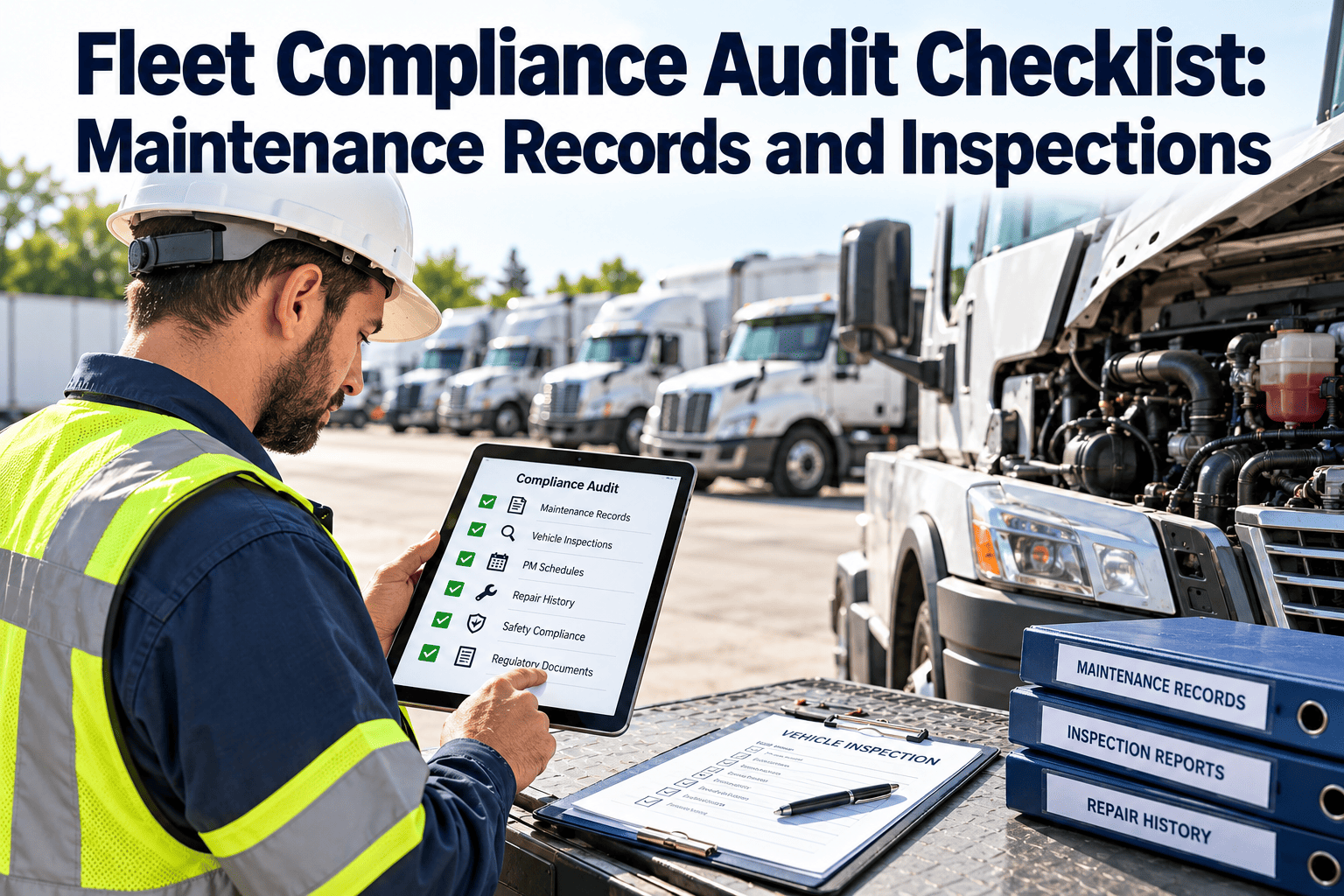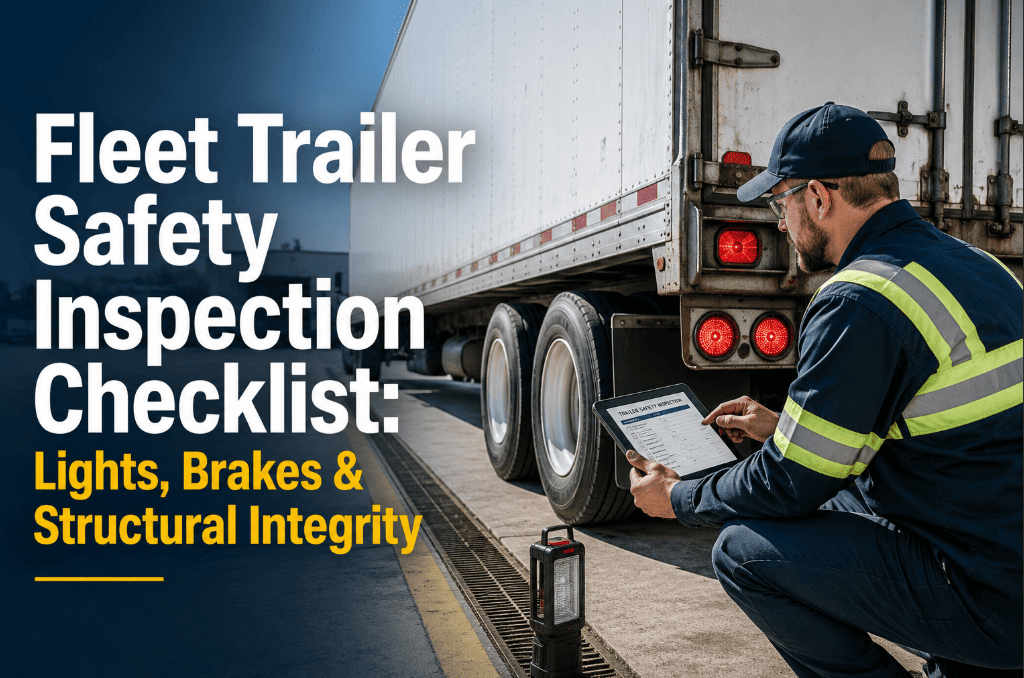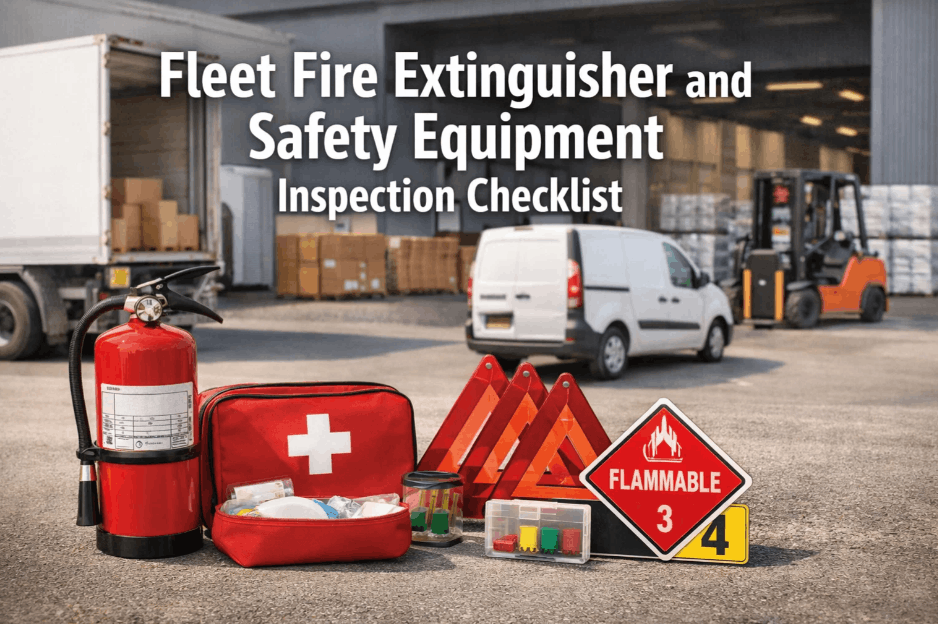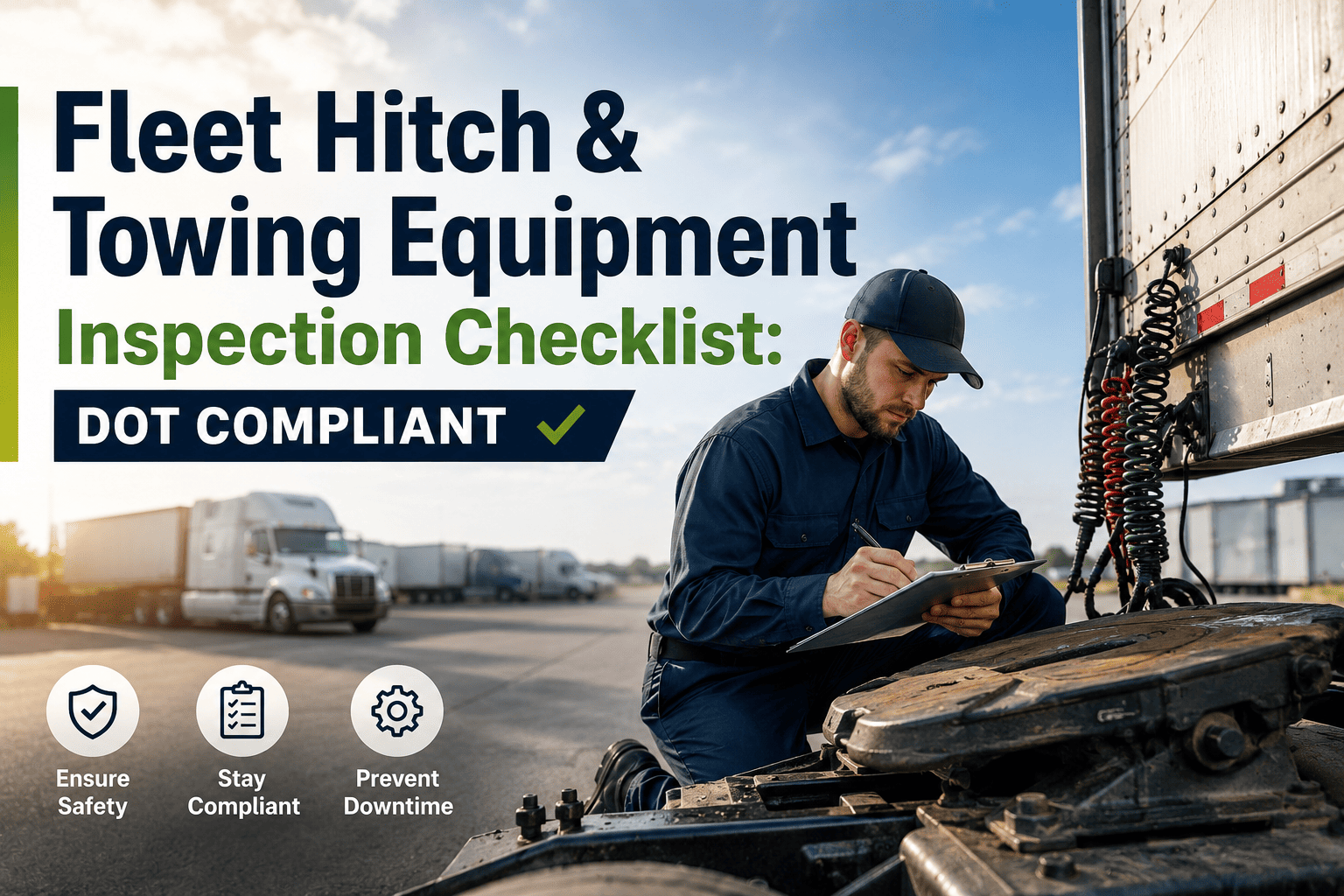
A failed fifth wheel latch, worn kingpin, or missing safety chain is not a maintenance oversight — it is a DOT violation, a dropped trailer, and a liability that ends careers. Towing equipment failures account for a disproportionate share of commercial vehicle roadside citations because coupling and hitch components are inspected inconsistently or skipped entirely on pre-trip walkarounds. A structured hitch and towing equipment inspection catches every coupling defect, documents every wear baseline, and identifies fifth wheel and kingpin degradation before it becomes a separation event. Sign Up Free to guide inspectors through every towing zone, record component wear with photos, and auto-generate repair work orders for every defect before the vehicle leaves the yard.
Manage Fleet Towing Inspections on Oxmaint
Oxmaint guides inspectors through every hitch and coupling zone — recording fifth wheel condition, kingpin wear, safety chain status, and breakaway system operation with photos per finding and repair work orders auto-generated for every defect before dispatch.
DOT Towing Equipment Compliance — 4-Level Severity Scale
Every coupling defect must be assessed against its risk level before the vehicle is dispatched. A fifth wheel latch that passes a pull test but shows jaw wear greater than tolerance is not the same as a functional coupling — both are defects but carry different dispatch consequences. The severity scale below maps every towing inspection finding to a dispatch decision. Sign Up Free to record severity per component in Oxmaint at every inspection event.
1. Fifth Wheel Inspection Checklist
The fifth wheel is the primary load-bearing coupling between tractor and trailer. A latch that passes visual inspection but has jaw wear beyond tolerance will release under dynamic load — the failure mode that produces runaway trailer events. Fifth wheel inspection must include a physical pull test, not just a visual check. Book a Demo to record fifth wheel findings per vehicle in Oxmaint.
Fifth wheel latch — positive engagement confirmed by pull test
After coupling, move tractor forward with trailer brakes applied — the kingpin must not release. A visual check alone does not confirm latch engagement. OOS — latch releases on pull test
Fifth wheel jaw wear — no gap beyond manufacturer tolerance
Insert jaw wear gauge between kingpin and jaw — any gap exceeding tolerance requires jaw replacement before dispatch. Most OEMs specify 0.5–1.5mm maximum. OOS — jaw gap exceeds tolerance
Fifth wheel plate — lubrication coverage and surface condition
Grease must cover the full wear surface — a dry fifth wheel plate accelerates jaw wear by 3–4x and creates premature kingpin scoring detectable within 10,000 km. Defect — dry or contaminated plate
Fifth wheel mounting — no cracks in mounting brackets or frame attachment
Inspect all four mounting bracket attachment points for cracks, elongated bolt holes, or loose fasteners — a cracked bracket transfers coupling loads directly to the frame rail. OOS — cracked mounting bracket
Fifth wheel tilt and pivot — free movement without binding
Rock the trailer nose laterally — the fifth wheel must tilt freely. A seized pivot causes trailer tracking issues and transfers lateral shock loads to the mounting frame. Defect — seized or restricted pivot
Release handle — locking mechanism fully operational
Test release handle operation through full travel — a handle that binds mid-stroke will not unlock the jaw completely, leaving a partial engagement that releases under load. Defect — binding or incomplete release
2. Kingpin Inspection Checklist
Kingpin diameter wear is the mirror condition to fifth wheel jaw wear — both must be within tolerance simultaneously. A kingpin at minimum diameter combined with a jaw at maximum gap produces a combined coupling slop that exceeds what either measurement alone would indicate. Kingpin inspection requires a calibrated wear gauge, not visual assessment. Book a Demo to log kingpin diameter measurements per trailer in Oxmaint.
Kingpin diameter — measured, within §393.70 minimum specification
Standard kingpin minimum diameter is 49.2mm for 2-inch pins — below this, the coupling slop becomes a DOT OOS condition regardless of fifth wheel jaw condition. OOS — diameter below minimum spec
Kingpin scoring and grooving — no circumferential grooves
Run a fingernail around the kingpin wear surface — any groove deep enough to catch indicates metal-to-metal contact from dry coupling operation requiring kingpin replacement. Defect — grooved wear surface
Kingpin weld — no cracks at base plate junction
Inspect the kingpin base weld with a torch — fatigue cracks initiate at the weld toe and propagate under cyclic coupling loads before the kingpin visually appears damaged. OOS — any crack at kingpin base
Upper coupler plate — no cracks or deformation around kingpin
The upper coupler plate surrounding the kingpin must be flat — any dish or cracking around the pin indicates overload events that may have compromised the weld integrity. Defect — plate deformation or cracking
3. Safety Chains and Breakaway System Checklist
Safety chains and breakaway systems are the last line of defence after a coupling failure — and the component category most likely to produce an immediate OOS citation at roadside because defects are visible from 10 metres. A missing safety chain, a chain attached to a non-load-bearing point, or an inoperative breakaway switch are all §393.71 violations with no cure period. Sign Up Free to log safety chain and breakaway status per trailer in Oxmaint.
Safety chains — present, attached to load-bearing frame points only
Chains must attach to the tractor frame or hitch receiver — not to a decorative hook, bumper bracket, or hitch ball housing. Verify the attachment point with the vehicle OEM specification. OOS — missing chain or incorrect attachment
Safety chain length — crossed under coupler, no ground contact
Chains must be crossed under the coupler to form a cradle that catches the tongue if the coupling fails — chains that hang straight down provide no positional control. Defect — incorrect routing or ground drag
Chain links — no stretched, bent, cracked or corroded links
Inspect every link under tension — a stretched link that has lost its circular cross-section has yielded and lost its rated tensile strength even if it has not yet cracked. OOS — any damaged or stretched link
Breakaway switch — functional battery, cable tension and activation test
Test breakaway switch battery voltage — minimum 12V required. Pull the activation cable manually and verify trailer brakes apply — a switch that activates but produces no brake application is non-functional. OOS — inoperative breakaway system
Breakaway cable — correct length, no kinks, routed to clear all moving parts
A breakaway cable that is too long will not create tension on separation — measure cable length against the tongue length and verify the cable cannot catch on suspension or brake components during turns. Defect — incorrect length or routing
4. Trailer Electrical and Air Connections Checklist
Electrical and air connections are the coupling components most frequently damaged during coupling operations and most frequently missed during pre-trip inspections because they are small, low to the ground, and visually similar whether functional or failed. A trailer with no running lights or inoperative trailer brakes is an OOS condition — and both can result from a damaged gladhand seal that passed visual inspection but leaked under pressure. Book a Demo to track electrical and air connection condition per trailer in Oxmaint.
Electrical connector — all pins present, no corrosion, positive lock
Inspect all 7 or 15 pins before coupling — a bent pin will damage the socket on the trailer and both components require replacement. A connector that rattles in its socket is not positively locked. Defect — bent pin or no positive lock
Service gladhand — seal intact, full pressure coupling, no audible leak
After coupling gladhands, build system pressure and listen for air leaks at the gladhand junction — a leaking service line reduces trailer brake application pressure and is an OOS condition. OOS — service line pressure leak
Emergency gladhand — seal condition and correct emergency brake operation
Disconnect the emergency line with service line pressurised — trailer brakes must apply immediately. Any delay or partial application indicates a faulty relay valve requiring repair before dispatch. OOS — emergency brake fails to apply
Cable and hose routing — no ground contact, clear of fifth wheel and suspension
Route all cables and hoses through the correct support brackets — any hose or cable that contacts the fifth wheel plate will be abraded to failure within 50,000 km under fifth wheel oscillation. Defect — unsupported or misrouted line
Trailer lights — all functions verified after electrical connection
Walk the trailer and verify all running lights, brake lights, and turn signals function after electrical coupling — a dead circuit confirmed before departure avoids a roadside citation that a 5-minute walkaround prevents. OOS — inoperative stop or turn lights
Oxmaint's guided towing inspection workflow captures gladhand seal condition, fifth wheel jaw measurements, and safety chain routing with photos at every coupling event — auto-generating repair work orders for any defect before the driver signs off on the pre-trip.
Document Every Coupling. Prevent Every OOS Citation.
Oxmaint photo-documents hitch and towing equipment condition at every inspection — so every coupling defect is caught before dispatch, not at roadside.
We had two fifth wheel separation incidents in eighteen months — both traced to jaw wear that had been recorded as 'acceptable' on paper inspections with no measurement. After deploying Oxmaint's guided inspection with jaw gauge measurements and photo records per coupling event, we caught three trailers with out-of-tolerance kingpin wear before they ever left the yard. Zero separation events in ten months.
— Fleet Safety Manager, national dry bulk fleet, 140 tractors
Frequently Asked Questions
The most common questions from fleet inspectors and compliance managers about fifth wheel inspection standards, kingpin wear limits, and safety chain requirements under DOT regulations.
When the jaw gap exceeds the manufacturer's wear tolerance — typically 0.5–1.5mm for most OEM fifth wheels. Any fifth wheel where the kingpin can be moved laterally by hand after coupling is an OOS condition regardless of gap measurement.
Standard 2-inch kingpins must maintain a minimum diameter of 49.2mm (1.937 inches). Below this measurement, the coupling exceeds allowable slop under §393.70 and the trailer is OOS. Measure with a calibrated pin gauge, not visual inspection.
Safety chains must attach to the towing vehicle's frame or a load-rated hitch receiver — not to bumpers, hitch ball mounts, or decorative brackets. Chains must be crossed under the tongue coupler to form a cradle and must not drag on the ground.
At every PM event — minimum every 25,000 km for high-mileage operations. Vehicles operating in off-road, construction, or quarry environments require measurements every 10,000 km as contaminated fifth wheel plates accelerate jaw and kingpin wear significantly.
Required on all trailers with brakes — §393.43 mandates a breakaway system that applies trailer brakes if the trailer separates. Any trailer with air or electric brakes requires a functioning breakaway switch with a charged battery tested at every coupling event.
Oxmaint provides a zone-by-zone towing equipment inspection guide with photo capture per component, jaw wear measurement logging, and automatic repair work order generation. Each inspection is timestamped and archived per tractor and trailer — providing a complete coupling history for DOT audit and incident investigation.
Start Inspecting Towing Equipment the Right Way
Oxmaint's guided hitch inspection workflow captures fifth wheel jaw measurements, kingpin diameter, safety chain condition, and breakaway function — every coupling event, every vehicle, every time.