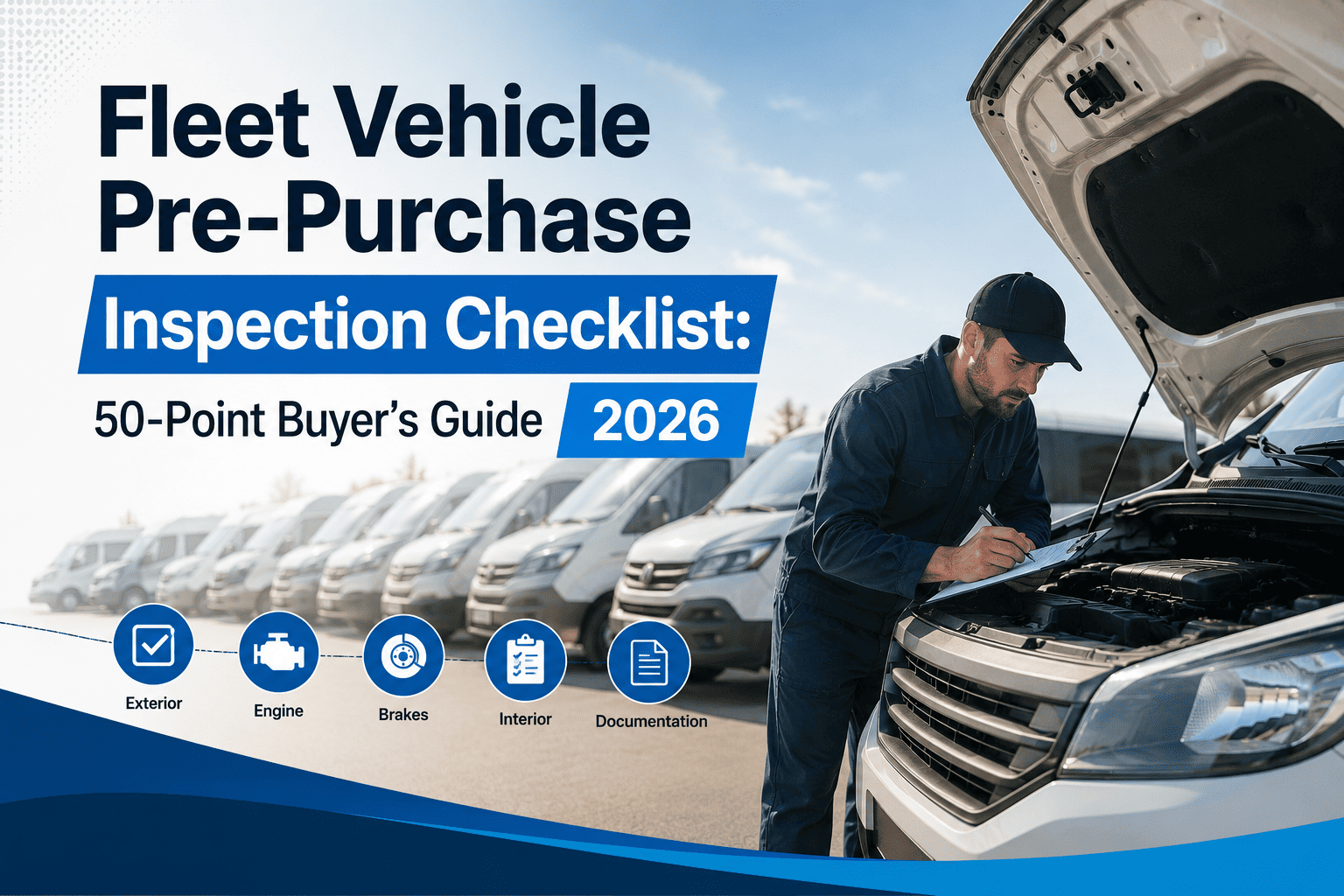
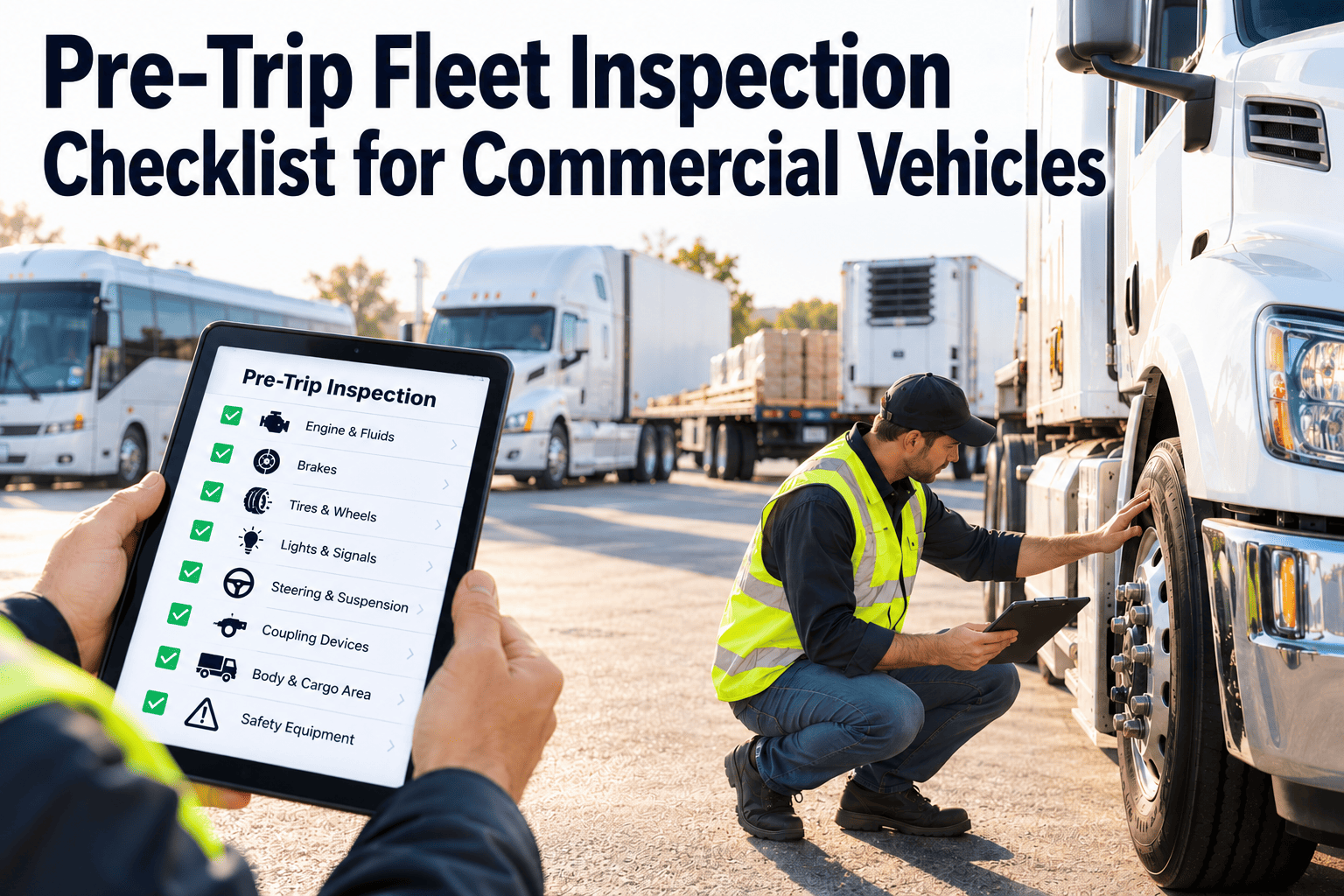
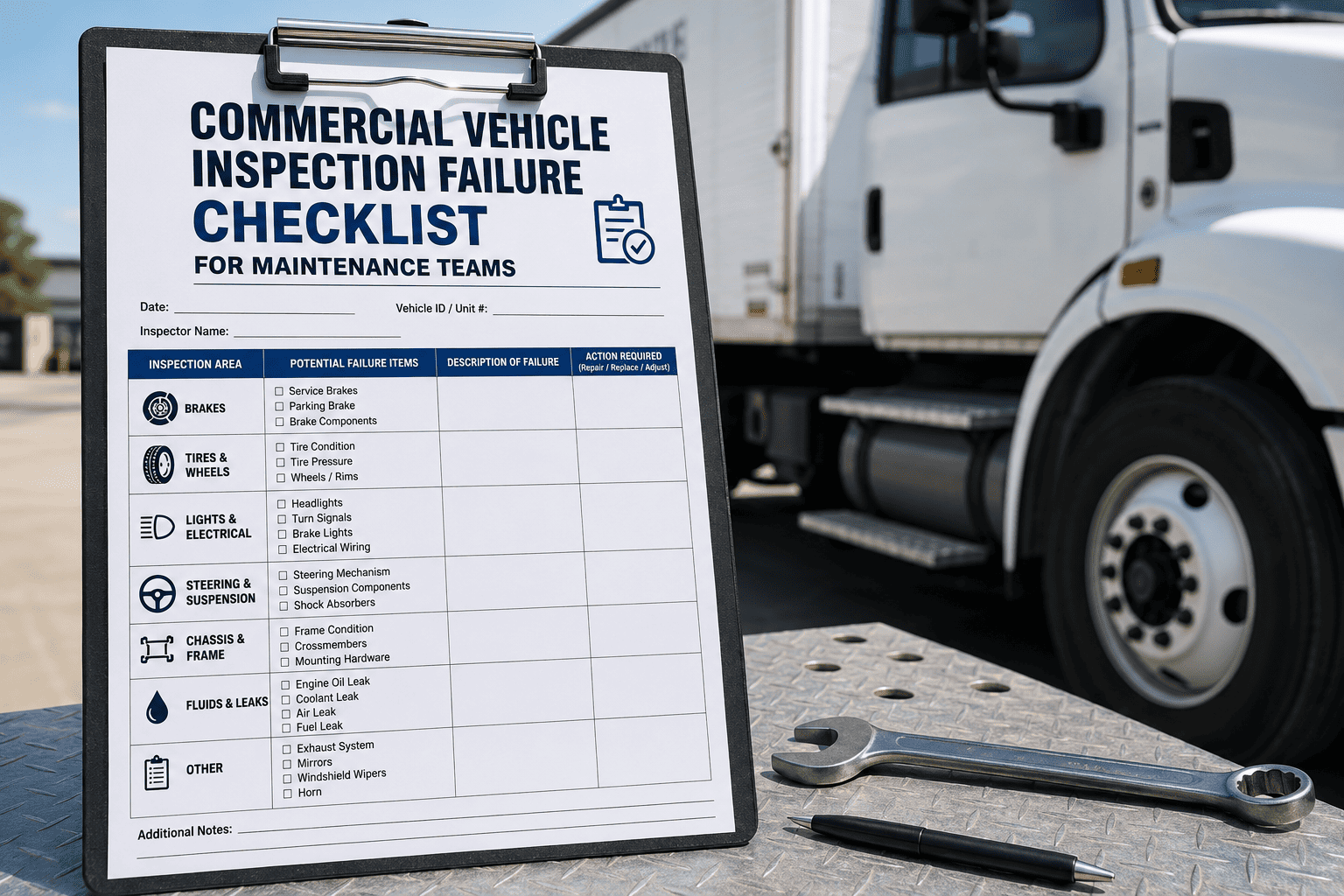
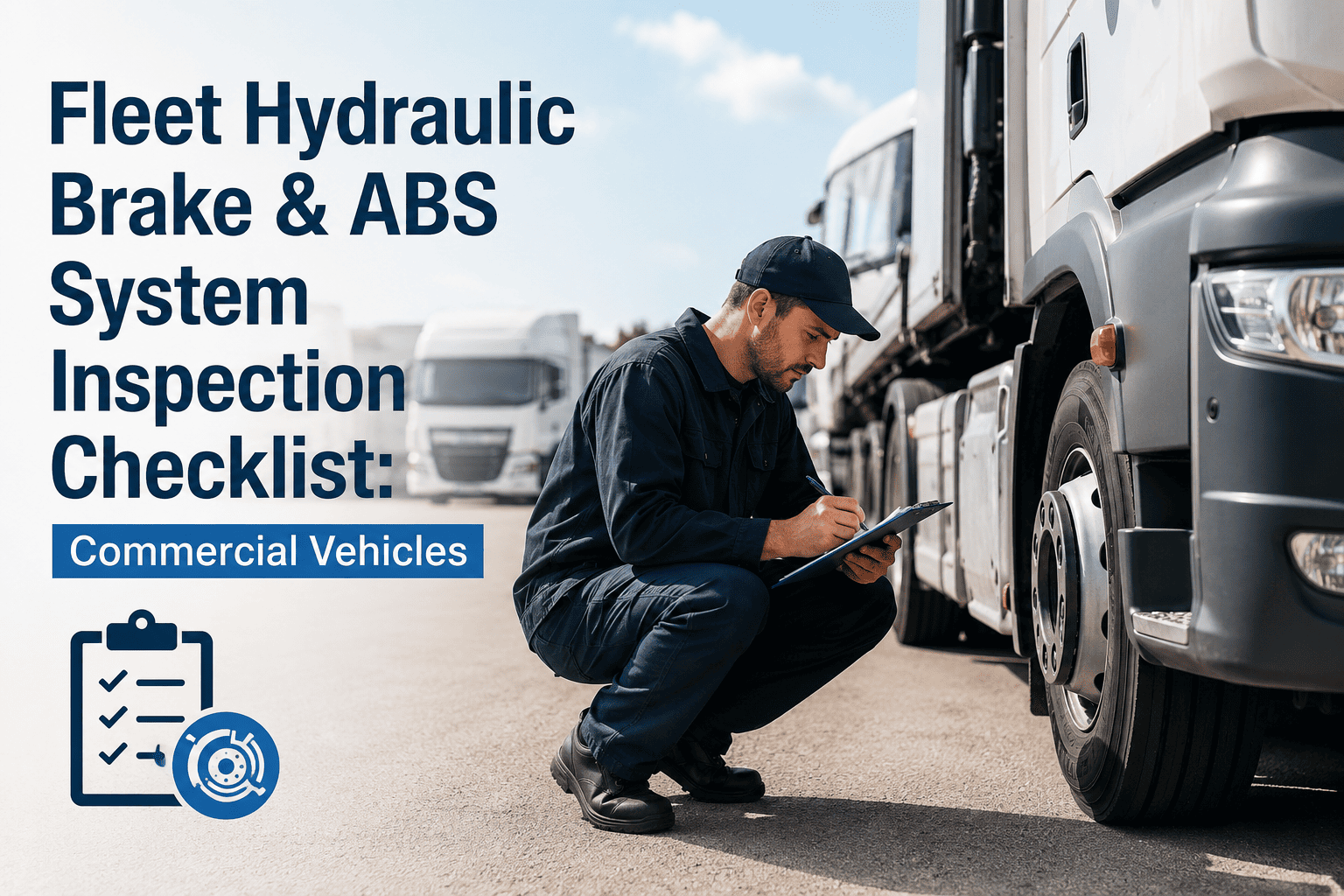
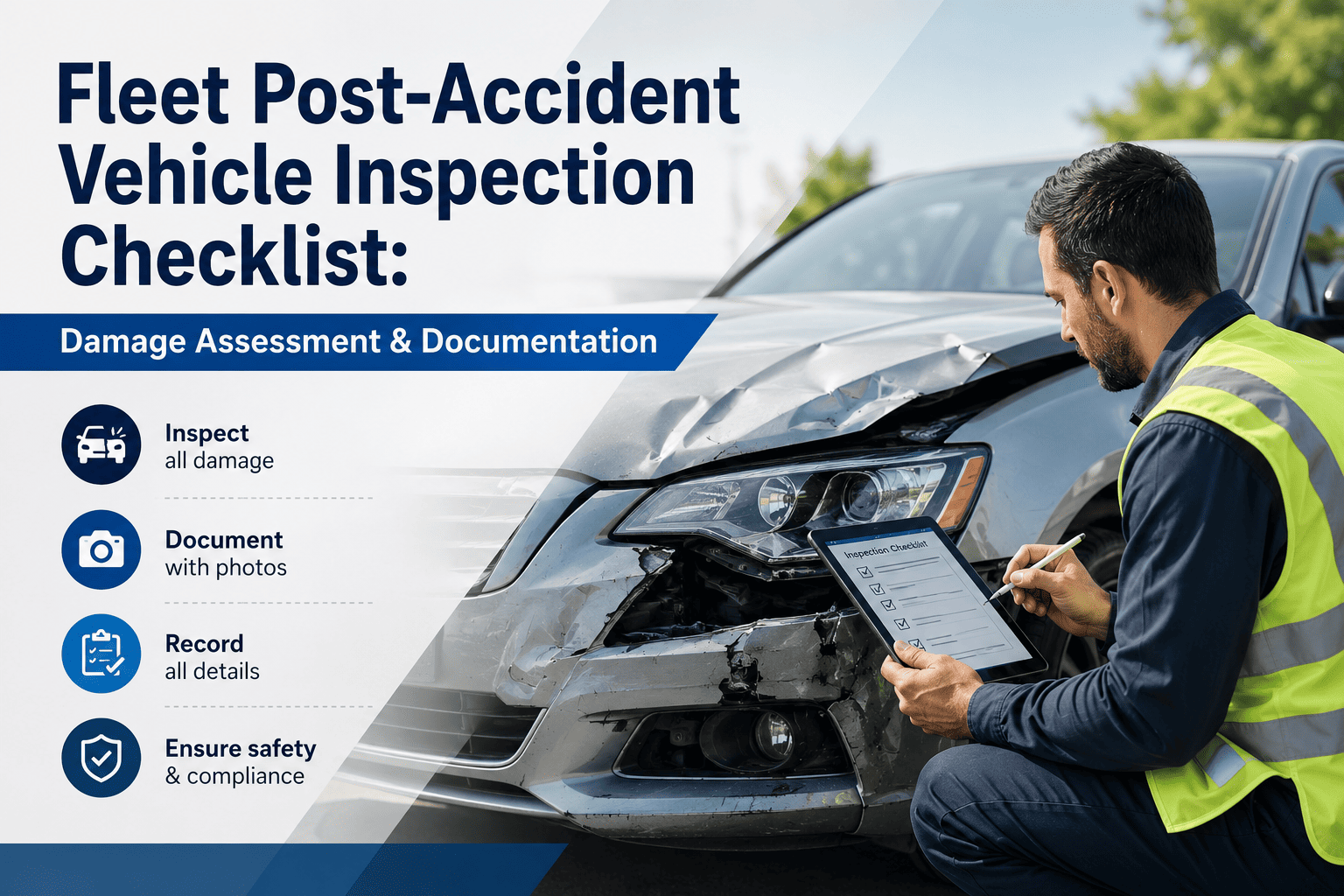
Purchasing the wrong commercial vehicle drains fleet budgets, disrupts operations, and creates maintenance backlogs that compound for years. A structured fleet vehicle pre-purchase inspection checklist eliminates guesswork, surfaces hidden defects, and ensures every acquisition aligns with your total cost of ownership targets. Whether you manage a 10-vehicle service fleet or a 500-unit last-mile operation, this 50-point buyer's guide covers every critical checkpoint — from engine diagnostics and chassis integrity to compliance documentation and CMMS-readiness assessment. Sign Up Free to create digital inspection templates and track your fleet acquisition lifecycle in OxMaint. For a personalized fleet evaluation workflow, Book a Demo with our fleet operations specialists.
Digitize Your Fleet Pre-Purchase Inspections
OxMaint lets you build custom inspection templates, capture vehicle condition data, attach photos, and feed acquired assets directly into your CMMS — eliminating paper-based due diligence.
Section 1: Engine & Powertrain Inspection
Engine condition is the single highest-cost variable in any used commercial vehicle purchase. A diesel engine rebuild runs $15,000–$40,000; catching early wear signals at acquisition prevents budget shocks post-purchase. OxMaint enables technicians to log all engine findings digitally and flag high-risk assets before purchase approval.
1. Cold Start Behavior Assessment
Start the engine from cold and observe idle quality, smoke color, and warm-up time. Excessive white or blue smoke on cold start indicates coolant or oil burning — a costly red flag in commercial diesel engines.
2. Engine Oil Condition Check
Pull the dipstick and inspect oil color, viscosity, and milky discoloration. Milky or frothy oil signals coolant contamination, suggesting a blown head gasket — a major repair often exceeding the vehicle's acquisition value.
3. Coolant System Integrity
Inspect coolant level, color, and odor. Check for oil streaks in the coolant reservoir. Pressure-test the radiator cap and hoses. Coolant leaks cause overheating events that cascade into catastrophic engine damage under fleet duty cycles.
4. Compression Test (Diesel)
Run cylinder compression tests on diesel engines to detect worn rings, valves, or liners. Low or uneven compression readings indicate engine wear that will shorten service life and increase unplanned downtime within the first 6–12 months of fleet deployment.
5. Turbocharger Inspection
Check turbo shaft play, inspect for oil leaks at inlet and outlet, and listen for bearing whine at operating RPM. Turbocharger replacement on commercial vehicles ranges from $1,500 to $5,000 — negotiate the purchase price accordingly if wear is detected.
6. Fuel System & Injector Health
Check for fuel leaks, inspect return lines, and perform injector balance rate tests where accessible. Worn injectors cause rough running, poor fuel economy, and excess particulate emissions — particularly relevant for fleets operating in compliance-sensitive urban zones.
7. Exhaust & Emissions System Review
Inspect DPF, EGR, and SCR systems for clogging or damage. Verify emissions compliance with applicable regional standards. Aftertreatment system repairs on Class 5–8 trucks frequently exceed $3,000 and trigger regulatory non-compliance risk if left unaddressed.
8. Air Filter & Intake Condition
Inspect air filter element, intake piping, and intercooler for cracks or contamination. Restricted airflow degrades combustion efficiency and accelerates engine wear — particularly relevant for vehicles operating in high-dust environments like construction or agriculture.
Section 2: Transmission & Drivetrain
9. Automatic Transmission Fluid Analysis
Check ATF color and smell. Dark, burnt fluid indicates overheating history. Perform fluid analysis if purchasing a high-mileage unit — lab results reveal internal wear metals that predict remaining service life and help justify negotiation on price.
10. Manual Gearbox & Clutch Assessment
Test all gear selections for smooth engagement, synchro grinding, and clutch pedal free play. A worn clutch on a heavy commercial vehicle costs $1,200–$3,500 in parts and labor. Confirm remaining clutch life before finalizing acquisition price.
11. Driveshaft & U-Joint Inspection
Check driveshaft balance, inspect U-joints for play and rust, and verify center bearing condition on multi-piece shafts. Failed U-joints cause immediate vehicle immobilization — a particularly disruptive breakdown in time-sensitive delivery fleet operations.
12. Differential & Axle Fluid Review
Inspect differential fluid for contamination and metal particle presence. Check axle seals for leaks. Differential rebuilds on drive axles range from $2,000 to $6,000 — early detection at acquisition stage protects against unexpected capital expenditure post-deployment.
13. 4WD / AWD System Verification
Engage all transfer case modes and verify smooth engagement. Test differential lock function where applicable. For fleet vehicles operating in off-road or all-weather conditions, 4WD system integrity directly impacts mission capability and driver safety.
Section 3: Braking System & Safety
Brake system deficiencies create liability exposure, regulatory non-compliance, and driver safety risk. OxMaint's pre-purchase inspection workflow captures brake measurements, wear photos, and component history — creating an audit trail that supports both procurement decisions and post-acquisition PM scheduling. Sign Up Free to build brake inspection templates for your fleet acquisition team.
14. Brake Pad & Shoe Thickness Measurement
Measure remaining pad and shoe thickness at all wheel positions. Document measurements in your CMMS to schedule immediate replacement or project first brake service interval. Commercial vehicle brakes approaching minimum thickness should be factored into acquisition cost negotiation.
15. Rotor & Drum Condition Assessment
Inspect rotors for scoring, heat cracks, and minimum thickness. Measure drum diameter on rear drum systems. Warped or undersized rotors cause brake fade and vibration under load — common in high-mileage delivery vehicles that operate on frequent stop-start urban routes.
16. Air Brake System Leak Test (Class 5–8)
Build air pressure to full, shut off engine, and monitor pressure drop over 3 minutes. Excessive leakage indicates failing gladhands, air lines, or chamber diaphragms. Failing air brake inspections results in immediate out-of-service orders under FMCSA/DOT regulations.
17. ABS & Electronic Brake System Check
Verify ABS warning lights clear after startup and test system activation on a safe surface. Scan for ABS fault codes using OBD-II or proprietary diagnostic tools. Non-functional ABS on commercial vehicles increases accident risk and creates liability exposure for fleet operators.
18. Parking Brake Function Test
Apply parking brake on a grade and verify vehicle holds without rolling. Check spring brake chambers on air brake systems. A non-functional parking brake is an immediate regulatory violation and creates yard safety risk in fleet depot environments.
Section 4: Chassis, Frame & Suspension
19. Frame Rail Crack & Bend Inspection
Inspect frame rails along full length for cracks, welds, bends, and unauthorized modifications. Frame damage is a structural integrity issue that may render a vehicle uninsurable or disqualify it from commercial operation — always inspect before committing to purchase.
20. Crossmember & Body Mount Condition
Check crossmembers for rust-through and body mount integrity. Corroded mounts cause body flex, door misalignment, and accelerated wear on cargo body components — particularly common in vehicles operated in northern climates with heavy road salt exposure.
21. Front Suspension & Steering Geometry
Check ball joints, tie rod ends, idler arm, and drag link for play. Inspect king pins on beam axle trucks. Worn steering components increase tire wear costs and driver fatigue — important factors in calculating true total cost of ownership for high-mileage fleet candidates.
22. Leaf Spring & Air Suspension Inspection
Inspect leaf springs for cracks, broken leaves, and shifted U-bolts. Check air bags and height control valves on air-ride systems. Suspension damage directly affects payload capacity, handling stability, and cargo protection — critical evaluation points for delivery fleet acquisitions.
23. Shock Absorber Performance Check
Inspect shock absorbers for oil leaks and perform bounce test at each corner. Worn shocks increase stopping distances, reduce load stability, and accelerate wear on adjacent suspension components — a compounding maintenance cost that affects both safety and operating economics.
24. Wheel Bearing Load Test
Jack each wheel and check for bearing play by rocking the tire at 12 and 6 o'clock positions. Spin wheel and listen for grinding. Failed wheel bearings cause vehicle pull, accelerated tire wear, and potential wheel separation — a critical safety risk on commercial highway vehicles.
Section 5: Tires, Wheels & Undercarriage
Book a Demo to see how OxMaint captures tire measurements during pre-purchase inspection and automatically builds tire replacement schedules into your PM calendar from day one of fleet deployment.
25. Tread Depth Measurement at All Positions
Measure tread depth at inner, center, and outer positions on all tires. Document readings to project replacement timing. Uneven wear patterns reveal alignment, inflation, or suspension problems that existed before acquisition and will recur post-purchase without correction.
26. Sidewall & Casing Condition Check
Inspect sidewalls for cuts, bulges, weather cracking, and repair plugs. Commercial vehicle tire sidewall damage is cause for immediate replacement — sidewall integrity failures under load create blowout risk that compromises vehicle control and cargo safety.
27. Wheel & Rim Integrity Inspection
Check steel and aluminum rims for cracks, weld separations, and severe corrosion. Inspect stud holes for elongation on steel wheels. Compromised rims on commercial vehicles pose catastrophic blowout risk and should result in immediate disqualification of the acquisition candidate.
28. Undercarriage Corrosion Assessment
Inspect undercarriage for frame rust, floor pan deterioration, and brake line corrosion. Photograph all affected areas. Heavy undercarriage corrosion on vehicles from salt-belt regions indicates reduced structural life and increased maintenance frequency that must be factored into total cost modeling.
29. Fuel Tank & Fuel Line Inspection
Inspect tanks for dents, leaks, and corrosion. Check fuel lines for chafing, cracking, and improper routing. Fuel system defects create both fire risk and regulatory non-compliance — a failed fuel system inspection can ground a newly acquired vehicle before its first delivery run.
Section 6: Cab, Body & Cargo Area
30. Cab Structural Integrity Assessment
Inspect cab mounts, door alignment, and windshield seal integrity. Check for previous collision repairs using a paint thickness gauge — hidden body filler indicates undisclosed accident history that may affect insurance coverage and resale value within your fleet asset lifecycle.
31. Cargo Body Condition Review
Inspect cargo box floor, walls, roof seams, and door seals for damage and water ingress. Check liftgate condition and hydraulic function. Cargo body repairs are expensive and disrupt revenue-generating vehicle availability — assess condition carefully before fleet purchase approval.
32. Refrigeration Unit Inspection (Reefer)
For refrigerated units, verify temperature controller function, door gasket seal, and compressor operation across temperature ranges. A failed reefer unit on a food or pharma delivery vehicle results in immediate cargo loss and customer SLA violations — verify before acquisition.
33. Fifth Wheel & Coupling System Check
Inspect fifth wheel jaw engagement, slide mechanism, and locking bar on semi-tractors. Verify kingpin wear on trailer connections. Fifth wheel failure at highway speed is catastrophic — worn coupling systems on fleet tractors must be rebuilt or replaced before deployment.
34. Cab Interior & Driver Ergonomics Review
Inspect seat condition, seatbelt function, mirror adjustment, and HVAC operation. Assess driver comfort features relevant to your duty cycle. Driver ergonomics affect fatigue, safety, and retention — a factor that fleet operators increasingly weight in acquisition decisions for long-haul routes.
Section 7: Electrical, Electronics & Telematics
Modern commercial vehicles carry complex electrical architectures that directly impact both operational capability and CMMS integration potential. OxMaint connects to existing telematics systems to feed live vehicle data into your predictive maintenance workflows — but only if the vehicle's electronics are sound. Sign Up Free to assess telematics compatibility during your pre-purchase inspection process.
35. OBD-II / J1939 Diagnostic Scan
Connect diagnostic scanner and pull all stored fault codes across all ECUs. Active and pending codes indicate current faults; stored/historical codes reveal problems the seller may have recently cleared. Require code history documentation as part of your acquisition due diligence package.
36. Battery & Charging System Load Test
Perform load test on all batteries and verify alternator output voltage under load. Commercial vehicles with multiple batteries (for APU, liftgates, or refrigeration) require individual testing. A weak battery bank causes no-start events that strand drivers and trigger overtime dispatch costs.
37. Lighting & Signaling System Audit
Test all exterior lights including DOT-required conspicuity lighting, brake lights, turn signals, and reverse alarms. Non-compliant lighting is an immediate DOT violation and results in out-of-service orders during roadside inspections — verify compliance before the vehicle enters your fleet.
38. Telematics & GPS Hardware Assessment
Verify existing telematics hardware compatibility with your fleet management platform. OxMaint integrates with GPS and OBD-II telematics via standard APIs — confirm the vehicle's installed hardware supports data feed integration to enable predictive maintenance from day one of fleet deployment.
39. ADAS & Safety System Verification
Test lane departure warning, collision mitigation, and stability control system function. Verify camera and radar sensor alignment. ADAS systems require calibration after any collision repair — confirm calibration records are available before accepting delivery of any pre-owned commercial fleet vehicle.
Section 8: Compliance, Documentation & CMMS Readiness
40. Title, VIN & Registration Verification
Confirm VIN matches title, registration, and all body stampings. Run a commercial vehicle history report. Salvage or rebuilt titles significantly affect insurance costs and resale value — a mismatch between VIN records and seller representations is grounds for immediate disqualification.
41. Maintenance History Record Review
Request complete maintenance records including oil change intervals, PM history, and repair invoices. Gaps in maintenance documentation correlate with higher breakdown risk in fleet service. Vehicles with OxMaint or CMMS-tracked maintenance history provide the most reliable condition transparency.
42. DOT Inspection Compliance Status
Verify current annual DOT inspection status and obtain copies of inspection reports. Review any out-of-service violations in the vehicle's history. A pattern of DOT violations indicates chronic maintenance neglect — a strong predictor of elevated repair costs in your first year of ownership.
43. Emissions Compliance Documentation
Confirm the vehicle meets emissions standards for your operating region, including CARB compliance for California-registered fleets. Retrofit or replacement of non-compliant aftertreatment systems can exceed $10,000 — verify compliance before acquisition, not after fleet registration.
44. Warranty Transferability Assessment
Confirm any remaining OEM, extended, or powertrain warranty is transferable to your fleet entity. Document warranty coverage terms and expiration milestones. Transferable warranties reduce first-year maintenance cost risk — a quantifiable financial advantage that should factor into your acquisition decision matrix.
45. Recall Compliance Verification
Check NHTSA recall database for open recalls using the VIN. Unaddressed safety recalls create liability exposure and may trigger regulatory enforcement. Require sellers to either complete open recalls prior to transfer or provide written documentation and dealer commitment for post-sale completion.
46. Lien & Encumbrance Search
Conduct a UCC lien search to verify the vehicle is free of financing encumbrances. Purchasing a vehicle with an outstanding lien transfers debt obligation risk to your fleet entity. Work with your legal team to confirm clean title before any purchase agreement is signed.
Section 9: Fleet Total Cost of Ownership Assessment
Book a Demo to see how OxMaint's asset management module calculates projected maintenance costs for fleet acquisition candidates based on vehicle type, mileage, and maintenance history — giving procurement teams data-driven acquisition recommendations before committing capital.
47. Remaining Component Life Estimation
Estimate remaining life on high-cost components — brakes, tires, engine, transmission, and clutch — based on inspection findings and mileage data. Map replacement timelines into your CMMS to project first-year maintenance costs and avoid acquisition decisions that create budget shocks within 90 days of purchase.
48. Fleet Duty Cycle Suitability Analysis
Assess whether the vehicle's spec, condition, and history align with your intended operational duty cycle. A vehicle optimized for regional highway use will experience accelerated wear in urban stop-start delivery applications. Matching acquisition spec to operational profile reduces maintenance frequency and extends asset life.
49. Acquisition Price Negotiation Based on Findings
Compile all inspection findings into a documented defect and cost estimate report. Use identified repair costs to negotiate a price adjustment or seller-funded pre-delivery repair. A thorough pre-purchase inspection provides leverage that consistently yields 5–15% purchase price reductions on used commercial fleet vehicles.
50. CMMS Asset Onboarding Readiness Check
Before finalizing acquisition, confirm you have all data needed to onboard the vehicle into your CMMS: VIN, make/model/year, engine spec, mileage, component history, and telematics compatibility. OxMaint's asset registry accepts this data at acquisition stage — enabling PM schedules and predictive alerts from the vehicle's first day in fleet service.
Sign Up Free to build your fleet asset registry today.
From Pre-Purchase Inspection to Full Fleet Uptime — OxMaint Covers Every Step
Create digital inspection forms, onboard acquired assets into your CMMS, build PM schedules from day one, and track vehicle health scores — all in one platform. Fleets using OxMaint reduce unplanned breakdowns by 40% and cut maintenance costs by 25% within 12 months.
Frequently Asked Questions
How long does a thorough fleet vehicle pre-purchase inspection take?
A complete 50-point pre-purchase inspection on a Class 5–8 commercial vehicle typically takes 2–4 hours when performed by a qualified fleet technician. Shorter inspections risk missing critical defects. OxMaint's digital inspection templates help technicians work systematically, capturing photos and measurements at each checkpoint to ensure nothing is overlooked.
Should I hire an independent inspector or use my own fleet technicians?
For high-value acquisitions exceeding $50,000, an independent certified inspector provides objectivity the seller cannot dispute. For lower-value units or purchases from established dealers, qualified in-house fleet technicians using a structured checklist and digital inspection tool deliver sufficient due diligence. OxMaint supports both workflows with customizable inspection forms.
Can OxMaint integrate pre-purchase inspection data into ongoing fleet maintenance?
Yes. OxMaint's asset onboarding workflow accepts pre-purchase inspection findings directly, building PM schedules based on component condition at acquisition. Brake measurements, tire depth readings, and component age data captured during inspection automatically populate maintenance triggers — eliminating manual schedule setup and ensuring no PM is missed from day one.
What is the most commonly missed item in fleet pre-purchase inspections?
Emissions system condition — particularly DPF and EGR health — is consistently underinspected in used commercial vehicle purchases. Aftertreatment system repairs frequently exceed $3,000–$8,000 and are not always apparent on visual inspection. Always include an OBD/J1939 diagnostic scan that specifically checks aftertreatment fault codes before committing to any commercial fleet acquisition.
How does a pre-purchase inspection checklist reduce fleet total cost of ownership?
A structured inspection reveals deferred maintenance, hidden defects, and near-end-of-life components that create predictable cost spikes in the first 6–12 months of fleet service. This data enables negotiated purchase price reductions, accurate first-year maintenance budgeting, and proactive PM scheduling — all of which reduce unplanned downtime and eliminate the reactive emergency repair costs that are 3–5x more expensive than scheduled maintenance.
Does OxMaint provide inspection templates for different commercial vehicle types?
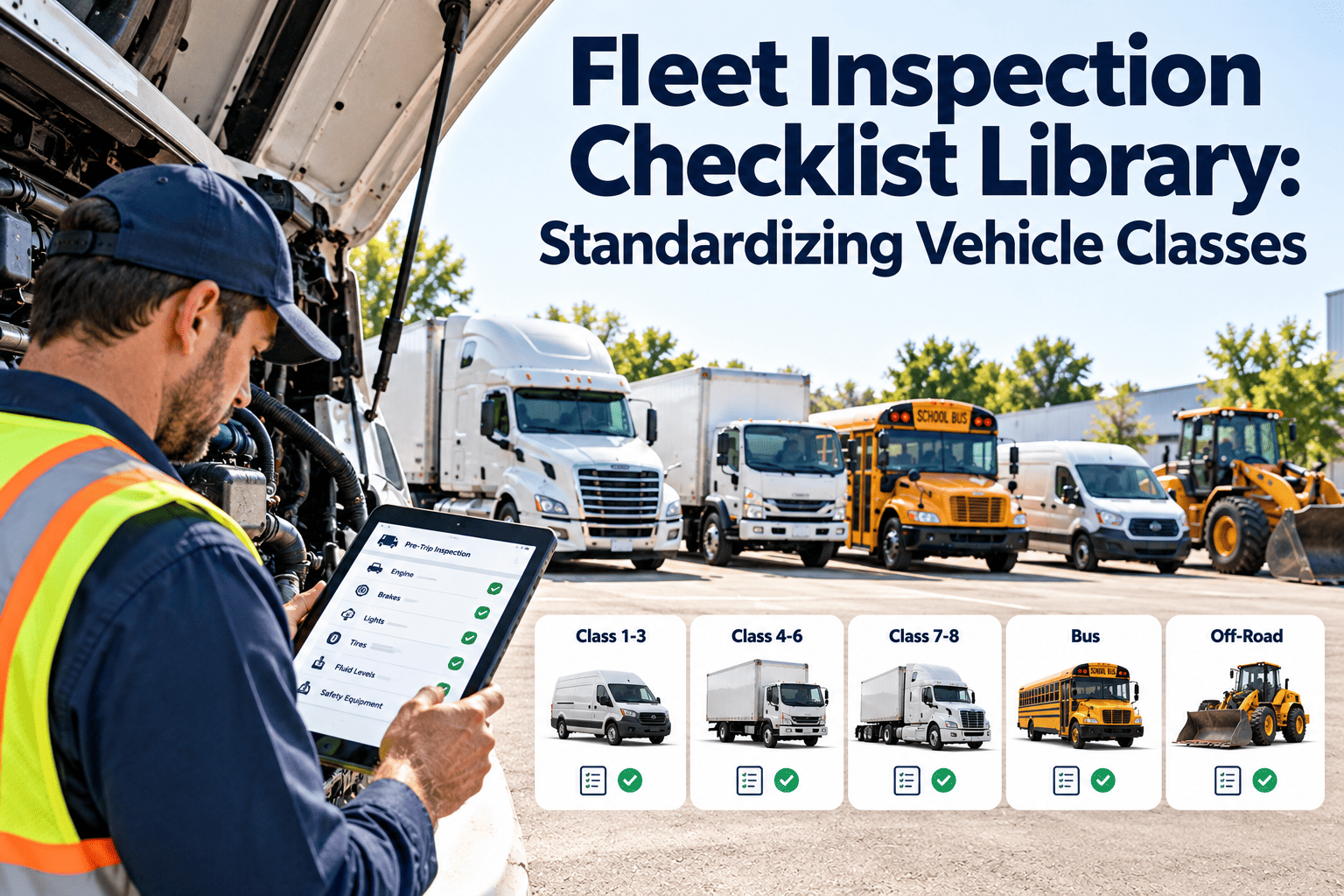
OxMaint supports fully customizable inspection templates for any commercial vehicle category — delivery vans, box trucks, semi-tractors, utility vehicles, and specialized equipment. Templates are built once and deployed across your entire inspection workflow, ensuring consistent data capture regardless of which technician performs the acquisition inspection.
Book a Demo to see template configuration in action.
Start Building Your Fleet Acquisition Inspection Workflow Today
OxMaint gives fleet procurement teams digital inspection forms, asset onboarding, PM scheduling, and predictive maintenance — everything you need to turn every acquisition into a high-performing fleet asset from day one.