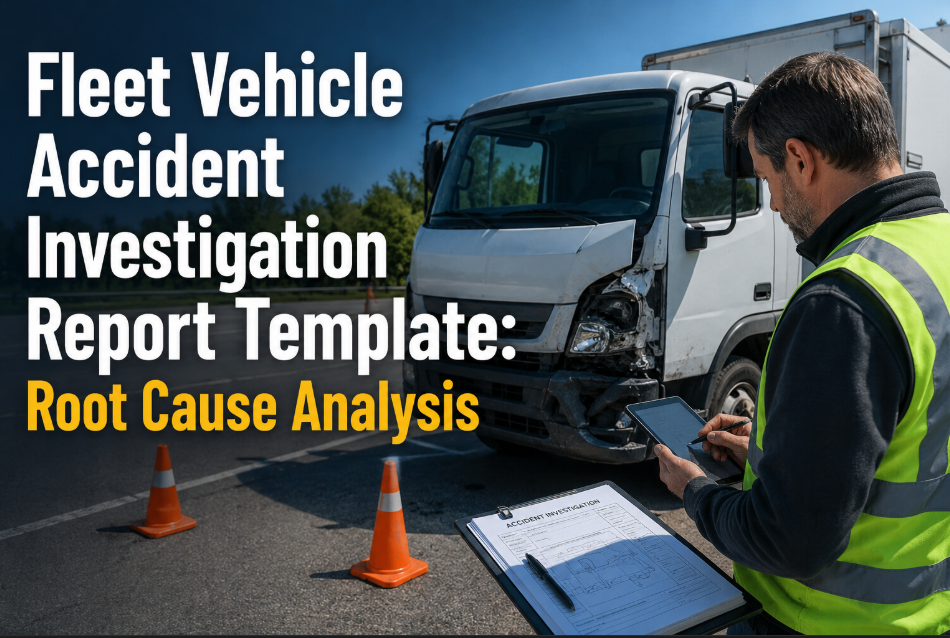
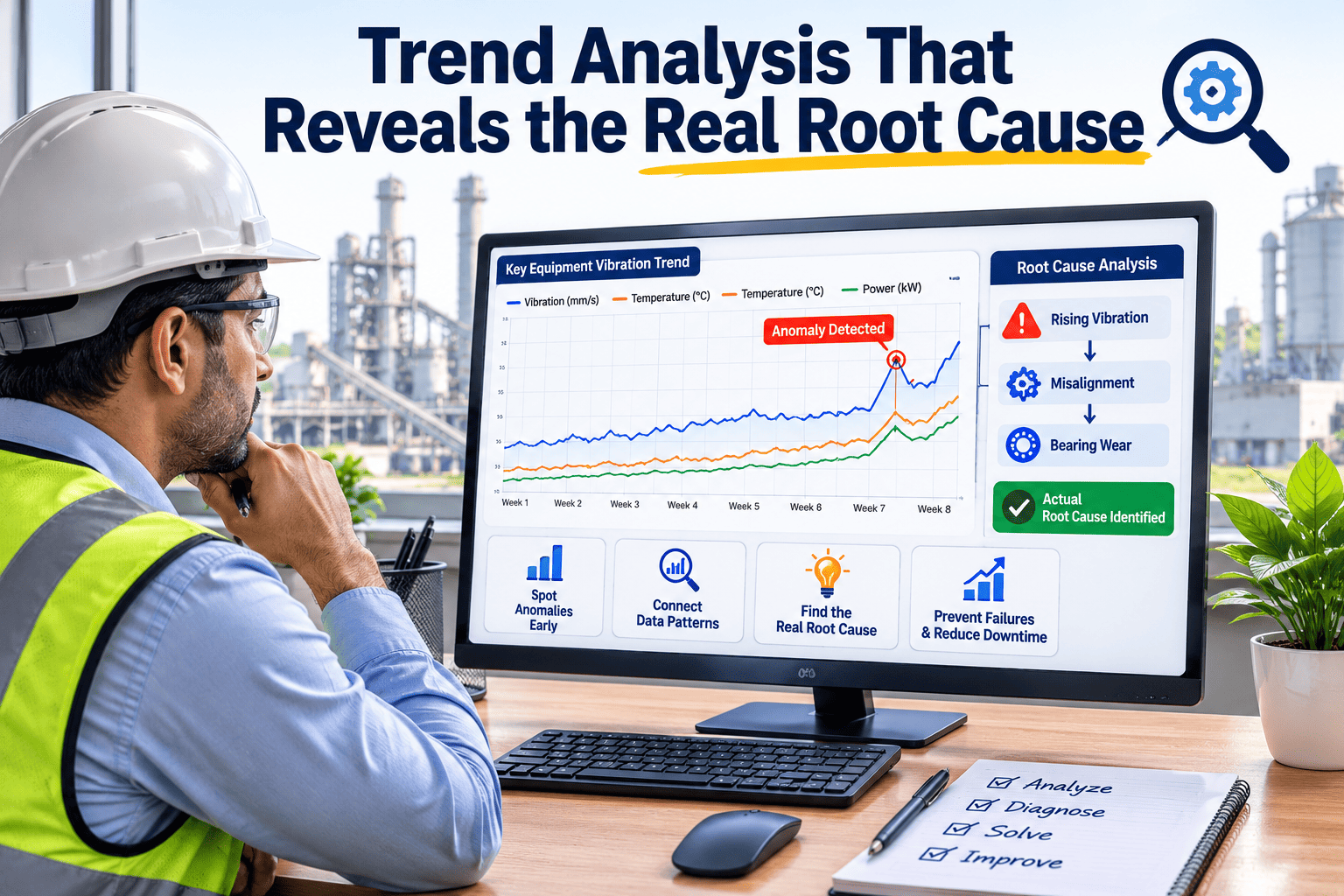
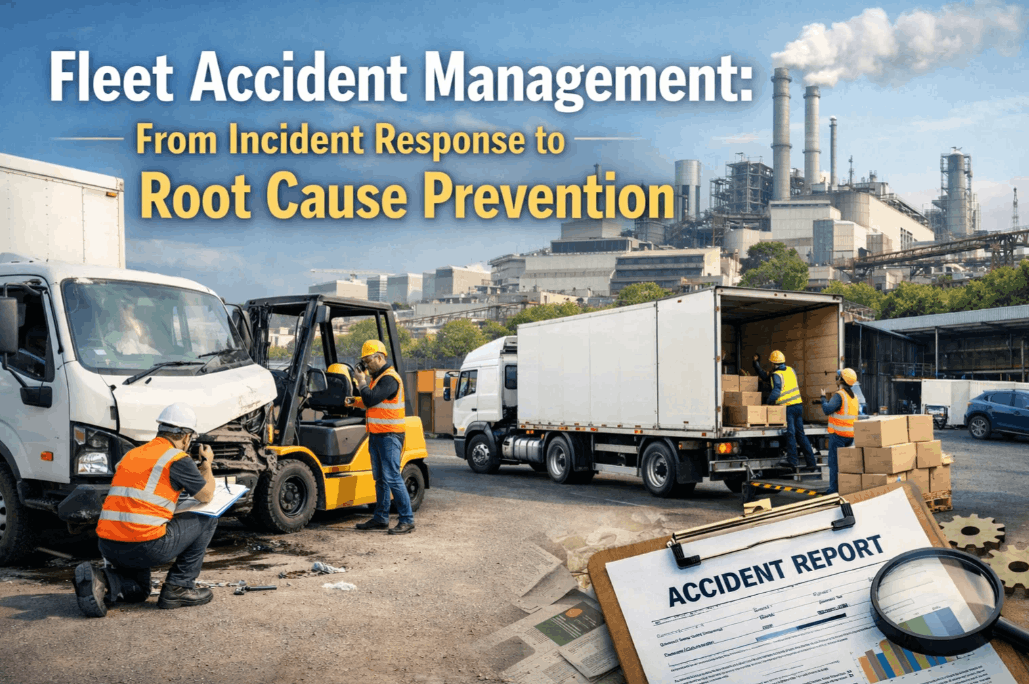
Fleet Vehicle Accident Investigation Report Template: Root Cause Analysis
By Jack Miller on May 20, 2026
Fleet vehicle accidents cost commercial operations an average of $74,000 per incident when factoring in repair, downtime, insurance premium increases, and litigation exposure. A structured accident investigation report — anchored in 5-why root cause analysis — is the single most important document protecting your fleet from repeat incidents and legal liability. Fleets using formal investigation templates reduce accident recurrence rates by 47% within 12 months and cut insurance premium increases by 23% after major incidents. Want to digitize your accident investigations with built-in root cause workflows and audit-ready documentation? Start a free trial with Oxmaint to access the accident investigation module, or book a demo to walk through a live investigation workflow.
FLEET SAFETY · INVESTIGATION TEMPLATE · 2026
Fleet Vehicle Accident Investigation Report Template: Root Cause Analysis Framework
Complete 5-why methodology, contributing factor analysis, corrective action planning, and insurance documentation in one structured template.
Including repair, downtime, premium hikes, and litigation
47%
reduction in repeat accidents
With formal root cause investigation programs
23%
lower premium increases
When insurers see documented corrective actions
94%
faster claim resolution
With complete digital investigation packages
What Is a Fleet Accident Investigation Report?
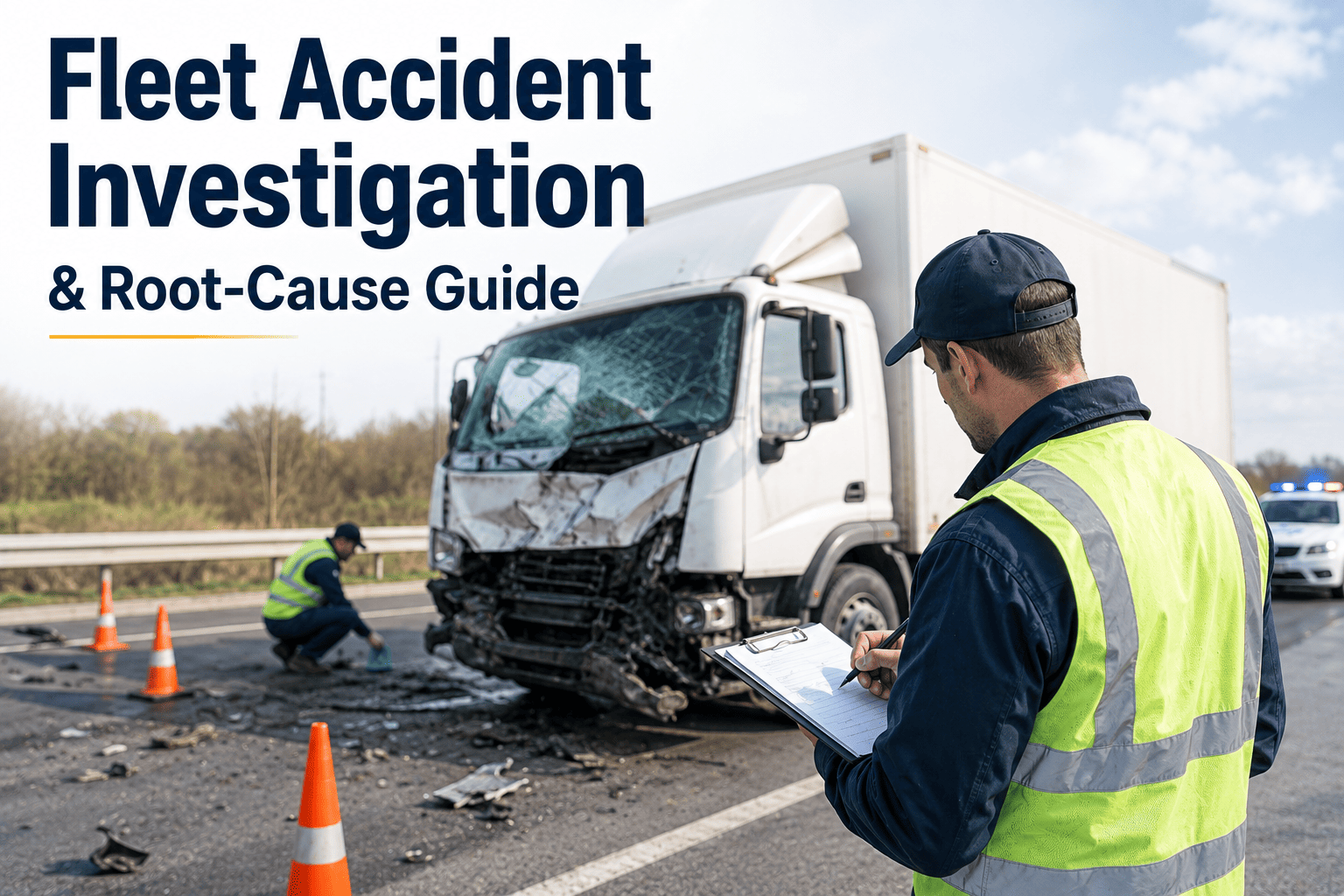
A fleet accident investigation report is a structured document that captures every detail of a vehicle incident — from initial conditions through root cause analysis and corrective actions. Unlike a basic incident form, it goes deeper than "what happened" to answer "why did it happen" and "how do we prevent it next time."
Every commercial fleet operating under FMCSA jurisdiction must maintain accident records for 3 years minimum. But beyond compliance, a quality investigation report is your strongest defense in litigation, your best evidence for insurance negotiations, and your most valuable input for safety program improvement. Start a free trial to digitize your accident investigations, or book a demo to see the investigation dashboard.
8 Critical Sections of an Accident Investigation Report
A complete fleet accident report must contain all eight sections below. Missing any section weakens the investigation, exposes the fleet to liability, and limits the ability to identify true root causes.
Incident Identification Data
Required
Date, time, exact GPS location, vehicle unit number, driver ID, and unique incident report number. This forms the legal foundation for every downstream record and must be captured within 24 hours per FMCSA requirements.
Environmental Conditions
Required
Weather, road surface, lighting, visibility, traffic density, and temperature at the time of incident. Environmental factors contribute to 31% of all fleet accidents and must be documented before conditions change.
Vehicle Condition Assessment
Required
Pre-trip inspection status, last PM service date, tire condition, brake system status, lighting function, and any active fault codes. Mechanical condition is a contributing factor in 18% of commercial vehicle accidents.
Driver Status and HOS Record
Required
Hours of service log, time since last break, hours into shift, recent training history, certification status, and any prior incidents. Driver fatigue contributes to 13% of fatal commercial vehicle accidents.
Sequence of Events Narrative
Required
Timestamped chronological account of what happened, from pre-incident to post-incident actions. Include driver statement, witness accounts, telematics data, and dash-cam footage references.
5-Why Root Cause Analysis
Required
Structured questioning that drills past surface symptoms to the underlying system failure. Without this section, investigations stop at "driver error" and miss the training gaps or process flaws that caused it.
Corrective Action Plan
Required
Specific actions, assigned owners, deadlines, and verification criteria to prevent recurrence. Without documented corrective actions, the same incident type will repeat within 18 months in 62% of fleets.
Insurance and Compliance Package
Required
Photos, police reports, insurance claim numbers, FMCSA accident register entry, and witness contact information. Complete packages reduce insurance claim resolution time by 94%.
The 5-Why Root Cause Methodology Explained
The 5-why technique forces investigators past surface-level symptoms to systemic causes. Stopping at "driver was distracted" tells you nothing actionable. Asking "why" five times reveals the real intervention point.
Level
Question
Example Answer
Action Type
Why #1
What was the immediate cause?
Driver rear-ended vehicle at red light
Incident classification
Why #2
Why did that happen?
Driver was looking at dashboard warning
Behavioral analysis
Why #3
Why did that occur?
Low coolant warning had just activated
Vehicle system check
Why #4
Why was the warning new?
PM service was 4,200 miles overdue
Process failure identified
Why #5
Why was PM overdue?
Manual PM scheduling missed unit
Root cause — system fix needed
Why Manual Accident Reports Miss Root Causes
Paper accident forms collect facts but rarely drive analysis. Investigators fill in boxes, file the report, and move on. The deeper question — what systemic failure made this incident possible — gets skipped.
This is why fleets using paper-based reporting see 62% repeat incident rates within 18 months. The same conditions that caused the first accident still exist because the investigation never identified them. Start a free trial to deploy structured 5-why workflows, or book a demo to see automated root cause analysis.
Paper Reports vs. Digital Investigation Platform
Paper-Based Investigation
Report completion time: 4-7 days average
Root cause depth: Surface-level only
Photo and evidence linkage: Manual filing
Repeat incident rate: 62% within 18 months
Insurance claim resolution: 90-180 days
Trend identification: Rare or impossible
Digital Investigation (Oxmaint)
Report completion time: 24-48 hours average
Root cause depth: Structured 5-why methodology
Photo and evidence linkage: Embedded in report
Repeat incident rate: 15% within 18 months
Insurance claim resolution: 14-30 days
Trend identification: Automated pattern detection
Investigation Workflow: Hour-by-Hour Response
The first 72 hours after a fleet accident determine the quality of every downstream outcome — from insurance claims to litigation defense. Follow this structured response timeline.
Accident Response and Investigation Timeline
From incident notification through final corrective action verification
Hour 0-2 — Immediate Response
Scene safety, medical, law enforcement, evidence capture
Driver ensures scene safety, calls emergency services, captures photos of all vehicles, road conditions, and damage. Reports to dispatch immediately. Fleet manager activates accident response protocol.
Hour 2-24 — Initial Documentation
Driver statement, witness contacts, telematics data pull
Capture driver statement while details are fresh. Collect witness contact information. Pull telematics data showing speed, braking, and route history for 30 minutes before incident. Notify insurance carrier.
Hour 24-72 — Root Cause Analysis
5-why investigation, vehicle inspection, HOS review
Conduct structured 5-why analysis with safety manager and operations lead. Inspect vehicle for mechanical contributing factors. Review driver HOS, training records, and prior incident history. Document all findings.
Day 3-30 — Corrective Action Deployment
Implement and verify preventive measures
Deploy specific corrective actions: driver retraining, PM schedule fixes, route changes, equipment upgrades, or policy updates. Assign owners and verification deadlines. Schedule 90-day follow-up to confirm effectiveness.
How Oxmaint Streamlines Accident Investigations
Mobile Incident Capture
Drivers capture photos, witness contacts, and initial statements directly from their phone within minutes of the incident. All data syncs instantly to the fleet manager and creates the investigation case file automatically.
Structured 5-Why Workflow
Built-in 5-why analysis template guides investigators through each level of root cause questioning. Cannot close the investigation until all five levels are answered — eliminating shallow analysis and surface-level conclusions.
Vehicle History Auto-Linking
The system automatically attaches the involved vehicle's complete maintenance history, PM compliance record, recent fault codes, and last inspection results to the investigation file. Mechanical contributing factors surface immediately.
Driver Record Integration
Pulls driver HOS logs, training history, certification status, and prior incident records directly into the investigation. Identifies patterns — a driver with three minor incidents in 6 months gets flagged for intervention.
Corrective Action Tracking
Every corrective action becomes a tracked work order with assigned owner, deadline, and verification criteria. Open actions surface on the safety manager's dashboard until verified complete. No more lost commitments.
Trend Analytics and Pattern Detection
Aggregate analytics identify recurring patterns — same intersection, same vehicle class, same time of day, same root cause type. Surfaces systemic safety issues that individual investigations would never reveal.
Safety Program ROI Metrics
62%
faster investigation closure
Digital workflows vs. paper-based processes
$112K
avg. annual liability savings
Per 100-vehicle fleet from prevented repeats
76%
reduction in CSA score impact
With documented corrective actions in place
3.4x
stronger litigation defense
Complete digital evidence packages vs. paper
Why Complete Documentation Wins Insurance and Litigation Battles
When a fleet accident escalates to insurance dispute or litigation, the quality of your investigation file determines the outcome. Carriers and opposing counsel will scrutinize every detail — and gaps in documentation become assumptions of negligence.A complete digital investigation package showing structured root cause analysis, immediate corrective actions, and verified preventive measures demonstrates organizational diligence. This evidence reduces premium increases by 23% and cuts settlement amounts by an average of 31%. Start a free trial to build litigation-ready investigation files, or book a demo for a walkthrough.
Frequently Asked Questions
Does Oxmaint help us meet FMCSA accident register requirements?
Yes, the platform automatically formats accident data per FMCSA 390.15 requirements and maintains the digital accident register with 3-year retention. All required fields — date, location, driver, fatalities, injuries, tow-away status — populate automatically from the investigation file.
Can drivers submit initial incident reports from their mobile devices?
Yes, the mobile incident capture tool allows drivers to submit photos, witness contacts, and preliminary statements directly from their phone within minutes of the incident. All data syncs instantly to fleet management and creates the investigation case file automatically.
How does the system integrate with our insurance carrier's claim process?
Oxmaint generates a complete claim package including investigation report, photos, telematics data, police reports, and witness statements in one PDF export. Most major carriers accept this format directly, reducing claim documentation time from days to minutes.
Can we track corrective actions across multiple incidents to spot trends?
Yes, the trend analytics dashboard aggregates root causes, locations, vehicle classes, and driver patterns across all investigations. Recurring issues surface automatically — letting safety managers address systemic risks before they generate more incidents.
Turn Every Accident Into Prevention Intelligence
Join fleet safety teams using Oxmaint to digitize investigations, automate root cause analysis, and reduce repeat incidents by 47%. Free trial, no credit card required.