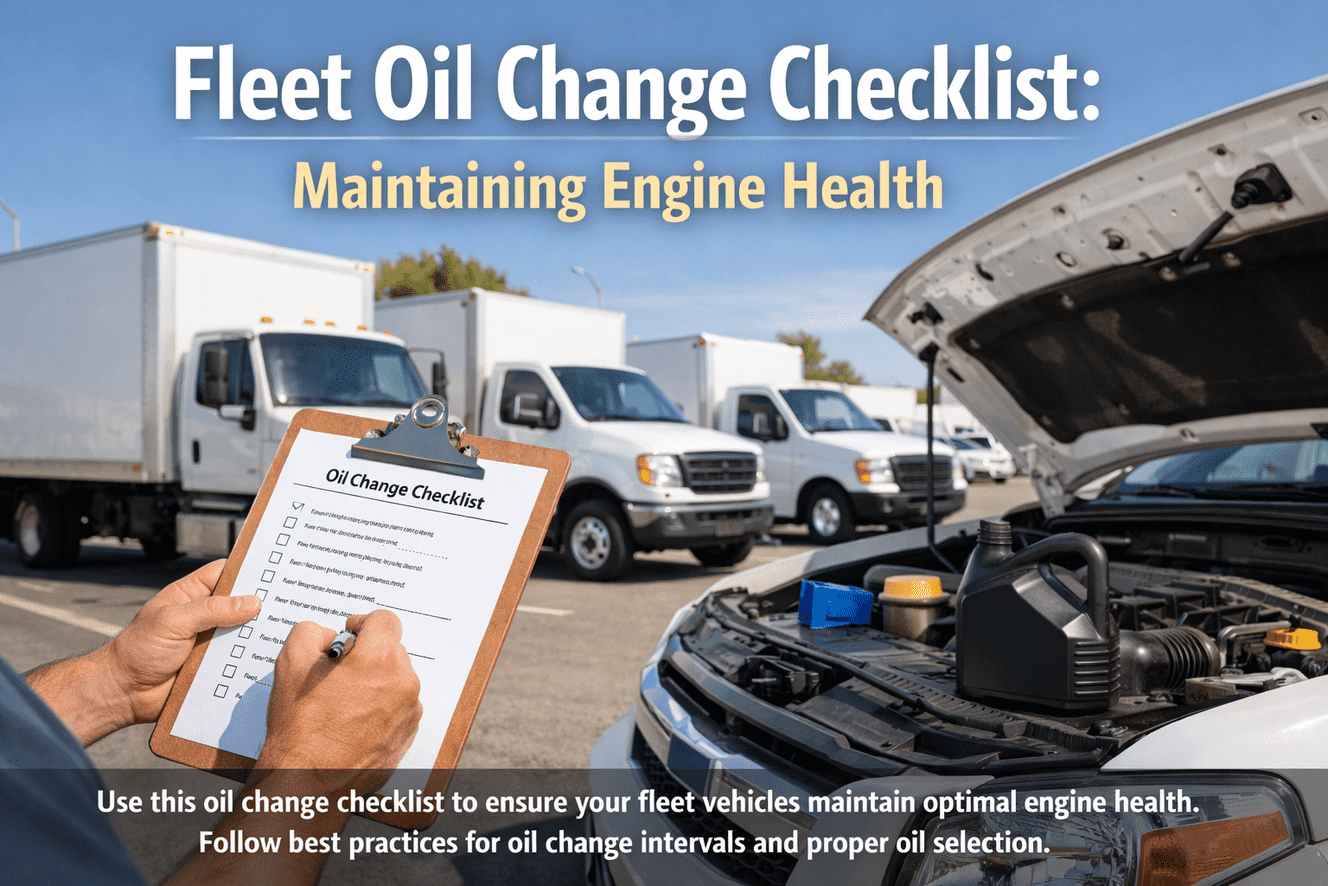
Lubrication is the cheapest fleet maintenance task and the most expensive to neglect. Overdue engine oil increases wear metals by 40%. A dry kingpin seizes at 25× the cost of the grease service that prevents it. Transmission fluid that turns brown has already damaged the clutch packs. A structured lube programme — every fluid, every grease point, every interval — is the highest-return PM investment in any commercial fleet. Oxmaint tracks every fluid type, interval, and grease point per vehicle with technician sign-off at every service.
Fleet Fluid Service Intervals — Quick Reference
Every fluid in a commercial vehicle has a specific service interval based on operating conditions, mileage, or hours. The reference grid below shows the standard interval, the change trigger, and the consequence of missing the service — so lube technicians know exactly what they are maintaining and why the interval matters.
Technology Making Lube Service Smarter
Manual lube service tracking — stickers, paper cards, and spreadsheets — misses the 20% of vehicles that go over interval because the record was not updated or the driver did not report the mileage. Four technologies make fleet lubrication proactive, condition-based, and automatically scheduled. Oxmaint integrates all four into one lube service workflow.
1. Engine Oil, Transmission and Differential Checklist
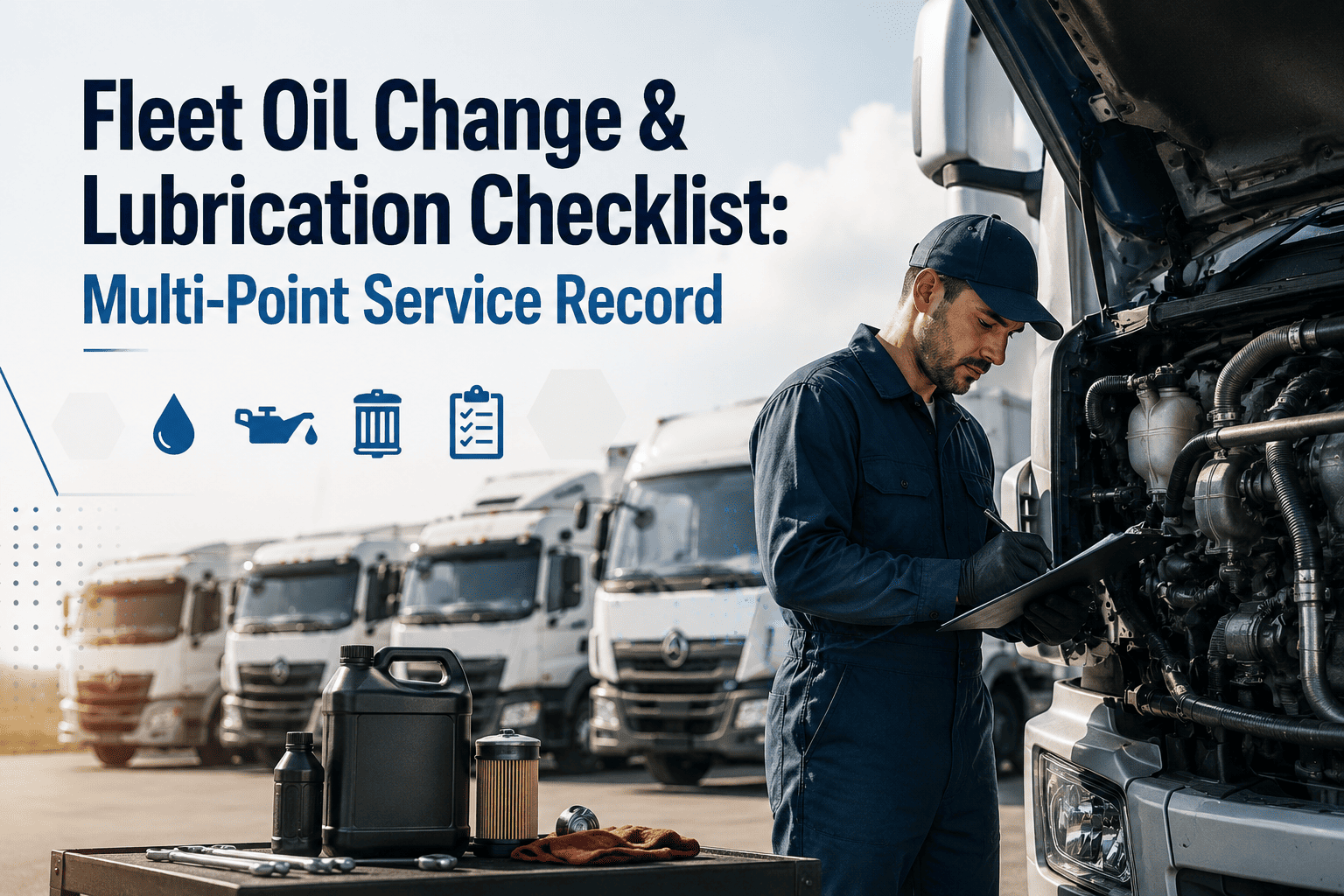
The three primary drivetrain fluids — engine oil, transmission fluid, and differential oil — must be checked for level and condition at every service, not just changed on a fixed interval. A transmission that is at the correct service interval but shows brown, burnt fluid must be changed immediately regardless of the calendar. Record drivetrain fluid levels, condition, and service dates per vehicle in Oxmaint.
Engine oil level — dipstick check cold before start
Check level on a cold, level surface before starting. Below minimum requires topping up before operation — running low by even 1 litre increases bearing clearances and accelerates wear exponentially. OOS — below min mark
Engine oil condition — colour, viscosity, and contamination
Wipe the dipstick on a white cloth. Black oil is normal. Milky or grey oil indicates coolant ingress — do not operate until the contamination source is identified. Metal particles felt on the cloth indicate internal wear requiring investigation. OOS — milky or metallic
Engine oil change — at mileage or calendar interval
Drain and fill to the correct specification and quantity. Record the oil grade, quantity used, and new service due date in Oxmaint. The drain plug and filter must be torqued correctly — finger-tight is not a torque value. Record — oil grade and quantity
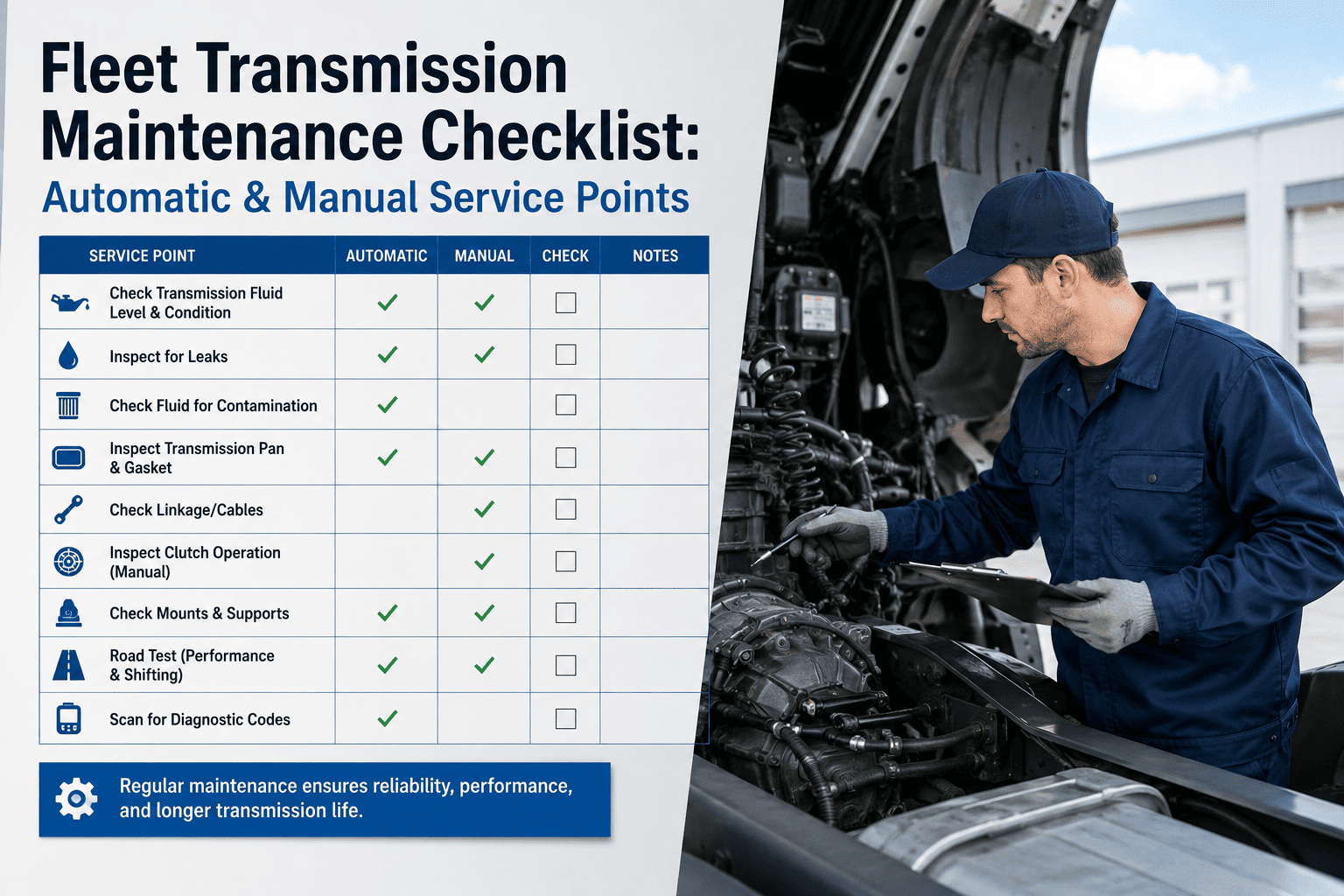
Transmission fluid level and condition — check at operating temperature
Check transmission fluid with the vehicle at operating temperature per manufacturer procedure. Brown or burnt-smelling fluid must be changed immediately regardless of interval — the clutch packs are already degrading. OOS — burnt fluid
Transmission filter and magnet — service at fluid change
Replace the transmission filter at every fluid change. Clean the magnetic drain plug and inspect metal particles — fine black powder is normal friction material; bright metal chips indicate gear or bearing damage requiring investigation. Defect — metal chips on magnet
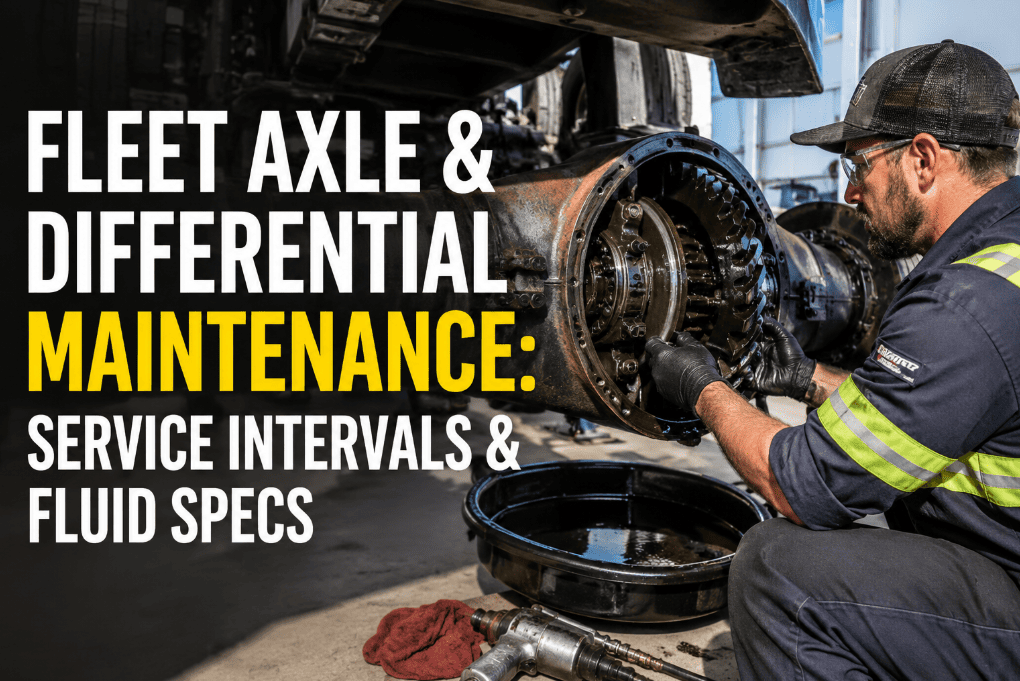
Front and rear differential fluid — level and condition check
Check all differentials for correct level and clear fluid. Milky differential oil indicates water ingress from a failed breather or wading without a snorkel — replace immediately and find the ingress point. OOS — milky diff fluid
Transfer case fluid — level and condition for 4WD vehicles
Check transfer case fluid level and colour. Low level in a transfer case almost always indicates a rear output shaft seal leak — top up and investigate the seal before the chain runs dry. Defect — low level
OBD Integration tip: OBD oil life monitor percentage, transmission fluid temperature history, and coolant temperature readings stream via Oxmaint's telematics integration — triggering a lube service work order automatically when the oil life monitor drops below 15%, eliminating manual mileage tracking for every vehicle in the fleet. See Oxmaint's OBD-triggered lube service scheduling.
2. Coolant, Brake Fluid and Power Steering Checklist
Coolant, brake fluid, and power steering fluid are the three most frequently forgotten fluids in a lube service — because they do not get changed at the same interval as engine oil and are easy to defer until a problem makes them impossible to ignore. Each has a specific failure mode that costs significantly more than the fluid service. Set individual service reminders for every fluid type in Oxmaint.
Coolant level and freeze protection — refractometer test
Test freeze protection with a refractometer at every annual service. A coolant that looks fine but tests at +5°F protection in a fleet operating in northern winter will freeze — causing a cracked block that costs $8,000+ to repair. OOS — below min protection
Coolant pH — corrosion inhibitor test
Test coolant pH with a test strip. Below 7.5 indicates acid conditions actively corroding aluminium components. Replace coolant on any pH below 7.5 — do not add inhibitor top-up to acid coolant. Defect — pH below 7.5
Brake fluid moisture content — test strip or electronic tester
Test brake fluid moisture content at every annual service. Above 3% water content reduces the boiling point below the minimum safe level — replace the fluid before summer heavy braking routes or mountain operations. OOS — above 3% moisture
Brake fluid level — reservoir check and leak investigation
Low brake fluid almost always means worn brake pads have pushed the caliper pistons out — top up and check pad thickness before assuming a leak. Only investigate for a leak if pads are at acceptable thickness but fluid is still low. Defect — low with good pads
Power steering fluid — level, colour, and system for leaks
Check level and colour. Foamy power steering fluid indicates air in the system from a low reservoir or suction hose leak. Discoloured fluid (brown or dark) should be flushed — it is degrading the pump seals and rack seals. Defect — foamy or discoloured
Windshield washer fluid — correct concentration for ambient temperature
Refill with solution rated at least 10°F below the minimum expected ambient temperature. A frozen washer system on a winter motorway route forces drivers to clear the windshield manually in traffic — a direct distraction hazard. Required — before winter
3. Chassis Grease Points and Final Checks Checklist
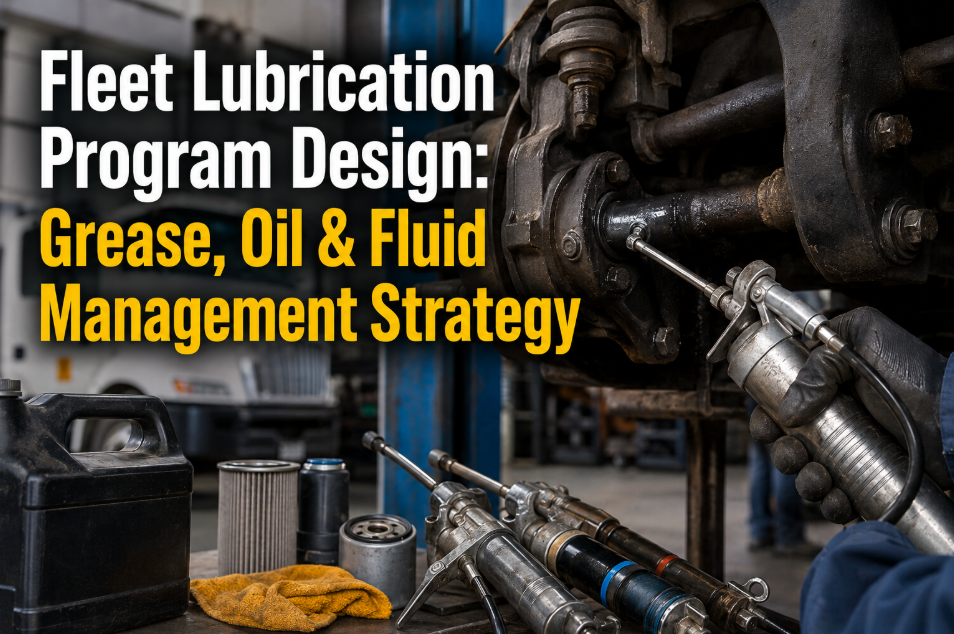
Chassis greasing is the most underperformed lube service item in most commercial fleets — because it requires physical effort, knowledge of grease nipple locations, and a willingness to get underneath a vehicle. It is also the highest-consequence missed service: a dry kingpin that seizes costs 25× a grease service. Every grease nipple on every vehicle must be identified, accessed, and greased to purge at every service interval. Configure all chassis grease points per vehicle in Oxmaint's grease service checklist.
Steering kingpins — grease to purge at each nipple
Apply grease gun until fresh grease purges from the seal at each kingpin. If no purge is achieved, the grease path is blocked — the kingpin is not greased until purge is confirmed. Missed kingpin greasing is the #1 cause of premature steering component failure. Required — purge must be observed
Tie rod ends and drag link — all nipples greased
Grease all steering linkage nipples until purge. Any tie rod end that accepts no grease pressure has a blocked or stripped nipple — replace the nipple before the joint runs dry. A dry tie rod end fails within 20,000 km. Required — replace blocked nipples
Propeller shaft U-joints and centre bearing — all nipples
Grease all driveshaft U-joint nipples and centre bearing grease point. A dry U-joint develops vibration, then a click, then fails catastrophically — dropping the propshaft and potentially fatally impaling the ground beneath the vehicle. OOS — failed U-joint
Fifth wheel plate — lubrication and wear inspection
Clean the fifth wheel plate with a brush and apply a thin layer of fifth wheel grease — not standard chassis grease. Insufficient lubrication causes king pin wear, coupling noise, and trailer wander that drivers attribute to the trailer rather than the fifth wheel. Defect — dry or worn plate
Spring shackles and pins — grease all nipples
Apply grease to all spring shackle nipples. Spring shackles that run dry bind and crack the spring eye — requiring spring replacement. At $400+ per spring, a $0.50 grease application is the clearest ROI calculation in fleet maintenance. Required — every service
Door hinges, lock mechanisms and cab tilt pivots
Apply a light oil or grease to all door hinges, lock strikers, and cab tilt safety pivot. A seized cab tilt safety prop is an immediate safety hazard during engine access. Stiff door hinges create driver ergonomic issues on high-frequency delivery routes. Required — every service
Service record completed and next service date set in Oxmaint
Close the lube service work order in Oxmaint with all fluid types, quantities, and grease points confirmed. Set the next service trigger — mileage and calendar. A service not recorded in the CMMS has not happened for audit and DOT maintenance record purposes. Required — before releasing vehicle
Digital Twin tip: Oxmaint's vehicle digital twin models oil degradation based on OBD load data, ambient temperature, and idle percentage — scheduling the next oil change at the optimal point per vehicle rather than applying the same fixed interval to a heavily-loaded construction truck and a lightly-used support vehicle. Book a demo to see condition-based lube scheduling in Oxmaint.
We had three transmission failures in six months — all from burnt fluid that nobody caught because we were only checking mileage intervals, not fluid condition. After deploying Oxmaint's lube service module with condition checks at every service, our transmission repair costs dropped by 80% in the first year. The fluid condition checks found problems the mileage calendar would never have caught.
Frequently Asked Questions
The most common questions from lube technicians and fleet managers about fluid service intervals, grease specifications, and CMMS lube tracking.
No — fluid appearance does not reflect additive depletion. Transmission additives that prevent clutch pack wear are chemically exhausted before colour changes occur. Always follow the OEM interval as the maximum, and change on any colour change regardless of mileage.
Fresh grease must purge from the seal or relief point of the joint being greased. Applying grease until the gun resistance increases does not confirm the joint is full — only purge at the seal confirms the old contaminated grease has been displaced. If no purge occurs, the path is blocked.
Brake fluid absorbs water from the atmosphere over time — the level remains correct while the water content rises. Above 3% moisture the boiling point drops below the minimum safe level for heavy braking, causing vapour lock. Replace on moisture content, not level.
Use a dedicated fifth wheel lubricant — not standard chassis grease, which is too thick and can actually trap abrasive particles. Fifth wheel grease is formulated to reduce kingpin wear and coupling noise under the very high contact pressures at the fifth wheel plate interface.
Oxmaint configures individual fluid service intervals per vehicle based on OEM specifications and fleet operating conditions. A heavily-loaded tipping truck can have a shorter oil change interval than a lightly-used support van — each vehicle's service schedule is independent and triggers on its own mileage and calendar parameters.
Yes. Under §396.3, carriers must maintain records showing the vehicle has been systematically inspected, repaired, and maintained. Fluid service records are maintenance records — they must be retained for 1 year while the vehicle is in service and for 6 months after disposal.