Most fleets set inspection frequency once, usually by copying a manufacturer schedule or last year calendar, and never question it again. The result is a mismatch: lightly used units are inspected more than they need, while severe-duty trucks run past the point where wear becomes failure. This checklist ties frequency to asset class, duty cycle and risk, then tunes it with real defect data. It shows how fleet inspection and maintenance software keeps every interval scheduled, assigned and recorded.
Fleet Maintenance Inspection Frequency Planning Matrix Checklist
Seven checklist categories that set inspection intervals by asset class, duty cycle and risk, then adjust them with defect and failure data instead of habit.
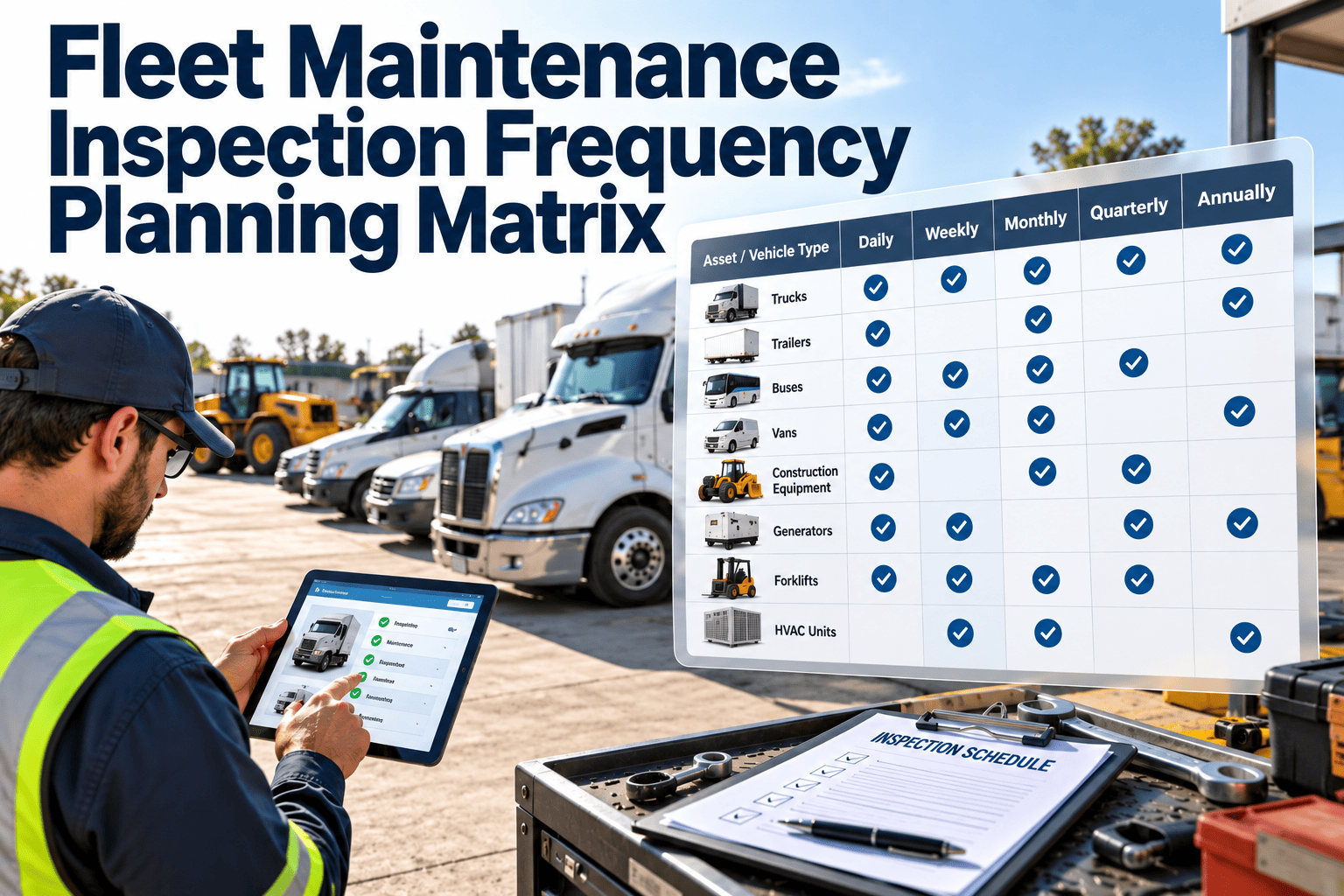
Asset classDailyServiceAnnual
TractorsHighHighFixed
TrailersHighMediumFixed
Delivery trucksHighHighFixed
Light vehiclesMediumLowFixed
DDaily
WWeekly
MMonthly
QQuarterly
AAnnual
EEvent-driven
Baseline Planning Matrix by Asset Class
Treat these as starting points. Always follow the manufacturer schedule and your regulator, then adjust with the scoring model later in this page.
The Five Inspection Layers
Each layer has one purpose. Overlap between layers is where inspection hours are wasted.
Layer 1Pre-trip and post-trip driver inspectionEvery shift or trip. Catches visible defects in tires, lights, leaks, brakes and coupling.
Layer 2Yard or walk-around inspectionWeekly for drop, shuttle or idle units that nobody sees end to end.
Layer 3Preventive service inspectionBy mileage, hours or time, in staged levels, measuring wear and replacing parts.
Layer 4Specialist system inspectionBrakes, fifth wheel, refrigeration, lifts and PTO equipment, by component risk.
Layer 5Periodic regulatory inspectionAt least every 12 months for US interstate commercial vehicles, with a qualified inspector.
Category 01Baseline Setup
A frequency plan is only as good as the asset data behind it. Start by segmenting the fleet and fixing the source of truth.
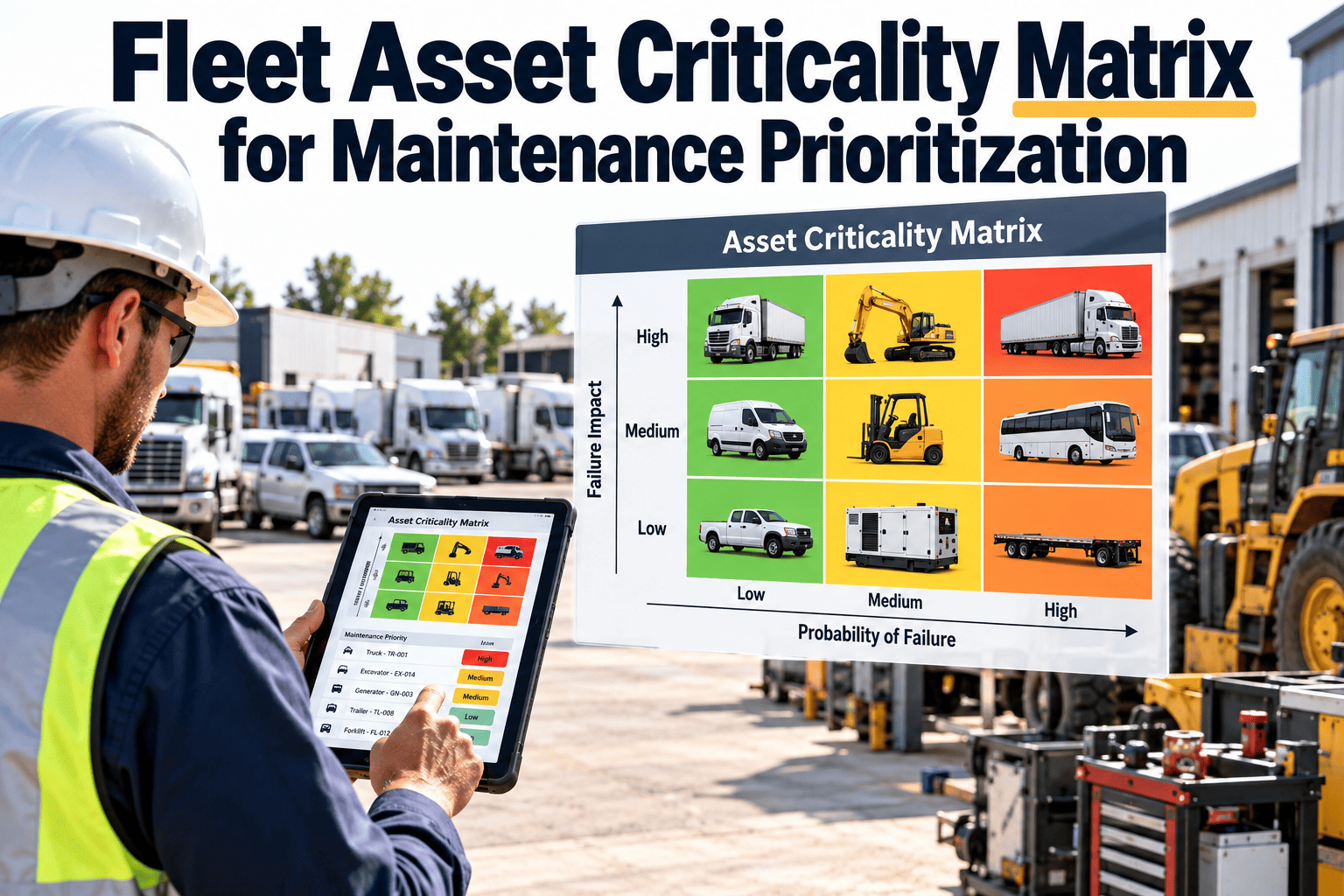
Fleet segmented by class, duty cycle, location and criticality. Group assets by how they are used and how much the operation depends on them, not only by make and model.AFleet manager · Asset segmentation record
Manufacturer schedules loaded for each model. Intervals and inspection items from owner and service manuals are entered as the starting baseline.AMaintenance planner · Manufacturer schedule register
Regulatory minimums mapped to each unit. Identify the federal, state, provincial or local inspection requirements for every unit and record them as a floor.ACompliance lead · Regulatory requirement map
Trigger type set for each asset class. Choose calendar, mileage, engine hours or condition, with a whichever-comes-first rule where wear is mixed.AMaintenance planner · Trigger rule register
Meter data reliability confirmed. Compare odometer and engine hour readings with telematics or fuel records, and fix units where data drifts.MShop supervisor · Meter reconciliation report
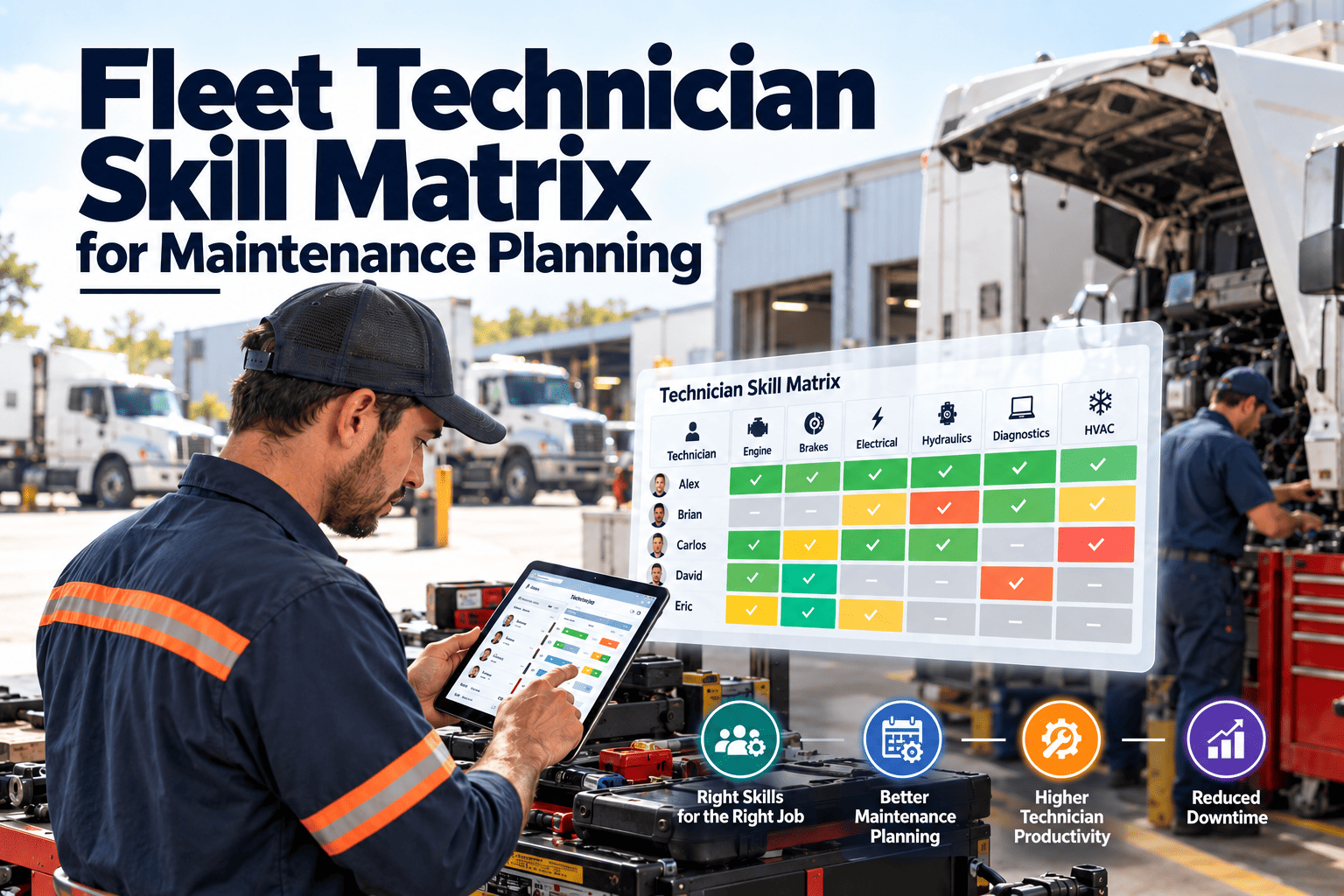
Inspector assigned to each layer. Drivers, yard staff, technicians and qualified inspectors are named per layer, with training and qualification records.ASafety manager · Inspector assignment matrix
Category 02Driver Pre-Trip and Post-Trip Inspections
The driver layer sees the unit every day. It only works when findings reach maintenance.
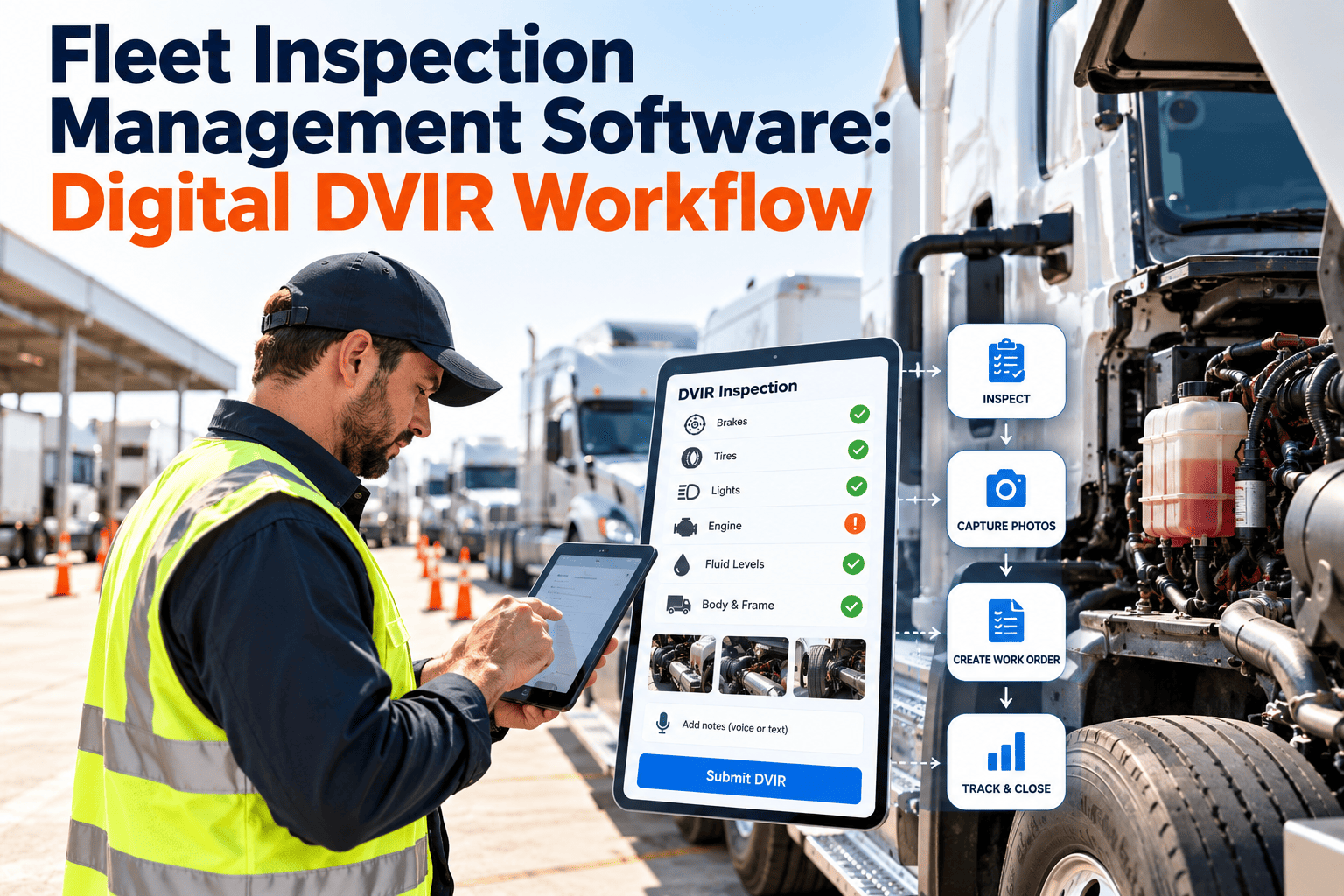
Pre-trip completed before every shift or dispatch. Inspection covers tires, lights, brakes, leaks, coupling, load securement and safety equipment, with date, unit and driver recorded.DDriver · Pre-trip inspection log
Post-trip defects reported. Defects noticed at the end of a trip are recorded so the next driver and maintenance both see them.DDriver · Post-trip defect report
Defects raised as work orders automatically. A failed item creates a work order with a photo, so no finding relies on someone remembering to call.DDispatcher · Defect routing log
Missed inspections reviewed. Units that departed without a completed inspection are listed and followed up with the driver and supervisor.WFleet supervisor · Missed inspection report
Checklist tailored by asset class. Tractor, trailer, reefer and vocational forms include only relevant items, which keeps completion rates high.QMaintenance planner · Checklist template review
Driver inspection refresher delivered. Drivers are trained on the defects that matter most and shown examples of recent findings.ASafety manager · Driver training record
Category 03Yard and Walk-Around Inspections
Units that sit on drops or move between tractors collect defects that no single driver sees.
Weekly walk-around for drop and idle units. A short check of lights, tires, brake components, doors and landing gear catches problems between dispatches.WYard inspector · Walk-around log
Tire pressure measured with a gauge. Pressure is checked on every tire, including inner duals, rather than judged by eye.WYard inspector · Tire pressure log
Trailer structure and coupling components checked. Look at frame, crossmembers, kingpin area, landing gear and rear impact guard for damage or movement.WYard inspector · Structure inspection log
Post-event inspection after incidents. After an accident, overload, dock impact, off-road use or flood exposure, an extra inspection is triggered.EShop supervisor · Post-event inspection record
Seasonal readiness checks completed. Pre-winter and pre-summer lists cover batteries, heating, cooling, belts, hoses, wipers and refrigeration.QMaintenance planner · Seasonal readiness checklist
Long-idle units inspected before return to service. Units parked for an extended period get a full inspection before dispatch.EShop supervisor · Return-to-service record
Category 04Preventive Service Inspections
Service inspections should measure wear and replace parts before failure, not just tick boxes.
Service levels staged and documented. Define what each level covers, from basic to major, so work is predictable and inspection scope is clear.AMaintenance planner · Service level definition
Whichever-comes-first trigger applied. Mileage or hour triggers carry a calendar ceiling so low-use units are not missed.DMaintenance planner · Trigger compliance report
Measured values recorded. Brake lining, tire tread, belt wear, fluid condition and battery tests are stored as numbers that can be trended.DTechnician · Service inspection record
Severe-duty intervals shortened. Units with dusty, salted, stop-start or heavy-load duty are given tighter intervals and the reason is recorded.QFleet manager · Severe-duty review
Due dates staggered across the month. Spread inspections so they do not stack on one week and overload the shop.MMaintenance planner · Capacity plan
Inspection combined with service where possible. One bay visit covers both, which cuts downtime and handling.DShop supervisor · Combined visit record
Put the Matrix Into Your Maintenance System
Build interval rules once, apply them by asset class, and let the system schedule every inspection.
Category 05Specialist System Inspections
Some components fail with little warning and need their own frequency, tools and qualified people.
Brake system measured. Pushrod stroke, lining thickness, drum condition and air system leakage are measured and recorded against limits.MQualified technician · Brake measurement log
Fifth wheel and kingpin inspected. Check wear, lubrication, mounting, locking function and kingpin condition with a gauge where applicable.MTechnician · Coupling inspection log
Refrigeration unit inspected by hours. Unit hours, temperature records, door seals and defrost function are reviewed on a schedule separate from the chassis.MReefer technician · Refrigeration inspection log
Lift gates, booms and PTO equipment checked. Hydraulic leaks, structural wear, safety devices and controls are checked to the manufacturer and local requirement.MTechnician · Equipment inspection log
Wheel ends and tires reviewed. Bearing play, seals, hub temperature signs, lug nuts and tire condition are checked on a fixed cycle.MTechnician · Wheel end inspection log
Qualified person assigned and recorded. Specialist checks are performed by people whose qualifications are on file and visible to the planner.ASafety manager · Qualification register
Category 06Periodic Regulatory Inspections
Annual inspections are fixed by regulation. Your job is to schedule them early and document them properly.
Inspection scheduled 60 days ahead. Due dates are listed by unit with reminders, so no vehicle reaches expiry unplanned.MMaintenance planner · Periodic inspection calendar
Qualified inspector evidence on file. Inspector training, experience and certifications are stored and checked before the inspection.ASafety manager · Inspector qualification record
Report contains required content. Carrier details, date, inspector signature, vehicle identity and the standard used are present on every report.AInspector · Periodic inspection report
Findings repaired before release. Defects found are corrected and re-checked, with the repair linked to the report.EShop supervisor · Finding closure record
Local, state and other rules checked. Confirm any additional frequency, emissions, safety or industry requirements for each unit and region.ACompliance lead · Jurisdiction review
Frequency Adjustment Score
Score each asset on these factors. The total moves its interval tighter or looser than the baseline.
0 to 3 pointsHold at baseline
4 to 7 pointsShorten service interval or add yard checks
8 to 12 pointsShorten intervals and add specialist inspections
Category 07Review and Adjustment
The matrix improves only when findings flow back into it. Review on a fixed rhythm and record every change.
Adjustment score applied to each asset. Every unit is scored and the resulting interval is recorded with the reason and approver.QFleet manager · Interval adjustment record
Defects per inspection reviewed by class. Compare defects found against inspections done, to see whether intervals match real wear.MMaintenance planner · Defect rate report
Too-long signals checked. Defects clustering before the next visit, road calls from inspected components and roadside findings your checks missed all point to intervals that are too long.QFleet manager · Interval review
Too-short signals checked. Repeated clean inspections, parts replaced with life left and heavy inspection labor on low-risk units point to intervals that are too short.QFleet manager · Interval review
Change log maintained. Each change to an interval has a date, reason, data used and approver, so decisions can be explained to auditors and insurers.EMaintenance planner · Interval change log
Pilot before fleet-wide rollout. Trial a new interval on one asset class for a quarter and compare defects, road calls and labor before expanding.EFleet manager · Pilot review record
How Oxmaint Supports Frequency Planning
Oxmaint turns the matrix into live schedules, so intervals are applied the same way on every unit.
- Recurring preventive maintenance and inspection schedules by calendar, mileage or engine hours.
- Mobile inspection checklists with photos, pass or fail results and automatic work orders.
- Asset records grouped by class, location and criticality for consistent interval rules.
- Defect and repair history by asset to support quarterly interval reviews.
- Compliance records and dashboards for on-time rate, open findings and repeat failures.
Frequently Asked Questions
How often should fleet vehicles be inspected?Drivers inspect each day of operation, preventive services follow manufacturer guidance and duty cycle, and periodic inspections occur at least yearly where regulations apply.
Should we use mileage or calendar intervals?Use both where possible, with whichever comes first. Track them in one maintenance system so neither is missed. How do we justify changing an interval?Record the defect data, the score and the approver. This gives auditors and insurers a clear rationale.
Can the matrix replace manufacturer schedules?No. It adjusts around them. Never extend beyond manufacturer or regulatory requirements, and shorten where your data supports it.
How do we start without disrupting the shop?Pilot one asset class for a quarter. You can book a demo to see how schedules are set up. Inspect the Right Assets at the Right Time
Replace habit-based schedules with a matrix that reflects how each unit is really used.