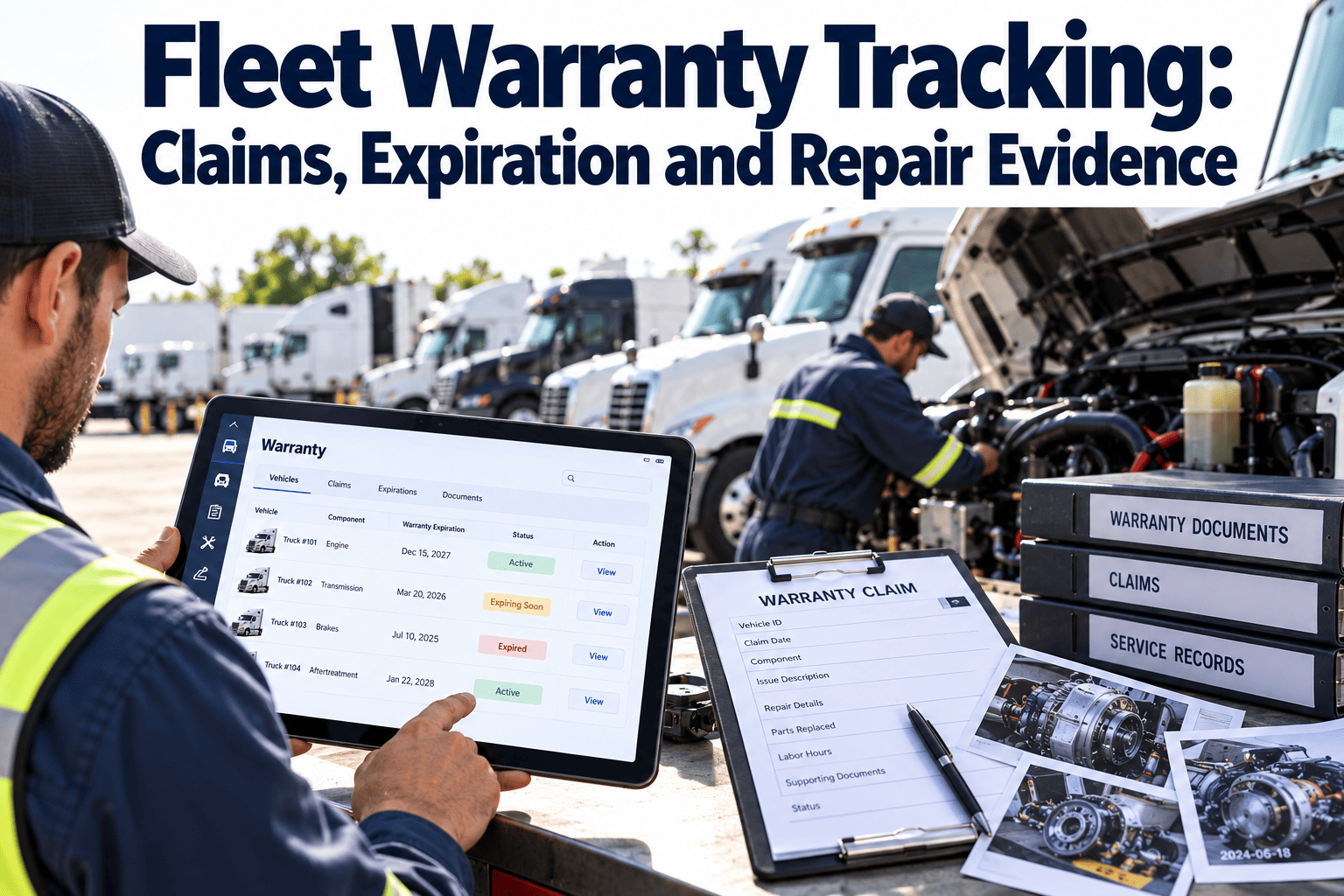
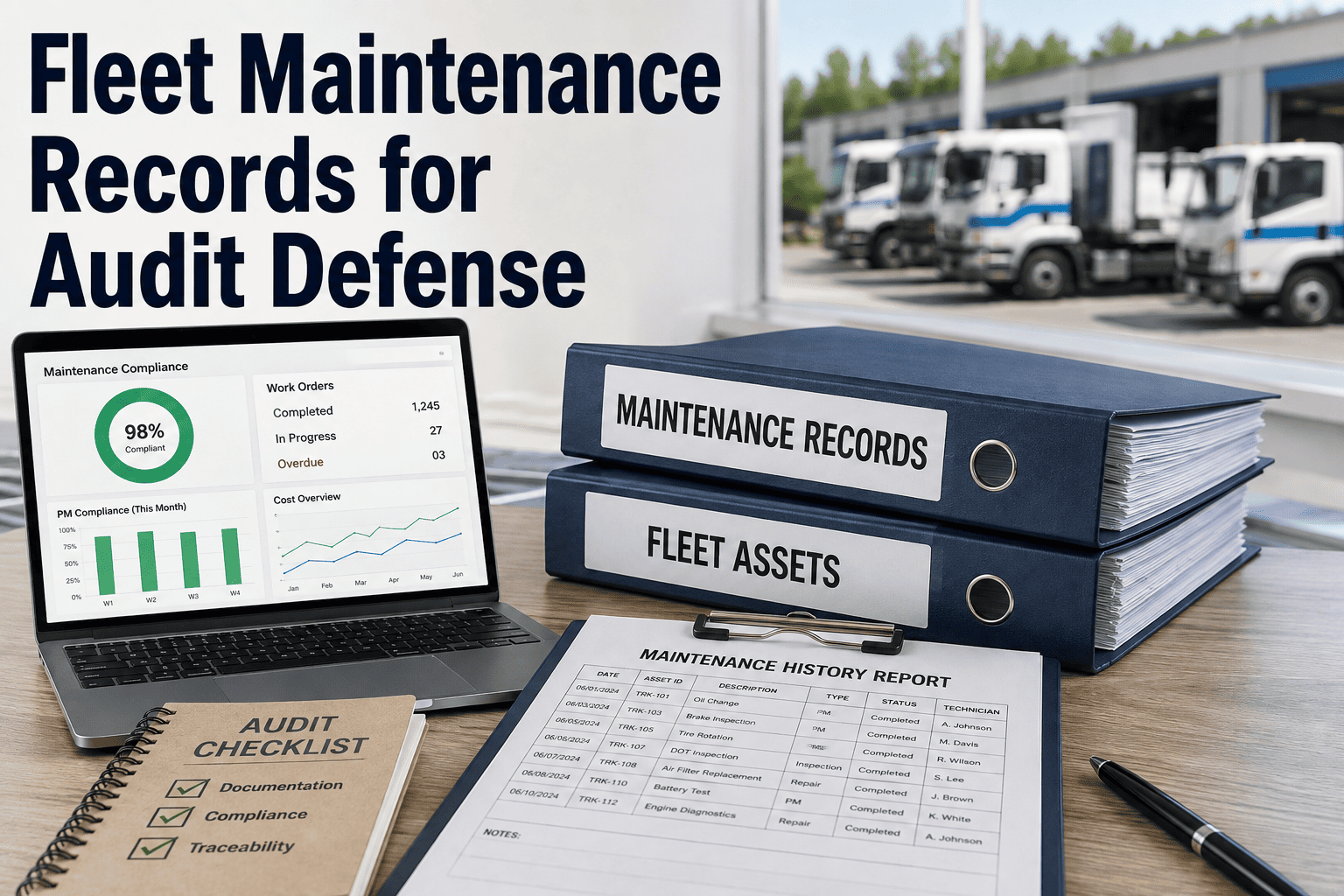
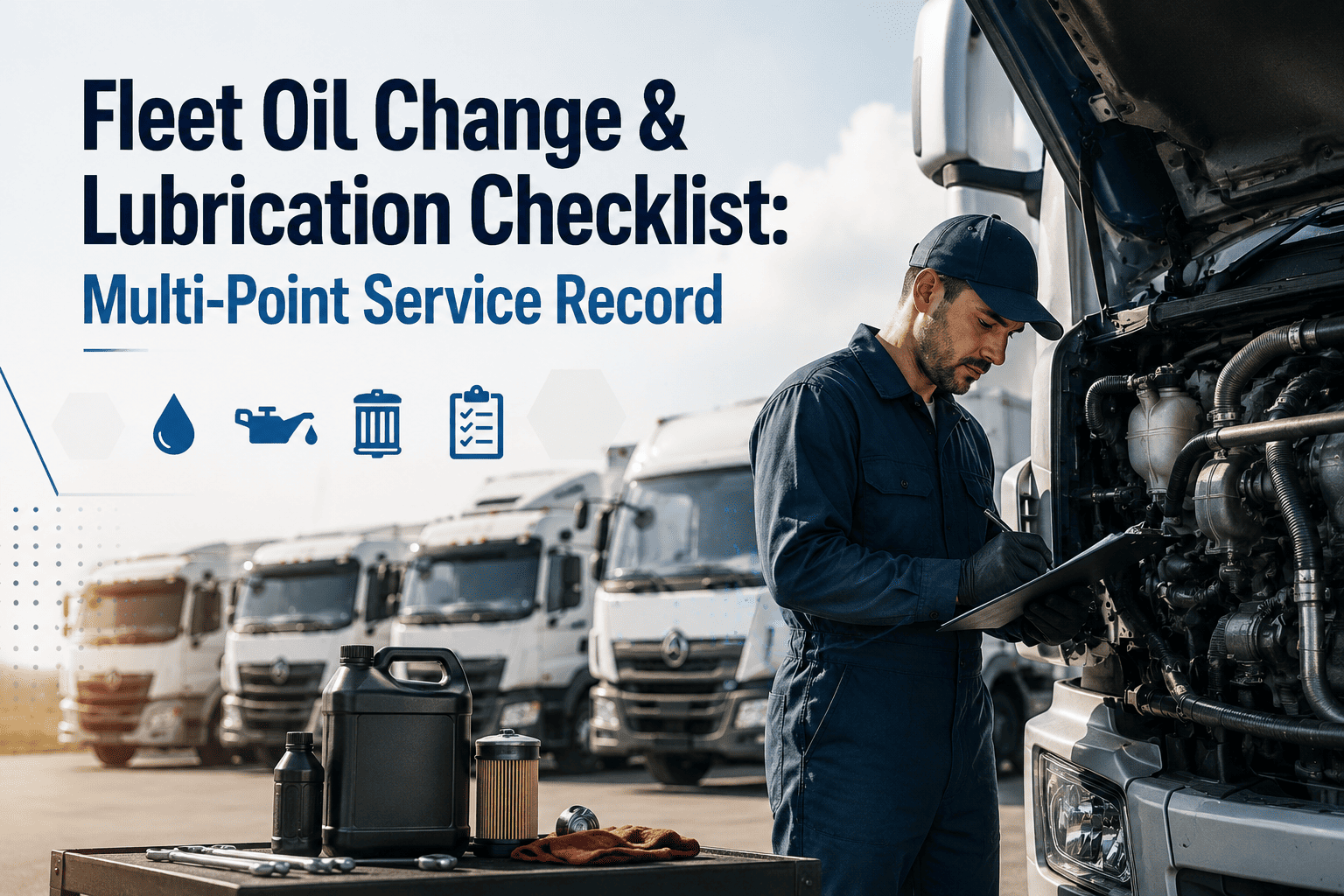
A regional produce distributor running 40 box trucks filed a warranty claim after a 2-year-old engine spun a bearing at 61,000 miles — well inside the powertrain coverage window. The OEM's field investigator pulled the vehicle's service history and found six oil changes logged over two years against a manufacturer-specified interval that called for nine. The claim was denied in nine days, and the distributor absorbed a $14,200 repair with no recourse, because the paperwork proving compliance did not exist in a form the OEM would accept. That single denial is the story behind a much bigger pattern across commercial fleets: engines rarely fail because a technician did the work wrong. They fail warranty review because nobody can prove the interval was followed, and that proof gap is what oil interval verification is built to close.
Your Oil Change Happened On Time. Can You Prove It To The Manufacturer?
Fleets don't lose engine warranty claims because service was skipped — they lose them because the mileage, the date, the oil spec, and the technician sign-off never made it into a record the OEM will actually accept as evidence.
of claimable repair costs fleets without structured maintenance tracking actually recover from OEMs
7–30
days is the typical window an OEM allows to file a claim once a repair is completed
1 in 3
denied claims trace back to incomplete or unverifiable service interval records, not the actual part failure
$4K–$8K
typical recoverable value of a single powertrain repair when interval documentation holds up
Extended oil drain intervals made this problem worse before anyone noticed. A decade ago, most fleets changed oil every 3,000 to 5,000 miles and the paperwork gap rarely mattered — the margin for error was wide. Modern synthetic-blend engines now run 10,000, 15,000, even 25,000-mile intervals under OEM-approved oil analysis programs, which means a single missed or late change represents a much larger percentage of the total interval. When that engine fails and the OEM pulls records, they are not looking for good intentions. They are looking for a mileage-stamped, technician-attributed, spec-matched entry for every single interval since the vehicle left the factory floor.
Why Oil-Related Warranty Claims Actually Get Denied
01
Interval Gaps the OEM Can See But You Can't Explain
A field investigator compares odometer readings across your service records against the OEM interval table. A 12,000-mile gap where the spec called for 10,000 is an automatic red flag — even if the engine failure has nothing to do with lubrication.
02
Oil Spec Mismatch Against the Approval List
OEMs publish approved viscosity grades and API/ILSAC or dexos-type certifications for each engine family. A record showing "5W-30 synthetic" with no certification mark listed is treated as unverified, even when the correct oil was actually used.
03
No Attribution — Who Did the Work, and With What
A paper invoice that says "oil change — $85" with no technician name, no filter part number, and no torque value applied to the drain plug gives the OEM nothing to verify. Unattributed records are functionally the same as no records.
04
Severe-Duty Reclassification After the Fact
Stop-and-go delivery routes, extended idling, dusty environments, and trailer towing all trigger a shorter "severe duty" interval under most OEM schedules. Fleets that logged against the standard interval — not knowing their duty cycle qualified as severe — get reclassified and denied retroactively.
05
Records That Exist But Can't Be Produced Fast Enough
Some fleets do keep accurate paper logs — scattered across shop binders, technician notebooks, and separate spreadsheets per location. When the claim window is seven days, a record that takes three weeks to locate and compile might as well not exist.
The Core Problem
Warranty review does not ask whether the oil was actually changed on schedule. It asks whether you can produce, within days, a mileage-stamped, spec-matched, technician-attributed record for every interval back to the vehicle's in-service date. Those are two different questions, and most fleets are equipped to answer only the first one.
What a Warranty-Defensible Interval Record Actually Contains
1
Interval Trigger Captured at the Threshold, Not After
The work order opens automatically when the vehicle crosses the OEM-specified mileage or time threshold — whichever comes first — with the triggering odometer reading stamped to the record before service begins.
2
Oil Grade and Certification Logged Against the Approved List
The viscosity grade, API service category, and any OEM-specific certification (dexos, European ACEA rating, or manufacturer-specific approval number) is recorded against the vehicle's own asset profile — not a generic fleet-wide default.
3
Technician Sign-Off, Filter Part Number, and Torque Spec Attached
The individual who performed the service is attributed to the work order, along with the filter part number installed and the drain plug torque value applied — the details an OEM investigator checks first when a bearing or gasket failure follows an oil service.
4
Oil Analysis Results Linked When the Interval Is Condition-Based
For fleets running OEM-approved extended-interval programs, the used oil analysis (UOA) results — viscosity, TBN, wear metals, soot loading — attach directly to the same record that triggered the extension, closing the loop an OEM needs to see to honor a condition-based interval claim.
5
Complete History Exportable Inside the Claim Window
The full service history for the affected vehicle — every interval, every technician, every spec — exports as a single document the moment a claim needs to be filed, rather than being assembled by hand from multiple locations under a countdown clock.
Standard vs. Severe Duty: Why One Interval Schedule Doesn't Fit Every Route
Most OEM maintenance schedules publish two separate interval tables, and fleets that apply the standard schedule to a severe-duty route are building a documentation gap before the first oil change ever happens.
Stop-and-go delivery, frequent short trips, extended idling, trailer towing
5,000–7,500 miles or 6 months
Duty-cycle classification documented on the asset record itself
Extreme Environment
Dusty, high-heat, or high-altitude operating conditions
Manufacturer-specific — often shortest published interval
Environmental classification plus oil analysis trend
Condition-Based / UOA Extended
OEM-approved extended-drain program with lab monitoring
Up to 25,000+ miles, gated by lab results
Oil analysis report attached to every service record
Warranty-Proof Checklist — Before You File the Claim
Paper and Spreadsheet Logs vs. Asset-Linked Digital Records
The difference between a claim that gets paid and one that gets denied usually is not whether the oil change happened — it is whether the record survives contact with an OEM investigator who is actively looking for a reason to say no.
Paper & Spreadsheet Logs
Interval triggerManually tracked, easy to miss
Oil spec verificationRelies on technician memory
AttributionOften missing torque and part data
Duty classificationRarely recorded at all
Claim-window retrievalManual search across locations
VS
Asset-Linked CMMS Record
Interval triggerAuto-generated at threshold
Oil spec verificationMatched against approved list
AttributionTechnician, filter, and torque attached
Duty classificationSet on the asset profile permanently
Claim-window retrievalSingle export, minutes not weeks
Stop Rebuilding Service History Under a Claim Deadline
OxMaint ties every oil interval to the vehicle's own asset record — trigger, spec, technician, torque, and analysis results all attached to one exportable history from day one.
OEM Extended-Interval Programs: The Paperwork Behind the Extra Miles
Cummins, Detroit Diesel, and most major powertrain manufacturers now publish formal extended-drain programs that let fleets stretch beyond the standard interval — but every one of those programs is conditional, not automatic. The extension is granted based on a sampling schedule, and the OEM expects to see a continuous chain of lab results, not a single favorable report used to justify skipping years of testing.
A
Baseline Sample Before the Extension Starts
Most programs require an initial oil analysis at the standard interval to establish a baseline before any extension is approved — skipping this step is one of the fastest ways to lose eligibility for the entire program.
B
Sampling at Every Extended Interval, Not Just the First One
A single clean report does not authorize indefinite extension. The OEM expects a sample at every interval in the extended schedule, forming a trend line that shows viscosity, total base number, and wear metals staying within range over time.
C
Immediate Reversion When a Sample Flags Out of Range
If a single sample comes back outside the acceptable range, most programs require an immediate reversion to the standard interval until two consecutive clean samples restore eligibility — a step fleets frequently miss when the lab report and the PM schedule live in separate systems.
The practical effect is that an extended-interval program creates more documentation obligation per oil change, not less. A fleet running a 25,000-mile extended interval without an unbroken analysis trail attached to each service record is, from the OEM's perspective, running an unauthorized interval — which converts a routine oil-related failure into an easy denial rather than a covered repair.
Where Oil Interval Records Fit Into Broader Fleet Maintenance Software
Oil interval documentation is rarely the only warranty exposure a fleet carries — transmission service, coolant intervals, and emissions component replacement all follow the same OEM logic of interval, spec, and attribution. A maintenance management platform that generates PM work orders automatically at each mileage or time threshold, attaches the applied part numbers and torque values to the record, and stores the technician sign-off against the vehicle's permanent asset history removes the manual reconstruction step entirely. Inspections completed on a mobile device at the point of service, rather than written up later from memory, close the gap between what happened and what got recorded. When a claim window opens, the fleet manager is exporting a record that already exists instead of trying to assemble one from scattered paperwork.
This matters most for mixed fleets running multiple OEM brands, where each manufacturer publishes a different interval table, a different approved oil list, and a different claim-filing window. A platform that tracks these per-vehicle, rather than applying one blanket policy across the fleet, is what keeps a Freightliner's severe-duty schedule from accidentally being applied to a Peterbilt running standard highway miles — a mismatch that shows up immediately to anyone reviewing the record on the OEM side.
Acquisitions and brand additions are the most common source of a discovered gap.
Fleet managers who inherit a mixed fleet from an acquisition, or who add a new OEM brand to the roster, often discover the documentation gap only after the first denied claim. Building the interval-by-OEM logic into the maintenance system before that first denial — rather than reconstructing years of history under deadline pressure — is the difference between a warranty program that pays out and one that exists only on paper.
Frequently Asked Questions
How far back does an OEM typically check oil change records during a warranty investigation?
Most investigators request the complete service history back to the vehicle's in-service date, not just the most recent interval. Gaps anywhere in that history, not only near the failure point, can factor into the decision.
Does changing your own oil void a commercial vehicle warranty?
Not automatically — most OEMs allow self-performed maintenance as long as the interval, oil specification, and part records are documented and can be produced on request. The risk is documentation quality, not who performed the work.
What is the difference between standard and severe duty oil intervals?
Severe duty schedules apply to stop-and-go routes, extended idling, or towing, and typically cut the standard mileage interval by 30 to 50 percent. Applying the wrong classification is a common cause of retroactive claim denial.
Can oil analysis results extend an OEM interval without voiding warranty?
Yes, when the extension follows an OEM-approved condition-based program and the lab results are attached to the service record for every extended interval. Book a demo to see how analysis data attaches automatically to the work order.
How quickly do fleets need to produce records once a claim is filed?
Filing windows range from as short as seven days to around thirty, depending on the manufacturer, and records that cannot be compiled and submitted inside that window are typically treated as if they don't exist.
Every Oil Interval Should Already Be Warranty-Ready — Before You Ever Need the Claim.
OxMaint attaches the interval trigger, oil spec, technician sign-off, and analysis results to every vehicle's permanent record, so the documentation exists the moment service happens, not the moment a claim window opens.