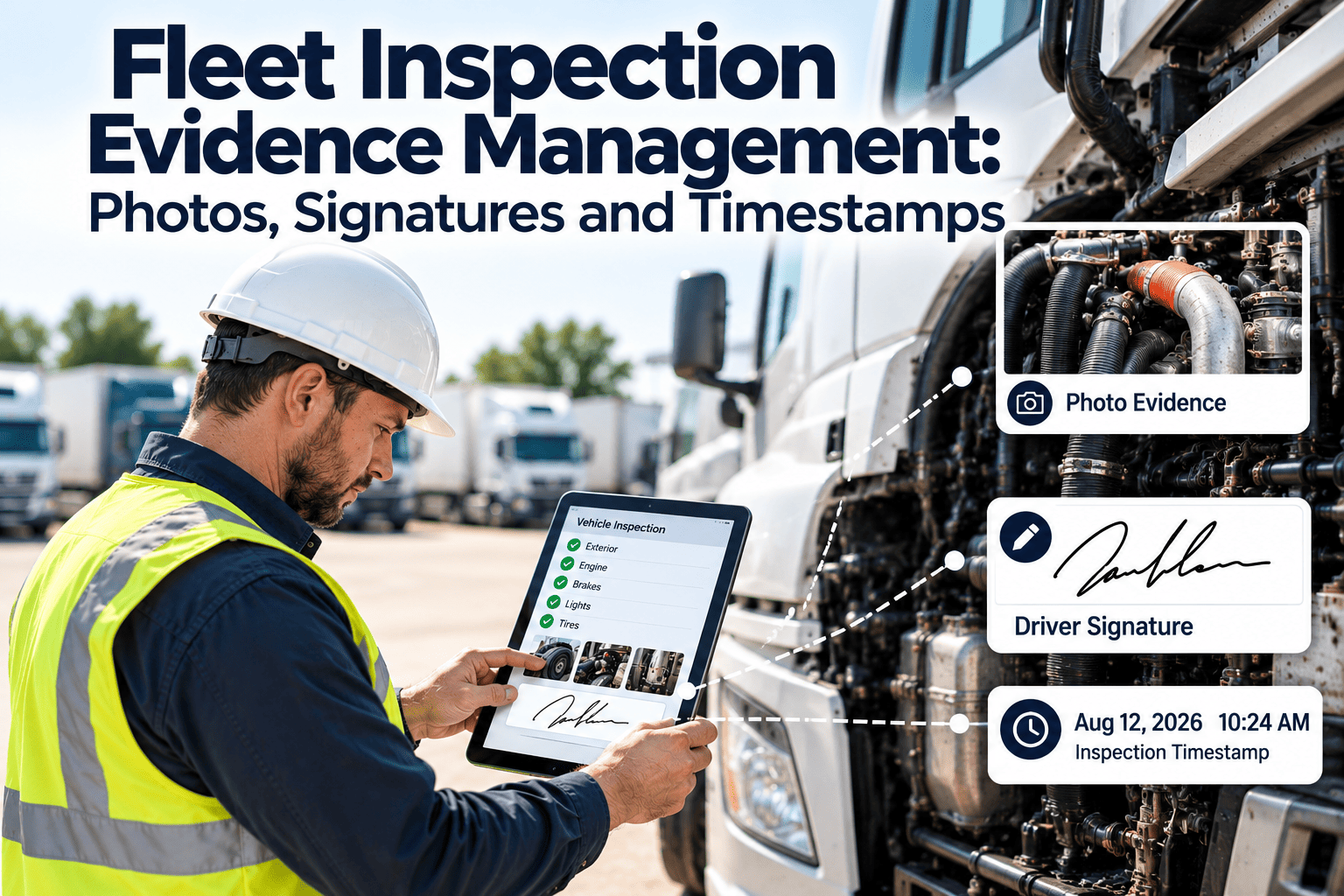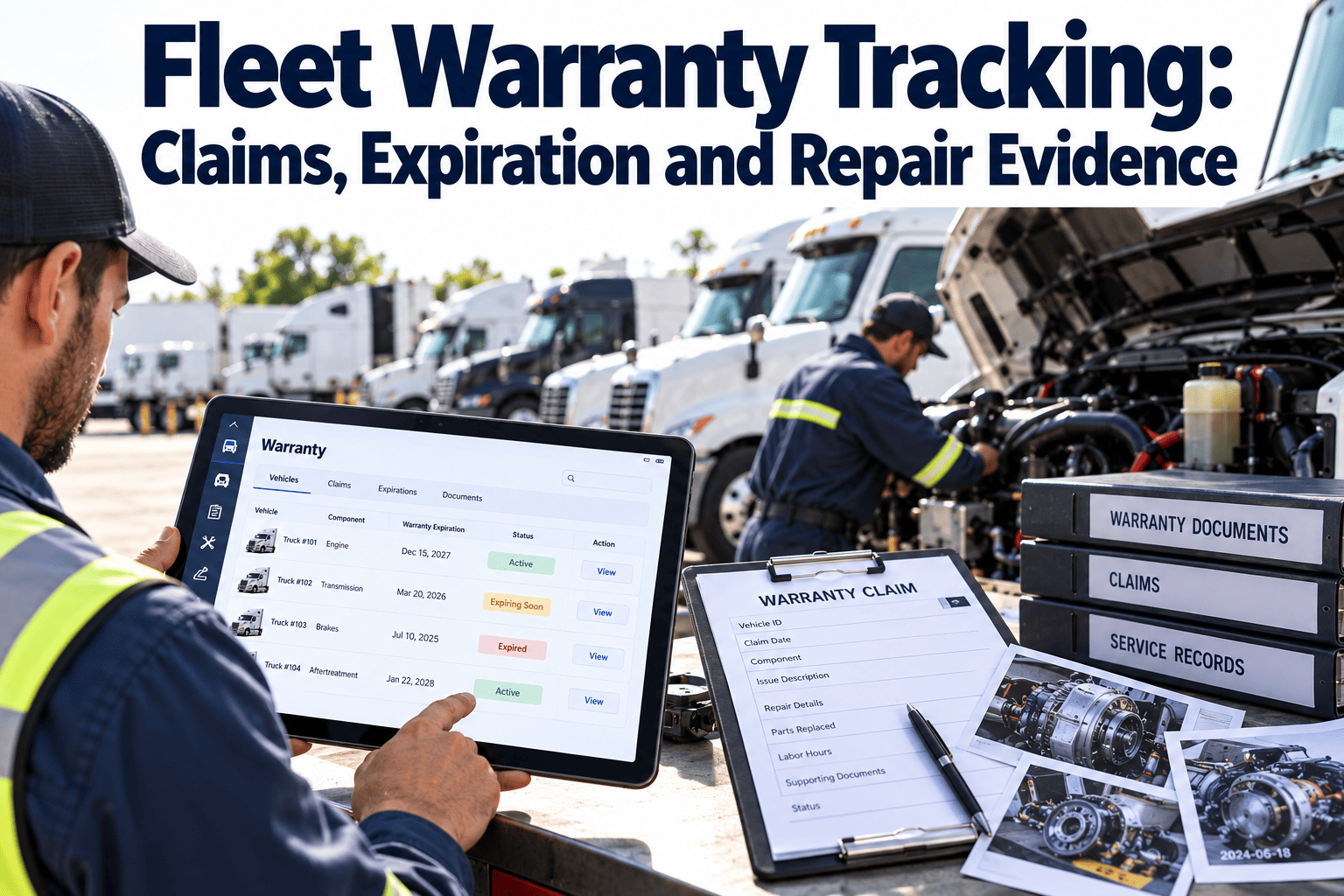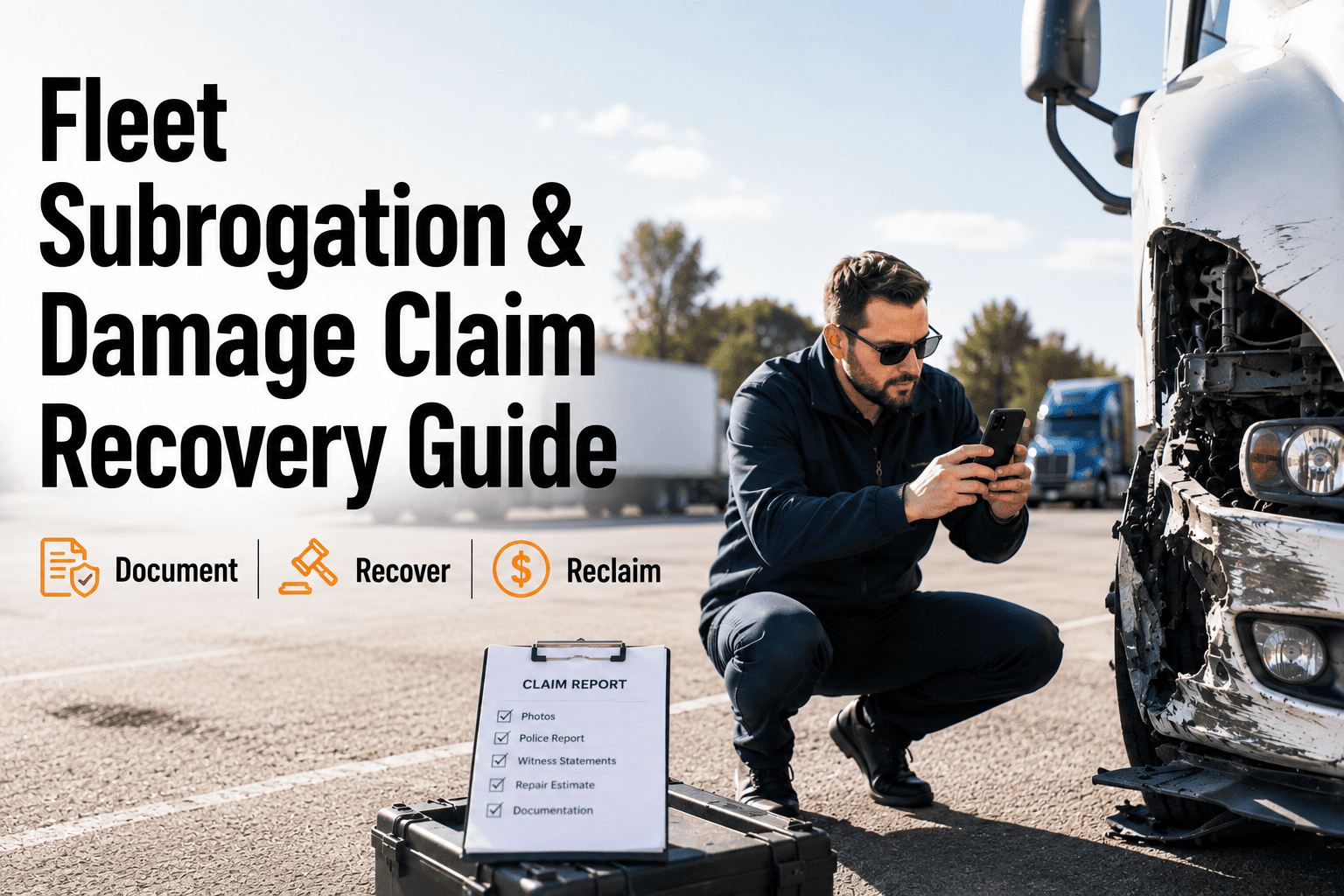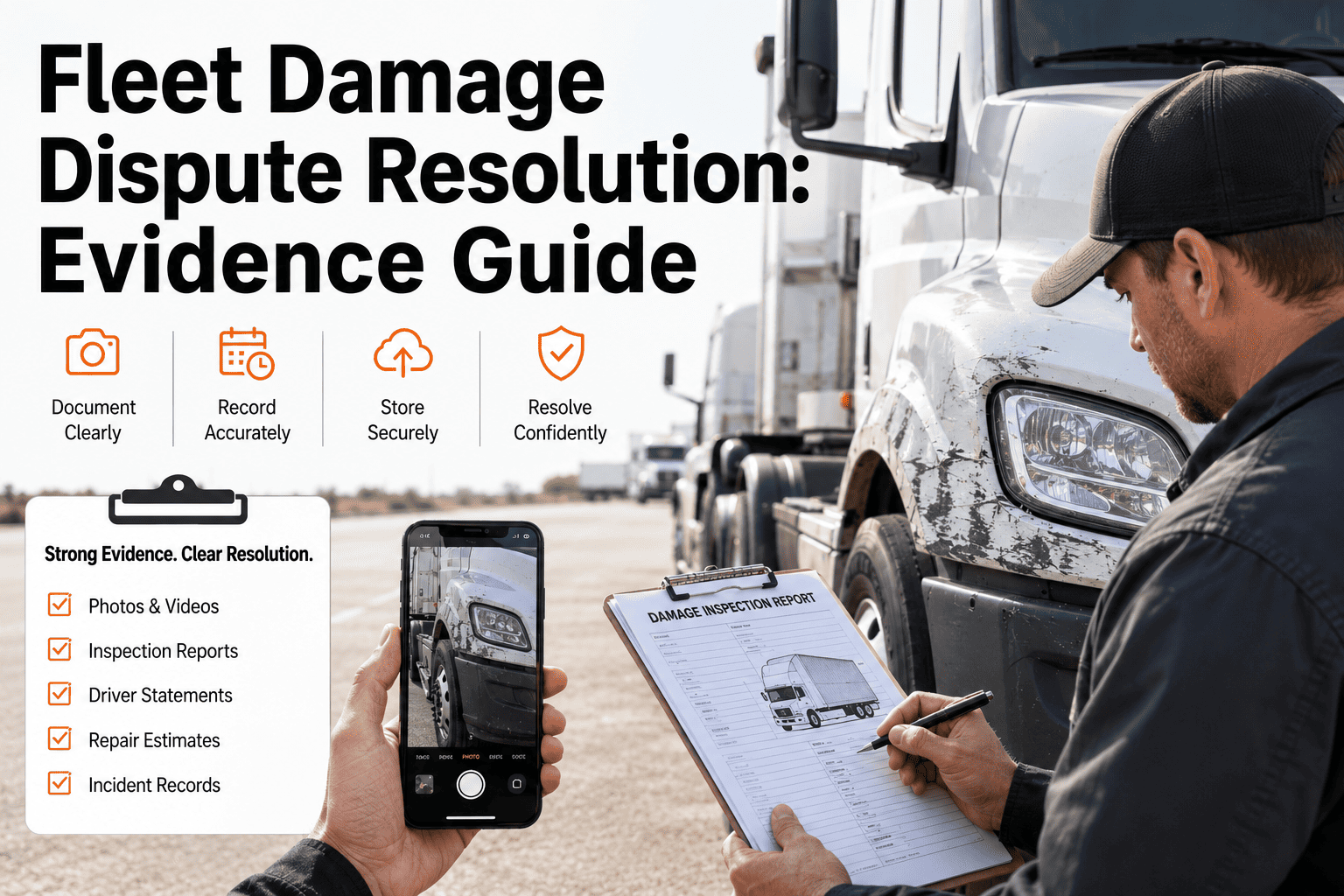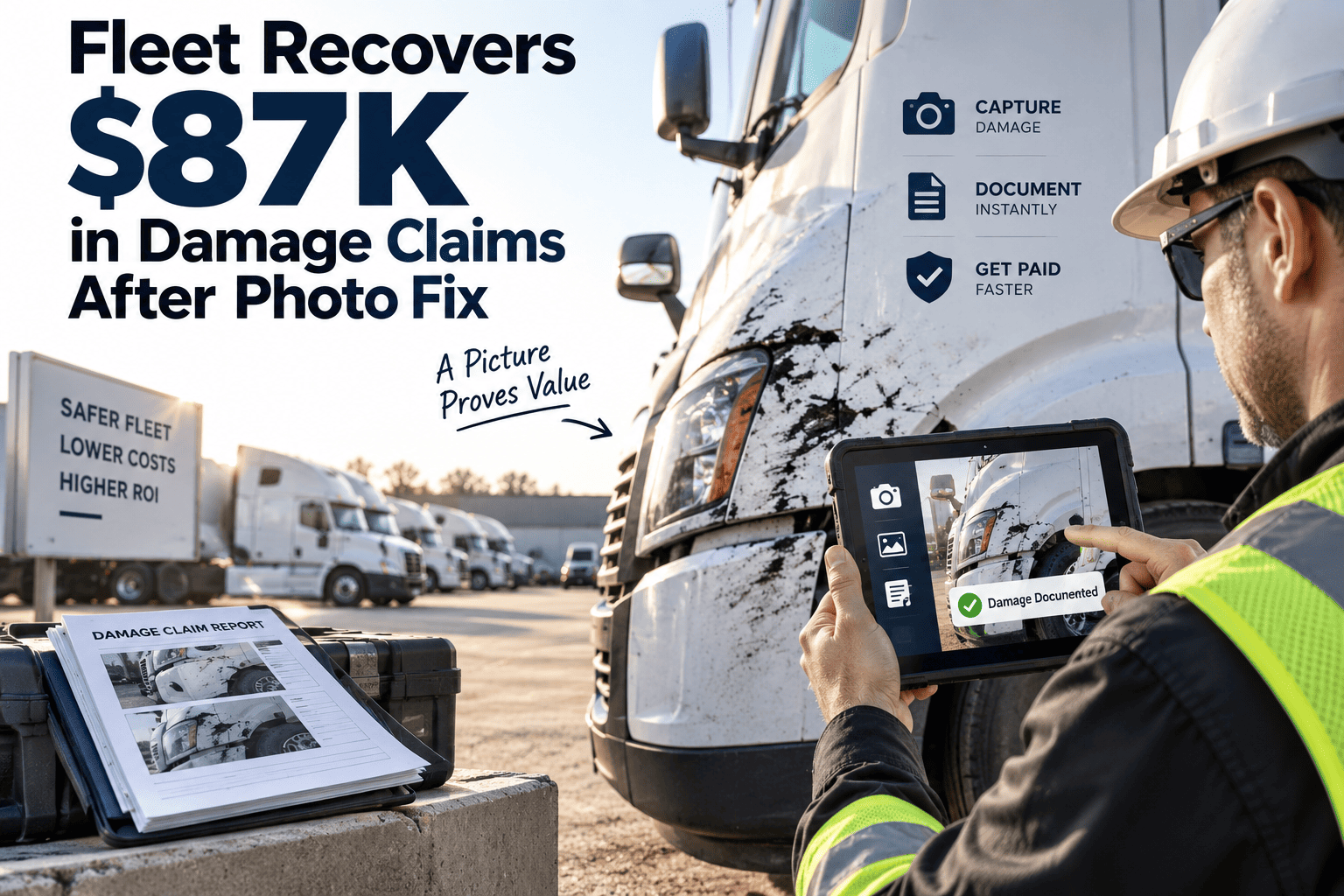
A regional delivery fleet running 220 straight trucks and cargo vans was absorbing roughly one in three cargo damage claims as a flat write-off — not because the damage wasn't real, but because nobody could prove where it happened. After standardizing a five-photo capture sequence inside a connected work order system, the fleet reversed $87,000 in claims that would previously have been denied or split 50/50, in a single year. This is the breakdown of what changed, why it worked, and the exact workflow inside OxMaint that made the evidence defensible instead of anecdotal.
$87,000 in denied damage claims, reversed in one year
A 220-vehicle delivery fleet went from losing roughly one-third of cargo damage disputes to winning the majority of them — by fixing how condition was documented at pickup and delivery, not by disputing more claims.
Why this fleet was losing claims it should have won
Industry data backs up what this fleet's claims team already suspected: missing or incomplete documentation, not disputed damage, is the leading reason cargo claims get denied. Roughly 35 to 40 percent of rejected freight claims fail purely because the paperwork or photo trail couldn't hold up — the damage itself was rarely the argument.
- Drivers took one or two phone photos "if they remembered"
- No timestamp, no shipment reference, no consistent angle
- Photos lived on personal phones or a shared folder nobody indexed
- Proof of delivery signed clean even when damage was visible
- Claims filed days after discovery, past the carrier's notice window
- Five-photo sequence required before a stop can be marked complete
- Every photo timestamped and linked to the work order and load ID
- Photos stored centrally, searchable by vehicle, driver, route, or date
- Exceptions noted on the delivery record before signature, not after
- Claim packet auto-assembled the same day damage is logged
This isn't a one-fleet problem — it's an industry default
Freight claims cost U.S. shippers and carriers tens of billions of dollars every year, and the fleets losing the most money on disputes are rarely the ones with the worst safety records or the most reckless handling. They're the ones running documentation as an afterthought — a habit that depends on an individual driver's memory instead of a system that enforces it the same way every time.
The pattern repeats across LTL, full truckload, parcel, and specialty freight: carriers and insurers don't need to prove the damage didn't happen to deny a claim, they only need to show the paperwork trail has a gap. A proof of delivery signed without a damage notation legally shifts the presumption of condition onto the receiving party. A photo with no timestamp or shipment reference is treated as unverifiable rather than false. None of that requires bad faith on the carrier's side — it's simply how evidence standards work, and most fleets are unknowingly operating below them on every single stop.
What makes this fixable rather than just frustrating is that the fix doesn't require new hardware, new routes, or new headcount. It requires making the existing photo step impossible to skip, and making the photos that do get taken impossible to lose. That's a workflow design problem, not a driver discipline problem — and it's why fleets that fix the system see the change hold, while fleets that just "remind drivers to take more photos" watch compliance decay within a few weeks.
Where the $87K was actually being lost
Before changing anything, the fleet's ops manager pulled twelve months of closed claims and tagged each denial by cause. Three patterns accounted for almost all of it, and none of them were about whether the damage was legitimate — every one of these claims described real, verifiable damage that a carrier or insurer simply had no obligation to pay because the evidence trail didn't meet their standard.
That distinction mattered more than anything else in how the fix got designed. If the losses had been about disputed liability — arguments over who actually caused the damage — the answer would have looked different, probably involving more inspection staff or stricter driver accountability measures. But a documentation gap doesn't need more scrutiny of drivers; it needs a workflow that captures the same evidence, the same way, on every stop, regardless of how busy the yard is or how experienced the driver happens to be.
| Denial pattern | Share of losses | What was actually missing |
|---|---|---|
| Clean-signed proof of delivery | ~45% | No damage notation before the receiver's signature — once signed clean, the claim presumption flips against the carrier |
| Photo without context | ~30% | A close-up of the dent with no wide shot, no timestamp, no load ID to tie it to |
| Late notification | ~25% | Damage discovered but not reported to the carrier within the required window |
The five-photo sequence that closed the evidence gap
Rather than asking drivers to "document damage carefully" — a subjective instruction that produces inconsistent results — the fleet built a fixed capture sequence into every pickup and delivery stop as a required step before the work order can close. Every driver captures the same five angles in the same order, which means a claims reviewer looking at photo evidence from any stop, on any route, on any day, is looking at a record with a predictable structure instead of guessing what a given driver happened to think was worth photographing.
The sequence was deliberately kept short. A ten-step checklist looks thorough on a training slide but gets skipped the first time a driver is running behind schedule. Five required frames, captured in under two minutes per stop, was the ceiling the fleet found drivers would actually complete consistently across a full shift.
Wide context shot
Full trailer or cargo area with doors open, load still in position, vehicle ID visible in frame.
Load ID / seal shot
Bill of lading number, seal number, and any pre-existing packaging condition, legible in one frame.
Condition-at-pickup shot
Cargo condition captured before the vehicle leaves the origin, establishing the baseline every later dispute gets compared against.
Delivery condition shot
Same angles, same load, captured immediately before the receiver signs — not after they've already taken possession.
Exception close-up (if needed)
Damage-specific photo with a scale reference, captured before the driver leaves the delivery point, attached directly to the work order.
What changed in twelve months
Figures reflect one fleet's internal before/after comparison over a twelve-month window and are illustrative of the pattern reported across fleets that formalize photo-evidence capture, not a guaranteed outcome for every operation.
What it actually took to make the sequence stick
The photo sequence itself was the easy part to design. Getting 220 vehicles' worth of drivers, across multiple shifts and routes, to follow it every single stop without exception was the harder problem — and it's the part most fleets underestimate when they try to copy a documentation fix from a policy memo alone.
Three changes made the difference between a policy that looked good on paper and one that actually held up under audit. First, the photo step was built into the work order itself as a required field, not a separate app or a manual upload — a stop simply could not be marked complete without it. Second, every photo captured attached automatically to the vehicle, driver, and load record, so nothing depended on someone remembering to file it correctly afterward. Third, the ops team ran a short weekly spot-check on a sample of closed work orders during the first six weeks, catching the handful of drivers who were rushing the sequence before it became a habit rather than after a claim was already lost.
None of these changes required new capital equipment. They required treating photo evidence as a required maintenance and operations record with the same enforcement rigor as a pre-trip inspection — logged, timestamped, and impossible to close out around. Drivers who initially treated the sequence as extra work settled into it within two to three weeks once it became the default way a stop gets closed rather than an optional add-on layered on top of their existing routine.
See what a defensible photo trail looks like on your fleet
Walk through how OxMaint attaches timestamped, work-order-linked photos to every stop, and turns damage documentation into evidence instead of guesswork.
Turning photo capture into an unbreakable habit, not a hope
The hardest part of any documentation fix isn't designing the sequence — it's making sure every driver, every stop, every time, actually follows it. That's a workflow enforcement problem, and it's exactly what a connected maintenance and operations platform is built to solve. A policy on a laminated sheet in the cab doesn't survive a busy Friday; a required field on a digital work order does, because the stop can't be closed without it.
It also solves the second half of the problem that policy alone never touches: retrieval. A photo that exists but can't be found within the claim's response window is functionally the same as a photo that was never taken. Centralizing capture inside the same system that already tracks the vehicle, the driver, and the work order means a claims manager pulling evidence for a contested delivery from three weeks ago can search by load ID or vehicle instead of asking a driver to check their phone.
Required steps, not optional habits
OxMaint work orders can require photo capture before a delivery stop is marked complete, so the sequence isn't dependent on any one driver remembering it.
Every photo linked to the load
Photos, timestamps, and GPS attach directly to the vehicle and work order record instead of a phone camera roll nobody can search later.
Exception flagging at the point of delivery
Damage noted during the stop routes into a corrective work order automatically, so the claim packet starts assembling before the driver even leaves the site.
Searchable history for disputed claims
Dashboards and reporting make it possible to pull every photo tied to a vehicle, route, or date range in minutes instead of days when a claim is contested.
Frequently asked questions
Why do cargo damage claims get denied even when the damage is real?
Most denials trace back to missing or incomplete documentation rather than a genuine dispute over the damage itself — no timestamped photo, no notation before signature, or notice filed too late.
How many photos does a defensible damage claim actually need?
A wide context shot, a load/seal identifier, condition at pickup, condition at delivery, and a close-up of any exception with a scale reference is generally enough to remove ambiguity.
Can a CMMS really change claim outcomes, or is that a documentation problem only?
Documentation is the root cause, but a CMMS is what makes the habit consistent — requiring the photo step before a work order closes and linking every image to a searchable record. You can Start Free Trial to see the workflow.
How quickly should damage be reported after it's discovered?
Most carriers require initial notice within days of delivery, and the strongest claims are filed the same day damage is found, with the full evidence packet attached from the start.
Does this only help with cargo damage, or also with vehicle condition disputes?
The same structured, timestamped photo habit applies to accident documentation, lease turn-in disputes, and driver-to-driver vehicle handoffs — anywhere "it was already like that" becomes an argument.
The same habit protects more than one line item
Once the five-photo sequence was running reliably for cargo claims, the fleet extended the same required-step pattern to two other recurring disputes: driver handoff condition between shifts on shared vehicles, and vehicle condition at the point of lease turn-in. Both had been quieter sources of loss than freight claims, but both followed the identical root cause — a condition record that existed in someone's memory instead of a searchable, timestamped work order.
Handoff disputes between drivers sharing a vehicle across shifts dropped noticeably once each handoff required its own short photo record, because neither driver could plausibly claim damage happened "on the other shift" when a timestamped photo existed showing the vehicle's exact condition at the moment of transfer. Lease turn-in disputes followed the same logic: a documented condition record at pickup meant the fleet was negotiating from evidence instead of memory when a leasing company tried to bill for wear that was already present before the vehicle was even assigned.
Stop writing off claims you could actually win
Book a walkthrough and see how a required photo sequence, linked to every work order, turns damage disputes into a five-minute review instead of a lost argument.
Free 14-day trial · No credit card required