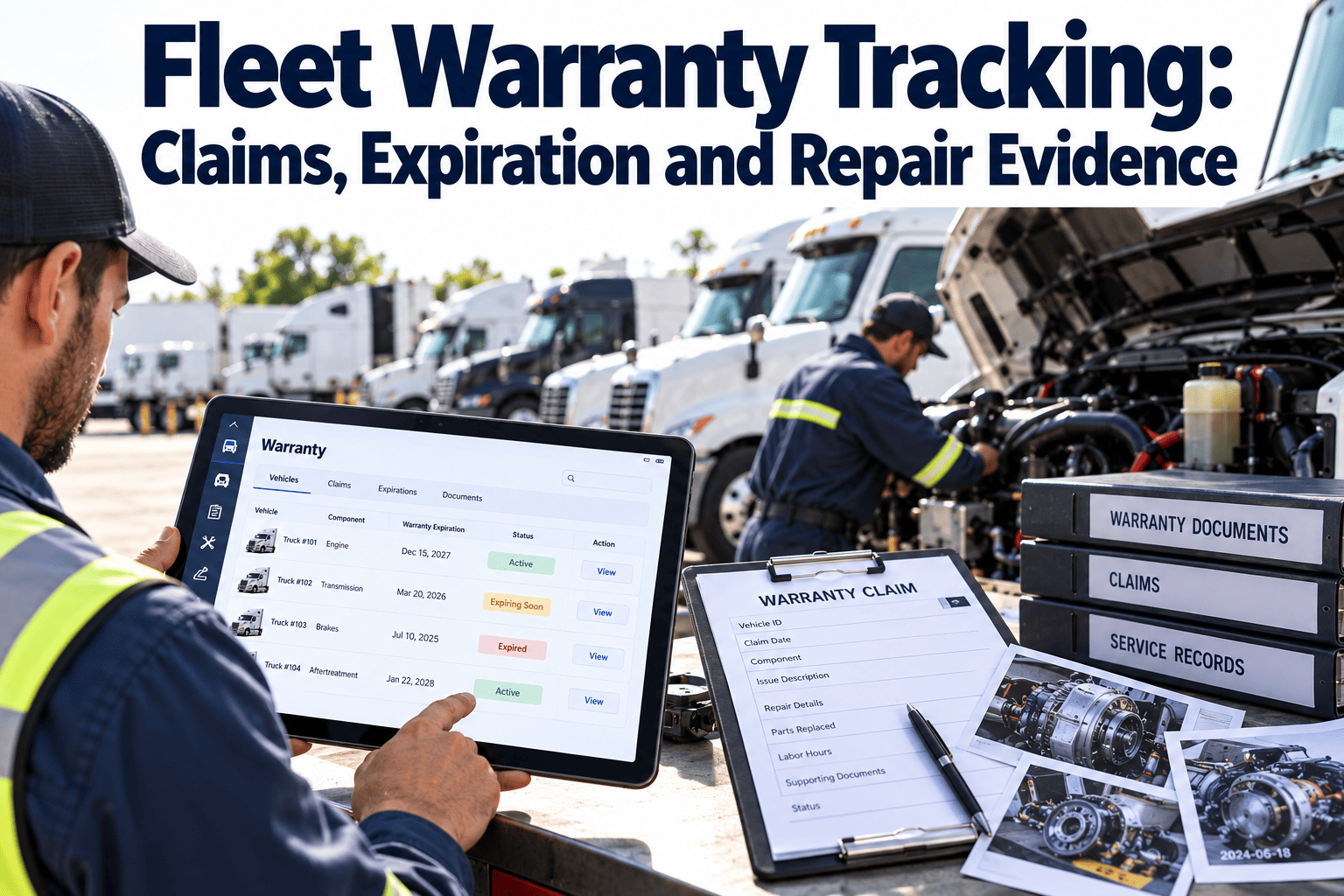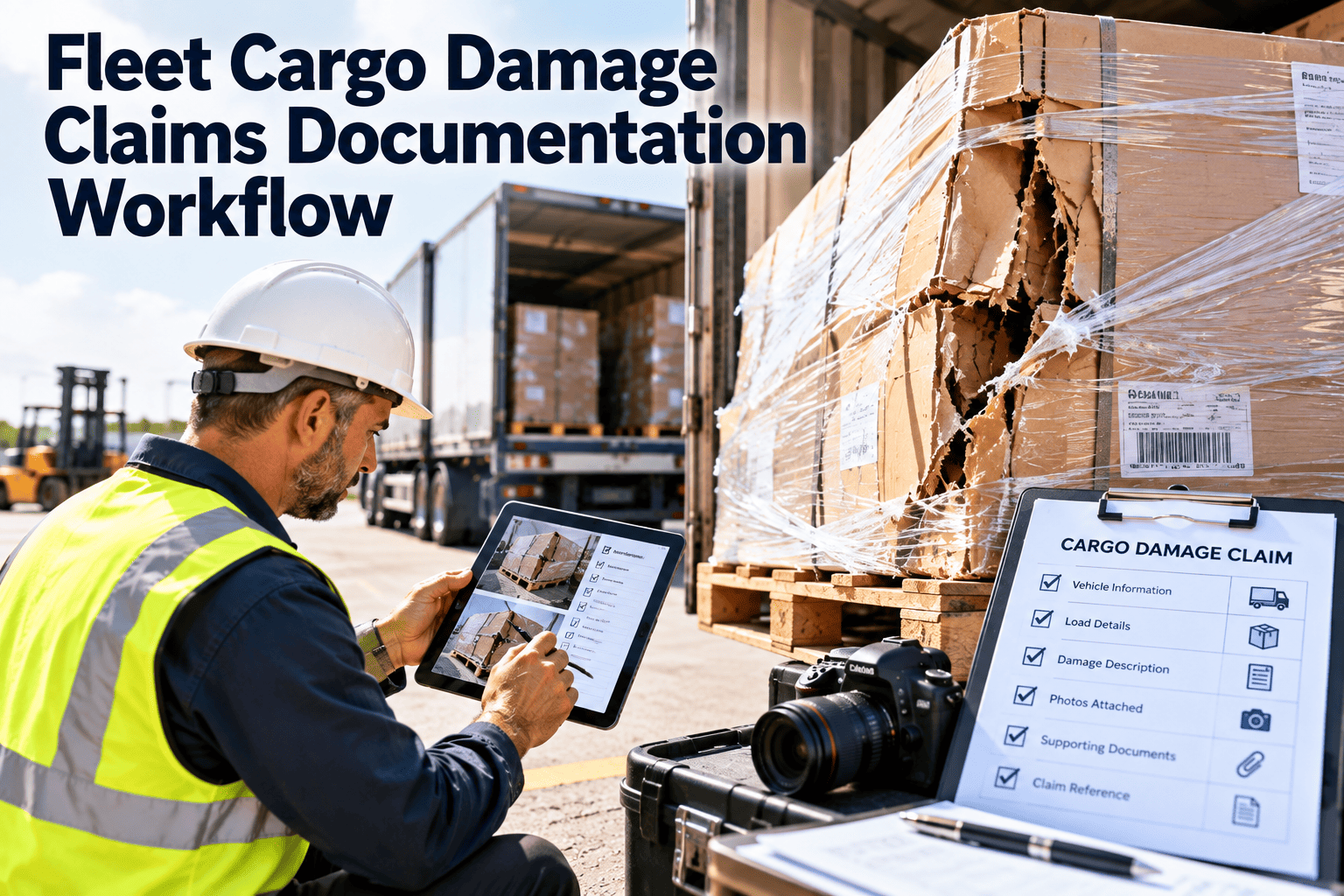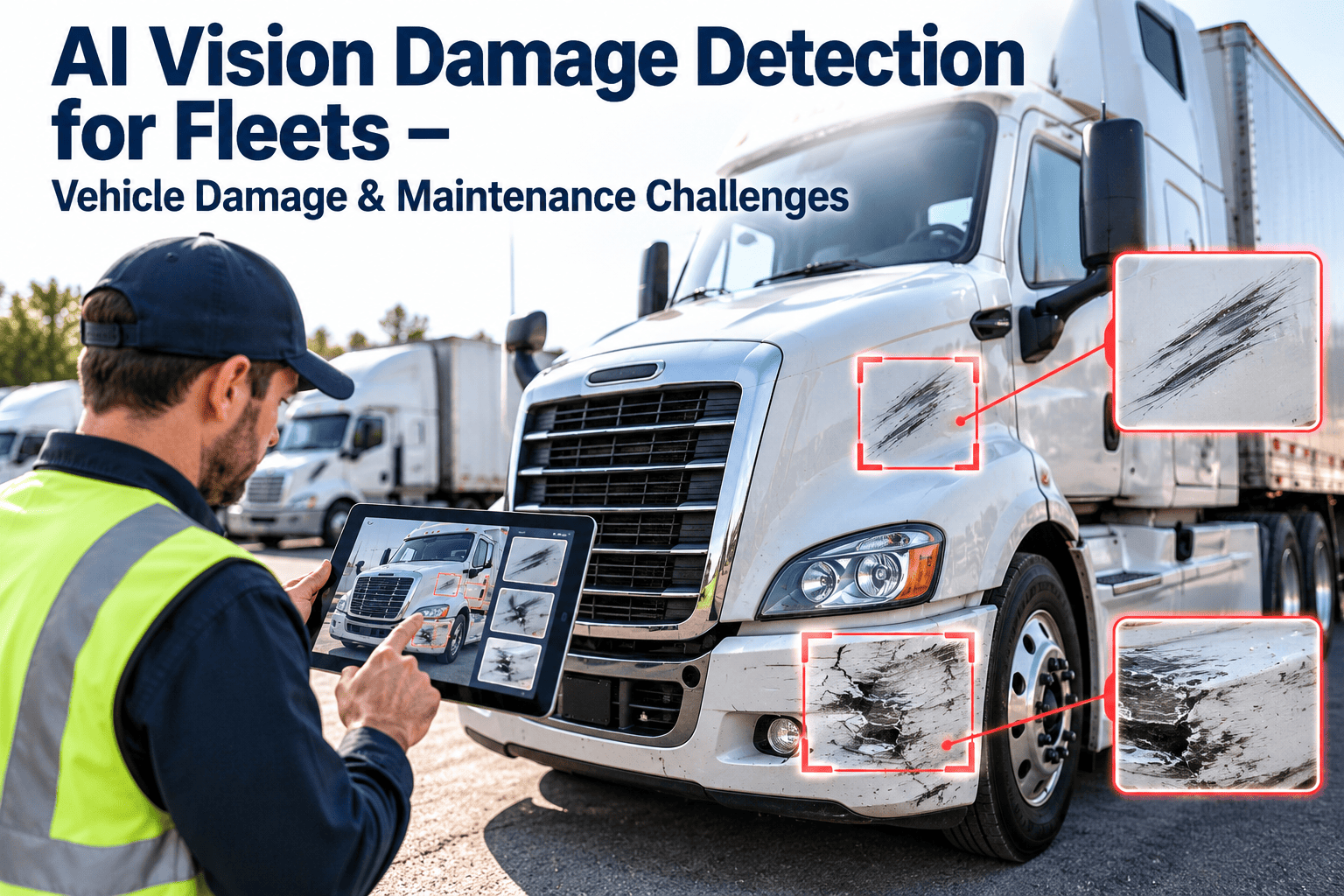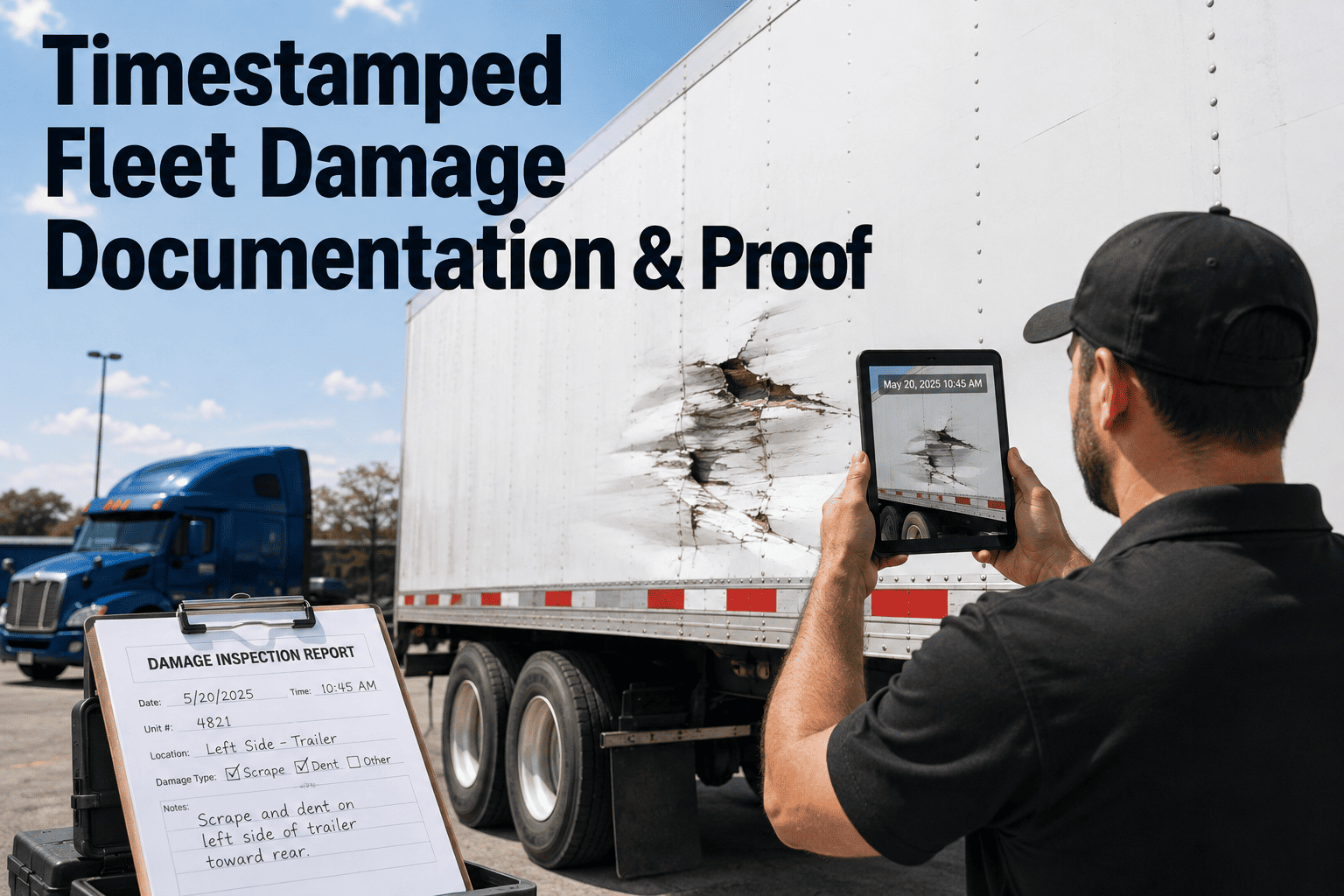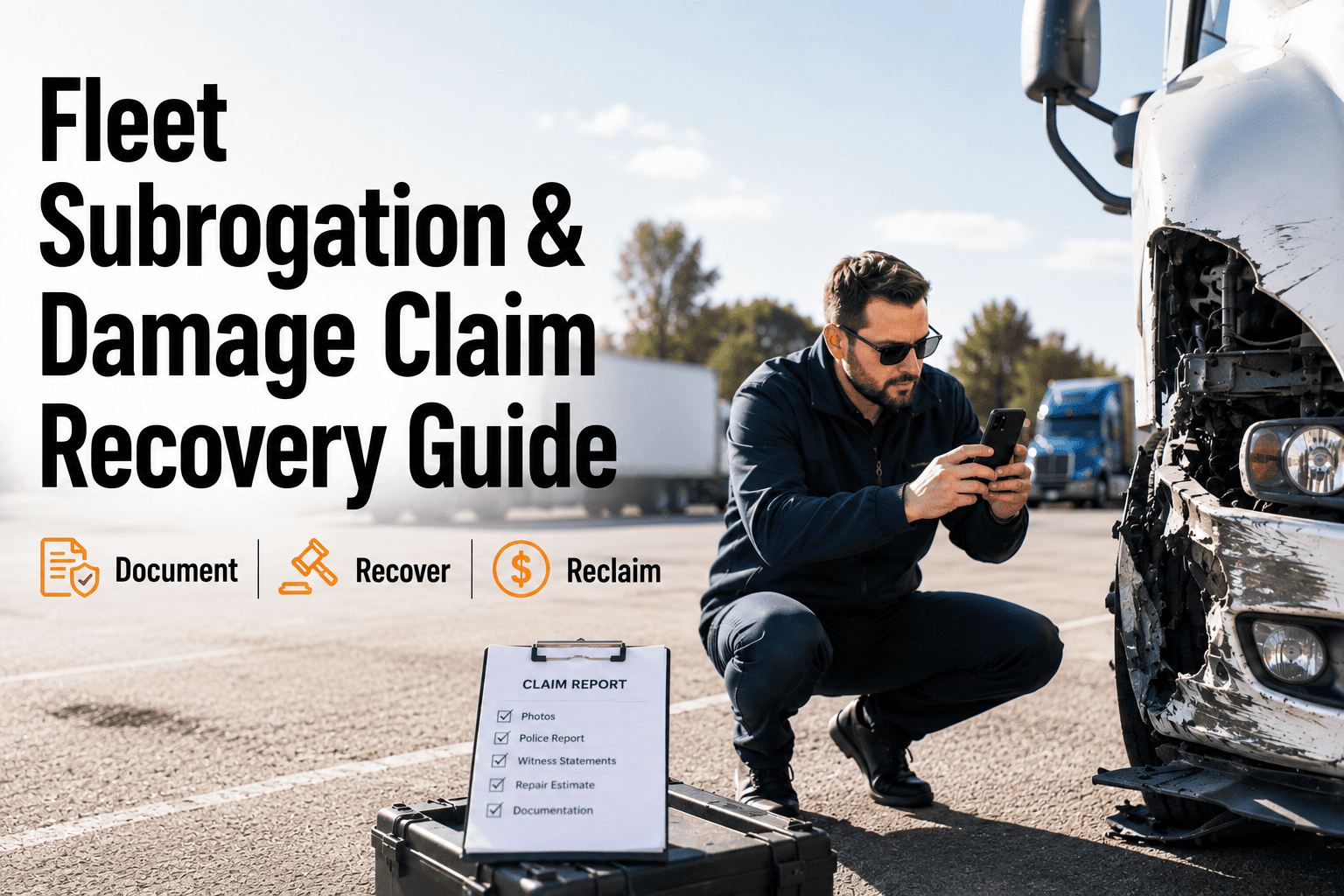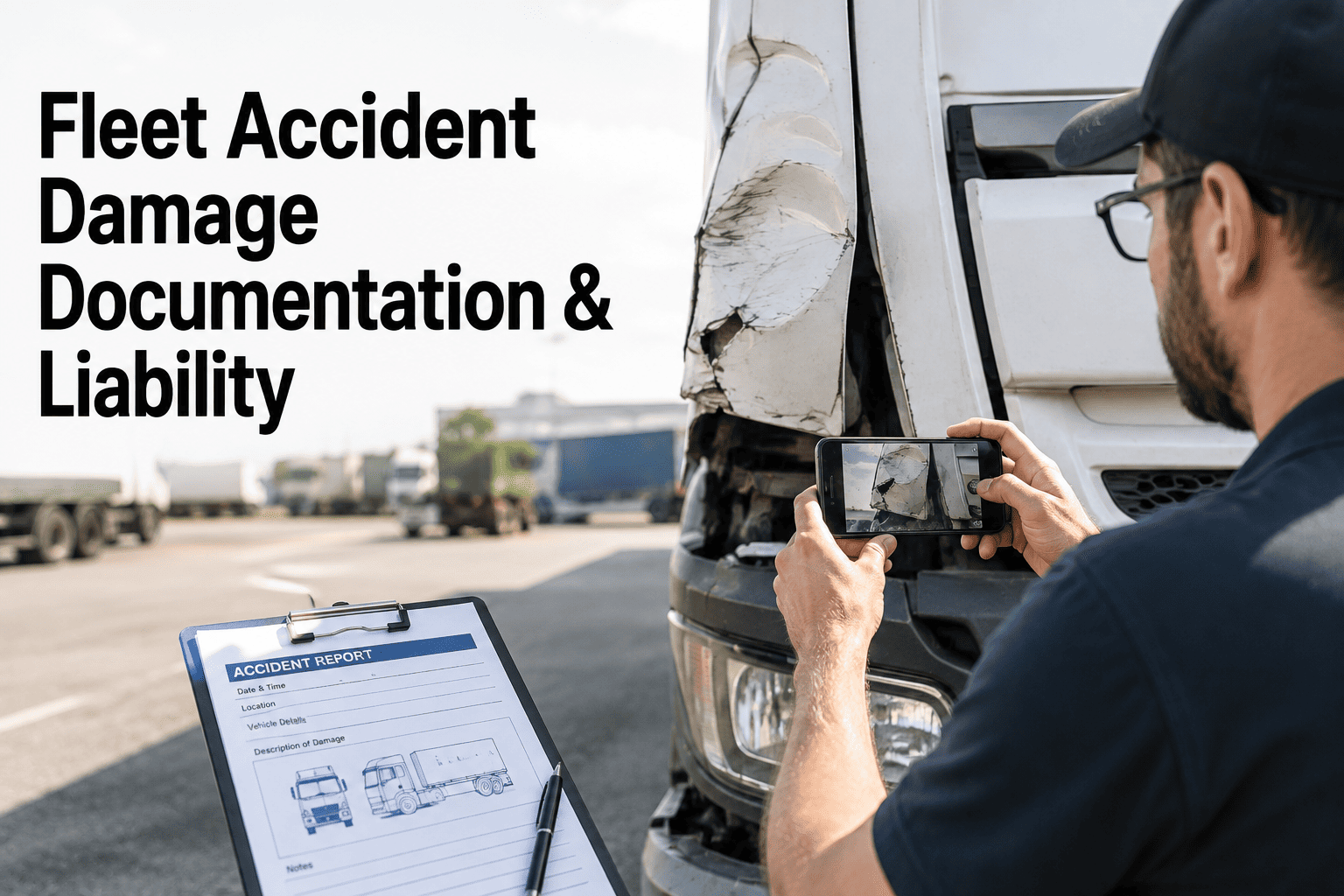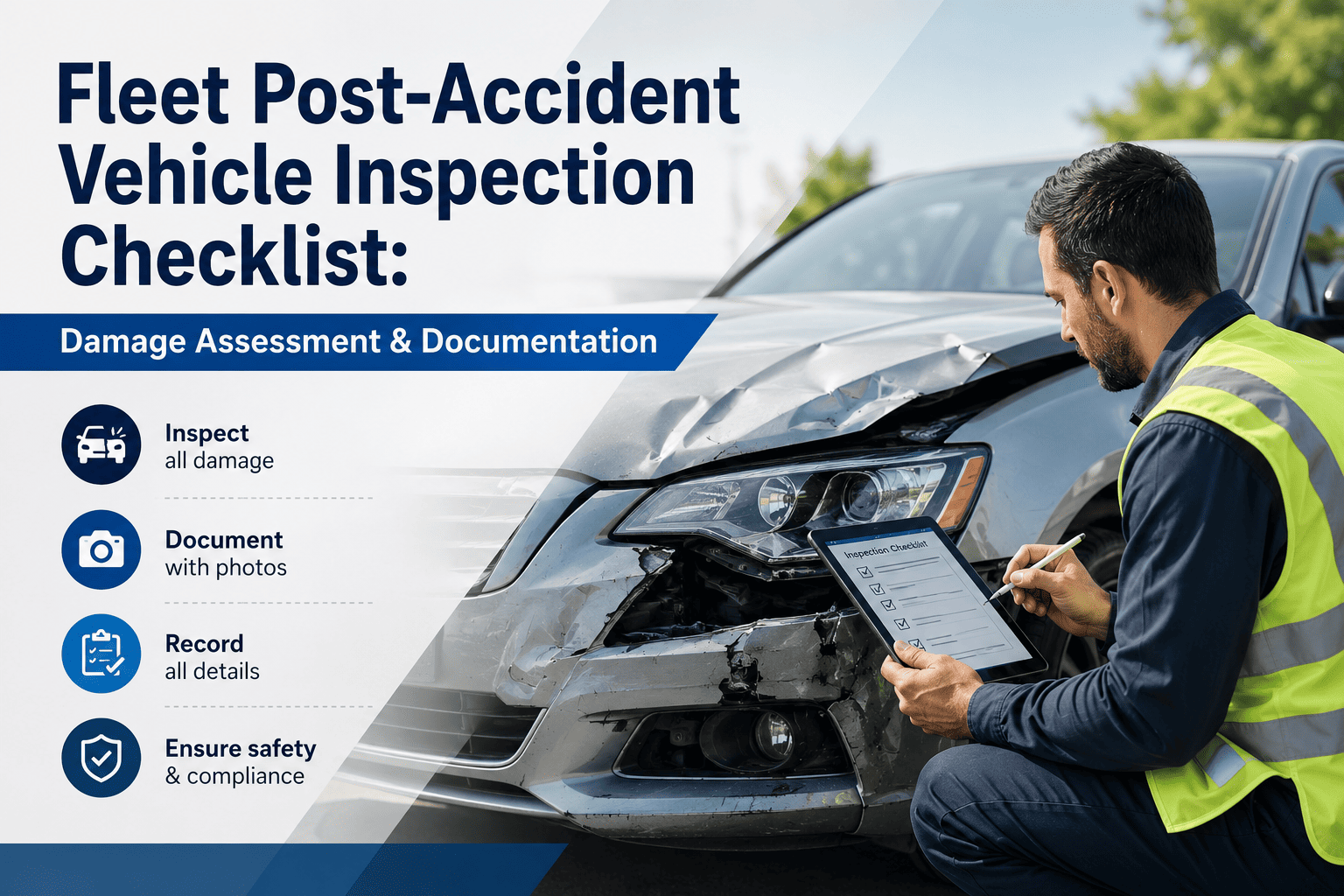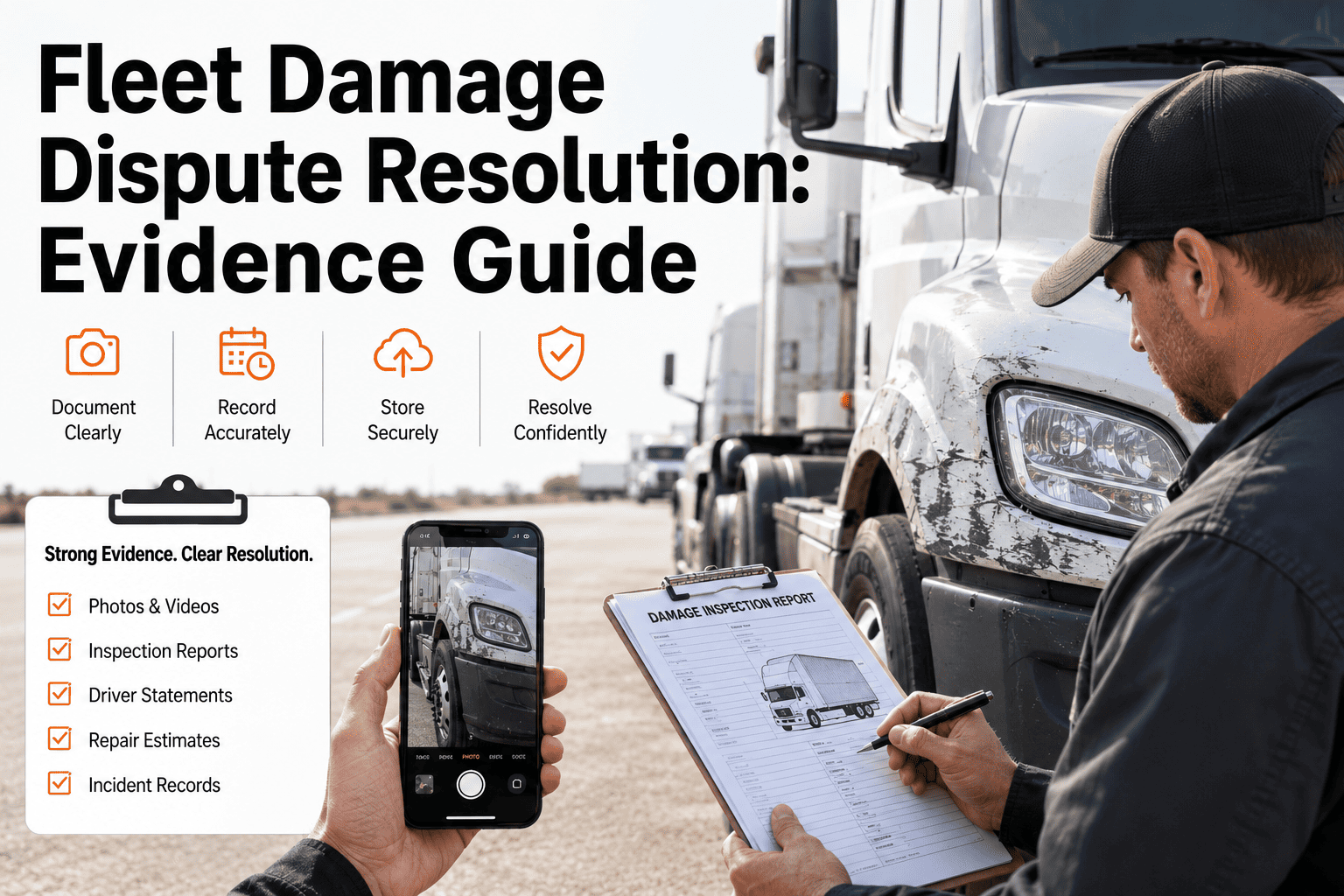
Fleet damage dispute resolution succeeds or fails on evidence: fleets that capture timestamped photos, inspection records, and a documented chain of custody win or settle the overwhelming majority of vehicle damage disputes, while fleets relying on memory and paper logs absorb repair costs they never caused. Industry loss-adjusters estimate that undocumented fleet damage claims are recovered at rates below 30%, compared with 80%+ recovery when a defensible evidence package is produced within 48 hours of the incident. This guide explains exactly what fleet damage evidence you need, how to build a dispute-ready documentation workflow, and how to protect your fleet from he-said-she-said outcomes. If you want this evidence trail captured automatically on every vehicle, Start Free Trial and see how OxMaint turns inspections into dispute-proof records.
Can You Prove the Damage Wasn't Your Driver's Fault — Right Now?
When a damage dispute lands, you have roughly 48 hours to produce timestamped photos, condition reports, and custody records. Fleets that can, recover 80%+ of claim value. Fleets that can't, pay for damage they didn't cause — often $3,000–$12,000 per incident.
Why Fleet Damage Disputes Fail Without Documentation
A single unresolved fleet vehicle damage dispute averages $4,500 in direct repair cost — before you count admin hours, insurance premium impact, and write-offs. Here is where the money goes when evidence is missing.
"In a damage dispute, the party with the better records wins — not the party telling the truth. Truth without timestamps is just an opinion."
The 5 Types of Fleet Damage Evidence That Win Disputes
Claims teams and arbitrators look for five specific evidence categories. Miss two or more and your fleet damage claim dispute is effectively unrecoverable.
Timestamped Photo & Video Condition Records
Dated, GPS-tagged images of every panel, wheel, glass surface, and the interior — captured at check-out and check-in. Photos taken hours after an incident are routinely dismissed; photos taken at handover are not.
Chain of Custody Tracking
A signed, sequential log of who had the vehicle, when, and in what recorded condition. Custody gaps — an unlogged weekend, a vendor handoff with no signature — are where fleet damage disputes are lost.
Pre-Existing Damage Baseline
A documented history of prior dents, scratches, and repairs per asset. Without a baseline, every old scratch becomes "new damage" your fleet is billed for.
Telematics & Incident Data
GPS location, speed, harsh-event, and ignition logs that corroborate (or refute) where and when damage occurred. Objective sensor data ends arguments that witness statements can't.
Repair & Maintenance Records
Work orders, invoices, and parts records proving the asset's condition before and after the disputed window — and demonstrating the fleet maintained the vehicle to a defensible standard.
How to Resolve a Fleet Damage Dispute in 5 Steps
Fleets with a defined damage dispute resolution process close claims in 7–14 days. Fleets without one drag disputes out for 60+ days and usually settle for less. Follow this sequence.
Document Immediately (Hour 0–4)
Photograph the damage from 8+ angles with a wide establishing shot, capture the odometer and VIN plate, and log the discovery in your CMMS the same shift. Every hour of delay weakens credibility.
Freeze the Custody Record (Day 1)
Pull the chain-of-custody log for the 72 hours before discovery: every driver, handoff, fuel stop, and vendor touch. Identify the exact window where the damage could have occurred.
Assemble the Evidence Package (Day 1–2)
Compile photos, baseline condition reports, custody logs, telematics extracts, and prior work orders into one dispute-ready report. A single indexed PDF beats a shoebox of loose records every time.
Present & Negotiate (Day 3–7)
Submit the package to the insurer, lessor, vendor, or employee with a clear position statement. Documented fleets typically settle at 80–100% of claim value at this stage — without escalation.
Close, Repair & Learn (Day 7–14)
Log the resolution, schedule the repair work order, and tag the incident cause in your analytics. Repeat dispute patterns — one route, one vendor, one depot — become visible within a quarter.
Fleet Damage Dispute Outcomes: Evidence vs. No Evidence
The same $6,000 damage claim produces radically different outcomes depending on the evidence trail behind it.
| Dispute Factor | With Evidence Package | Without Evidence |
|---|---|---|
| Claim recovery rate | 80–100% | Under 30% |
| Time to resolution | 7–14 days | 60+ days or write-off |
| Admin hours per dispute | 1–2 hrs (report auto-generated) | 6–10 hrs chasing paper |
| Insurance premium impact | Minimal — third-party liability proven | Premium rises; fleet absorbs fault |
| Vendor / lessor relationship | Professional, fact-based | Adversarial, recurring conflict |
| Repeat-incident visibility | Patterns flagged in analytics | Same losses repeat quarterly |
What One Dispute Looks Like in Practice
A 120-vehicle delivery fleet was billed $8,200 by a leasing company for "excess damage" on 14 returned vans. Here's how evidence changed the outcome.
Without documentation (Year 1)
The fleet had paper check-out sheets with no photos and no signatures on 9 of 14 returns. The lessor's assessor attributed every scratch to the fleet. Result: $8,200 paid in full, plus 11 hours of admin time, plus a strained lessor relationship going into renewal.
With OxMaint evidence (Year 2)
Every van had timestamped check-in/check-out photo sets, signed digital custody logs, and a baseline damage history per asset. The fleet generated a dispute-ready report per vehicle in under 10 minutes. Result: 11 of 14 damage items disproved, $6,900 recovered, dispute closed in 9 days.
How OxMaint Makes Every Fleet Damage Dispute Defensible
OxMaint is an AI-powered CMMS + EAM platform that builds your fleet damage evidence trail automatically — as a byproduct of inspections and work orders your team already does.
Evidence Documentation Workflow
Mobile inspections force timestamped, GPS-tagged photos at check-out and check-in — no photo, no completed inspection. Evidence capture becomes automatic, not optional.
Chain of Custody Tracking
Digital signatures and sequential asset handoff logs close every custody gap. You can show exactly who had vehicle #47 on any given shift — in seconds, not days.
Dispute-Ready Report Generation
One click compiles photos, custody logs, baseline condition, and repair history into an indexed evidence package per asset. What took 6–10 admin hours now takes under 10 minutes.
Damage Pattern Analytics
Maintenance analytics flag repeat damage by route, driver, vendor, or depot — so you fix the root cause and cut dispute volume 30–50% within two quarters, not just win individual claims.
See Your Fleet's Evidence Trail — Book a 30-Min Demo
We'll show you live how OxMaint captures timestamped condition evidence, tracks chain of custody, and generates dispute-ready reports on your actual vehicles.
Fleet Damage Dispute Resolution: Common Questions
What evidence do I need to win a fleet damage dispute?
You need five things: timestamped photos at handover, a signed chain-of-custody log, a pre-existing damage baseline, telematics or GPS data, and repair records. Fleets producing all five recover 80%+ of claim value; missing two or more drops recovery below 30%.
How long does a fleet vehicle damage dispute take to resolve?
With a documented evidence package, most fleet damage disputes close in 7–14 days. Without documentation, disputes routinely drag past 60 days and end in write-offs or unfavorable settlements simply because neither side can prove condition at handover.
Who is liable for damage on a leased or rented fleet vehicle?
Liability follows custody: whoever held the vehicle when the damage occurred — and can be proven to have held it — bears the cost. That's why chain-of-custody tracking matters more than any single photo. Start Free Trial to see how OxMaint logs every handoff with a digital signature automatically.
How do I dispute a damage claim from a leasing company or vendor?
Respond within 48 hours with a structured evidence package: your check-in/check-out photos, baseline damage history, and custody log for the disputed window. Present it as an indexed report, not loose files — documented counter-evidence settles most lessor claims at or near zero within two weeks.
Can CMMS software really help with damage dispute resolution?
Yes — a CMMS like OxMaint captures the evidence trail as a byproduct of daily work: photo-enforced inspections, signed handoffs, and per-asset repair history. When a dispute hits, you generate a dispute-ready report in minutes instead of reconstructing records over days. Book a Demo to see the report workflow on real fleet data.
Stop Paying for Damage You Didn't Cause
OxMaint builds your fleet damage evidence trail automatically — timestamped photos, custody logs, and dispute-ready reports on every vehicle, every handoff.
Free 14-day trial · No credit card · Set up your first vehicle in under 10 minutes