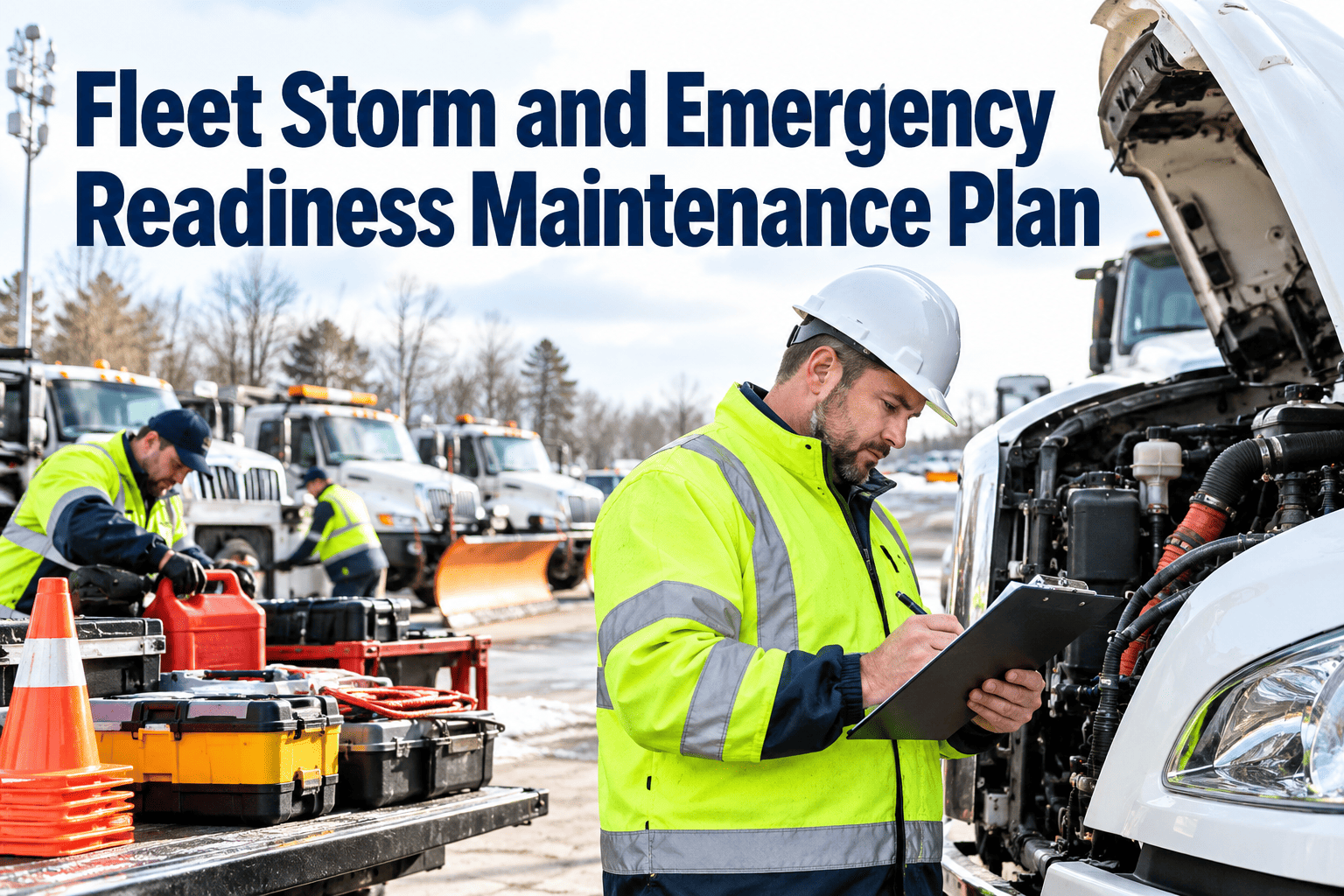
When a hurricane, ice storm, wildfire or flood is forecast, a fleet is judged by how many vehicles start, stop and keep running when the plan is activated. Most storm failures are not caused by the storm itself. They come from weak batteries, worn tires, untested generators, overdue brakes and missing parts that were visible in maintenance history weeks earlier. A storm and emergency readiness plan turns that history into scheduled work, clear ownership and proof of completion. The sections below show how to build one, and how fleet maintenance software keeps it current.
Fleet Storm and Emergency Readiness Maintenance Plan
Emergency response, utility, school, transit, delivery and municipal fleets cannot repair their way out of a disaster after it starts. Build readiness into preventive maintenance, inspections and parts control so every critical vehicle is verified before the warning, not discovered broken during it.
Why readiness is a maintenance discipline, not an emergency plan appendix
Emergency plans usually describe who calls whom and where vehicles stage. They rarely describe the condition of the assets being staged. A plan that assumes every truck is available is only as good as the maintenance records behind it.
What typically goes wrong
- Preventive maintenance is overdue on the vehicles the plan depends on most.
- Defects reported on driver inspections sit open because nobody ranks them by mission need.
- Parts for batteries, belts, wipers, lamps, filters and tires are not stocked at the level a long event requires.
- Auxiliary equipment such as generators, pumps, light towers and plows has no inspection history at all.
- After the event, damage and repair costs are rebuilt from memory and text messages.
What readiness actually requires
- A defined list of mission-critical assets, ranked by role.
- Seasonal inspection templates tied to the hazard in your region.
- Preventive maintenance completed ahead of the season, not during it.
- Stocked, tracked parts and fluids sized to a multi-day event.
- Records that prove what was checked, by whom and when.
Questions to answer before every season
Assets
- Which units are mission-critical, and which can substitute for them?
- Which of those have overdue preventive maintenance today?
- Which carry open defects that were never closed?
People
- Who authorizes removing a vehicle from service during an event?
- Which technicians can work off-site or on extended shifts?
- Do drivers know how to report a defect quickly?
Supply
- How many days of fuel, fluids and parts are on hand?
- Which vendors have agreed to emergency terms in writing?
- Where are spares stored, and who can access them after hours?
Readiness lifecycle: what to do in each phase
Each phase has different priorities. Treat them as separate work packages with their own checklists, owners and due dates inside your maintenance system.
Phase 1: Seasonal preparation
- Run a hazard-specific inspection on every critical unit.
- Close overdue preventive maintenance and open defects first.
- Load-test and date-stamp batteries and charging systems.
- Service generators, pumps, plows and spreaders.
- Set minimum stock levels for storm-related parts.
Phase 2: Watch or warning
- Generate a pre-event work order for each staged vehicle.
- Confirm fuel levels, fluid levels and emergency kit contents.
- Verify lights, wipers, tires, brakes and communications.
- Relocate or secure vehicles that cannot be used.
- Photograph asset condition for later comparison.
Phase 3: Active event
- Log defects from drivers and crews as they occur.
- Triage by mission need, safety and parts availability.
- Track mobile technicians and field repair requests.
- Record parts consumed so reordering stays ahead of demand.
- Remove unsafe units from service immediately.
Phase 4: Recovery
- Inspect every vehicle that operated or sat in the affected area.
- Document damage with photos, notes and cost.
- Hold flood-exposed units until fully evaluated.
- Reconcile parts, labor and outside repair spend.
- Update the plan with lessons learned.
System-by-system pre-event inspection guide
Use this table as a starting point for a storm inspection template. Adjust the items to your vehicle types and your local hazards.
| System | Why it fails in an emergency | Pre-event check | Record to keep |
|---|---|---|---|
| Batteries and charging | Cold, heat and long idling expose weak batteries and alternators | Load test, terminal condition, charging output | Test result and battery install date |
| Tires and wheels | Flooded roads, debris and ice punish worn or underinflated tires | Tread depth, pressure, sidewall damage, spare condition | Measurements per position |
| Brakes | Wet, steep or icy conditions demand full braking capacity | Pad or lining thickness, air system leaks, brake fluid | Inspection result and defects |
| Cooling and HVAC | Heat events and defrost demand stress the system | Coolant level, hoses, belts, fan operation, defrost | Fluid levels and component notes |
| Lighting and visibility | Low visibility makes failed lamps and worn wipers a safety risk | All lamps, beacons, wipers, washer fluid, mirrors | Defect and correction date |
| Fuel system | Fuel supply can be interrupted and contaminated by water | Tank level, water separator, filters, fuel cap seal | Fuel level at staging |
| Generators and pumps | Rarely run, so failures appear only when needed | Run under load, check oil, fuel, filters and starting | Run hours and test log |
| Plows, spreaders and chains | Hydraulic leaks and seized parts delay deployment | Hydraulics, cutting edges, controls, mounting | Condition and service record |
| Emergency kits | Missing or expired items go unnoticed until needed | Triangles, extinguisher, first aid, flashlights, tow strap | Kit checklist and expiry dates |
Hazard and vehicle exposure matrix
Different hazards stress different systems. Rank exposure for your region so inspection effort goes where failure is most likely.
| Hazard | Highest-exposure systems | Vehicles most affected | Priority maintenance focus |
|---|---|---|---|
| Hurricane and flooding | Electrical, drivetrain, fuel, brakes | Utility, emergency, transit and delivery fleets | Fuel, battery, lighting, post-flood inspection |
| Winter storm and ice | Batteries, tires, brakes, wipers, hydraulics | Plow trucks, school buses, service vehicles | Cold-start readiness, tires, plow equipment |
| Wildfire and smoke | Air filters, cooling, tires, visibility | Water tenders, support and evacuation vehicles | Filters, coolant, tires, cabin air |
| Extreme heat | Cooling, tires, batteries, refrigeration | Refrigerated, heavy-duty and passenger fleets | Coolant, belts, tire pressure, refrigeration units |
| Tornado and high wind | Body, glass, lighting, trailers | Trailers, high-profile vehicles, parked fleets | Post-event damage inspection and documentation |
Reactive versus planned readiness
The difference shows up in how decisions are made when the forecast changes.
Reactive approach
- Inspections start after the warning is issued.
- Vehicle availability is guessed from memory.
- Parts are bought at emergency prices or not at all.
- Defects are passed along by phone and radio.
- Damage records are incomplete when claims are filed.
Planned approach
- Seasonal inspections are scheduled and tracked to completion.
- Each critical asset has a current readiness status.
- Minimum stock levels trigger reorder before the season.
- Defects become work orders with owners and priorities.
- Pre- and post-event records support claims and audits.
Know which vehicles are ready before the forecast changes
Set up seasonal inspections, preventive maintenance and work order tracking in one maintenance system.
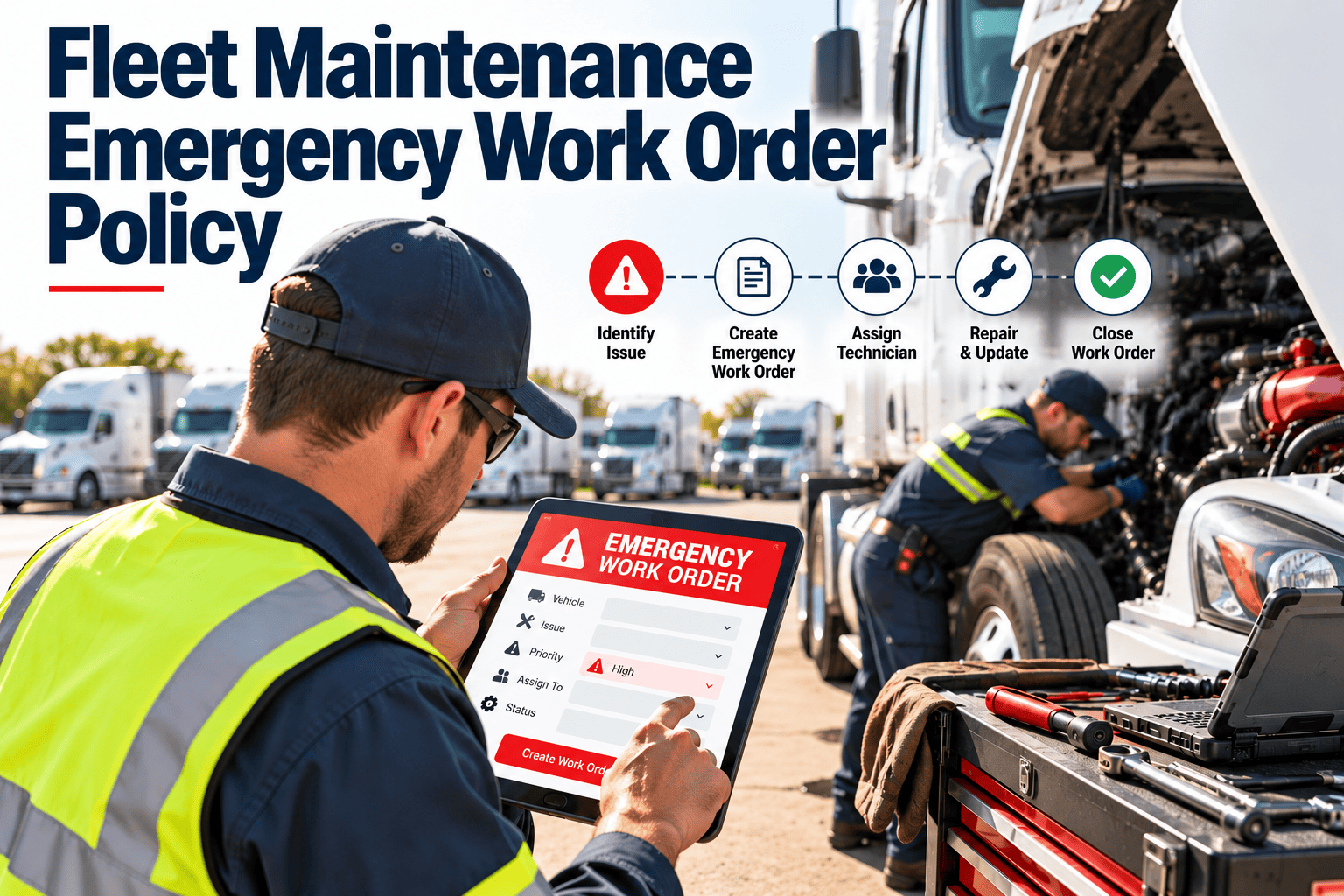
Event-day work order flow
During an event, maintenance has to keep vehicles moving without losing control of safety. A simple, repeatable flow keeps decisions consistent across shifts.
Report
Driver or crew logs the defect from the vehicle with location, photos and whether the unit is still operable.
Triage
A supervisor sets priority by safety risk, mission role and whether a substitute vehicle is available.
Assign
The work order goes to a shop technician, mobile service unit or outside vendor with parts reserved.
Repair
Labor, parts and notes are recorded as the work happens, not reconstructed once the event ends.
Release
A final check confirms the unit is safe and updates its status so dispatch sees it as available.
Parts, fuel and consumables staging
Supply chains are often disrupted in the same events that increase repair demand. Stock for duration, not for a normal week.
High-turn items
- Batteries and jumper equipment
- Wiper blades and washer fluid
- Bulbs, fuses and relays
- Belts, hoses and clamps
Event-specific items
- Tire chains and tire repair supplies
- Plow cutting edges and hydraulic hoses
- Generator fuel, oil and filters
- Fuel water separators and filters
Control practices
- Minimum and reorder levels per storeroom
- Reserved parts for critical assets
- Vendor contacts and emergency terms on file
- Issue tracking by work order
Post-event recovery and return to service
Recovery is where cost, safety and liability are decided. Do not assume a vehicle that starts is a vehicle that is safe.
Gate 1: Safety hold
Flood-exposed, struck or visibly damaged units stay out of service until inspected.
Gate 2: Full inspection
Check brakes, steering, electrical, fluids for water intrusion, tires and body damage.
Gate 3: Repair and document
Complete repairs with photos, parts, labor and notes attached to the asset record.
Gate 4: Release
An authorized person signs off and the unit returns to the active, ready list.
Compliance and recordkeeping during emergencies
Regulators may grant relief for some operating rules during declared emergencies, but that does not remove your duty to keep vehicles safe. Read the terms of any declaration that applies to your operation.
Records worth keeping
- Driver vehicle inspection reports and defect follow-up
- Preventive maintenance completion by asset
- Pre-event and post-event inspection results
- Repair orders showing parts, labor and technician
- Photos and notes tied to damage events
Why they matter
- Insurance and reimbursement claims need dated proof.
- Audits ask for evidence, not recollection.
- Accident reviews depend on prior maintenance history.
- Future planning improves when costs are accurate.
Readiness KPIs to track
Pick a small set of measures and review them before each hazard season and after every activation.
How Oxmaint supports storm and emergency readiness
A fleet CMMS gives readiness a single source of truth. These capabilities map directly to the plan above.
| Readiness need | Oxmaint capability | Result |
|---|---|---|
| Seasonal and pre-event inspections | Inspection templates and mobile checklists | Consistent checks with timestamps and photos |
| Catch-up on overdue service | Preventive maintenance scheduling and reminders | Critical units serviced before the season |
| Defect handling | Work orders with priority, assignment and status | Clear ownership from report to release |
| Vehicle and equipment history | Asset management with full service records | Condition and repair history in one place |
| Parts availability | Inventory tracking with reorder levels | Fewer stockouts during extended events |
| Management visibility | Dashboards and reporting | Readiness status and cost review after activation |
Frequently asked questions
When should a fleet start storm readiness maintenance?
Start before your local hazard season, not when a warning is issued. Schedule inspections and preventive maintenance early enough to repair what you find.
Which vehicles should be inspected first?
Begin with units that perform a mission-critical role, such as emergency, utility, plow and support vehicles. Then work down by operational importance and known condition.
How do we handle vehicles exposed to floodwater?
Hold them out of service until a qualified technician inspects electrical, brake, drivetrain and fluid systems. Record the findings in the asset history using a maintenance management system.
Does an emergency declaration waive maintenance duties?
Relief usually covers specific operating rules and has defined terms. Review the declaration carefully, and keep vehicles safe and well documented regardless.
Can Oxmaint be set up for our specific hazards?
Yes. Inspection templates, schedules and parts lists can be tailored to your fleet and region. You can book a demo to review your setup.
Build a fleet that is ready before the storm arrives
Bring inspections, preventive maintenance, work orders, parts and records into one system, so readiness is something you can verify.