Summer kills fleet vehicles differently than winter. Winter kills batteries and fuel lines. Summer kills cooling systems, tires, and transmissions — slowly, silently, over weeks of sustained heat that pushes every thermal system past its design margin. A cooling system that performs perfectly at 75°F ambient starts failing incrementally at 105°F — and the failure doesn't present as a warning light. It presents as a seized engine on I-10 outside Phoenix at 2:00 PM with 42,000 pounds of freight and a $6,000 tow bill. Tire blowouts increase 30–40% during summer months because asphalt surface temperatures exceed 150°F, and tires already running 5 PSI high from spring inflation expand further until casing failure occurs. AC systems that weren't serviced pre-season fail mid-route, creating driver safety and labor compliance issues in states with heat exposure regulations. OxMaint's summer preparation PM addresses every heat-sensitive system before the first 90°F day — not after the first failure.
Fleet Summer Operations · Heat Protection 2026
Fleet Summer Maintenance: Prevent Every Heat-Related Failure Before It Happens
Cooling systems, tires, AC, transmissions, and driver safety — every thermal system in your fleet has a failure threshold that summer heat exposes. CMMS-driven summer preparation catches every vulnerability before the season starts.
30–40%
Summer tire blowout increase
150°F+
Asphalt surface temps in peak heat
$6K+
Avg cost of roadside overheat event
5°F/PSI
Tire pressure rise per 10°F ambient
The 6-System Summer Preparation Checklist
Every heat-related failure traces to one of these six systems. OxMaint generates summer preparation work orders 4–6 weeks before your region's average first 90°F day — with system-specific checklists assigned to the right technician.
01 Cooling System
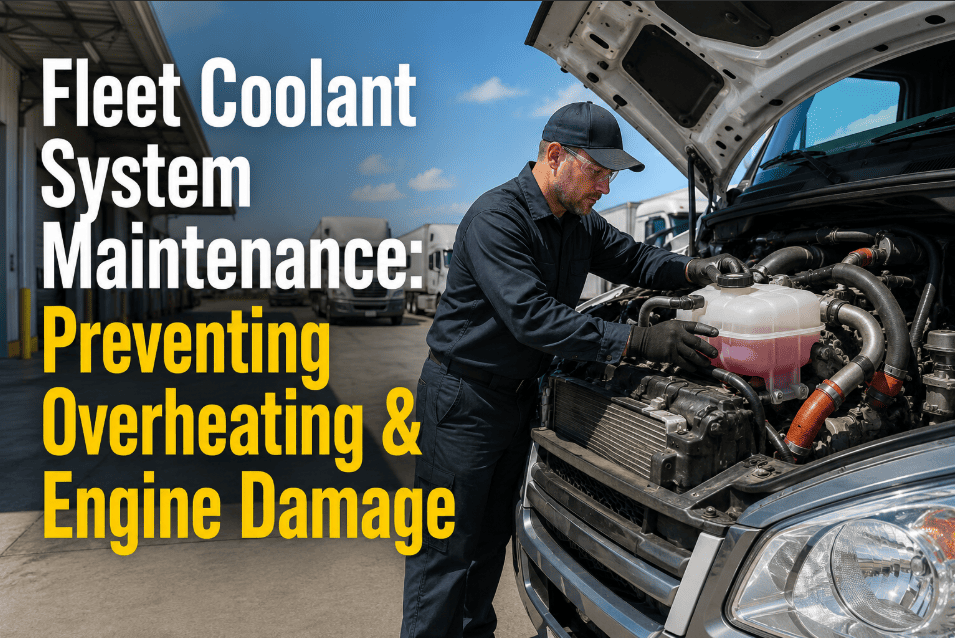
Coolant flush and refill per OEM coolant specification
Radiator inspection: fins, leaks, debris blockage, cap pressure test
Thermostat function test — verify opening temperature
Water pump inspection for leaks, bearing wear, impeller damage
All coolant hoses inspected for soft spots, cracks, swelling, clamp integrity
Fan clutch and belt tensioner tested — fan must engage at temperature
A cooling system failure at 105°F ambient leads to engine seizure in minutes — not hours. Average repair cost: $8,000–$15,000 for a seized diesel engine.
02 AC & Cab Climate
Refrigerant charge tested — recharge or repair leaks before heat season
Compressor function and engagement verified
Cabin air filter replaced — restricted airflow reduces cooling capacity
Evaporator and condenser cleaned of debris accumulation
Blower motor output tested on all speed settings
AC failure in 100°F+ conditions creates driver heat exposure risk. Several states regulate maximum cab temperatures for commercial driver safety — a non-functional AC is a compliance event, not just discomfort.
03 Tires & Pressure
Adjust tire pressure for summer ambient temps (reduce from spring settings)
Inspect tread depth, sidewall condition, and wear patterns
Check for heat damage indicators: cracking, bulging, tread separation signs
Verify TPMS functionality on equipped vehicles
Tires inflated correctly at 70°F run 5–10 PSI high at 110°F ambient. Overinflated tires on 150°F+ asphalt are the leading cause of summer blowouts. Reduce to hot-weather spec before the season starts.
04 Transmission & Drivetrain
Transmission fluid level and condition check — heat accelerates degradation
Transmission cooler inspection for blockage and flow restriction
Differential fluid condition and level verification
Universal joints and driveline component inspection
Transmission fluid breaks down faster in sustained heat. A transmission operating 20°F above normal doubles fluid degradation rate — cutting fluid life from 60,000 miles to 30,000.
05 Belts, Hoses & Electrical
Serpentine belt condition and tension — heat accelerates cracking
All coolant and heater hoses inspected for heat deterioration
Battery electrolyte levels checked — heat evaporates faster than cold
Wiring harness inspection for heat-related insulation damage
Heat is the #1 killer of rubber components. A serpentine belt that shows no visible cracking at 70°F may show advanced deterioration at 110°F under hood — and a belt failure shuts down every engine accessory simultaneously.
06 Driver Safety & Hydration
Cab cooling supplies: water, electrolyte packets, cooling towels
Heat illness awareness briefing — recognition of heat exhaustion symptoms
Shade and rest protocol for drivers during loading/unloading in extreme heat
Emergency protocol for vehicle breakdown in high-heat conditions
OSHA's heat illness prevention standards apply to commercial vehicle operators during non-driving activities (loading, inspection, fueling). Heat-related incidents are preventable with protocol and preparation.
Summer vs Winter: Different Seasons, Different Failure Modes
Winter Failure Mode
Summer Failure Mode
Engine
No-start from cold oil / weak battery
Overheat from cooling system failure
Tires
Underinflation from cold pressure drop
Blowout from overinflation + hot surface
Fuel
Gelling from paraffin crystallization
Vapor lock in extreme heat (gasoline)
Brakes
Frozen air lines from moisture
Brake fade from sustained heat on grades
Driver
Hypothermia risk during breakdown
Heat illness during loading/unloading
Cost pattern
Sudden failure — single event
Gradual degradation — cumulative damage
CMMS Summer Preparation Timeline
6 Weeks Before First 90°F Day
Assessment: Fleet-wide cooling system audit, AC performance test, tire condition review, transmission fluid analysis. Identify every vehicle requiring pre-season service.
4 Weeks Before
Procurement: Order coolant, AC refrigerant, summer-spec tires, cabin air filters, belts, hoses. Planned pricing — not emergency markup when your radiator blows in July.
2 Weeks Before
Execution: Coolant flush, AC service, tire adjustments, transmission cooler cleaning, belt and hose replacement. Each vehicle cleared with a summer-ready status in CMMS.
Throughout Summer
Monitoring: Weekly coolant temp monitoring, bi-weekly tire pressure checks, monthly AC output verification. OxMaint flags any vehicle trending toward thermal limits before failure.
Fleet Summer Preparedness
Cool Every Engine. Protect Every Tire. Prepare Every Driver.
OxMaint generates summer preparation checklists for every vehicle in your fleet — cooling systems, AC, tires, transmissions, and driver safety — scheduled before the first heat wave, not after the first breakdown.
Frequently Asked Questions
When should fleet summer preparation begin?+
Start 4–6 weeks before your region's historical first sustained 90°F period. Unlike winter, which has a hard frost date trigger, summer heat arrives gradually — but fleet damage accumulates from the first hot week. OxMaint can be configured with your region's average summer onset date to auto-generate summer preparation schedules annually.
What is the most common summer fleet breakdown cause?+
Cooling system failures (overheating) and tire blowouts are the two most costly summer fleet issues. Cooling system failures are more expensive per event ($6,000–$15,000 for an overheat that damages an engine), while tire blowouts are more frequent (30–40% increase during summer months). Both are preventable with pre-season inspection and ongoing summer PM compliance.
How does heat affect EV fleet operations differently?+
EV fleets face battery thermal management challenges in extreme heat. High ambient temperatures increase battery cooling system demand, reduce charging efficiency, and can accelerate battery degradation. AC usage draws from the battery pack, reducing available range by 10–15% in extreme heat. OxMaint tracks battery temperature trends, AC energy consumption, and range impact per vehicle — ensuring EV dispatch accounts for heat-reduced range just as it accounts for cold-weather range reduction in winter.
Are there OSHA requirements for driver heat protection?+
OSHA's General Duty Clause requires employers to provide working conditions free from recognized hazards — and heat illness is a recognized hazard for outdoor and vehicle-based workers. OSHA's National Emphasis Program on heat inspections targets industries with outdoor workers, including transportation. Fleet operators should document heat illness prevention protocols, provide water and shade access during non-driving activities, and train drivers on heat exhaustion recognition. OxMaint can include driver heat safety briefing verification as part of summer preparation checklists.
How does OxMaint monitor fleet thermal performance during summer?+
OxMaint integrates with telematics data to monitor engine coolant temperature, transmission temperature, and tire pressure across the fleet in real time. When any vehicle exceeds configured thermal thresholds, the system generates an alert and a preventive work order. This continuous monitoring catches gradual degradation — like a slowly clogging radiator or a transmission cooler losing efficiency — before it becomes a roadside failure event.
OxMaint · Fleet Heat Protection
Summer Doesn't Break Trucks All at Once. It Breaks Them One Hot Day at a Time.
The difference between a fleet that survives summer and one that loses $200,000+ to heat-related failures is 6 weeks of preparation. OxMaint automates every summer PM check, monitors thermal performance throughout the season, and documents everything for compliance and cost control.
.png)