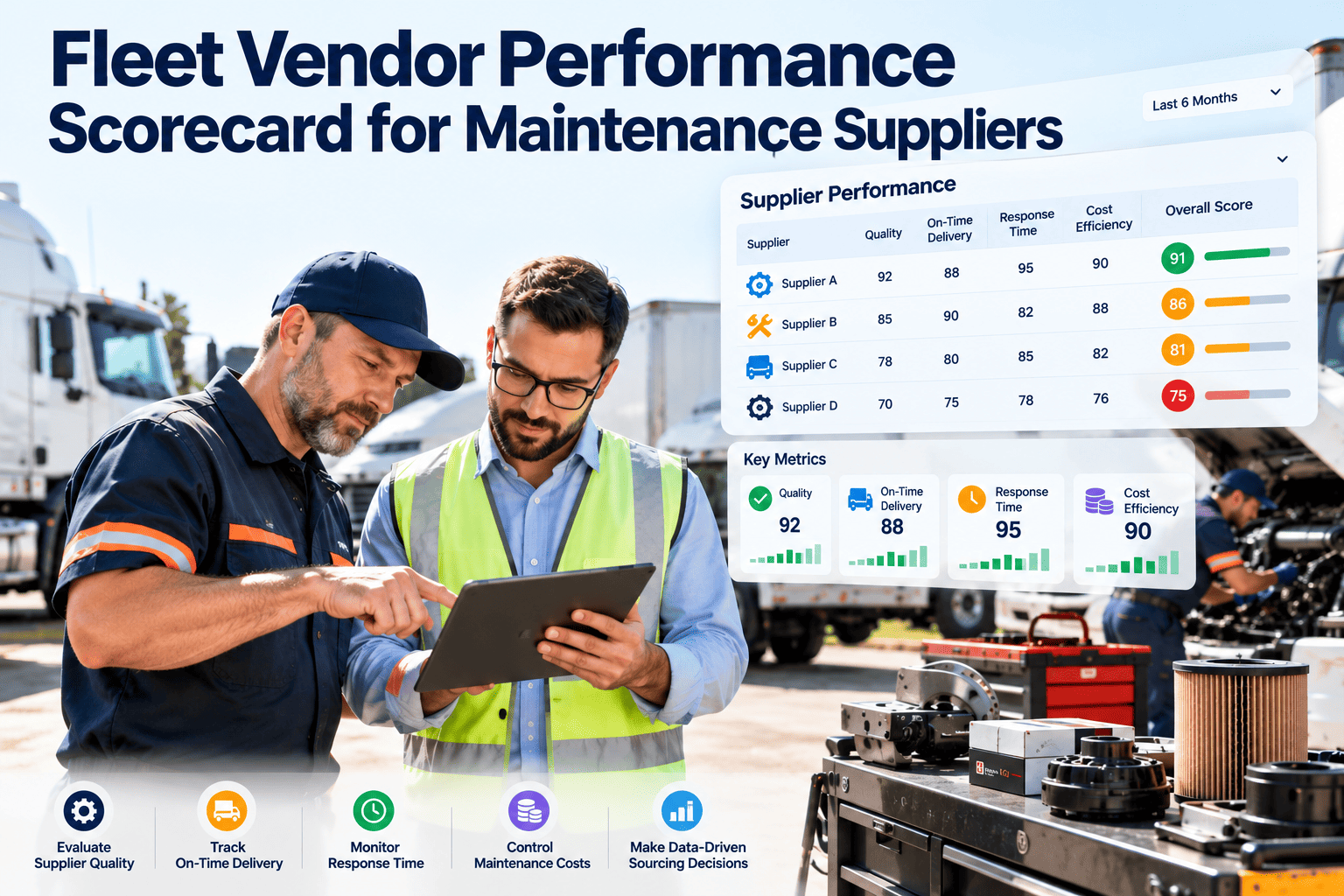
Most fleets know which maintenance vendor they like, but fewer can show which one is actually faster, more accurate or cheaper once repeat repairs and downtime are counted. A vendor scorecard replaces opinion with evidence drawn from work orders, invoices and inspection records. This checklist walks fleet managers through scoring repair quality, turnaround, cost, parts, compliance, communication and warranty, and shows how to keep the data in fleet CMMS software so reviews take minutes instead of weeks.
Fleet Analytics & KPIs · Maintenance Suppliers
Fleet Vendor Performance Scorecard for Maintenance Suppliers
A weighted, evidence-based scorecard for repair shops, tire dealers, parts suppliers and mobile service vendors, built on the work order and invoice data your fleet already holds.
8Checklist Categories
39Check Points
4Frequency Codes
Example scoring weights (adjust to your fleet)
Repair quality25%
Turnaround20%
Cost accuracy15%
Compliance15%
Parts control10%
Warranty10%
Communication5%
Maintenance Vendor Scorecard Checklist
Score each item from 1 to 5 using evidence from work orders, invoices and audits. Tick the item when it has been reviewed, and note the supporting record. Weights are examples.
MMonthly data pullQQuarterly reviewAAnnual contract reviewEEach job
01Repair Quality and First-Time Fix (25%)
Score the share of jobs closed without a return visit inside the agreed comeback window, calculated from your work orders and not from vendor reports.12345MMonthly data pull · Fleet analyst
Compare repeat repairs on the same component and unit against the vendor job mix, so a shop doing harder work is not unfairly penalised.12345MMonthly data pull · Fleet analyst
Check diagnosis accuracy: the root cause on the invoice should match the failure confirmed after repair.12345QQuarterly review · Maintenance manager
Audit workmanship on a random sample of completed jobs against the work order, including torque, fluid levels and safety-critical re-checks.12345QQuarterly review · Shop supervisor
Confirm that safety-critical repairs on brakes, steering, suspension and wheel ends include a documented post-repair check before release.12345EEach job · Shop supervisor
Verify technician qualifications for the work type, such as ASE or OEM training, and qualified inspector status where annual or brake inspections are performed.12345AAnnual contract review · Compliance lead
02Turnaround and Availability (20%)
Measure quote response time from request to written estimate, and record the result against the service agreement.12345MMonthly data pull · Fleet analyst
Compare arrival-to-start and start-to-finish times with the promised schedule on each job.12345EEach job · Shop coordinator
Calculate the on-time release rate: units ready at the promised date and time divided by jobs completed.12345MMonthly data pull · Fleet analyst
Record emergency and roadside response times, including after-hours availability for breakdowns.12345MMonthly data pull · Dispatcher
Check whether the vendor flags backlog and parts delays in advance, and not at pickup time.12345QQuarterly review · Maintenance manager
Log vehicle downtime days attributable to vendor delay so the cost of lateness is visible.12345MMonthly data pull · Fleet analyst
03Cost and Invoice Accuracy (15%)
Compare labor rate and parts markup with the contract and with comparable vendors in the same region.12345QQuarterly review · Procurement
Match each invoice to the approved estimate, and explain every variance that was not approved before work started.12345EEach job · Fleet administrator
Confirm invoice lines map to work order tasks and standard repair codes, with no vague or lump-sum lines.12345MMonthly data pull · Fleet analyst
Flag duplicate, unapproved or unexplained shop supply and environmental charges.12345MMonthly data pull · Fleet administrator
Track invoice submission time and the number of disputes resolved per period.12345MMonthly data pull · Fleet administrator
04Parts Quality and Control (10%)
Verify fitted parts are OEM or approved equivalents, with part numbers shown on the invoice.12345EEach job · Technician
Track parts failures inside warranty and the success rate and time of resulting claims.12345QQuarterly review · Warranty coordinator
Confirm core returns and failed parts are retained per policy for inspection and warranty claims.12345QQuarterly review · Shop supervisor
Compare parts delivery time with the promised time, and record out-of-stock delays.12345MMonthly data pull · Fleet analyst
05Compliance, Safety and Insurance (15%)
Keep current insurance certificates, licences and permits on file, with expiry dates tracked and reminders set.12345AAnnual contract review · Compliance lead
Confirm annual inspections and brake work are done by qualified people, with records kept in line with 49 CFR Part 396 or the local equivalent.12345AAnnual contract review · Compliance lead
Review shop safety practices, including lifting equipment, hazardous waste handling and environmental compliance.12345AAnnual contract review · Safety officer
Check that complete service records are returned for each unit within the agreed time.12345MMonthly data pull · Fleet administrator
Close audit findings and corrective actions with owners and dates.12345QQuarterly review · Safety officer
06Communication and Data Quality (5%)
Check that status updates arrive at agreed milestones, such as estimate, parts ordered and ready for pickup.12345MMonthly data pull · Shop coordinator
Request photos of failed parts and repairs on selected jobs, and score how complete they are.12345QQuarterly review · Maintenance manager
Confirm work order and invoice data arrive in the agreed format so they can be loaded without re-keying.12345MMonthly data pull · Fleet administrator
Test the escalation contact response time against the agreement.12345QQuarterly review · Maintenance manager
07Warranty and Dispute Handling (10%)
Confirm workmanship warranty terms are written, and that claims are honoured without argument.12345QQuarterly review · Warranty coordinator
Log warranty returns as work orders linked to the original job, so comebacks are measured correctly.12345EEach job · Shop supervisor
Record warranty response time from claim to repair or credit.12345QQuarterly review · Warranty coordinator
Review dispute outcomes and credits issued during the period.12345QQuarterly review · Fleet administrator
08Review, Tiering and Sign-Off
Record the review period, vendor, locations and number of jobs reviewed.QQuarterly review · Fleet analyst
Enter each score with supporting evidence, and leave no score without data behind it.QQuarterly review · Fleet analyst
Calculate the weighted score and assign the vendor tier.QQuarterly review · Fleet analyst
Share the scorecard with the vendor and agree improvement actions with owners and dates.QQuarterly review · Maintenance manager
Record the sourcing decision: retain, increase volume, reduce volume or place on watchlist, and sign off.AAnnual contract review · Fleet director
Score Every Vendor From Real Work Order Data
Keep repair history, invoices and inspection results in Oxmaint so each scorecard line points to a record, and vendor reviews stop depending on memory.
Weighted Score Formula and Rating Scale
Convert each category rating into a weighted total so vendors can be compared fairly.
Weighted scoreSum of (category weight x category average rating), where weights add to 100% and ratings run from 1 to 5.
| Rating | Meaning | Evidence expected |
|---|
| 5 | Exceeds the contract | Consistent results in data, no open issues |
| 4 | Meets with minor gaps | Occasional misses, quickly corrected |
| 3 | Acceptable, needs attention | Repeated small misses or slow correction |
| 2 | Below standard | Frequent misses affecting uptime or cost |
| 1 | Unacceptable | Safety, compliance or serious service failure |
Vendor Tiers and Actions
Link scores to action so the scorecard changes behaviour. The thresholds below are examples to calibrate with your own history.
PreferredExample score 4.2 and abovePriority for new work, longer agreements, joint planning.
ApprovedExample score 3.4 to 4.1Standard volume, targeted coaching on weak categories.
WatchlistExample score 2.6 to 3.3Written improvement plan, closer audit, volume held.
Corrective actionExample score below 2.6Formal review, reduce volume or replace if no improvement.
Data You Need Behind Each Score
A scorecard is only as good as its inputs. Most are already created by normal maintenance workflow.
| Metric | Source record | Typical calculation |
|---|
| Comeback rate | Work orders linked to prior jobs | Return visits within window divided by completed jobs |
| On-time release | Promised and actual completion times | Jobs on time divided by jobs completed |
| Invoice variance | Estimate versus invoice | Invoice total minus approved estimate |
| Downtime days | Unit out-of-service timestamps | Days lost per job or per unit |
| Parts warranty claims | Warranty work orders and claim status | Accepted claims divided by claims filed |
| Compliance currency | Vendor document records | Valid documents divided by required documents |
Common Vendor Performance Problems and How the Data Reveals Them
Many vendor issues look like normal repairs until the records are compared. These patterns are worth watching in monthly pulls.
| Problem | Where it shows up | What to check |
|---|
| Repeat repairs on the same component | Asset history shows the same part replaced twice within a short interval | Compare diagnosis notes, parts used and the comeback window |
| Slow quotes that delay downtime decisions | Long gap between request and estimate on the work order | Review quote response time by vendor and job type |
| Invoices that exceed estimates | Variance between approved estimate and final invoice | Check for unapproved additions, labor padding and shop supplies |
| Parts that fail early | Warranty work orders on recently fitted parts | Verify part numbers, brand and fitment practice |
| Records that arrive late or incomplete | Gaps in service history for a unit after outside work | Measure time to return paperwork and missing fields |
| Unqualified work on safety systems | Brake or inspection work without credentials on file | Confirm qualifications and re-inspect samples |
Opinion-Based Reviews Versus Data-Based Scorecards
The change is from who shouts loudest to what the records show.
Opinion-based
Data-based
Preference for the shop closest to the yard
Comparison by comeback rate, turnaround and cost per repair
Complaints remembered after a bad week
Trends across months, with job counts shown
Invoice disputes handled case by case
Variance tracked against estimates for every job
Annual review before renewal only
Monthly data, quarterly review, annual contract decision
Scorecard Rules That Keep the Process Fair
A scorecard loses credibility when vendors believe it is arbitrary. These rules protect trust.
- Share the criteria, weights and rating scale with vendors before the first review period starts.
- Score only what the records support, and mark a category as not rated when there are too few jobs.
- Compare vendors on similar work, such as preventive service with preventive service and tire work with tire work.
- Separate vendor-caused delay from delay caused by approvals, parts availability or fleet scheduling.
- Let vendors respond to disputed scores with evidence, and record the outcome.
- Review the weights yearly, because a fleet with new vehicles or new routes may value different outcomes.
Review Cadence
Match the depth of review to the frequency of the data.
MonthlyPull metrics from work orders and invoices. Flag outliers and open disputes.
QuarterlyScore all categories, run audits, share scorecards with vendors and agree actions.
AnnuallyReview contract terms, insurance and qualifications, and decide volume for the next year.
How Oxmaint Supports the Scorecard
Oxmaint maintenance management software keeps vendor evidence attached to the work that created it.
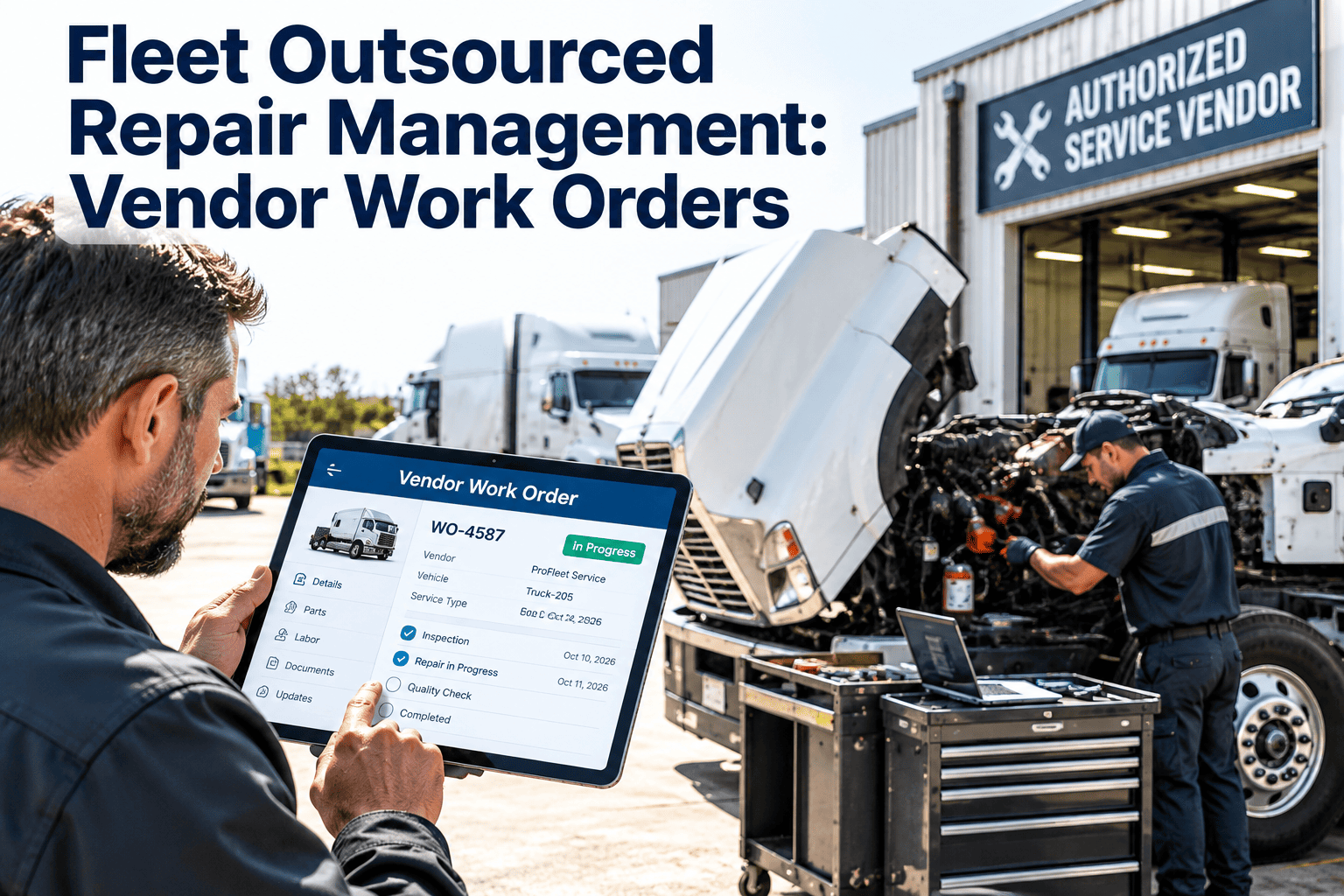
Vendor-linked work ordersRecord the vendor on each job, with estimate, approval, labor and parts.
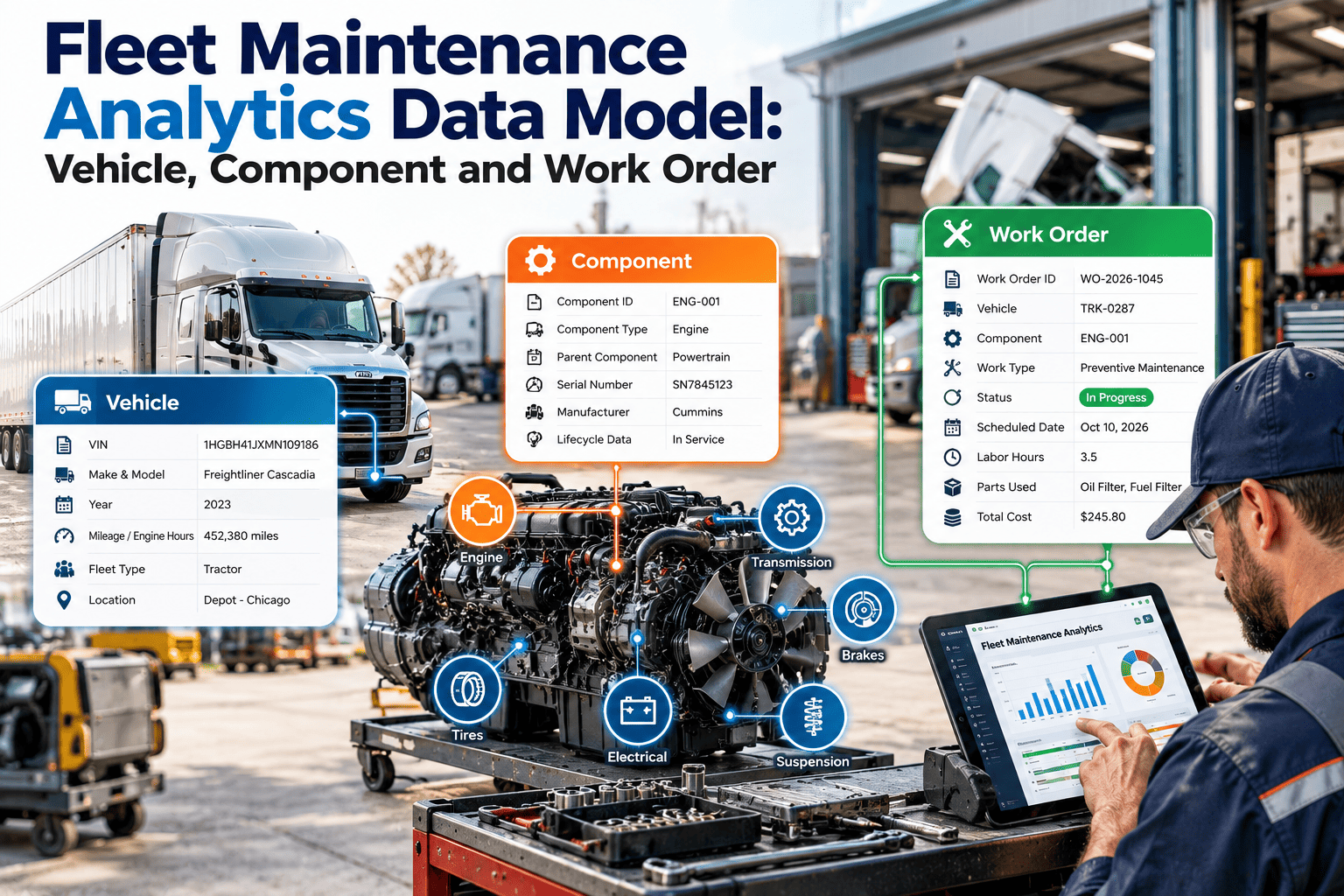
Asset historySee repeat repairs per unit and component across vendors.
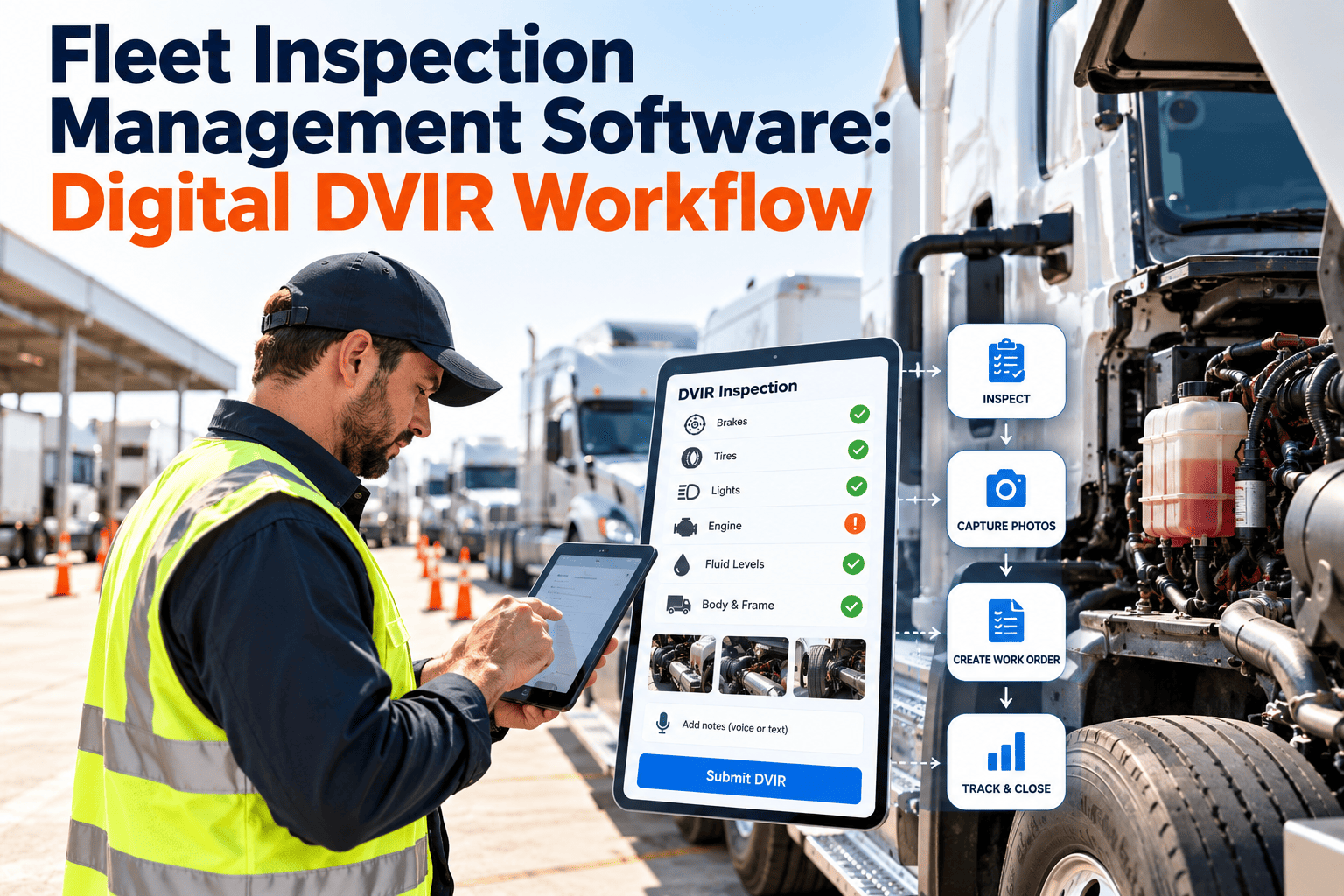
Inspection recordsCapture post-repair checks and audit results on mobile.
Reports and dashboardsCompare turnaround, cost and comeback measures by vendor.
Frequently Asked Questions
What should a maintenance vendor scorecard measure?
Repair quality, turnaround, cost accuracy, parts control, compliance, communication and warranty handling, each backed by records.
How often should vendors be scored?
Pull data monthly, review quarterly with the vendor, and make contract decisions annually. Book a demo to see vendor reporting.
How do I avoid unfair comparisons between vendors?
Compare like with like by job type and unit class, and show job counts next to each score so small samples are visible.
Can a fleet CMMS support vendor scorecards?
Yes. Work orders, invoices and downtime records provide most inputs. Get started and record the vendor on every job.
What should happen to a vendor with a low score?
Share the results, agree a written improvement plan, and reduce volume if the key measures do not improve.
Turn Vendor Reviews Into Decisions You Can Defend
Bring work orders, invoices, inspections and vendor records into one fleet maintenance system, and score suppliers on evidence instead of impressions.