A Midwest transit authority discovered their fuel system failures weren't random—they were predictable. After tracking maintenance vendor performance across 180 buses for 18 months, a pattern emerged: one vendor's fuel injector repairs had a 34% comeback rate compared to 8% from their other providers. That single metric, buried in spreadsheets until digitized, was costing $127,000 annually in repeat repairs, unexpected breakdowns, and missed service routes. When fuel costs consume 60% of total fleet operating expenses and poorly maintained vehicles burn up to 40% more fuel than properly serviced units, vendor performance becomes the difference between profitable operations and budget overruns.
60%
of operating costs
Fuel expenses dominate fleet budgets—any efficiency loss multiplies rapidly across the fleet
40%
more fuel burned
Poorly maintained vehicles consume significantly more fuel than properly serviced units
20%
faster turnaround
Digital diagnostics reduce average maintenance turnaround time by one-fifth
30%
of total costs
Maintenance expenses account for nearly one-third of bus fleet operational budgets
Bus and coach operators face a fundamental challenge: multiple maintenance vendors, multiple depot locations, and no standardized way to compare performance. The charter company using three different shops for fuel system work has no visibility into which provider delivers lasting repairs versus which creates recurring problems. The transit authority managing 12 depots across a metro area can't benchmark maintenance quality between facilities. Vendor scorecards—systematic, data-driven evaluations of maintenance provider performance—transform this chaos into actionable intelligence.
Harden fleet management energy performance with smart scheduling
Fuel system health directly determines both operational reliability and energy efficiency. A bus fleet's fuel system encompasses components from tank to injector: fuel pumps, filters, pressure regulators, injectors, and the sensors that monitor each element. When any component degrades, the cascade effect impacts multiple performance dimensions simultaneously—fuel economy drops, emissions increase, power output suffers, and breakdown risk escalates. The predictive maintenance market has reached $10.93 billion in 2024 specifically because operators recognize that reactive approaches cost 40% more than proactive monitoring.
Fuel Pressure
Normal: 35-65 PSI
Hard starting
Power loss at speed
Engine stalling
Below 30 PSI or erratic readings
Immediate investigation—pump failure imminent
Injector Performance
Variance: Under 5%
Rough idle
Black smoke
Misfires
Over 10% variance between cylinders
Schedule injector service within 500 miles
Filter Restriction
Differential: Under 3 PSI
Fuel starvation
Pump overwork
Contamination
Differential exceeds 5 PSI
Replace filter—pump damage risk increases
Fuel Economy Trend
Variance: Under 8% from baseline
Gradual MPG decline
Increased fuel costs
Higher emissions
Over 12% decline from baseline
Comprehensive fuel system diagnostic required
Smart scheduling transforms diagnostic data into maintenance timing decisions. Rather than arbitrary calendar intervals, CMMS platforms enable condition-based scheduling that aligns service with actual component wear. Bus operations ready to implement data-driven fuel system monitoring can start with a free platform to build their diagnostic baseline immediately. The system learns your fleet's normal operating parameters, then flags deviations that warrant attention before they become roadside failures.
Standardizing compliance at scale — a fleet management governance model with IoT
Multi-site bus operations face a unique compliance challenge: maintaining consistent maintenance standards across depots that may use different vendors, employ technicians with varying skill levels, and operate under different local management approaches. IoT-enabled CMMS creates a unified governance framework where every bus, regardless of location, reports health data to a central platform. This standardization enables meaningful vendor comparison—you can finally answer whether Depot A's higher maintenance costs reflect worse vendor performance or simply older vehicles.
Central Command
Fleet-wide KPI dashboards
Vendor performance comparison
Compliance reporting
Budget allocation
CMMS Platform
Work order automation
Vendor scorecard tracking
Parts inventory management
Diagnostic code routing
Depot Operations
Depot A
45 buses • 2 vendors
Depot B
62 buses • 3 vendors
Depot C
38 buses • 2 vendors
The governance model succeeds when standardized data collection enables apples-to-apples comparison. Over 80% of bus companies in developed markets have adopted telematics systems—the infrastructure for IoT-enabled maintenance already exists. The missing element for most operations is the CMMS layer that transforms raw telematics data into vendor performance metrics. Fleet managers evaluating this approach should schedule a demo to see how multi-site data aggregation works in practice.
Stop Guessing Which Vendors Deliver Results
Build vendor scorecards that reveal true performance across your entire bus and coach operation. Track comeback rates, turnaround times, and cost per repair with automated data collection.
The Vendor Performance Scorecard Framework
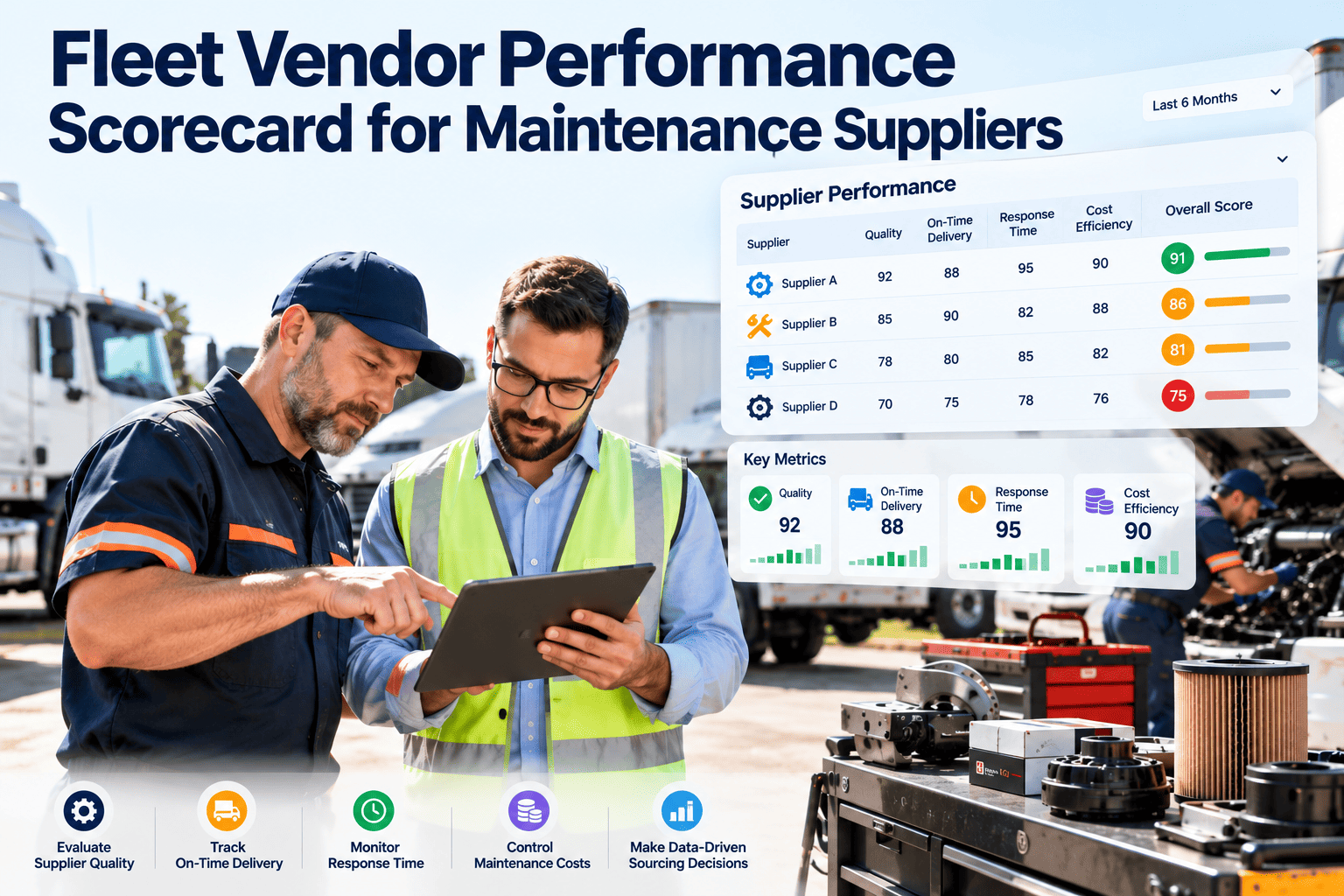
Effective vendor scorecards measure what matters: not just whether work was completed, but whether it delivered lasting results. The framework below captures the six dimensions that separate high-performing maintenance providers from those creating hidden costs. Each metric feeds into a weighted overall score that enables objective vendor comparison and contract negotiation leverage.
Comeback Rate
Target: Under 5%
First-Time Fix Rate
Target: Over 92%
Post-Repair Failure Rate
Target: Under 3%
Highest-weighted dimension—poor quality cascades into all other metrics
Turnaround Time
Target: Under 8 hours
Estimate Accuracy
Target: Within 10%
Parts Availability
Target: Over 95%
Directly impacts fleet availability and schedule reliability
Cost Per Repair Type
Target: Within market rate
Labor Rate Variance
Target: Under 5%
Parts Markup
Target: Under 25%
Lower weight than quality—cheap repairs that fail cost more long-term
Status Update Frequency
Target: Every 4 hours
Issue Escalation Speed
Target: Under 30 minutes
Enables proactive scheduling adjustments when delays occur
Work Order Completeness
Target: 100%
Photo Documentation
Target: Before/after required
Creates audit trail for warranty claims and compliance
Safety Protocol Adherence
Target: 100%
Environmental Compliance
Target: Zero violations
Non-negotiable baseline—any violation triggers review
The scorecard becomes powerful when populated with actual data rather than subjective impressions. CMMS platforms automate data collection for most metrics: turnaround time calculated from work order timestamps, comeback rate derived from repeat repair tracking, cost efficiency benchmarked against historical averages. Operations implementing vendor scorecards can start tracking these metrics immediately with free CMMS access and build their evaluation baseline over 90 days before conducting formal vendor reviews.
| Metric |
Vendor A |
Vendor B |
Vendor C |
Target |
| Comeback Rate |
12% |
4% |
7% |
Under 5% |
| Avg Turnaround |
9.2 hrs |
6.8 hrs |
14.1 hrs |
Under 8 hrs |
| Cost Per Injector Job |
$842 |
$915 |
$1,127 |
$850-950 |
| Documentation Score |
78% |
96% |
62% |
Over 95% |
| Overall Score |
71/100 |
89/100 |
58/100 |
Over 80 |
Vendor A's low price masks a high comeback rate that actually increases total cost. Vendor B delivers best overall value despite moderate pricing.
Expert Review: What High-Performing Transit Fleets Do Differently
The shift from reactive to predictive maintenance isn't optional anymore—it's survival. Transit operations achieving 95%+ availability don't just track whether work was done; they track whether it was done right. Vendor scorecards transform relationships from adversarial cost negotiations into collaborative performance partnerships. When vendors know they're measured on comeback rates, not just completion rates, repair quality improves immediately.
Data-Driven Vendor Selection
Top fleets don't award contracts based on lowest bid alone. They weight historical performance data—comeback rates, turnaround times, documentation quality—to project total cost of ownership. A vendor charging 15% more but delivering 95% first-time fix rates often costs less than the cheapest bidder.
Quarterly Performance Reviews
High performers conduct structured quarterly reviews with each maintenance vendor, presenting scorecard data and agreeing on improvement targets. These sessions include specific action plans for metrics falling below targets, with follow-up tracking built into the CMMS workflow.
Real-Time Diagnostic Integration
Leading operations route telematics fault codes directly to vendor work orders. When a bus triggers a fuel pressure alert, the assigned vendor receives the diagnostic data before the vehicle arrives—enabling parts pre-staging and faster turnaround that keeps buses on scheduled routes.
The technology investment case is straightforward: software ROI typically arrives within 12-18 months through reduced emergency repairs, improved vendor accountability, and better parts inventory management. Fleets managing multiple depots gain additional value from standardized data that enables meaningful cross-location comparison. Operations ready to transform vendor relationships can book a consultation to design their scorecard framework with implementation guidance.
Ready to Hold Vendors Accountable with Data?
Join bus and coach fleets already using systematic vendor scorecards to reduce comeback rates, accelerate turnaround times, and maximize uptime across every depot.
Conclusion: From Vendor Management to Vendor Partnership
Fuel system reliability determines whether your bus and coach operation meets service commitments or scrambles with backup vehicles. Vendor performance determines fuel system reliability. The connection is direct, measurable, and—until now for many operations—invisible. Scorecard-based vendor management transforms maintenance from a cost center managed by relationship and lowest-bid procurement into a strategic capability managed by data and continuous improvement.
The implementation path is clear: establish baseline metrics across your current vendors, weight dimensions according to your operational priorities, and conduct quarterly reviews that drive accountability. Starting with a free CMMS platform lets you begin data collection immediately while planning your formal scorecard rollout. Within 90 days, you'll have objective evidence of which vendors deliver value and which create hidden costs—evidence that changes negotiations, improves repair quality, and ultimately keeps more buses on the road earning revenue.
Frequently Asked Questions
What metrics should bus fleets prioritize in vendor scorecards?
Quality metrics should receive the highest weighting (25-35% of total score) because poor repair quality cascades into all other performance dimensions. The most predictive quality metric is comeback rate—how often vehicles return for the same issue within 30-90 days. Target under 5% for fuel system repairs. Timeliness metrics (turnaround time, estimate accuracy) typically warrant 20-25% weighting since they directly impact fleet availability. Cost efficiency should receive moderate weighting (15-20%) because the cheapest vendor often isn't the most cost-effective when comeback rates are factored in. Communication and documentation metrics (10-15% combined) ensure you have the audit trail needed for warranty claims and compliance verification.
How often should transit fleets conduct vendor performance reviews?
Best practice is quarterly formal reviews with continuous metric tracking. Quarterly cadence provides enough data points to identify trends while allowing time for improvement initiatives to show results. Each review should include: presentation of scorecard data, comparison to targets and prior quarters, specific action plans for underperforming metrics, and agreement on next-quarter targets. For new vendors, conduct informal 30-day check-ins during the first quarter to catch issues early. Critical vendors (those handling safety-related systems like brakes and fuel) may warrant monthly metric monitoring with immediate escalation protocols when performance drops below thresholds.
What diagnostic trouble codes indicate fuel system problems in buses?
Common DTCs related to bus fuel systems include: P0087 (Fuel Rail/System Pressure Too Low)—indicates pump failure or restriction; P0088 (Fuel Rail Pressure Too High)—suggests regulator issues; P0190-P0194 (Fuel Rail Pressure Sensor Circuit)—sensor or wiring problems; P0200-P0208 (Injector Circuit)—individual injector failures; P0230 (Fuel Pump Primary Circuit)—electrical supply issues. CMMS platforms should be configured to route these codes automatically to maintenance workflows, creating work orders with the specific diagnostic data attached. This enables vendors to pre-stage parts and reduces diagnostic time, directly improving turnaround metrics on your scorecard.
How do multi-site bus operations standardize vendor evaluation across depots?
Standardization requires three elements: unified data collection through a central CMMS platform, consistent metric definitions applied across all locations, and normalized benchmarking that accounts for fleet age and operating conditions. Each depot may use different vendors, but all should track identical KPIs using the same measurement methodology. The CMMS serves as the single source of truth, aggregating work order data, comeback tracking, and cost information regardless of which depot or vendor is involved. This enables meaningful comparison: is Depot A's higher maintenance cost due to worse vendors, older vehicles, or more demanding routes? Without standardized data, you're comparing apples to oranges. With it, you can identify best practices from top-performing locations and replicate them fleet-wide.
What ROI can bus fleets expect from implementing vendor scorecards?
ROI typically materializes within 12-18 months through multiple value streams. Direct savings include: 15-25% reduction in comeback-related costs (re-repairs, towing, backup vehicle deployment), 8-15% improvement in negotiated rates once you have objective performance data, and 10-20% reduction in parts costs through better vendor accountability on markup and warranty claims. Operational improvements include: 20% faster average turnaround time as vendors compete on metrics rather than just price, improved fleet availability that reduces missed service penalties or charter cancellations, and better compliance documentation that satisfies auditors and reduces regulatory risk. For a 100-bus fleet spending $1.5M annually on outsourced maintenance, conservative 15% cost reduction plus avoided downtime typically generates $300,000+ annual value against software costs of $15,000-$30,000.