Most fleet purchase agreements are silent on what happens after the sale, once a recall is issued three years into the vehicle's service life. The manufacturer's obligation to notify the registered owner is a federal requirement, not a contractual promise — so when that notice arrives by mail weeks after the defect was logged with NHTSA, the fleet has no contractual ground to demand faster electronic notification or a completion deadline. A handful of added clauses at the purchase stage change that, turning a mailed notice into an automated feed and a vague obligation into a measurable SLA — language that costs nothing to negotiate but changes how quickly a fleet can respond the day a real safety campaign lands. Book a demo to see how recall data flows into a fleet record once these clauses are in place.
OEM Contracts · Recall Clauses · Fleet Procurement · OxMaint
The Recall Notice Isn't the Problem. The Three-Week Gap Before You See It Is.
Purchase contract language that requires electronic recall notification, a completion SLA, and a data feed into your maintenance system closes the gap between when NHTSA logs a recall and when your fleet actually acts on it.
Why the Standard Purchase Agreement Leaves This Gap Open
Federal Notice, Not Contract Notice
Federal law requires manufacturers to notify the registered owner of a recall, but it does not specify the channel, the speed, or the format. A mailed letter to a fleet's registered address, routed through a title company or a leasing entity, can sit unopened for weeks before it reaches the person who actually schedules repairs.
No Completion Deadline
Federal law requires the repair be free, but it sets no deadline for the manufacturer to have parts available or for the fleet to complete the fix. A recall can remain open, at no fault of the fleet's process, for months while parts are backordered — with no contractual mechanism to escalate or seek a loaner.
No Data Feed Requirement
Without a contract clause requiring it, the manufacturer has no obligation to push recall data into a fleet's maintenance system by VIN. The fleet is left manually checking NHTSA's public database against its own asset list — a process that scales poorly past a few dozen vehicles.
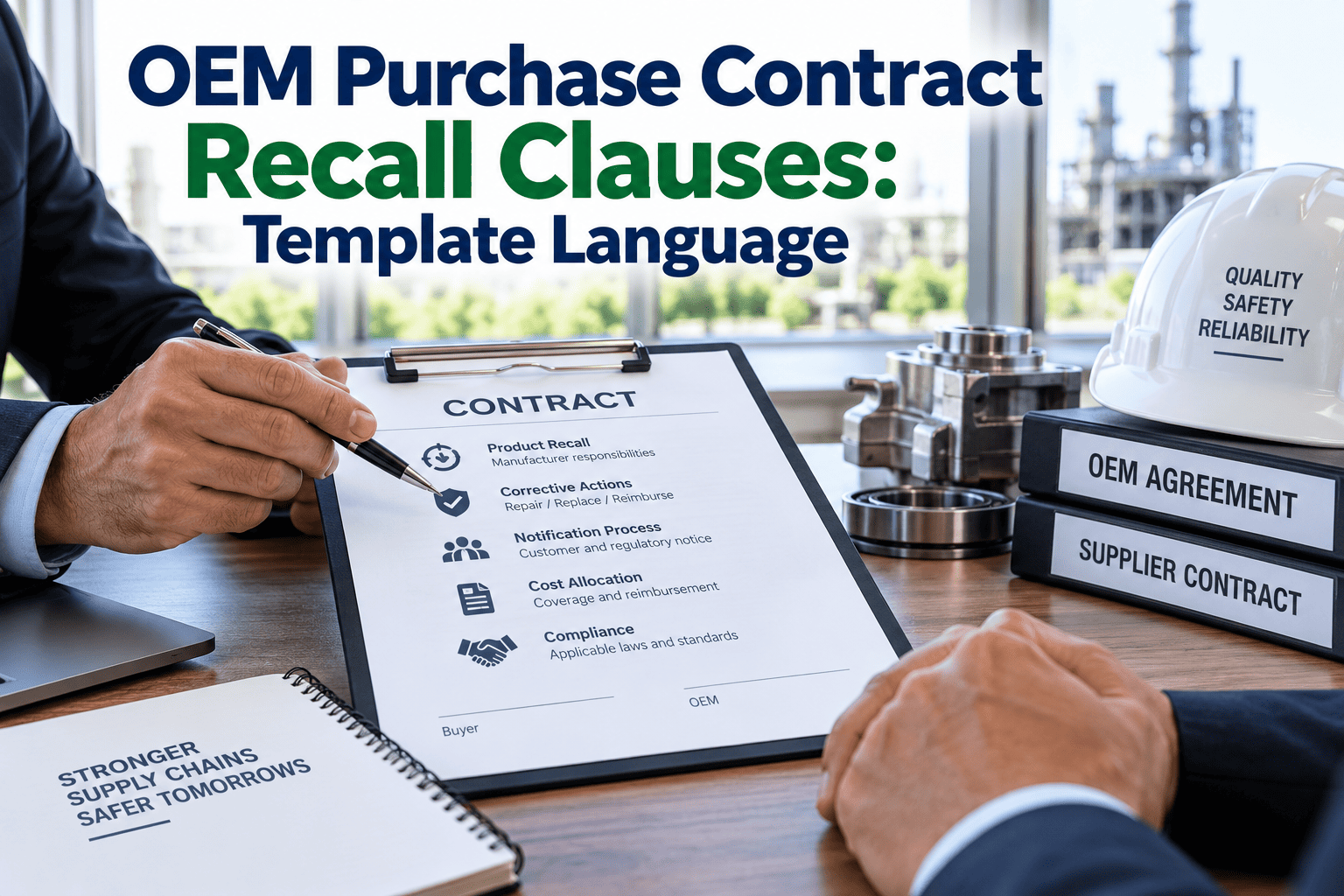
Four Clauses Worth Negotiating Into Every Fleet Purchase Contract
Clause 1
Electronic Recall Notification Within 24–48 Hours
Require the manufacturer or dealer network to push recall notices electronically — by API, structured email, or portal feed — to a named fleet contact within 24 to 48 hours of NHTSA campaign registration, rather than relying on mailed notice to the registered owner of record.
Clause 2
Repair Completion Service Level
Set a target window for parts availability and repair scheduling once a recall is issued, with a defined escalation path — priority parts allocation or loaner vehicle provision — if the manufacturer cannot meet that window for reasons within its control.
Clause 3
VIN-Level Data Feed Into the Fleet's System of Record
Require recall data to be delivered in a structured, VIN-matched format compatible with the fleet's maintenance or CMMS platform, so open campaigns appear automatically against the correct vehicle record instead of requiring manual cross-referencing.
Clause 4
Recall Cost Carve-Out From Liability Caps
Recall-related costs — parts, labor, downtime compensation for safety-critical campaigns — should be explicitly excluded from any aggregate liability cap elsewhere in the agreement, so the recall obligation isn't quietly gutted by a limitation-of-liability clause written for unrelated disputes.
What This Looks Like Once a Recall Is Actually Issued
1
NHTSA registers the campaign against a range of VINs; the manufacturer's system matches it to your fleet contact under the notification clause.
2
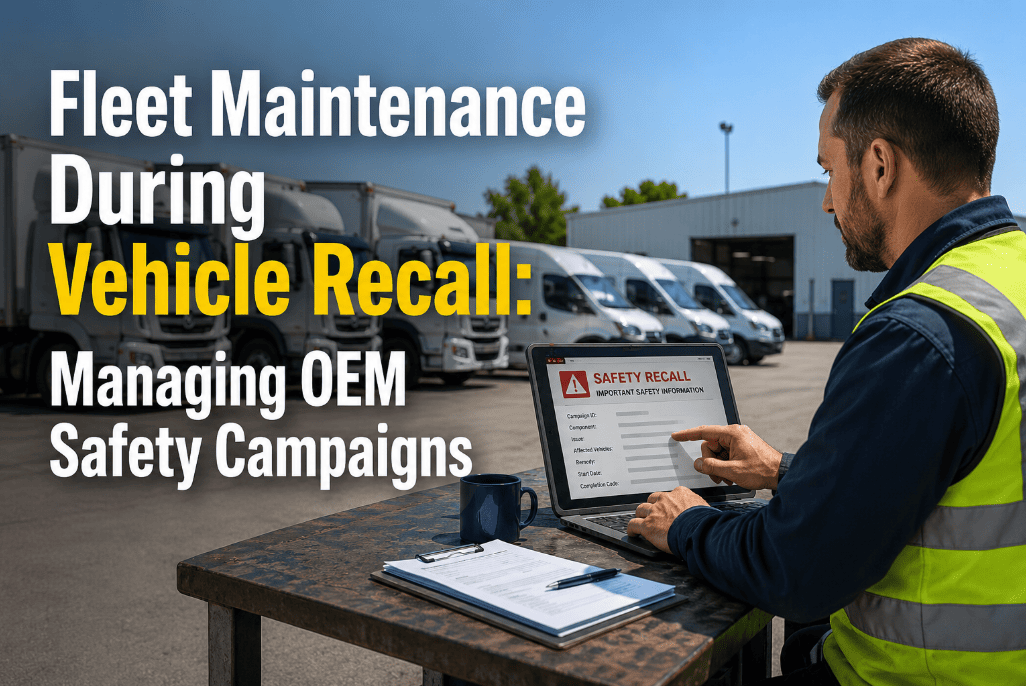
The structured feed pushes the campaign details — affected VINs, defect description, remedy — directly into your maintenance platform, flagging each matching vehicle record.
3
Each flagged vehicle generates a work order automatically, with the completion SLA attached so the fleet can track whether the manufacturer is meeting its committed window.
4
If the SLA is missed, the escalation clause activates — priority parts request or loaner provision — without a renegotiation each time it happens.
A Note on Timing Language Specifically
Business Days vs. Calendar Days
A 48-hour notification window measured in calendar days can slip to nearly a full week if it starts on a Friday afternoon before a holiday. Fleets with tight compliance windows often specify business days for scheduling-related deadlines and calendar days only for the initial notice itself, closing that gap deliberately.
Start the Clock at Registration, Not Discovery
Tying the notification deadline to the date NHTSA registers the campaign — a matter of public record — rather than to when the manufacturer says it "became aware," removes a common point of dispute about when the clock actually started running.
Where Recall Exposure Costs Fleets the Most
High Exposure
Safety-Critical Campaigns Left Open
A brake, steering, or airbag recall left open because notice arrived late is treated in litigation as a known, unaddressed defect — regardless of whether the fleet ever actually saw the notice in time to act.
Moderate Exposure
Parts Delay With No Contractual Remedy
Without an SLA, a fleet has no leverage to request priority parts allocation over retail customers, leaving commercial vehicles idle longer than the safety issue actually requires.
Moderate Exposure
Manual VIN Matching at Scale
Fleets checking NHTSA's database manually against a spreadsheet of VINs routinely miss matches when vehicle records list a VIN inconsistently across systems — precisely the failure a structured data feed clause eliminates.
Recall Clauses Belong in the Purchase Agreement, Not the Owner's Manual
Once a vehicle is delivered, a fleet has almost no leverage to add these terms. The purchase or fleet supply agreement — negotiated before the order is placed — is the only point where a buyer can require electronic notice, a completion SLA, and a direct data feed as a condition of the deal.
Drafting Notes for the Legal Team
Define "Notification" With a Format, Not Just a Deadline
A clause that only sets a time limit without specifying the delivery format leaves room for a manufacturer to satisfy it with an automated email that lands in a shared inbox nobody monitors. Name the channel — API feed, structured data file, or a named contact's direct line — alongside the deadline.
Separate Safety Recalls From Service Campaigns
Not every manufacturer communication is a safety recall — service bulletins and voluntary campaigns carry different urgency. Scoping the strict notification and SLA language specifically to NHTSA-registered safety recalls avoids diluting the clause's force by applying it to routine service advisories.
Address What Happens Across a Change of Ownership
Fleet vehicles get sold, transferred between subsidiaries, or moved into a leasing structure. The notification obligation should follow the VIN and the fleet's designated contact of record, not just the original named buyer on the purchase agreement, so coverage doesn't lapse silently after an internal transfer.
We added the electronic notification and SLA language to our next fleet order after a steering recall sat in a mailroom for eleven days. The following year, a similar campaign hit our system within a day of NHTSA registration, and every affected unit had a work order open before the mailed letter would have even arrived. Legal didn't have to rewrite the whole contract — just four clauses in the boilerplate we'd been signing for years without reading closely.
— Fleet Procurement Manager, Regional Delivery Fleet
When Buyers Actually Have Leverage to Negotiate These Terms
Volume Purchase Agreements
A fleet ordering dozens or hundreds of units in a single agreement has meaningfully more leverage to require electronic notification and SLA language than a buyer purchasing one or two vehicles at retail terms, since the manufacturer has a direct financial interest in closing the larger order.
Renewal and Replacement Cycles
A fleet renewing its standard order with the same manufacturer for a new model year is a natural point to reopen the purchase agreement's boilerplate terms and add clauses that weren't part of the original contract, without appearing to reopen the entire commercial relationship.
Multi-Manufacturer Competitive Bids
When a fleet is evaluating chassis or vehicle bids from more than one manufacturer for the same acquisition, recall notification and SLA terms can be scored as part of the bid evaluation itself, giving buyers room to push harder on the manufacturer that's least willing to commit to the language.
A Contract Clause Is Only as Useful as the System That Acts on It
Negotiating electronic notification and a completion SLA solves half the problem. The other half is making sure that once the data arrives, it turns into a work order automatically instead of sitting in an inbox waiting for someone to notice it.
Frequently Asked Questions
Can these clauses be added after a fleet purchase is already signed?
Rarely on existing units, but they can be added to the next order or renewal cycle. Fleets that negotiate volume purchase agreements have the most leverage to standardize this language across future acquisitions.
Do manufacturers typically resist a completion SLA?
Some do, especially around parts availability they don't fully control. A reasonable compromise ties the SLA to notice and scheduling speed rather than absolute repair completion, with escalation rights if delays are excessive.
How does recall data actually reach a fleet maintenance system?
Once the contractual feed is in place, VIN-matched recall data can route directly into a CMMS.
Sign in to OxMaint to see how open campaigns appear against the correct vehicle record automatically.
Should the liability carve-out apply to every recall or just safety-critical ones?
Most fleet legal teams scope the uncapped carve-out to safety-critical campaigns specifically, while routine, low-risk recalls remain subject to the general liability terms elsewhere in the agreement.
What's the fastest way to see if this gap exists in a current fleet?
Compare the date a recent recall was logged with NHTSA against the date your fleet team actually opened a work order for it. A gap of more than a few days usually points to a missing notification clause.
Book a demo to review your recall handling.
A Pre-Signing Checklist for the Procurement Team
Confirm the Notification Contact Is a Role, Not a Person
Naming a specific individual as the notification recipient creates a gap the day that person changes roles or leaves the company. Route the clause to a role-based address or a system integration endpoint instead, so the obligation survives staff turnover without a contract amendment.
Verify the SLA Has a Measurable Trigger and Endpoint
An SLA that says the manufacturer will act "promptly" or "as soon as reasonably possible" gives a buyer nothing to enforce. Insist on a specific trigger event — NHTSA campaign registration date — and a specific measurable endpoint, such as parts availability confirmation or scheduling contact within a stated number of business days.
Test the Data Feed Format Before Signing, Not After
Ask the manufacturer or dealer to provide a sample recall data file in the format the clause describes before the agreement is finalized. This surfaces format mismatches — a VIN field that doesn't match your CMMS import structure, for example — while there is still room to adjust the clause rather than after the first real recall arrives.
Confirm the Liability Carve-Out Language Doesn't Get Overridden Elsewhere
A well-drafted recall carve-out can still be neutralized by a general "entire agreement" or conflicting limitation-of-liability clause elsewhere in the same contract. Have legal specifically check that the carve-out is referenced as an exception in every other liability-limiting section, not just stated once in isolation.
Ask Who Owns the Data Feed Once It's Contracted
A recall data feed set up during onboarding and never revisited can quietly break after a vendor system upgrade on the manufacturer's side. Naming a point of contact responsible for validating the feed periodically — even a simple annual check — keeps the clause's value from silently degrading years after signing.
Close the Gap Between a Recall Being Issued and Your Fleet Acting on It
Template clauses are only half the fix — the other half is a maintenance system that turns a VIN-matched recall feed into an automatic work order. OxMaint does exactly that.