Tires are the only part of a fleet vehicle that actually touches the road, yet they are among the most neglected components in maintenance programs. A single tire blowout on the highway can cost a fleet anywhere from $2,000 to $50,000 when you add up replacement costs, towing fees, cargo delays, driver downtime, and potential accident liability. Multiply that across a fleet of 50 or 100 vehicles, and the numbers become staggering. The real frustration for most fleet managers is not that tire problems happen, but that they happen without warning because the reporting and repair process is broken. Drivers spot a nail in a sidewall and call dispatch. Dispatch scribbles a note. The note gets lost. The truck rolls out the next morning on a compromised tire. A digital request maintenance workflow built specifically for tire systems eliminates every one of those failure points. It connects the driver who spots the problem to the technician who fixes it through a single, trackable, automated process. If your team is still managing tire issues through phone calls and sticky notes, it is time to sign up for OxMaint and put a real system in place.
The True Cost of Poor Tire Management
Tires represent roughly 30 to 35 percent of a fleet's total maintenance spend, making them the third-largest operating expense after fuel and driver wages. Yet most fleets lack a structured process for handling tire-related maintenance requests, which means problems are caught late, repairs are rushed, and money is wasted on emergency roadside service calls that could have been prevented with a simple inspection two weeks earlier.
These numbers paint a clear picture. Tire maintenance is not something that can be managed casually. It requires a dedicated workflow that ensures every tire issue, from a slow leak to a bald tread, is captured, prioritized, and resolved before it becomes a roadside emergency. Want to see how leading fleets are cutting tire costs by up to 40 percent? Book a demo with OxMaint and we will walk you through the workflow.
Inside the Tire Maintenance Request Workflow
A tire-specific maintenance workflow is not just a form that drivers fill out. It is an intelligent process that connects every stakeholder involved in tire care, from the driver who notices uneven wear to the procurement team ordering replacements. Each step is designed to capture data, eliminate delays, and create an audit trail that supports both compliance and cost optimization. Here is what that workflow looks like when built on a modern CMMS platform.
Issue Detection and Reporting
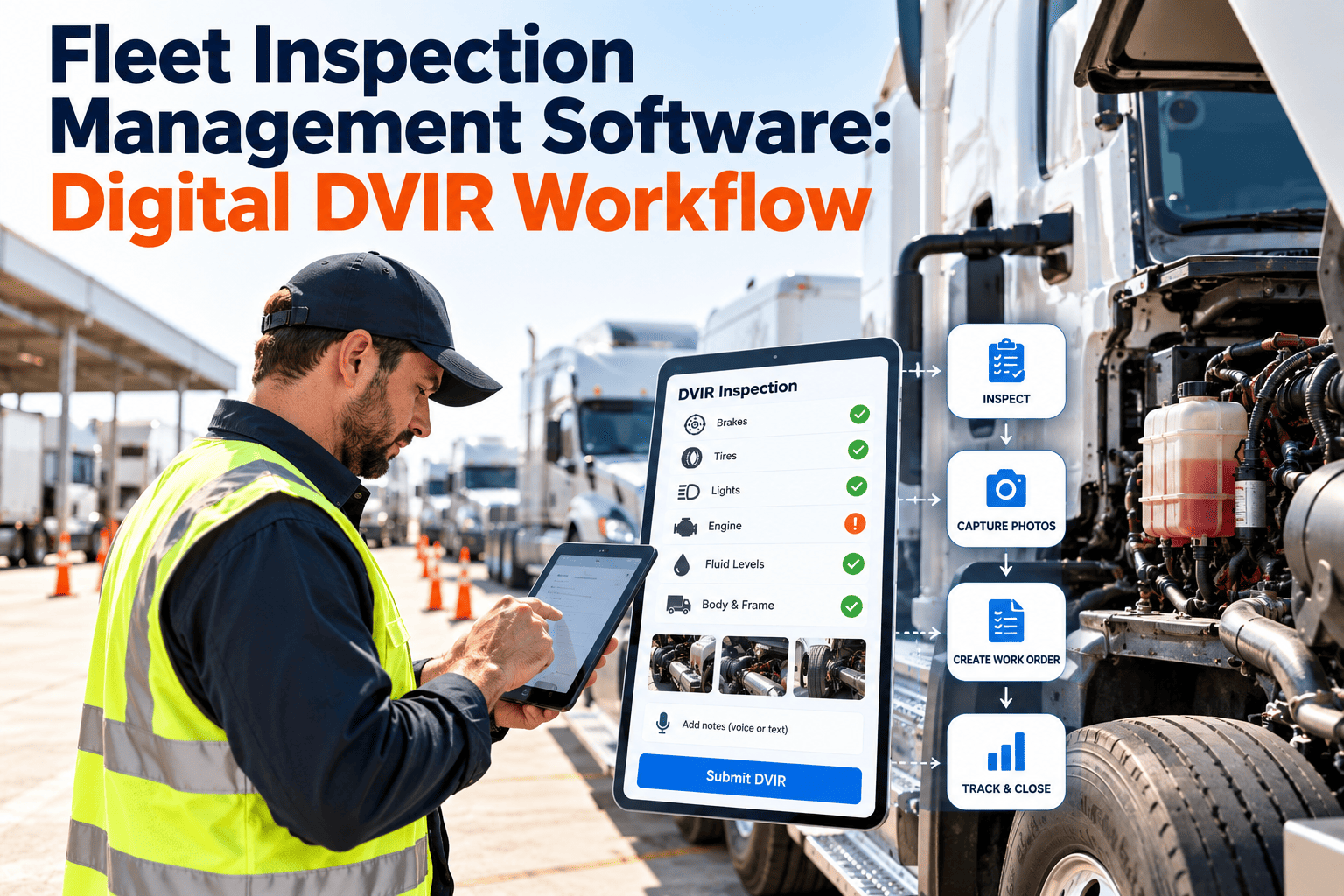
The driver opens the CMMS mobile app during a pre-trip or post-trip inspection, scans the vehicle QR code, and selects from a tire-specific issue list: low pressure, visible damage, uneven wear, vibration at speed, or bulge in sidewall. They snap a photo of the tire and position, add any notes, and submit the request in under a minute, even without cell service thanks to offline mode.
Intelligent Triage
The system automatically classifies the request based on severity. A sidewall bulge or exposed cord triggers an immediate out-of-service flag and alerts the supervisor within seconds. A slow pressure loss routes to the next available shop slot. The workflow checks for duplicate requests on the same tire position and merges them to prevent wasted effort.
Parts and Inventory Verification
Before the work order is even created, the system checks tire inventory for the correct size, load rating, and brand match. If the needed tire is in stock, it is reserved. If not, a purchase order is automatically generated and sent to the preferred vendor, reducing the delay between approval and repair to near zero.
Work Order Assignment
The supervisor approves the request and it converts into a detailed work order pre-loaded with a tire service checklist, the vehicle's tire history, manufacturer torque specs, and the assigned technician. Scheduling considers technician certifications, current workload, and shop bay availability.
Service Execution and Data Capture
The technician performs the work following the digital checklist: records tread depth measurements at multiple points, checks and sets inflation pressure, torques lug nuts to spec, inspects the removed tire for retread eligibility, and logs the new tire's DOT code and serial number. Before-and-after photos are attached to the work order automatically.
Closeout and Fleet Intelligence
The completed work order feeds data into fleet-wide tire analytics: cost per mile by tire brand, average tread life by route type, position-specific wear patterns, and retread yield rates. This data drives smarter purchasing decisions and more accurate PM intervals for every vehicle in the fleet.
Turn Tire Problems Into Tire Intelligence
OxMaint connects every tire request to a data-driven workflow that reduces blowouts, extends tread life, and saves your fleet thousands per year.
The Tire Inspection Checklist Your Workflow Should Include
A tire maintenance request is only as good as the inspection data behind it. When a technician opens a tire work order, the attached checklist should leave nothing to interpretation. Vague instructions like "check tires" lead to inconsistent results and missed problems. A proper tire inspection checklist captures specific, measurable data points that feed into your fleet's maintenance intelligence. Here are the critical inspection areas every tire work order should cover.
When these inspection items are embedded directly into your CMMS work orders, every technician follows the same standard, every tire gets the same level of scrutiny, and your fleet builds a database of tire health metrics that gets more valuable with every service. Sign up for OxMaint to access pre-built tire inspection templates that your team can start using today.
Why Most Fleets Fail at Tire Maintenance (and How to Fix It)
Tire problems rarely happen because a fleet lacks knowledge about tire care. They happen because the process between spotting a problem and fixing it has too many gaps. Understanding where those gaps typically occur is the first step toward building a workflow that actually works.
The Problem
Drivers notice tire issues but wait until end of shift or next yard visit to report them. By then, a repairable puncture has become a destroyed casing.
Tires are replaced and rotated without recording which position they came from or went to. Fleet loses visibility into position-specific wear trends.
Tire work orders lack vehicle-specific specs. Technicians install wrong load ratings or torque wheels by feel instead of to specification.
Tire expenses are lumped into general maintenance budgets. Fleet cannot compare cost per mile between tire brands, vendors, or vehicle classes.
The OxMaint Fix
Drivers report tire issues in under 60 seconds from anywhere using the mobile app with offline support. Photos and GPS location are attached automatically.
Every tire is tracked by serial number, DOT code, and position across rotations, repairs, retreads, and disposal. Complete history at a glance.
Work orders auto-populate with vehicle tire specs, torque values, recommended brands, and step-by-step checklists. No guesswork for technicians.
Track cost per mile by tire brand, position, vehicle type, and route. Identify which tires deliver the best value and which vendors earn your repeat business.
The difference between a fleet that spends $100,000 a year on tires and one that spends $60,000 often comes down to whether they have a structured workflow or not. Book a demo with OxMaint to see the cost difference a digital tire workflow can make for your operation.
Connecting Tire Workflows to Preventive Maintenance
A tire maintenance request workflow should not exist in isolation. Its greatest value comes when it feeds directly into your fleet's preventive maintenance program, turning individual tire events into fleet-wide intelligence that prevents future issues before they start.
When every tire request, inspection, and repair flows through a centralized CMMS, the system begins to reveal patterns that are invisible in manual processes. For example, if vehicles running a particular urban delivery route consistently need front tire replacements at 30,000 miles instead of the expected 50,000, that data triggers a review of the route's road conditions, braking patterns, and load distribution. If a specific tire brand fails at higher rates on steer positions but performs well on drives, procurement can adjust purchasing specs accordingly.
Modern CMMS platforms also integrate with tire pressure monitoring systems (TPMS) and telematics, allowing low-pressure alerts or abnormal temperature readings to automatically generate maintenance requests before the driver even notices a problem. This is the shift from reactive to predictive tire management, and it is only possible when you have a consistent digital workflow capturing data at every stage. If you are ready to move beyond reactive tire management, sign up for OxMaint and start building a tire intelligence system that pays for itself within months.
Sample ROI: 100-Vehicle Fleet
Ready to Slash Your Fleet's Tire Costs
Join thousands of fleet teams using OxMaint to transform tire maintenance from an unpredictable expense into a managed, optimized program.
Frequently Asked Questions
What is a tire maintenance request workflow in fleet management
It is a structured digital process that manages every tire issue from driver report through triage, work order creation, repair, and closeout. It automatically attaches tire checklists, tracks serial numbers and positions, checks inventory, and feeds data into fleet-wide analytics.
How does a CMMS help manage fleet tire maintenance
A CMMS centralizes all tire data including inspections, tread depth, pressure logs, repair history, and cost analytics in one platform. It automates work orders from driver requests or TPMS alerts, enforces standardized checklists, manages inventory with reorder triggers, and provides dashboards showing tire health trends across the fleet.
How often should fleet tires be inspected
Basic visual checks should happen during every pre-trip and post-trip inspection. Detailed measurements with calibrated gauges should occur at every PM interval: every 5,000–6,000 miles for light-duty, 6,000–8,000 miles for medium-duty, and 10,000–25,000 miles for heavy-duty vehicles.
What tire data should be tracked in a fleet CMMS
Track tire serial number, DOT code, manufacturer, purchase date, cost, position history, tread depth at every inspection, inflation pressure, repair and retread records, removal reason, and calculated cost per mile. This data helps compare brands, spot problem routes, and optimize purchasing.
Can tire maintenance requests be submitted offline from remote locations
Yes. OxMaint's mobile app works fully offline. Drivers can scan the vehicle QR code, select the tire issue, capture photos, and submit the request without any network connection. Data syncs automatically once connectivity is restored.
How does a tire workflow reduce fleet operating costs
It catches damage early when repairs cost $25 instead of $400+ replacements, prevents blowouts averaging $1,500 per incident, extends tire life by 25% through optimized rotations, and reduces fuel waste from underinflation. Fleets typically see a 35–45% reduction in total tire expenses.
What is the difference between reactive and predictive tire maintenance
Reactive maintenance waits until a tire fails before acting, leading to emergency calls and high costs. Predictive maintenance uses TPMS data, tread depth trends, and wear patterns to forecast service needs before tires reach critical condition. A CMMS enables predictive maintenance by collecting data over time and auto-triggering requests at threshold limits.