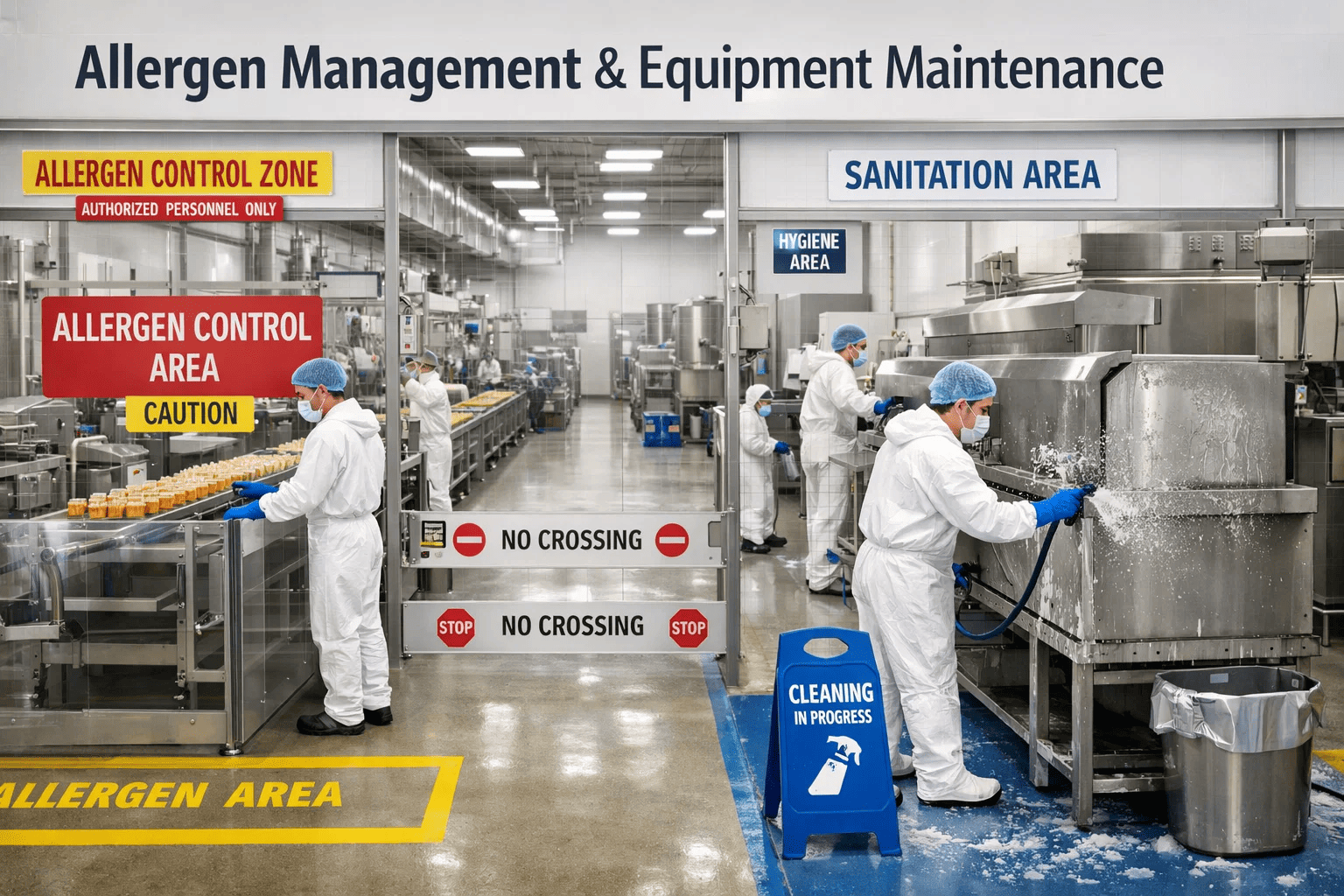
Undeclared allergens are the leading cause of FDA food recalls in the United States — accounting for more recall events than microbial contamination, foreign objects, and chemical hazards combined. The root cause in the majority of allergen recalls is not raw material contamination — it is cross-contact during production, driven by inadequate changeover procedures, failed cleaning validation, and equipment design that traps allergenic residue in locations invisible to visual inspection. A single allergen recall costs an average of $10 million in direct expenses, with total impact including brand damage, retailer delisting, and litigation reaching 3–5x higher. Yet the prevention is fundamentally a maintenance and equipment management discipline: ensuring that every changeover between allergen-containing and allergen-free products follows a validated cleaning protocol, that cleaning effectiveness is verified through allergen-specific testing, and that equipment maintenance does not inadvertently introduce allergens from one production zone to another. Start a free trial to build digital allergen changeover workflows in Oxmaint, or book a demo to see allergen risk management capabilities.
Every Changeover Is an Allergen Risk — Oxmaint Makes Every Changeover Controlled
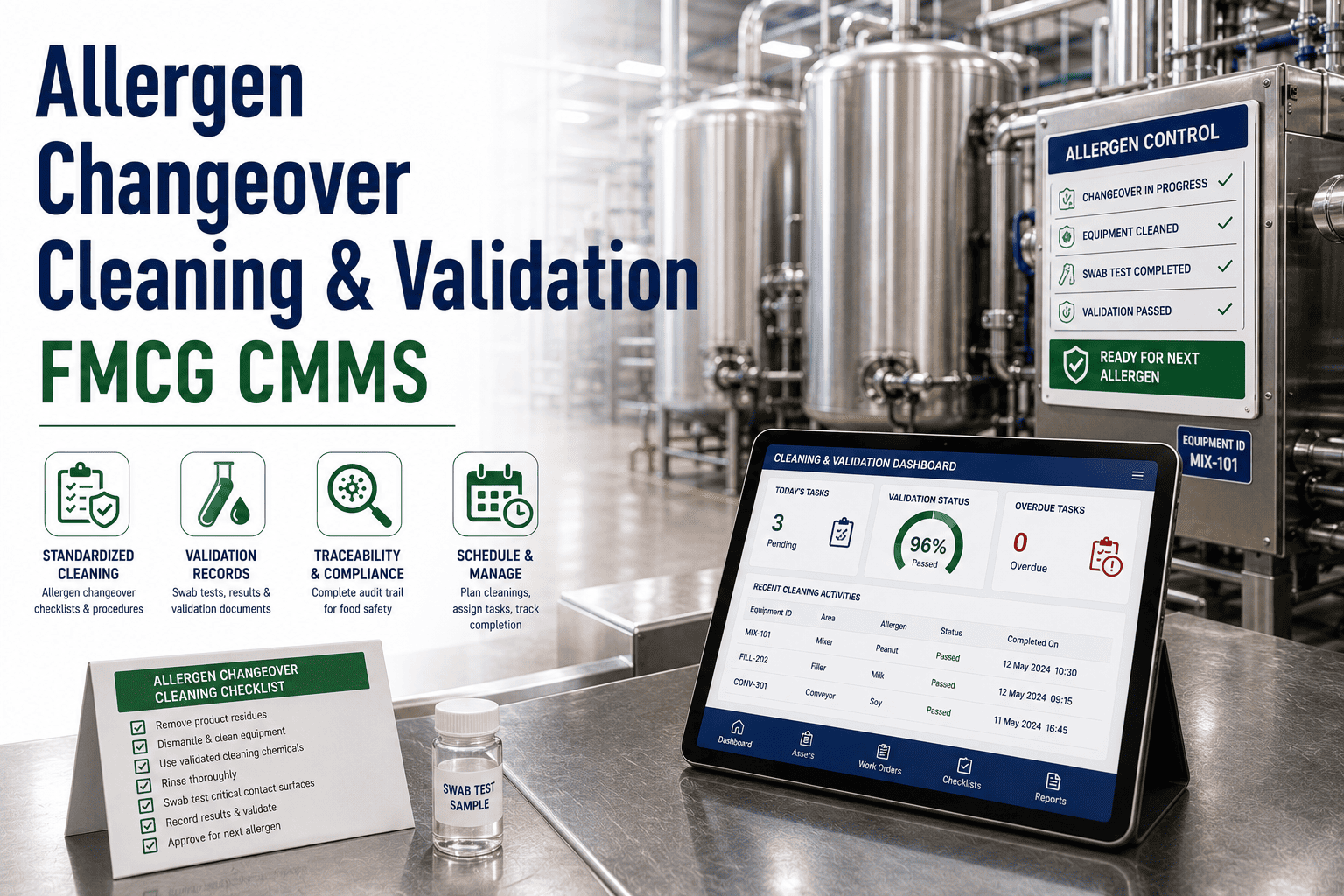
Oxmaint digitizes allergen changeover workflows with validated cleaning checklists, mandatory verification steps, photo-documented line release, and complete audit trails that demonstrate allergen control compliance to BRCGS, SQF, and FDA auditors.
The Allergen Cross-Contact Risk Chain: Where Equipment Maintenance Matters
Allergen cross-contact is not random — it follows predictable pathways through equipment, processes, and environmental conditions that can be controlled through structured maintenance and changeover management. Understanding these pathways is the foundation of an effective allergen management program. Each risk point below has a specific equipment maintenance and procedural control that prevents it. Start a free trial to configure allergen-specific maintenance controls in Oxmaint.
Cleaning Validation: Proving Your Changeover Actually Works
Visual cleanliness is not allergen cleanliness — microscopic protein residue invisible to the naked eye can trigger a severe allergic reaction at concentrations as low as 0.1 mg. Cleaning validation proves that your changeover procedures reliably remove allergenic proteins to safe levels. Verification proves that a specific changeover event achieved those levels. Both are regulatory requirements under BRCGS, SQF, FSSC 22000, and FSMA. Book a demo to see how Oxmaint manages cleaning validation records and verification workflows.
ATP Swab Testing
Measures general organic residue on surfaces after cleaning. Fast results (10 seconds) but NOT allergen-specific — a surface can pass ATP and still carry allergenic protein. Use as a first-pass screen, not as allergen verification.
Lateral Flow Immunoassay (LFI)
Rapid, allergen-specific test that detects target proteins (peanut, milk, egg, soy, wheat, tree nut) on equipment surfaces. Industry standard for post-changeover verification at the production line before QA line release.
ELISA Laboratory Analysis
Quantitative laboratory test that measures exact protein concentration in parts per million. Used for initial cleaning validation studies and investigation of positive LFI results. Provides the sensitivity needed for high-risk allergen contact situations.
UV Light Inspection
UV fluorescence inspection reveals protein residue deposits invisible under normal lighting. Useful as a supplementary tool for identifying cleaning gaps in hard-to-reach areas, but not a substitute for allergen-specific testing.
Allergen Management ROI: Prevention vs. Recall
Frequently Asked Questions
What is the difference between allergen cleaning validation and verification?
Validation is the initial study that proves your cleaning procedure CAN remove allergenic proteins to safe levels — conducted once per allergen/equipment/product combination using the most sensitive testing (ELISA) under worst-case soil loading conditions. Verification is the ongoing confirmation that each individual changeover DID achieve the validated cleaning standard — conducted every time using rapid on-site testing (LFI swabs). Validation says "this procedure works." Verification says "this procedure worked this time." Both require documentation. Oxmaint stores validation study records and automates verification checklist workflows with mandatory test result recording. Start a free trial to configure allergen validation tracking.
How should production scheduling reduce allergen changeover frequency?
Strategic production sequencing is the most cost-effective allergen control: schedule allergen-free products first, then introduce allergens in sequence from least to most prevalent. Group products containing identical allergen profiles to minimize the number of full allergen changeovers per week. A facility running 5 product changeovers daily with mixed allergen profiles might require 25 full allergen cleans per week. Strategic sequencing can reduce this to 8–10 full allergen cleans — saving 60% of changeover cleaning time while reducing cross-contact risk proportionally. Book a demo to see production scheduling tools in Oxmaint.
How does equipment design impact allergen management?
Poor hygienic design is the root cause of persistent allergen retention. Equipment with crevices, dead legs, rough welds, threaded connections, and non-drainable sections traps allergenic residue that even validated cleaning procedures cannot reliably remove. When specifying new equipment for allergen-sensitive production, require: smooth welds (Ra less than 0.8 micrometers), fully drainable design, quick-release clamp connections, visible inspection access, and CIP-compatible construction. Oxmaint's equipment management module tracks hygienic design specifications and flags assets with known allergen retention risks for enhanced cleaning protocols.
What allergen management records do BRCGS and SQF auditors expect?
Both BRCGS and SQF auditors expect comprehensive allergen management documentation including: documented allergen risk assessment with cross-contact pathways identified, validated cleaning procedures for each allergen/equipment combination, cleaning verification test results for every allergen changeover, production scheduling records showing allergen sequencing rationale, training records demonstrating allergen awareness for all production and maintenance personnel, and corrective action records for any positive allergen test result. Digital CMMS systems generate this evidence trail automatically — paper systems consistently produce gaps that trigger audit findings.
Control Every Changeover. Verify Every Clean. Document Every Decision.
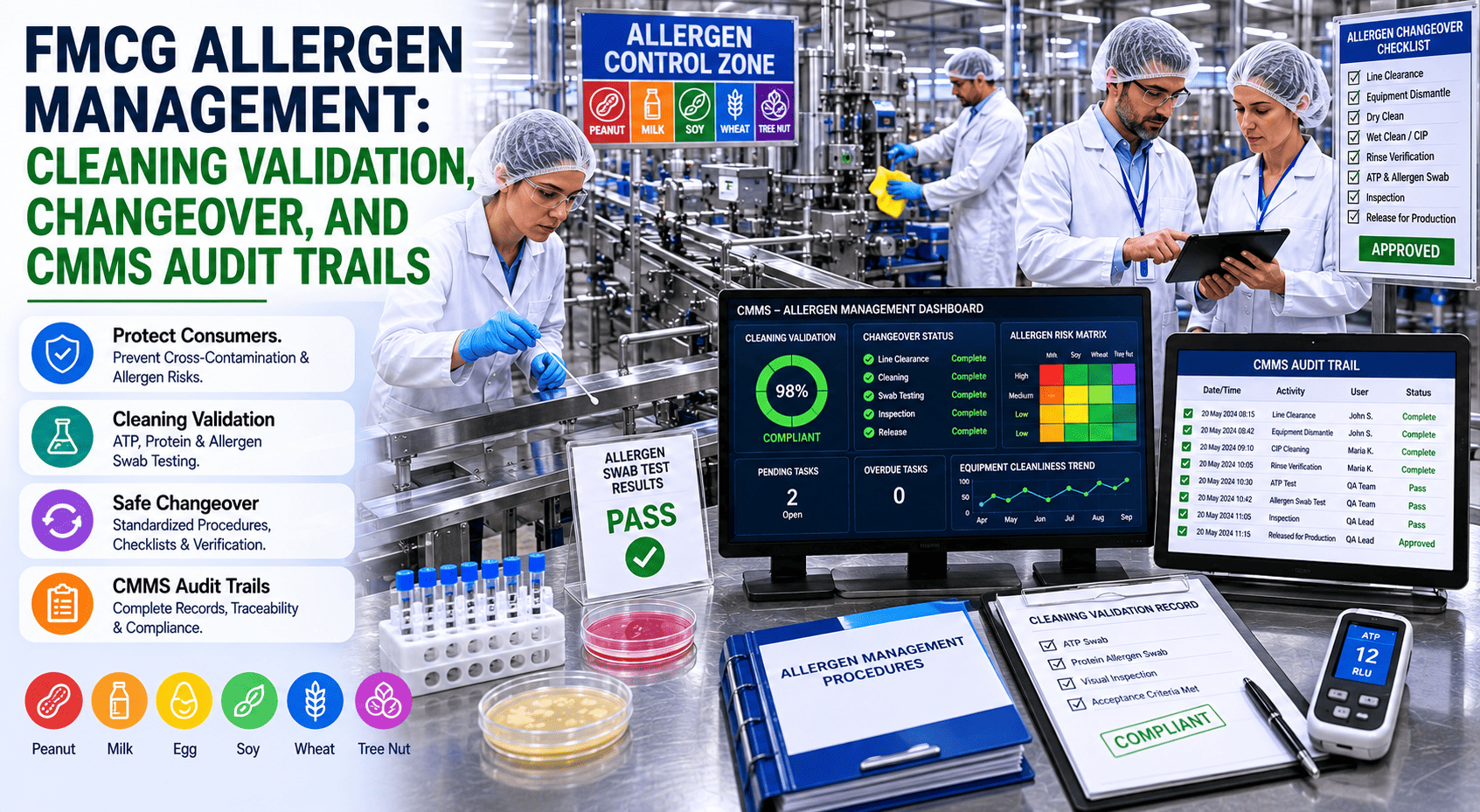
FMCG manufacturers use Oxmaint to digitize allergen changeover workflows — validated cleaning checklists, mandatory LFI test recording, QA line release sign-off, and complete audit trails that prove allergen control compliance every time production switches between allergen profiles.

.png)


